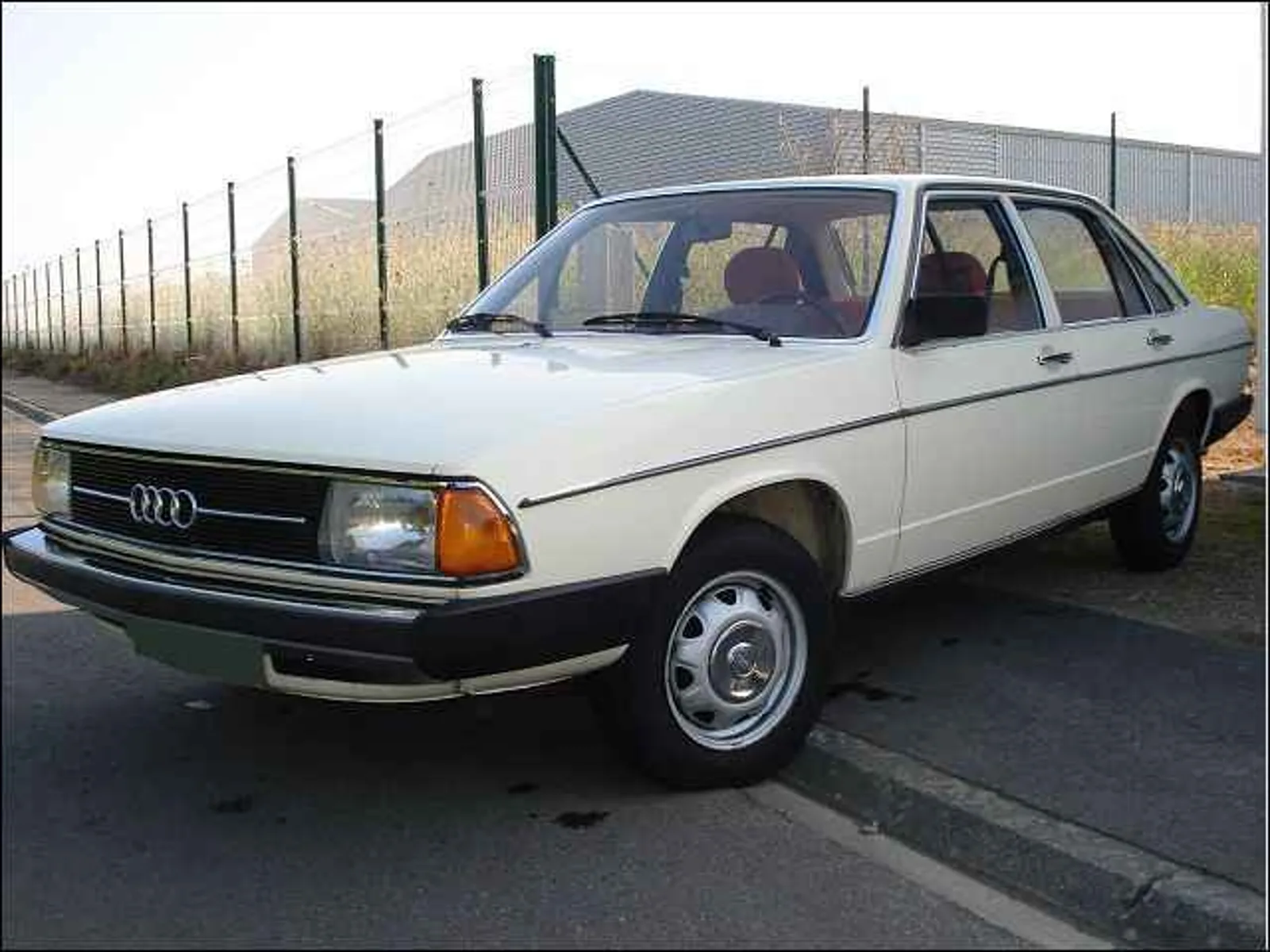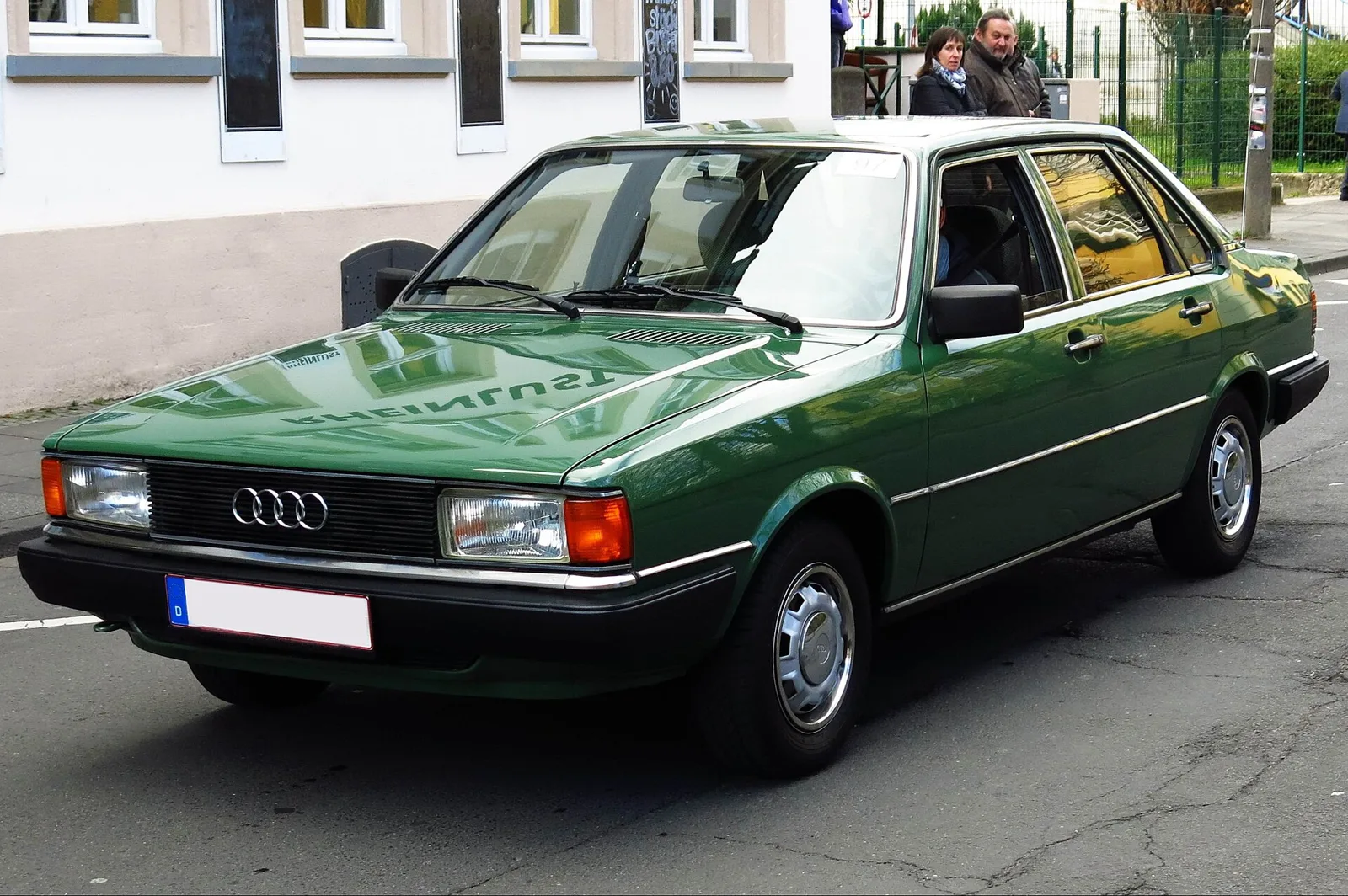
A bigger, sharper notchback from Ingolstadt that added quattro, a diesel and a fuel-saving Formel E version during its eight years on sale.
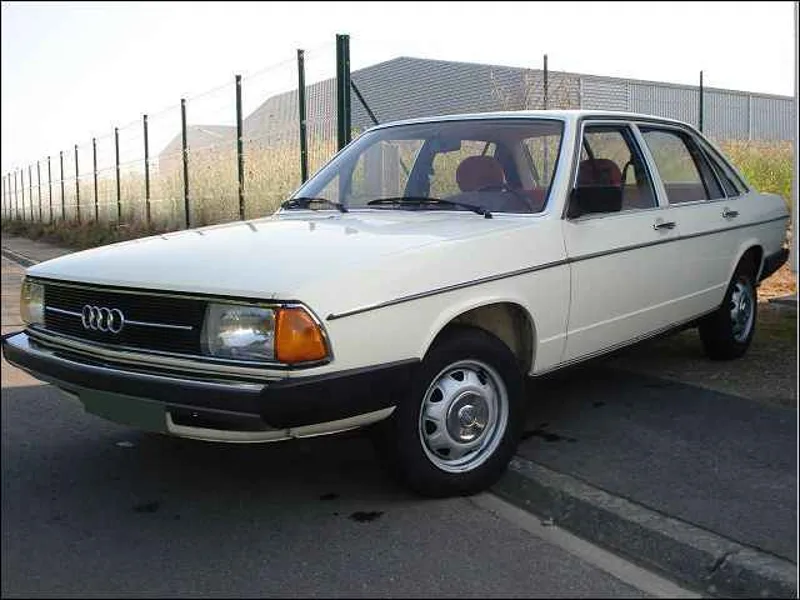
The Audi 80 B2 was the second-generation Audi 80, built mainly in Ingolstadt from 1978 and replaced in 1986 by the B3. It was a notchback saloon with petrol and diesel engines, a quattro version from 1982 and the Formel E economy model.
The Audi 80 B2 was the second generation of the Audi 80, launched in late summer 1978 with a larger notchback body. It came as a two-door and four-door saloon and underlined Audi's push into the mid-size segment, then dominated by BMW and Mercedes-Benz. The quattro all-wheel-drive version, internally type 85, arrived in 1982.
Where did the Audi 80 B2 come from?
Development began in Ingolstadt at the start of the 1970s, with the aim of a larger, safer and more modern car than the first Audi 80. The B2 replaced the B1 and was shown to buyers in September 1978. Its two-door body did not reach customers until spring 1979, while the four-door had arrived first.
Management kept the classic notchback shape because the first generation had sold well. Estate and hatchback variants were discussed early on, using the Audi 100 C2 Avant of 1976 as a reference point. The coupe and quattro were later derivatives of the same platform, and both were shown in spring 1980.
The B2 underlined Audi's push into a mid-size segment then dominated by BMW and Mercedes-Benz.
Who styled the car?
Giorgetto Giugiaro gave the B2 its restrained wedge styling, combining simplicity with elegance while following the guidelines set by Ferdinand Piech. Claus Luthe drew the first shape, but after he moved from Audi to BMW, Giorgio Giugiaro reworked the look heavily. The result was a clean, angular profile with a long bonnet.
Lines and details
The bonnet was long and sloped slightly forward into a clearly drawn front end. Big rectangular headlamps dominated the face, with the indicators placed beside them to keep things tidy. Plastic bumpers at the front and rear were integrated neatly, which made the car look modern for its time. Its much greater length and width gave the car more presence on the road.
A horizontal line ran below the door handles and gave the side view its structure. A lower beltline and larger windows, including the windscreen and rear screen, gave the car a light, open feel. At the back, large rectangular lamps were the main focus of a simple tail design.
What was under the skin?
The chassis kept a familiar layout. MacPherson struts and wishbones on a front subframe sat alongside a torsion crank axle at the rear, with rack-and-pinion steering. The brakes ran as a dual-circuit X split with front discs and, usually, rear drums, and the whole arrangement was adapted to the wider track.
Sound insulation got particular attention. Engineers added a cross member to the body apron, larger rubber mounts to damp down suspension thump, separating walls in the water box, heavy door and boot seals and two pin locks on the bonnet against flutter. The interior received a sound-absorbing tray of composite material 4 cm thick, and the instrument panel was redesigned.
Steering and brakes were refined in detail.
Which engines did launch buyers get?
The 1.3-litre engine from the discontinued Audi 50 reached 100 km/h in 17.5 seconds and 145 km/h (90 mph). The earlier Audi 80's 1.6-litre came in three outputs: 75 PS (74 hp) with a downdraught carburettor, 85 PS (84 hp) with a Solex dual-barrel carburettor, and 110 PS (108 hp) with fuel injection.
The strongest 1.6 needed 10.7 seconds to reach 100 km/h from rest and topped out at 182 km/h (113 mph). Every engine also gained intake-air preheating that worked on its own, plus an automatic starter.
How did Audi fight fuel use?
In 1981 every Audi 80 received measures to save fuel. A transistor coil ignition replaced the contact breaker, and tight crankshaft tolerances brought the engine close to its intended compression ratio. An electric mixture preheater cut fuel use during warm-up by 30 per cent, and a light-emitting arrow told drivers when a higher gear would save fuel.
The arrow was calculated from engine speed and carburettor vacuum, with a one-second delay to stop it flashing. It stayed off on a cold engine and during overrun. A display of instantaneous fuel consumption was also fitted.
What was the Formel E version?
The Formel E arrived in February 1981 as an economy version. It came with a five-speed gearbox that had a long-geared fifth, and a stop-start system that switched the engine off when the driver pressed a small button on the wiper lever. Fuel use was about one litre per 100 km lower than the standard car.
Buyers were not won over, however. Public interest fell short of expectations even though the car used less fuel. A separate Formel-E package from 1981 added similar fuel-saving items, including a nose spoiler meant to reduce lift at speed.
How did the trims and power levels develop?
In August 1981 the model line was reorganised, and the top CD gained a 1.9-litre five-cylinder carburettor engine of 115 PS (113 hp). The CD package brought honeycomb-pattern velour trim, a driver's seat with height adjustment, a rev counter and aluminium wheels, and it came solely as a four-door car.
Diesel joined the story as well. The 1.6-litre diesel had been added in August 1980, and from February 1982 a turbocharged version producing 51 kW (70 PS; 69 hp) was available. The turbodiesel was also offered with CD equipment, again only as a four-door.
What was the quattro?
The Audi 80 quattro 5E arrived in November 1982, rated at 100 kW (136 PS; 134 hp). Audi had shown the quattro in March 1980, and this car was its second permanent all-wheel-drive model. Internally it was type 85, and it was Audi's first all-wheel-drive saloon. Outwardly it matched the Coupe B2 and the quattro.
Audi had planned that around 30 per cent of sales would be quattro models, a target it missed by a wide margin. Only years later did all-wheel drive take a significant share of the company's sales.
How did the GTE and the 1984 update change it?
The GTE returned from February 1983 to March 1984 with the 1.8-litre rated at 82 kW (112 PS; 110 hp), replacing the GLE. The 1984 update widened the bumpers and side mouldings, raked the radiator grille and headlamps, and enlarged the two-part tail lamps to match the Audi 100 C3. The cabin and engines were updated too.
For the 1983 model year the GTE came in just three colours: Alpine White, Zermatt Silver and Montego Black metallic. A lower stripe bearing the GTE name ran along the doors, and the stock 13-inch alloy wheels were finished in Alpine White.
How far did one tank go?
In summer 1981 Auto Motor und Sport ran an Audi 80 LD on a single tank of fuel from Hamburg to Palermo. Shell, Pirelli and Audi helped prepare the car. The testers covered 3,255.2 km on 73.821 litres, which worked out at 2.27 L/100 km (103.6 mpg-imp).
The tyres and chassis had been tuned for low rolling resistance. Audi had named 57 km/h in fourth gear as the best consumption speed, and a support vehicle was used to cut air resistance during the drive. The company expected under 3 litres of fuel to be used at 1,500 rpm.
Where was the Audi 80 built?
Most Audi 80s came from Ingolstadt, but just under 210,000 were also built at the Volkswagen plant in Emden, which made the Passat and Santana on the same platform. Because Emden sat close to the seaports, its cars had a high export share, and they were often said to suffer from corrosion.
Which versions and trims existed?
Between August 1978 and August 1981 the range ran from the basic Audi 80 and S through the LS, GLS and the diesel LD up to the GLE with the 81 kW fuel-injected engine. From August 1981 the C, CL, GL and CD took over, alongside the GTE and special models such as the SC and LC.
The CS was sold only in the Netherlands and Belgium. The SC and GT specials of 1986 closed out the B2 story, and the GT was offered only for model year 1986. Several of these models could also be had with quattro drive.
The diesel models followed their own ladder, from the basic D through the LD to the GLD, which was the best-equipped diesel of that period.
What were the Audi 4000 and 5+5?
The Audi 80 B2 was built for the United States from March 1979 and sold there as the Audi 4000. It carried a different engine range and CD-level equipment to meet stricter exhaust rules and different buyer tastes. From spring 1983 a quattro version was also available.
A two-door 4000 5+5 arrived for model year 1981, with a 101 PS 2.2-litre five-cylinder engine from the Audi 5000 and a five-speed gearbox. Australia received a four-door 5+5 from October 1981 to 1983, with the same engine and a three-speed automatic as an extra-cost option.
Did the Audi 80 race before the quattro?
The Audi 80 GLE raced in the Touring Cup in several European countries between 1979 and 1981, years before Audi's quattro achieved big results in rallying. Private drivers Hans-Joachim Nowak and Willi Bergmeister took the European touring car title in 1980.
Pre-series cars and staff sales
Some pre-series cars were delivered to dealers as demonstrators during start-up delays. They differed in wiring, in some body and attached parts such as door handles, and in a few units taken from the Audi 100 then in production. Almost every fastener was a hexagon socket screw, which was still rare in car building at the time.
Those cars were finished in Inari Silver metallic, a shade that ran a touch more yellow on the pre-series cars than on production models. Some reached the used market through staff sales. They had better rust protection than the production model, but they also suffered persistent problems with spare parts, electrics and paintwork.
On screen
In the Eberhofer crime series the lead character Franz drives an Audi 80 B2 that serves as a police patrol car, fitted with police equipment. The old car draws plenty of mockery, and it is ridiculed as a memorial cart.
Specifications at a glance
| Item | Detail |
|---|---|
| Launch | Late summer 1978, second Audi 80 generation |
| Body | Two-door and four-door notchback saloon |
| Lower 1.6-litre petrol engine | 1.6-litre, 75 PS (74 hp), downdraught carburettor |
| Top launch petrol engine | 1.6-litre, 110 PS (108 hp), fuel injection |
| 0-100 km/h, 110 PS car | 10.7 seconds |
| Top speed, 110 PS car | 182 km/h (113 mph) |
| 1.3-litre engine | 17.5 seconds to 100 km/h; 145 km/h (90 mph) |
| GLE displacement and power | 1,588 cc (96.9 cu in), 81 kW (110 PS; 108 hp) |
| CD engine | 1.9-litre five-cylinder, 115 PS (113 hp) |
| Quattro 5E | 100 kW (136 PS; 134 hp) |
| Record drive consumption | 2.27 L/100 km (103.6 mpg-imp) |
| Output at Emden | Just under 210,000 cars |
| Replacement | Audi 80 B3, summer 1986 |