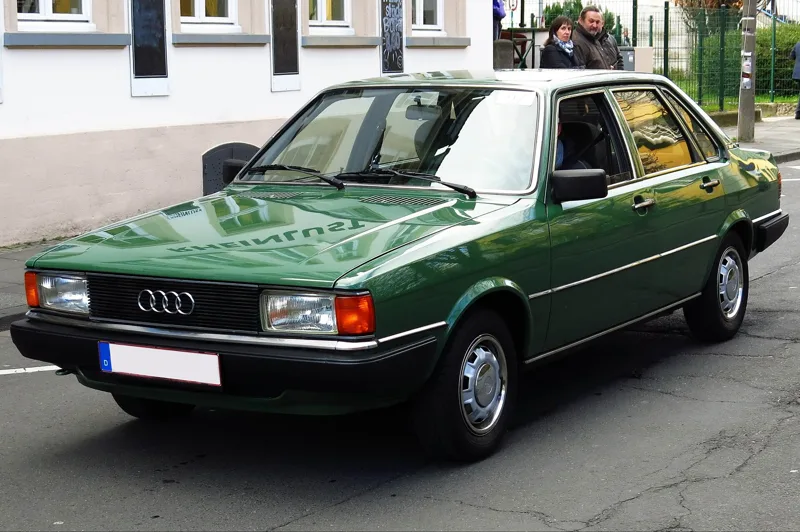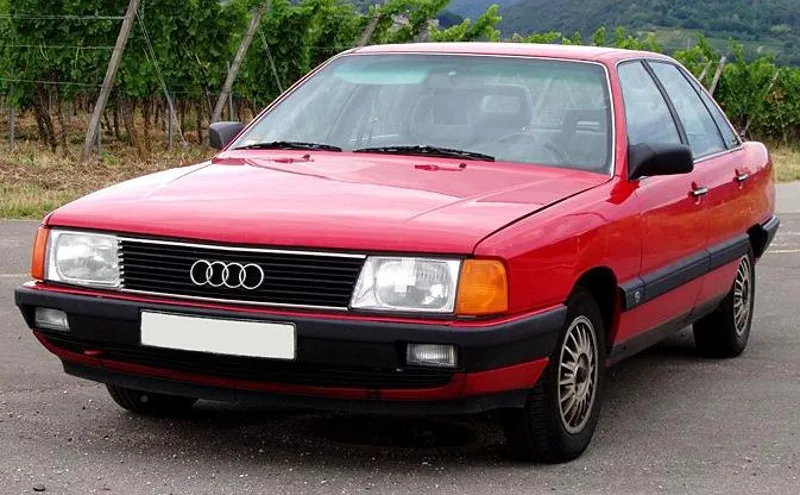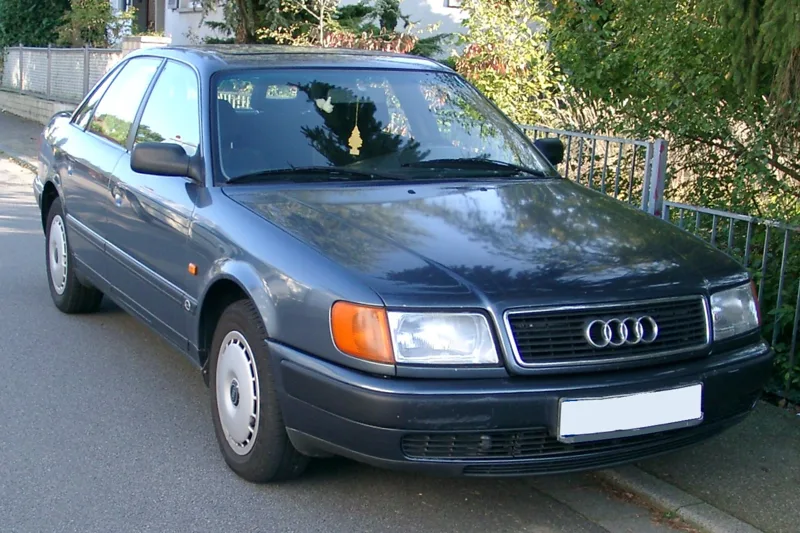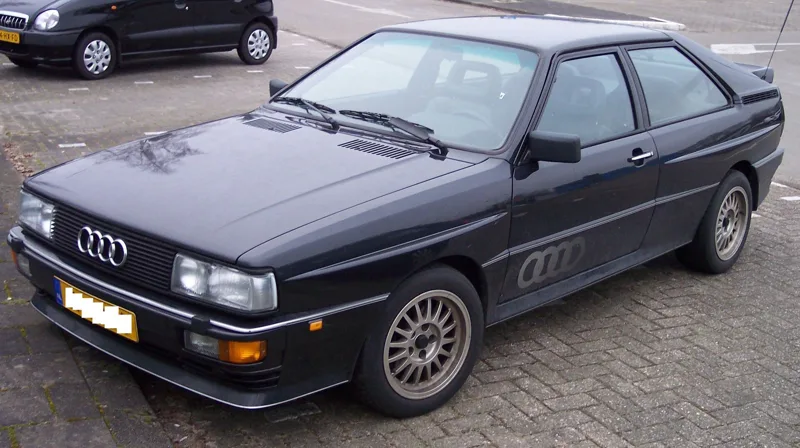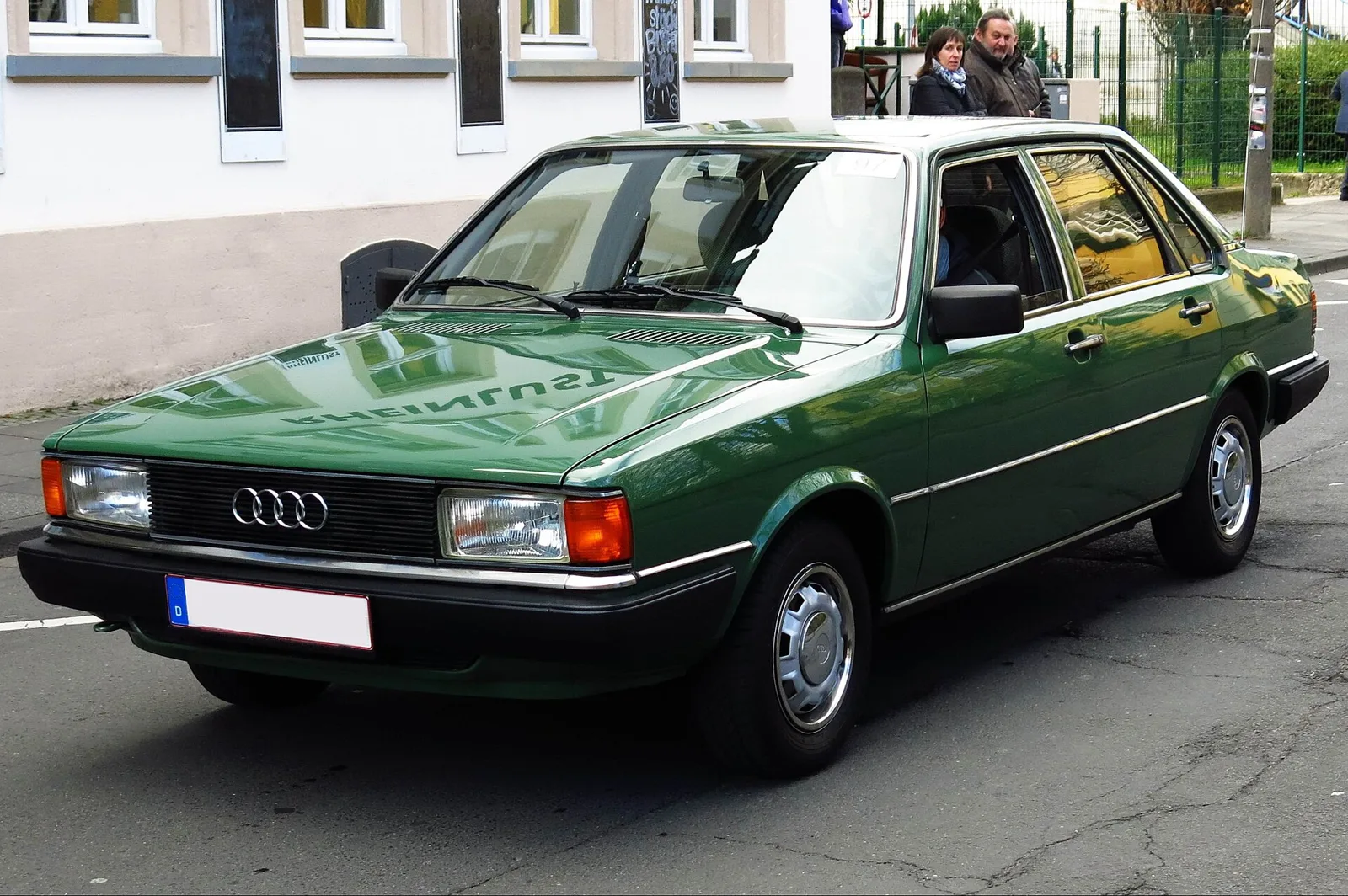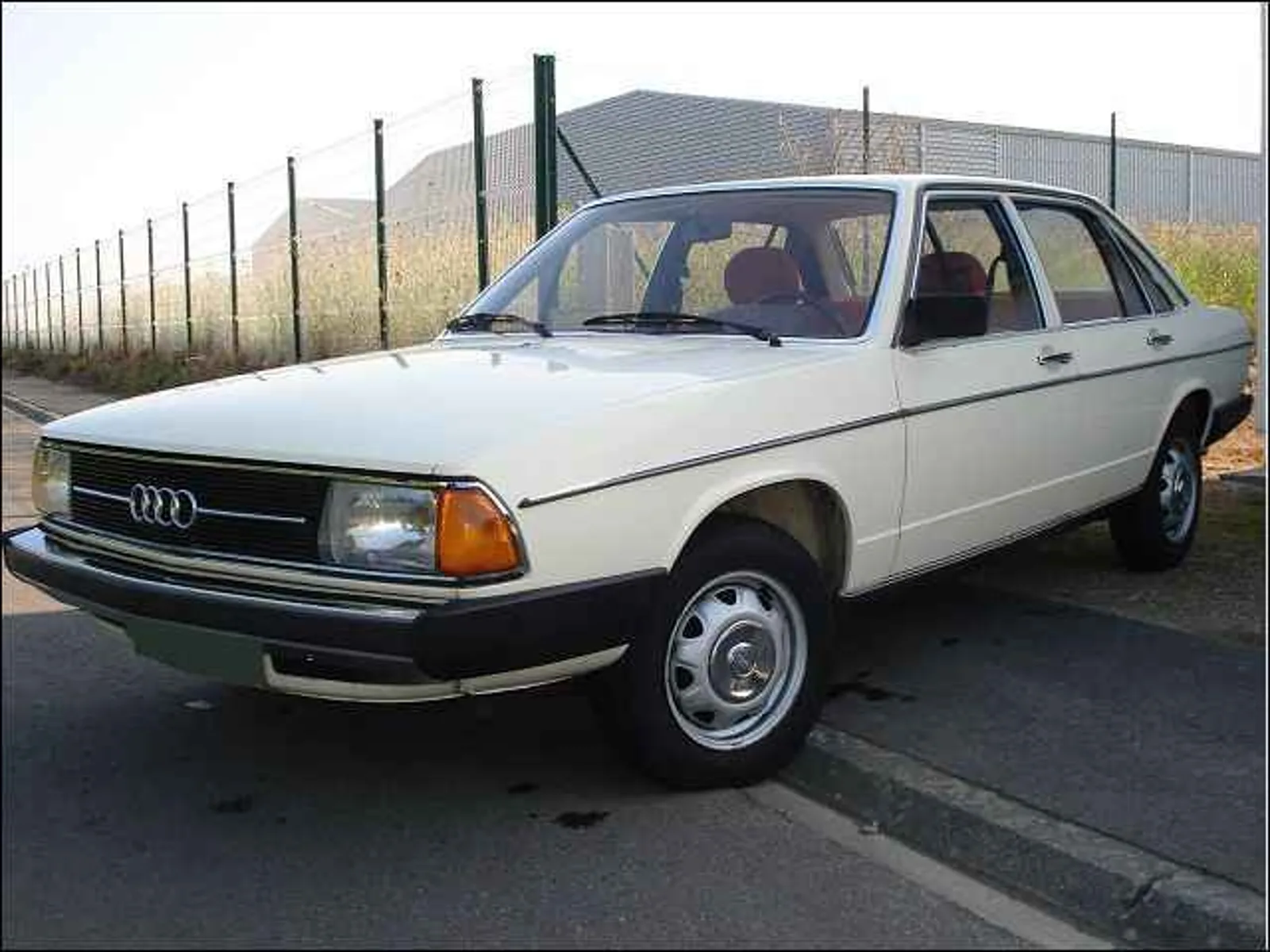
Ferdinand Piech's C2 brought a worldwide car family, a five-cylinder engine and a lighter body to Audi's upper middle class from 1976.
The Audi 100 C2 was an upper-middle-class saloon from Audi NSU Auto Union AG, built from 1976 and replaced in 1982 by the Audi 100 C3. Its engines ran from four-cylinder petrol units to a five-cylinder diesel, and it offered a 642-litre boot.
The Audi 100 C2 was a new upper-middle-class car from Audi NSU Auto Union, built from 1976 as the successor to the C1. Its five-cylinder engines and lightweight construction made it a turning point for Audi, and the C3 replaced it in 1982.
Where did the Audi 100 C2 come from?
The C2 was a completely new development, aimed at the upper middle class, where it competed with Mercedes and BMW. Its predecessor had been conceived for Europe, but the C2 was planned from the start as a worldwide family with a wide range of variants.
The C1 was widely seen as a clerk's Mercedes, a car that felt as if it sat below the W 114/115 'dash-eight' models and still strongly recalled the Daimler design line. The C2 instead went up against the Mercedes W 123 and the BMW 5 Series.
The C2 was conceived at the height of the 1973 energy crisis, so efficiency weighed heavily in the brief. Consistent lightweight construction put the car around 200 kg (441 lb) below comparable competitors.
The US market had by then become relevant to Audi, and key elements of the C2 platform stayed in use until the C5 replaced it. The new car was also meant to replace the VW K 70 and the Type 411.
It was further intended to fill the gap the Ro 80 would leave, since the last NSU was due to end production in 1977. The range had been designed for reciprocating-piston engines as well as the new KKM 871 Wankel rotary engine.
Audi gained its own styling language and a new engine identity with one car.
How did the C2 design break with the C1?
The C2 had a monolithic shape with many straight lines and sharp edges, which gave it a cool, almost severe look. It dropped the Mercedes echoes of the C1, and Audi began to develop a style of its own, borrowing elements from the NSU Ro 80 since the brand's return in 1965.
Hartmut Warkuss led the exterior design. The design motif of articulated surfaces arranged the greenhouse and bodywork geometrically, while the Toronado line split the flank and made the centre of gravity look low.
Four-door cars carried rear triangular quarter windows, as the NSU Ro 80 did. The windscreen and rear window were bonded into the body, a fairly new method that turned the glass into an element that stabilised the structure. The raked nose made room for the five-cylinder engine and improved airflow.
The interior was styled by Claus Luthe, who had designed the Ro 80. Its muted palette of brown, blue, orange and green was developed with the Munich architect Paolo Nestler, who was also the reason no strong red was available at first.
A drag coefficient of 0.36 in the base model was low for a car of that size. Combined with a light kerb weight for its class, it delivered favourable fuel consumption and good performance.
How was the C2 tested before launch?
Once Ferdinand Piech had become development chief, Audi set up a comprehensive programme of cold and hot testing for the first time. Development prototypes were driven under extreme conditions, including in the wintry north of Sweden and the Algerian desert.
Journalist Rainer Gunzler put the car through a thorough test on his ZDF television car programme at the time of its market launch.
The predecessor C1 was not dropped at once. Production for the US carried on until summer 1977 at Neckarsulm, alongside the C2 on the same line, since the US successor, the Audi 5000, was still waiting for approval under the strict emissions and safety laws.
How safe was the C2 in a crash?
The front side members absorbed impact energy in a frontal crash by folding in a controlled way. They deformed regularly and permanently along a predetermined sequence, a principle known as autogenous folding buckling, after Timoschenko.
A safety steering column with a release element and a deformable mounting kept the column from being pushed into the passenger compartment. The steering gear sat behind the front axle, where it was better protected in a collision.
Side-impact protection was improved by leaving wide spaces between the skins of the doors and side panels. A flexible dashboard material and a padded interior added to the protection.
The torsionally rigid, computer-calculated body offered high passive safety, and the lightweight design still cut mass clearly. The result was a car that was both lighter and better at protecting its occupants.
Specifications at a glance
| Specification | Detail |
|---|---|
| Body styles | Four-door saloon from 1976; two-door from February 1977; Avant hatchback estate from September 1977 |
| Boot | 642 litres |
| Drag coefficient | 0.36 in the base model |
| Four-cylinder EA 827 | 63 kW (84 hp; 85 PS) |
| Four-cylinder EA 831 | 85 kW (114 hp; 115 PS) |
| Five-cylinder 5E | 2.1-litre (128 cu in), 100 kW (134 hp; 136 PS) |
| Five-cylinder diesel 5D | 2.0-litre (122 cu in), 51 kW (68 hp; 70 PS) |
| Diesel torque | 123 newton-metres (91 lb ft) |
| Production | Just under 900,000 units, 1976 to the C3 of 1982 |
How did the five-cylinder engine change things?
The five-cylinder added a cylinder to the proven four-cylinder design, combining the smoothness of a six with the economy of a four. Developed under Ferdinand Piech, the 5E of April 1977 started a five-cylinder boom at Audi.
The aim was to catch up with the mid-size Mercedes and BMW models on performance without a six-cylinder. A six would have been too nose-heavy with front-wheel drive and would have needed a longer overhang or a complicated transverse layout.
The extra cylinder brought inertia forces and vibration, which were tamed by a rigid unit of engine, gearbox and differential, plus balancing measures comparable to the wobbling seen in figure skating. The motoring press praised the smoothness, high output, low consumption and rational production.
Daimler-Benz had already shown a five-cylinder diesel, the OM617, in the Mercedes 240 D 3.0 in 1974. Piech had developed that engine while working at an engineering office in Stuttgart after leaving Porsche.
What diesel and turbo versions were offered?
The 5D diesel, shown at the Salon de l'Automobil in Paris in October 1978, had 51 kW (68 hp; 70 PS) from a 2.0-litre (122 cu in) five-cylinder. A turbocharged version for the US followed from 1981 with 64 kW (86 hp; 87 PS).
Before the launch, a publicity-friendly world journey covered about 30,000 km across several continents. Its purpose was to prove the reliability of Audi's first diesel model, which had its underside enclosed to cut noise.
The toothed-belt drive kept the diesel quieter than the comparable OM617 in the Mercedes-Benz 123. Sound-absorbing insulation went on the inside of the bonnet, and diesels received a discreet front spoiler lip, like the 5E and cars with air conditioning.
The base price of the 5D sat about DM 1,000 above that of the 5E, and in its first year the diesel was not offered as an automatic. From 1981 the US turbo version produced 172 newton-metres (127 lb ft) of torque, and that engine remained available in Germany in the C3 until 1987.
Why was the Wankel version dropped?
A Wankel engine would have been the Ro 80's heir inside Audi's line-up. Audi dropped the idea in 1977, after a fleet trial with the KKM 871 rotary piston engine, rated at about 132 kW (177 hp; 180 PS).
Between 1976 and 1978 twenty prototype Audi 100s with the KKM 871 went on an international demonstration campaign in Europe, the USA and Japan. The aim was to win over potential licensees such as General Motors and Citroen.
Feedback on fuel use and smoothness was positive. High production costs and scepticism about Wankel technology remained decisive obstacles. The expense of exhaust treatment for the US market and high fuel consumption counted against it too.
The five-cylinder EA 828 instead received an exhaust turbocharger and produced 170 PS (168 hp). The Ro 80 was left without a successor.
What did the Avant and CD versions add?
The Avant appeared in September 1977 at the IAA as a hatchback estate with 433 to 1,113 litres of boot volume. It cost DM 595 more than the notchback saloon, and it came with an innovative extra: a ski bag behind the centre armrest.
Ingolstadt's press office called the Avant a 'flowing tail' and stressed the car's progressive character. Renault with the R30 and Rover with the SD1 had offered similar concepts.
The CD version arrived in August 1978 as the richly equipped variant. Standard comfort features included a height-adjustable driver's seat, three-point automatic belts, rear head restraints, central locking and four electric windows.
Power steering offered rising resistance with speed, to reduce the risk of the wheel being snatched at high speeds. A sliding roof, air conditioning, cruise control and rear level control were all extras.
How did the Audi 200 relate to the 100?
The Audi 200 C2 appeared at the end of 1979, based on the 100 CD. It came with a 100 kW (134 hp; 136 PS) fuel-injected engine and, as a turbo version, 125 kW (168 hp; 170 PS). It marked Audi's first push into the upper class.
A 1.9-litre (116 cu in) five arrived in August 1980, with a Keihin carburettor. It had been developed shortly before for the Audi Coupe B2, made 100 PS (99 hp), and was the smallest five-cylinder in the range, with 11,635 units built, 615 of them Avants.
In Italy the 1.9 could also be combined with the CD trim, a way round the local luxury tax on engines above 2.0 litres of displacement.
How did Audi cut fuel use in 1981?
Lower fuel use came from transistor coil ignition, very tight crankshaft tolerances and an electric mixture pre-heater, which cut fuel consumption by 30 per cent during warm-up. Everyday economy also came from a dashboard arrow.
The arrow lit when a change up would save fuel. It was calculated from engine speed and the vacuum in the carburettor, with a one-second delay to avoid hectic flickering, and it stayed off when the engine was cold or in overrun.
The Formel E package, ordered only with the 1.6-litre (98 cu in) four and its 85 PS (84 hp), added a stop-start system, a gearbox ratio that kept engine speed down on fast roads, and a front spoiler lip to counter lift.
The CS trim went the other way, with a front spoiler, light-alloy wheels and many details borrowed from the Audi 200. It also brought a four-spoke steering wheel and tweed seat covers.
How did the C2 sell in the United States?
In the USA the C2 was sold as the Audi 5000 from August 1977 to July 1983. The cars were generally better equipped than in Europe, with leather seats and air conditioning, which were rarely fitted on this side of the Atlantic.
The line-up started with the base 5000, followed by the 5000 S from August 1978. Diesel models arrived in January 1979, and the 5000 Turbo came with the facelift for the 1980 model year.
In the USA the C2 gave way to the C3 in August 1983, one model year later than in Europe. The C2's influence reached well beyond its production run, because much of its platform and engine philosophy carried on in later models.