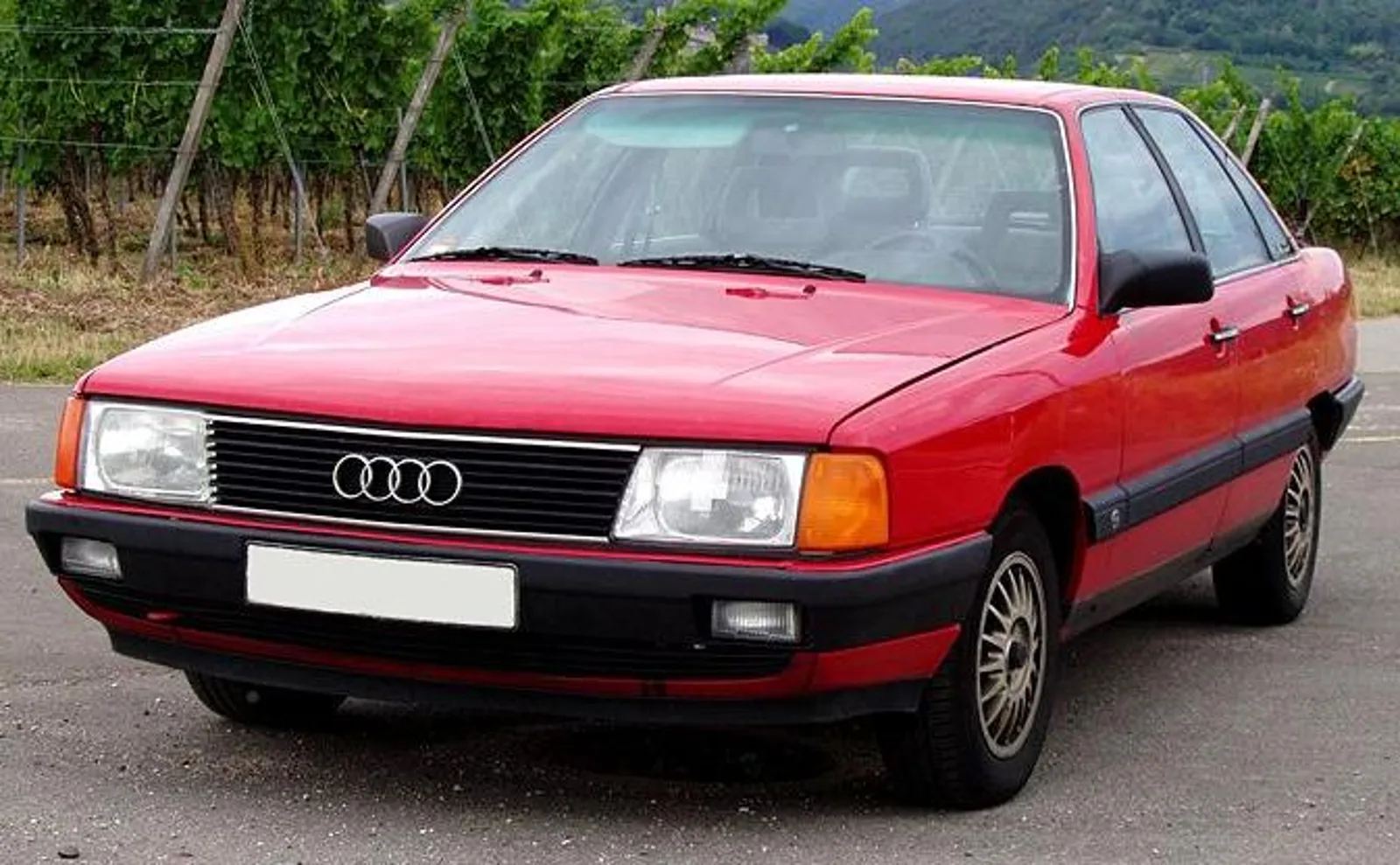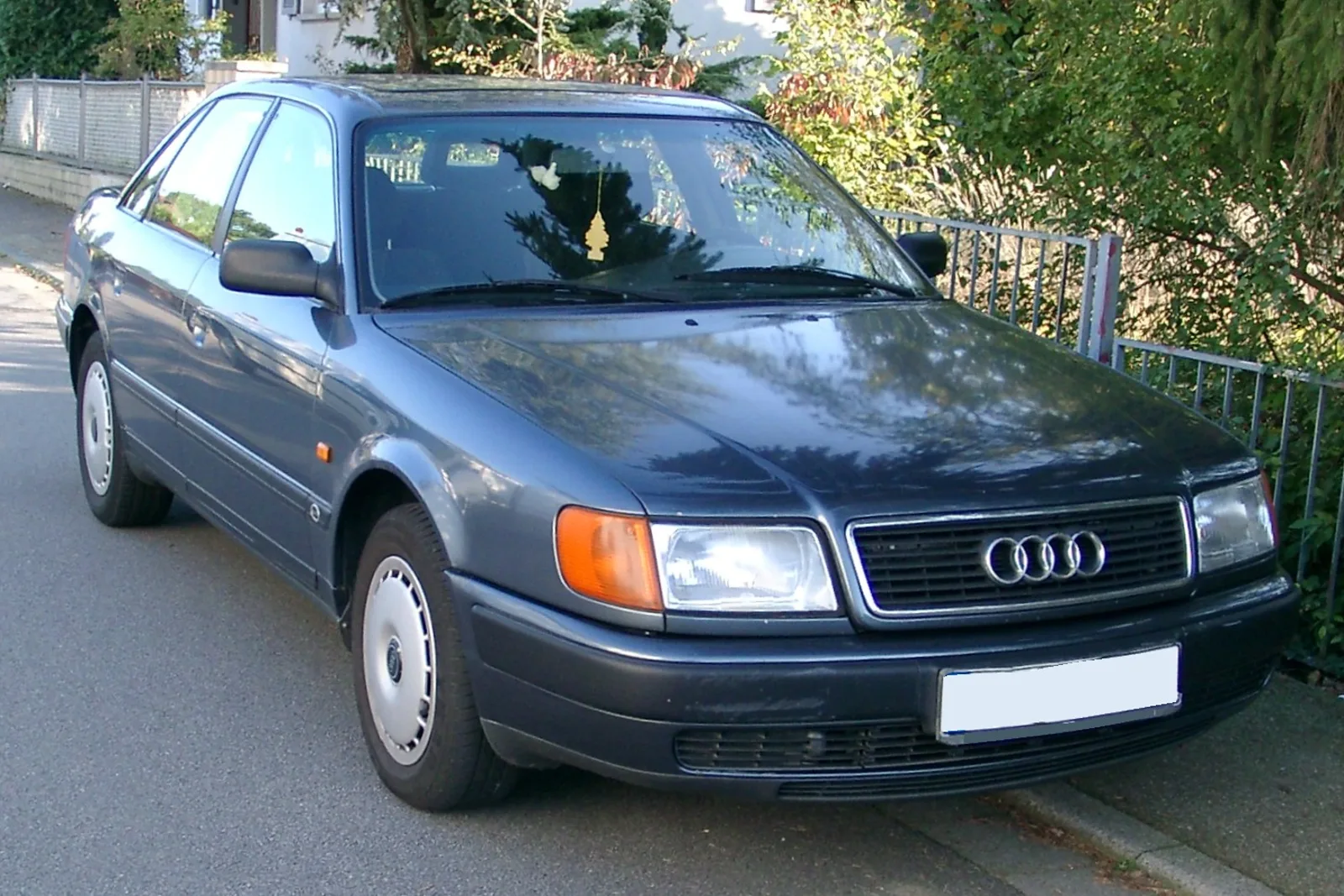
A 1990 saloon with an Avant estate, all-wheel drive, a V8 flagship and a 1994 renaming that turned it into the first A6.
The Audi 100 C4 closed out the Audi 100 line as its fourth generation, a top-of-the-range car built from late 1990 to 1994. Its engines ranged from a 2.0-litre four to a 4.2-litre V8, and the 1994 restyling renamed it the first-generation A6.
The C3 was one of the hardest acts to follow for the fourth Audi 100. The result looked familiar, but it carried more technical content and more refined trim.
Work on the fourth Audi 100 began with an awkward problem: the C3 was still so modern that replacing it was hard. Sales of the C4 opened on 7 December 1990, and an Avant estate joined the saloon later.
Why was the C4 hard to design?
The C3 had set a high bar, and it still looked modern five years after its debut. Engineers therefore aimed for evolution rather than revolution, improving aerodynamics, strengthening the brand look and enriching the equipment, while keeping the winning formula of the third generation intact.
Hartmut Warkuss, Audi's chief designer, conceded that the C3 still looked modern when its replacement was being considered. Ferdinand Piech, by then chief executive of Audi, set the brief. Development was well advanced by 1987, although first studies had begun soon after the C3 launched. The technical task was clearer, since rivals had made six-cylinder engines their flagship, and the new car had to answer that challenge.
Finish got attention too. Panel joins were made more uniform and the interior used finer materials. Production began in August 1990, but dealers did not receive their first batches until November.
The last Audi 100, and the car that handed its name to the A6.
How did the C4 look compared with the C3?
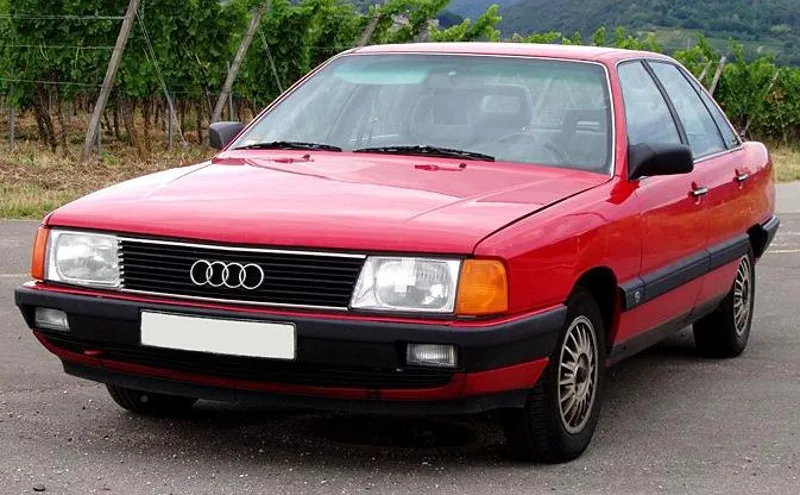
The C4 kept the three-box saloon silhouette but drew tauter lines with rounded edges. Length stayed the same, width shrank by 3 cm, and the drag coefficient improved to a Cx of 0.29. The wheel arches became semicircular, and the light clusters wrapped around the corners.
Height rose slightly to give taller drivers and passengers more room. The beltline leaned forward past the windscreen, continuing through a sloping bonnet and an integrated grille.
Side glass that had been strongly raked on the C3 went back to a more upright angle, which limited solar heating of the cabin. The interior was reworked for as much room as possible, and heavy use of sound-deadening materials made it markedly quieter.
Several of the C3's distinctive details were dropped in favour of comfort on board.
Seats were softer, while stiffer side bolsters gave better support on the rear bench too.
How did the suspension and drivetrain work?
Every car had MacPherson struts at the front. Front-drive cars had a rigid rear axle with interconnected wheels, a Panhard rod and trailing arms, while all-wheel drive cars used independent rear wheels with deformable wishbones. Coil springs and telescopic hydraulic dampers sat on both axles.
The roof was bonded to the rest of the structure to boost torsional rigidity, and the whole shell was galvanised to reduce the risk of rust. The layout stayed as before, a longitudinal engine driving the front wheels, but all-wheel drive was offered from the debut, engineered differently from the front-drive versions as had happened with the C3.
Brakes were of a mixed type on basic cars and four-disc on top versions. ABS was standard on the better-equipped models and optional on the base cars. Narrower overall than the C3, the new car nonetheless had wider tracks.
Which engines did the Audi 100 C4 launch with?
The launch range had four fuel-injected, catalysed engines: a 2.0 four with 101 PS (74 kW; 100 hp), a 2.0 E with 115 PS (85 kW; 113 hp), a 2.3 E five-cylinder with 133 PS (98 kW; 131 hp), and a 2.8 E V6 displacing 2,771 cc (169.1 cu in), producing 174 PS (128 kW; 172 hp).
The 2.0 E shared its engine with the base 2.0, but its maximum power was raised. The 2.3 E had five cylinders, with 2,309 cc (140.9 cu in) of capacity, while the 2.8 E's V6 sat at the top of the launch range.
Gearing was a 5-speed manual across the range, with a 4-speed automatic offered on request in some versions. Only the basic 2.0 lacked all-wheel drive; the other three engines could be ordered with it, using a centre differential.
When did the diesels, S4 and V8 arrive?
Spring 1991 brought the first diesels: the 2.5 TDI in April and a 2.4 in May. The S4 followed, a sporting version with 230 PS (169 kW; 227 hp). At the end of 1992 the 4.2 V8 S4 quattro arrived as the new top model.
The 2.5 TDI was a direct-injection turbodiesel with 115 PS (85 kW; 113 hp). The 2.4 was naturally aspirated with 82 PS (60 kW; 81 hp), and it was limited to a few markets. The 2.5 could take a six-speed gearbox with a very long sixth gear for relaxed cruising, and no diesel was ever offered with all-wheel drive.
The S4 was a sporting version whose engine evolved from the earlier 2.2 Turbo quattro. Versus the previous 165 PS (121 kW; 163 hp), the reworked unit made 230 PS (169 kW; 227 hp), and the top speed reached 244 km/h (152 mph). It was all-wheel drive only.
The Avant estate arrived in October of the same year. Its styling looked more balanced than the C3 Avant's, and with the rear bench folded it offered 1,310 litres of luggage space. Its competition came from Mercedes with the W124 T and from BMW with the 5 Series Touring E34, the latter due two months later. Designed mainly for motorway driving or long journeys, it showed how thin the line was becoming between an estate and a prestige car.
From early 1992 the range was refreshed with a new 2-litre petrol engine, four valves per cylinder and 137 PS (101 kW; 135 hp), offered in certain markets from January. A 2.6-litre V6 with 150 PS (110 kW; 148 hp) followed in March, closing the power gap between the 2.3 and the 2.8.
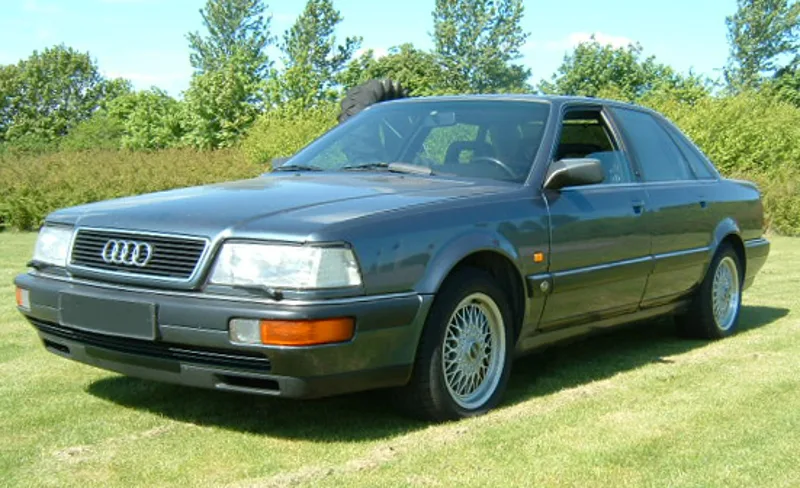
The flagship at the end of 1992 was the 4.2 V8 S4 quattro, which sat above the 2.2 Turbo. Its 280 PS (206 kW; 276 hp) V8 was the first V8 to sit beneath an Audi 100's bonnet, letting the car approach 250 km/h (155 mph). A six-speed manual was fitted as standard. Its arrival led Audi to drop the matching Audi 200, though the separate Audi V8, an F-segment model, had been on sale for some years.
From February 1993 the 2.5 TDI could also be had with a 4-speed automatic. The following 18 months brought only minor updates.
What happened to the C4 in 1994?
The summer 1994 restyling did more than refresh the car: it renamed it. From then until 1997 the Audi 100 was sold as the first generation of the A6, although the car was technically unchanged from before. This came after a stretch of small detail changes.
The restyling changed the name more than the car. Nothing in the basic engineering was reworked, and the model simply carried on under the new badge.
Did some markets get different engines?
Several markets did, with engines planned only for them. Only 135 units were built of a 1.6-litre rated at 102 PS (75 kW; 101 hp). A detuned 2.6 offered 140 PS (103 kW; 138 hp) in some markets, and a 2.0 16-valve, also at 140 PS, was made solely for Italy.
All three could be had with either body style. The two strongest units were available with all-wheel drive too.
Audi 100 C4 specifications at a glance
| Specification | Detail |
|---|---|
| Internal code | C4/4A |
| Built | Late 1990 to 1994; sales launched 7 December 1990 |
| Body | Three-box saloon; Avant estate from October of the same year |
| Drag coefficient | Cx 0.29 |
| Launch engines | 2.0, 101 PS (74 kW; 100 hp); 2.0 E, 115 PS (85 kW; 113 hp); 2.3 E, 2,309 cc (140.9 cu in), 133 PS (98 kW; 131 hp); 2.8 E, 2,771 cc (169.1 cu in), 174 PS (128 kW; 172 hp) |
| Diesels | 2.5 TDI, 115 PS (85 kW; 113 hp); 2.4, 82 PS (60 kW; 81 hp) |
| S4 | 230 PS (169 kW; 227 hp); 244 km/h (152 mph); all-wheel drive |
| 4.2 V8 S4 quattro | 280 PS (206 kW; 276 hp); 6-speed manual; all-wheel drive |
| Avant boot | 1,310 litres with the rear bench folded |
| Total production | 493,202 units |
Final tally and legacy
Production of the C4 reached 493,202 cars, which closed the Audi 100 story. That total includes 18,136 units made only for some markets with other engines. Output had reached 750 cars a day in early 1991, and the name passed to the A6 after the 1994 restyling.
Taken together, the C4 was less a leap than a careful refinement of a successful design. It was more refined, quieter and better equipped, and it closed the Audi 100 name.