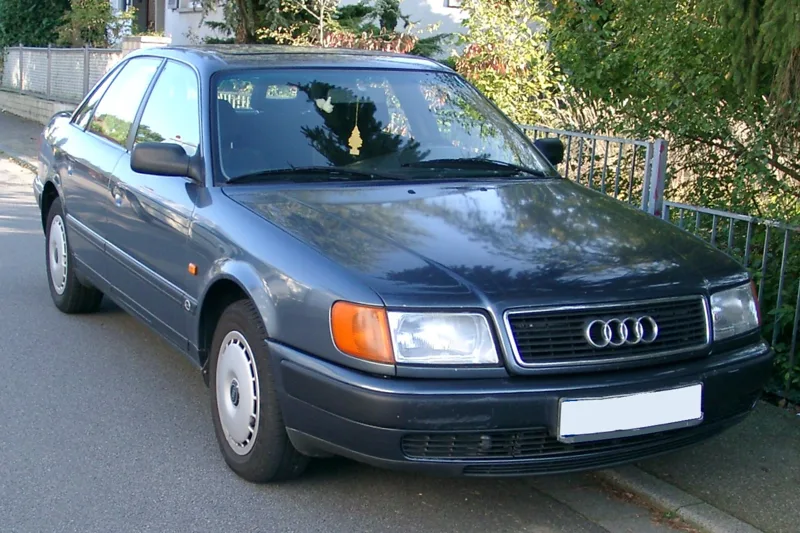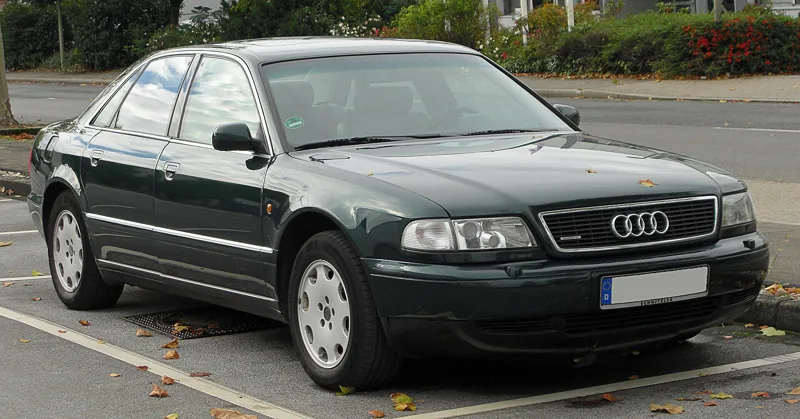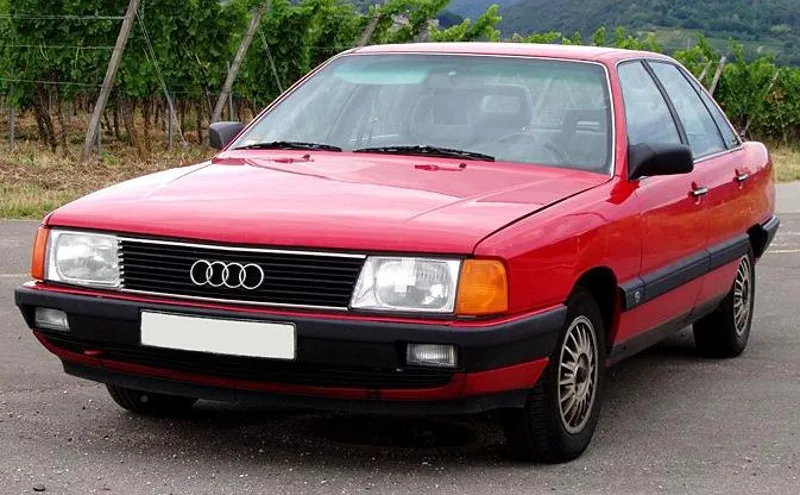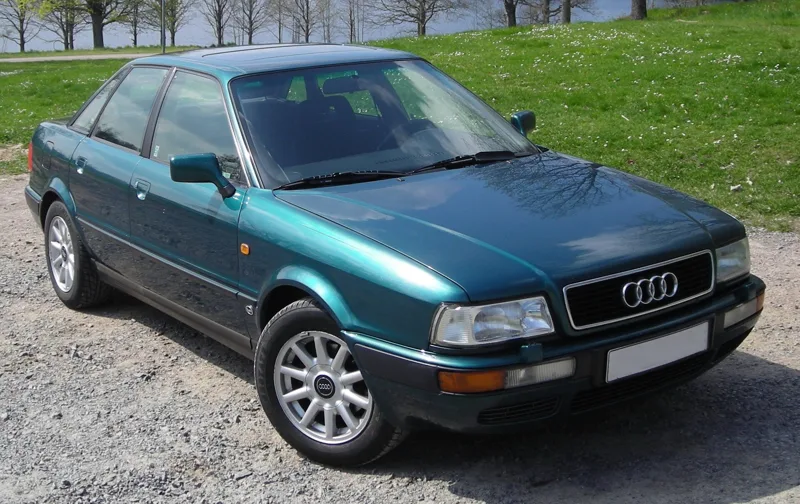
Launched in autumn 1994 as the Audi 80's successor, the B5 built almost 1.7 million cars and spawned the S4, RS4 and an early hybrid.
The Audi A4 B5 was the first generation of the A4, launched in autumn 1994 as the successor to the Audi 80. Almost 1.7 million were built, as a saloon and an Avant estate, with S4 and RS4 performance versions and an early hybrid.
The Audi A4 B5 replaced the Audi 80 in 1994 and went on to become one of the brand's best-selling cars. Nearly 1.7 million were built over six years. Its platform also underpinned several Volkswagen Group models, and the range grew sporty and hybrid versions.
What made the A4 B5 different from the Audi 80?
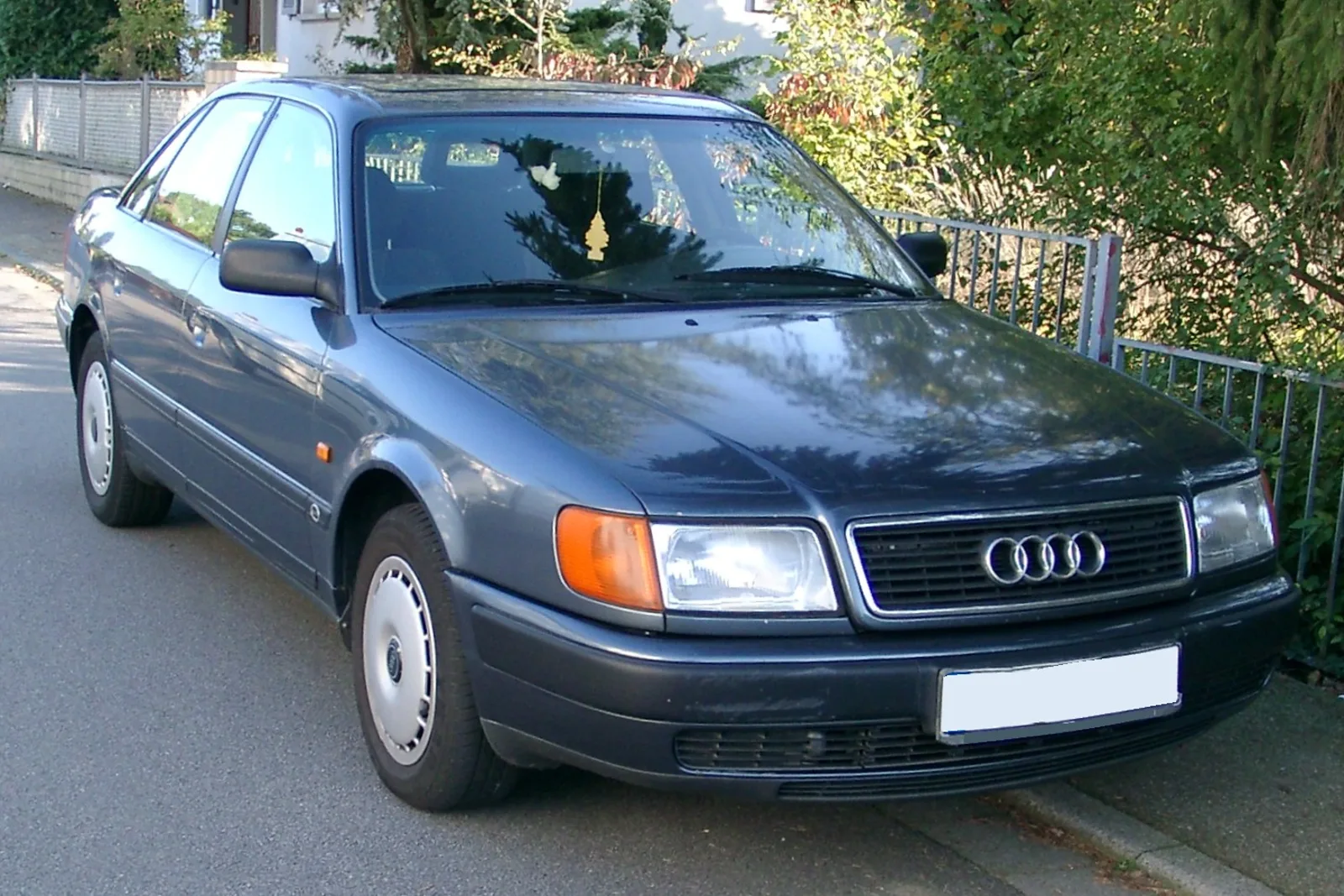
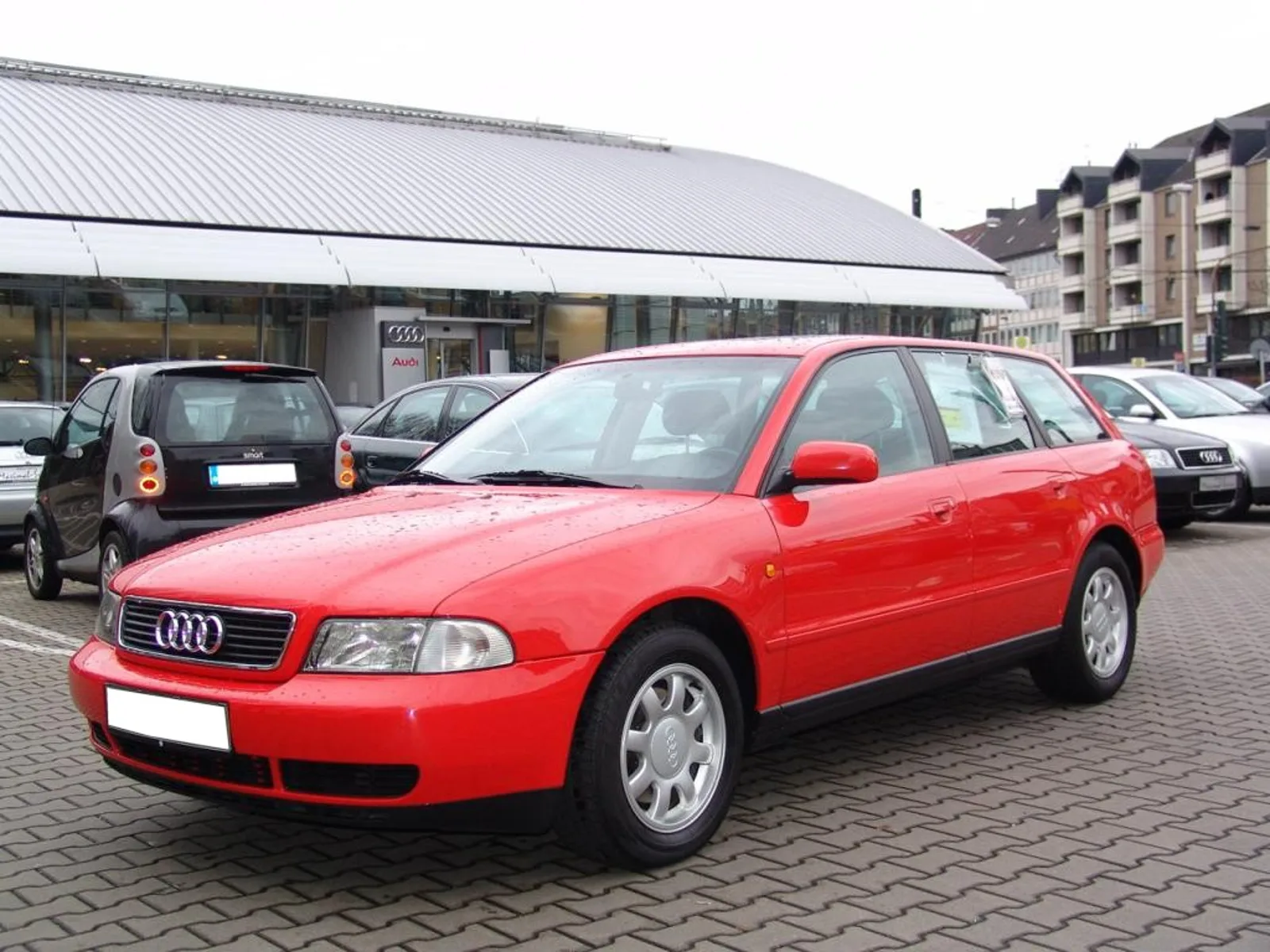
The A4 B5 was a further development of the Audi 80 that kept the three-box shape but rounded the front and gave the tail a new, abrupt look. It was only slightly wider, and its drag coefficient was 0.29. Inside, a classic layout with three round instruments replaced the older design.
Outwardly the car kept the proportions of its predecessor, but the details were largely new. The front had narrower and more modern headlamps, a more comprehensive bumper and a more aerodynamic shape. The rear lamps were smaller and extended less vertically, and the side line rose towards the back.
Inside, the materials looked more valuable than those of the Audi 80, and few controls carried over. The boot held 440 litres, which grew to 720 litres when the asymmetrically split rear seat was folded down. Body gaps were tighter than on the Audi 80. Audi had first achieved those gap dimensions in 1990 on the Audi 100 C4, at the urging of Ferdinand Piech.
Almost 1.7 million cars, one platform shared across the group, and a hybrid that few buyers would take.
Which engines did the A4 B5 launch with?
At market launch in November 1994, the A4 offered four petrol engines: 1.6, 1.8, 2.6 and 2.8 litres. The 1.8 used a five-valve cylinder head with two exhaust valves and three intake valves, designed to deliver a better power curve with lower fuel consumption, and it made 125 PS (92 kW; 123 hp).
The 1.6 had a single overhead camshaft with two valves per cylinder and produced 101 PS (74 kW; 100 hp). The 2.6 and 2.8 were V6 engines with 150 PS (110 kW; 148 hp) and 174 PS (128 kW; 172 hp), both of them V6s known from the Audi 100. The five-valve engines came in a naturally aspirated form and as the turbocharged 1.8 T.
Every launch car had front-wheel drive and a five-speed manual gearbox as standard. quattro all-wheel drive was offered on every engine except the 1.6, and the automatic options were a four-speed for the fours and a five-speed for the V6s.
Diesel engines followed in early 1995, starting with the 1.9 TDI rated at 55 to 81 kW and then the 2.5 TDI at 110 kW. From model year 1996 the 2.8 V6 gained the same five-valve technology as the fours, lifting output to 142 kW (193 PS). The 2.4-litre V6 that replaced the 2.6 from model year 1998 also used five valves, with 121 kW (165 PS) on offer.
Most V6 engines, including the TDI units, had switchable intake manifolds with electronic flap control. The 2.6 was the exception, and the first V8 engines the V6s had grown from lacked that feature as well.
How did the chassis and drivetrain work?
The A4 used front-wheel drive as standard, with quattro all-wheel drive available on most engines. A centre differential controlled the split between the axles on a slip-selective basis, and in normal driving the power split was 50:50. When one axle starts to slip, the differential sends more torque to the axle with less slip.
The four-link front axle was the big technical novelty. It later became standard on every Audi car with a longitudinally mounted engine, and it was designed to sharpen steering and reduce the influence of road bumps on the wheel. The front axle was a cast unit with aluminium arms, mounted on a subframe.
Front-drive models had a torsion crank rear axle, while quattro cars kept the double-wishbone rear axle familiar from the Audi 80. Every axle had coil springs, twin-tube gas dampers and anti-roll bars, and each wheel had a disc brake. The power steering used a rack-and-pinion drive.
The V6 engines, including the TDI units, had a 90 degree angle between their cylinder banks. That layout reflected their origin in the Audi V8 engines from which they had been developed.
What did the S4 and RS4 add?
The S4 arrived in September 1997 with 195 kW (265 PS; 261 hp) from a 2.7-litre (164.8 cu in) V6 with double turbocharging, known as biturbo. The RS4 Avant followed in June 2000 with 280 kW (380 PS; 375 hp) from a 2.7-litre biturbo V6 as well.
Beyond the extra power, both variants looked different from the standard cars. The bumpers were redesigned, and the bumpers and side sills were painted in body colour as standard.
The RS4 Avant came only towards the end of the B5's production run. It was distinguished by a wider look and matt-gloss aluminium mirrors, and only 6,030 were built up to September 2001.
Was there a hybrid version of the A4 B5?
Yes. The Audi duo appeared in October 1997 on the A4 Avant. It combined a 1.9-litre TDI rated at 66 kW (90 PS) with a 21 kW (29 PS) electric motor, and it was the first production hybrid from a German manufacturer. Fewer than 100 were sold before production stopped in June 1998.
Customers were hesitant, partly because of the price of about 60,000 Deutsche Mark (DM).
How many A4 B5 cars were built?
The saloon was built from November 1994 to October 2000, and the Avant from January 1996 to September 2001. Across those years the factory turned out 1,680,989 vehicles. Roughly 510,720 of them were Avant estates, which made up 30.4 percent of output.
The Audi 80 convertible continued to be built until summer 2000, alongside the new A4. The sporting S2 and RS2 predecessors came off the line until the end of 1995, and the Avant replaced the Audi 80 Avant from January 1996.
What changed during the B5's production run?
Changes came in several stages. For the 1997 model year the saloon received new rear lamps, the central locking gained a radio link instead of infrared, and a recirculation mode was added to the manual climate system. Early in 1997 side airbags became standard, and the 2.5-litre V6 TDI from the Audi A6 C5 debuted in the A4 that autumn.
The major product upgrade in early 1999 introduced a 1.9-litre pump-nozzle diesel rated at 85 kW (115 PS), a magnetic release for the boot lid and CAN bus with ESP as standard from July 1999. The chassis was also reworked and the body stiffened.
The body changes were extensive. The headlamps were restyled with optional xenon dipped beam, the fog lamps moved into the bumper and the rear lamps received clear white reversing lights. Every removable part was reworked, so pre- and post-facelift parts are not interchangeable without visible differences.
Specifications at a glance
| Model | Displacement | Layout | Output | Period |
|---|---|---|---|---|
| 1.6 | 1,595 cc (97.3 cu in) | Inline four, SOHC, 2 valves per cylinder | 101 PS (74 kW; 100 hp) | From November 1994 |
| 1.8 | 1,781 cc (108.7 cu in) | Inline four, DOHC, 5 valves per cylinder | 125 PS (92 kW; 123 hp) | From November 1994 |
| 2.6 | 2,598 cc (158.5 cu in) | V6, SOHC, 2 valves per cylinder | 150 PS (110 kW; 148 hp) | From November 1994, replaced by 2.4 in model year 1998 |
| 2.8 | 2,771 cc (169.1 cu in) | V6, SOHC, 2 valves per cylinder | 174 PS (128 kW; 172 hp), then 193 PS (142 kW) from 1996 | From November 1994 |
| S4 | 2.7-litre (164.8 cu in) biturbo V6 | All-wheel drive as standard | 265 PS (195 kW; 261 hp) | From September 1997 |
| RS4 Avant | 2.7-litre (164.8 cu in) biturbo V6 | All-wheel drive as standard, estate body | 380 PS (280 kW; 375 hp) | From June 2000 |
Why does the B5 still matter?
The B5 matters because it was one of Audi's best-selling models, and because one platform carried family saloons, sporty biturbo cars and a hybrid. The same platform also served the VW Passat B5, the Audi A6 C5 and the Skoda Superb I, which shows how far one design could travel within the group.
The Passat and Superb offered much more rear room thanks to a different body, but their engines, gearboxes and drivetrain matched the A4 B5. The Passat also took over the quattro all-wheel-drive system.