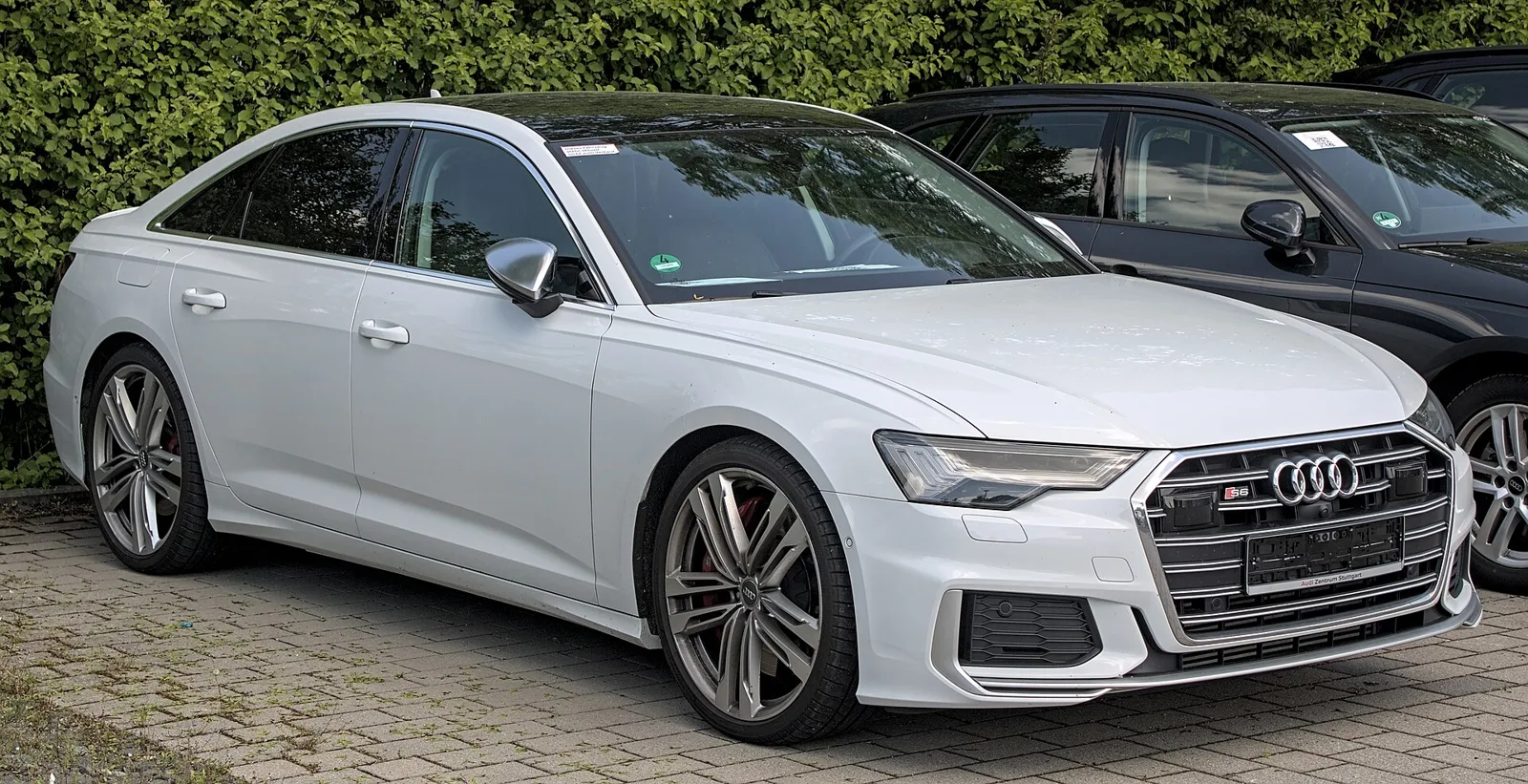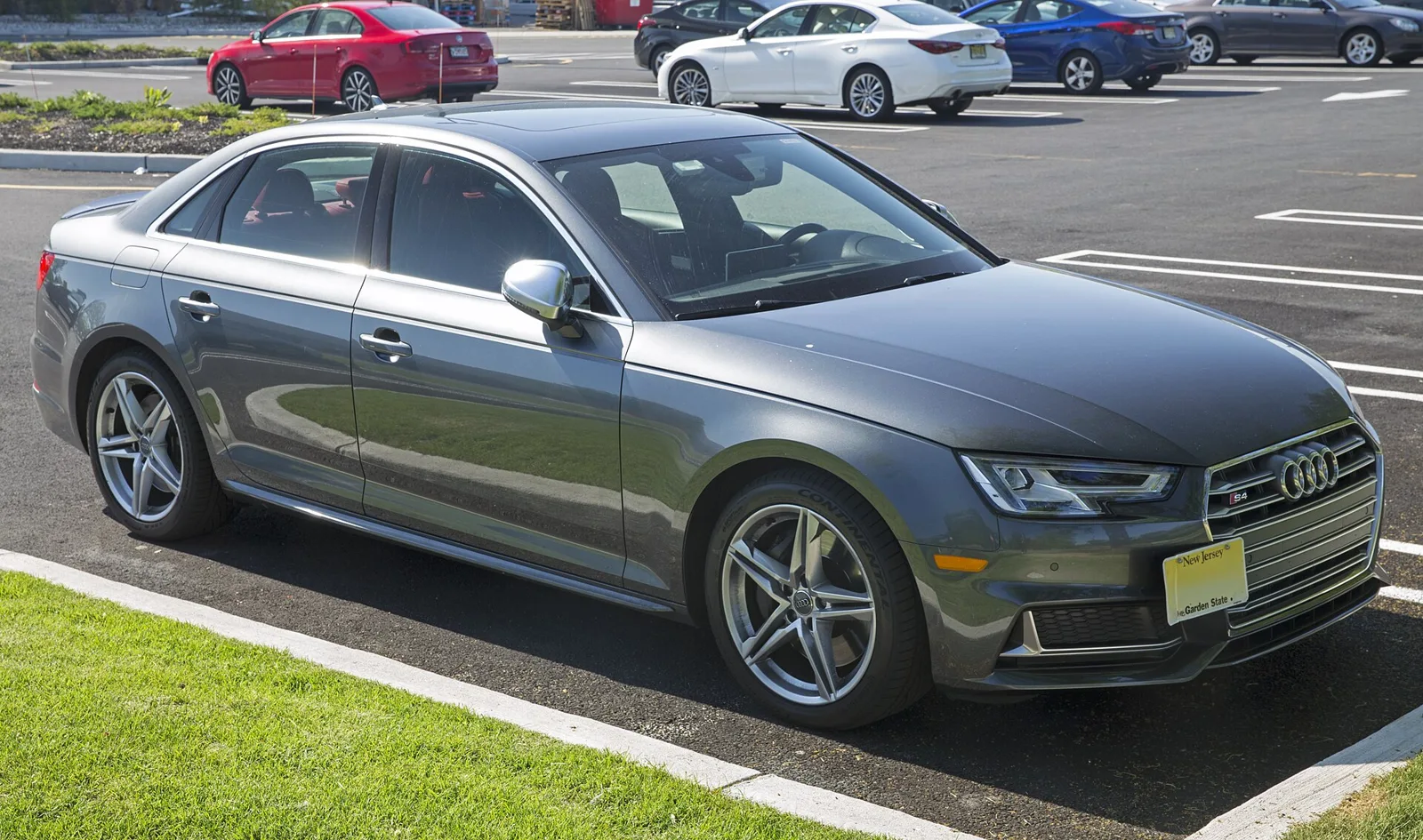
Quattro all-wheel drive from the first car, a V8 that broke the compact executive mould, and a supercharged V6 that cut its weight in fuel.
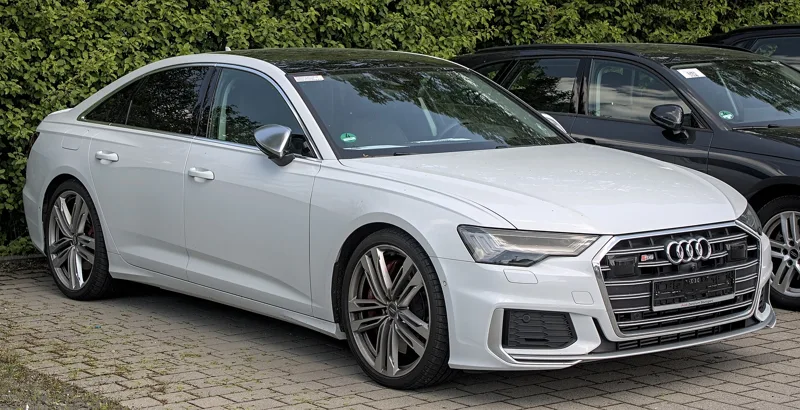
The Audi S4 is the high-performance version of the A4 compact executive car, built with quattro all-wheel drive as standard. The first S4 appeared in 1991 as a performance Audi 100 saloon, and the current B9 uses a turbocharged V6 rated at 354 PS (260 kW; 349 hp).
The Audi S4 is the performance version of Audi's compact executive A4, and every example has carried quattro all-wheel drive as standard. Across six generations it has moved from a turbocharged five-cylinder saloon to a V8, then to a supercharged V6 and finally to a turbocharged V6, while the recipe of firm suspension, stronger brakes and quiet styling stayed the same.
Where did the Audi S4 begin?
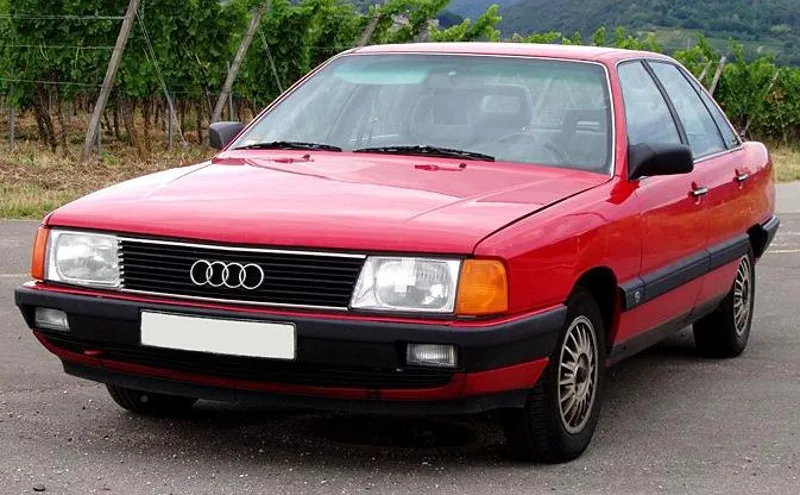
The original S4, usually called the Ur-S4, was the performance version of the C4 Audi 100 saloon. Production started in August 1991, and the car replaced the Audi 200 turbo quattro 20V, a sports saloon discontinued at the end of 1990. It was first shown at the May 1991 Barcelona show.
Audi renamed the 100 range as the A6 in 1994, and the S4 name briefly disappeared. The car that followed, the S6, was an updated but nearly identical model with cosmetic changes only. The C4 S4 ended factory production in July 1994, after less than three years.
Its most famous owner was Ayrton Senna, who drove a silver Avant. He was also Audi's distributor for Brazil, which helped explain the choice.
Quattro from the first car, a V8 where none had been before, and a turbo V6 that kept the same recipe.
What did the C4 S4 engine offer?
The standard C4 S4 had one engine: a turbocharged, intercooled 2.2-litre five-cylinder with 20 valves and 2,226 cc. Peak power was 169 kW (230 PS; 227 bhp), reached at 5,900 rpm. Torque peaked at 350 N m (258 lbf ft) and arrived at 1,950 rpm. The five-speed manual car needed 6.2 seconds to reach 100 km/h (62 mph).
European buyers could choose a five- or six-speed manual, while North America received only the five-speed. A four-speed automatic was optional worldwide. Final drive ratios were 4.111 or 3.889, depending on the gearbox.
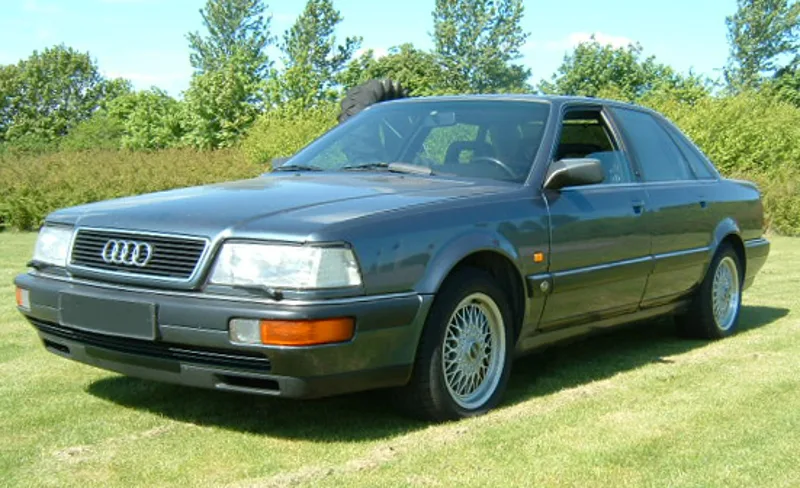
From October 1992 European customers could order a 4.2-litre V8 rated at 206 kilowatts (280 PS; 276 bhp). It came only with the six-speed manual, in saloon or Avant form.
Discs measured 310 mm (12.20 in) at first and grew to 314 mm (12.36 in) alongside the V8. American cars made do with 276 mm (10.87 in) units. Standard wheels were five-arm 8.0Jx16 alloys with 225/50 R16 tyres.
How did the B5 S4 change the formula?
Launched in 1997, the B5 S4 carried a 2.7-litre twin-turbo V6 whose 195 kW (265 PS; 261 bhp) peaked at 5,800 rpm. Quattro continued with a Torsen T-2 system, and a five-speed ZF tiptronic automatic was offered as an option for the first time.
Thirty valves and twin hybrid-driven overhead camshafts and two BorgWarner K03-series turbochargers served the 2,671 cubic centimetre engine. Its peak of 400 N m (295 lbf ft) came in at 1,850 rpm, and Bosch Motronic ME 7.1 management helped it meet the European EU-3D emissions standard.
US-market cars were detuned to 184 kW (250 PS; 247 hp) with 350 N m (258 lbf ft). Even so, the B5 S4 claimed 5.7 seconds to 100 km/h (62 mph), and an electronic limit held it at 250 km/h (155 mph). That made it the quickest Audi saloon in the range at launch.
How did the B5 handle and stop?
The B5 used four-wheel independent suspension. The front was a multi-link layout, with four arms on each wheel, while the rear used an unequal-length double wishbone on a subframe that also carried the differential. Shock absorbers, coil springs and anti-roll bars sat at both ends.
Front discs measured 321 mm (12.64 in) across and 256 mm (10.08 in) at the rear, all ventilated. Two-piston Lucas calipers gripped the front. Later 2001.5 cars gained electronic stability control and upgraded tyres. Standard wheels were six-arm Avus alloys of 7.5Jx17, shod with 225/45 ZR17 performance tyres.
What was the S4 25quattro?
The S4 25quattro marked quattro's 25th year with 250 saloons sold only in the United States, from June 2005. Each car had unique bumpers, a carbon fibre lip spoiler, 15-spoke DTM wheels and a '1 of 250' shift knob.
Mechanically, it was the second Audi after the B7 RS4 to adopt the Torsen T-3 asymmetric centre differential. The default split was 40:60 front to rear, and up to 100% of torque could be sent to the rear axle when grip demanded it. Its final drive ratio was 3.889.
Why was the B6 V8 a milestone?
The third-generation S4, launched as a Type 8E in March 2003, used a 4.2-litre V8 for the first time in a compact executive Audi. That placed it directly against the BMW M3 with its 3.2 L inline six and the Mercedes-Benz C32 AMG with its 3.2-litre supercharged V6.
The all-aluminium 40-valve V8 came from the A8's engine family. At 4,163 cc it made 253 kW (344 PS, 339 bhp), peaking at 7,000 rpm, with 410 N m of torque from 3,500 rpm, and Bosch E-Gas throttle control handled the electronics.
The B6 was standard with a Getrag six-speed manual, and from July 2003 a ZF 6HP19 tiptronic was optional. An unusual detail was water cooling for the 190 amp alternator, with two extra thermostatically controlled radiators on the sides.
How did the B6 sell its performance?
Motor Trend ran a B6 hard and recorded a sub-5-second sprint to 60 mph. The same car reached 200 km/h (124 mph) in a little over 20 seconds, though its fuel use fell into single figures during the run. The six-speed manual sedan therefore attracted a $1,700 gas guzzler tax, rated at 11.6 L/100 km, or 20.2 mpg US combined.
The saloon and Avant ceased factory production in December 2004. The Cabriolet, introduced from February 2004 as the first open-top S car, ended twelve months later at December 2005.
How did the B7 differ from the B6?
Officially a new car, the B7 of late 2004 was mostly a reworked B6. The 4.2-litre V8 stayed, still rated at 253 kW (344 PS, 339 bhp) with 410 N m at 3,500 rpm, and the changes centred on springs, dampers and chassis electronics.
From model year 2007 the car gained a Torsen T-3 centre differential with a 40:60 default split on manual cars, along with Bosch ESP 8.0 stability control and black brake calipers. A Bose system became standard, and the Avus-III wheels were replaced by an 8.0Jx18 seven-spoke alloy.
A trapezoidal single-frame grille, bi-xenon headlamps, L-shaped tail-lamps and quad exhaust pipes set the B7 apart from its predecessor. The B6 and B7 interiors kept Recaro front seats, and the front pair could be fully electric with heated seats.
What changed with the B8 supercharged V6?
The fourth-generation S4 dropped the V8 for a 3.0-litre TFSI V6 with an Eaton supercharger. Rated at 245 kW (333 PS; 329 bhp) and 440 N m (325 lbf ft), it was priced 9% lower than the V8 models it replaced, and it sat directly above the 2.0T base A4.
The engine displaces 2,995 cubic centimetres. Power is available from 5,500 to 7,000 rpm, and torque from 2,900 to 5,300 rpm. The Eaton 'Twin Vortices Series' blower sits within the Vee and feeds two water-cooled intercoolers, and it was designed to reduce noise and vibration.
Buyers could choose a six-speed manual or a seven-speed S tronic dual-clutch that replaced the earlier tiptronic automatics. Audi quoted 5.1 seconds to 100 km/h (62 mph) for the manual saloon and 5.3 seconds for the S tronic saloon.
On the test track, Road and Track clocked a manual car at 4.5 seconds for the sprint to 60 mph, and a later B8.5 car managed 4.4 seconds. Audi's own figure was 4.9 seconds, and the company claimed 28 highway miles per gallon.
How did the B8 handle?
The B8 moved its front axle 6.1 inches forward, which improved the weight distribution of the platform. Combined with an optional Sport Rear Differential, the car's balance and dynamics improved over the V8 models, and active steering and adaptive damping were offered as well.
The base wheels were 8.5Jx18 five-double-spoke alloys, shod with 245/40 ZR18 tyres. A 19-inch option used 8.5Jx19 wheels with 255/35 ZR19 rubber. LED tail lights came as standard, with LED daytime running lamps at the front.
Audi S4 generations at a glance
| Generation | Years | Engine | Output |
|---|---|---|---|
| C4 (Typ 4A) | 1991 to 1994 | 2.2-litre turbo inline five | 169 kW (230 PS; 227 bhp) |
| C4 V8 option | From October 1992 | 4.2-litre V8 | 206 kW (280 PS; 276 bhp) |
| B5 (Typ 8D) | 1997 to 2002 | 2.7-litre twin-turbo V6 | 195 kW (265 PS; 261 bhp) |
| B6 (Typ 8E/8H) | 2003 to 2005 | 4.2-litre V8 | 344 PS (253 kW; 339 bhp) |
| B7 (Typ 8E/8H) | 2005 to 2008 | 4.2-litre V8 | 253 kW (344 PS; 339 bhp) |
| B8 (Typ 8K) | 2009 to 2016 | 3.0-litre supercharged V6 | 245 kW (333 PS; 329 bhp) |
| B9 (Typ 8W) | 2017 to 2025 | 3.0-litre turbo V6 | 354 PS (260 kW; 349 hp) |
How quick is the B9 S4?
The B9 uses a 3.0-litre petrol V6 with a single twin-scroll turbocharger, rated at 354 PS (260 kW; 349 hp) with 500 N m (369 lbf ft). Audi quotes 0-60 mph in 4.2 seconds, and the car is electronically limited to 155 mph (249 km/h).
The engine uses a hot-inside-V layout, with the exhaust ports, manifolds and turbocharger placed within the V. The arrangement mirrors the twin-turbo V8s in the RS 6 and RS 7 models, and it keeps the exhaust heat close to the cylinder heads.
The 2019 facelift brought a European diesel: a 3.0-litre turbocharged V6 with 347 PS (255 kW; 342 hp), paired with a ZF eight-speed automatic and all-wheel drive. Its torque figure reached 700 N m (516 lbf ft). Other markets kept the petrol V6.
Did the S4 race?
The S4 raced in several series. A B5, the Champion Racing S4 driven by Michael Galati, won the 2001 SpeedVision GT title, took four race wins and helped Audi secure its first Manufacturers' Championship.
Don Istook's team ran several B5 S4s in the Motorola Cup, then in the Grand Am Cup. The S4s even filled Rolex GT fields for several races. One of them finished second in the rain at Barber Motorsports Park, racing against proper GT cars.
The Champion A4 chassis had Alcon racing calipers, with four pistons at the front and two at the rear, and it carried a B5 RS4 engine. Later, APR Motorsport entered a B8 S4 in the Grand Sport class of the Grand-Am Continental Tire Sports Car Challenge.
Which interior options mattered most?
Options on the B5 included a Bose sound system, an Audi navigation system, a six-disc CD changer and a hands-free Motorola cellular telephone. The Premium Package added a sunroof, HomeLink transmitter and auto-dimming mirrors, and the Cold Weather Package brought heated front seats and heated outside mirrors.
The Sport Package replaced the wood-grain belt line with silver aluminium trim and swapped wood for black plastic around the shifter. Silver or blue Alcantara seat inserts were a rare choice, and carbon fibre trim appeared on some models.
Was the S4 sold in America?
The C4 cars did reach North America, where a five-speed manual was the only gearbox. The B5 did not arrive there until late 1999, and the B8 was imported only as a saloon, with Canada receiving the same car.
The B6 and B7 topped the American A4 range, above the 3.2L V6 and the 2.0T four-cylinder cars. The B8 now sits directly over the base 2.0T model, and Audi's comparison leans toward the BMW 335i.