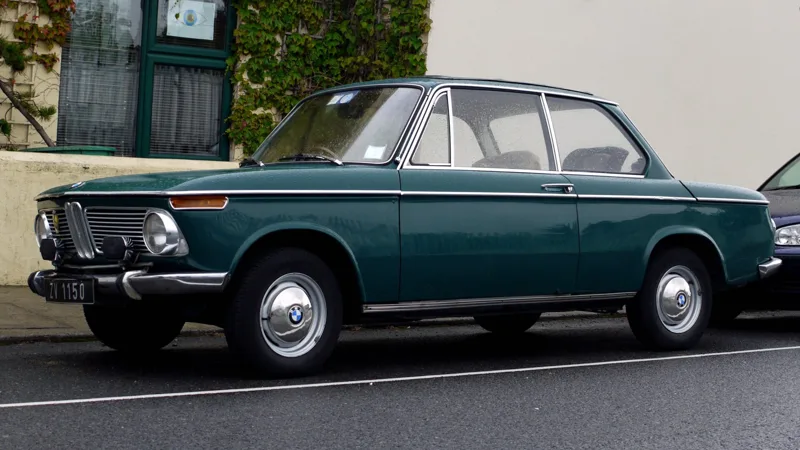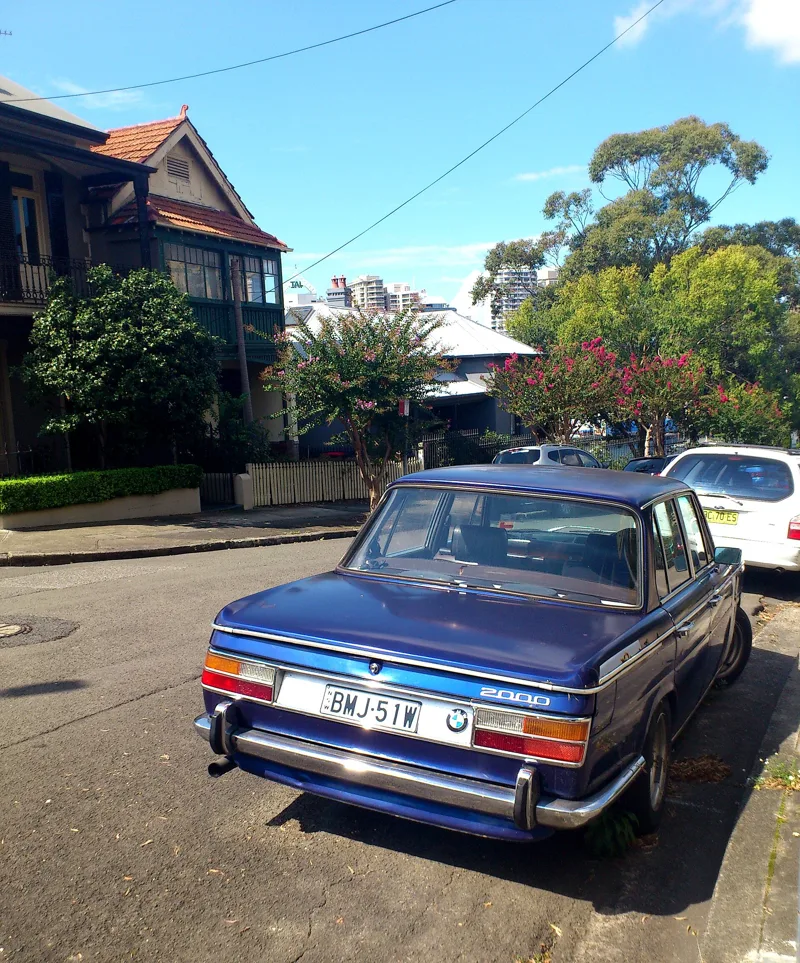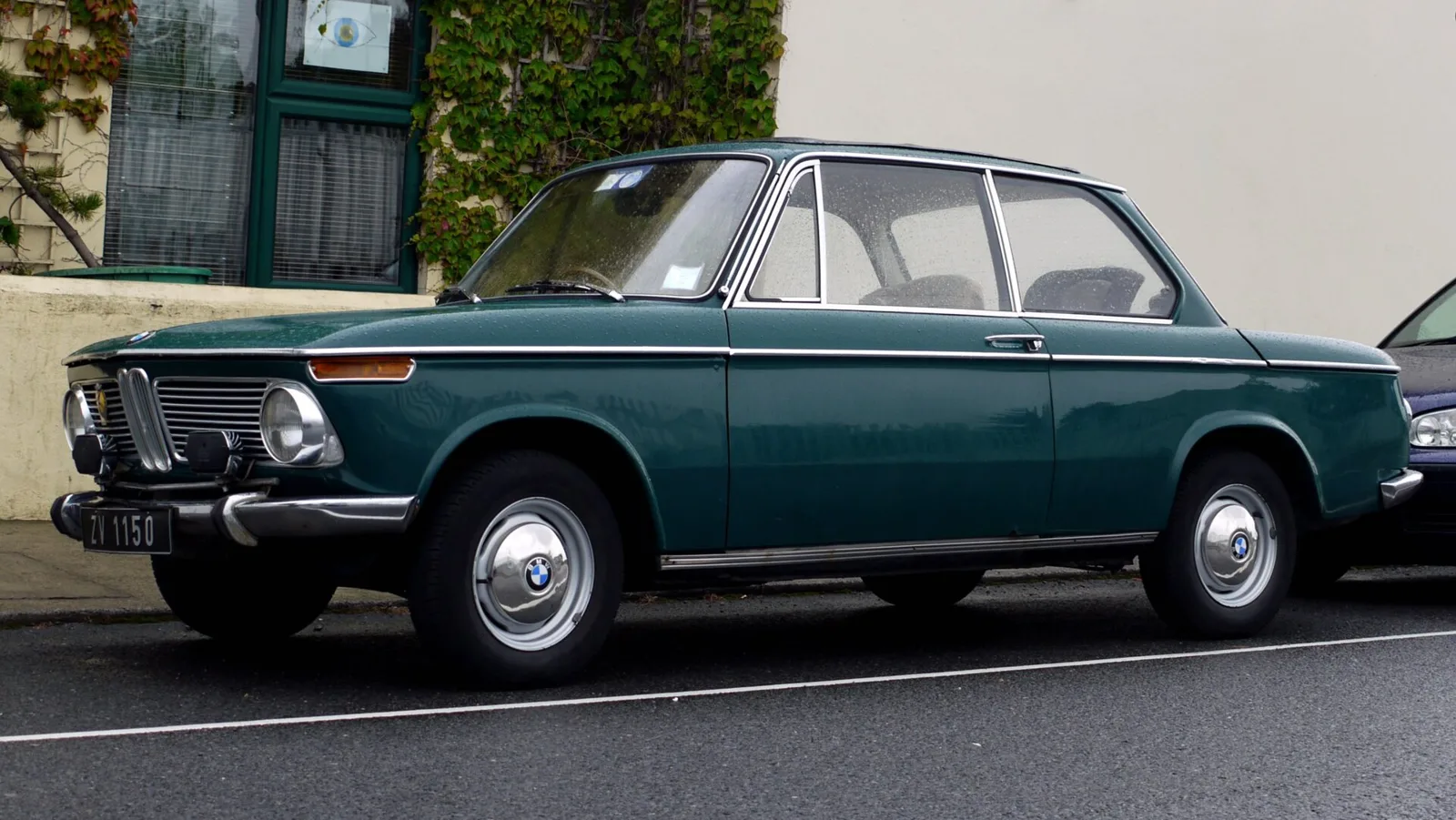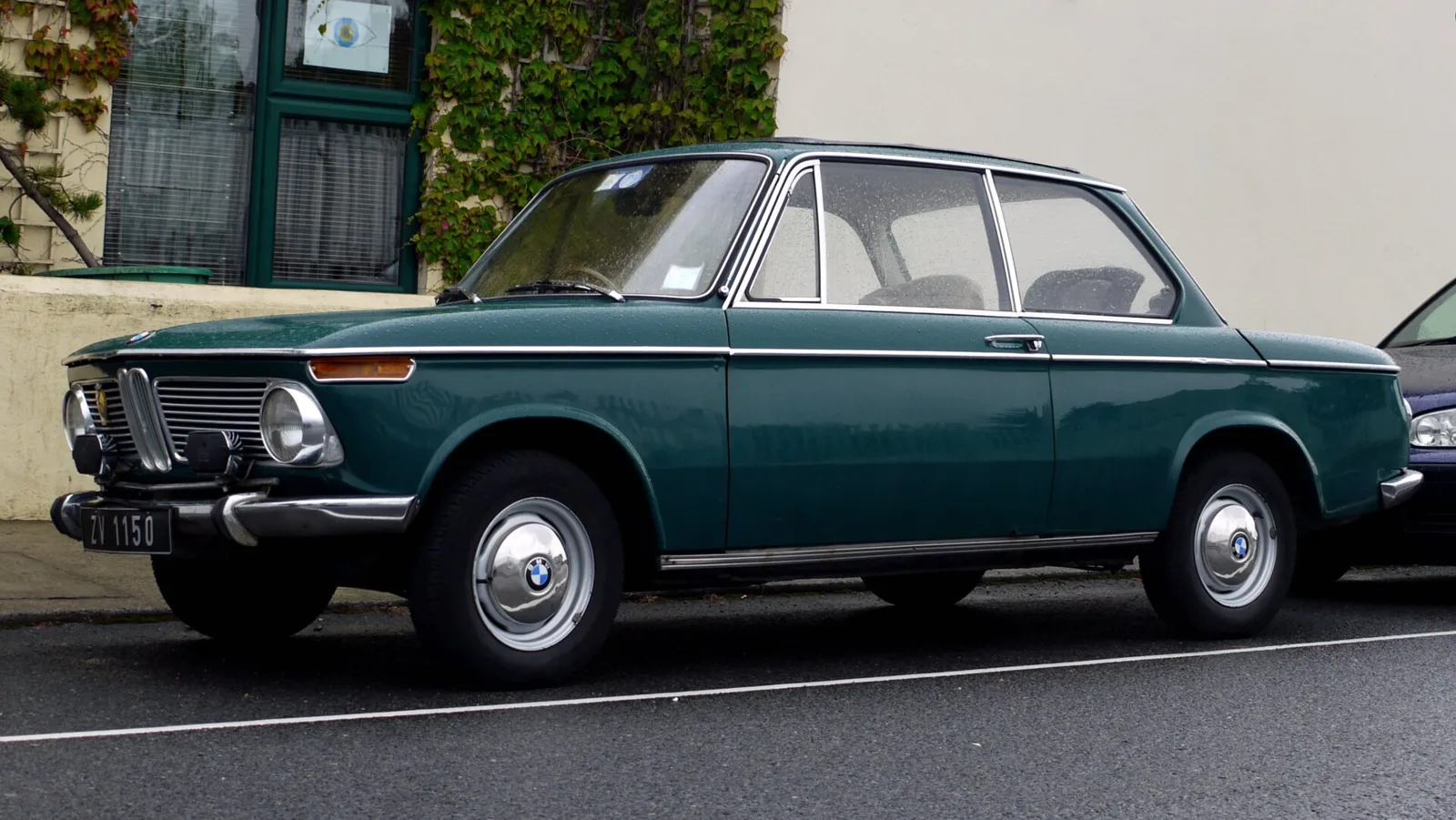
From the 1600-2 of 1966 to the 2002 turbo of 1973: a compact two-door that started as a cheaper New Class and went on to win rallies and touring car races.
The BMW 02 Series was a compact sporting range from BMW, built from 1966 to 1977. Its 2002 and 2002 turbo models built the company's name for affordable performance, and the E21 3 Series succeeded it in 1975.
Between 1966 and 1977 BMW built the 02 Series, a compact two-door range made by shortening its New Class sedan. The 2002 with its 2.0-litre engine, and the turbocharged 2002 of 1973, did more than any other models to give the marque its name for affordable performance.
A project meant to produce a cheaper two-door sibling for the New Class ended up yielding Europe's first turbocharged production car, a rally title and a run of touring car results that lasted until 1986.
Where did the 02 Series come from?
The 02 Series started life as a smaller, cheaper take on BMW's New Class sedan in the mid-1960s. Designers cut the wheelbase and trimmed the rear deck, and the 1600-2 that resulted was lighter, quicker and better handling than the four-door it came from.
Corporate design director Wilhelm Hofmeister gave the job to Georg Bertram and Manfred Rennen. Their wheelbase came out 5 cm (2 in) shorter, and the overall length about 25 cm (10 in) less, mostly through the trimmed deck. The 1600-2 was first shown at Geneva in March 1966, carrying simple 1600 badging.
In Western Europe the car sold quickly, but Italy proved a hard market. There the two-door 85 CV model cost 1.4 million lire and could not match four-door rivals from Fiat and Alfa Romeo.
Road & Track judged the US$2676 1600 excellent value in 1968.
The 2002 followed in 1968, and its origins lie with two BMW men. Helmut Werner Bonsch, the product planning director, and Alex von Falkenhausen, the designer of the M10 engine, had each fitted a two-litre M10 to a 1600-2 for personal use.
When they discovered they had made the same change, they pitched a joint proposal to the board. US importer Max Hoffman, meanwhile, wanted a sportier 02 for American buyers.
A cheaper two-door sibling of the New Class ended up as BMW's first turbocharged production car.
What engines did the 02 Series use?
The first 02 used a 1.6-litre M10 that produced 85 PS (63 kW; 84 hp), peaking at 5,700 rpm. Later cars carried a 2.0-litre version, and by the end of the range there were fuel-injected, turbocharged and economy engines to choose from.
Introduced in September 1967, the 1600 TI ran 9.5:1 compression and dual Solex PHH side-draft carburettors taken from the 1800 TI. It made 105 PS (77 kW; 104 hp), peaking at 6,000 rpm, and weighed 960 kg (2,116 lb). When the 2002 appeared, the TI was dropped, and it never reached the United States because it failed federal emission rules.
The 2002 came in three strengths at first. The base car had one carburettor and 100 PS (74 kW; 99 hp). The ti had dual carburettors and a higher compression head, giving 120 PS (88 kW; 118 hp). A ZF 3HP12 three-speed automatic was offered from 1969.
Switching to the tii in 1971 brought fuel injection from the 2000 tii, a unit making 130 PS (96 kW; 128 hp). The tii topped out at 185 km/h (115 mph).
Also new in 1971, the 1802 offered 90 PS (66 kW; 89 hp).
How did the 2002 turbo work?
The 2002 turbo used a twin-scroll turbocharger developed with KK&K, running a boost pressure of 0.55 bar. Output was 170 PS (125 kW; 168 hp), torque reached 240 Nm (177 lbf ft), and the car could reach 211 km/h (131 mph).
Launched at the 1973 Frankfurt show, the turbo ran a tii-based engine with a modified head and larger combustion chambers. Compression fell to 6.9:1 so that the engine would not knock under boost.
Fuel was metered by Kugelfischer mechanical injection, with boost enrichment and altitude compensation built in.
Chassis changes were significant. A larger radiator and an oil cooler came as standard, the front brakes were ventilated derivatives of the tii's, and the rear drums were of a design the E21 3 Series later adopted.
Gearboxes were a strengthened Getrag 232 four-speed unique to the turbo or a Getrag 235/5 five-speed that the tii also offered. Both drove a 3.36:1 limited-slip differential.
Inside, the instrument panel was red and carried a 240 km/h (150 mph) speedometer beside an extra gauge for boost and a clock.
Wider wheels fitted cut-back arches, with fibreglass extensions and a front airdam bolted to the steel body.
BMW built only 1,672 turbos, since the car appeared just before the 1973 oil crisis, and the company later said it went against the spirit of the times.
Which body styles did the 02 Series offer?
Buyers could choose a two-door saloon, a Baur cabriolet or, from 1971, a Touring hatchback. Baur's open car began as a full convertible and became a targa-style top cabriolet with fixed window frames.
The cabriolet moved to the 2.0-litre engine in 1971 and was renamed the 2002 TopCabriolet, with a large roll bar. It stayed on sale into 1975.
Touring hatchbacks, badged 2000 at first, sold 25,827 units before the body style ended in 1974. Only 422 tii Touring models were built.
A 1971 facelift added wraparound bumpers across the range, a two-piece instrument cluster and new seats.
The economy 1502 arrived in 1975 for buyers facing dearer fuel. Its 1573 cc engine ran at 8.0:1 compression so it could use cheaper low-octane petrol, and output fell to 75 PS (55 kW; 74 hp).
How did the 02 Series perform in motorsport?
Competition use ran from 1968 to 1986 and covered 600 events. Of 2,449 entries, 1,520 finished and 707 retired, and the cars won 50 overall events plus 53 class wins.
A notable early result came in June 1969 at Brands Hatch, where Dieter Quester and Hubert Hahne took a turbocharged 2002 TiK to victory in the European Touring Car round.
In the Trans Am Series, the 2002 competed in the two-litre class, a category Alfa Romeo, Porsche and Datsun controlled. BMW took only two race wins in the 1966 to 1972 golden age, both in 1970, at Bryar and Bridgehampton.
At Le Mans in 1975, Max Heidegger prepared a 2002 ti with a 260 bhp F2 engine for French privateer Daniel Brillat. It finished last overall after 252 laps, 85 laps fewer than the winning Mirage GR8.
Schnitzer Motorsport produced a Group 5 car from 1974 to 1979, with widened, boxy rear arches housing sideways-mounted radiators.
Rallying produced the biggest honours. Stuck and Schickentanz won the first 1970 Nurburgring 24-hour race in a 2002, and Warnbold, partnered by Jean Todt, took the 1973 Austrian Rally in a 2002 tii, the ninth round of the first World Rally Championship season.
Poland's Sobieslaw Zasada claimed the European Rally Championship in 1971, adding to his earlier titles from 1966 and 1967.
Sandro Munari, on a Lancia, placed second, while Jean-Pierre Nicolas took third in an Alpine-Renault.
Uruguayan results included Gran Premio 19 Capitales rally wins in 1971 and 1973, plus a 1972 victory at El Pinar.
Where else was the 02 Series built?
Convex S.A. assembled the 1600-2 and then the 2002 in Montevideo, Uruguay, from CKD kits under licence. The first 58 kits for the 1600-2 were shipped in 1967, and about 750 2002s came from the plant before the final kits left in April 1973.
Local 2002 assembly started in 1969, so the Uruguayan kits covered the later years of the model's production.
Which special models and concepts were built?
BMW built the 1602 Elektro for the 1972 Munich Olympic Games, and it was the company's first electric car. Two were produced to carry VIPs and to support the long-distance walkers and marathon runners taking part in the Games themselves.
The motor was 32 kW (43 hp) and drove the rear axle from the front, with a rated maximum of 100 km/h (62 mph).
A pack of twelve lead-acid batteries, weighing 350 kg (772 lb), sat under the bonnet and gave around 30 km (19 mi). The pack was rated at 12.6 kWh, and spent cells could be swapped for a freshly charged pack.
For racer Hubert Hahne's wedding to Diana Korner, twelve custom 2002 ti models were built, each painted a different colour. They had twin headlights from the 2800 CS, leather trim and Italian alloy wheels. Four are known to survive.
The GT4 started as a Frua-designed coupe body fitted to a 2002 ti. Just two were built, in 1969 and 1970, and a fastback GT4 concept shown at the 1969 Paris Motor Show never reached production.
Bertone's Garmisch concept, built on a 2002 tii chassis, appeared at Geneva in 1970. It returned to BMW and then vanished, until BMW rebuilt it in 2018 with its original designer, Marcello Gandini, and a Turin coachbuilder. The recreation was shown in 2019.
In 2015 BMW unveiled two tribute concepts, the Hommage and the Hommage Turbomeister, both honouring the 2002 turbo.
Why is the 2002 turbo important?
The 2002 turbo was Europe's first turbocharged production car and BMW's first. It arrived in 1973 with 170 PS (125 kW; 168 hp), and it showed that forced induction could sit in an affordable sports car rather than a race-only special.
Turbocharging had been raced by 1969, when a turbocharged 2002 TiK won at Brands Hatch. Road-going turbo development followed in 1973, and the production car was limited to 1,672 examples.
How did the 02 Series end?
The E21 3 Series replaced the 02 Series in 1975, although the economy 1502 kept going until 1977. The Touring body had already ended in 1974, and the 02 had been built for nearly a decade by then, with assembly in Uruguay as well.
BMW 02 Series specifications
| Model | Output | Notes |
|---|---|---|
| 1600-2 (1.6 L M10) | 85 PS (63 kW; 84 hp), peaking at 5,700 rpm | Debut at Geneva, March 1966 |
| 1600 TI | 105 PS (77 kW; 104 hp), peaking at 6,000 rpm | 960 kg (2,116 lb); compression 9.5:1 |
| 2002 | 100 PS (74 kW; 99 hp) | Single carburettor base car, 2.0-litre |
| 2002 ti | 120 PS (88 kW; 118 hp) | Dual carburettors, higher compression |
| 2002 tii | 130 PS (96 kW; 128 hp) | 185 km/h (115 mph); fuel injection |
| 2002 turbo | 170 PS (125 kW; 168 hp), torque 240 Nm (177 lbf ft) | 211 km/h (131 mph); 1,672 built |
| 1502 | 75 PS (55 kW; 74 hp) | 1573 cc, 8.0:1 compression, 1975 to 1977 |
| 1602 Elektro | 32 kW (43 hp) electric motor | 100 km/h (62 mph); about 30 km (19 mi) range |