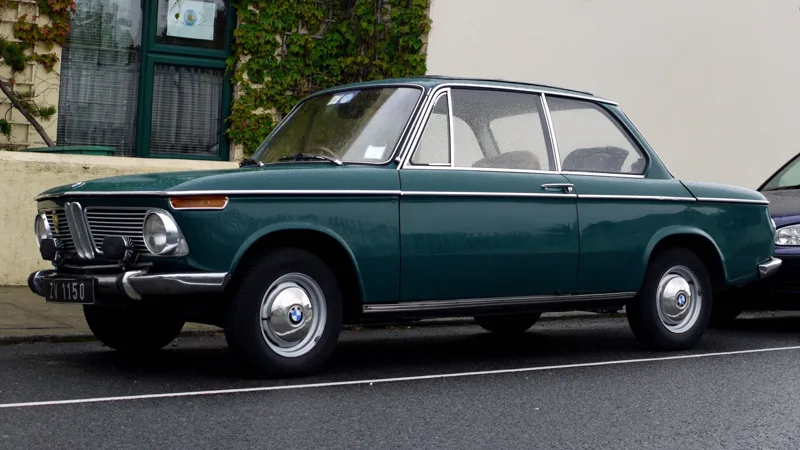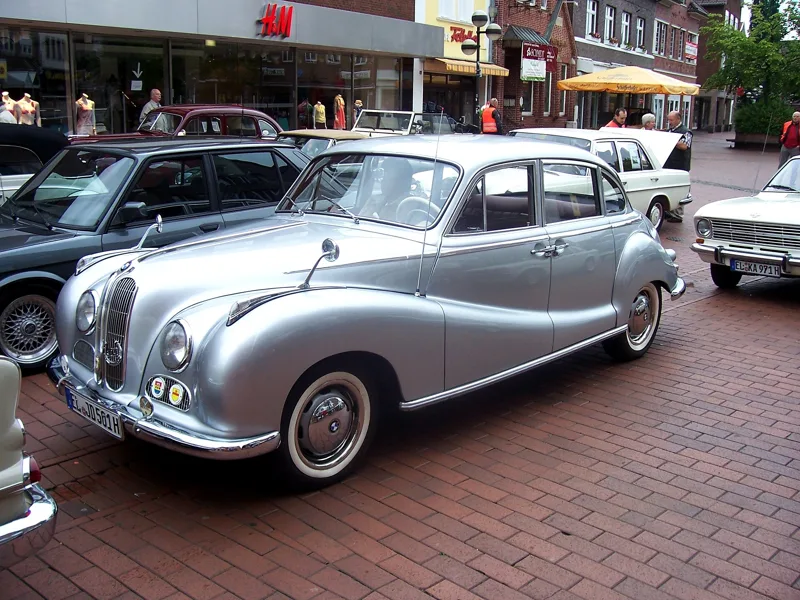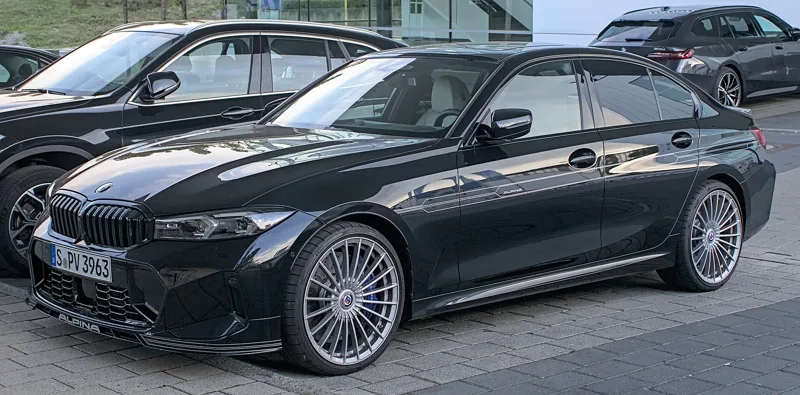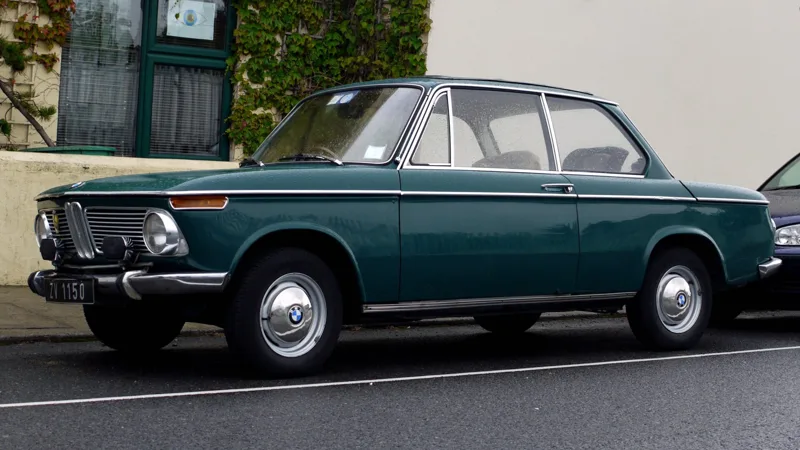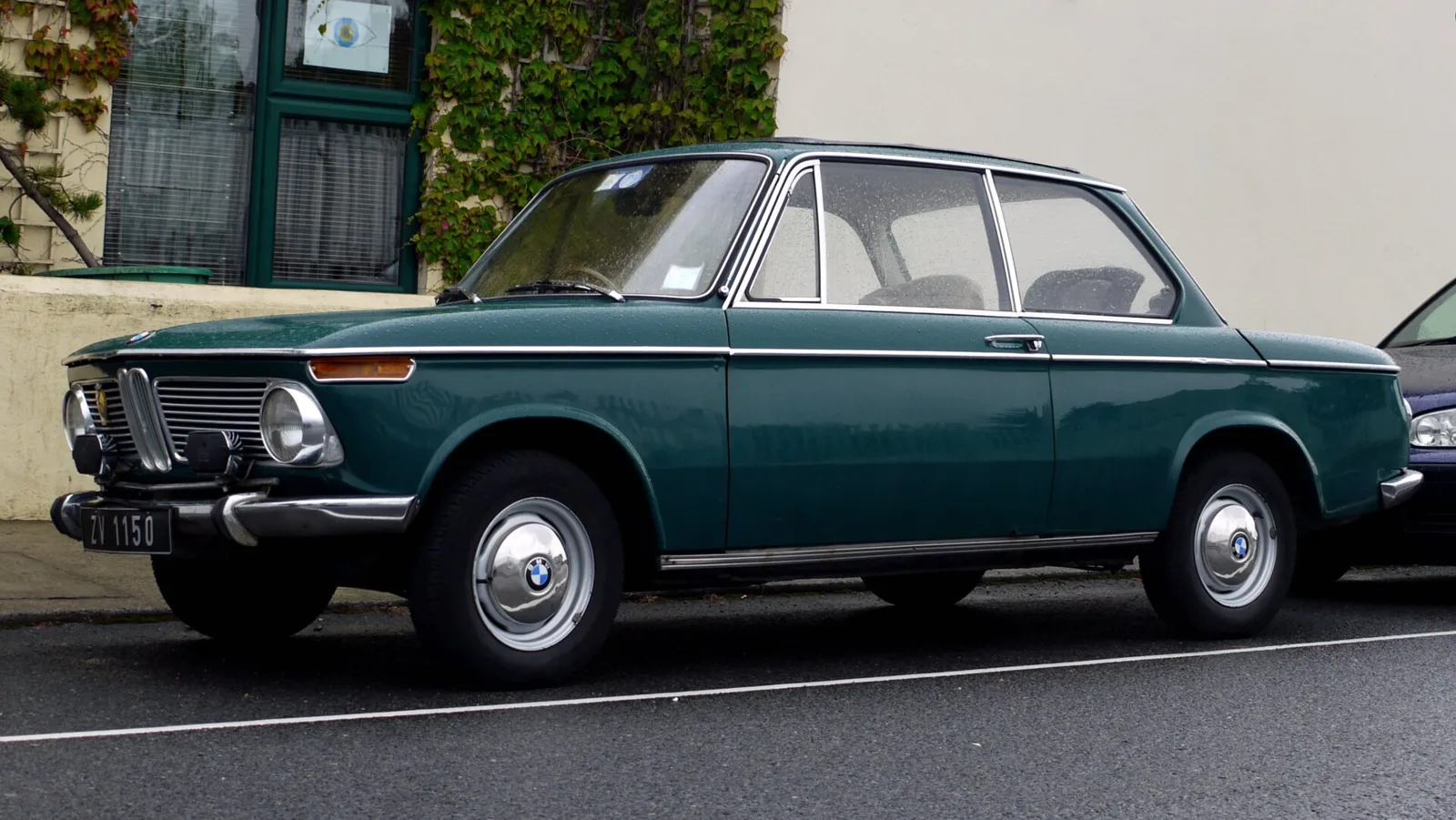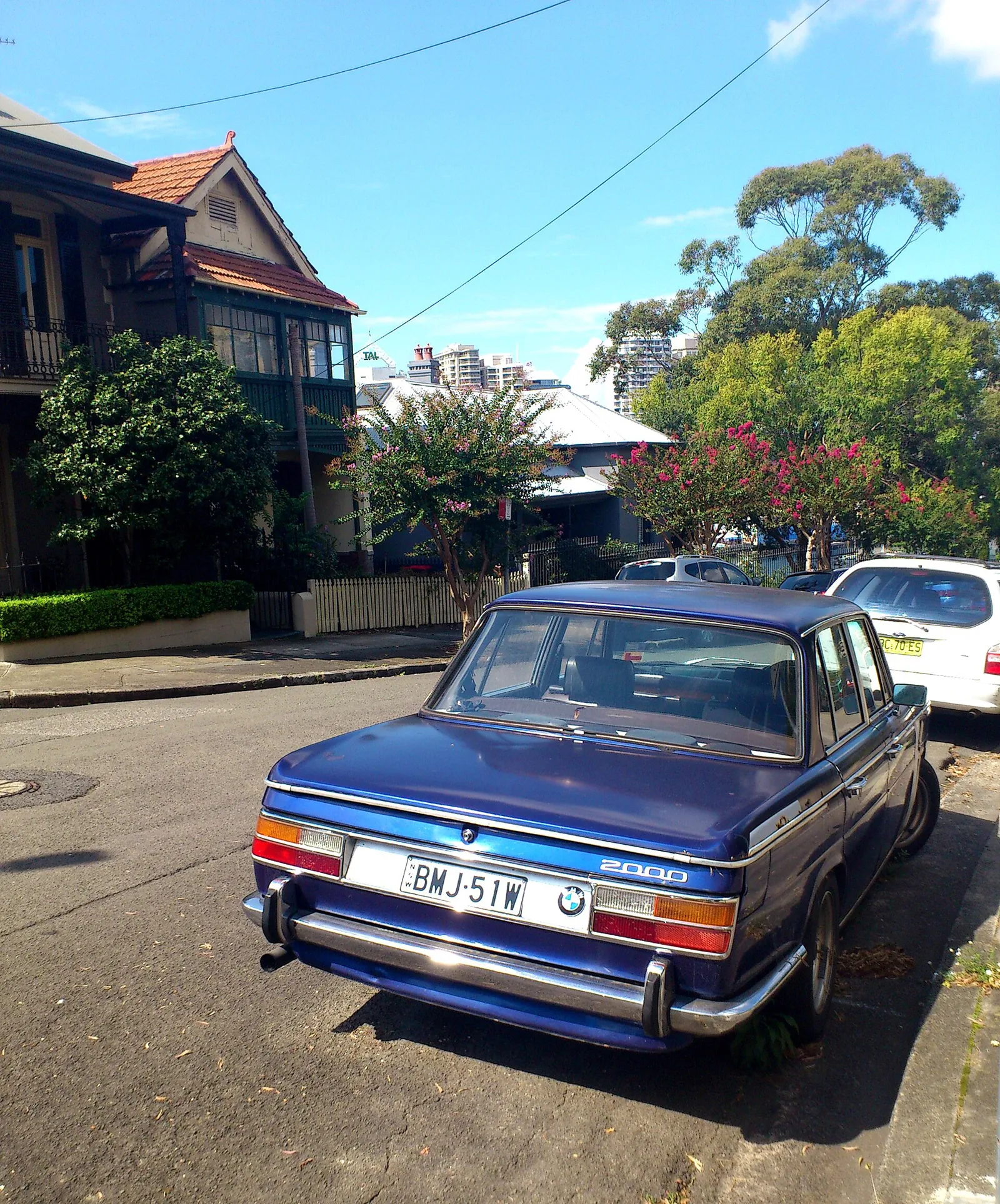
Karmann-built 2000 C and 2000 CS coupes from 1965 to 1969, a sporting spin-off of the New Class sedans that gave BMW its modern identity.
The BMW New Class coupe was the Karmann-built 2000 C and 2000 CS, produced from 1965 to 1969 on the New Class sedan platform. Its 1,990 cc M10 engine gave 120 hp in CS form, and 13,691 coupes were made before the six-cylinder E9 took over.
The BMW New Class coupe was a two-door version of BMW's New Class family, built from 1965 to 1969. Karmann produced the 2000 C and 2000 CS coupes in Rheine, using the 2.0-litre M10 four-cylinder engine. They replaced the 3200 CS as BMW's flagship and were later succeeded by the six-cylinder E9 coupes.
What was the BMW New Class?
The New Class was a line of sedans and coupes built by BMW between 1962 and 1972. It restored the company's finances after a crisis in the 1950s and fixed the brand's identity as a maker of luxury sports sedans.
The first model was the 1500, a four-door compact executive car with a new overhead-camshaft four-cylinder engine. The 2000 C and 2000 CS coupes arrived in 1965, and the family was later extended by the 1800, the 1600 and the 02 Series.
A Karmann-built coupe that carried BMW's New Class engineering into the late 1960s with 120 hp of twin-carburettor power.
Why did BMW create the New Class?
BMW had struggled through the 1950s with luxury cars of two litres or more, economy cars powered by motorcycle engines and its motorcycles. Its luxury cars were ageing and unprofitable, while the small cars were losing appeal in an increasingly affluent society.
BMW needed a car in the 1.5 to 2 litre class to stay competitive. Prototypes using one bank of the OHV V8 engine, at 1.6 litres, were built and tested without a convincing result.
Herbert and Harald Quandt invested heavily in BMW in 1960 and gained a controlling interest, and that year the Neue Klasse project began.
Who led the New Class project?
Fritz Fiedler led the overall project, while Eberhard Wolff took charge of the chassis design. Wilhelm Hofmeister handled styling and body engineering, and Alex von Falkenhausen designed the engine, which was the first new BMW engine since the 303 of 1933.
The prototype appeared at the September 1961 Frankfurt Motor Show as the BMW 1500 four-door saloon, alongside the 3200 CS, the last BMW to use the OHV V8. The name New Class described the 1.5 to 2 litre class, which BMW had not competed in since the Second World War.
The timing helped too. The Borgward company had gone into liquidation the year before, which left buyers looking for a car of that size.
What engineering did the New Class use?
The sedan had a unitary structure and MacPherson strut front suspension, which was becoming mainstream at the time. Its rear suspension was independent, with coil springs and semi-trailing wishbones, and every New Class car had front disc brakes. The layout was conventional at the front and more unusual at the rear.
The M10 overhead camshaft engine was designed for 1.5 litres at first, with room to grow to 1.8 litres. Von Falkenhausen based it on an earlier engine prototype for the BMW 700, and the unit was canted over 30 degrees so the bonnet could stay low.
The coupe was developed from the sedan to show off the 2.0-litre version of the M10. Its 1,990 cc capacity came from an 89 mm bore with the 80 mm stroke of the 1.8-litre engine.
How did the 1500 perform?
The 1500 went into regular production in October 1962, a year after its Frankfurt debut, and stayed on sale until December 1964. Its M10 engine had an 82 mm bore and a 71 mm stroke, and it produced 60 kW (80 hp).
Contemporary testers found the car lively for its size and praised the visibility and the commanding driving position. It could reach 100 km/h (62 mph) in about 15 seconds, although the suspension was firm and the ride was harsh for buyers used to the BMW 501.
Early cars suffered from separation of the semi-trailing arm mounts, rear axle failures and gearbox problems. Later New Class sedans fixed these faults, and the 1500 was replaced in 1964 by the 1600, although it stayed on sale where engines above 1,500 cc attracted higher tax.
What engines did the 1800 and 1600 use?
The 1800 arrived in September 1963 with an 84 mm bore and an 80 mm stroke, giving 1,773 cc. In standard form it produced 67 kW (90 hp) at 5,250 rpm and an engine torque figure of 130 Nm (96 lb ft) at 3,000 rpm.
The 1800 TI was tuned with components developed by the tuner Alpina, including twin Solex side-draught carburettors and higher compression pistons. It made 82 kW (110 hp) at 5,800 rpm, and it also gained a front anti-roll bar.
A homologation special, the 1800 TI/SA, followed in 1964 with twin Weber carburettors and a 10.5:1 compression ratio. Its engine produced 97 kW (130 hp) at 6,100 rpm, and it used a Getrag five-speed gearbox. Only 200 were built, sold to licensed racing and sports drivers.
The 1600 replaced the 1500 in 1964. It used the 1800's 84 mm bore with the 1500's 71 mm stroke, giving 1,573 cc and 62 kW (83 hp) at 5,500 rpm, and it was built until early 1966.
Which 2000 models were offered?
The 2000 sedan arrived in 1965 with 75 kW (101 hp) from the 2000 C engine, with a three-speed automatic available. The 2000 TI followed in 1966 with the 2000 CS engine, rated 90 kW (121 hp), twin Solex carburettors and front and rear anti-roll bars.
The 2000 tilux added the TI's sportier chassis to the 2000's styling, with a wood dashboard and optional leather seats. In 1969 BMW launched the 2000 tii, its first fuel-injected model, with Kugelfischer mechanical injection and 97 kW (130 hp) at 5,800 rpm.
Only 1,952 examples of the 2000 tii were built. The 1969 update also brought dual-circuit brakes, better heating and ventilation, and a restyled grille for the whole 2000 range.
What were the New Class coupes?
The coupe range, the 2000 C and 2000 CS, was built by Karmann for BMW from summer 1965 to 1969. It replaced the Bertone-bodied 3200 CS, which had been the last of BMW's V8 luxury cars from the 1950s.
The 2000 C used a single carburettor and produced 100 hp (75 kW) at 5,500 rpm, while the 2000 CS used twin two-barrel carburettors for 120 hp (89 kW) at 5,500 rpm. The 2000 C Automatic came first with a three-speed automatic, and a four-speed manual arrived for the C in 1967.
Unlike the sedan, the coupe had no B pillar between its front and rear side windows. Its headlights sat behind a glass fairing, and its grille was a single chrome double kidney at the centre of the nose.
How did the coupe sell?
BMW built 13,691 New Class coupes between 1965 and mid-1969. Of those, 9,999 were twin-carburettor 2000 CS models, 3,249 were single-carburettor 2000 C automatics, and 443 were 2000 C cars with a manual gearbox. The split shows where buyers' choices lay.
In 1968 the coupes gave way to the six-cylinder New Six CS, known as the E9. It had a longer wheelbase and a longer front clip to house the M30 engine, and its nose was restyled to resemble the New Six sedan.
At the 1968 Paris Motor Show BMW displayed a concept called the 2000ti Coupe, designed by Pietro Frua for Glas, a company BMW had taken over two years earlier. It did not reach production.
How did the New Class change BMW's finances?
BMW had recorded many operating losses in the years before the 1962 release. The company broke even that year on a turnover of DM 294 million, and in 1963 sales rose by 47% to DM 433 million.
That profit allowed BMW to pay shareholders a dividend for the first time in 20 years.
How did the New Class perform in motorsport?
A BMW 1800 TI/SA won the 1965 Spa 24 Hours touring car race, and a BMW 2000 TI won the 1966 running. Hubert Hahne also took the 1966 European Touring Car Challenge in Division 3 with a 2000 TI.
These results added a competition record to the range. The 1800 TI/SA was sold only to licensed racing and sports drivers.
What is the New Class legacy?
The New Class introduced the Hofmeister kink, a styling feature used on most BMW cars since. Another legacy is the 02 Series, a shortened version of the New Class sedan that began production in 1966.
The coupe's successor, the E9, kept the sporting character but used a six-cylinder engine. The sedans gave way in 1972 to the larger E12 5 Series, which marked the end of the New Class era.
What are the BMW New Class coupe specifications?
| Specification | Detail |
|---|---|
| Family years | 1962 to 1972 |
| Family debut | 1500 four-door saloon, shown September 1961 |
| Coupe production | Karmann, Rheine, summer 1965 to mid-1969 |
| Engine | 1,990 cc M10 four-cylinder, 89 mm bore, 80 mm stroke |
| 2000 C output | Single carburettor, 100 hp (75 kW) at 5,500 rpm |
| 2000 CS output | Twin two-barrel carburettors, 120 hp (89 kW) at 5,500 rpm |
| Gearbox | CS four-speed manual; C three-speed automatic, then four-speed manual from 1967 |
| Coupes built | 13,691 in total |
| Replacement | E9 New Six CS from 1968 |