A Bremen car group built on the Blitzkarren, the Isabella and a 1500 cc racing engine, undone by cash flow and a Bremen bailout that failed in 1961.
Borgward was a Bremen car maker whose group sold cars as Borgward, Hansa, Goliath and Lloyd. Its Isabella became the most popular model, but cash-flow trouble led to liquidation in 1961, and a later revival ended in insolvency in 2022.
Borgward was a German car maker based in Bremen, built by Carl F. W. Borgward, whose group sold cars under the Borgward, Hansa, Goliath and Lloyd names. Its Isabella became the most popular model in the range, but cash-flow trouble ended the group in 1961. This history covers the founding, the postwar expansion, the racing engine, the collapse and the later revival of the name.
Where did the Borgward group come from?
The company's roots go back to 1905, when Hansa Automobilgesellschaft was established at Varel near Bremen. NAMAG, the maker of the Lloyd car, was founded in Bremen, and the two businesses merged in 1914 as Hansa-Lloyd-Werke. By the late 1920s that group faced bankruptcy, and Carl Borgward became its director in 1929.
Borgward had already built a successful business around the Goliath Blitzkarren. That experience gave him a base from which to expand, and the misfortunes of Hansa-Lloyd offered an opportunity to take on a far larger operation.
A Bremen group that sold four brands, built the Isabella and then fell in 1961 when its cash ran out.
What was the Blitzkarren and why did it matter?
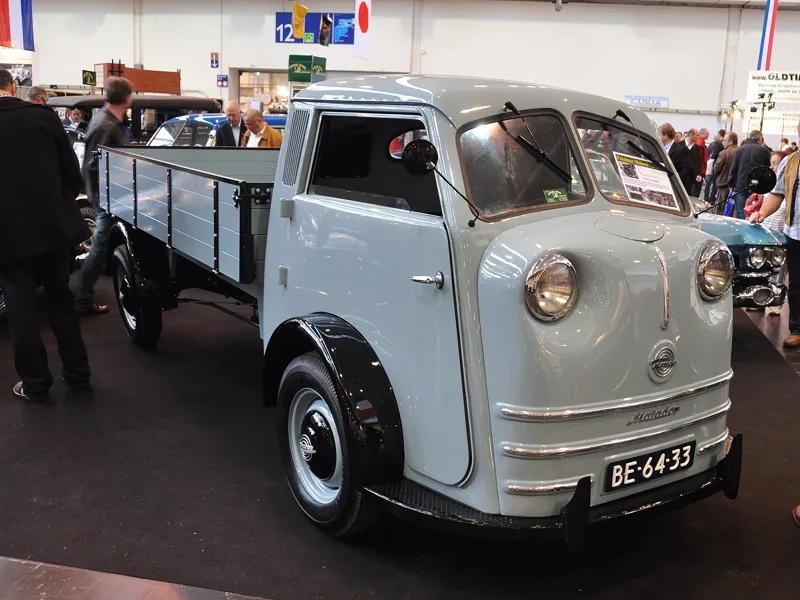
The Blitzkarren, or lightning cart, was a tiny three-wheeled van of 1924 with 2 hp. Traders bought it for deliveries, and the Reichspost ordered many for its postal service. Its success showed Borgward how a cheap, practical vehicle could fill a gap in the market.
The business grew from cheap utility transport into a broader car maker, a shift that set the pattern for everything that followed. Borgward's instinct for filling gaps would later drive the company's expansion across several brands.
How did the company split into Borgward, Goliath and Lloyd?
In 1946 Carl Borgward founded three separate companies, Borgward, Goliath and Lloyd, using brand names he had acquired over the years. The aim was to secure a larger steel allocation in an era of shortages and controls. For many purposes the three firms were run as a single entity.
The arrangement added legal complexity through the postwar years. Carl Borgward preferred to keep control himself rather than delegate, and the number of legal entities grew while the range broadened. That expansion eventually proved financially unsustainable at the volumes the company could achieve.
Hubert M. Meingast was one of the top engineers at the company from 1938 to 1952, and the Hansa 1500 was presented in 1949 as part of the postwar lineup.
What role did the Lloyd and Goliath names play?
The Lloyd name carried the Lloyd Alexander and the Lloyd 600, models that offered affordable mobility to many motorists. Goliath traced its roots to the same Blitzkarren business, so the two smaller brands each carried part of the group's early history into the postwar years.
The three-brand arrangement meant that each name had to find its own buyers. The company's complex structure made that task harder over time, and the Lloyd and Goliath companies, which were run alongside Borgward, shared the same engineering base and the same financial pressure.
Which models came before the Isabella?
The Hansa Borgward 2000 appeared in February 1937 and was renamed Borgward 2000 in 1939. The Borgward 2300 remained in production until 1942. After the war the Hansa 1500 was presented in 1949, setting the scene for the models that followed.
The prewar Borgward 2000 and 2300 show that the car programme predated the postwar expansion. The names reveal how the marque built up its range one model at a time, with each new car extending the lineup rather than replacing it.
How important was the Isabella?
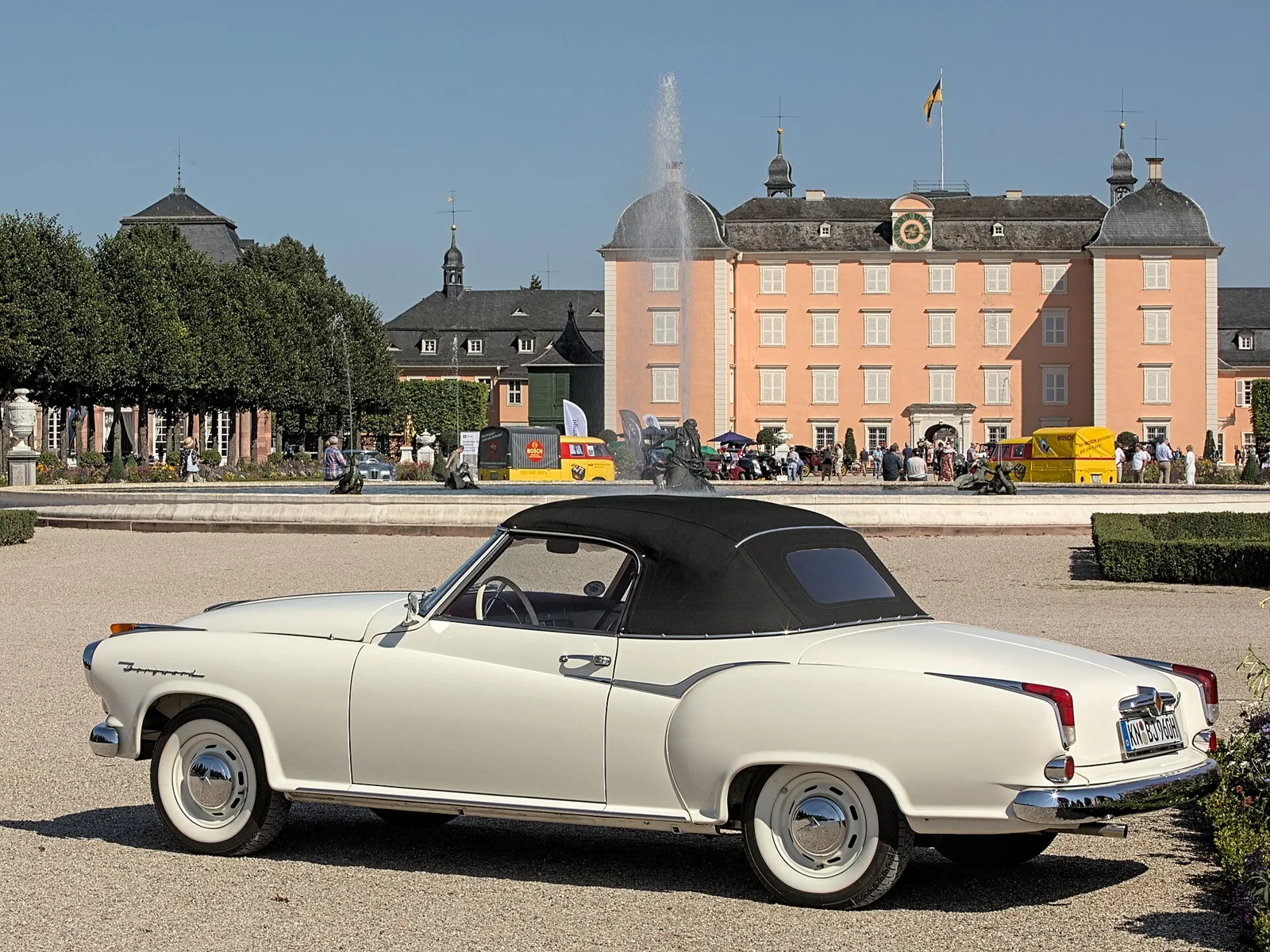
The Isabella went into production in 1954 and became Borgward's most popular model. It counted among Germany's favourite premium models of its era, and it stayed in production for the rest of the company's life. Its sales gave the group the volume it relied on.
In 1959 the P100 arrived with pneumatic suspension, giving the range a technically distinctive model. The P100 showed the company still had ambitions for its engineering, even as its financial strains were building beneath the surface.
Why did Borgward build the 1500 RS racing cars?
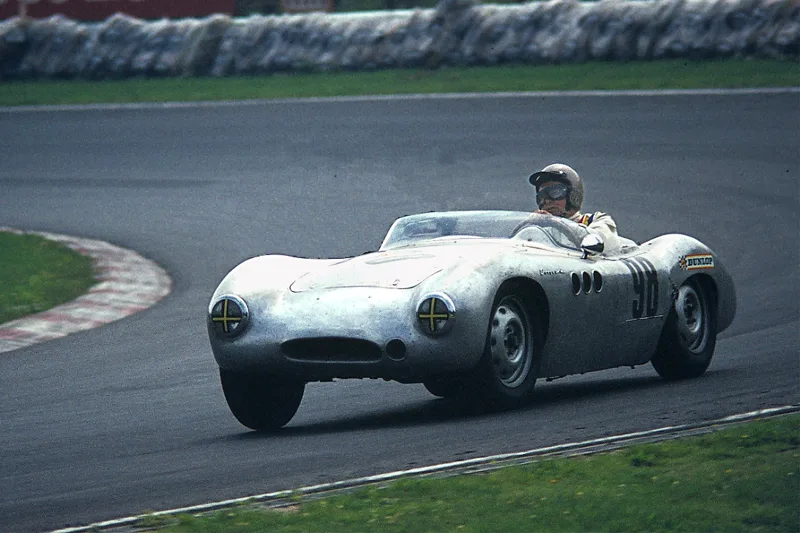
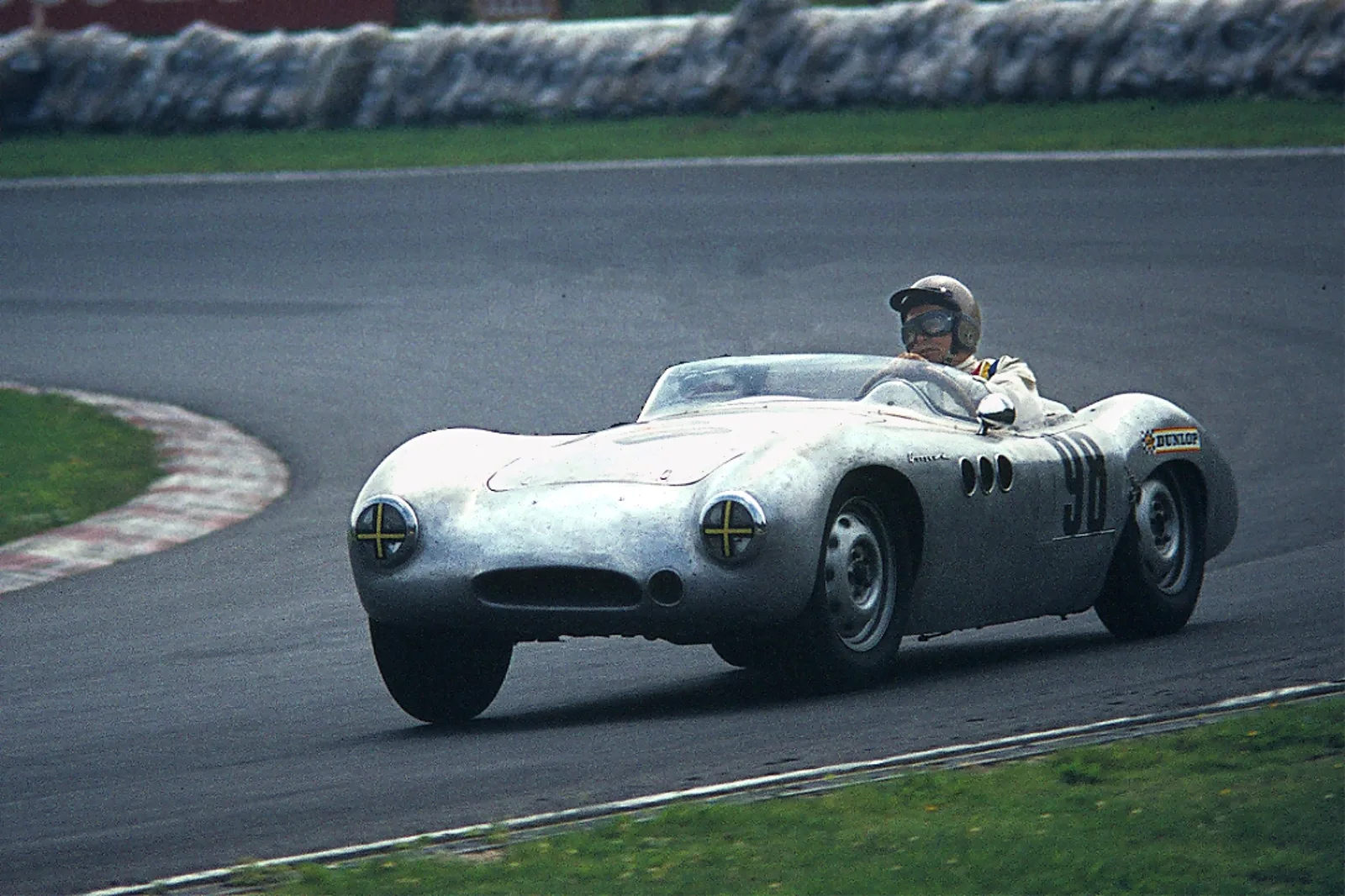
Borgward introduced the 1500 RS, a line of 1500 cc sports racers, to compete with Porsche 550 and Porsche 718 cars. The chassis was not refined enough, so the effort was stopped in 1958, although the race engine was very sophisticated for its time.
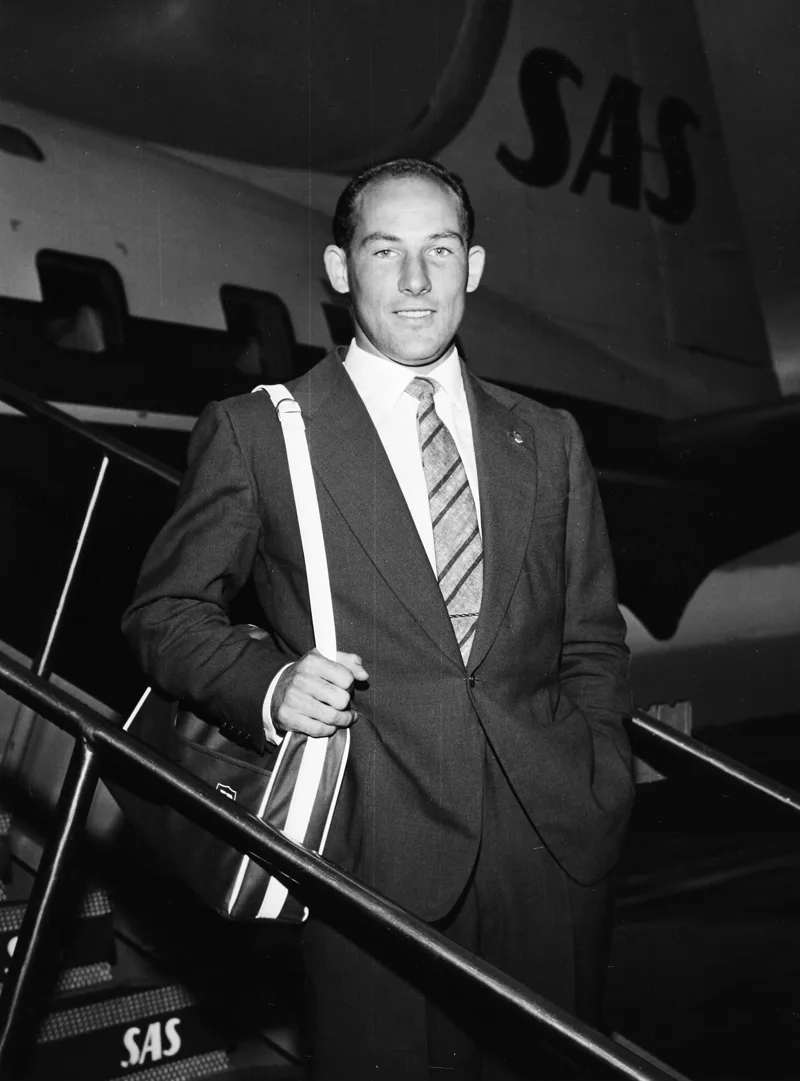
The 16-valve DOHC engine was fuel-injected, and it became a successful Formula Two unit when fitted to Cooper chassis for Stirling Moss. The engine was also used in Cooper T43 and T45 cars, and some F1 privateers ran it in 1961 under new 1500 cc rules. Its four valves per cylinder and fuel injection made it advanced for its era.
With the company gone, the racing engine lost its development programme, though its layout spread to other makers. That legacy outlived the marque itself, and the engine remains one of the more technically interesting parts of the Borgward story.
Why did Carl Borgward's management style matter?
Carl Borgward's approach was hands-on and restless, and it shaped the product as much as the balance sheet. He favoured adventurous technology and an ever-widening set of models, and the Isabella and P100 were the family cars that carried most of the group's hopes.
Many components of the period did not work as intended, broke down or fell apart. The result was a stream of costly remediation work before delivery and warranty repairs afterwards, which drained cash that the group could not spare.
How did the 1960 crisis develop?
Der Spiegel published a critical article on 14 December 1960, and the press attention made the company's cash-flow problems public. Borgward had ranged across three nominally separate companies, and the combined turnover of 650 million Marks put it only fifth among German makers.
Export plans added pressure, because Der Spiegel speculated that 6,000 cars might have to be taken back from the 15,000 ordered by North American dealers in 1960, of the 12,000 that had been delivered.
Timing mattered as well. The North American plans rested on orders that depended on continued demand, and when those orders were put at risk the company had few reserves to absorb the shock.
How did the Bremen senate and the bank affect the outcome?
Over 100 million Marks of creditor invoices were unpaid by autumn 1960, according to a 1966 Der Spiegel analysis. At the end of December 1960 Borgward sought one million Marks in extra credit. The Bremen senators, after critical press coverage, demanded that the company itself be pledged to the state.
Borgward accepted the senate's terms on 4 February 1961 after a long meeting, which averted bankruptcy for the moment. The senate further required that its nominee, Johannes Semler, chair the supervisory board.
Semler later became a focus of conspiracy theories. Some suspected that he never intended to let the Borgward businesses survive, and that suspicion has coloured accounts of the collapse ever since.
What happened to the group in 1961?
Proceedings for a court-supervised scheme of arrangement began on 28 July 1961. Within two months, in September 1961, Borgward and Goliath were declared bankrupt, and the Lloyd business followed in November. The collapse ended one of the most ambitious car businesses in postwar Germany.
Der Spiegel argued in 1966 that the company could have overcome its problems with more support and better advice. Carl Borgward insisted the company had been technically solvent, and the creditors were in fact paid in full, leaving 4.5 million Marks behind.
That outcome has been used to argue that the liquidation was taken prematurely. The gap between the solvency claim and the final collapse remains one of the central questions in the Borgward story.
What happened to the Bremen factory and the brands afterwards?
The Bremen factory was bought by Henschel, which merged with Hanomag in 1969. In 1972 Mercedes-Benz took over the Hanomag-Henschel truck arm, which used the works for its own vehicle production.
Borgward's presence also reached overseas. The Argentine subsidiary came into being in 1954 through a joint venture, and its production used local engines, glass and tyres alongside parts from Germany. The Argentine plant completed 1,050 cars in total, and the operation carried on for a short time after the German parent closed in 1961.
Argentine production of the Isabella was a notable part of that story, because it relied on a mix of imported and domestic parts. It showed how the company tried to adapt its cars to different markets, even as its home finances came under strain.
Production of the Isabella and P100 in Mexico began in August 1967, and it ceased in 1970. Each overseas operation shows how widely the company tried to sell its cars before its finances failed.
How was the Borgward name revived?
Borgward Group AG was formed in Lucerne in 2008 by Christian Borgward. With investment and manufacture by Chinese partners, the group had started selling SUVs by January 2017, which reopened the brand to a new generation of buyers.
The new group designed and marketed cars made in China. Its final chapter came in Beijing in April 2022, when the revival attempt ended in insolvency.
Which Borgward models and vehicles should readers know?
Among the cars, the Borgward 2000, 2300, Arabella, Hansa 1500, Hansa 1800, Hansa 2400, Isabella and P100 stand out. The company also built a broad range of trucks, from the B 611 up to the B 4500, which showed how widely the group had spread its effort.
Each of these models answered a different part of the market, from the Blitzkarren era to the Isabella family car. The model list reflects how far the brand had spread before its finances failed.
The company also had a military and aviation record, with the Goliath tracked mine and the Kolibri helicopter. Those lists show a company that tried to serve nearly every segment, which added to the costly sprawl that Der Spiegel later criticised.
What are the key figures for Borgward?
| Specification | Detail |
|---|---|
| Origins | 1905, Hansa Automobilgesellschaft at Varel |
| Founder | Carl F. W. Borgward (1890-1963) |
| Headquarters | Bremen, Germany |
| Brands | Borgward, Hansa, Goliath, Lloyd |
| Isabella production | From 1954, the most popular model |
| P100 | Introduced 1959 with pneumatic suspension |
| Liquidation | 1961, with Borgward and Goliath bankrupt in September |
| Mexican production | August 1967 to 1970 |
| Revival | Borgward Group AG, Lucerne, 2008 |
| Final bankruptcy | Beijing, April 8, 2022 |