From carburettors and typewriters to racing titles, hand-built road cars and the 2022 takeover that led to the BMW Alpina name.
Founded by Burkard Bovensiepen in 1965, Alpina was recognised as a car maker in 1983, acquired by BMW in 2022 and renamed BMW Alpina in 2025. The Buchloe marque builds high-performance BMWs, and its cars are finished by hand. Its link with BMW goes back to a 1962 carburettor.
Alpina is a Buchloe-based marque that has developed high-performance BMWs since 1965. Founded by Burkard Bovensiepen, it was recognised as a car maker in 1983, was acquired by BMW in 2022 and was renamed BMW Alpina in 2025. Its cars are built on BMW production lines and finished by hand.
Alpina is recognised by the German Ministry of Transport as a manufacturer rather than an aftermarket tuner. That status matters, because its engines are tuned in Buchloe, delivered to BMW for marriage with the body, and returned for interior finishing. The marque's story runs from carburettors and typewriters to racing success and then to saloons and SUVs.
How did Alpina begin?
The company traces its origins to 1962, when Burkard Bovensiepen built a Weber dual carburettor for the BMW 1500. The automotive press liked it, and BMW's sales chief, Paul G. Hahnemann, also rated the product highly. In 1964 BMW gave Alpina-fitted cars its full factory guarantee.
The business was formally set up on 1 January 1965 as Alpina Burkard Bovensiepen KG, in Kaufbeuren, Bavaria, with eight employees. The original Alpina had been a typewriter business, but it stopped at the end of the 1960s when it tried to move into textiles.
Burkard, who had made money from stock market investments, set up a BMW tuning business in an outbuilding of the typewriter factory. The workshop tuned carburettors and cylinder heads, and by 1970 it had seventy staff and had moved from Kaufbeuren to Buchloe.
The logo, which dates from 1967, reflected its core skill of tuning carburettors and camshafts. Burkard Bovensiepen (1936 to 2023) was a member of an industrialist family.
Hand-built engines, BMW bodies and a racing past that began with a 1962 carburettor.
When did Alpina become a recognised manufacturer?
In 1983 the German Federal Ministry of Transport recognised Alpina as a car manufacturer, so Alpina-built cars were registered as Alpinas rather than BMWs. Alpinas can still be serviced at BMW dealers and are covered by the BMW warranty. Some BMW dealerships also sell Alpinas.
That status changed how Alpina worked, since its cars carried the Alpina name and the engine and interior work was done under it.
BMW announced on 10 March 2022 that it would acquire Alpina, and the same day its website said the brand had been acquired. The marque was officially renamed BMW Alpina in 2025.
What did Alpina achieve in racing?
Alpina raced successfully between 1968 and 1977. Its cars won the European Touring Car title, a German hillclimb title, rally and track titles, and the Spa 24 Hours in 1970. The marque officially withdrew from racing in 1988, citing capacity limits and restrictions.
The Alpina wordmark on the nose was carried over from the racing cars, and it remains one of the brand's distinguishing marks. The 1988 decision to leave racing went hand in hand with the launch of a fresh range of BMW Alpina cars.
Alpina returned to competition in later years, when it won the 2011 ADAC GT Masters with a B6 GT3. The success prompted a limited run of the B3 GT3 road car, which celebrated the title.
What makes an Alpina different from a BMW M car?
Alpina emphasises touring performance, higher torque and its own shiftable ZF automatics, where BMW M favours high-revving engines and manual or semi-automatic gearboxes. The B5 used a supercharged 4.4-litre V8, while the M5 used a naturally aspirated V10. The Alpina version delivered similar power at lower revs.
Alpina pioneered buttons on the steering wheel for changing gear, a feature most of its cars still have, with paddles on the B4 S Edition 99.
The B5 gave a different take on performance from BMW M's own cars, relying on torque rather than high revs.
How are Alpinas built?
Alpinas are built in a hand-made process that moves between Alpina's Buchloe site and BMW's plant at Dingolfing. The engine is tuned at Buchloe, married to the body at the BMW plant, and then returned to Alpina for interior finishing.
Each B7 engine is hand-built at Buchloe, then goes to Dingolfing, where the car shares its line with BMW's 7 Series. The process allows only limited numbers of cars.
Limited production is part of the appeal. A metal plate inside the car records the serial number and proves the car's heritage.
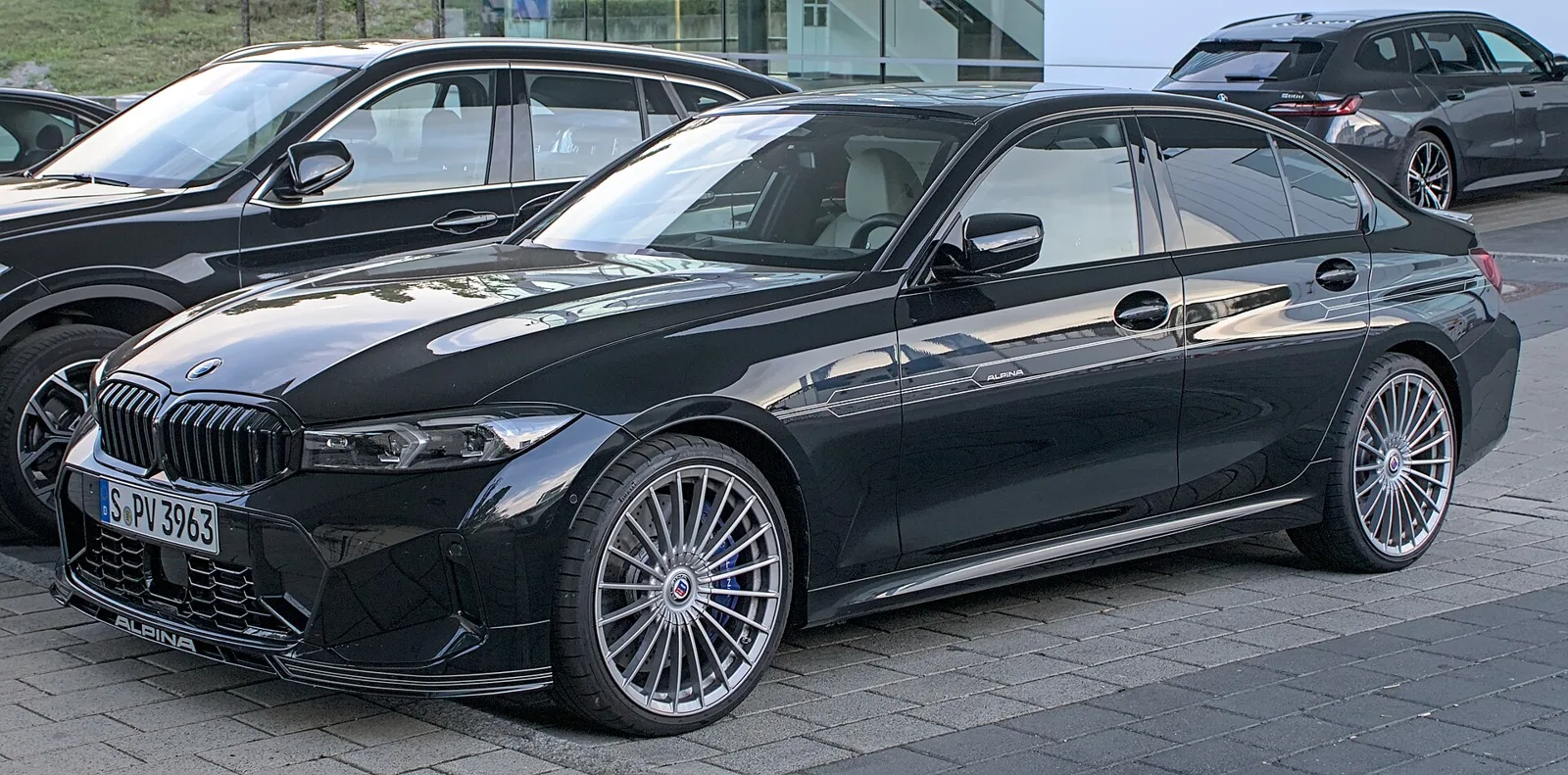
The car is recognisable from its alloy wheels, which have 20 spokes and valves tucked beneath the centre cap. Alpina Blue and Alpina Green metallic paint, gold or silver pinstripes and the nose wordmark complete the identity.
What were the early 3 Series Alpinas?
The early 3 Series Alpinas were the C1 and C2 cars, with the B6 range following. The C1 2.3 was based on the E21 323i and produced 125 kW (168 hp). Only 35 C1 cars were built, and the car reached 132 mph (213 km/h).
The C1 2.3 had Mahle pistons, plus a reworked exhaust and ignition. The car also had a dry sump and a five-speed gearbox with short ratios. It accelerated from 0 to 100 km/h in 7.8 seconds.
The C1 2.5 and early C2 used a 2552 cm3 development of the M20 engine, with a ported head and harder valve springs. It produced 136 kW (182 hp) and reached 0 to 100 km/h in 7.1 seconds.
The 2.7-litre C2 arrived in February 1986 in uncatalysed form, making 154 kW (207 hp) at 5800 rpm. The C2/1 2.7 reached 227 km/h (141 mph), and only 108 were built.
The B3 2.7 with a catalytic converter and Motronic 1.3 management continued until 1992, with 254 cars built from 1987 to 1992.
What were the B6 models?
The B6 2.8 was based on the 323i, and 533 were made from 1983 to 1986. The B6 3.5 used the 3430 cm3 M30 engine on the 325i chassis, giving 261 bhp (195 kW), with 155 mph (250 km/h) at the top.
The B6 3.5 S used the M3 chassis with a Getrag 260/6 Sport gearbox, known as a dog-leg unit. Only 62 were made from 1987 to 1990.
In Japan the B6 3.5 appeared as the B6 2.7, with the C2's 2.7-litre engine, because the larger 3.0-litre unit could not pass emissions. A BMW 333i was also developed for BMW South Africa, based on the 325i with Alpina components common to the B6.
Buyers of the 333i had to choose between power steering and air conditioning.
How did the E36 and E46 3 Series Alpinas develop?
The B3 3.0 of 1993 to 1996 was based on the E36 325i, and the B3 3.3 followed in 1999 on the E46. The B3 3.3 used an E36 M3 engine block, adapted to suit, and an all-wheel-drive version arrived in 2001.
The B3 3.0 came as a coupe, saloon, cabriolet and estate, and it used the robust M50 cast-iron engine because the M52 was not suitable for expanding the displacement. From 2002 the B3 S produced 224 kW and 362 Nm.
What was the B3 Biturbo?
The B3 Biturbo was built from 2007 to 2012 on the E9x 335i, with a twin-turbo 3.0-litre six making 500 N-m and 265 kW (355 hp). It reached 100 km/h in 4.8 seconds. The B3S of 2010 went further, reaching 300 km/h with 294 kW (394 hp).
The B3 GT3 was a limited run of 99 cars, created to celebrate Alpina's 2011 ADAC GT Masters success. It had a 300 kW (408 PS; 402 bhp) engine, 380 mm brake discs and an Akrapovic exhaust that saved 11 kg (24 lb).
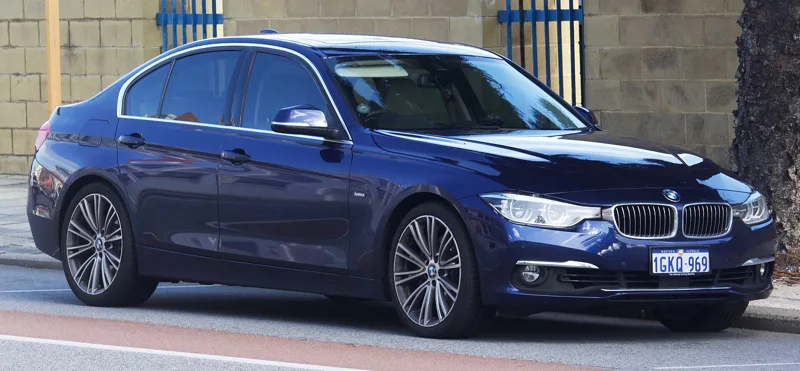
The F30 Alpina B3 Bi-Turbo arrived in March 2013, with 301 kW (409 PS; 404 hp) and 600 N-m from a bi-turbocharged 3.0-litre six. It accelerated to 100 km/h in 4.0 seconds. A new G20-based B3 replaced it with 700 N-m and 340 kW (462 PS; 456 hp), which is 150 N-m more than the BMW M3.
What diesel and four-cylinder Alpinas were built?
Alpina's D3 Bi-Turbo, shown at IAA 2013, used a 3.0-litre diesel six with 257 kW (349 PS; 345 hp) and 700 N-m. The B4 Bi-Turbo, launched in 2014 on the 435i, produced 408 PS (300 kW; 402 hp).
The B4 engine gained twin turbos, a much larger intercooler and a new crankshaft. Peak torque of 601 N-m (443 lb-ft) arrived in the 3,000 to 4,000 rpm range.
What were the E12 and E28 Alpinas?
The E12 B2 of 1976 was based on the 528i and was built in only eleven examples before the B7 arrived. The B7 Turbo followed on the same body, with 221 kW (300 PS; 296 bhp) from 1978 to 1982.
The B7 S Turbo arrived in 1981 at 243 kW (330 PS; 326 bhp), and only sixty were produced. The E28 B9 of 1981 to 1985 was built on a 528i with a 3.45-litre engine, and about 500 were made.
The 1985 B10 3.5 used the B6 3.5's engine on the 535i, with 192 kW (261 PS; 257 hp), and only 77 were built.
What were the E34 and E39 B10 models?
The B10 3.5 of 1988 was the first Alpina on the E34, and the B10 BiTurbo followed in 1989 as the fastest production saloon when it launched. Road and Track tested it, and it was the fastest production saloon at the time of its introduction.
The B10 BiTurbo was built from 1989 to 1994, and 507 of them were made, close to the 572 B10 3.5 cars. The B10 range also included V8 versions of 4.6 and 4.8 litres from the 540i.
The D10 Biturbo of February 2000 was the first six-cylinder diesel Alpina. Its 3.0-litre twin-turbo made 500 N-m, with 182 kW (247 PS) on top, and it was described as the most powerful diesel saloon on sale at the time.
What were the E60 and F10 B5 models?
The E60 B5 of 2005 used a supercharged 4.4-litre V8 with a Turbessor supercharger, raising output from 245 kW to 368 kW (500 PS; 493 hp). The 2007 B5 S reached 390 kW (530 PS; 523 hp) and 317 km/h.
Power reached the rear wheels through a six-speed automatic, refined by Alpina with Switch-Tronic. A B5 Touring took 319 km/h (198 mph) at the Nardo test track in 2005, according to Auto Motor und Sport.
The 2007 B5 S had revised camshafts, which reduced exhaust temperatures, and a six-speed ZF gearbox whose switching time was 50% quicker.
The F10 B5 of 2010 made 507 PS (373 kW) with 700 N-m, and an eight-speed automatic was fitted. The 2015 Edition 50 reached 441 kW (600 PS), and the standard B5 took that engine for its last year in 2016.
The G30 B5 arrived at the 2017 Geneva show with all-wheel drive, a 4.4-litre N63 V8 making 800 N-m (590 lb-ft) and 447 kW (608 PS; 599 hp), and it reached 100 km/h in 3.5 seconds.
The G30 D5 S, shown in 2017, used a modified 3.0-litre diesel six with three turbochargers in left-hand-drive markets. Alpina claims it is the fastest diesel production car, with 387 PS (285 kW; 382 hp) in those markets.
What were the 7 Series Alpinas?
The E65 B7 of 2003 was the first Alpina with a centrifugal supercharger, fitted to a 4.4-litre V8. Later B7s used twin turbos, and the G12 generation added xDrive all-wheel drive. The B7 xDrive was announced on 8 February 2016 by BMW North America.
BMW of North America offered 800 Alpina B7s as limited editions for 2007 and 2008, and they sold out quickly. The F01 B7 returned for 2011 in the US, with about 500 vehicles for that market.
The 2013 update added an eight-speed automatic and Valvetronic, lifting output to 547 PS (403 kW), with 4.3 seconds to 100 km/h and a 300 km/h ceiling.
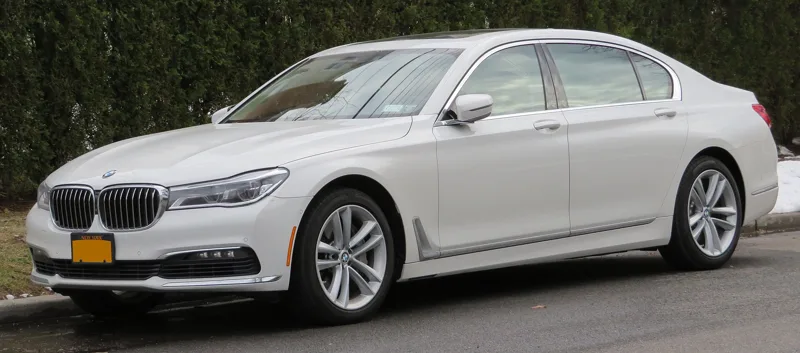
The G12 B7 was built on the same Dingolfing line as the standard 7 Series, and it could be specified identically to a 760Li. An exclusive Alpina Green finish was the main difference.
The B7 xDrive was sold only in the US and Canada, with a 310 km/h electronic limit and 3.7 seconds to 100 km/h. Other markets received the B7 Bi-Turbo with a 330 km/h limit.
The 2019 facelift brought 608 PS (447 kW; 600 hp) and a 3.6-second 0-100 time, with a 330 km/h top speed now limited worldwide.
What were the 8 Series and V12 Alpinas?
The E31 B12 5.0 of 1990 to 1994 used an Alpina-modified M70 V12 in the 850i, while the B12 5.7 of 1992 used an enlarged S70 V12 in the 850CSi. The E38 B12 5.7 and 6.0 followed in 1995 and 1999.
The E38 cars were not electronically limited to 250 km/h like the BMW 750i, and they could reach 174 mph (280 km/h) and 181 mph (291 km/h). Alpina said the B12 5.7 was the first production car with an electrically heated catalyst fitted as standard.
The B8 Gran Coupe of 2021 used an Alpina-tuned version of BMW's 4.4-litre N63 V8, producing 800 N-m, with 630 PS (463 kW; 621 hp). It was based on the M850i and M8 Gran Coupe.
What SUVs and roadsters did Alpina build?
The XD3 SUV debuted at the 2018 Geneva show with a 388 PS quad-turbo diesel six in left-hand-drive markets. The XD4 followed with a four-turbo diesel, while the Roadster V8 of 2003 replaced BMW's Z8 with a 4.8-litre V8. Only 555 roadsters were built.
The XD3's quad-turbo engine delivered 770 N-m (568 lb-ft), and the car reached 266 km/h (165 mph) with a 4.6-second 0-100 km/h time. The right-hand-drive bi-turbo was rated at 333 PS, with 700 N-m.
The XD4 is the fastest accelerating diesel SUV, and it sits in the 4.6-second bracket for 0-100 km/h. It has 770 N-m with 285 kW (382 hp), and its top speed is 268 km/h (167 mph); it is sold only in left-hand-drive markets.
The Roadster V8 was a departure from the Z8's sporty focus, with relaxed suspension tuning, softer tyres on 20-inch wheels and a 260 km/h (160 mph) limiter. Only 555 were built, with 450 of them for the US market, sold through BMW dealers.
What are the Alpina specifications?
| Specification | Detail |
|---|---|
| Founded | 1965 at Kaufbeuren; at Buchloe by 1970 |
| Founder | Burkard Bovensiepen (1936 to 2023) |
| Manufacturer status | Recognised by the German Ministry of Transport since 1983 |
| BMW takeover | Announced 10 March 2022; renamed BMW Alpina in 2025 |
| B6 3.5 | 261 bhp (195 kW); 346 N-m; 0-100 km/h in 6.4 seconds; 250 km/h |
| B3 Biturbo | 265 kW (355 hp); 500 N-m; 4.8 seconds to 100 km/h |
| B3 GT3 | 99 units; 300 kW (408 PS; 402 bhp) |
| F30 B3 Bi-Turbo | 301 kW (409 PS; 404 hp); 600 N-m; 4.0 seconds to 100 km/h |
| B4 Bi-Turbo | 408 PS (300 kW; 402 hp); 601 N-m (443 lb-ft) |
| E60 B5 | 368 kW (500 PS; 493 hp); 700 N-m |
| B5 S (2007) | 390 kW (530 PS; 523 hp); 725 N-m; 317 km/h |
| G30 B5 | 447 kW (608 PS; 599 hp); 800 N-m; 3.5 seconds to 100 km/h |
| B7 facelift (2019) | 447 kW (608 PS; 600 hp); 3.6 seconds to 100 km/h |
| B8 Gran Coupe | 630 PS (463 kW; 621 hp); 800 N-m |
| XD4 | 285 kW (382 hp); 770 N-m; 4.6 seconds; 268 km/h |
| Roadster V8 | 555 built; 381 PS (280 kW); 260 km/h limit |