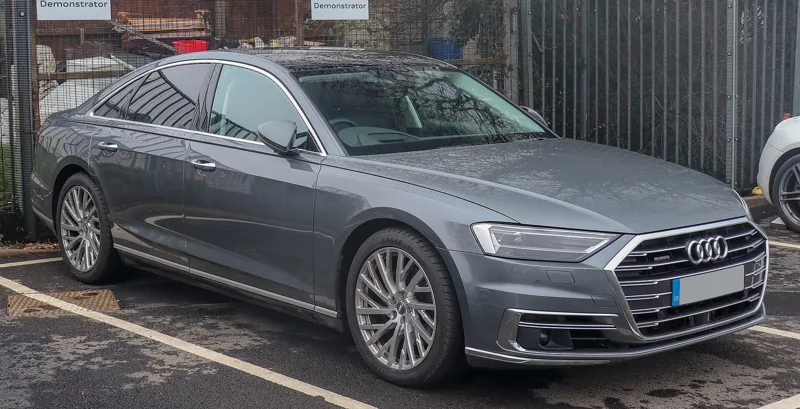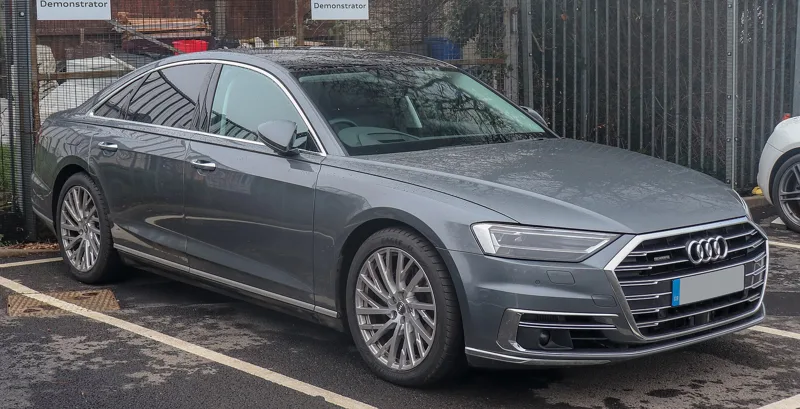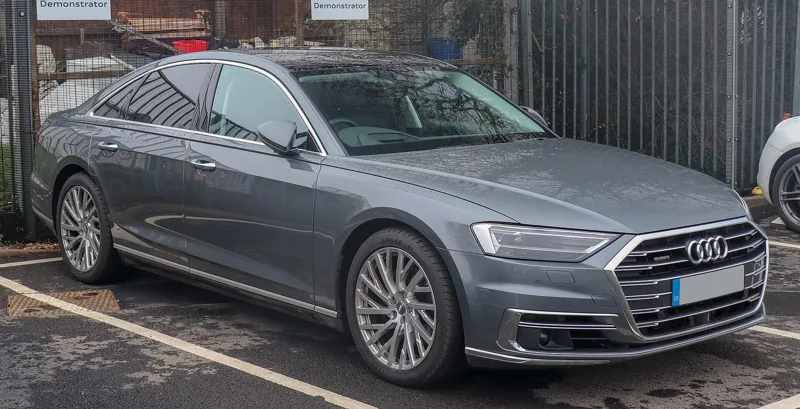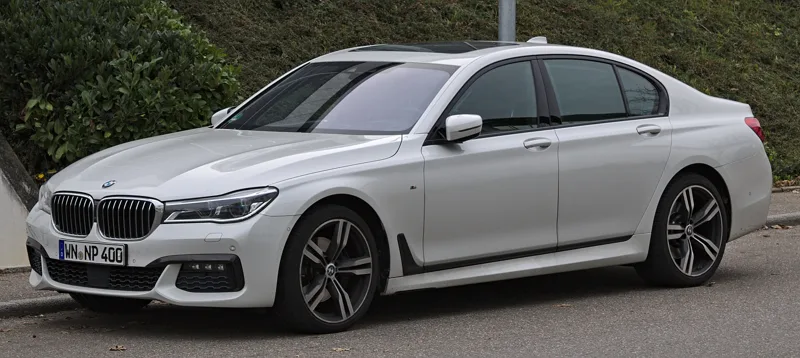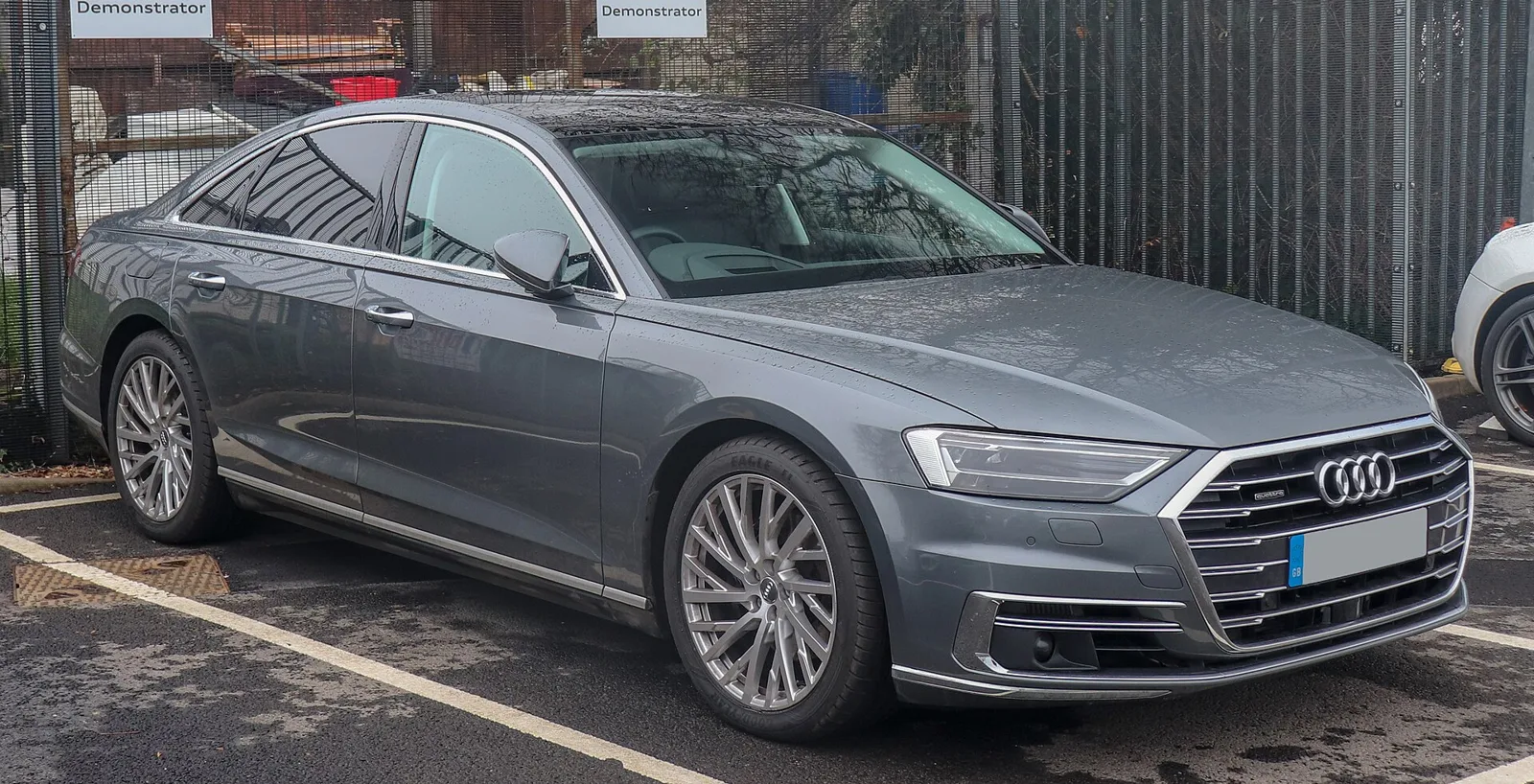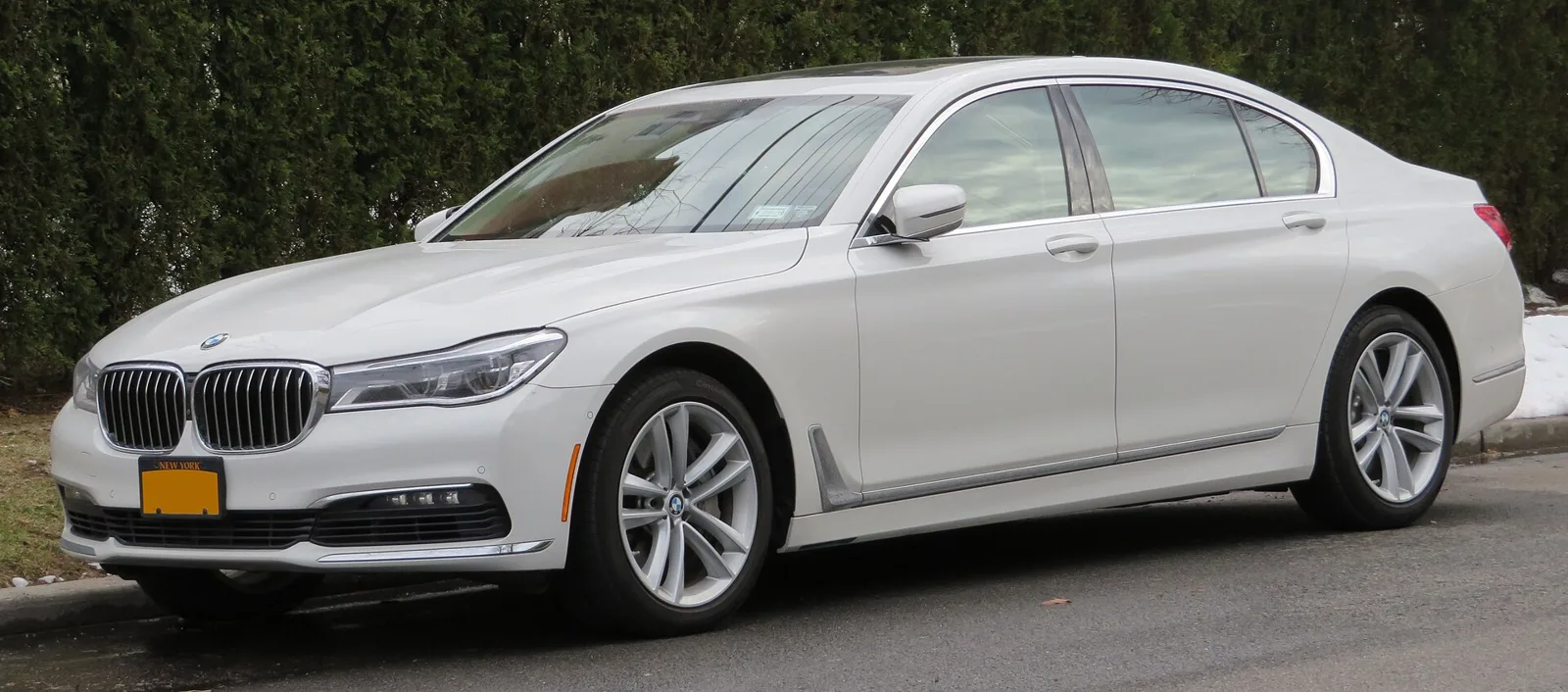
BMW's 2015 G11 used carbon fibre and a plug-in hybrid, while Audi's A8 was the first mass-market car with an aluminium chassis, and it set the template for both.
The BMW 7 Series G11 ran from 2015 to 2022 and was BMW's first use of the CLAR architecture. The first Audi A8 arrived in 1994 with an aluminium Space Frame, which the company kept through its 2002 generation.
The BMW 7 Series G11 and the Audi A8 both sit at the top of their makers' ranges, and the A8 was designed to compete with the Mercedes-Benz S-Class and the 7 Series. The G11 arrived in 2015 on the new CLAR platform, with carbon fibre in its passenger cell and a plug-in hybrid variant. The Audi A8 had been first with an aluminium chassis back in 1994, and its later generations kept that construction. The two cars share a lineage of rivalry, but they reached their best moments on different technologies.
How did the Audi A8 begin with aluminium?
Audi presented the first A8 in February 1994, with the Geneva show debut in March and full-scale production from June. It replaced the Audi V8 and used the Volkswagen Group D2 platform, an all-aluminium monocoque marketed as the Audi Space Frame. The car was the first mass-market vehicle with an aluminium chassis, and the construction was developed with Alcoa.
The development began with an agreement in 1982 between Ferdinand Piech and the Aluminum Company of America. The aim was to build a car lighter than its rivals, offsetting the roughly 100 kg (220 lb) weight penalty of standard all-wheel drive. The programme cost US$700 million by the time development ended in early 1994.
Carbon fibre and a plug-in hybrid from BMW, against an aluminium Audi that was first on the road with a mass-market aluminium chassis.
What did the first A8 offer in North America?
The A8 was available in North America from October 1996, for the 1997 model year. It came in a standard wheelbase and as the A8 L, which added 5 inches (127 mm) of rear legroom. The car was aimed squarely at the Mercedes-Benz S-Class and the BMW 7 Series, and it also competed with the Jaguar XJ and the Lexus LS.
Engines for 1997 were a 2.8 L V6 at 193 PS (142 kW) and a 3.7 L V8 at 230 PS (169 kW) in front-wheel drive form, and a 4.2 L V8 at 300 PS (221 kW) for the quattro version with permanent all-wheel drive. Standard equipment included dual-zone climate control, wood and leather trim, 14-way power and heated seats and a Bose audio system.
How did the Audi S8 and W12 extend the range?
A high-performance version, the S8, debuted in 1996 and was built exclusively at Audi's Neckarsulm plant. It came with quattro as standard and a 4.2 L V8 that was later raised to five valves per cylinder, giving 265 kW (355 hp) and 430 N m (317 lb-ft). European cars came with a six-speed manual at first, while most other markets received a sports-tuned five-speed Tiptronic. The S8 came with 18-inch Avus six-spoke alloys as standard, and 20-inch nine-spoke RS wheels became an option after the 1999 facelift.
In 2001 Audi introduced its W12 engine, a 6.0 L unit made by joining two VR6 engines at the crankshaft. It was offered to European and Asian customers, and only 750 D2 W12 models were built before the engine's discontinuation in 2003. Production of the first generation ended on 4 August 2002, at car number 105,092.
In 1997 Audi introduced the first series production electronic stability control for all-wheel drive vehicles, on the A8 and the A6, and the A8 became one of the first production cars with both front and rear side airbags. In 1999 the flagship gained side curtain airbags, new colours and a restructured option list, and the North American warm-weather package added a solar sunroof that ran the ventilation fans while the car was parked.
Which politician chose the A8?
In 1998 the German Chancellor, Gerhard Schroder, chose the A8 as his official state car, a break from tradition since his predecessors had preferred the Mercedes-Benz S-Class. He moved to the Volkswagen Phaeton after being re-elected in 2002. The choice gave the A8 a public profile that its rivals did not enjoy in quite the same way.
What changed with the second-generation A8?
The second generation, the Typ 4E, was previewed as the Audi Avantissimo concept at the 2001 Frankfurt show. It was built on the Volkswagen Group D3 platform, was unveiled by press release in July 2002 and went into production in August 2002, with European sales from November 2002 and the US from June 2003 as a 2004 model. It was longer than its predecessor, with room for four or five adults depending on the rear seats.
The A8 L added 120 mm (4.7 in) of rear legroom and 11 mm (0.43 in) of height. The D3 brought the Multi Media Interface, which was pioneered on the car after the Avantissimo preview. The concept had also shown a six-speed automatic with shift paddles, self-levelling adaptive air suspension and a fingerprint scanner for driver identification.
The D3 programme began in 1996, and design work moved to Ingolstadt in 1997. Six full-size exterior clay models were built, and they were reduced to two by late 1998 before the final theme was chosen at the end of 1999. Aluminium was part of the reason for the long timescale, because it cannot take the small radii of sharp feature lines as easily as steel.
The A8 L version of the second generation was further improved in 2002, when it received standard xenon headlights and a heated steering wheel. Every A8 that year also gained a boot release lever, so that someone trapped in the boot could get out.
What did the BMW G11 bring to the segment?
The G11 and its long-wheelbase G12 twin were produced from 2015 to 2022. The G11 was unveiled on 10 June 2015 at BMW's Munich headquarters and was the first BMW line-up on the CLAR architecture. It introduced carbon-fibre-reinforced polymer in the passenger cell, which was combined with steel and aluminium and kept the car's axle load split at 50/50.
The carbon fibre allowed a lower kerb weight and a lower centre of gravity, and the aluminium on the doors, boot lid, brakes, wheel hubs and rear suspension arms reduced weight further. The body was 40 kg (88 lb) lighter than its predecessor, and the drag coefficient fell to 0.24 with grille shutters and air openings behind the front wheel arches.
How did the G11's engines and plug-in hybrid work?
The line-up used a 4.4 L V8, two 3.0 L inline-sixes and a 2.0 L four, with an eight-speed ZF automatic on every model. The G11 was the first 7 Series to offer a plug-in hybrid, the 740e and 740Le iPerformance, which replaced the less popular ActiveHybrid 7. The car was sold as a BMW iPerformance model rather than as part of the BMW i sub-brand.
The 740e paired a turbocharged 2.0 L four rated at 192 kW (257 hp) with an electric motor for a combined 240 kW (322 hp) and 500 N m (369 lb-ft). It reached 100 km/h in 5.6 seconds, and the electric range was 40 km (25 miles) under the NEDC test. Under the EPA test the all-electric range was 23 km (14 miles), and the EPA noted that the car burns some petrol during that first stretch.
How strong was the M760Li V12?
The top trim was the M760Li xDrive, which used BMW's N74B66 6.6 L twin-turbo V12 producing 601 hp (448 kW) with 800 N m (590 lb-ft) of torque. It was the first 7 Series to be an M Performance model, and it was the first V12 BMW to offer xDrive as standard. The limited top speed was 250 km/h, raised to 305 km/h with the optional M Driver's Package.
BMW also announced a limited edition called The Final V12 on 18 January 2022, as the last series-production BMW with a V12. Only 12 were sold to the public, all in the United States, and BMW invited previous V12 owners to buy one.
How did the Alpina B7 compare?
The Alpina B7 xDrive used a modified version of the 750Li's 4.4 L twin-turbo V8 with 600 hp (447 kW) and 800 N m (590 lb-ft). It had an electronically limited top speed of 310 km/h (193 mph) and reached 100 km/h in 3.7 seconds. The B7 was sold by BMW only in the United States and Canada, and it was called the B7 Bi-Turbo elsewhere with a limit of 330 km/h (205 mph).
What did the G11 facelift change?
The updated 7 Series was unveiled on 16 January 2019 as a 2020 model, and the grille was 40 percent larger than before. The headlights could be upgraded to lasers, and a 12.3-inch instrument cluster and a 10.25-inch infotainment screen were added. The Extended Traffic Jam Assistant allowed hands-off driving at up to 56 km/h (35 mph) in urban traffic.
The 740i turbo six was rated at 250 kW (335 hp), with 450 N m (332 lb-ft) of torque after the facelift. The V8 and hybrid models were updated too, and a hands-free driving system was added to the range.
Specifications side by side
| Feature | BMW 7 Series (G11) | Audi A8 |
|---|---|---|
| Generation in this comparison | Sixth 7 Series, 2015 to 2022 | First (1994) and second (2002) generations; fourth generation current in 2026 |
| Platform | CLAR, with carbon fibre passenger cell | Volkswagen D2 and D3, aluminium Audi Space Frame |
| Body weight | 40 kg (88 lb) lighter than the predecessor | Not listed |
| Drag coefficient | 0.24 | Not listed |
| Long wheelbase | G12 with L in the model name | A8 L adds 5 in (127 mm) (D2) and 4.7 in (120 mm) (D3) of rear legroom |
| Top engine | M760Li 6.6 L V12, 601 hp (448 kW) | S8 4.2 L V8, 355 hp (265 kW); W12 6.0 L from 2001 |
| Plug-in hybrid | 740e, 240 kW (322 hp) combined | Not listed |
| Transmission | Eight-speed ZF automatic | Six-speed Tiptronic on the D3; ZF five-speed on the D2 S8 |
| Drive | Rear or xDrive all-wheel drive | Front-wheel drive or quattro |
| 0 to 100 km/h | 740e 5.6 seconds; Alpina B7 3.7 seconds | Not listed |
| Production | 2015 to 2022; Dingolfing, Germany | D2 ended 4 August 2002 at 105,092 cars |
Which luxury flagship suits which buyer?
The BMW suits a buyer who wants the latest technology, a plug-in hybrid option and a V12 at the top of the range. Its carbon fibre passenger cell and its xDrive V12 show how far BMW pushed weight and power in the same car.
The Audi suits a buyer who values the aluminium Space Frame and a long-running history of quattro all-wheel drive. The first A8's aluminium construction was a genuine first, and the state-car choice gave it a profile that few rivals could match.
On the evidence here, neither car takes a clear lead, because they were built in different eras with different solutions. The G11 offers the more recent platform and powertrain choices, while the A8 offers the earlier aluminium story. Buyers should weigh the newer technology against a heritage built on an early, distinctive engineering bet.
Reports in March 2026 said Audi had stopped taking new A8 orders in Germany from 18 February 2026, and that a successor was being developed. That news matters for any buyer of the current fourth-generation car.