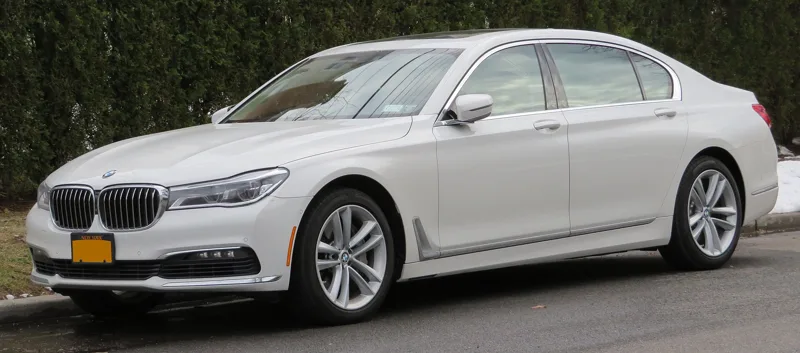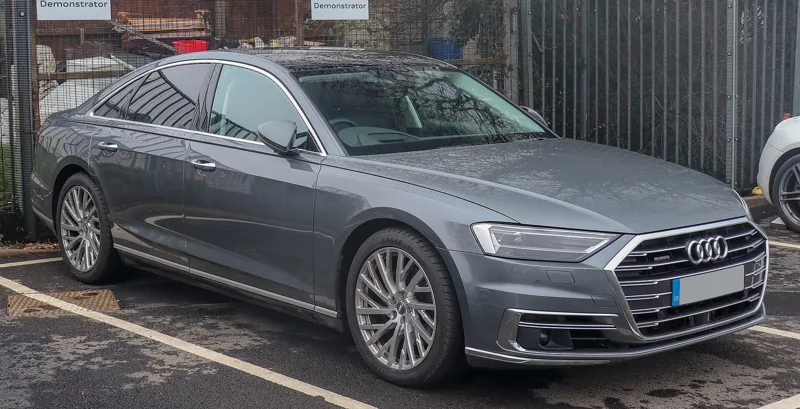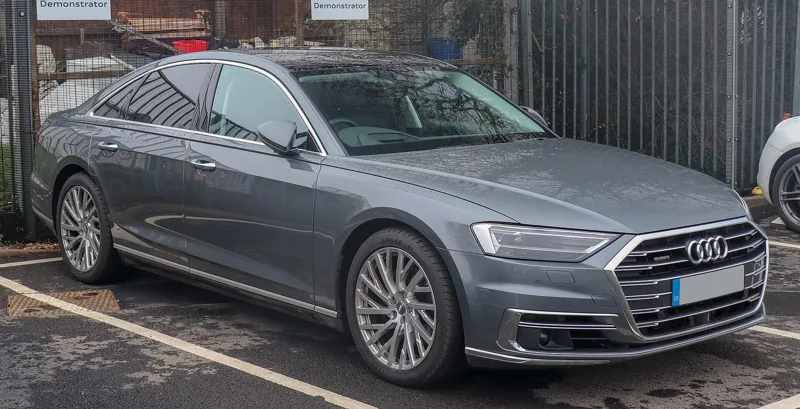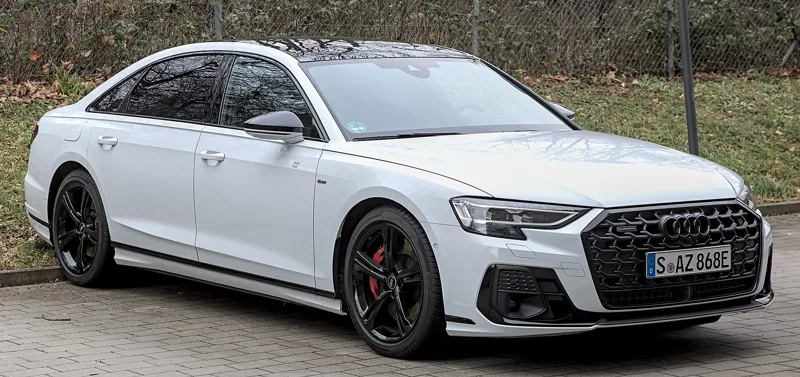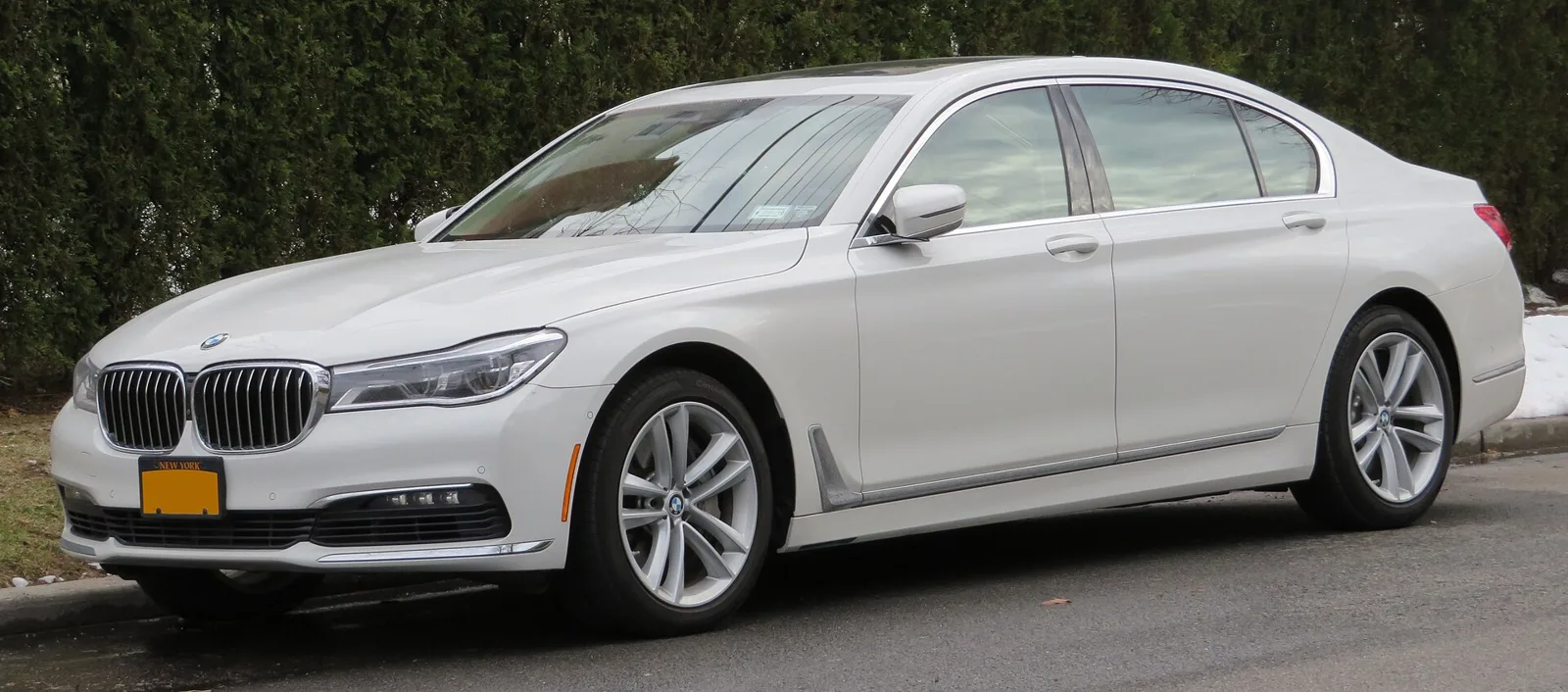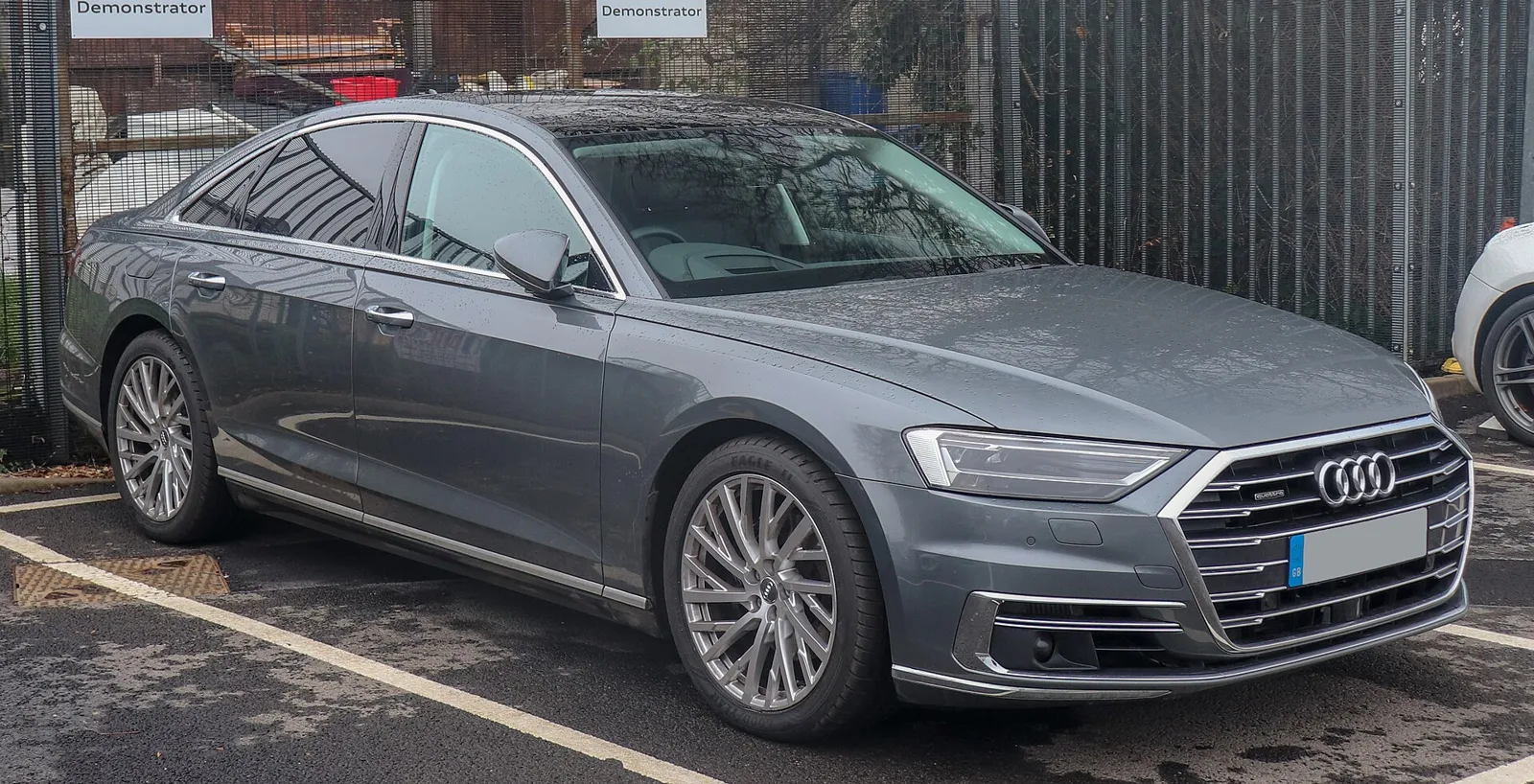
Two full-size luxury saloons from the mid-1990s, one built on an aluminium space frame and the other a Jaguar evolution with Ford money behind it.
The Audi A8 used an all-aluminium Audi Space Frame and was sold from 1994 to 2002, while the Jaguar XJ X300 was an evolution of the XJ40 built from 1994 to 1997. The A8 offered a 6.0-litre W12 and a 4.2-litre V8 quattro, and the XJR made 321 hp from a supercharged six.
The Audi A8 and the Jaguar XJ X300 were both full-size luxury saloons from the mid-1990s, and both were aimed at buyers who could afford a flagship. The A8 was built around an aluminium space frame, while the X300 was an evolution of the XJ40 with Ford money and new production behind it. Their engines and sporting variants show how far the two makers went in different directions.
Why were the A8 and XJ rivals?
Audi pitched the A8 at the established German benchmarks, Mercedes-Benz's S-Class and BMW's 7 Series. Jaguar's XJ and Lexus's LS from Japan were rivals too.
The A8 was unveiled in February 1994 and shown at Geneva that March, and full production began in June. The X300 followed later that year, launched at the Paris Motor Show in October 1994.
The A8 reached North America only in October 1996, for the 1997 model year.
An aluminium space frame from Germany against a Jaguar evolution with a supercharged six from Britain.
How did the two cars differ in construction?
The A8 sat on the Volkswagen Group D2 platform, an aluminium monocoque that Audi branded the Audi Space Frame. Audi co-developed the structure with Alcoa, and the car is often cited as a pioneer of aluminium chassis in mass production. Audi had signed the deal with Alcoa in 1982, under Ferdinand Piech.
The X300 took a more conventional route. It evolved from the XJ40, kept the independent rear suspension that defined every XJ, and placed its emphasis on build quality, reliability and a return to traditional Jaguar styling.
The programme wrapped up in early 1994 with a bill of $700 million (GBP 418.1 million). On the Jaguar side, Ford put GBP 200 million into a facilities renewal that brought in welding robots built by Nissan.
How did the A8 and XJ look?
The X300's shape came from a 1991 design refresh led by Geoff Lawson. The XJ40's flat bonnet gave way to a fluted, curvaceous one that accentuated four separate round headlamps, and a body-coloured bumper replaced the old black rubber bar.
The A8's styling was refined through the decade. A 2000 facelift brought larger clear headlights, a revised grille and standard projector fog lamps, with a new horizontal stitch pattern for the seats.
Audi also explored a two-door version. IVM Automotive of Munich built a prototype A8 Coupe in 1997, with a shorter aluminium body and no central B pillar. Audi decided against production, citing lower-than-expected sales of rivals such as the BMW 8 Series, and only one car was ever built.
What engines did they offer?
The 1997 A8 line-up started with a front-wheel drive 2.8-litre V6 at 142 kW (193 PS; 190 bhp) and a 3.7-litre V8 at 169 kW (230 PS; 227 bhp). The quattro model received a 4.2-litre V8 at 221 kW (300 PS; 296 bhp), and the 3.7 V8 was dropped in 2000.
In 2001 Audi introduced a 6.0-litre W12, which effectively mated two VR6 engines at the crankshaft. Only 750 of the D2 W12 cars were built before production ended in 2003, and the engine was offered only in Europe and Asia.
Jaguar's X300 used the AJ16 inline-six in 3.2-litre and 4.0-litre forms, and its V12 was a 6.0-litre unit with a new Nippon Denso engine management system. The V12 came in the XJ12 and the Daimler Double Six, and the North American market never had a manual option.
The XJR was the sporting X300. Its AJ16 was supercharged with an Eaton M90 and an air-water intercooler, which lifted output to 321 hp (239 kW; 325 PS) and 512 Nm (378 lb ft). That made it Jaguar's first supercharged road car. Only the turbocharged XJ220 had come before it with forced induction.
How quick were the performance versions?
The Audi S8 brought a more potent 4.2-litre V8. The early D2 S8 had a 250 kW (335 hp) version, and from late 1999 Audi raised it to five valves per cylinder with 265 kW (355 hp) and 430 Nm (317 lb ft) of torque.
The XJR reached 97 km/h (60 mph) in about 5.9 seconds with the manual gearbox and 6.6 seconds with the automatic. It ran 17-inch wheels where the rest of the range had 16-inch wheels, plus Pirelli P-Zero tyres, lower firmer suspension and traction control.
Audi's S8 and Jaguar's XJR shared a purpose, but they used different routes to it. The S8 used a sports-recalibrated five-speed Tiptronic with Dynamic Shift Programme, while most XJRs were built with the GM 4L80-E automatic.
What did the X300 range offer?
The X300 was sold as short and long-wheelbase cars in several trims. The base XJ6 carried the 3.2-litre AJ16, with alloy wheels, leather and air conditioning as extra-cost options, and a 4.0-litre version came later.
The Sovereign was the luxury trim. It used the AJ16 in either size and came with ten-way electric leather seats, cruise control, automatic climate control and a tool kit under the bonnet, plus chrome trim around the grille, lights and windows.
The XJ Sport aimed at younger buyers with 8-inch wheels, revised seats and stiffer suspension, while the Executive model of 1997 added leather trim, a wood and leather steering wheel and the wide wheels of the Sport. The highest trim was the Daimler, with a Double Six version that used the V12, and in North America the same car was sold as the Jaguar Vanden Plas.
North America had a narrower menu. The XJ6 was offered only with the 4.0-litre engine, with alloy wheels, leather and air conditioning fitted as standard, and neither the Sport, Executive nor Century models were sold there. No manual gearbox was offered in that market.
Specifications side by side
| Feature | Audi A8 (D2) | Jaguar XJ (X300) |
|---|---|---|
| Build years | 1994 to 2002 | 1994 to 1997 |
| Body | Saloon, standard and long wheelbase | Saloon, short and long wheelbase |
| Structure | All-aluminium monocoque, Audi Space Frame | Evolution of the XJ40 body |
| Drive | Front-wheel drive or quattro permanent all-wheel drive | No figure |
| Entry engine | 2.8-litre V6, 142 kW (193 PS; 190 bhp) | 3.2-litre AJ16 inline-six |
| Mid engine | 3.7-litre V8, 169 kW (230 PS; 227 bhp) | 4.0-litre AJ16 inline-six |
| Top engine | 6.0-litre W12, 750 built; 4.2 V8 quattro 221 kW (300 PS; 296 bhp) | 6.0-litre V12 in the XJ12; XJR supercharged six 321 hp (239 kW; 325 PS) |
| Performance flagship | S8 with 265 kW (355 hp) and 430 Nm (317 lb ft) | XJR with 0-97 km/h in about 5.9 seconds manual |
| Long wheelbase | A8 L adds 5 inches (127 mm) rear legroom | Adds 5 inches (130 mm) for rear seat occupants |
| Airbags | Six interior airbags from 1997 | No figure |
| Production total | Production ended with car number 105,092 on 4 August 2002 | XJR total 6,547 cars |
| Motorsport | No figure | No figure |
What did the second-generation A8 change?
The second-generation A8, known as the D3 and built on the Volkswagen Group D3 platform, was previewed as the Avantissimo concept at the 2001 Frankfurt show. It was unveiled by press release in July 2002, introduced in Europe that November, and reached the United States in June 2003 as a 2004 model.
The D3 was longer than the D2 and had room for four or five large adults, depending on the rear seat layout. Its development ran from 1996, with the design studio in Ingolstadt producing six full-size clay models before the field was narrowed to two in late 1998. Aluminium made the sharp feature lines harder to achieve, and that lengthened the process.
The Avantissimo showed much of the technology that reached production, including the Multi Media Interface, a six-speed automatic with shift paddles, self-levelling adaptive air suspension, an electric park brake, bi-xenon headlights with adaptive front lighting, and a fingerprint scanner for driver identification. The estate version shown in the concept never reached production.
The D3 kept the two body lengths. The A8 L added 120 mm (4.7 inches) to rear legroom and 11 mm (0.43 in) to overall height, which kept the long-wheelbase car in step with the rest of the range.
How practical were they?
Audi also introduced series production electronic stability control for its all-wheel drive cars in 1997, starting with the A8 and A6, and the company described those cars as the first production models with both front and rear side airbags.
The A8 was offered in standard and long-wheelbase forms, and the A8 L added 5 inches (127 mm) of rear legroom. Audi also added six interior airbags for 1997 and side curtain airbags in 1999, while a trunk release lever arrived in 2002 to help anyone trapped inside to get out.
The X300's long-wheelbase version arrived for the 1996 model year as the X330, adding 5 inches (130 mm) for rear seat passengers and an inch of headroom. The shape was built on the standard production line, which made it cost more than the short-wheelbase car.
Early X300s had no front passenger glovebox, a space sacrifice caused by a new front passenger airbag. That detail is the sort of compromise that shows how the two makers prioritised differently in the mid-1990s.
Which car was the sportier flagship?
The S8 was Audi's performance A8, built only at Neckarsulm with standard quattro all-wheel drive. Jaguar's answer was the XJR, a supercharged six that brought forced induction to the X300 range.
On the road, the comparison comes down to what each maker put into its flagship. The S8 leaned on a larger, revised V8, while the XJR relied on a smaller supercharged six, and the XJR's 6,547 production cars show how many buyers it reached.
How were the cars received?
The A8 made a notable political appearance when Gerhard Schroeder chose it as his official state car in 1998, a break from the Mercedes-Benz S-Class that his predecessors had preferred. When he was re-elected in 2002, he moved on to the Volkswagen Phaeton.
The X300 went on to become one of Jaguar's most successful models. It improved build quality and reliability over the XJ40, and it was the first XJ built entirely under Ford ownership, after the 1990 takeover.
The XJ12's emissions story is a cautionary note. In 2001 the United States EPA and Jaguar agreed a settlement that extended the emissions warranty on 1995 and 1996 XJ12 saloons to 14 years or 150,000 miles, because the engine management could not provide continuous misfire monitoring.
Which buyer should choose which?
A buyer who wanted an aluminium structure, a choice of front-wheel drive or quattro, and a W12 flagship would look at the Audi. The A8 L gave rear passengers extra space in the long-wheelbase body.
A buyer who wanted a British saloon with a supercharged six, a V12 option and a long traditional Jaguar lineage would find the X300 more appealing. The XJR delivered a strong performance statement in the mid-1990s.
Neither car is given a clear overall winner by the facts. The A8 was the more technically ambitious design, while the X300 was the more traditional Jaguar with a strong sales history and an easy route to the XJR and XJ12.