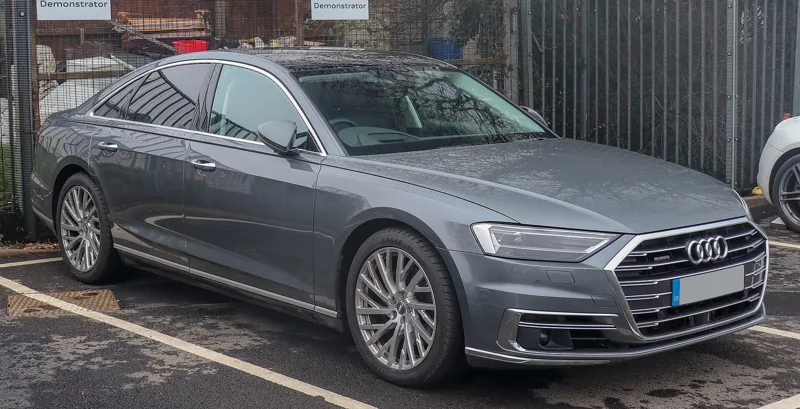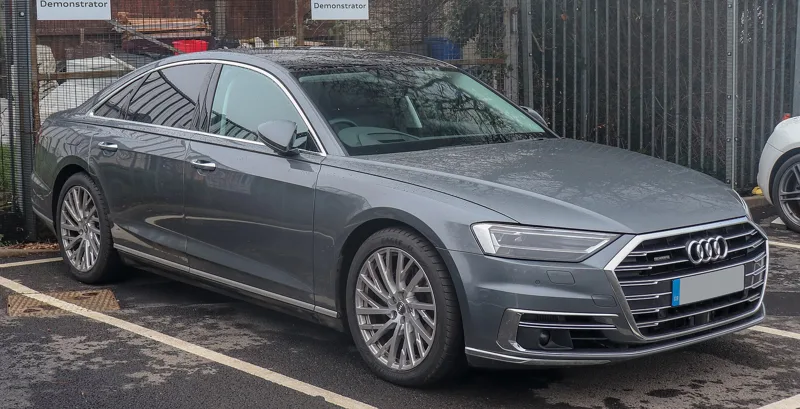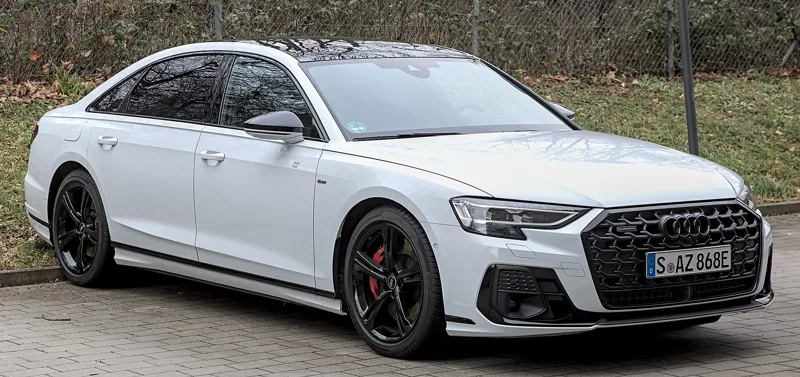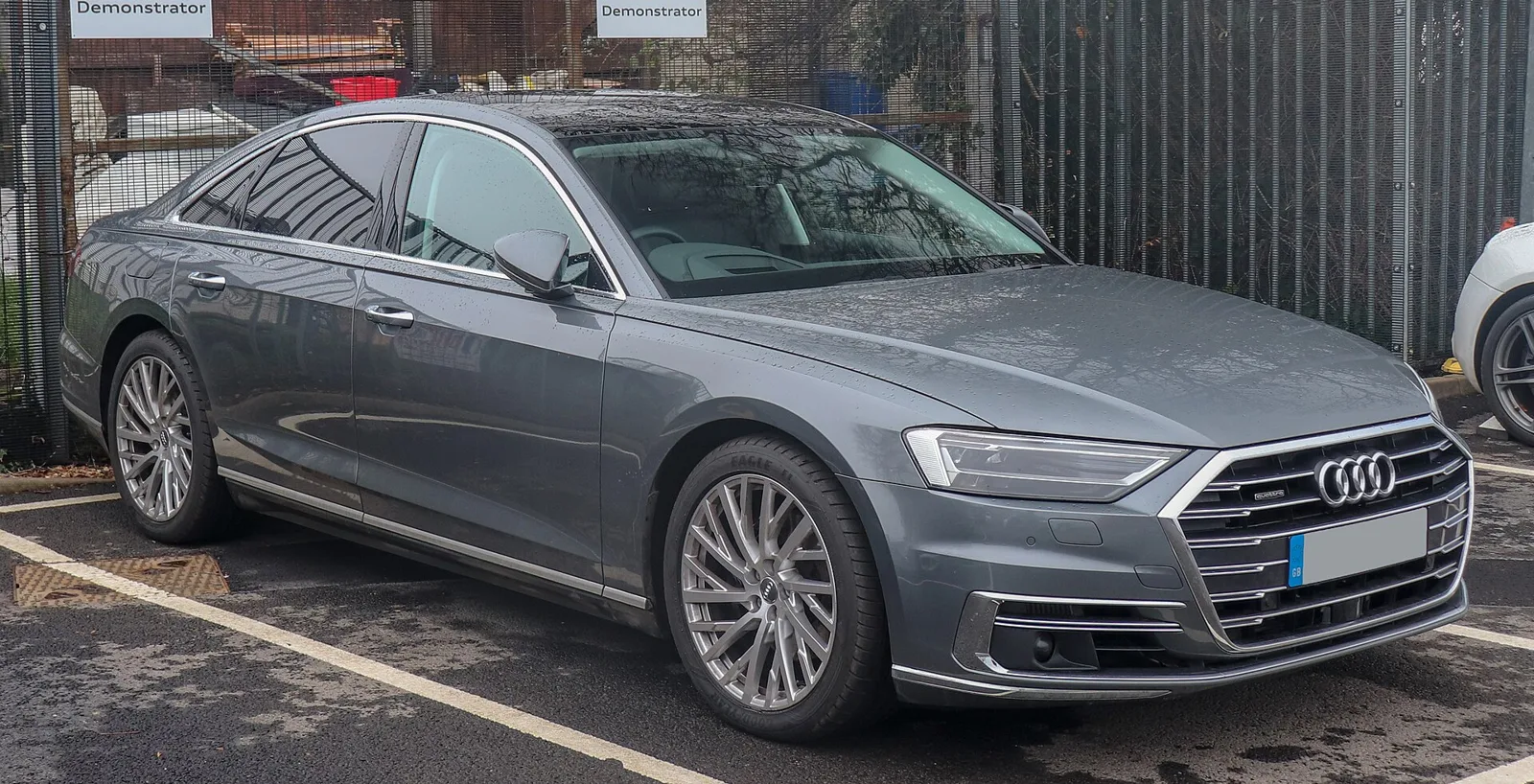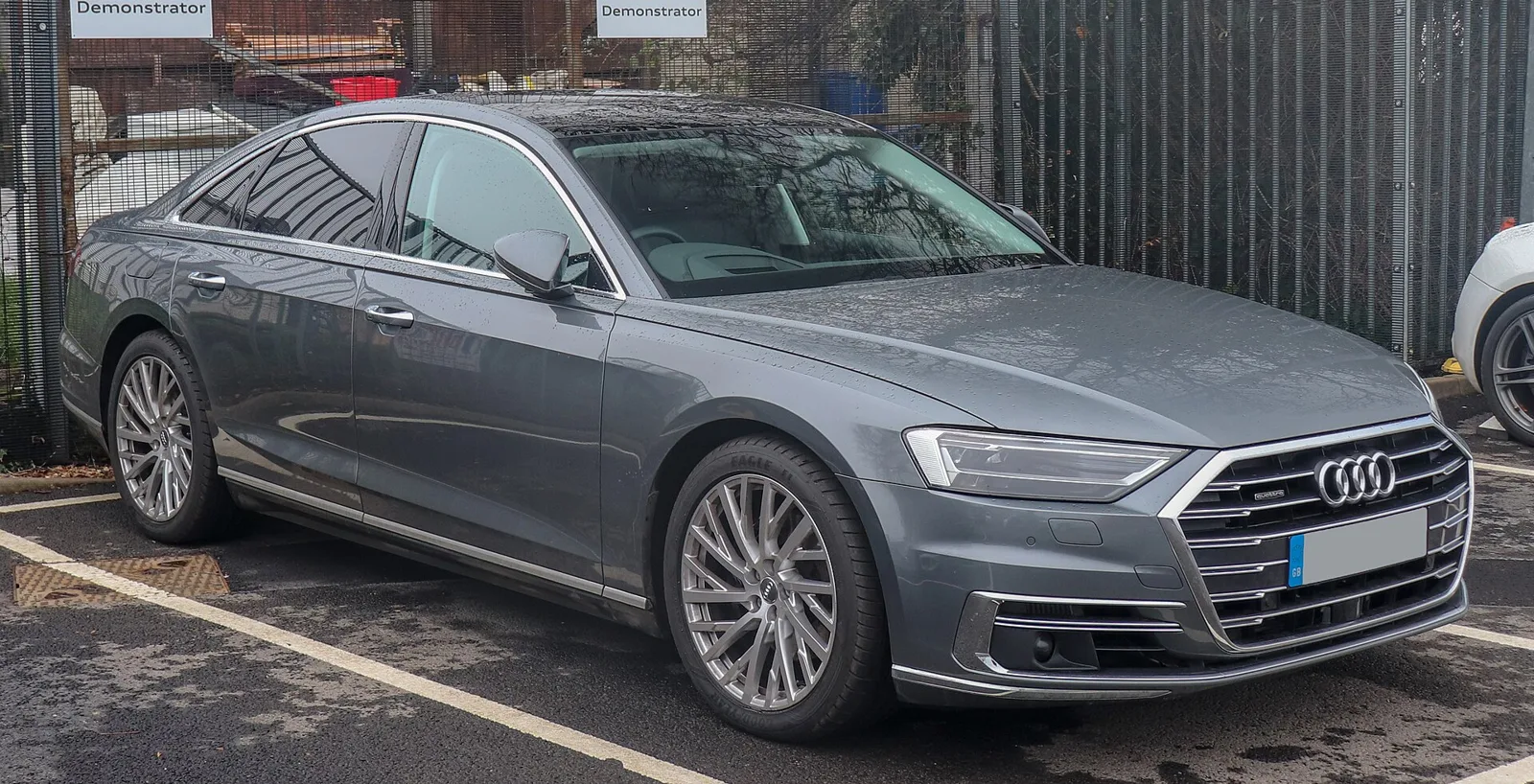
Audi's aluminium-bodied A8 and Toyota's luxury flagship, the Lexus LS, competed for the same wealthy buyers, built on very different ideas about how a flagship should be made.
The Audi A8 and Lexus LS were full-size luxury saloons that overlapped from 1994 to 2000. The A8 D2 used an aluminium body, while the LS 400 had a V8, a quiet cabin and a US base price of US$35,000 at its launch.
The Audi A8 and the Lexus LS were both full-size luxury saloons aimed at the most demanding buyers of the 1990s. The A8 arrived in 1994 with an aluminium body, and the first LS 400 had gone on sale in the United States in September 1989. The two cars overlapped from 1994 to 2000, when the second-generation LS was in production alongside the first-generation A8.
Were the Audi A8 and the Lexus LS rivals?
Yes. The A8 was designed as a competitor to the Mercedes-Benz S-Class and the BMW 7 Series, and Jaguar's XJ and Toyota's Lexus LS were also in its sights. The LS was therefore one of the cars Audi had in mind when it set the A8's brief.
The two makers approached the class from different directions. Audi chose an all-aluminium monocoque for its flagship, while Toyota's Lexus division built a conventional steel flagship with a new V8 and a focus on quietness. The sections below compare what each approach produced.
An aluminium German flagship chasing a Japanese luxury newcomer, two saloons that competed for the same buyers from 1994 to 2000.
How did the Audi A8 come about?
The A8 began with an agreement that Ferdinand Piech signed with the Aluminum Company of America in 1982. The aim was a car substantially lighter than its rivals, which would offset the roughly 100 kg (220 lb) penalty of standard all-wheel drive. A successor to the V8 flagship of 1988 was chosen as the target, and Chris Bird and Dirk van Braeckel produced the final design, which was frozen for production in mid-1991.
The Audi Space Frame concept appeared at the 1993 Frankfurt show in September, and pilot production started in December 1993. Work wrapped up in early 1994, having cost $700 million. The A8 was presented in February 1994, went on show in Geneva in March, and entered full production from June 1994.
How did the Lexus LS come about?
The Lexus LS began as a secret project. Toyota chairman Eiji Toyoda started the F1 project in August 1983, a clandestine effort to build a world-class luxury sedan for international markets. Chief engineer Ichiro Suzuki sought an all-new design that would surpass the American and European flagships on aerodynamics, cabin quietness, top speed and fuel efficiency.
The development effort was large. Some 60 designers, 1,400 engineers in 24 teams and 2,300 technicians built around 450 flagship prototypes and 900 engine prototypes, and logged 2.7 million kilometres (1.7 million miles) on the road. The eventual cost was over US$1 billion, and the car was named the Lexus LS to support the new marque.
How do the specifications compare?
The table sets the Audi A8 D2 against the Lexus LS 400 and its second generation, the two cars that overlapped with the A8.
| Feature | Audi A8 (D2) | Lexus LS (first and second generation) |
|---|---|---|
| Introduction | February 1994 presentation; production from June 1994; North America from 1997 model year | LS 400 debuted January 1989; US sales from 1 September 1989; second generation November 1994 |
| Structure | All-aluminium monocoque, the Audi Space Frame, co-developed with Alcoa | Conventional steel body with sandwich steel panels and extensive sound insulation |
| Drivetrain | Front-wheel drive or Torsen-based quattro all-wheel drive | Rear-wheel drive in the first four generations |
| Base engine | 2.8-litre V6 at 142 kW (193 PS; 190 bhp) for 1997 | 4.0-litre 1UZ-FE V8 at 245 PS (180 kW; 242 hp) in the LS 400 |
| Top engine | 4.2-litre V8 quattro at 221 kW (300 PS; 296 bhp) for 1997 | Second generation 1UZ-FE at 194 kW (260 hp) and 366 N-m (270 ft-lbf) |
| 0 to 100 km/h | Not reported | 8.5 seconds for the LS 400; 7.5 seconds for the second generation |
| Top speed | Not reported | 250 km/h (155 mph) |
| Weight | Substantially lighter than rivals by design | Second generation 95 kg (209 lb) lighter than the first |
| Price | Not reported | US$35,000 base price at US launch; above US$50,000 by 1994 |
| Drag and noise | Not reported | Drag coefficient 0.29; 58 dB cabin noise at 100 km/h |
| Long wheelbase | Long-wheelbase A8 L gains 127 mm (5 inches) of rear legroom | Long-wheelbase versions of later models |
| Safety | Six interior airbags added in 1997; ESP for all-wheel drive from 1997 | Front airbag for the passenger on the 1993 model year, the first Toyota-built series production car with one |
| Recall | Not reported | Voluntary recall of 8,000 cars in December 1989 |
| Production | Ended at number 105,092 on 4 August 2002 | Over 165,000 first-generation LS 400s built |
Which engines did the Audi A8 offer?
For 1997 the A8 had three engines. Front-drive cars took either a 2.8-litre V6 rated 142 kW (193 PS; 190 bhp) or a 3.7-litre V8 of 169 kW (230 PS; 227 bhp), while the quattro had a 4.2-litre V8 at 221 kW (300 PS; 296 bhp). The 3.7 V8 front-drive model was dropped in 2000.
Later A8s brought bigger engines. A 6.0-litre W12 arrived in 2001, made by joining two VR6 engines at the crankshaft, but only 750 D2 W12 models were built. The S8 of 2001 offered 360 hp in North America, following the European S8 4.2 quattro of 1996.
How did the Lexus LS engine evolve?
The LS 400's 4.0-litre 1UZ-FE 32-valve V8 delivered 350 N-m (258 lb-ft) of torque with 245 PS (180 kW; 242 hp), linked to a four-speed automatic with electronic shifts. The engine gave the car a quiet cabin, with 58 dB at 100 km/h, and a top speed of 250 km/h (155 mph).
The second generation kept the 1UZ-FE, now rated at 194 kW (260 hp) and 366 N-m (270 ft-lbf), and cut the 0 to 100 km/h time to 7.5 seconds. The LS 430 of January 2000 followed, and the LS 460 arrived in 2006 with the first production eight-speed automatic.
How did the two cars price themselves?
The LS 400 undercut its rivals in the United States, with a base price of US$35,000 that was thousands of dollars below the competition and drew accusations of selling below cost from BMW. The price had been intended to be $25,000 early in development, but the weaker yen pushed it up.
The A8's pricing is not reported in the material available here, so a like-for-like price comparison cannot be made. The A8 was positioned at the top of the Audi range, and it was the German state car of choice for the Chancellor from 1998.
What did the A8 and the LS say about their makers?
The A8 was the first mass-market car with an aluminium chassis, and Audi's Space Frame was marketed as a major step in engineering. That message fitted Audi's wider image as a company willing to take technical risks in its flagship.
The LS carried Toyota's ambition to enter the luxury class with a car that did not reuse existing parts. Its launch was complicated in Japan, where a Celsior badge sold a domestic version of the LS 400, and the first generation later earned a recall that helped establish the brand's customer service reputation.
How did the second-generation A8 build on the first?
The second generation, the D3 (Typ 4E), was previewed as the Audi Avantissimo concept at the 2001 Frankfurt Motor Show. It rode on the Volkswagen Group D3 platform, was unveiled in July 2002, and reached European showrooms in November 2002 before arriving in the United States in June 2003 as a 2004 model.
The development programme began in 1996, and the design process started in Ingolstadt in 1997. Six full-size clay models for the exterior had shrunk to two by late 1998, and the final theme was picked at the end of 1999 by Miklos Kovacs and Imre Hasanic. The A8 L added 120 mm (4.7 inches) of rear legroom to the long-wheelbase version.
What did the A8's interior and equipment offer?
The 1997 A8 offered dual-zone climate control, wooden and leather trim, heated 14-way seats and an upgraded Bose stereo. By 1999 side curtain airbags had been added, along with new colours and a reworked set of option packages, and a first aid kit sat in the rear centre armrest.
In 2002 the A8 L gained xenon headlights as standard, along with a heated steering wheel. Tyre pressure monitoring also arrived that year, and a boot release lever to help anyone trapped inside was added before production ended.
What was new in the LS 400's cabin and technology?
The LS 400 was among the first luxury sedans with an automatic tilt-and-telescoping steering wheel that carried an SRS airbag, along with power-adjustable shoulder belts and a self-dimming rear mirror. The cabin seated five and was trimmed in California walnut and leather, with soft-touch controls.
A back-lit electroluminescent gauge cluster with a holographic effect projected indicator lights onto the dash, and a memory system stored the driver's seat, mirror, steering wheel and seat belt positions. A Nakamichi premium sound system and an integrated hands-free telephone were options. Toyota counted some 300 technological features for smooth running and quiet, including fluid-damped cabin fixtures and sandwich steel body panels.
How did the Celsior and the Japanese market fit in?
Launching the Lexus in Japan was complicated by Toyota's existing dealer networks. A right-hand-drive Celsior version of the LS 400 was introduced on 9 October 1989 at Toyopet Store locations, and it came in basic A, uprated B and fully equipped C trims. Owning a Celsior was costly, because of Japanese dimension regulations and annual road tax.
The Celsior brought two world firsts: high-performance twin-tube dampers, and an air suspension married to an upgraded version of Toyota's semi-active Piezo TEMS system. In 1992 Aisin supplied the GPS navigation with spoken directions that the Celsior offered.
Which buyer suits which car?
The facts do not settle which car was better, because they reward different priorities. The Audi A8 suits a buyer who wanted an aluminium flagship with all-wheel drive, a V8 or the W12 in later years and a car chosen by a head of government. The Lexus LS suits a buyer who wanted a quiet, reliable V8 saloon with low noise, strong sales in the United States and a reputation for service.
Sales figures are the clearest measure for the LS, with over 165,000 first-generation cars built and production limited to about 50,000 a year. The A8's sales are not reported, so no verdict on sales can be reached.