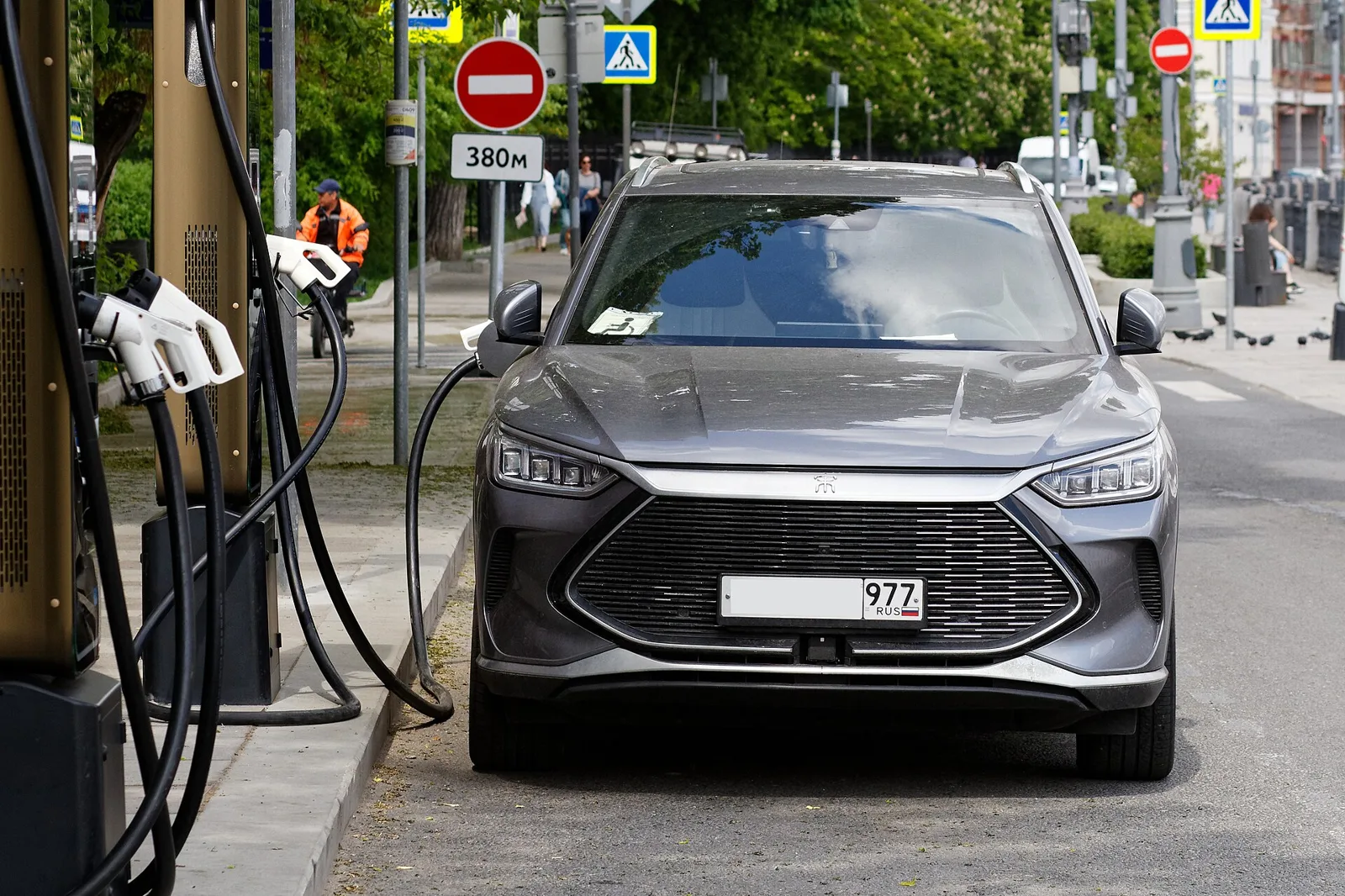
From a 1899 hybrid to the BYD systems that dominate today, how a battery that can be plugged in changes a hybrid's fuel use, costs and emissions, and why the verdict depends on how often the car is charged.
A plug-in hybrid electric vehicle has a battery that can be recharged from the grid and an engine that takes over when the charge runs out. Introduced in production from 2008, PHEVs are dominated by Chinese makers, and their savings depend on how often owners charge them.
A plug-in hybrid electric vehicle, or PHEV, is a hybrid with a battery that can be recharged from an external power source as well as by its own engine-driven generator. Most PHEVs are passenger cars, but plug-in hybrid versions now exist for sports cars, vans, buses, trains, motorcycles and boats. Their appeal is simple: a short trip can run on grid electricity, while a longer one can fall back on petrol or diesel without range anxiety.
How does a plug-in hybrid differ from a conventional hybrid?
A PHEV has a larger battery pack than a conventional hybrid, and it can be recharged from almost anywhere with access to the electricity grid. That allows longer and more frequent all-electric driving, and electric motors in PHEVs often produce more power and torque with quicker acceleration. Its battery is smaller than that of an all-electric car of the same weight, because it must also accommodate an engine and a hybrid drivetrain.
That compromise carries a benefit. If the charge runs out, the car can keep going on its engine, which helps relieve range anxiety in areas with few chargers. Generation can be central or local: a PHEV charged from solar, wind or hydroelectric power is largely emission-free, while one charged from a fossil plant moves the emissions from the tailpipe to the power station.
A battery that can be plugged in lets a hybrid run its short trips on grid power, and the real saving depends on how often it is charged.
What are the basic PHEV powertrain designs?
PHEVs use the same three architectures as conventional hybrids. In a series hybrid, the electric motor alone propels the car, with the engine acting as a generator. In a parallel hybrid, the engine and electric motors drive the wheels together. A series-parallel hybrid can work in either mode. The essential difference from a standard hybrid is that a plug-in obtains a significant share of its energy from the grid rather than from the engine alone.
| Architecture | How the wheels are driven | Typical role |
|---|---|---|
| Series | Electric motor alone; engine generates power | Extended-range designs such as the Chevrolet Volt |
| Parallel | Engine and electric motors together | Performance and efficiency blends |
| Series-parallel | Either mode, depending on demand | Many mainstream plug-in SUVs and sedans |
How do PHEVs manage their battery?
A plug-in hybrid runs in charge-depleting and charge-sustaining modes. In charge-depleting mode, a fully charged PHEV runs on electric power until its battery reaches a preset level, when the engine starts. That is the all-electric range. In charge-sustaining mode, the engine keeps the battery at a steady level. Blended mode combines the two, so a trip may start electric in town, switch to blended mode on the motorway and finish in charge-sustaining mode.
Most PHEVs also offer battery hold, which locks out the electric motor and saves remaining charge for later, and self-charge, which runs the motor as a generator while the car moves. Self-charge uses more fuel because the engine must both drive the car and recharge the pack, but it can help where there are few places to plug in.
How do plug-in hybrids charge?
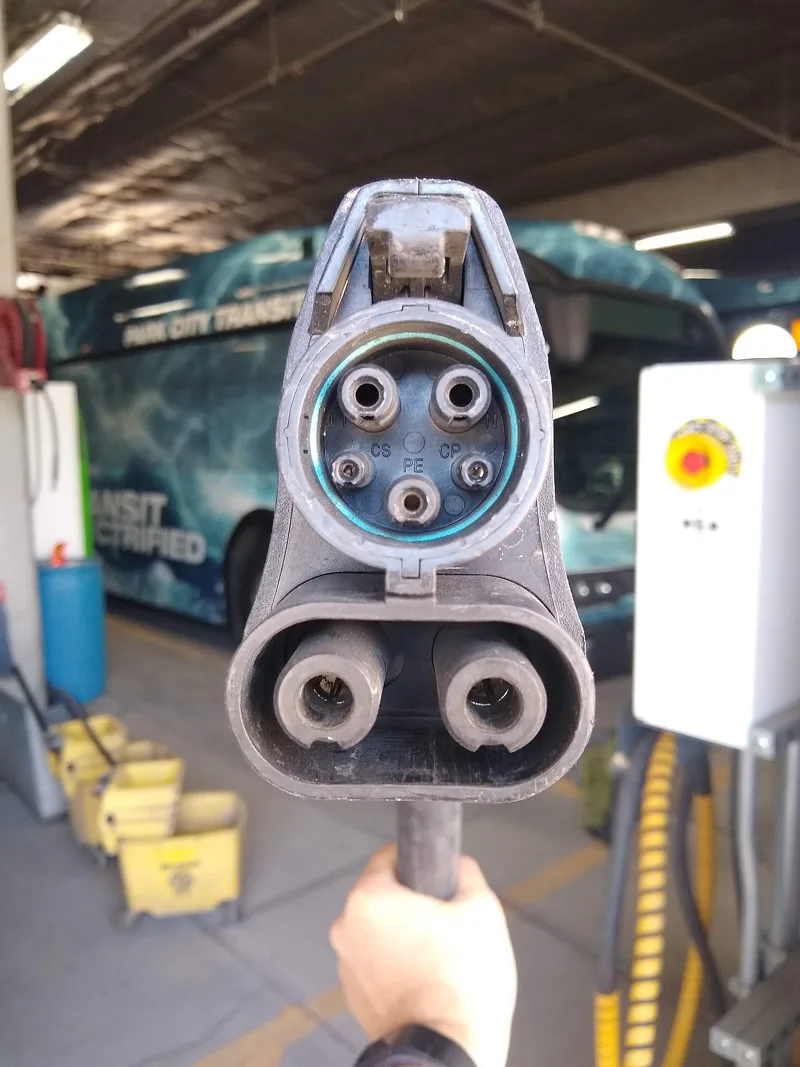
The charger can sit on board the vehicle or off board in a charging station. An on-board charger converts AC into DC for the battery, and its size and weight are limited, as is the capacity of ordinary AC outlets. Off-board chargers can be as large and powerful as the owner can afford, but the car must return to them, and fast chargers may be shared between vehicles.
Some designs reuse existing hardware. The motor windings can act as transformer coils, with the high-power inverter serving as the AC-to-DC charger, so the car gains a powerful on-board charger without much extra weight or bulk. AC Propulsion calls this reductive charging.
How did the plug-in hybrid begin?
The Lohner-Porsche Mixte, built as early as 1899, is usually regarded as the first hybrid car, and early hybrids could be charged from outside before they ran. The term plug-in hybrid came to mean a hybrid that can be charged from a standard wall socket. UC Davis professor Andrew Frank coined the phrase plug-in hybrid electric vehicle, and he is often called the father of the modern plug-in hybrid.
Interest revived in the early 2000s, when rising petrol prices in the United States encouraged hybrid sales. Renault sold the Elect'road, a plug-in series hybrid version of its Kangoo, from 2003. In 2004 a CalCars conversion of a Prius added lead-acid batteries and offered up to 15 km of electric-only driving. Toyota and General Motors announced plug-in plans in 2006, and a Toyota plug-in was certified for road use in Japan in 2007.
When did plug-in hybrids reach series production?
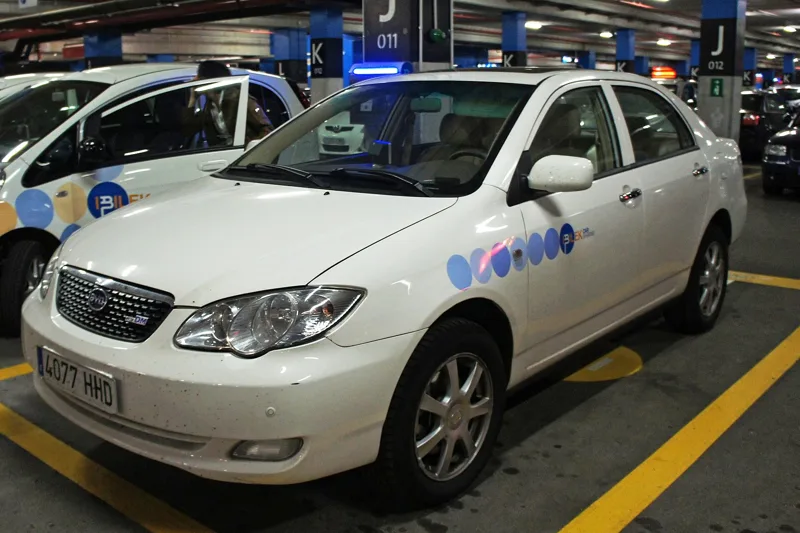
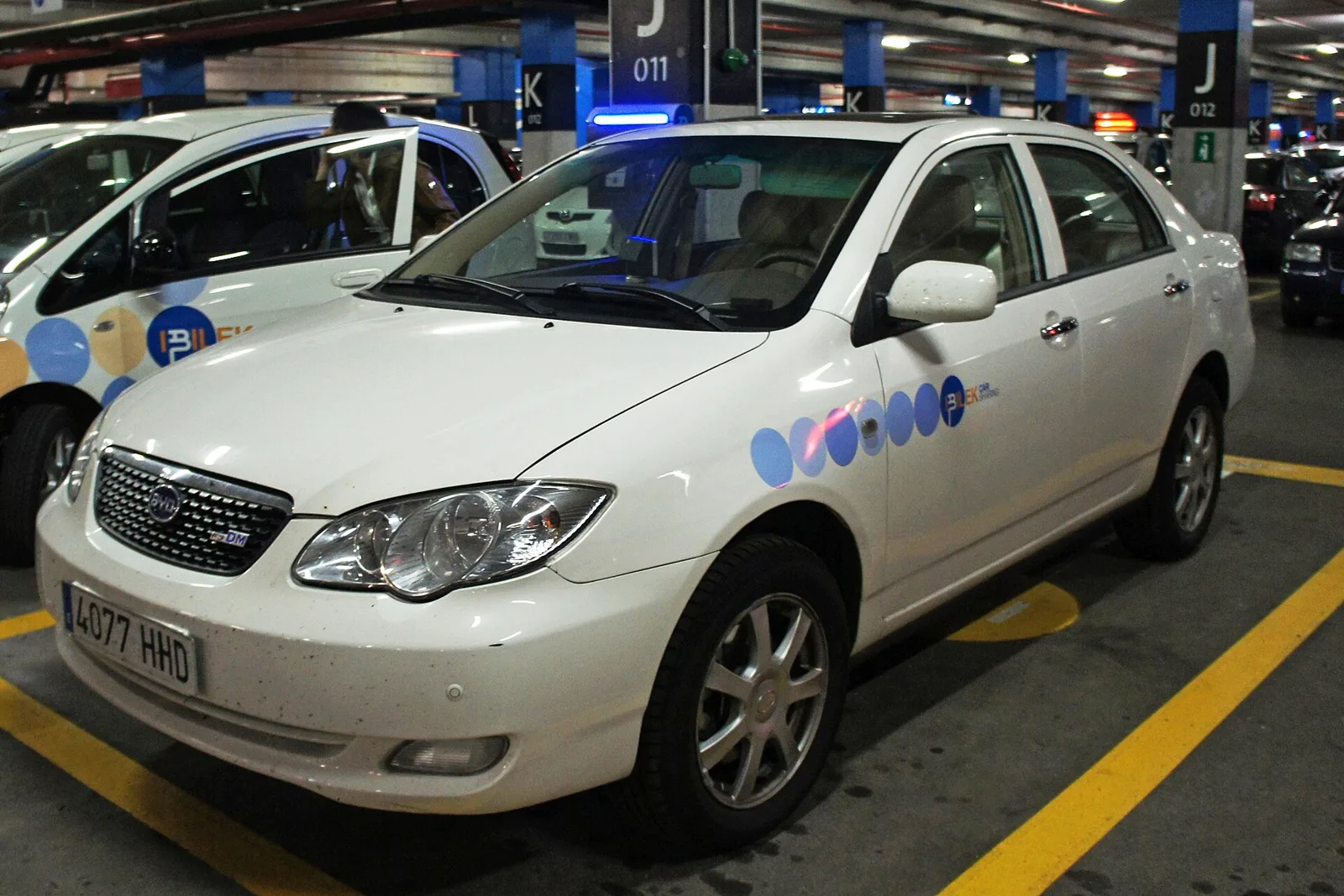
BYD Auto began selling the F3DM in China on 15 December 2008, making it the first production plug-in hybrid sold worldwide. Sales to the general public began in Shenzhen in March 2010, and subsidies were expected to bring it within reach of private buyers. The Chevrolet Volt, launched in the United States in late 2010, was the first mass-production plug-in hybrid from a major carmaker, and GM described it as an extended-range electric vehicle.
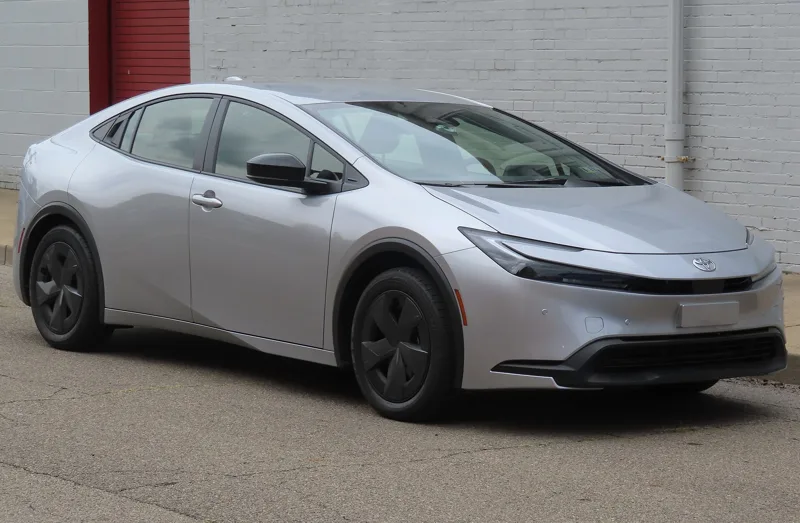
Through the 2010s the field grew. The Toyota Prius Plug-in Hybrid reached Japan in January 2012 and the United States the next month. The Mitsubishi Outlander PHEV became the first SUV plug-in hybrid in 2013, and the BYD Qin followed the F3DM in December 2013. Ferrari introduced the SF90 Stradale in May 2019, a plug-in supercar with 26 km of electric range from a 7.9 kWh battery and three electric motors. Toyota's RAV4 Prime followed in December 2019 as the brand's first plug-in SUV.
Who makes the most plug-in hybrids?
China has become the centre of the market. Cumulative plug-in hybrid sales reached 9.31 million units by December 2024, counting range-extended vehicles, which gives the country the biggest installed base anywhere. Chinese producers also dominate the global top five: BYD, Geely, Chery, Li Auto and Changan. BYD's plug-in share rose from 6.0 percent in 2020 to 39.1 percent in 2024, and Geely was the second-largest maker in 2025 with a 9.2 percent share.
Outside China, volumes have shifted. Volkswagen's global plug-in share peaked at 16.4 percent in 2020 and fell to 4.2 percent in 2024, while Toyota's dropped from 9.9 percent in 2019 to 2.4 percent in 2024. Those figures show how quickly the balance has moved toward Chinese brands.
Do PHEVs save fuel and money?
The answer depends on how often the car is charged. A PHEV can use less fuel than a conventional hybrid, because its engine runs less often and closer to its most efficient point. A Toyota Prius is likely to convert fuel at around 30 percent efficiency, while a plug-in with 70 km of electric range would operate its engine nearer its peak more often. Losses in generation, battery charging and the drivetrain still limit the gain.
Each kilowatt-hour of battery capacity in use can displace up to 50 US gallons of petroleum a year, according to one estimate. An analysis of Volt owners reported that they drove about 62.5 percent of their trips in all-electric mode, and a 2016 Ford report found that about half of its electrified-vehicle miles were run electric.
Costs have been a harder case. A 2010 National Research Council study put the cost of a lithium-ion pack at about US$1,700 per kWh of usable energy, and found that lifetime fuel savings would not offset the high upfront cost for decades. By 2024 pack prices had dropped to US$115 per kWh, and the 2025 BloombergNEF survey put the average at US$108. Even so, a 20 kWh PHEV pack reportedly costs about as much as a 65 kWh battery electric pack, because PHEV packs must meet higher power needs in a smaller size.
Consumer Reports said in March 2026 that PHEVs were unlikely to save most drivers money in the first few years without significant incentives, and that electricity and petrol prices strongly change the picture. A 2026 University of Michigan study put the break-even point against a comparable petrol car at roughly the sixth year for a typical new buyer driving 15,000 miles a year and charging mainly at home.
What are the emissions results?
Emissions depend on the electricity that charges the battery. Electric operation produces no tailpipe pollutants, but the clean-air benefit is often local, because pollution moves to the place where electricity is generated. A 2009 Argonne National Laboratory analysis examined well-to-wheel energy use and greenhouse emissions across several regional grid mixes, and found that petroleum savings and emission cuts grew with all-electric range except where coal or oil dominated the grid.
Timing matters too. An analysis by three economists associated with the National Bureau of Economic Research found that emissions from charging vary by hour and by region. In the Upper Midwest, charging during recommended off-peak hours could mean higher emissions per mile than the average car, because coal units often supply base-load and night-time demand. The result shows a real tension between cheap power and clean power.
Real-world tests add another layer. Recent studies in China found that plug-in hybrids used more energy than standardised test cycles suggest, and an International Council on Clean Transportation analysis of about 100,000 PHEVs found real-world fuel use and CO2 two to four times higher than type-approval values on average. Research in 2024 from the University of Michigan found that a 50-mile PHEV had 31 to 36 percent more greenhouse gas emissions than a 300-mile battery electric car across US regions.
How are governments supporting plug-in hybrids?
Support varies widely. In the United States, a federal tax credit of up to US$7,500 applied to PHEVs with a battery of at least 7 kWh, until vehicles acquired after 30 September 2025 lost eligibility. Canada launched its Electric Vehicle Affordability Program on 16 February 2026, offering up to CAD 5,000 for longer-range plug-in hybrids.
China has changed its approach repeatedly. Direct subsidies for plug-in hybrids ended at the close of 2022, and the purchase tax exemption was capped at 30,000 yuan for 2024 and 2025. From 1 January 2026, a plug-in hybrid needs at least 100 km of electric-only range to qualify for tax incentives, up from 43 km. Germany paid 3,000 euros to plug-in hybrids in its 2016 bonus, and discontinued subsidies for them in December 2022. In the United Kingdom, the Plug-in Car Grant ended on 14 June 2022, and no direct purchase subsidy for plug-in hybrids remains.