From a 1997 state-owned start-up with a copied first car to a listed group that sold 2,806,393 vehicles in 2025, with a multi-brand range and a growing overseas footprint.
Chery is a Chinese carmaker founded in 1997 in Wuhu, Anhui. It sold 2,806,393 vehicles in 2025, led China in car exports for many years, runs nine brands and listed in Hong Kong in September 2025, with a plug-in hybrid range built on its own engines and software.
Chery is a Chinese car maker founded in 1997 in Wuhu, Anhui, and it is now the fifth largest automobile group in China by volume, with 2,806,393 vehicles sold in 2025. It began with a car that copied a European design, and it has since become the country's largest car exporter, with a range that runs from budget hatchbacks to plug-in hybrid SUVs.
This guide covers how the company was founded, its first car and the lawsuits that followed, the engine business, the export push, the joint ventures with Jaguar Land Rover and others, the brand structure, the hybrid technology, the Hong Kong listing and the current line-up.
Where did Chery come from?
The company traces its start to 8 January 1997, when officials in Wuhu city set it up as a state-owned enterprise in Anhui province. The officials appointed Yin Tongyue, who later became chairman, as technical director in 1996. Its formal incorporation on 18 March 1997 created Anhui Auto Parts Co, Ltd, which received sizeable backing from the provincial treasury.
The first plan was to build an engine production line and a components industry before starting car manufacturing. The company is headquartered in Wuhu today, and the name Chery came from Qirui, a term that Yin Tongyue proposed in 1998 and that means unexpected and auspicious. The first brand launch in 1999 spelled it Cheery.
A Wuhu start-up that began with a copied SEAT-based car and now sells in more than 80 countries.
How did Chery make its first car?
Chery launched its first car, the Fengyun, in 1999. It used an unlicensed copy of the SEAT Toledo bodyshell and a Ford CVH engine built on equipment bought from Ford Dagenham. The Fengyun sold nearly 30,000 units, and by 2002 the company's production and sales had passed 50,000 units, placing it among the top eight domestic passenger car makers.
The company could not legally sell cars outside Anhui for several years, because it did not win a national passenger car production licence until 2003. During that period Chery piggybacked on a licence held by SAIC Motor, which at one point held 20 percent of Chery. That stake was sold on after tensions grew between Chery and SAIC's partner General Motors.
What lawsuits did Chery face?
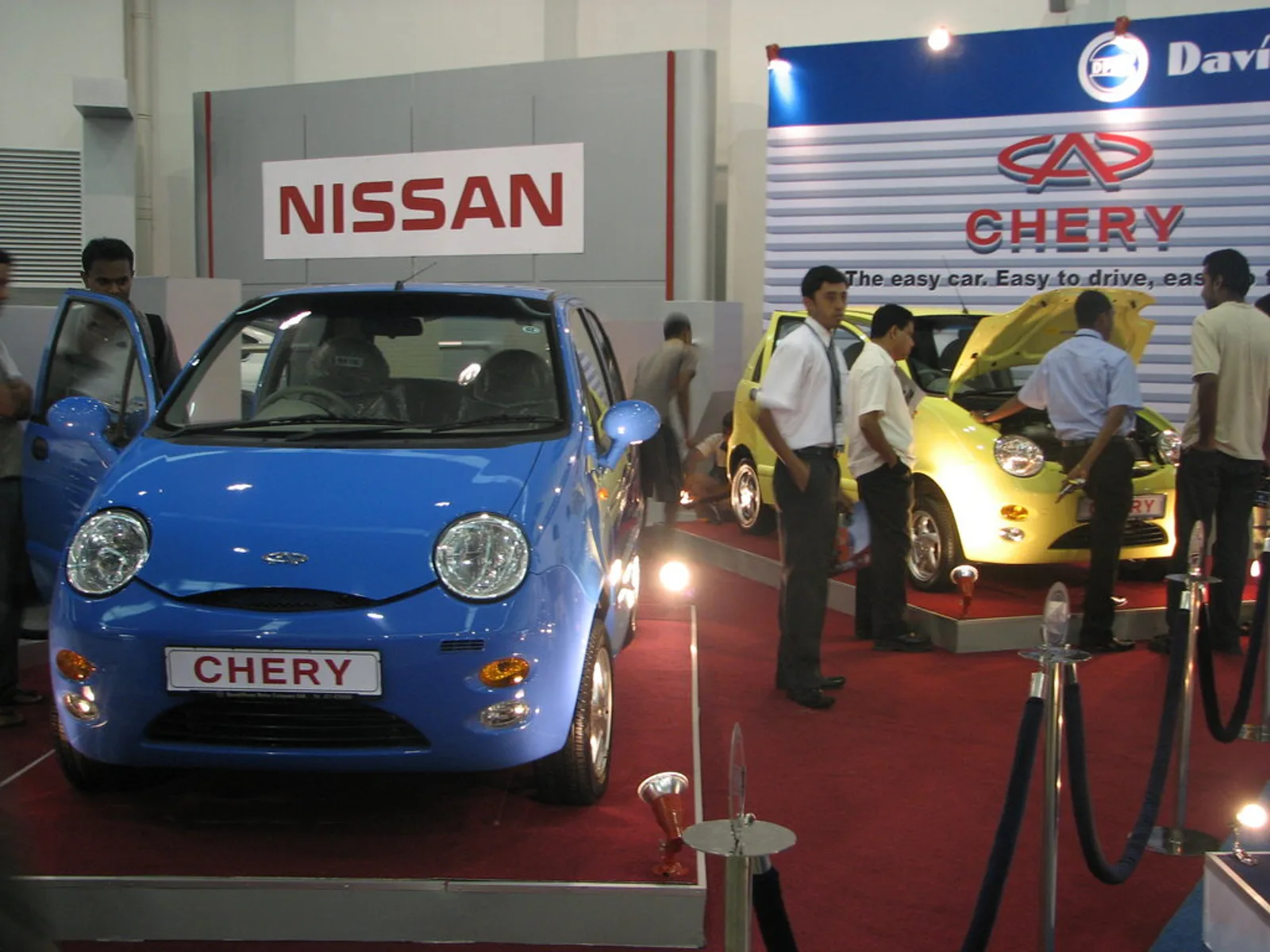
In May 2003 Chery launched the QQ, its smallest car, which sold well because of its design and low price. Owners did complain about quality and durability. In June 2003 General Motors filed a lawsuit alleging that the QQ copied the Daewoo Matiz, a car developed by GM Daewoo. The case was settled out of court in late 2005.
Volkswagen also planned a lawsuit over side deals with VW parts suppliers for the Fengyun, which was based on the Volkswagen Jetta II. Chery offered a financial settlement, and Volkswagen agreed not to proceed. The Wall Street Journal described the company in 2007 as an odd hybrid of communist state enterprise and entrepreneurial start-up.
The company's expansion into the United States also ran into trouble. In December 2004 Chery agreed an import deal with Visionary Vehicles, owned by Malcolm Bricklin, the entrepreneur who brought Yugo cars to America. The partners hoped to sell 150,000 vehicles in the US by 2007, but breach of contract claims in 2006 damaged the deal, and Visionary won a lawsuit against Chery in 2013.
How did the Chery engine business start?
In 2003 Chery bought 1.4-litre Tritec petrol engines made in Brazil, which had been developed by BMW and Chrysler. In 2005 it used a Mitsubishi Motors engine for the Tiggo SUV. From 2006 the company produced its own ACTECO engines, the result of a technical cooperation dating from 2003 with the Austrian engineering firm AVL.
From 2008 Chery supplied ACTECO engines to Fiat, which used the 1.6-litre and 1.8-litre units in the Fiat Linea. The engine business later became a source of sales to other manufacturers as well as an internal supply for Chery's own cars.
When did Chery become a serious brand?
The A3, introduced in August 2007, was the turning point for the brand. Its sedan was styled by Pininfarina, and it became the first Chinese-developed car to earn a five-star rating in the China NCAP safety test. The company also began sales in Argentina in July 2008, after selling cars to 69 countries that year.
Chery's production reached 508,500 units in 2009, against a capacity of around 650,000 units. More than 400,000 of its 2009 sales were sedans. The company then introduced three new brands, Karry, Rely and Riich, and renamed most of its cars with the Cowin prefix, except the E5, QQ and Tiggo.
The product spread proved a problem. With more than 100 new models in the works, Chery cancelled the Rely and Riich brands in the autumn of 2012. The company entered a period of returning to one Chery, and it cut its planned models to around 30.
How did Chery build its export business?
Chery started exporting in October 2001, after a car dealer from Syria saw a Fengyun in Beijing and tracked the car to the company's headquarters. Yin Tongyue agreed to export 10 cars as a trial. The company has been the top exporter of Chinese brand passenger vehicles since 2003, and it exported 119,891 vehicles in 2007.
Chery invested more heavily overseas than most Chinese rivals, and many of its vehicles were assembled abroad from complete or semi-complete knock-down kits. Exports rose from 269,154 vehicles in 2021 to 451,337 in 2022 and 937,148 in 2023, which accounted for 52 percent of overall sales that year.
The 2021 Double 50 plan aimed to export 500,000 vehicles and earn US$5 billion in export revenue by 2025. Chery overshot that target by a wide margin, and it reported more than 1.7 million vehicles exported as of 2024, with exports to more than 80 countries and regions.
Russia, South America and the Middle East are its main export markets. Chery says it was the first Chinese maker to export complete vehicles, CKD components, engines and whole production technology. By 2024 it had 10 production bases overseas, mainly in South America, the Middle East and Russia.
Which foreign partnerships shaped Chery?
In March 2012 Chery and Jaguar Land Rover agreed to invest an initial US$2.78 billion in a China-based joint venture, Chery Jaguar Land Rover, which received approval in September 2012. The first Chinese-made Range Rover Evoque rolled off the line on 21 October 2014 at the Changshu plant in Jiangsu.
The venture later ran into trouble. In May 2025 JLR said the joint venture would stop production before the end of 2026, after it lost US$18.7 million in the 2024 fiscal year. Jaguar XE, XF and E-Pace production was to end in September 2025.
Qoros was a 50:50 venture set up in December 2007 with Israel Corporation under the name Chery Quantum Automotive Corporation. In January 2021 Baoneng Group took 63% of Qoros, leaving Chery with 25%, and Qoros applied for bankruptcy in January 2026.
In Brazil, Chery's Jacarei plant was built with the government of Sao Paulo and started operating in August 2014. In 2017 Caoa bought a majority stake in Chery's Brazilian business, and the vehicles there were sold under the Caoa Chery brand.
Chery also agreed to a 40 percent joint venture with the Spanish firm EV Motors in 2024 to build cars under the Ebro brand in Barcelona, and it took a 10 percent stake in KG Mobility, formerly SsangYong, in September 2026 for US$75 million.
Why does Chery run so many brands?
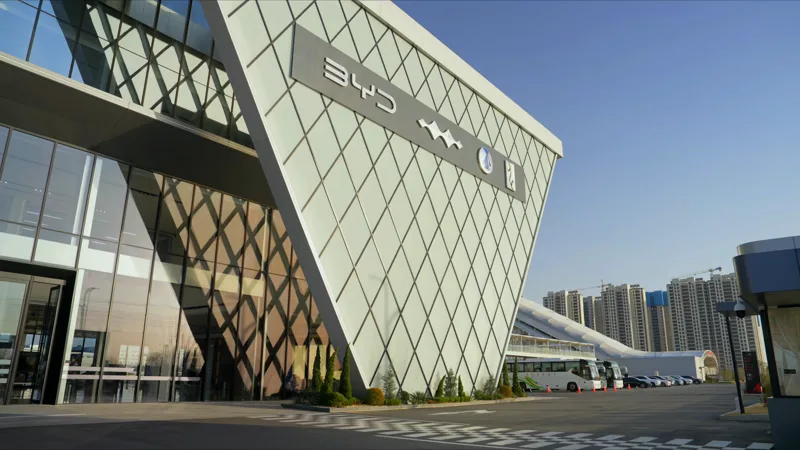
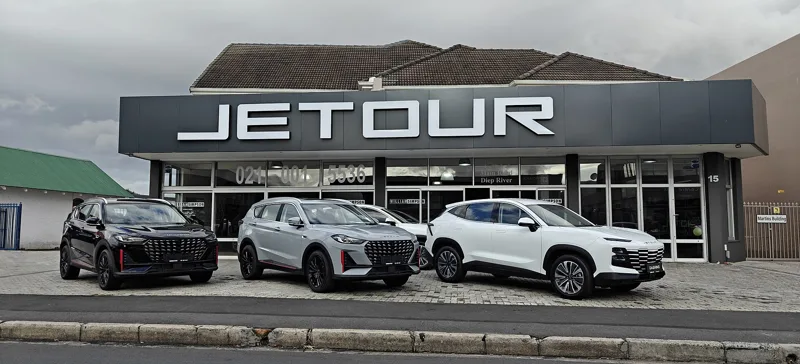
Chery adopted a multi-brand strategy, which it had first tried in 2009. As of 2024 it had nine active brands. The main Chery brand includes the Fulwin and Chery New Energy sub-brands for plug-in and electric cars, Exeed serves the premium market, Jetour focuses on SUVs with the Zongheng off-road line, and iCar sells electric SUVs.
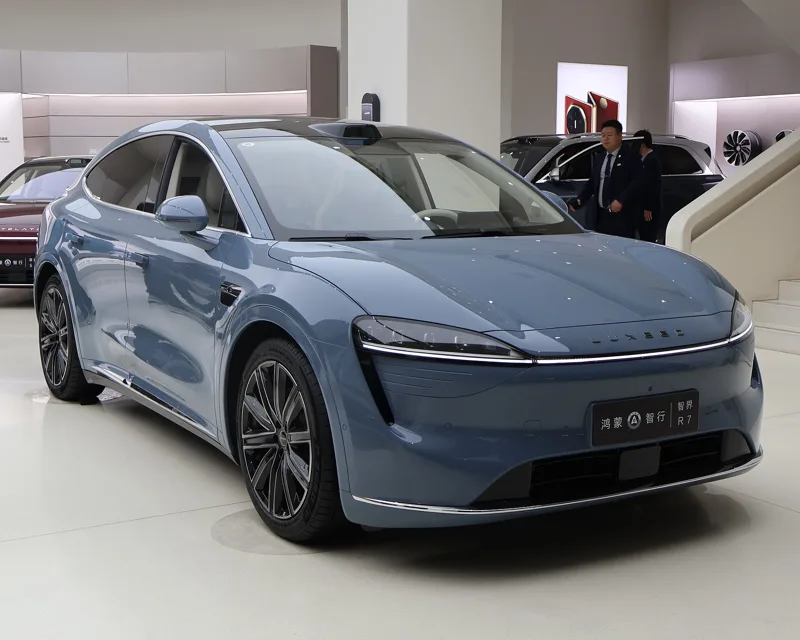
Luxeed is a collaborative electric car brand with Huawei, Karry sells commercial vehicles, and Omoda, Jaecoo, Lepas, Exlantix and Aiqar serve export markets. The strategy lets each brand target a different buyer, though it also means many models share parts and platforms.
How did the Exeed and Jetour brands start?
Exeed was introduced in September 2017 at the International Motor Show Germany in Frankfurt, showing the TX concept. The first production model, the Exeed TX/TXL mid-size SUV, arrived in March 2019. Chery describes Exeed as its premium passenger car brand.
Jetour arrived in January 2018 at an event in Beijing. It concentrates on value-for-money mid-size SUVs for families in tier-three and tier-four cities, and it has its own Shanhai sub-brand for plug-in hybrids.
What is the Chery Super Hybrid?
Chery Super Hybrid, known as CSH, is a family of hybrid powertrains introduced for overseas markets from 2025, in both full-hybrid and plug-in forms. The company began hybrid development in 2001. The plug-in version appears in the Tiggo 7, Tiggo 8, Tiggo 9 and Arrizo 8.
The flagship Tiggo 9 CSH pairs a 1.5-litre turbocharged hybrid engine with a three-speed dedicated hybrid transmission and three electric motors, giving all-wheel drive. Chery's figures put the system at 428 PS (315 kW) with 580 Nm of torque, reach 100 km/h from rest in 5.4 seconds, and give up to 147 km of electric-only WLTP range and up to 1,050 km combined. A 30-80% DC fast charge takes 18 minutes.
Chery says the CSH battery is rated IP68 and works between -35 and 60 degrees Celsius. In June 2025 engineers in Jakarta kept a battery pack under seawater in a one-metre tank for over 53 hours, then fitted it to a Tiggo 8 CSH that was driven afterwards. In April 2026 Chery Malaysia exposed a pack to a petrol fire for 80 seconds, and the pack showed no thermal runaway.
How did Chery design and develop its cars?
Chery invests around 7% of its total sales in research and development, and it had more than 4,000 patents by 2011. By late 2023 it had applied for more than 29,000 patents. Its R&D centre in Raunheim, near Frankfurt, was established in 2018, and the company planned to double its staff there to 120 by the end of 2024.
James Hope, a former General Motors designer, was hired in 2012. Hakan Saracoglu, once of Porsche, came aboard in 2013 and moved the brand's styling away from the budget image of the QQ. Former Mazda Europe design director Kevin Rice led the Raunheim centre from 2018 until he left for Pininfarina in 2020. By 2023 Chery had six design centres.
What does the Chery line-up look like today?
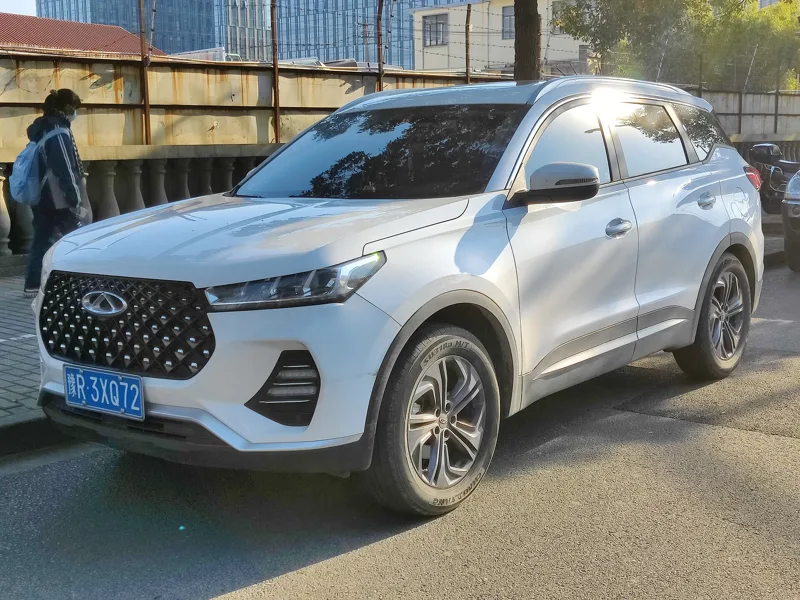
The passenger range is built around the Arrizo sedans, the Tiggo SUVs and the Himla pickup. The Arrizo 8 is a mid-size sedan from 2022, the Arrizo 5 is a compact sedan from 2016, and the Tiggo 9 and Tiggo 8 are mid-size SUVs. The Tiggo 7 and Tiggo 3x are compact and subcompact SUVs.
Fulwin, established in November 2023, sells plug-in hybrids in sedan, SUV and MPV series. The Fulwin A9L is an extended-range full-size sedan, and the Fulwin T11 is a full-size SUV. Fulwin became an independent luxury brand in July 2025, and the QQ line was reorganised in the same month, with the QQ3 hatchback as its current model.
Overseas, the Omoda 5 and Omoda E5 sell alongside the Jaecoo brand. Omoda and Jaecoo were launched in April 2023 for export only, and their combined target is 1,400,000 units a year by 2030.
How did Chery list on the stock market?
In January 2025 Chery Holding distributed its 42.32% stake to shareholders in a downchain restructuring to meet the listing rules. Wuhu SASAC held 21.17%, Luxshare Precision 16.83% and the Ruichuang employee company 11.51%. Anhui state-owned firms, CATL and Gotion High-tech also held stakes.
The Hong Kong listing on 25 September 2025 brought in roughly US$1.2 billion at HK$30.75 a share, a valuation near US$23 billion. The shares rose more than 11% on debut. After the listing, Chery Holding kept the commercial vehicle business, with no capital ties to the car maker.
What are the key Chery figures?
| Item | Detail |
|---|---|
| Founded | 8 January 1997, Wuhu, Anhui |
| First car | Fengyun, 1999; nearly 30,000 units sold |
| Production licence | Awarded 2003 |
| 2009 production | 508,500 units |
| 2010 sales | Nearly 700,000 units |
| 2025 sales | 2,806,393 vehicles |
| Exports | 269,154 (2021); 451,337 (2022); 937,148 (2023) |
| Export share | 52 percent of overall sales (2023) |
| Fortune Global 500 | 385th place in 2024, revenue $39.0917 billion |
| Brands | Nine active brands as of 2024 |
| Overseas plants | 10 production bases as of 2024 |
| R&D spend | Around 7% of total sales |
| Patents applied | More than 29,000 by late 2023 |
| IPO | 25 September 2025, HK$30.75 per share, about US$1.2 billion |
| Super Hybrid output | 428 PS (315 kW), 580 Nm, 0-100 km/h in 5.4 seconds (Tiggo 9 CSH) |