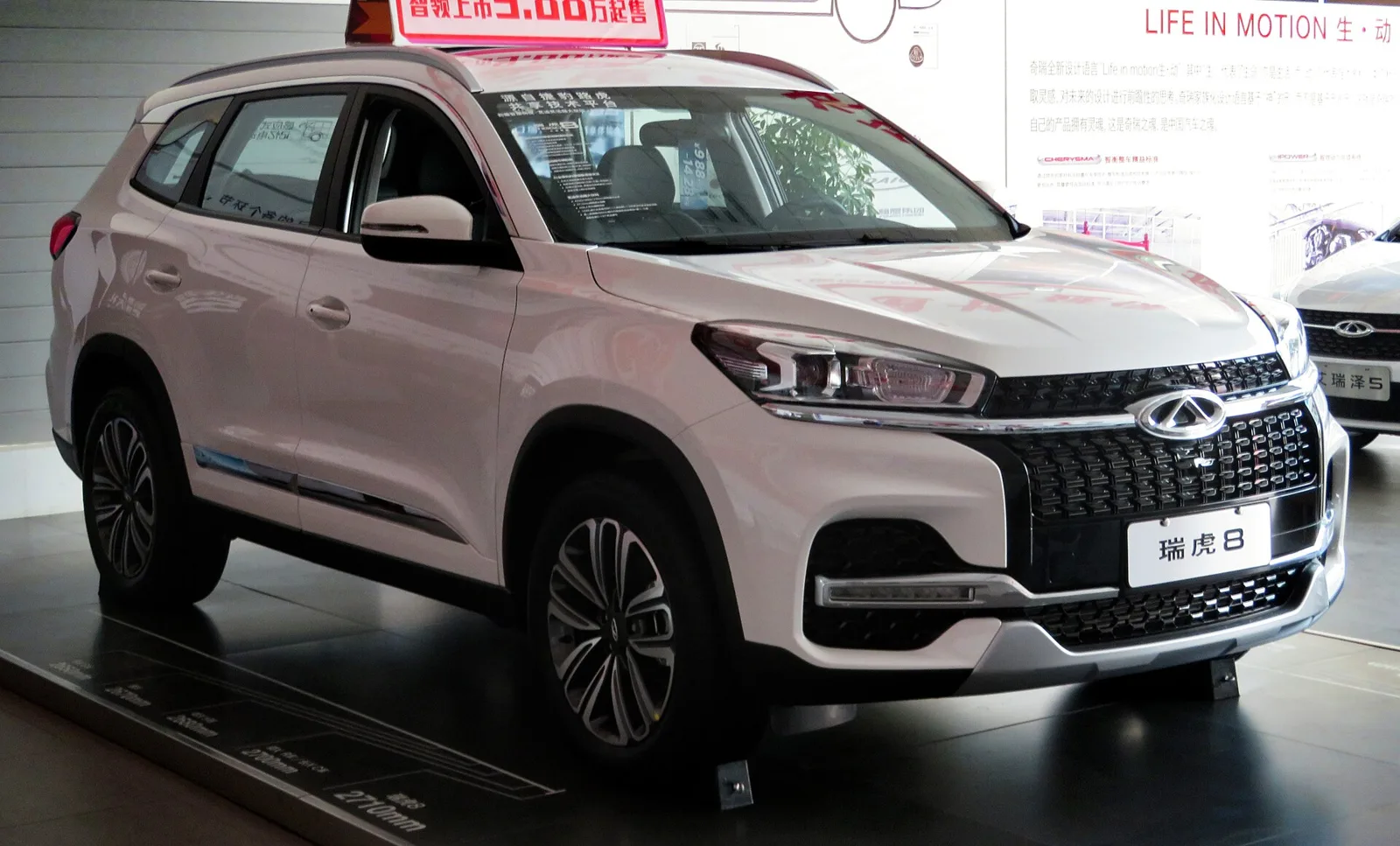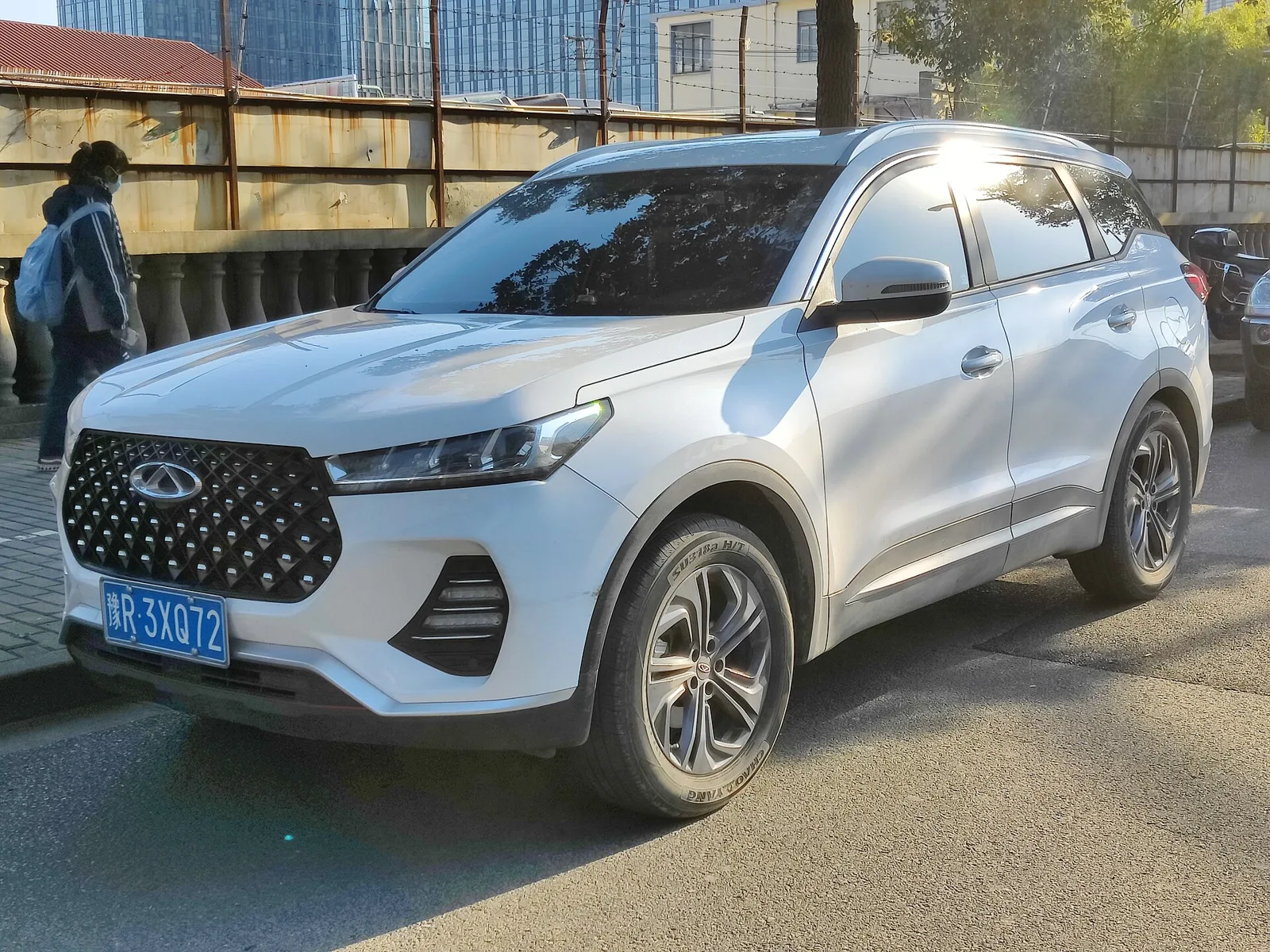
Chery's fourth Tiggo crossover across two generations, plug-in hybrid versions and rebadged editions sold from Spain to Russia.
The Chery Tiggo 7 is a compact SUV built by Chinese carmaker Chery since 2016. Its second generation arrived in 2019 and 2020 with petrol, mild-hybrid and plug-in hybrid engines. Rebadged versions have been sold in Europe, Russia and Iran, and the nameplate has continued through several facelifts.
The Chery Tiggo 7 is a compact crossover SUV from the Chinese automaker Chery, and it is the fourth model in the company's Tiggo line. The first generation went on sale in China in 2016 and the second in 2020. The nameplate has since reached many export markets under local names, with hybrid versions following from 2021.
When did the Tiggo 7 first go on sale?
The first-generation Tiggo 7, codenamed T15, was presented on 24 April 2016, and sales started in China on 20 September 2016. Chery based its design on the TX SUV concept shown at the 2012 Beijing Auto Show, and it sat above the Tiggo 5 in the range.
The car made its public debut at the 2016 Beijing Auto Show. Its platform later became the basis of the upmarket Exeed LX, introduced in 2019.
The facelift, called the Tiggo 7 Fly, was revealed on 21 September 2018 and went on sale about a week later. It kept the 1.5-litre turbocharged petrol engine, paired with a six-speed dual-clutch or six-speed manual gearbox.
A Qoros-branded version called the Young was previewed in August 2017 but was never released. Between 2020 and 2023 DR Automobiles sold the first generation in Italy as the DR F35, using the Fly styling with a different grille.
The fourth Tiggo crossover, and a nameplate that has reappeared under more brand names than most cars ever carry.
What engines does the Tiggo 7 use?
Current versions use a 1.5-litre turbocharged petrol rated at 116 kW (158 PS; 156 hp) with 230 Nm, a 1.6-litre turbo rated at 147 kW (200 PS; 197 hp) with 290 Nm, and a plug-in hybrid producing 240 kW (326 PS; 322 hp).
The 230T pairs with a continuously variable transmission in most markets, while a six-speed manual is sold only in China. The 290T uses a seven-speed dual-clutch gearbox, and some markets offer it with all-wheel drive.
A 48-volt mild-hybrid system has been offered since 2021, pairing the 1.5-litre turbo with a CVT. The plug-in hybrid, marketed as New Energy in China and e+ overseas since 2023, combines the 1.5-litre engine with a permanent-magnet motor and a 3-speed dedicated hybrid transmission. It offers 80 km (49.7 mi) of electric-only range.
The plug-in version's 545 Nm of torque makes it the strongest Tiggo 7 powertrain offered, with 326 PS across the range of engines.
What was the second generation and the Plus?
The second-generation car, codenamed T1E, was previewed as a near-production concept at the 2019 Guangzhou International Auto Show in November 2019. The production version was revealed on 23 December 2019, and sales started in China on 9 March 2020, with a Russian debut later that year.
The Tiggo 7 Plus was revealed in August 2021 at the Chengdu Auto Show. It added a redesigned front fascia, slightly updated taillights with a CHERY script on the rear, and a Lion 4.0 infotainment system with Baidu CarLife and Apple CarPlay. Sales began on 27 September 2021, and the Plus also introduced a mild-hybrid powertrain.
What did the 2023 and 2025 facelifts change?
The first 2023 facelift for China was unveiled on 29 September 2022, with a redesigned front end using headlight units from the Tiggo 8 Plus. A plug-in hybrid for China followed on 17 March 2023, and a second facelift revealed in April 2024 carried the 2025 model year.
The global version of the 2023 facelift came with the Pro Max name for petrol models and Pro e+ for plug-in hybrids. It used the 2021 Plus exterior with a redesigned front bumper and grille.
The 2025 facelift borrowed the exterior of the facelifted 2023 Plus, with a reworked bumper, grille and rear fascia. The overseas debut came in May 2024, when the Spanish brand Ebro showed the car as the S700 in Madrid, while Chinese models launched on 1 November 2024 as the Tiggo 7 Plus.
How did the second generation differ from the first?
The second generation was offered with two petrol engines, the 1.5-litre 230T and the 1.6-litre 290T, where the first generation also had a 2.0-litre naturally aspirated option. That 2.0-litre car ran only with a continuously variable transmission, while the turbo versions used a six-speed dual-clutch or manual gearbox.
The first-generation 1.5-litre turbo produced 110 to 113 kW (150 to 154 PS; 148 to 152 hp) with 205 to 210 Nm, and the 2.0-litre made 91 kW (124 PS; 122 hp) with 180 Nm. The second generation added hybrid technology instead. The 48-volt mild hybrid arrived in 2021, and the plug-in hybrid with 240 kW (326 PS; 322 hp) followed in 2023.
Where is the Tiggo 7 sold outside China?
The Tiggo 7 has been sold in Australia, Europe, Indonesia, Malaysia, Mexico, the Philippines, Russia and South Africa, usually under the Pro or Pro Max name. Brunei received a plug-in hybrid version from 11 September 2026, based on the Chinese-market Tiggo 7 Plus and launched alongside the Tiggo Cross. It marked the return of Chery to the market after 13 years.
Australia received the Tiggo 7 Pro in August 2023 with Urban, Elite and Ultimate grades and a 1.6-litre turbo petrol engine. The line was revised in February 2025 with SE and SE+ grades, and a Super Hybrid went on sale in June 2025 as the cheapest plug-in hybrid on sale there at launch.
The facelifted 2026 model arrived on 28 August 2025 with the Pro suffix dropped, a 1.5-litre turbo and six-speed dual-clutch gearbox, and an independent multi-link rear suspension. The same update removed the driver's knee airbag, the full-size spare wheel and the integrated satellite navigation.
Indonesia launched the Tiggo 7 Pro on 23 November 2022, but it was discontinued in May 2026 because of low sales. In Russia the car arrived on 10 September 2020, and the Pro Max followed in January 2023.
Local assembly took place in both Southeast Asian markets. The Indonesian car was built at Handal Indonesia Motor's facility in Bekasi, West Java, and the Malaysian car at Inokom's facility in Kulim, Kedah, where the plug-in version was also assembled.
Russia's plug-in hybrid arrived in October 2023 alongside the Tiggo 8 Pro e+, and it was sold there simply as the Tiggo 7 Pro Plug-In Hybrid, without the e+ moniker. In Mexico the Tiggo 7 Pro is marketed under the Chirey brand, and the plug-in version went on sale in July 2025 as the Chery Super Hybrid, available in Premium trim only.
South Africa's Super Hybrid went on sale in June 2025 for the Plus and Ultra trims, and at that point it was the cheapest plug-in hybrid available there.
Which rebadged versions exist?
Rebadged versions include the Ebro S700 in Spain, the DR 6.0 and Sportequipe 6 in Italy, the Fownix range in Iran, and the Xcite X-Cross 7 and Tenet T7 in Russia. Each one uses the second-generation car as its base, with local styling and, in some cases, different engines.
DR Automobiles launched the DR 6.0 in Italy on 20 April 2022, with a 1.5-litre turbo petrol or a Thermohybrid bi-fuel system. A 1.6-litre option and a plug-in hybrid followed in 2024, and the Sportequipe 6 sold as a sportier alternative since 2023.
Due to international sanctions, Iran's MVM sold the car under the Fownix brand from 2021, and it renamed the range the Fownix F7 Pro in 2025. Russia's AvtoVAZ built the Xcite X-Cross 7 from May 2024, and the Tenet T7 has been sold there since September 2025.
What other Tiggo 7 names exist in China?
Since November 2024 a revised version of the Chery Tansuo 06 has been sold in China as the Tiggo 7 High Energy, and a plug-in hybrid variant is marketed as the Tiggo 7 C-DM. The Tiggo 7L, based on the Omoda C7 sold in international markets, was revealed in China on 2 March 2026.
What trim levels did overseas buyers get?
Overseas trim structures varied widely, with the 1.5-litre petrol usually the base engine and the 1.6-litre turbo reserved for upper grades. Russia, South Africa, Indonesia, Mexico and Malaysia each built its own line-up from the same Chinese-market car.
Russia offered the Tiggo 7 Pro in Luxury, Elite and Prestige trims with the 1.5-litre turbo petrol as standard. The Pro Max added Prestige and Ultimate trims at launch, and the 1.6-litre turbo became available with all-wheel drive in July 2023.
South Africa's Pro came in Distinction and Executive versions, and the Pro Max added a Premium variant in April 2024. In Indonesia the Pro came in Comfort, Luxury and Premium grades, all with the 1.5-litre engine. Mexico offered Comfort and Luxury trims with the same engine.
The Malaysian model came as a single unnamed variant with a 1.6-litre turbo, and the Philippines sold its Pro with a single 1.5-litre engine. The South African range changed again in July 2025, when the facelifted model arrived with Prime, Prestige and Legacy variants, and the Executive with the 1.5-litre engine joined the line in April 2026.
Specifications at a glance
| Specification | Detail |
|---|---|
| First generation | T15, presented 24 April 2016; sales from 20 September 2016 |
| Second generation | T1E, production revealed 23 December 2019; China sales from 9 March 2020 |
| 230T engine | 1.5-litre turbo petrol, 116 kW (158 PS; 156 hp), 230 Nm |
| 290T engine | 1.6-litre turbo petrol, 147 kW (200 PS; 197 hp), 290 Nm |
| Mild hybrid | 48-volt system from 2021, with CVT |
| Plug-in hybrid | 240 kW (326 PS; 322 hp), 545 Nm, 80 km (49.7 mi) electric range |
| Australia | Tiggo 7 Pro from August 2023; 2026 model year from 28 August 2025 |
| Brunei | Plug-in hybrid from 11 September 2026 |
| Europe | From June 2025, starting in Poland |