A luxury off-road marque launched by British Leyland in 1970, shaped by four generations of engineering and now in its fifth generation with an electric plan.
Launched by British Leyland in 1970, Range Rover is the premium off-road line now sold within Jaguar Land Rover. It won the Paris-Dakar Rally in 1979 and 1981, reached American buyers officially in 1987, and is now in its fifth generation.
Range Rover began as a premium off-roader from British Leyland and now operates as a luxury marque inside Jaguar Land Rover. It debuted in 1970 and is in its fifth generation. Its story runs from early prototypes to a family of models that includes the Sport, the Evoque and the Velar, with a constant focus on premium off-road capability.
Where did the Range Rover idea come from?
Rover, the firm behind Land Rover, had been testing a bigger vehicle as early as 1951. Gordon Bashford developed a two-wheel-drive Road Rover project based on the Rover P4, but it was shelved in 1958 and lay dormant until 1966.
In 1966 Spen King and Bashford began a fresh model. The first prototype was built in 1967, carrying the plate SYE 157F, and the design was finalised in 1969 after a long period of development.
From a 1967 prototype to a luxury family of 4x4s, Range Rover has kept one idea at its centre: capability that never needs an apology.
How were the first development cars built?
Between 1969 and 1970, twenty-six development cars took to the road on a run of registration plates. Chassis 3, registered YVB 153H, is thought to be the earliest car built for sale, since a car in that colour was needed quickly for marketing.
The name Velar came from the Italian word for veiling or covering. Range Rover development engineer Geof Miller used it as a decoy when registering pre-production cars, and a Velar company in London produced 40 pre-production vehicles between 1967 and 1970.
What made the first Range Rover different?
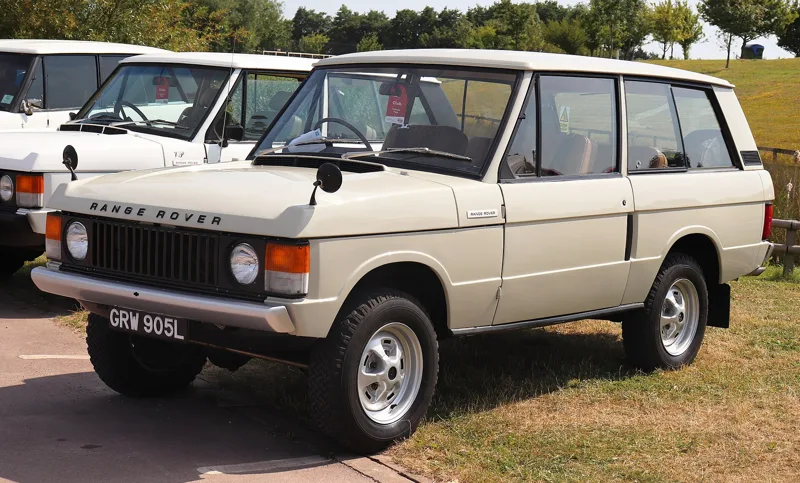
Unlike rival off-roaders, the first Range Rover was not conceived as a luxury car. It was more upmarket than the Land Rover models that preceded it, but its early interiors had vinyl seats and plastic dashboards that could be washed down with a hose.
Its engineering was clear and robust. It was a body-on-frame design with a box-section ladder chassis, like the Series Land Rovers, but it used coil springs instead of leaf springs, with permanent four-wheel drive and four-wheel disc brakes.
How did the first generation grow up?
The first-generation car was built from 1970 to 1996 and was available only as a two-door until 1981. Creature comforts arrived slowly, with power steering, carpets, air conditioning and wooden trim fitted later in the car's life.
The engine story is equally long. The car began with a detuned 127 hp Rover V8, which Lucas fuel injection lifted to 155 hp in 1984. The 3.5-litre engine was enlarged to 3.9 litres for the 1990 model year and to 4.2 litres in 1992 for the long-wheelbase Vogue.
Diesel followed in 1988 with a 2.4-litre turbodiesel producing 112 bhp, built by the Italian firm VM Motori under the Beaver project. A mildly tuned 119 bhp version followed in 1990, and in 1992 Land Rover introduced its own diesels, beginning with a 111 bhp unit first seen in the Discovery.
Specialist versions were built on the same platform. Carmichaels produced a six-wheel fire tender, and the Ministry of Defence bought examples for the RAF, while at least one survivor was later converted into a full six-wheel-drive machine.
How did the Range Rover reach North America?
Before 1987 American owners had to rely on unofficial grey-market imports. Its popularity through those channels prompted official sales to begin on 16 March 1987, and until 1993 the marketing was entirely in the Range Rover name.
In 1993 the American arm, with the Defender 110 and the Discovery on its horizon, was rebranded as Land Rover North America. The move reflected a broader line-up that the single Range Rover could no longer represent on its own.
Australia had its own chapter. Jaguar-Rover-Australia began assembling the Range Rover from kits at Enfield in New South Wales in 1979, but rising import duties on parts ended the local assembly run in 1983.
What changed in the second and third generations?
The P38A, as the second generation was coded, appeared for 1996 on the long-wheelbase platform. It offered an updated Rover V8 or a 2.5-litre BMW six-cylinder turbodiesel with electronically controlled injection, the first of its kind in a Land Rover.
The P38A was the final Range Rover with the Rover V8, and its leather came from Connolly, a supplier that closed in 2002. It was also the first Range Rover offered with satellite navigation as an option.
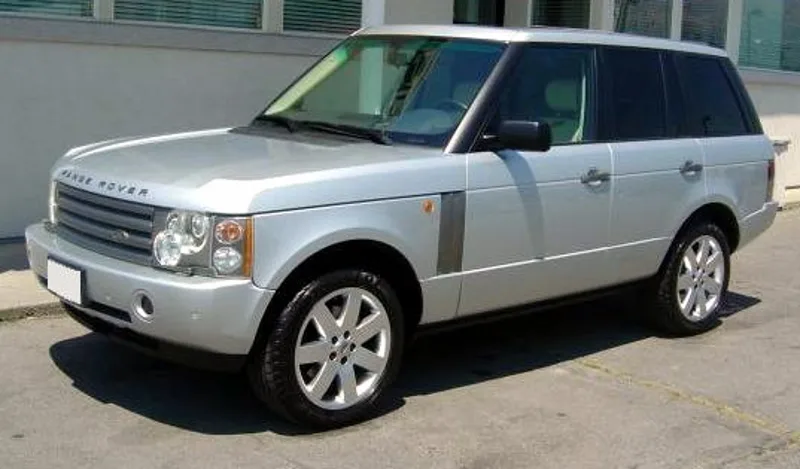
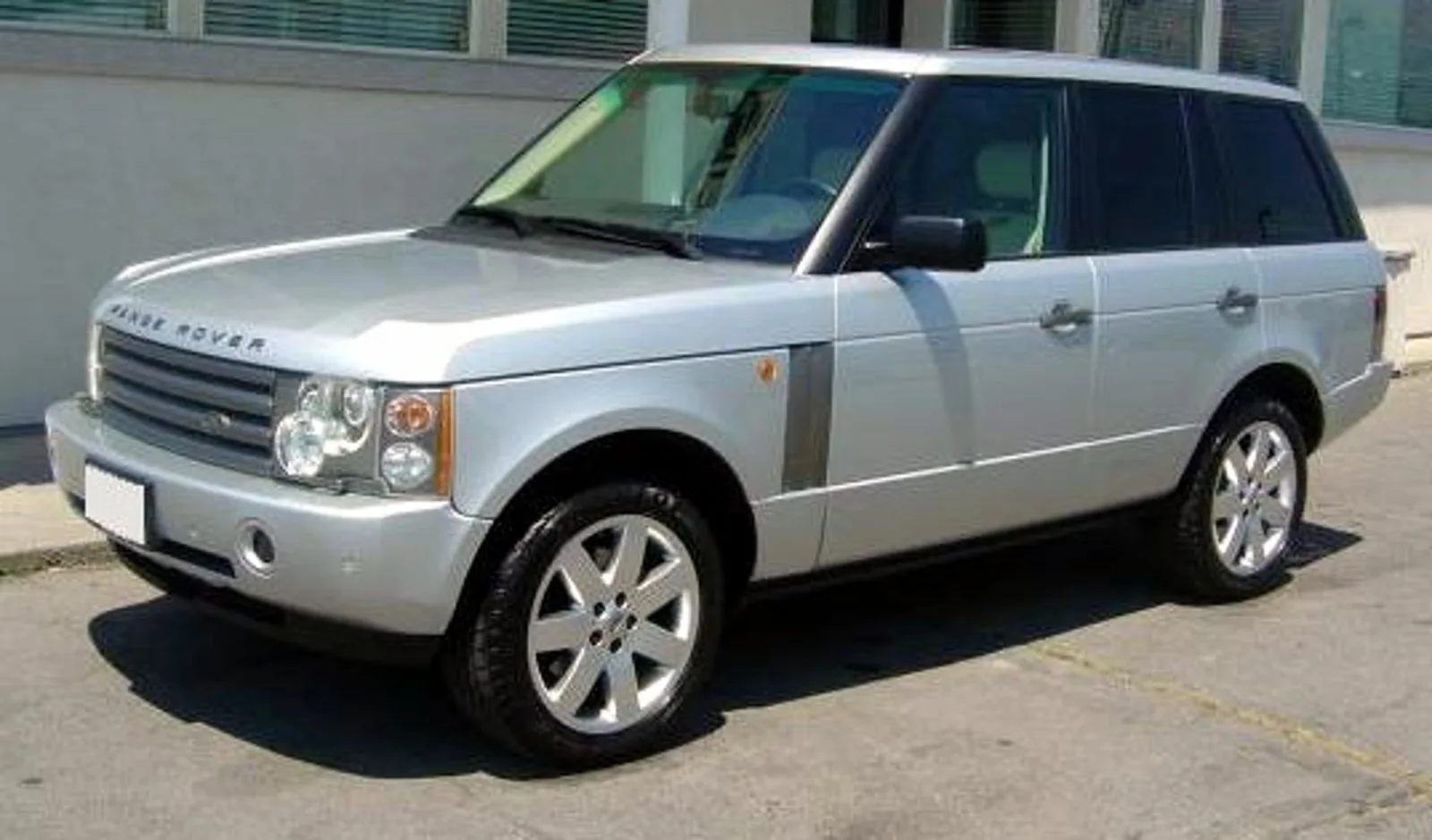
The third generation arrived in 2001 and moved the model further upmarket. Planned under BMW ownership, it shared components and electronics with the BMW 7 Series, and it used a 4.4-litre BMW V8 in its first years before Jaguar-derived engines took over.
The third generation was produced in three phases. The first ran from 2001 to 2005 with the BMW V8 and an automatic transmission, the second from 2006 to 2009 with Jaguar-derived engines, and the third from 2010 to 2012 with the new 5.0-litre engines.
Why was the fourth generation a turning point?
The fourth generation, codenamed L405, was shown at the 2012 Paris Motor Show. It used an all-aluminium monocoque body in place of the earlier steel unibody, which made it the first production 4x4 SUV built that way and cut 420 kg from the car.
Hybrid models followed. The Range Rover Hybrid, a diesel-electric model, was unveiled at the 2013 Frankfurt Motor Show, and a petrol plug-in hybrid was unveiled in 2018. In 2021 the Sport D350 added a 3.0-litre diesel to the range.
The move to an aluminium body was a major engineering project, and it set the pattern for the lighter, more efficient vehicles that followed in the range. It also showed how far the platform could be pushed without losing the character of the car.
What does the fifth generation promise?
Gerry McGovern, the car's designer, unveiled the fifth-generation model in London on 26 October 2021, with the group's creative chief alongside him. The car was launched with mild hybrid diesel and petrol engines, and plug-in hybrids were due in early 2022.
The line-up also included a 4.4-litre engine developed under the partnership between JLR and BMW, and the company set a target of an all-electric model by 2026. That plan put the marque at the centre of the group's shift to electric power.
How did the Range Rover family expand?
The Range Rover Sport arrived in late 2004 as a production development of the Range Stormer concept. Although it was called a Range Rover, it was built on the Discovery platform with a shorter wheelbase, and it quickly became one of the biggest sellers in the Land Rover range.
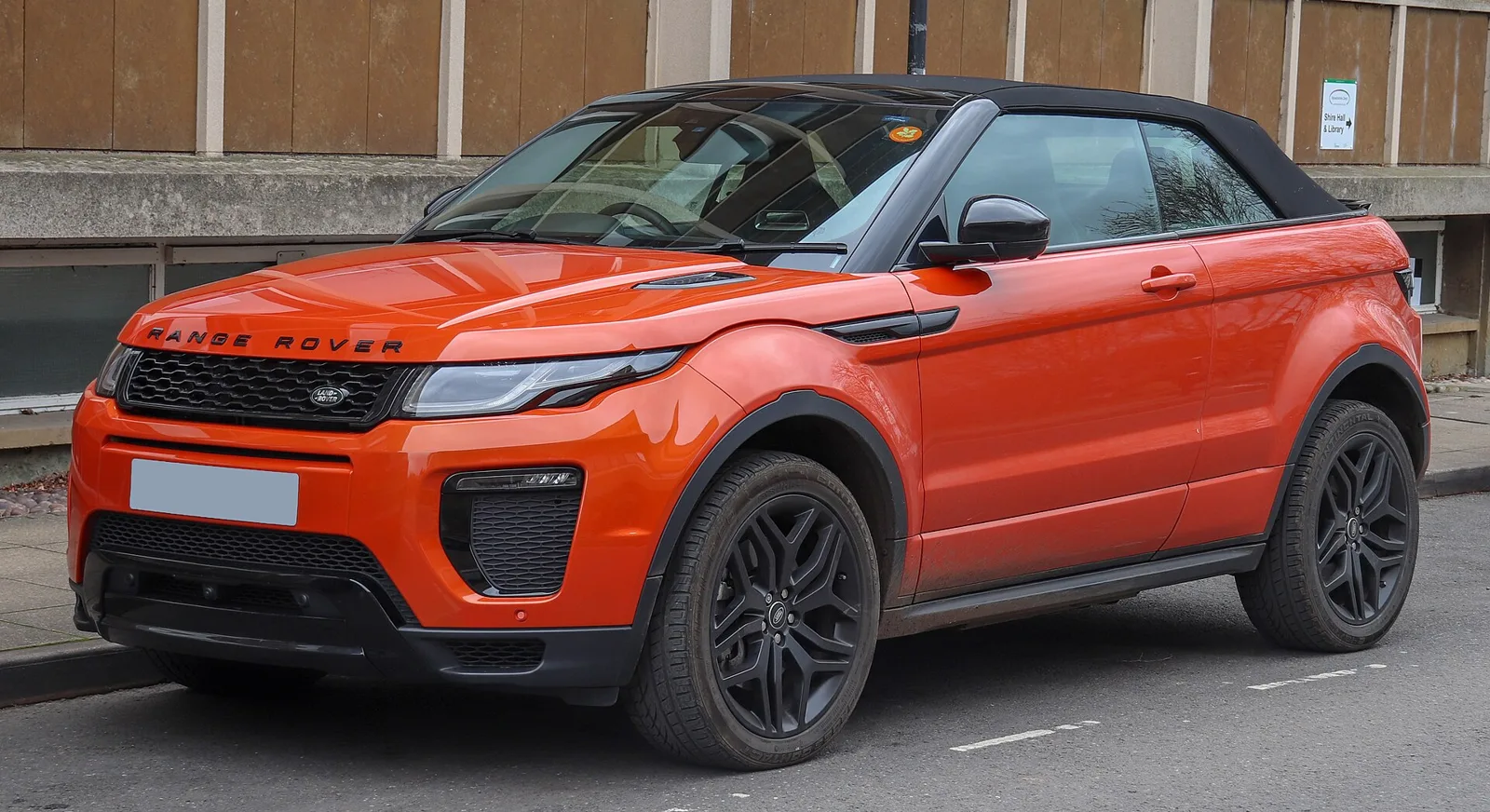
A redesigned Sport for the 2014 model year moved to the alloy platform used by the flagship, which made it around 400 kg lighter than its predecessor. The Evoque followed in July 2011 and was built with three or five doors, while the Velar arrived in March 2017.
The Velar was a mid-size crossover that reused the Range Rover name and shared its platform with the Jaguar F-Pace. Its roofline ran away at the rear, and it was the first family member to use that particular styling approach.
Each new model widened the audience for the name, though the core promise of the badge stayed the same: a capable, luxurious vehicle that could handle rough ground and city streets alike.
How did sales grow under Jaguar Land Rover?
Sales rose sharply after Jaguar Land Rover was formed in 2008. In 2009, during a severe recession, just over 22,000 Range Rovers were sold. Four years later the company sold more than twice that number, and by 2015 worldwide sales had exceeded 60,000.
The growth reflected the brand's move from a niche product to a mainstream luxury line, a change that the sales figures make plain.
The sales table in the company's figures excludes the Sport, Evoque and Velar. Those models brought extra volume, but the core Range Rover figures show the flagship's growth in the period.
What motorsport record does the Range Rover have?
A Range Rover won the inaugural Paris-Dakar Rally in 1979, and another won the 1981 event. Each win covered a race distance of roughly 10,000 km across harsh terrain, which made the car's reputation for endurance.
The East African Safari Rally also featured Range Rovers. Off-road success was part of the brand's identity from its earliest years, and the Trans-Americas Expedition of 1972 showed the same capability.
The 1972 British Trans-Americas Expedition became the first vehicle-based crossing of the Americas from north to south, including the roadless Darien Gap. The modified Range Rovers from that trip are held in the heritage collection at Gaydon.
Paris-Dakar was among the toughest events of its era, and winning it twice showed the car could sustain long-distance running across harsh terrain, not just short bursts of off-road work.
What criticism has the brand faced?
The brand has drawn criticism over its environmental impact. In 2005 Greenpeace members temporarily disrupted production at the Solihull plant, and Spen King himself criticised urban owners of off-roaders in 2004, saying the design was never meant as a status symbol.
Security and reliability have also been recurring themes. In 2014 reports said Range Rovers could be opened with hand-held equipment, and insurers in London reportedly refused to cover new models after a series of thefts.
Quality rankings have been unkind to the parent brand. J.D. Power placed Land Rover in its lowest category for overall quality, and it ranked the marque last in its 2014 US customer service study, although some reviewers felt the cars were far better than the rankings suggested.
Owners and reviewers often judged the cars differently from the rankings. One long-term test of a 2014 model found only two faults over a substantial run, which suggested that the ratings and daily experience did not always agree.
What are the key figures for Range Rover?
| Specification | Detail |
|---|---|
| Launch | 1970, British Leyland |
| First generation | 1970 to 1996, two-door until 1981 |
| Original engine | Detuned 127 hp Rover V8 |
| US sales start | 16 March 1987 |
| Paris-Dakar wins | 1979 and 1981 |
| Sales in 2009 | Just over 22,000 |
| Worldwide sales by 2015 | Exceeded 60,000 |
| Fourth generation | L405, shown in 2012, all-aluminium body |
| Fifth generation | Revealed 26 October 2021 |
| Electric target | All-electric model by 2026 |