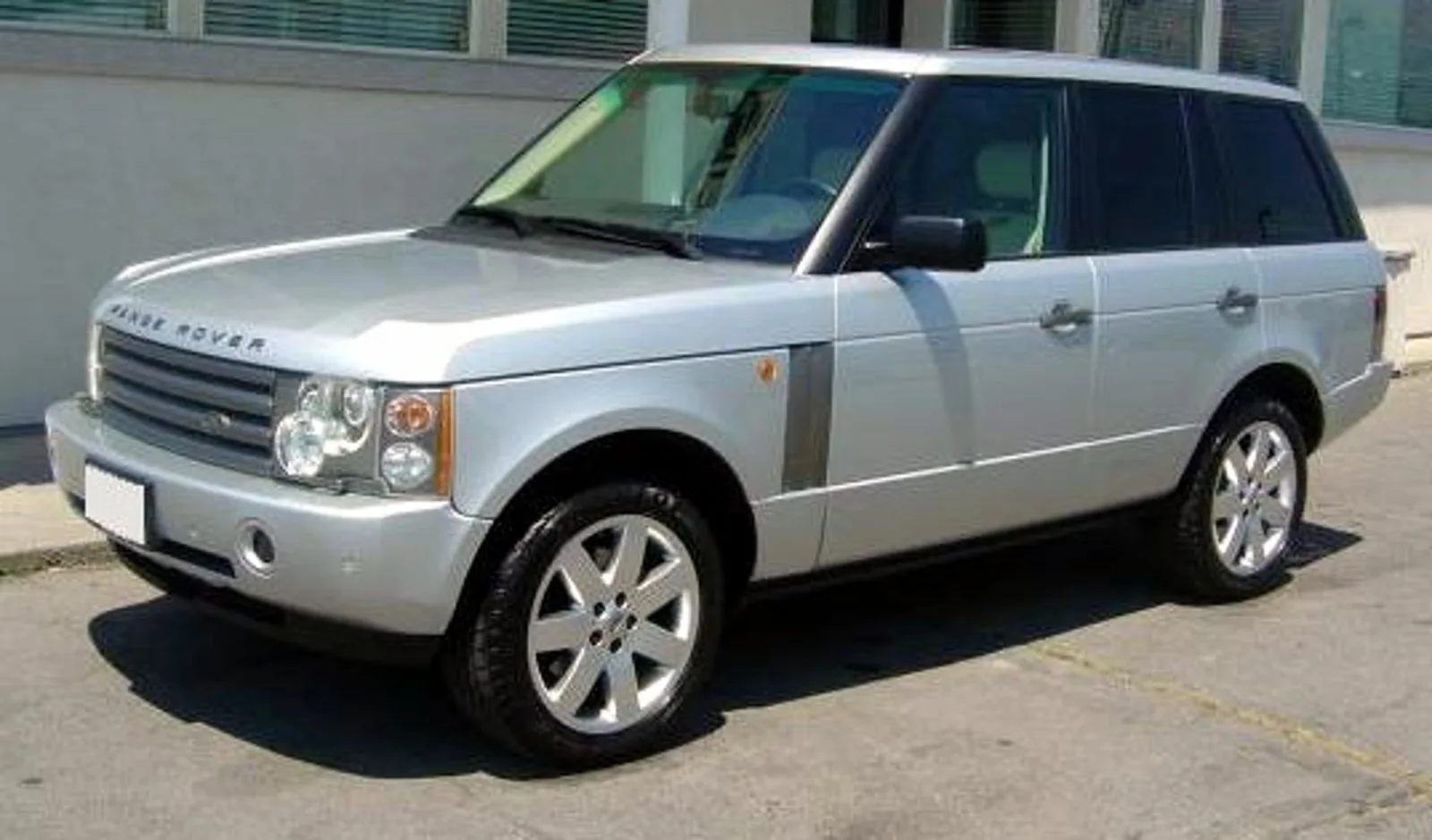
A monocoque, air-sprung Range Rover built from 2001 to 2012, with BMW-era roots, a 2010 refresh and special editions from anniversary cars to an armoured Vogue.
The Land Rover Range Rover L322 was the third-generation Range Rover, built from 2001 to 2012. It was the first Range Rover with a monocoque body and four-wheel independent air suspension. Its development began under BMW ownership, and its successor, the L405, followed in 2012.
Land Rover's third-generation Range Rover, the L322, replaced the old live axles with four independent air-sprung corners and a single-shell body. It grew larger and more muscular than the car it succeeded, and it was built from 2001 until 2012. Early cars reached North America as 2003 models, and later years brought new engines, rebuilt electronics and a long run of special editions.
Where did the L322 come from?
The L322 came from an all-new project started after BMW took over Rover Group in 1994. Its management judged the P38A's underpinnings too dated for a long life, so the planned updates were dropped. The new car was coded L30 before being renamed L322 after Ford's purchase of Land Rover.
The P38A, known in development as Pegasus, had been developed while Rover Group belonged to British Aerospace, when budgets were extremely tight. Critics also felt its styling lacked the presence of the original 1970 Range Rover. Once BMW took charge, it postponed a planned Discovery replacement and gave the all-new Range Rover priority.
Land Rover named its projects with an Lxx pattern, so the big model received the L30 label alongside the Freelander (L20) and the Discovery Series 2 (L25). After the Ford sale the car became L322 and sat at the top of a line-up that also included the Range Rover Sport (L320), Discovery 3 (L319), Defender (L316) and Freelander (L314).
The first Range Rover with a monocoque body and independent air suspension, and a run of special editions from anniversary cars to an armoured Vogue.
How did BMW and Ford shape the car?
BMW originally planned to share electronics and core power units between the L322 and its 7 Series E38. Ford bought Land Rover two years before production began, but the sale contract kept BMW involved until the car had entered volume production, so the two groups worked together through the handover.
Development was split between two countries. The L30 team started at BMW's FIZ Engineering Centre in Munich, then moved to Land Rover's Solihull plant for the final stages before volume production. Rover's Gaydon site was busy with the new Mini (R50) project and other MG, Rover and Land Rover work, so it lacked space for another large team.
The car was designed to accept BMW's M62 V8 engines for future models, and the manual gearbox was dropped entirely in favour of an automatic. The BMW 7 Series E38 electronics were being phased out during development and replaced by parts from the BMW E39 5 Series. Early cars could be upgraded with some newer BMW technology, but from 2005 the electronics were based on Ford and Jaguar systems.
What did the 2006 model year change?
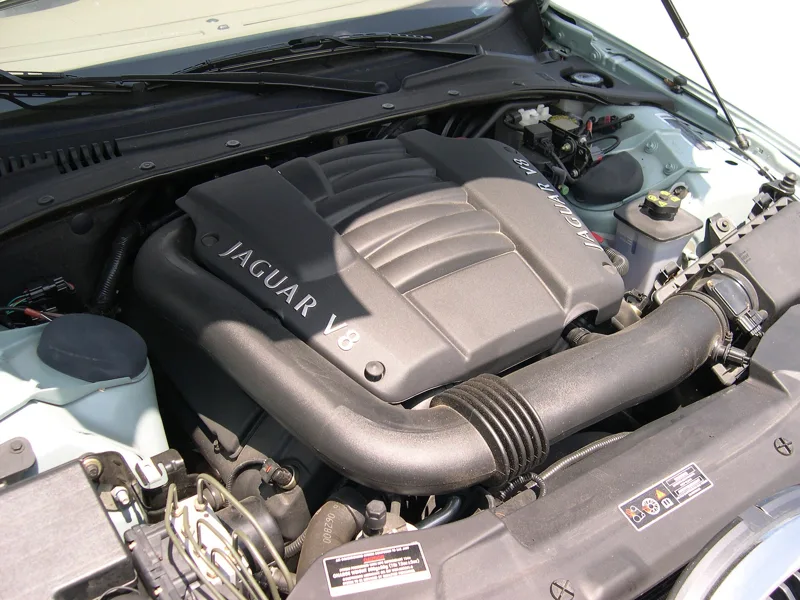
For the 2006 model year Land Rover updated the exterior and replaced the BMW V8 with Jaguar's aluminium AJ-V8. Buyers could choose a 4.4-litre engine rated at 220 kW (300 hp) or a supercharged 4.2-litre rated at 300 kW (400 hp). The car also gained a touch-screen infotainment system.
The engines were aluminium alloy units with torque-based engine management and drive-by-wire throttle control, and the 4.4-litre version also used variable camshaft phasing. The new Range Rover was presented at the 2005 North American International Auto Show and went on sale in summer 2005.
Performance covered a wide band. Across the range, 0-97 km/h (0-60 mph) took anywhere from 14.8 seconds to as little as 6.5 seconds. Top speed ran from 180 km/h (110 mph) to approximately 210 km/h (130 mph), with the upper figure being a governed limit.
The infotainment unit offered on and off-road navigation, radio, CD and telephone functions, plus a rear view camera, all through one touch-screen interface. Satellite radio was available in the US, and a wireless video camera system and a fully integrated rear seat DVD system were also offered.
Harman Kardon co-developed the audio system, a premium 720 W, 14-speaker set-up that became the first OEM vehicle to use the discrete Logic 7 surround algorithm. The components linked through a fibre optic MOST network and a CAN bus, a similar setup to the one used in the Discovery and Range Rover Sport.
Several suppliers contributed. Continental Automotive supplied the complete cockpit module, which incorporated a Denso touch-screen navigation unit, plus the centre console unit. Alpine provided the integrated head unit and rear seat entertainment, Connaught Electronics supplied the rear view and wireless camera systems, and Nokia handled the PTI telephone capabilities.
What did the 2007 update bring?
The 2007 update was mostly mechanical and interior work. A 3.6-litre twin-turbo diesel V8 replaced the BMW six-cylinder, Terrain Response arrived, and the handbrake became electronic. Heated seats became standard across the range, and the cabin gained more storage and extra wood trim.
The TDV8 was developed by Ford and Land Rover at Dagenham and Gaydon. Its 32-valve 3.6-litre AJD-V8 produced 203 kW (272 hp), against 132 kW (177 hp) from the BMW diesel it replaced, and torque reached 640 Nm (472 lb ft) at 2,000 rpm. That extra output suited the heavy body, and 0-97 km/h (0-60 mph) took 8.6 seconds.
Brembo supplied better brakes, the suspension was revised, and supercharged models gained an electronic rear differential that was optional on the others. Terrain Response came with a redesigned four-wheel drive control panel, bringing the car in line with the Range Rover Sport and the LR3.
Inside, the hidden cup holder gave way to an in-console design with sliding covers, and the ignition switch moved up to the dashboard beside the steering wheel. More wood inserts appeared on the doors and centre console, and the climate system received extra vents and quieter operation. New grains of leather were used on several trims.
Around January 2007 production, the key changed from the BMW design to Land Rover's switchblade type. It was sealed, held a rechargeable battery charged by a coil in the ignition switch, and had a third programmable oval button, normally set to open the tailgate.
What did the 2010 refresh add?
The 2010 refresh brought a new grille, a multicamera vision system, LED-accented bi-xenon headlights and two new petrol V8s, one naturally aspirated and one supercharged, both 5.0-litre. It was unveiled at the 2009 New York Auto Show and added a 12-inch virtual instrument panel to the cabin.
The cabin received a modest facelift built around redesigned switchgear, and many items from the BMW era were updated or replaced. New features included push-button engine start and stop, which the Range Rover had never offered before.
The 12-inch TFT LCD display replaced the conventional dials with virtual gauges. It could show navigation maps in place of engine readouts, and when an off-road mode was selected on Terrain Response, the gauges made room for a schematic of the suspension, steering and transmission.
The centre screen was bi-directional, so the driver could follow navigation while a front passenger watched the DVD player, although that screen was not offered in the US. A multi-camera system from Valeo Vision Systems in Ireland helped the driver see around the car during manoeuvres, with several overlays and views. For the 2012 model year the wheel centre caps carried a Range Rover logo in place of Land Rover, and the plastic on the side vent and door handle was deleted.
How did the engine and gearbox line-up change?
Launch-era cars used BMW engines, and Jaguar's AJ-V8 replaced the BMW V8 for the 2006 model year. The 3.6-litre TDV8 arrived in 2007, the 4.4-litre TDV8 with a ZF eight-speed automatic followed in 2011, and the 2010 refresh added two 5.0-litre petrol V8s.
Land Rover had been sold to Ford in 2000 as part of the break-up of the Rover Group, so the first engine derivatives were not included in that sale. The powertrain therefore moved from BMW engines to Jaguar units under Ford ownership.
The 4.4-litre diesel used turbochargers from Honeywell Turbo Technologies from 2011, because of reliability issues with the 3.6-litre setup. By 2010, petrol buyers could also choose between a naturally aspirated 5.0-litre V8 and a supercharged 5.0-litre V8, both new to the range.
What were the limited editions?
The L322 range included several special editions, among them a 40-car North American 20th Anniversary run, a thirty-car UK 35th Anniversary model, a 700-car 40th Anniversary Autobiography Black and a 500-car Autobiography Ultimate Edition. Each had its own paint, trim or interior features.
Land Rover built 40 examples of the 20th Anniversary Edition to celebrate twenty years in North America. Each was a supercharged car in pearl white paint, with 20-inch Diamond split-spoke wheels and a two-tone interior. Badges on the tailgate and door sills showed each car's production number out of 40.
Only one of each model went to each dealer, and the dealerships were chosen by lottery. The 40th car was auctioned at a silent auction to benefit charity.
The 35th Anniversary Edition was a UK-specification run of thirty cars to mark thirty years. They wore Claret coachwork with two-tone claret and jet interiors, and used the supercharged specification with the 4.2-litre Jaguar V8, rated at 298 kW (400 bhp; 406 PS).
The 40th Anniversary Edition marked forty years with 700 cars, sold as the 40th Anniversary Edition (Autobiography Black). It had its own grille, Barolo Black paint, and a choice of interiors in Jet with either Ivory or Pimento trim.
The Autobiography Ultimate Edition was produced entirely by Land Rover. Its front looked much like a standard Autobiography, with more wood finishes and a few unique trim pieces. The rear cabin was the difference, with two iPads, a fixed armrest with a metal laptop desk, electric reclining climate-controlled seats and a refrigerator. Buyers picked one of two colours for the 500 cars, which rode on 20-inch wheels with body-coloured door handles and smoked grilles and gills.
An armoured version was developed as well. In 2007 Land Rover Special Vehicles worked with Armour Holdings Group on an armoured Vogue certified to the European B6 ballistic standard. It added side-blast and under-floor grenade protection, uprated suspension, handling and braking, run-flat tyres and a fuel cut-off override. Tinted windows, an anti-tamper exhaust and an intercom were optional.
What was the Holland & Holland edition?
The Holland & Holland edition was unveiled in early 2010 and built by Overfinch from a standard Range Rover, with Holland & Holland as design consultants. It was not an official Land Rover limited edition, although finished cars could still be maintained through any Land Rover dealership.
Overfinch received the cars unfurnished and sometimes unpainted. Buyers could choose from five unique colours, including Tintern Green, a famous Holland & Holland shade, and the walnut trim could be colour matched to a customer's gun.
The interior featured a bespoke rear console with a refrigerator, power outputs and storage for branded crystal tumblers. The boot held a fully furnished gun box with a drinks cabinet. Each car also wore a modified Overfinch Aero 3 body kit to set it apart from other Range Rovers.
Buyers could specify the 4.4 TDV8 or the 5.0 supercharged engine, and both were given extra power. The car was billed as an all-season luxury supercar, a description the producer used when it was unveiled.
How did the car arrive in North America?
The Range Rover reached North America in early 2002 as a 2003 model. At that point it was one of only three full-size SUVs with four-wheel independent suspension, alongside the Mitsubishi Montero and the Ford Expedition, which was also new for 2003.
Early US-specification cars included tri-zone climate control with an interior air filter, a leather-wrapped steering wheel with tilt and telescopic adjustment and radio controls, cruise control and a memory system. The leather seats were 12-way power adjustable for the driver and ten-way for the passenger.
Standard equipment also covered a power sunroof, a premium sound system with a six-disc CD changer, voice-activated navigation, a rearview camera, a wireless phone link, a universal garage door opener and an outside-temperature indicator. Options included 14-way power heated and cooled front seats, a DVD entertainment system and upgraded leather.
What replaced the L322?
The L405 succeeded the L322, which had been built from 2001 to 2012. Land Rover announced the new car in August 2012 and unveiled it at the Paris Motor Show that same year. Its arrival ended a production run that had begun in 2001.
The L322 lineage shows a steady programme of updates. The 2006 engines, the 2007 interior and the 2010 instrument panel each arrived at a different point in the run, so the car changed in stages rather than through one large revision.
The Range Rover name carried on through the L405. The L322 remains the first Range Rover with a monocoque body and four-wheel independent air suspension, which marks a clear break from the live-axle cars that came before it.
Range Rover L322 specifications
| Specification | Detail |
|---|---|
| Generation | Third-generation Range Rover (L322) |
| Production | 2001 to 2012 |
| Body and suspension | Monocoque body, four-wheel independent air suspension |
| North American debut | Early 2002, as a 2003 model |
| 2006 petrol engines | 4.4-litre AJ-V8, 220 kW (300 hp); supercharged 4.2-litre, 300 kW (400 hp) |
| 2007 TDV8 | 3.6-litre 32-valve twin-turbo diesel V8, 203 kW (272 hp); 640 Nm (472 lb ft) at 2,000 rpm |
| 0-97 km/h (0-60 mph), 2007 TDV8 | 8.6 seconds |
| 2010 petrol engines | 5.0-litre naturally aspirated V8 and 5.0-litre supercharged V8 |
| 2011 diesel | 4.4-litre TDV8 with ZF 8HP70 eight-speed automatic |
| Transmission | Automatic only; manual dropped during development |
| Successor | L405, announced August 2012 |