How a load-bearing outer shell replaced frames in planes, race cars, motorcycles and boats, and why the term is so often misused.
A monocoque is a load-bearing outer shell with no internal frame to carry the loads. The name is French for single shell. It was first used in boats and aircraft, then in race cars, motorcycles and some locomotives.
A monocoque is a structure in which the outer skin carries the loads, much like an eggshell, rather than a skin wrapped around an internal frame. The name comes from French and means single shell. The idea was first used for boats, and it later reshaped aircraft, race cars and motorcycles, though many products described as monocoques are really something else.
What is a monocoque?
A monocoque, also called structural skin, is a structural system in which the external shell supports the loads. A true monocoque carries both tensile and compressive forces within that skin, and it has no load-carrying internal frame. That is what separates it from a conventional structure in which a frame does the work and the covering adds little.
Few metal aircraft can strictly be called pure monocoques, because most rely on sheet metal stiffened by frames fixed to the outside. Most wooden aircraft are described as monocoques anyway, even though they also incorporate frames. The label is therefore often applied loosely, and the distinction matters when judging how a structure really carries its loads.
A monocoque makes the skin do the work, which is why a single shell could carry a racer, a plane or a motorcycle.
How does a monocoque differ from a semi-monocoque?
A semi-monocoque is a hybrid. It combines a tensile stressed skin with a compressive structure of longerons and ribs or frames. Vehicle unibodies belong in this group, along with inflatable shells and balloon tanks, which are stabilised by pressure rather than by a frame.
The practical difference is where the strength lives. In a true monocoque, the skin does almost all of the work. In a semi-monocoque, the skin shares the load with an internal skeleton, which is easier to design for and to repair. Many road vehicles that are called monocoques are in fact unitary structures, as discussed below.
How did monocoque aircraft develop?
Early aircraft were built from frames, typically of wood or steel tubing, and then covered with fabric such as Irish linen or cotton. The cloth added a little strength under tension and none under compression, so its job was mainly aerodynamic. Monocoque construction changed that by integrating the skin and frame into one load-bearing shell, which brought real gains in strength and weight.
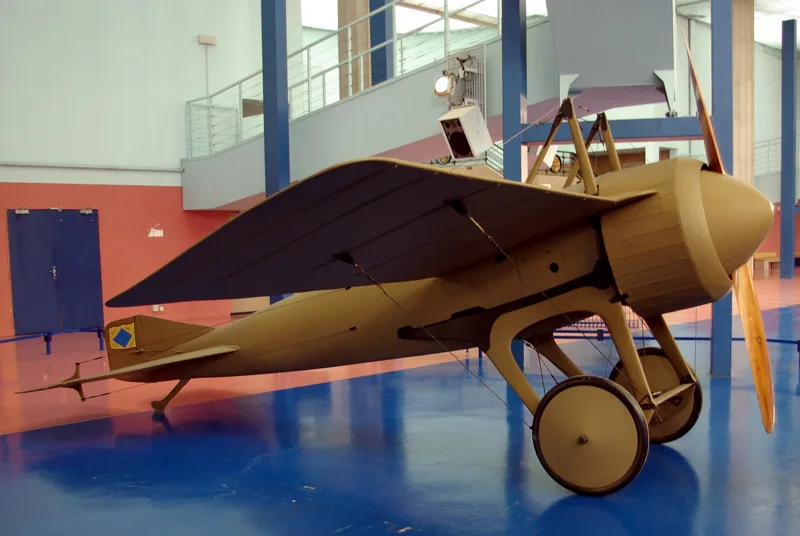
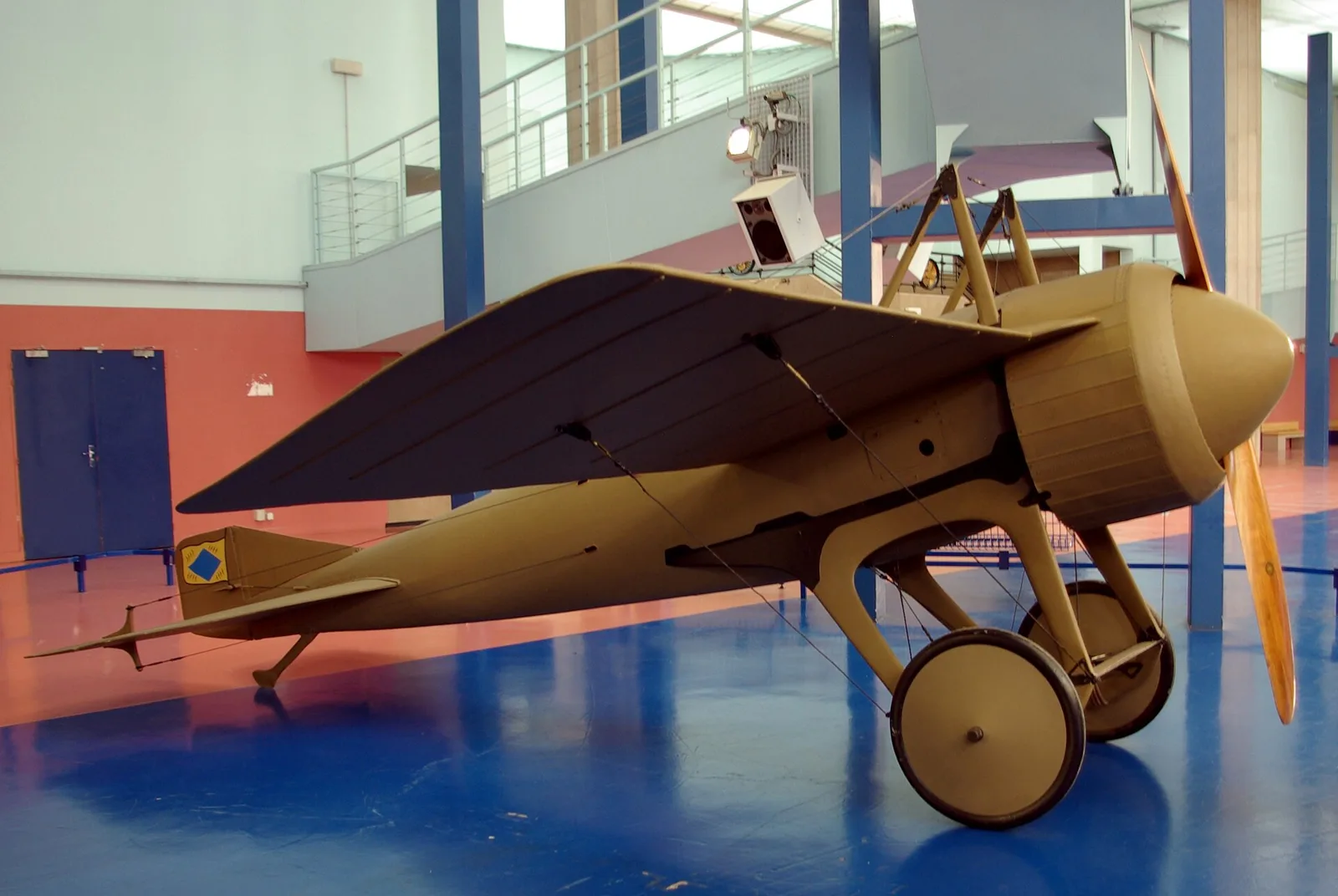
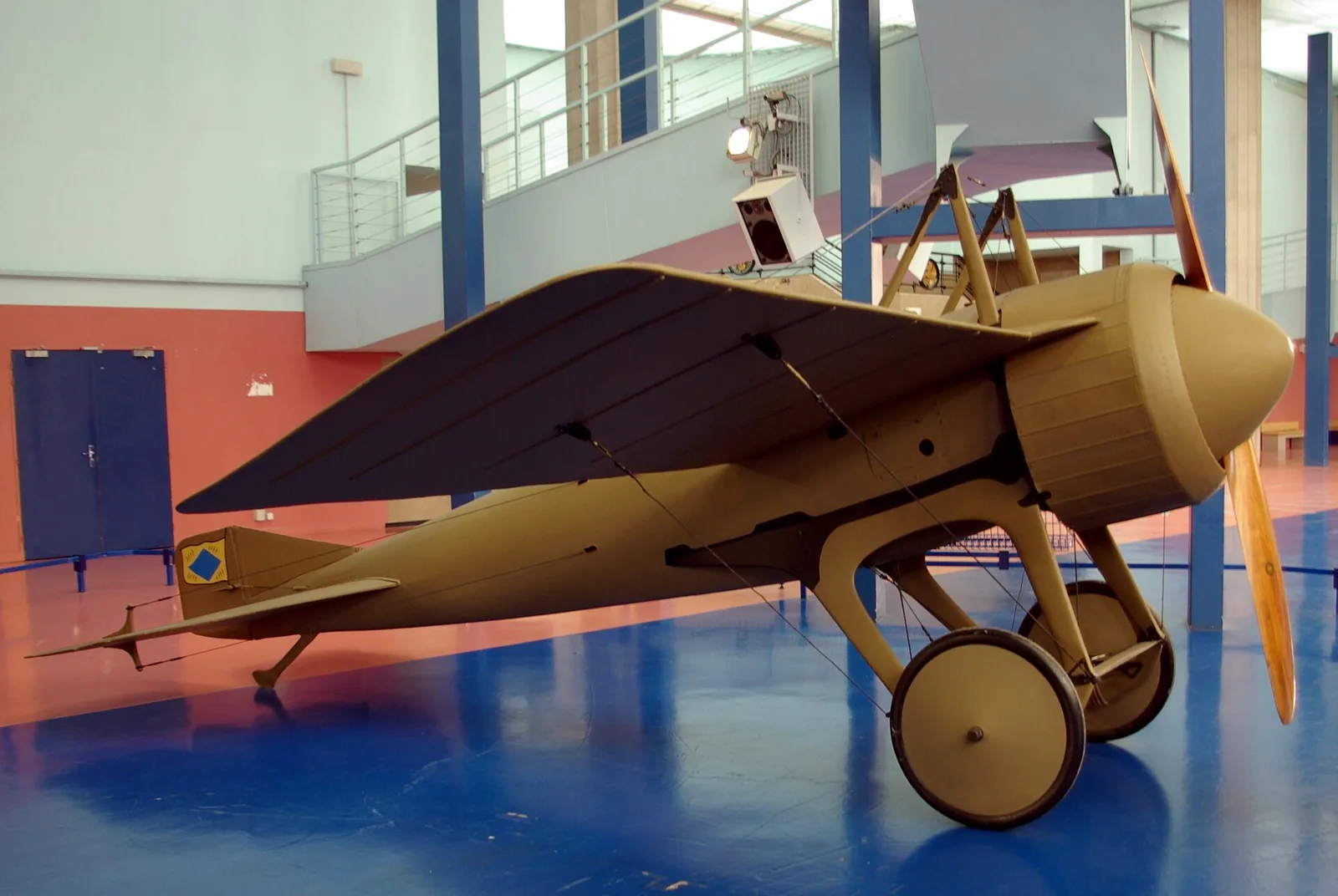
The first monocoque aircraft used thin strips of wood laminated into a three-dimensional shape, a technique borrowed from boat hull building. One of the earliest examples was the Deperdussin Monocoque racer of 1912. Its fuselage was made from three layers of glued poplar veneer, which formed both the external skin and the main load-bearing structure. The smooth surface also reduced drag, and the aircraft won most of the races it entered.
In Germany LFG Roland developed the patented Wickelrumpf, or wrapped hull, and licensed it to Pfalz Flugzeugwerke, which used it on several fighter aircraft. Each half of the fuselage was formed over a male mould with plywood strips and fabric wrapped between layers. Early plywood, however, was prone to damage from moisture and delamination.
Metal was harder. Claudius Dornier built the first metal monocoques while working for Zeppelin-Lindau, and he had to overcome poor-quality aluminium alloys that formed layers instead of a uniform material. His Zeppelin-Lindau V1 crashed, but the lessons were valuable, and the Dornier-Zeppelin D.I was the first all-metal monocoque aircraft to enter production. It was built in 1918 and was too late for operational service in the war.
Adolf Rohrbach, also working for Zeppelin, built the Zeppelin-Staaken E-4/20, which flew in 1920 as the first multi-engined monocoque airliner. In the UK, Oswald Short built experimental metal monocoque fuselages from the 1920 Short Silver Streak onward, while in the United States Northrop was a major pioneer. Aluminium alloy monocoques did not become common until the mid 1930s, partly because of design conservatism and the cost of production set-up.
Which landmarks mark the monocoque's progress?
| Year | Vehicle | Why it mattered |
|---|---|---|
| 1912 | Deperdussin Monocoque racer | Laminated wood skin that formed the main structure |
| 1918 | Dornier-Zeppelin D.I | First all-metal monocoque aircraft to enter production |
| 1920 | Zeppelin-Staaken E-4/20 | First multi-engined monocoque airliner |
| 1962 | Lotus 25 | Aluminium alloy monocoque in Formula One |
| 1981 | McLaren MP4/1 | Carbon-fibre-reinforced polymer monocoque |
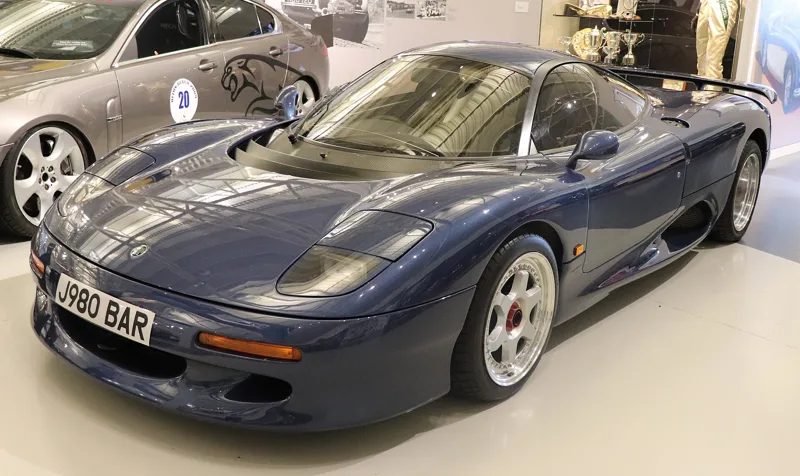
| 1990 | Jaguar XJR-15 | First production car with a carbon-fibre monocoque |
| 2000 | Kawasaki ZX-12R | First mass-produced motorcycle with an aluminium monocoque frame |
Why did race cars adopt monocoques?
In motor racing the driver's safety depends on the car body, which must meet strict regulations. Only a few race cars have been built as monocoques, even though the design offers a lower weight. Lotus introduced the approach to Formula racing with its 1962 Lotus 25, which had an aluminium alloy monocoque body and chassis, and the idea is now standard in Formula cars.
McLaren was the first team to use carbon-fibre-reinforced polymers to build a monocoque, with the 1981 MP4/1. The material went on to define the structures of modern racing cars, because it combines strength with very low weight. Jaguar followed in 1990 with the XJR-15, the first production car to use a carbon-fibre monocoque.
What is a unibody, and why is it called a monocoque?
The term monocoque is frequently misapplied to road cars that are really unibodies. Commercial car bodies are almost never true monocoques. Instead they use unitary construction, sometimes called a unitary body-chassis or body-frame integral construction. In that system the body, floor pan and chassis form a single structure, and the skin adds relatively little strength or stiffness.
The confusion is understandable, because a unibody and a monocoque both avoid a separate ladder frame. But a unibody relies on a skeleton of stamped sections, with the outer panels adding only a little to the total. Armoured fighting vehicles use a different approach again, building a shell from armour plates instead of attaching them to a frame. The German TPz Fuchs and RG-33 are examples, and the method reduces weight for a given amount of armour.
How did monocoques reach motorcycles?
French industrialist Georges Roy wanted to improve the bicycle-inspired motorcycle frames of the 1920s, which lacked rigidity and limited handling. He applied for a patent in 1926 and unveiled the Art Deco 1930 Majestic at the 1929 Paris Automotive Show. Its monocoque body gave it rigidity and protection from the elements, although strictly it was a semi-monocoque, built on a box-section pressed-steel frame.
Other machines followed. A Piatti light scooter of the 1950s used a hollow shell of welded sheet-steel pressings, into which the engine and transmission were installed from below. Yamaha built a monocoque-framed scooter from 1960 to 1962, the MF-1, which had a 50 cc engine, a three-speed transmission and a fuel tank built into the frame.
Spanish maker Ossa developed a monocoque-framed motorcycle for the 1967 Grand Prix season. Its single-cylinder engine made 20 horsepower less than its rivals, but it was 45 pounds (20 kg) lighter and its frame was much stiffer, which gave it superior agility. Ossa won four Grands Prix with the bike before its rider died after a crash at the 1970 Isle of Man TT, and the factory withdrew from Grand Prix racing.
Later designs pushed the idea further. Peter Williams won the 1973 Isle of Man TT F750 race on a monocoque-framed machine he helped design, based on the Norton Commando. Honda tried the NR500 monocoque in 1979, and John Britten's 1987 Aero-D One used a composite monocoque chassis that weighed only 12 kg (26 lb). Kawasaki's ZX-12R, introduced in 2000, was the first mass-produced motorcycle with an aluminium monocoque frame.
Are bicycles and boats monocoques?
Single-piece carbon bicycle frames are sometimes described as monocoques, but most use components to form the frame structure, even when they are moulded in one piece. Industry usage calls them framesets, and that is the more accurate term. The Lotus Type 108 was a true monocoque carbon-fibre superbike, and Chris Boardman won Olympic pursuit gold on one at Barcelona in 1992. Its design was later restricted by new regulations.
Boats were the original home of the idea, and most glassfibre boats are monocoques. Those hulls may have strengthening bulkheads, but they are built around a load-bearing shell, which suits glassfibre because it is easy to form in moulds and relatively easy to repair. Grumman began making aluminium canoes with monocoque construction after the Second World War, using a method similar to that of aircraft drop tanks.
Where else are monocoques used?
Some locomotives use monocoque shells, including the GE P40DC, P42DC and P32ACDM. The principle also appears in rockets, where pressure-stabilised monocoque designs have been used by vehicles such as Atlas and Falcon 1. Atlas relied on single-wall steel balloon tanks that held their shape under internal pressure, and it was very light as a result.
Balloon tanks are not true monocoques, because their skin carries only tension while internal liquid pressure resists compression. The structure collapses when that pressure is lost. The New Glenn rocket from Blue Origin uses a monocoque second stage, accepting extra mass because it lowers production cost for a stage that is thrown away.