Introduced in 1997, the AJ-V8 spanned 3.2 to 5.0 litres, powered Ford, Land Rover and Aston Martin models and ended its run in a 2024 Defender.
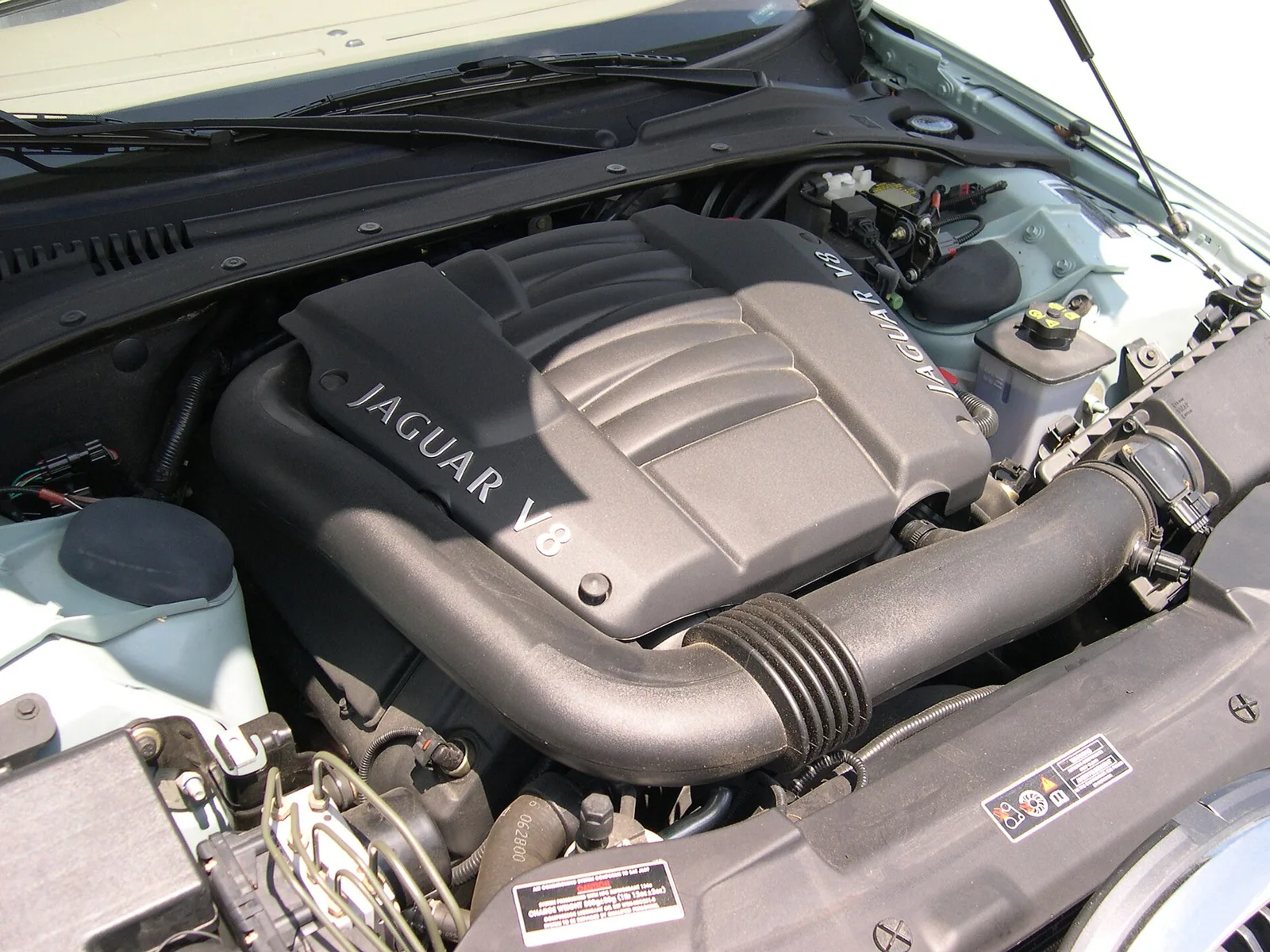
The Jaguar AJ-V8 was a compact DOHC V8 that replaced Jaguar's straight-six and V12 engines in 1997. It ran from 3.2 to 5.0 litres, powered Ford, Land Rover and Aston Martin models, and was built at Bridgend in South Wales.
Jaguar's AJ-V8 was a compact DOHC eight-cylinder that powered a wide range of cars from 1997. It was the company's fourth all-new engine design, and it was developed in-house, with work starting before Ford bought the business. Its displacement stretched from 3.2 to 5.0 litres, and a supercharged version joined the range.
Where did the Jaguar AJ-V8 come from?
The AJ-V8 replaced the straight-six AJ16 and the Jaguar V12 in 1997, and it was the only engine type on Jaguar cars until the 1999 S-Type brought in the AJ-V6. Its design began in-house before Ford purchased Jaguar, and Ford later spread members of the family into Lincoln, Thunderbird, Land Rover and Aston Martin models.
Jaguar's line-up before 1997 relied on two older designs, and the AJ-V8 consolidated them into one modern V8.
Ford's own use followed the Jaguar launch. The Lincoln LS, the 2002 to 2005 Ford Thunderbird, Land Rover models and the Aston Martin V8 Vantage all used members of the family. Ward's placed the engine on its 10 Best Engines list for 2000.
A compact DOHC V8 that took Jaguar from the straight-six and V12 era into a family spanning 3.2 to 5.0 litres.
Why did the Nikasil cylinders cause failures?
The original plan called for Nikasil-coated bores instead of the iron liners that were more usual. High-sulphur fuel reacted with that coating and caused engine failures, which led Jaguar to replace affected engines. Conventional cast-iron liners have been used ever since.
The failure mode was chemical rather than mechanical. High-sulphur fuel attacked the coating, and the damage was serious enough that customers received replacement engines under Jaguar's programme.
The BMW M60 suffered a similar problem, so the AJ-V8 was not an isolated case.
What were the first AJ26 and AJ27 engines?
The 4.0 L AJ26 arrived in 1996 with 3,996 cc and a square 86 mm bore and stroke. It became the AJ27 in 1998 with continuously variable valve timing, and the AJ28 followed in 2000. The number 26 reflects an intended family of 6, 8 and 12-cylinder engines, although only the eight was built.
Early AJ26 cars included the 1997 and 1998 XJ8, XK8 and Daimler V8. The naturally aspirated version produced 290 hp (216 kW; 294 PS) in the 2000 to 2002 XK8.
The AJ27 carried the XJ8, XK8 and Daimler V8 from 1999 to 2003. The AJ28 powered the 2000 to 2002 S-Type, where it delivered 281 hp (210 kW; 285 PS), with 287 lb-ft (389 N-m) of torque.
How did the supercharged R versions work?
The supercharged AJ26 went into the R-badged, high-performance models of Jaguar's line-up. It was brought to AJ27 specification for 2000, and its 370 hp (276 kW; 375 PS) came with 387 lb-ft (525 N-m) of torque from an Eaton supercharger, a modified Roots blower.
Variable cam timing was left off the boosted engine, because the usual gains in volumetric efficiency matter less once a supercharger is already filling the cylinders.
The supercharged AJ26S was used in the 1998 and 1999 XJR, XKR and Daimler Super V8. The AJ27S followed in the 2000 to 2003 XJR, XKR and Daimler Super V8.
What did the 3.2 and 3.5 litre variants offer?
The 3.2 litre variant was the second AJ-V8 to appear. Its stroke was cut to 70 mm (2.76 in), which yielded 240 hp (179 kW; 243 PS) and 233 lb-ft (316 N-m). It was never offered in North America. It did not use variable cam timing either.
The 3.5 was a 3.6 L (3,555 cc) engine marketed under that name, and it appeared only in the XJ series. Its stroke measured 76.5 mm (3.01 in), and it produced 262 bhp (195 kW; 266 PS) at 6,250 rpm. Torque peaked at 345 N-m (254 lb-ft) at 4,200 rpm.
What was the 3.9 L engine built for Ford?
The 3.9 L AJ30 and AJ35 displaced 3,934 cc and were used only by Ford and Lincoln. The engine was built in Ford's Lima, Ohio plant, with an 86 mm bore and an 85 mm stroke. The AJ35 added intake variable valve timing and electronic throttle control for the 2003 model year.
Its block, crankshaft, pistons and connecting rods were unique to this capacity, although many other parts were shared with the AJ-V8 built in the UK by Jaguar.
The Lincoln LS ran the 252 hp (188 kW; 255 PS) version from 2000 to 2002, and the Thunderbird took the same output in 2002. From 2003 both the Lincoln LS and the Thunderbird carried the 280 hp (209 kW; 284 PS) AJ35. The Ford Forty-Nine concept also used the engine.
The last AJ35 was built in March 2006, after only three years. The total run of the AJ30 and AJ35 came to nearly 250,000 units.
How did the 4.2 litre engines perform?
The 4.2 L (4,196 cc) AJ33 and AJ34 kept the 86 mm bore and used a 90.3 mm stroke. The AJ33 arrived in 2002 rated at 294 hp (219 kW; 298 PS) at 6,000 rpm, and a later uprate brought 300 hp (224 kW; 304 PS) plus 310 lb-ft (420 N-m) of torque.
The original torque rating was 303 lb-ft (411 N-m) at 4,100 rpm. The uprated engine lifted that to 310 lb-ft (420 N-m), and it went into the XK series, the S-Type, the XJ8 and the XF.
Fitment ran from the 2003 to 2006 XK series at 294 hp, through the 2006 to 2008 XK at 300 hp, to the 2008 to 2010 XF.
How strong was the supercharged AJ33S?
The AJ33S was a supercharged, intercooled version of the AJ33 introduced in 2002 to replace the 4.0 SC. Its rating was 390 hp (291 kW; 395 PS) at 6,100 rpm, while 399 lb-ft (541 N-m) of torque arrived at 3,500 rpm.
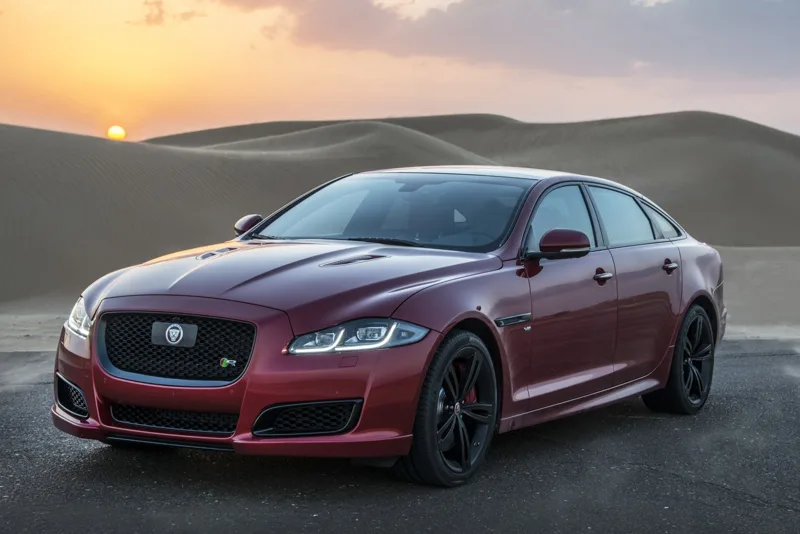
It was later updated to AJ34S specification with variable valve timing and other minor changes. Output in the XKR rose from 400 hp (298 kW; 406 PS) in the 2003 to 2006 car to 420 hp (313 kW; 426 PS) in the 2006 to 2008 version.
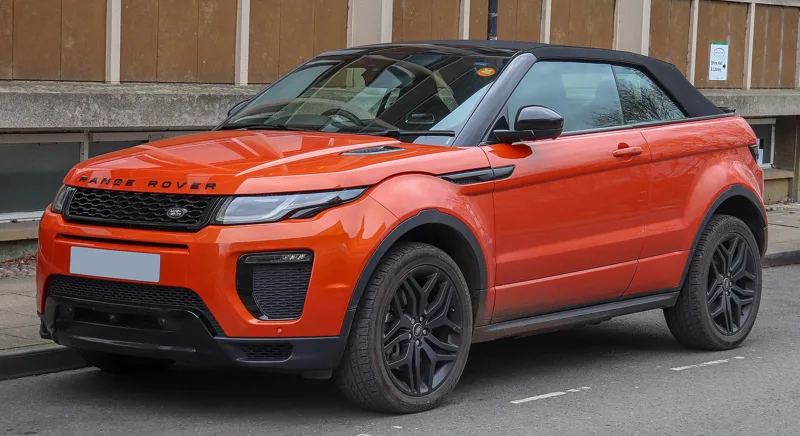
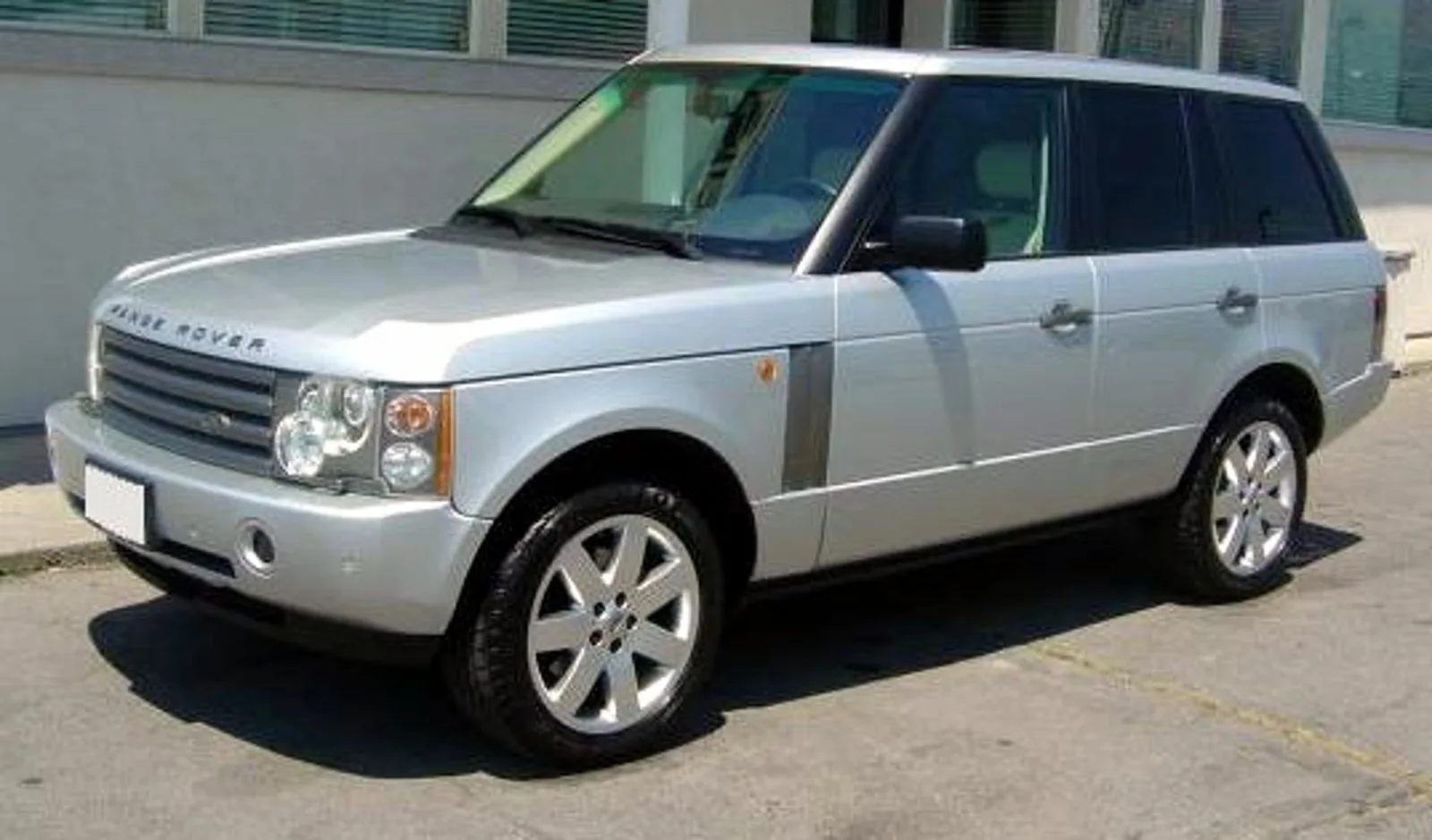
Land Rover offered its own supercharged 4.2 L, adapted from Jaguar's version but not identical to it. It powered the 2006 to 2009 Range Rover Sport at 390 hp (291 kW; 395 PS), and the Range Rover reached 400 hp (298 kW; 406 PS).
Which Land Rovers used the 4.4 litre AJ41?
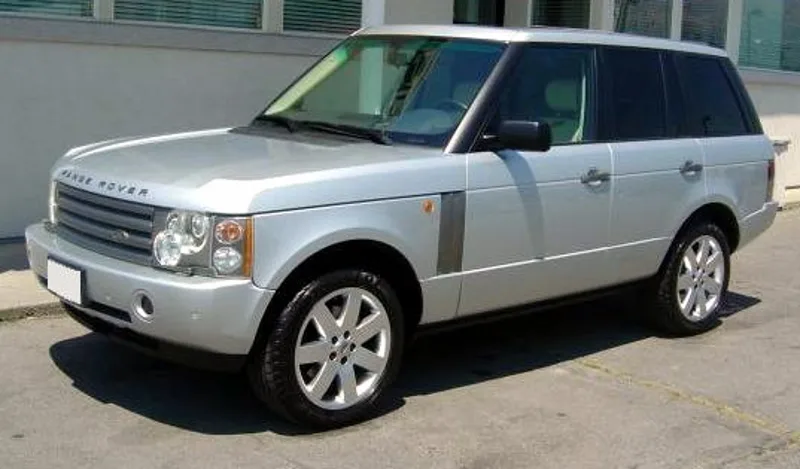
The 4.4 L (4,394 cc) AJ41 used an 88 mm by 90.3 mm bore and stroke. It replaced the BMW M62 used in 2003 to 2005 Range Rover models, and it went into the Discovery 3 and LR3 as well as the Range Rover and Range Rover Sport.
From 2005 to 2009 the LR3 and Discovery 3 received 300 hp (224 kW; 304 PS), along with 315 lb-ft (427 N-m) of torque. The Range Rover Sport from 2006 to 2009 made the same 300 hp at 5,500 rpm, with torque of 315 lb-ft (427 N-m) at 4,000 rpm.
The Range Rover of 2006 to 2009 offered the strongest figures listed for the AJ41, at 305 hp (227 kW; 309 PS) at 5,750 rpm, with 325 lb-ft (441 N-m) of torque at 4,000 rpm.
How did Aston Martin's AM05 and AM14 differ?
Aston Martin hand-assembled a special AJ-V8 variant for the 2005 V8 Vantage; the unit was called AM05, and AJ37 while in development. It displaced 4.3 L (4,280 cc) and produced 380 bhp (283 kW; 385 PS) at 7,000 rpm. In May 2008 the 4.7 L AM14 replaced it.
The AM05 used race-style dry-sump lubrication, which let the engine sit lower and lower the centre of gravity. Its firing order matched the other AJ-V8 engines, but its cylinder numbering differed from the AJ26. Torque was 409 N-m (302 lb-ft) at 5,000 rpm.
The AM14 raised output to 420 bhp (313 kW; 426 PS), an 11 percent gain, and maximum torque rose to 470 N-m (347 lb-ft), 15 percent higher. Pressed cylinder liners allowed thinner walls and the larger 4.7 L capacity.
The V8 Vantage S then developed 430 bhp (321 kW; 436 PS) at 7,300 rpm, and its 490 N-m (361 lb-ft) of torque arrived at 5,000 rpm. The same engine later appeared in the DB10 concept built for the 2015 film Spectre.
What is the Gen III 5.0 AJ133?
The AJ133 is a 90-degree direct-injection V8 introduced in 2009 for the 2010 model year, in supercharged and naturally aspirated forms. It has a 92.5 mm bore, a 93 mm stroke and compression ratios of 9.5:1 supercharged and 11.5:1 naturally aspirated.
The main structure is aluminium alloy. The block is a stiff, lightweight, enclosed-V, deep-skirt unit that is open at the deck. Beneath it, a windage tray bolted to the block adds stiffness, reduces noise, vibration and harshness, and helps limit oil foaming.
The crankshaft is spheroidal graphite cast iron. The pistons are high-strength cast units, and the connecting rods are fracture-split forged steel made from 36 Mn VS4 steel.
Bosch high-pressure direct injection uses two cam-driven pumps, which feed the fuel rails for each bank. Four camshafts carry variable camshaft timing, which adjusts the intake and exhaust valves independently of one another.
The naturally aspirated engine adds cam profile switching and a variable tract length inlet manifold. Supercharged engines use a sixth-generation TVS blower, a twin-vortex design, mounted in the vee and turned by its own belt from the crankshaft.
Fuel economy and emissions benefit from direct injection, refined piston and chamber shapes, and the supercharger. The engines meet EU5 rules in Europe and ULEV 70 standards in North America.
What changed in the AJ133 model years?
Over its production life the AJ133 and AJ133S changed in steps. Head bolts were upgraded in 2010 and again in 2013, timing chains changed pitch, and engine management moved from Denso to Bosch MED17 in 2013. The changes targeted reliability and emissions.
- 2010: 10.5 mm cylinder head bolts, a Tsubaki timing chain, Denso management and a vacuum-actuated supercharger bypass valve.
- 2011: an INA chain of 8 mm pitch, fitted from MY2012, plus redesigned guides and tensioners.
- 2013: 11 mm cylinder head bolts, Bosch MED17 management, an electric bypass valve and an eco start-stop starter, excluding the XKR and XKR-S.
- 2021: the mechanical vacuum pump replaced by a blanking plate on the F-Pace SVR and F-Type.
- 2024: aluminium coolant crossover pipes on the Defender and F-Pace SVR.
The supercharged AJ133S used an Eaton TVS1900R supercharger, two intercoolers cooled by water, and a heat exchanger mounted at the front, all on a shared cooling circuit. Flat-top pistons held compression to 9.5:1, against 11.5:1 for the naturally aspirated engine, and boost was roughly 15 psi.
The last vehicle with the AJ133S was the 2024 Land Rover Defender V8. For the 2025.5 model year, BMW's 4.4-litre N63 twin-turbo V8 joined the Defender in its Octa form. As of December 2024, Jaguar had discontinued most of its internal combustion models, including those with the AJ133S, as it moved to an all-electric line-up by 2025.
How do the main AJ-V8 variants compare?
| Variant | Years | Displacement | Output | Torque |
|---|---|---|---|---|
| AJ28 | 2000-2002 | 4.0 L | 281 hp (210 kW; 285 PS), S-Type | 287 lb-ft (389 N-m) |
| AJ26S | 1998-1999 | 4.0 L, supercharged | 370 hp (276 kW; 375 PS) | 387 lb-ft (525 N-m) |
| 3.2 L | 1997-2003 | 3.2 L | 240 hp (179 kW; 243 PS) | 233 lb-ft (316 N-m) |
| 3.5 | 2002-2007 | 3.6 L (3,555 cc) | 262 hp (195 kW; 266 PS) | 254 lb-ft (344 N-m) |
| AJ35 | 2003-2006 | 3.9 L (3,934 cc) | 280 hp (209 kW; 284 PS), Lincoln LS | 286 lb-ft (388 N-m) |
| AJ33/AJ34 | 2002-2008 | 4.2 L (4,196 cc) | 300 hp (224 kW; 304 PS) | 310 lb-ft (420 N-m) |
| AJ33S | 2002 onward | 4.2 L, supercharged | 390 hp (291 kW; 395 PS) at 6,100 rpm | 399 lb-ft (541 N-m) at 3,500 rpm |
| AJ41 | 2005-2009 | 4.4 L (4,394 cc) | 300 hp (224 kW; 304 PS) | 315 lb-ft (427 N-m) |
| AM14 | 2008 onward | 4.7 L (4,735 cc) | 420 bhp (313 kW; 426 PS) | 470 N-m (347 lb-ft) |
| AJ126 | 2013 onward | 3.0 L (2,995 cc), supercharged V6 | 340 PS (250 kW; 335 hp) | 332 lb-ft (450 N-m) |
The AJ33S and the AM14 show the two routes the range took: a supercharger on the 4.2 L block and a larger capacity in the Aston Martin unit.
What was the AJ126 V6?
The AJ126 is a supercharged 3.0 L (2,995 cc) 90-degree V6 built on the AJ133 V8 block, with two rear bores blanked. Its bore measures 84.5 mm, its stroke 89 mm, and its compression ratio 10.5:1. Four overhead camshafts work with four valves for each cylinder.
Its heads are abbreviated versions of the V8 heads, and the engine comes off the same line that builds the AJ133. The standard version made 340 PS (250 kW; 335 hp) at 6,500 rpm, with 332 lb-ft (450 N-m) between 3,500 and 5,000 rpm. The high-performance variant made 380 PS (279 kW; 375 hp) at 6,500 rpm.
A special F-Type 400 Sport produced 400 PS (294 kW; 395 hp) and 339 lb-ft (460 N-m). The engine uses an Eaton TVS R1320 Roots-type supercharger mounted in the vee, valued for its compact size and smooth response.
Jaguar has since replaced the AJ126 with the Ingenium turbocharged inline-six.
What is the legacy of the AJ-V8?
The AJ-V8 ran from the 1997 4.0 to the 2024 Defender V8, serving Jaguar, Ford, Land Rover and Aston Martin. Production at Ford stopped in September 2020, as the Bridgend Plant shut, and Jaguar Land Rover had taken over the production means in August 2020.
The Jaguar plant-within-a-plant at Bridgend ran a linked flow line of CNC machining, with loading and assembly handled automatically. Parts arrived just in time, and the arrangement spared Jaguar heavy investment costs.
Jaguar Land Rover later built supercharged V8s in its Engine Manufacturing Centre at Wolverhampton. The family's span, from the 240 hp 3.2 to the 430 bhp Vantage S, shows how far one architecture could be stretched.