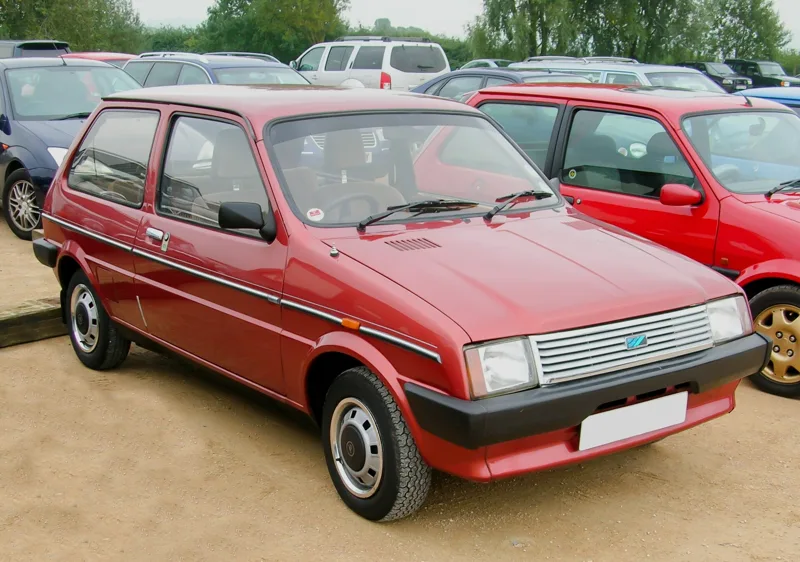
Starley's safety bicycle, the 1930s recovery, wartime jet engines, gas-turbine prototypes and Land Rover, with the Range Rover as the marque's most successful product.
Rover began as a cycle firm, moved into motorcycles and cars, and was bought by Leyland Motors in 1967. It began building cars in 1904. Its Land Rover and Range Rover models became its best-known products, and the Rover name later passed to the BL group.
The Rover Company, which operated independently from 1878 to 1967, made bicycles, then motorcycles and cars. It began building cars in 1904 and worked mainly from its base in Solihull. Land Rover and the Range Rover later became its best-known names, and the Range Rover proved its most successful and profitable product.
Where did the Rover Company start?
The company was founded in 1878 by John Kemp Starley and William Sutton. Starley's Rover safety bicycle of 1885 is usually described by historians as the first recognisably modern bicycle, with chain drive and two similar-sized wheels that made it more stable than the high-wheel designs of the day. The firm's name was later used by the Rover Cycle Company in the late 1890s.
A magazine of the period said the Rover had set the pattern for the world, and the company used that line in its advertising for many years. In 1889 the business became J. K. Starley & Co. Ltd, and the Polish word for bicycle, rower, is derived from the company's name.
Starley died in early October 1901, aged 46. The business was then taken over by its secretary, Harry Smith, who became general manager and in time managing director.
From Starley's 1878 bicycles to the Range Rover, the company ran from safety cycles to gas turbines and off-road icons.
How did Rover move from motorcycles to cars?
Rover built its first motorcycle, the Imperial, in November 1902. It was a 3.5 hp diamond-framed machine with the engine in the centre and springer front forks, and more than a thousand Rover motorcycles were sold in 1904. Car production began that same year, under the Viking longship badge that the company used from 1904 onwards.
The first car range was the two-seater Rover Eight, designed by Edmund Lewis, who had come from Daimler. Lewis left the company in late 1905 to join Deasy. Owen Clegg arrived from Wolseley in 1910, abandoned experiments with sleeve-valve engines and introduced a 12 hp model in 1912.
That 12 hp car sold so well that the other models were dropped, and Rover pursued a one-model policy for a time. Clegg left in 1912 to join the French subsidiary of Darracq and Company London.
Motorcycles and the First World War
Motorcycles were never far away. Rover supplied 499 cc single-cylinder machines to the Russian Army during the First World War. Between 1903 and 1924 the company produced more than 10,000 motorcycles, but poor sales eventually ended motorcycle production and left Rover focused solely on cars.
How did Rover recover in the 1920s and 1930s?
Rover struggled through the 1920s and paid no dividend from 1923 until the mid-1930s. In December 1928 shareholders were told that capital would be cut by 60 per cent to recognise the losses of the 1923 to 1928 years and the cost of that year's reorganisation. Frank Searle was appointed managing director in 1928 to lead the recovery.
Searle had trained as a locomotive engineer, had experience at Daimler and had recently been managing director of Imperial Airways. On his recommendation Spencer Wilks came in from Hillman as general manager in 1929 and joined the board that year. Searle split Midland Light Car Bodies from Rover to save money, and he asked Robert Boyle and Maurice Wilks to design a new small car.
The result, the Rover Scarab with a rear-mounted V-twin engine, was announced in 1931 but never went into production. The Rover 10/25 followed, with bodies made by the Pressed Steel Company, the same bodies used on the Hillman Minx. Rover had once backed light Weymann bodies, which had gone out of fashion, and those remained in the catalogue until 1933.
Results were mixed. Rover showed profits in 1929 and 1930, but losses of 77,529 pounds in 1931 and 103,000 pounds in 1932 followed. A further reorganisation returned the company to profit of 46,000 pounds in 1933, and its assembly operations in Australia and New Zealand were closed.
Publicity helped. Rover beat the Blue Train for the first time in 1930 in the Blue Train Races, and the Wilks brothers went on to attract several European royal, aristocratic and governmental warrants, along with upper-middle-class and star clients.
What did Rover make in the Second World War?
Rover ran three government-funded shadow factories, at Acocks Green, Solihull and Drakelow Tunnels, which made aero engines and airframes. The original Helen Street works in Coventry was badly bombed in 1940 and 1941 and never regained full production. The company also became involved in Frank Whittle's jet engine work.
In early 1940 Rover was approached by Whittle to work for Power Jets. The proposal would have seen Rover put 50,000 pounds of capital into Power Jets in exchange for shares, but Rover's dealings with the Air Ministry led instead to an arrangement with British Thomson-Houston to develop and produce Whittle's engine. Maurice Wilks led the team that improved on the original Whittle design.
The first test engines were built at Bankfield Shed, a former cotton mill in Barnoldswick, Lancashire, which Rover occupied in June 1941. Testing began towards the end of October 1941. Relations between Rover and Whittle soured, and Rover handed its jet engine work and the Barnoldswick factory to Rolls-Royce in return for Meteor tank engine work at Ascot Road, Nottingham.
The official hand-over date was 1 April 1943, although there was a considerable overlap, and Meteor tank engines were made until 1964. Rolls-Royce then chose the Rover design for its own jet engine, which became the Derwent. After the war Rover abandoned Helen Street, and Solihull became its vehicle centre, with production resuming in 1947.
Did Rover build gas turbine cars?
Yes. Rover hired engineers Frank Bell and Spen King from Rolls-Royce in 1945 to develop automotive gas turbines. By 1949 the team had a turbine running at 55,000 rpm and producing more than 100 horsepower, although its fuel consumption was far higher than that of piston engines.
The JET1 prototype was shown to the public in March 1950 as the first car powered by a gas turbine engine. It was an open two-seat tourer with the engine behind the seats, and in tests it reached 88 mph. In June 1952 it was run on the Jabbeke highway in Belgium, where it exceeded 150 mph. JET1 is on display at the London Science Museum.
Four further prototypes followed. Two were saloons, the T2 with its front engine and the T2A with its rear engine. The T3 was a rear-engined coupe with four-wheel drive, and the T4 was a front-engined saloon with front-wheel drive. Rover also joined forces with the BRM Formula One team to build the Rover-BRM, a gas turbine sports prototype, which lined up for the 1963 24 Hours of Le Mans.
With Graham Hill and Richie Ginther at the wheel, the car averaged 107.8 mph (173 km/h) and reached a top speed of 142 mph (229 km/h).
Which models did Rover build?
| Model | Years | Notes |
|---|---|---|
| Rover 8 | 1904 to 1912 | First car range, two-seater |
| Rover 12 Clegg | 1912 to 1923 | The 12 hp model introduced under Clegg |
| Rover 14/45 | 1925 to 1927 | Model of the mid-1920s |
| Rover 16/50 | 1926 to 1929 | Model of the late 1920s |
| Rover Speed 20 | 1931 to 1940 | Sold through the 1930s |
| Rover P3 (60/75) | 1948 to 1949 | Post-war saloon, a 1948 launch |
| Rover P4 | 1949 to 1964 | Many variants, from 60/75 to 110 |
| Rover P5 | 1958 to 1973 | 3-Litre and 3.5-Litre saloon |
| Rover P6 | 1963 to 1976 | 2000, 2200 and 3500 saloons |
Land Rover sits alongside these cars. Land Rover series vehicles were produced from 1948 onwards, and in 1978 British Leyland created a separate subsidiary to take over Land Rover production.
How did Rover's diesel engines develop?
Rover also ran diesel projects for the Land Rover. Its 2-litre diesel with 52 horsepower (39 kW) entered production in 1956 and was one of Britain's first modern high-speed automotive diesels. A multifuel version of the 2.25-litre variant followed in 1962 for the British Army, but its power on low-grade fuel was too low for the Army's needs.
In the mid-1960s Rover developed a turbodiesel 2.5-litre for an experimental 129-inch heavy-duty Land Rover. It used a turbocharger and an intercooler, which were among the first such features on a small-capacity diesel, but they were not adopted for production.
Why did Land Rover and the Range Rover matter so much?
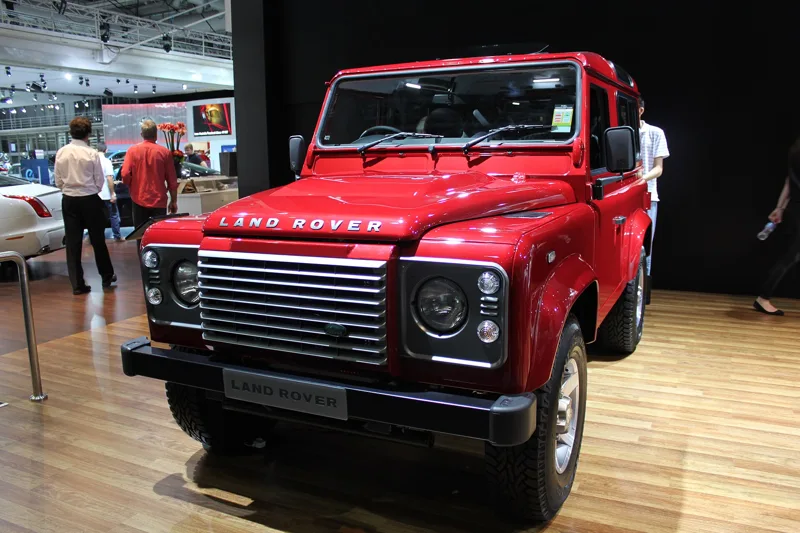
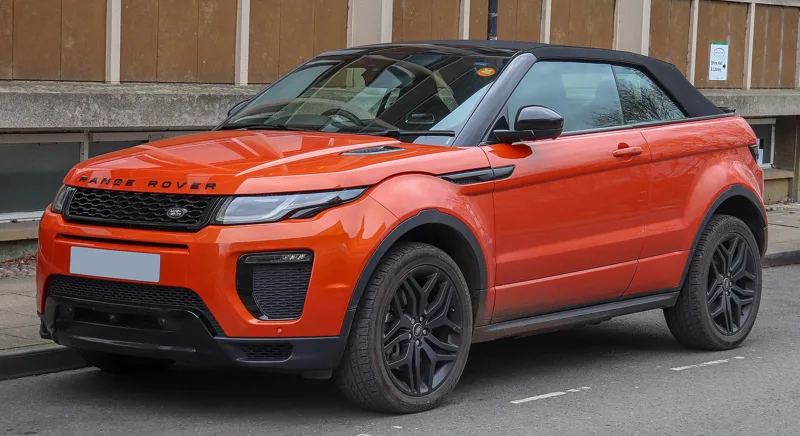
Land Rover became the company's biggest seller throughout the 1950s and the 1970s, despite Rover's reputation for upmarket saloons. The Range Rover followed in 1970 and became the most successful and profitable product the company ever made. Both vehicles owed much to the engineering behind the P5 and P6 saloons.
The P5 and P6 used a 3.5 litre aluminium V8 whose design and tooling were bought from Buick. Rover bought the Alvis company in 1965 and planned an Alvis-badged V8 supercar, the P6BS, while the P9 was drawn up as its finished proposal. The P8, which aimed to replace the P5, was cancelled late in preparation after Rover had already ordered dies for its body panels.
The Range Rover grew out of a '100-inch Station Wagon' project. It used the ex-Buick V8, the P6's safety-frame body structure, permanent four-wheel drive and all-round disc brakes. It was designed as a utility vehicle with Land Rover's off-road ability in a more refined and car-like package.
How did the Leyland takeover change Rover?
Leyland Motors bought Rover in 1967, having already acquired Standard-Triumph seven years earlier. The Leyland Motor Corporation merged with British Motor Holdings in 1968 to form BLMC, and Rover was placed in the Specialist Division with Triumph and Jaguar. Shared projects followed, but the independent heritage of the company was lost beneath the industrial and managerial problems of the 1970s.
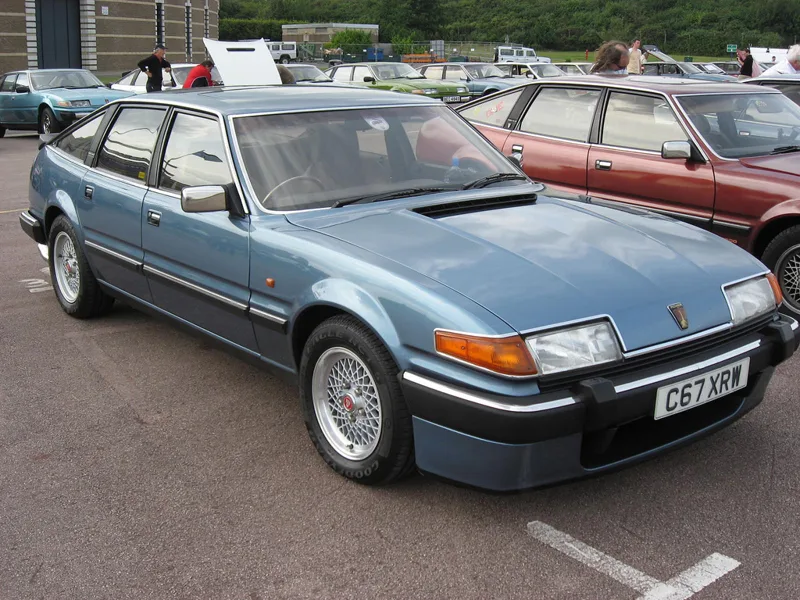
Projects were cancelled to avoid competing with Jaguar products. The SD1 was the only new Rover product launched during the decade. It arrived in 1976 and was the last car from the original Rover lineage, designed by ex-Rover engineers and first built at Solihull.
In 1978 British Leyland created Land Rover Limited to take in most of the old Rover assets, including Land Rover and Range Rover production. SD1 production moved to the former BMC plant at Cowley in 1982, which ended Rover-badged car production at the historic Lode Lane site.
What became of the Rover name?
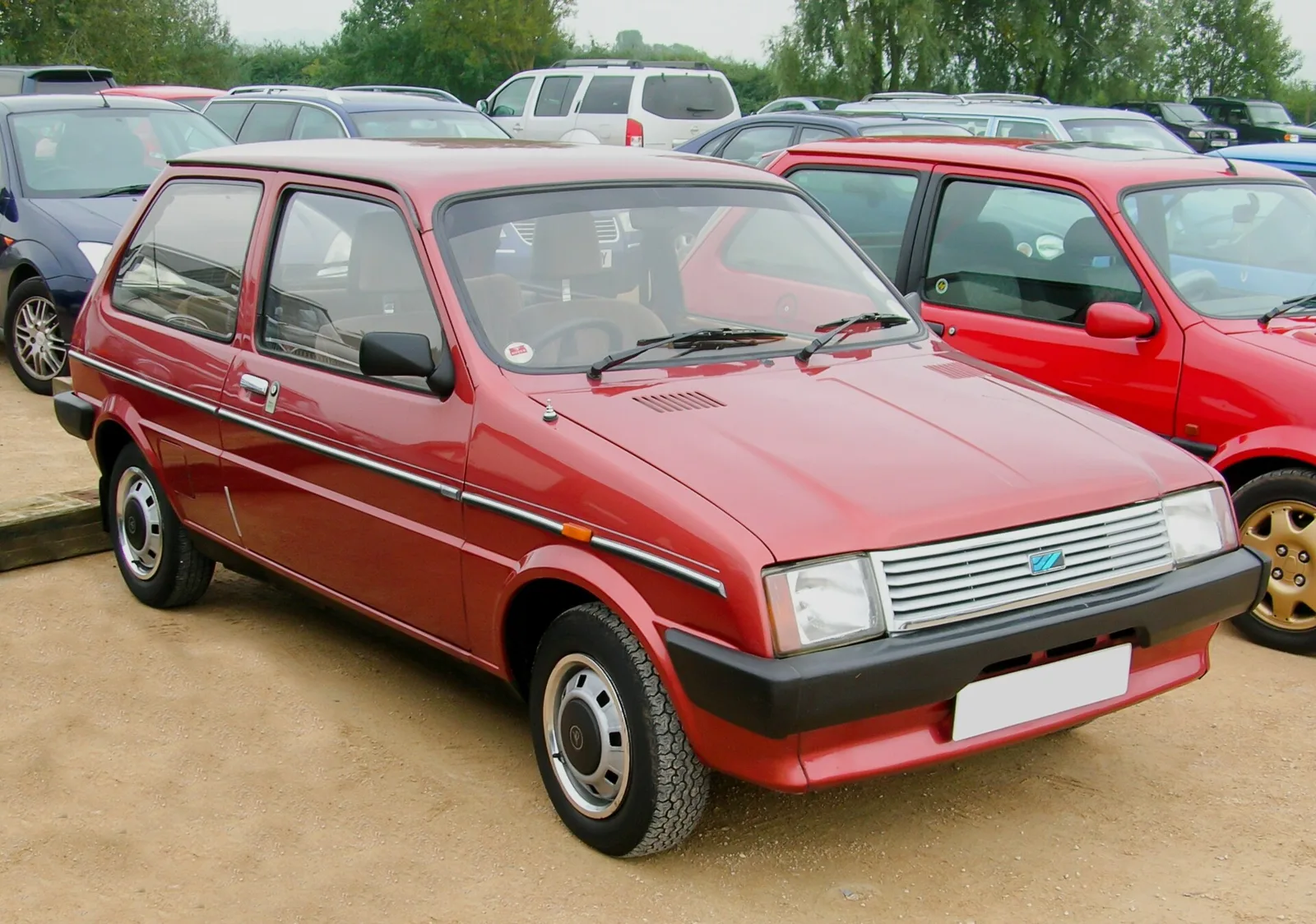
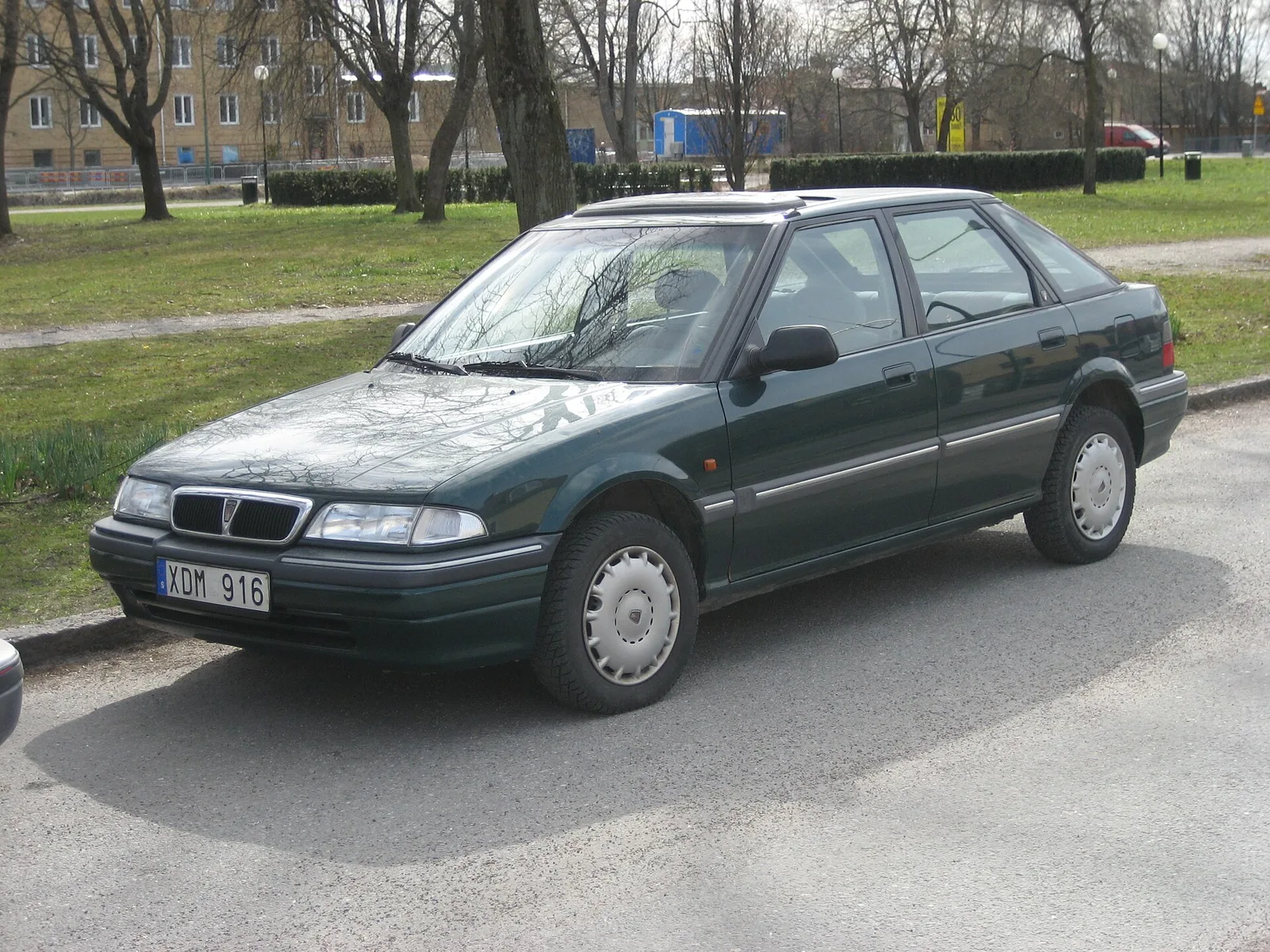
In 1986 BL became the Rover Group, and the Rover name was used across the whole conglomerate. BMW broke up the group in 2000, and Land Rover became a separate company. Today the Rover marque is dormant, held by Jaguar Land Rover, which is owned by Tata Motors and still operates from Rover's Solihull plant.
The Rover legacy is therefore a long one: bicycles in the 1880s, cars from 1904, jet and gas-turbine work in the 1940s and 1950s, and an off-road marque that outlived the company that built it.