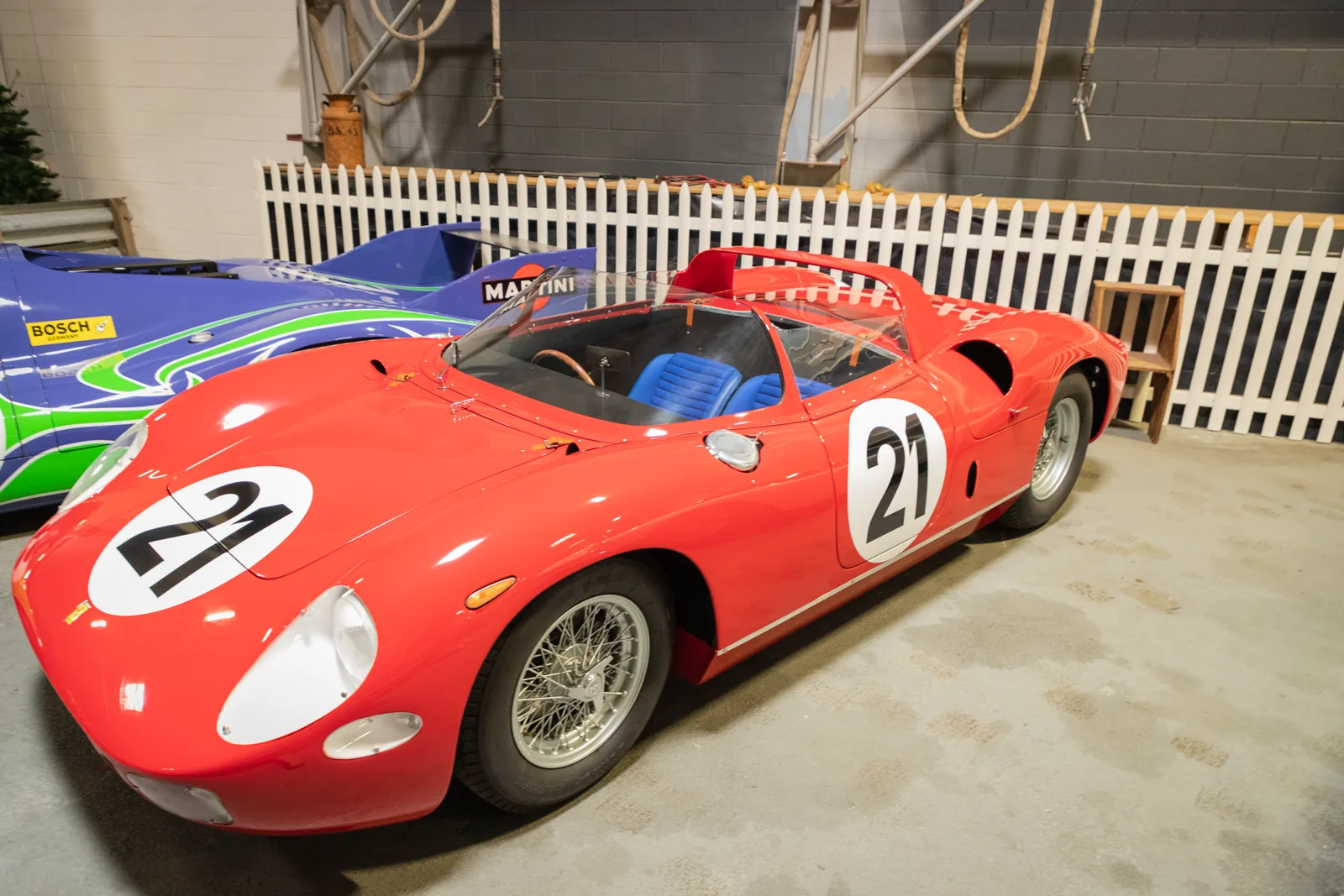
A works Ferrari 250 P took the first all-Italian win and the first victory for a mid-engined car, in a race where only a handful of cars survived to the flag.
The 1963 race went to Ludovico Scarfiotti and Lorenzo Bandini, who finished 16 laps clear of the field in their Ferrari 250 P. The race covered 4,561.71 km (2,834.52 mi) at an average of 190.07 km/h (118.10 mph), and Ferrari filled the top six places.
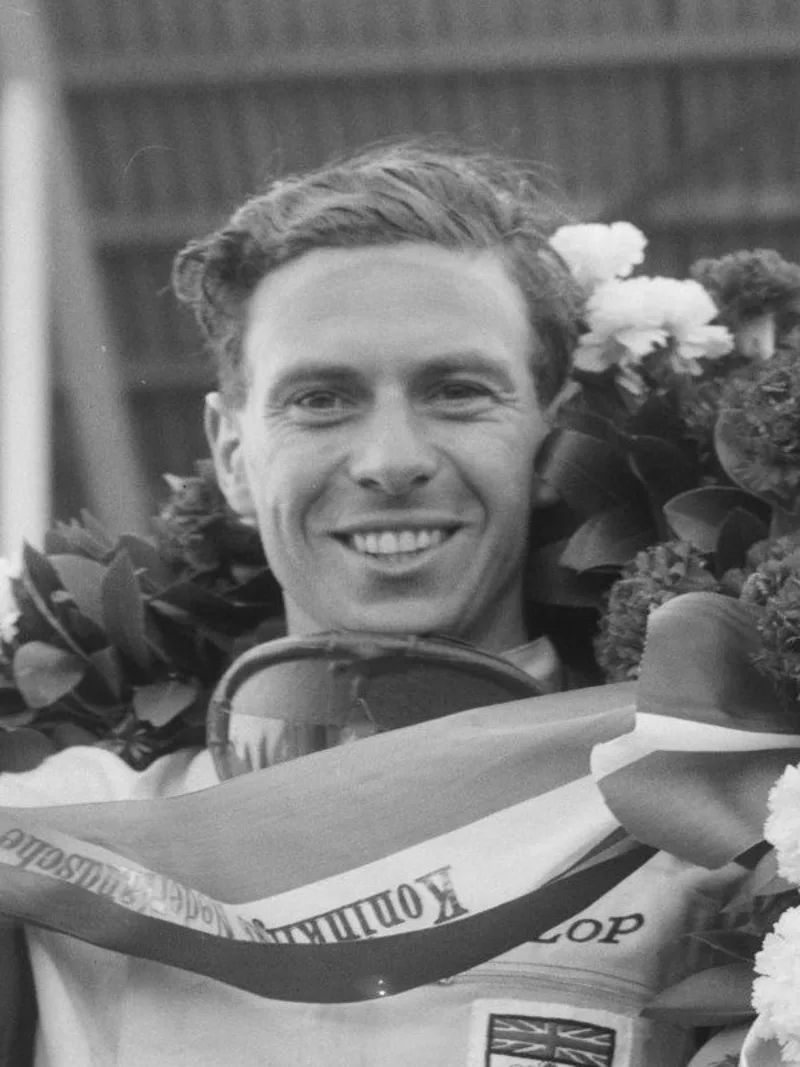
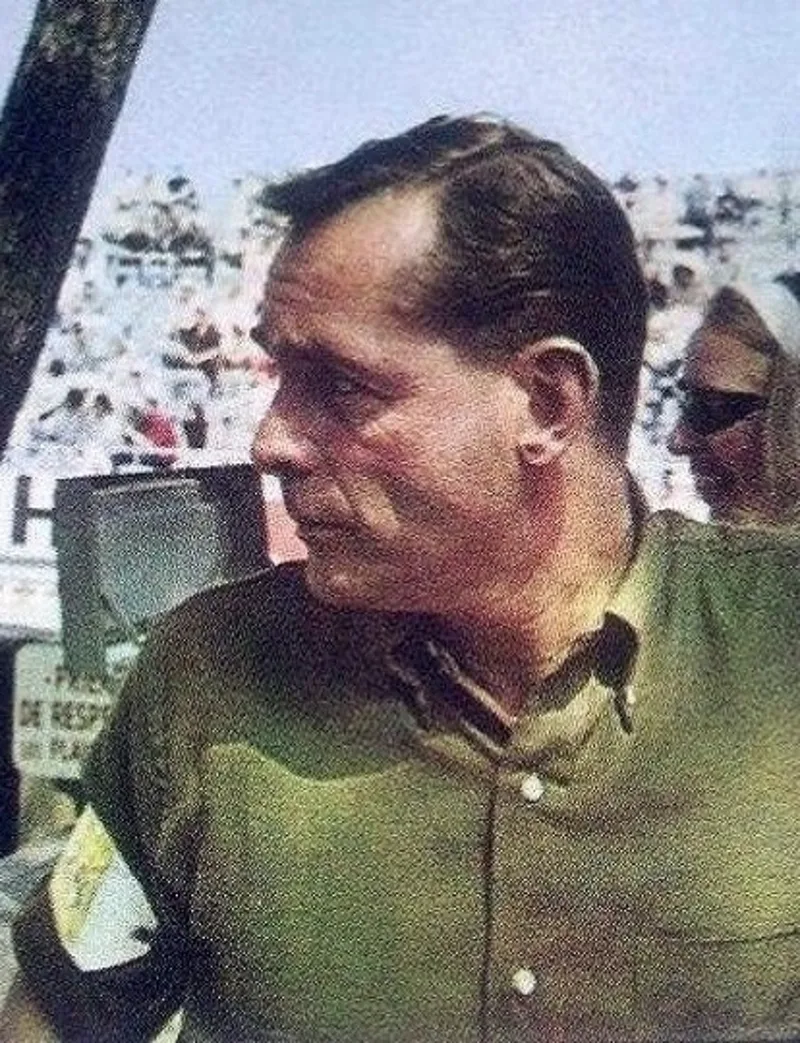
Ludovico Scarfiotti and Lorenzo Bandini won the 1963 24 Hours of Le Mans in a works Ferrari 250 P, giving Italy its first all-Italian victory at the event. It was also the first win for a mid-engined or rear-engined car, and Ferrari filled the top six places in a race of heavy attrition.
Who won the 1963 24 Hours of Le Mans?
Ludovico Scarfiotti and Lorenzo Bandini won in a works Ferrari 250 P, a mid-engined prototype with a 3-litre V12 producing 310 bhp. Their margin of 16 laps was the widest winning gap since Bentley's 1927 victory. Both men were Formula One drivers, and their win was the first all-Italian result the race had recorded.
Scarfiotti and Bandini had been running second when their team-mates' car burned in the Esses, and they took the lead they would not give up. From then on the Ferrari pair was never seriously challenged.
A works Ferrari took the first all-Italian win, and it was the first win for a mid-engined car.
What rule changes shaped the 1963 race?
The CSI lifted the 4.0-litre engine restriction on its GT classes and introduced a sliding scale of minimum weight against engine size. The ACO renamed the Experimental category as Prototype, lifted the same 4.0-litre restriction and set the grid by practice times rather than by engine size.
Other changes were smaller. Forced-induction engines had their equivalence ratio raised from 1.2 to 1.4, and the minimum car height rose to 850mm (33.5 inches). The ACO also recommended the wearing of safety belts in recognition of driver safety.
How big was the field, and who entered?
The ACO received 80 entries, and after withdrawals 55 cars were ready to practise. Ferrari entered eleven cars, led by three new 250 P prototypes for the works team. The rest of the grid was built around Aston Martin, Maserati, Lola and Porsche, each of which wanted to challenge the Italian cars at the front.
The works 250 Ps were driven by Surtees with Mairesse, Scarfiotti with Bandini, and Parkes with Maglioli. Three privateers ran 330 LMB front-engined prototypes, and the North American Racing Team entered the 330 TRI/LM for Pedro Rodriguez and Roger Penske, the car that had won the race the year before.
Aston Martin had its DP214 accepted as a GT derivative of the DB4. The successor DP215 had a 4.0-litre engine producing 323 bhp and was driven by Phil Hill and Lucien Bianchi. Maserati returned with an updated Tipo 151 coupe, its fuel-injected 5-litre V8 producing 430 bhp and reaching 290 km/h (180 mph).
Lola brought its Mk6 GT back for a second attempt. The car used a steel monocoque with a fibreglass body and was so light that it needed ballast to reach the 875 kg minimum weight. Its gearing held it to 240 km/h (150 mph), and it was driven by David Hobbs and the debutant Richard Attwood.
Porsche ran its 718/8 coupe and spyder in the 2-litre class, both fitted with the 2-litre flat-8 Formula One engine. Bonnier and Maggs drove the coupe, and Barth and Linge drove the spyder.
Leading finishers in 1963
| Position | Car | Drivers | Notes |
|---|---|---|---|
| 1 | Ferrari 250 P | Scarfiotti and Bandini | Winners, 16 laps clear |
| 2 | Ferrari GTO, Equipe Nationale Belge | Belgian crew | Second overall |
| 3 | Ferrari 250 P | Parkes and Maglioli | Just over 100 metres behind second |
| 4 | Ferrari GTO, Ecurie Francorchamps | Belgian crew | Fourth overall, barely a lap behind |
| 5 | Ferrari, Maranello Concessionaires | British crew | Battled overheating for most of the race |
| 6 | Ferrari 250 GTO/LMB, NART | Gregory and Piper | Out of alignment after going off at Arnage |
| 8 | Porsche 2-litre spyder | Barth and Linge | Repaired after losing a rear wheel |
| 9 | Jaguar lightweight E-type | Cunningham team | Brake failure overcome |
How did qualifying set the 1963 grid?
Pedro Rodriguez took the first pole set by qualifying, at 3 min 50.9 s. All eleven Ferraris qualified in the top sixteen places, and the grid was now ordered by practice times rather than engine size.
The works 250 Ps were second and third on the grid, with Bandini ahead of Parkes. Hill's Aston Martin reached fourth, with his team-mates in eighth and tenth, and the Maserati was sixth.
Bonnier got his two-litre Porsche in 17th at 4 min 07.9 s, and his team-mates were 23rd at 4 min 13.2 s. The 718/8 type had earlier taken the Targa Florio, when Ferrari's cars had failed, and the GT Porsche was 26th at 4 min 35.8 s.
The Rover turbine qualified at 4 min 22.0 s, which would have placed it mid-field on its own merits.
How did the Jaguars and the Cobra fare?
Briggs Cunningham returned with three Jaguar E-type Lightweight specials, prepared by Lofty England, each with a fuel-injected 3.8-litre straight-six producing 310 bhp. Cunningham drove with Bob Grossman, while Walt Hansgen and Roy Salvadori were paired with Augie Pabst and Paul Richards.
A brake pedal failure at the end of the Mulsanne straight sent Grossman's car through three rows of haybales. He got it back to the pits, where the team took parts from a third car that had retired in the first hour, and they lost two hours before rejoining the race.
AC Cars entered two Cobra Mk2s with the Ford Windsor V8. One was managed by Stirling Moss for Ninian Sanderson and Peter Bolton, and the other was entered by Ed Hugus, who had developed the car in America. Carroll Shelby, who had won the 1959 race, had worked with AC Cars to fit a small-block Ford V8 to the Ace chassis.
How did the start and the first hours unfold?
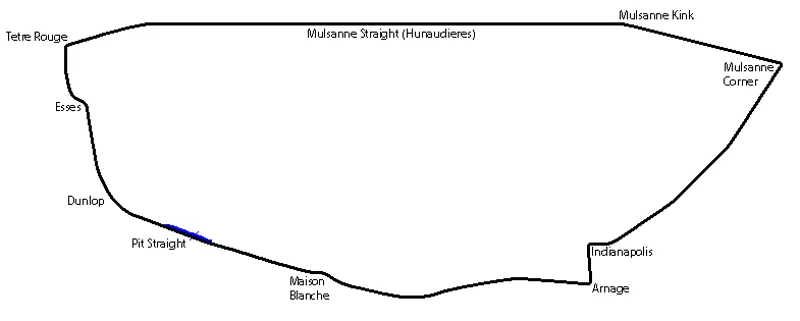
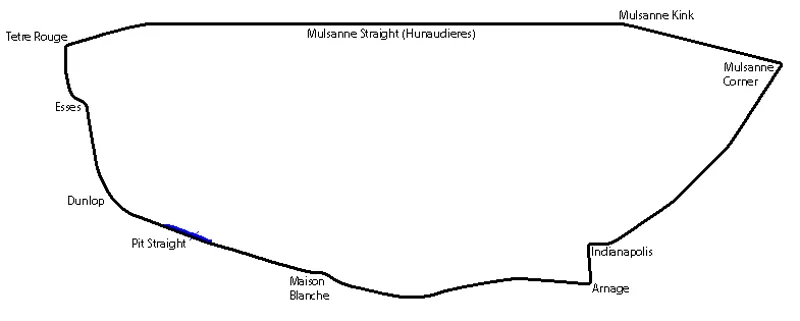
Phil Hill got his Aston Martin away first, but it was Andre Simon's Maserati that delighted the local crowd. Simon nudged Surtees aside at Mulsanne, then passed Hill before Arnage to lead the opening lap.
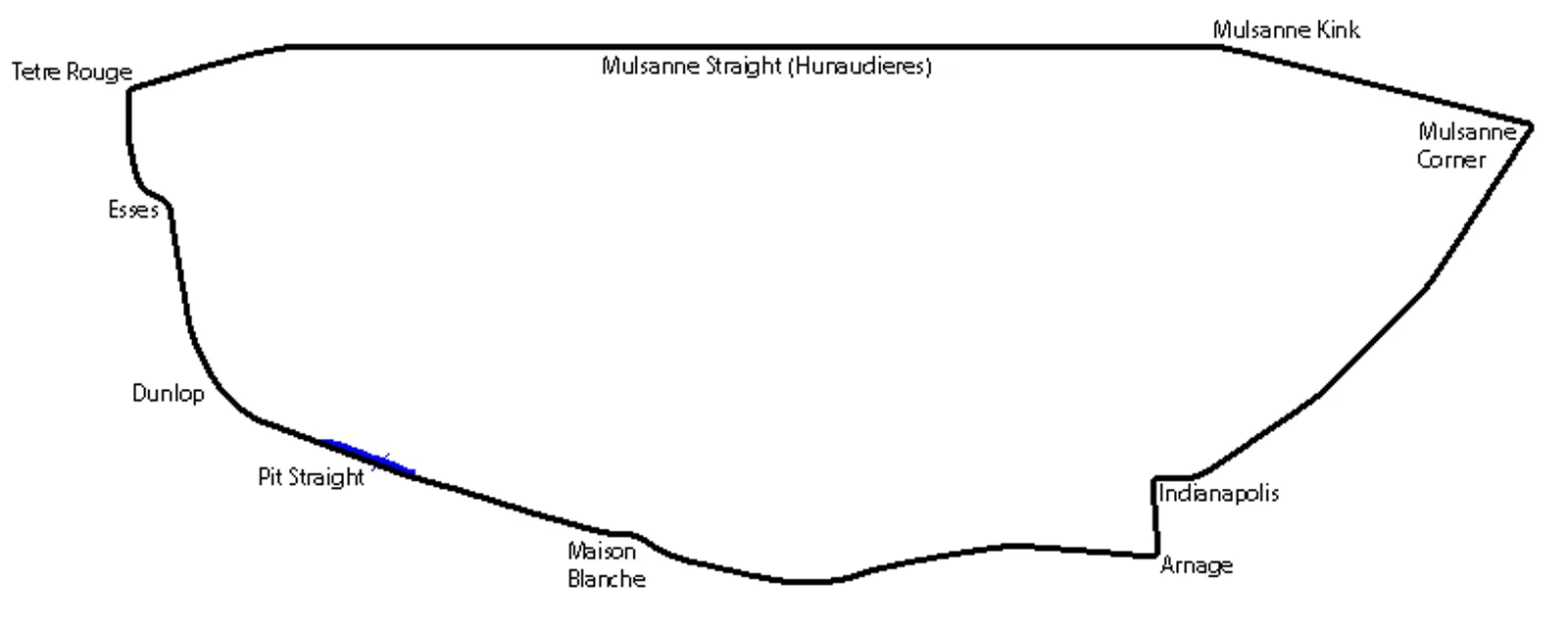
Trouble came quickly. Pat Ferguson put his Lotus Elite into the sandbank at Mulsanne on the first lap, dug it out and drove it straight back into the same spot on the next. Guilhaudin's CD-DKW was destroyed at Indianapolis on the second lap, and Roger Masson's Bonnet clipped the verge after the Dunlop bridge on lap five and somersaulted twice.
Simon held the lead through his opening two-hour stint and then handed over to Lucky Casner. Within an hour of taking the wheel Casner brought the Maserati into the pits with terminal gearbox problems, which ended the Maserati challenge early.
What happened in the Mulsanne crash?
By the four-hour mark the works 250 Ps of Surtees and Mairesse and Parkes and Maglioli were in the top five, with the NART 330 TRI/LM close behind. McLaren's Aston Martin was sixth overall and led the GT category until 8.20pm, when a piston shattered while he was flat out approaching the Mulsanne kink.
Oil from the holed sump set off a chain of accidents. Kerguen's DB4 spun into a ditch and wrecked its differential, and Sanderson's Cobra spun several times without hitting anything. Salvadori's Jaguar then arrived at 265 km/h (165 mph), spun and crashed into the banking.
Salvadori was thrown out as the car burst into flames, and Kerguen went to help him. Jean-Pierre Manzon's little Bonnet hit the wreckage and rebounded into the middle of the track, and Manzon was seriously injured and thrown onto the road. Christian Heins, who was leading his class and the Index of Performance, avoided the wreckage only to lose control of his Alpine-Renault, which rolled, hit a lamp-post and exploded. Heins was killed instantly.
What went wrong for the Aston Martins and the Lola?
Aston Martin's challenge collapsed in the first night. McLaren's car lost a piston in the early evening, and the Kimberly and Schlesser car retired with piston problems soon before 2am, which ended the marque's hopes for the race.
The Lola fared little better. David Hobbs crashed it at Maison Blanche as dawn broke, after it had run as high as eighth. The team had been fighting the gearbox for most of the night and had lost two hours in the pits.
What happened to Surtees and Mairesse?
Surtees and Mairesse led for fifteen hours and built a two-lap lead before the race turned against them. At 10.45 Surtees pitted for fuel and a driver change, and Mairesse was caught by a fire in the Esses that badly burned him.
The cause was spilt fuel in the engine bay, which an electrical spark from the brake lights set alight. Mairesse climbed out with his overalls burning, and the burns to his face and arms kept him out of racing for two months.
The team's other car, driven by Scarfiotti and Bandini, moved up to take the lead and never gave it back. The pair had been running second through the crucial hours, so the fire turned the race in their favour.
How did the Rover turbine car perform?
The Rover turbine car ran as an unofficial entry, given the number 00, with twin turbines producing 150 bhp and a top speed of 230 km/h (145 mph). It ran on paraffin, used about 7 mpg, and could not run on a regulation fuel tank, so it was kept off the official entry list.
The car was based on a BRM Formula One chassis, and BRM released its grand prix drivers, Richie Ginther and the reigning world champion Graham Hill, to drive it. Its practice time of 4 min 22.0 s would have put it mid-field, but as an outside entry it had to start 30 seconds after the flag.
The turbine had a remarkably trouble-free run and needed no mechanical work or even a change of tyres. It covered more than the 3600 km minimum at an average of 150 km/h and was awarded the ACO's FF25000 prize. It was not classified, but it would have finished seventh and beaten the 1958 winning car.
What did the 1963 race change?
The win was the first all-Italian victory at Le Mans, and it went to a mid-engined machine. Ferrari filled the top six places, and the margin was the widest since Bentley's 1927 win.
The two Belgian GT teams raced each other closely, and Parkes and Maglioli only failed to catch the Equipe Nationale Belge GTO by just over 100 metres. Fourth was the Ecurie Francorchamps GTO, barely a lap behind. Two days after the race the Belgian crews drove to Paris and went to a nightclub until 4am, leaving their racing cars outside.
Sixth and last of the Ferraris was the NART 250 GTO/LMB of Gregory and Piper. After going off at Arnage in the morning, Gregory spent an hour digging the car out of the sand, and it raced on out of alignment. The Index of Thermal Efficiency went to the sole surviving Bonnet, driven by Claude Bobrowski and Jean-Pierre Beltoise.
Despite good weather, attrition was high. Only fourteen cars were still running at the end, from 49 starters. Porsche's 2-litre spyder of Barth and Linge finished eighth, while the Lotus Elite of Ferguson and Wagstaff finished tenth and won its class.