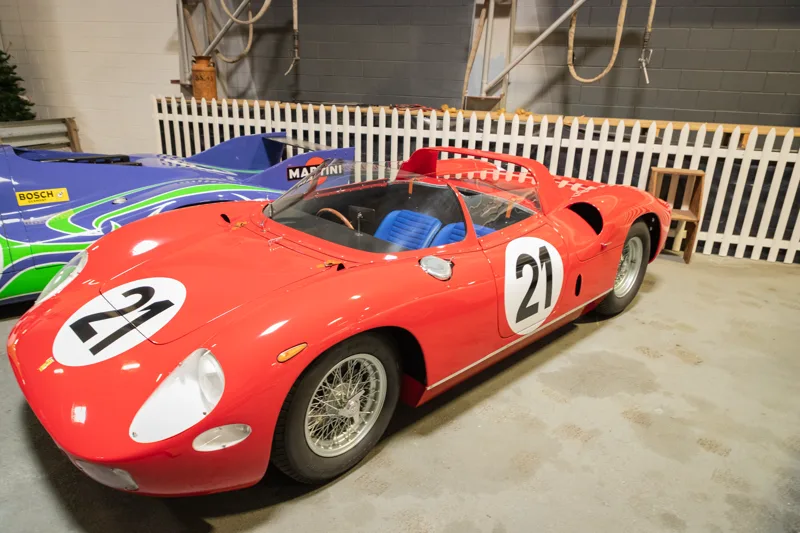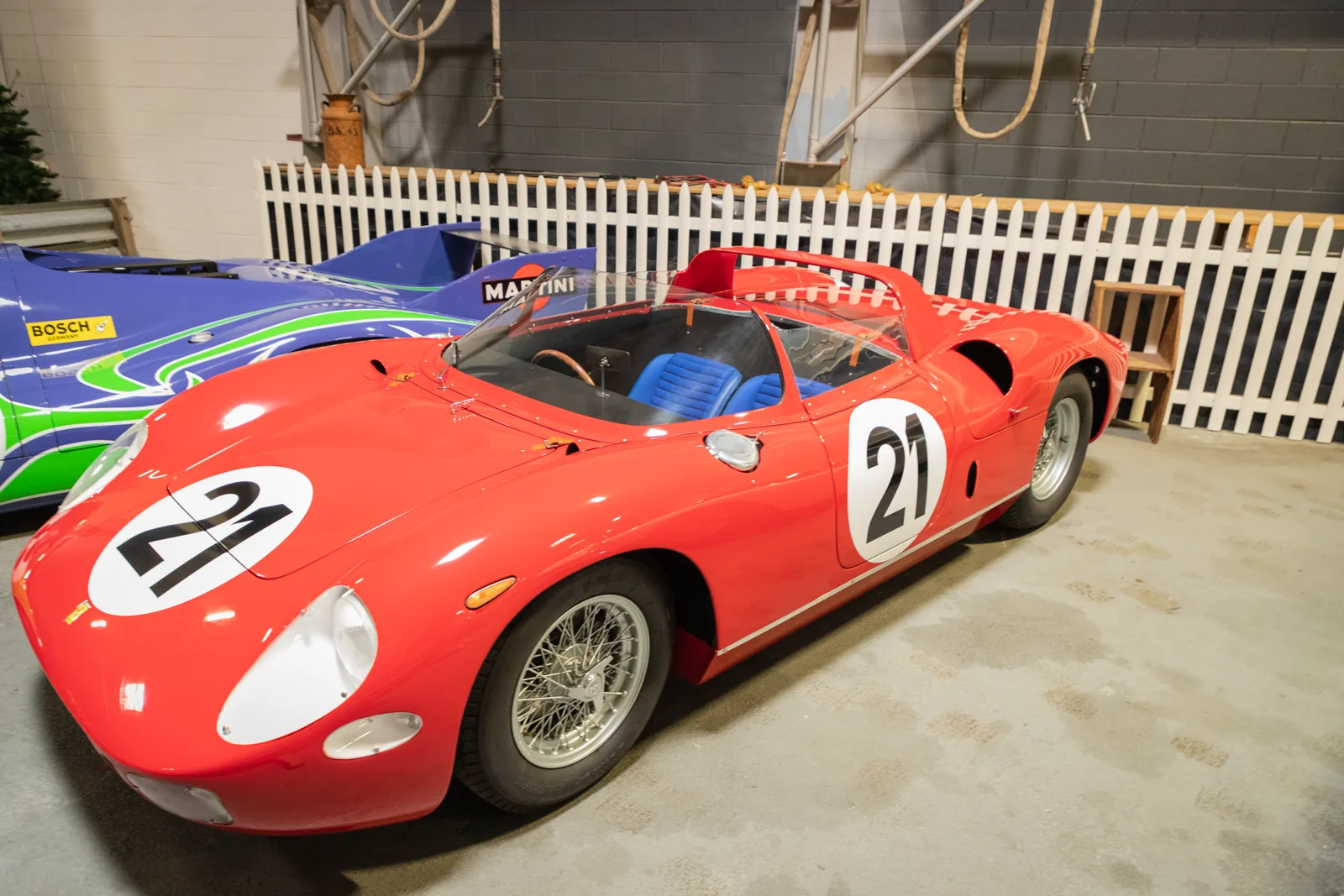
Vaccarella and Guichet's 275 P won by five laps and set a distance record, while Ford's big GT40s fell away after a promising start.
The 1964 race went to Nino Vaccarella and Jean Guichet, five laps clear of the next car in their Ferrari 275 P. The winning car covered 4,695.31 km (2,917.53 mi), the longest distance yet recorded at the event.
Nino Vaccarella and Jean Guichet won the 1964 24 Hours of Le Mans in a Ferrari 275 P, five laps ahead of the British-run 330 P of Graham Hill and Jo Bonnier. Their 4,695.31 km (2,917.53 mi) was a new distance record, and it came in the year Ford had brought ten American V8 cars to the start.
Who won the 1964 24 Hours of Le Mans?
Vaccarella and Guichet drove a Ferrari 275 P to a clear five-lap win, and the car's distance was a record for the race. The win rewarded years of effort at the event. Ferrari took its fifth successive victory.
The second place went to the Ferrari 330 P of Hill and Bonnier, entered by the British Maranello Concessionaires team. Surtees and Bandini, in the works 330 P, finished third, seven laps behind Hill and Bonnier. Ferrari dominated the top of the result from the early hours.
Ferrari's fifth straight win came with a distance record, while the Ford challenge faded out of the race.
How did Ford's challenge begin?
After the disappointments of earlier years, Ford spent heavily on a sports car that could beat Ferrari. The company had made an attempt to buy Ferrari for US$16 million before turning to its own programme. The GT40 took its name from its 40-inch height, and it was built around a Fairlane V8 that produced 350 bhp.
Eric Broadley's Lola had performed well at the 1963 race and was taken on to help with the new GT design, which gave the GT40 a clear family resemblance to the Lola Mk6. The gearbox was the real problem, and the Colotti five-speed unit was chosen to handle the engine's power. John Wyer, who had left Aston Martin, was brought in as project manager.
Three cars were entered. Richie Ginther and Masten Gregory shared one, Phil Hill was paired with Bruce McLaren, and Jo Schlesser drove with Richard Attwood, who had driven the Lola the year before. The Ford car could reach 340 km/h (210 mph), which made it fast on the straight.
Which Ferraris and rivals made up the field?
Ferrari arrived with twelve entries. Its new 275 P used a 3.3-litre V12 producing 320 bhp, and the 330 P was a new model for the race with a 4.0-litre V12 producing 370 bhp and reaching 305 km/h (190 mph). Scarfiotti and Parkes, Maglioli and Baghetti, and Guichet and Vaccarella drove the 275 Ps, while Surtees and Bandini were in a 330 P.
Maserati was represented by Col. John Simone's French team, which fitted the Tipo 151 with fuel injection and more than 400 bhp. The car could reach 310 km/h (190 mph), and the drivers were Andre Simon and Maurice Trintignant. New entrant Iso brought the Grifo A3C, designed by Giotto Bizzarrini, with a 327 cu in Chevrolet V8 that put out almost 400 bhp.
Porsche fielded two prototypes with the flat-8 from its concluded Formula One programme, producing 225 bhp. Barth and Linge drove one, and Mitter and Davis, who had won the 1964 Targa Florio, drove the other. The Porsche 904 GTs were powered by a 4-cylinder engine from the 356 Carrera until the new flat-6 was ready.
Leading finishers in 1964
| Position | Car | Drivers | Result |
|---|---|---|---|
| 1 | Ferrari 275 P | Vaccarella and Guichet | Winners, five laps clear, distance record |
| 2 | Ferrari 330 P, Maranello Concessionaires | Hill and Bonnier | Five laps behind the winners |
| 3 | Ferrari 330 P, works | Surtees and Bandini | Works car |
| 4 | Shelby Cobra Daytona Coupe | Gurney and Bondurant | First in GT |
| 7 | Porsche 904 GT | Buchet and Ligier | Led the 904 finishers |
| 8 | Porsche 904 GT | Privateer | Part of a five-car 904 finish |
How did qualifying set the 1964 grid?
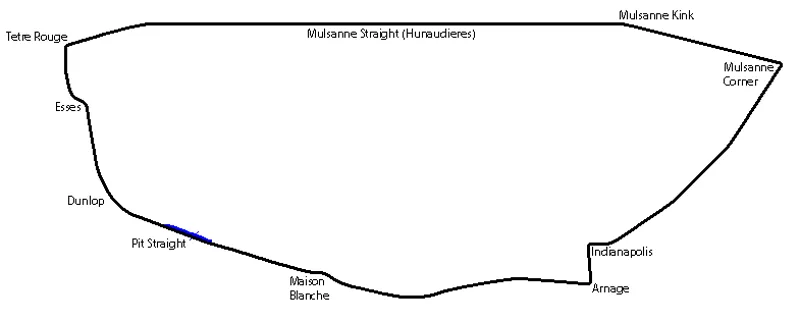
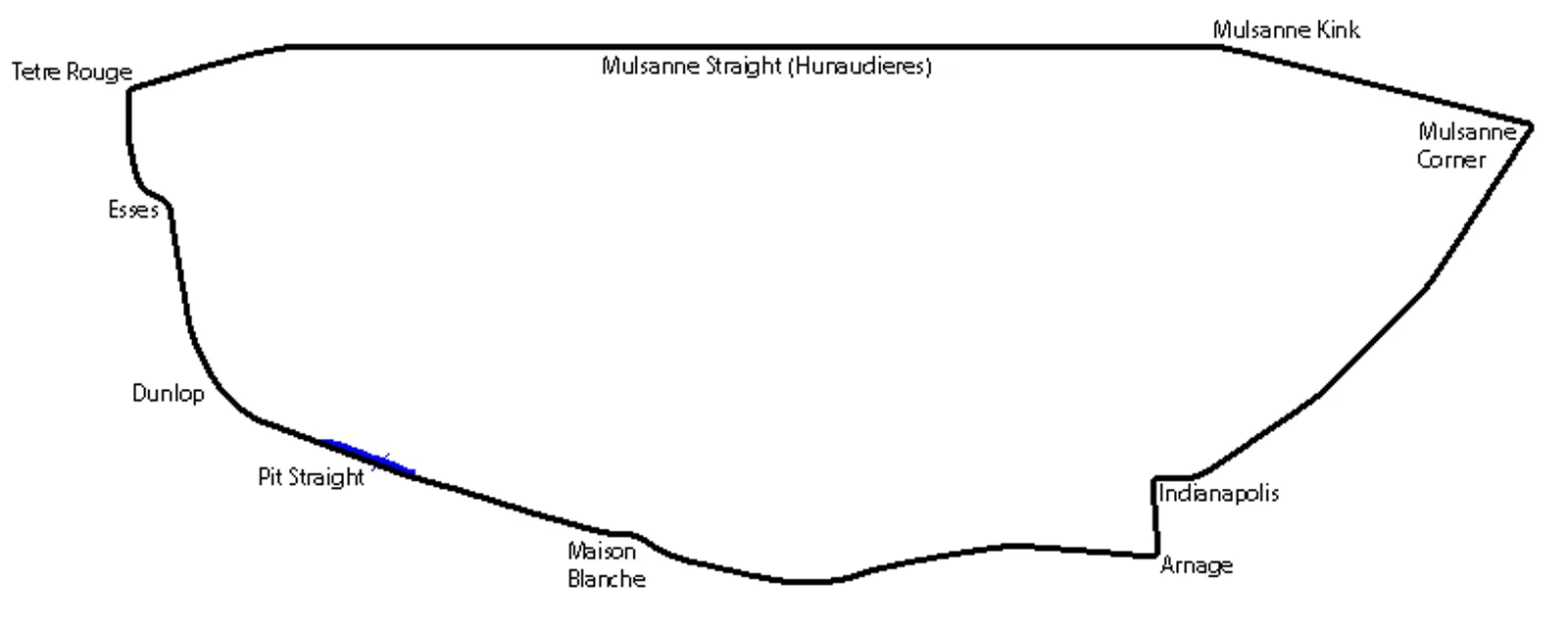
Surtees took pole with a record lap of 3m42.0 at dusk on the last practice session, although he hit a fox coming up to Maison Blanche. Ginther's Ford was second at 3m45.3, ahead of Rodriguez's NART Ferrari at 3m45.5 and Phil Hill's Ford at 3m45.9.
Ford and Ferrari took the top nine grid positions between them. Dan Gurney was 10th in his Shelby Cobra at 3m56.1, the fastest GT car, and the lead Cobra, the works AC and the Aston Martin were the only GT cars to get under four-minute laps.
The Davis and Mitter Porsche was the fastest 2-litre, qualifying 18th at 4m02.1. The Delageneste and Morrogh Alpine was the fastest small car at 4m34.3, in 35th place, while Pierre Orsini rolled his Alpine at Dunlop curve and broke an ankle.
Fords had problems at scrutineering as well. Their fuel tanks were larger than the 140-litre limit, and displacement blocks had to be added before the cars could race.
By race week the Fords had received aerodynamic improvements, including a tail lip to reduce rear-end lift, which made them far more competitive than they had been in April.
How did the race begin for the Fords and Ferraris?
The race started in cold but dry weather, and ten spectators were seriously injured before the start when an advertising hoarding they were standing on collapsed. Rodriguez got the best start in the NART 330 P, with a power-slide and a great deal of tyre noise.
Ginther gave the Ford its first real moment. On the second lap he got a run on the three Ferraris ahead of him and passed them on the Mulsanne Straight, unofficially at nearly 340 km/h, before dropping his revs to the level the team prescribed. He built a 40-second lead in the first hour and covered a record 15 laps in that hour.
Other drivers had less fortune. Piper's Ferrari suffered a burst oil line at once and left oil through the Esses, and Baghetti's clutch problems cost his SEFAC Ferrari 75 minutes and 20 laps. Mike Rothschild slid off in the Dunlop curve, and Hudson's NART Ferrari narrowly missed him as he rebounded into the road.
Did the Rover turbine race in 1964?
It did not. The Rover-BRM turbine was at the April test weekend, but it suffered damage on the trip back to the factory. That, together with problems with the new heat exchanger, meant it was not ready for the race.
Roy Salvadori's programme also ended that spring. He had an accident in the test when a door flew off his car, and a second accident the next day, approaching the Mulsanne corner, convinced him to leave the team.
Jo Schlesser had a major accident on the first day of testing at the Mulsanne kink after he hit standing water.
Which privateers and small teams stood out in 1964?
Among the privateers, the Equipe Nationale Belge car of Bianchi and Beurlys and the Maranello Ferrari of Ireland and Maggs both finished close behind the leading Cobra in the GT class. Fernand Tavano's privately entered Ferrari had led the GT division for a time in the morning.
The Scuderia Sant Ambroeus team had three Alfa Romeo Giulia TZ cars, and it had already taken class victories at Sebring, the Targa Florio and the Nurburgring that year. The Giulia TZ's 1570cc engine produced 135 bhp.
What happened in the night?
The night was bitterly cold and misty. Around 10.15pm Peter Bolton's AC Cobra had a tyre blowout at Maison Blanche. The Cobra spun, was struck by Baghetti's Ferrari, and three young spectators in a prohibited area were crushed. Bolton was taken to hospital with minor injuries, and Baghetti was uninjured.
At midnight the Ferraris were still running 1-2-3, and Surtees and Bandini had completed 119 laps. Fuel leaks then began to affect their car, and Vaccarella and Guichet moved into the lead during the pit-stop cycles.
The Cunningham Cobra was disqualified during the race. A Ferrari mechanic saw the team recharge the battery in the pits, the officials were told, and the car was disqualified. The row that followed led team manager Dragoni to chase Cunningham out of the pits, while no action was taken against Bandini's Ferrari.
Herbert Linge was left stranded at Tertre Rouge when the leading Porsche's clutch failed at 2.30am. Just before 4.30am Jean-Louis Marnat's Triumph was seen slumped at the wheel after carbon monoxide poisoning. It hit the barrier, swung across the track into the pits and rolled to the Dunlop curve.
Why did the Ferrari GTs and Shelby Cobras matter?
The Ferrari dominance in the GT category was broken for the first time by the new Shelby Cobra of Dan Gurney and Bob Bondurant, which finished fourth overall, first in the GT class and a lap ahead of the nearest Ferrari GTOs. Two Ferrari 250 GTOs were behind it. Gurney and Bondurant's car had engine temperatures high through the second day, and it still ran consistently.
Porsche had a good weekend too. Five of the six 904 GTs finished, in seventh, eighth, tenth, eleventh and twelfth, led by the French privateers Robert Buchet and Guy Ligier. Two Alfa Romeos finished behind them, and Bussinello and Deserti beat the class distance record that Porsche had set in 1958.
How did the end of the race go?
Once again the pressure was off the Ferraris, and the Vaccarella and Guichet car extended its lead steadily. It won by five laps and set a new distance record, a fine reward for Jean Guichet, who had finished third in 1961 and second in 1962 as a GT privateer.
Graham Hill and Jo Bonnier finished second, seven laps behind the winners, with Surtees and Bandini third. Hill's Ford GT, meanwhile, had retired around 5.30am with gearbox problems after it had climbed back to fourth and set a new lap record. The distance records made the race a success for Ferrari despite the Ford challenge.
In a race of records, five new distance records were set in the competing classes. As in the previous year, the winning Ferrari also took the Index of Performance, while Alpine finished 1-2 in the Index of Thermal Efficiency, with Delageneste and Morrogh finishing 17th overall.
What did 1964 mean for the marques?
The race marked several turning points. The race also marked the last appearance of Aston Martin and Jaguar at Le Mans for twenty years. Aston Martin had first raced in 1928 and had been at every race from 1931, including its 1959 victory.
It was also the last time that Rene Bonnet bought his own cars to Le Mans. Facing money problems, he sold his firm to Matra within months. Panhard made its last appearance at the event in 1964, and its CD-3 never raced again. Briggs Cunningham's team also ended its run here, after taking part in 11 races.
Two drivers who had raced at the event did not live through the year. Peter Lindner died later that year in the Jaguar he had brought to Le Mans, crashing in heavy rain at Montlhery. Carel Godin de Beaufort, a stalwart Porsche driver in sports cars and Formula One, was killed in practice for the German Grand Prix.