A North American Racing Team Ferrari won after the Ford GT40s collapsed, the first non-works victory since Ecurie Ecosse in 1957.
Gregory and Rindt took the 1965 win for the North American Racing Team, finishing five laps ahead of Dumay and Gosselin in a Ferrari. The race covered 4,677.11 km (2,906.22 mi), and the winning average was 194.88 km/h (121.09 mph).
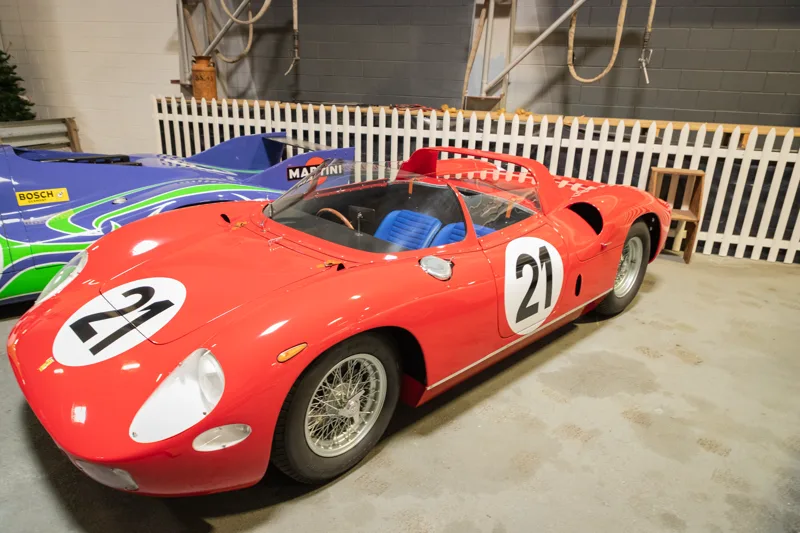
Masten Gregory and Jochen Rindt won the 1965 24 Hours of Le Mans in a North American Racing Team Ferrari, after Ford's improved GT40s again failed to deliver. It was Ferrari's sixth successive win at the event, and it proved to be the last Ferrari victory at Le Mans until 2023.
Who won the 1965 24 Hours of Le Mans?
The 1965 race went to Masten Gregory and Jochen Rindt in a NART Ferrari 365 P2, five laps clear of the Dumay and Gosselin car. The race covered 4,677.11 km (2,906.22 mi) at an average of 194.88 km/h (121.09 mph). It was the first non-works win since 1957.
The win came after a long delay. Gregory had pitted for a distributor change in the fourth hour, losing 30 minutes, and then found Rindt ready to leave, so the two rejoined in 18th and pushed flat out. By the end the car's differential was fragile, but it cruised to the finish.
A customer Ferrari won after the Ford GT40s failed, and the winning crew's story is still debated.
What rule changes came in for 1965?
The rules changed only slightly. The fuel tank on cars with engines above 5.0 litres was increased to 160 litres (35 gallons), the minimum engine size was set at 1000cc, and the two indices received minor tweaks to their calculation.
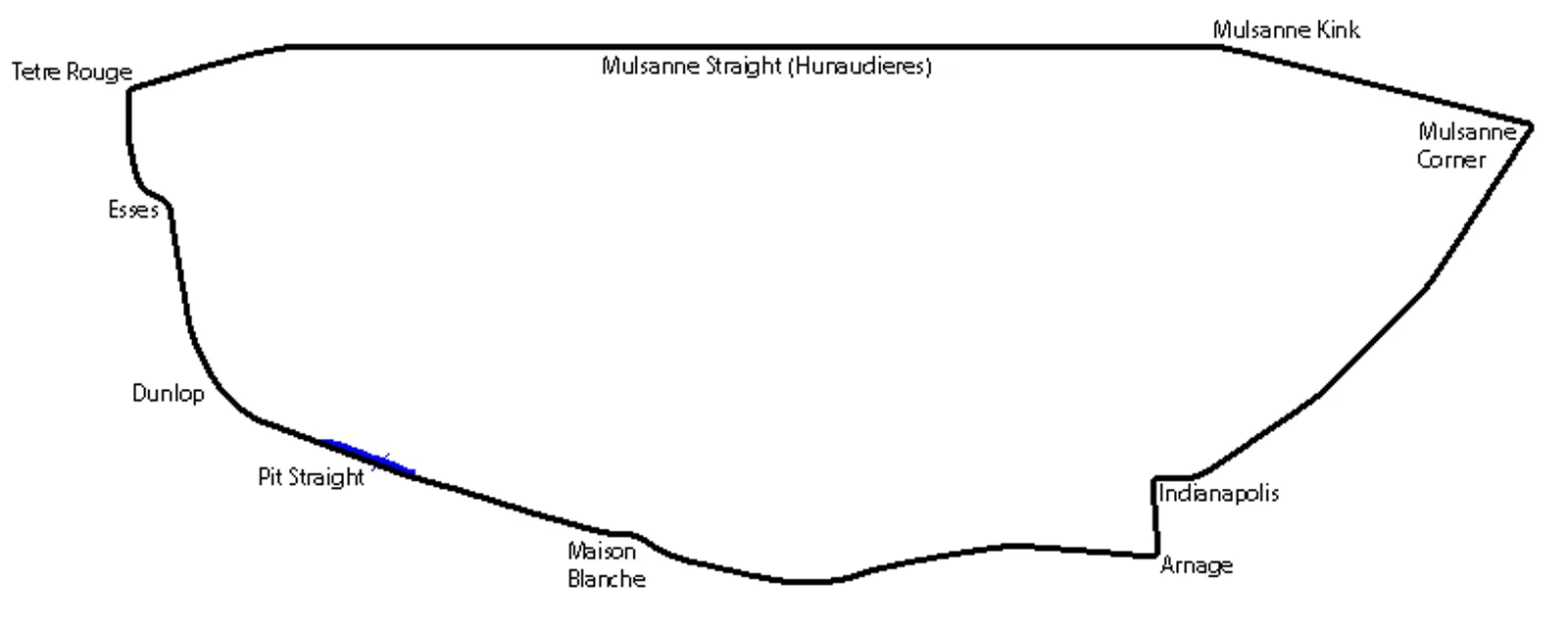
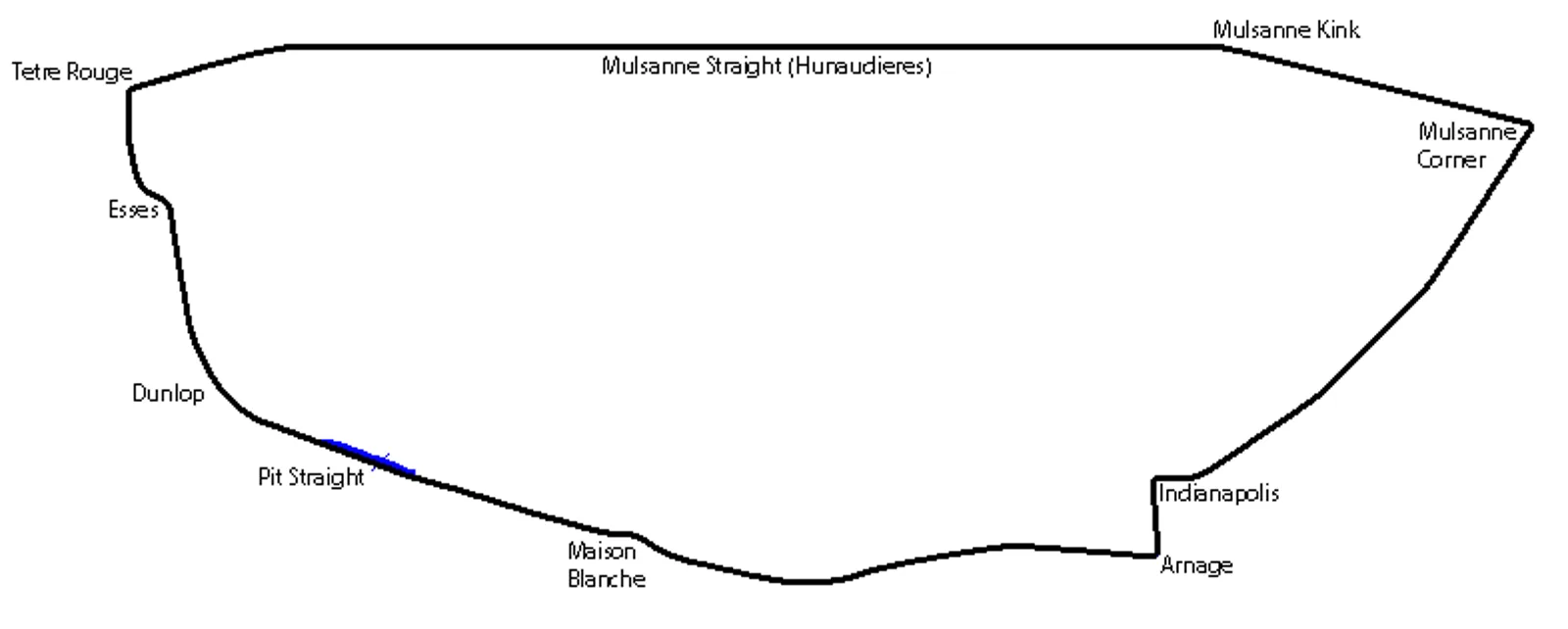
Protective barriers were placed in front of each pit after a car had crashed into the busy pits the year before, although the pit lane itself remained open. Plans for a permanent circuit were also under way, and Charles Deutsch was the design consultant for the project that became the Bugatti Circuit.
How did the entry list take shape?
The ACO received 89 entries, and after selection, withdrawals and no-shows 51 cars were at the start. Manufacturers came back in force, with 42 works-supported entries among the starters.
Ferrari introduced its new 275 P2 at the April test and at the Monza 1000 km. Two open-top cars with 4.0-litre V12 engines producing 410 bhp went to Surtees and Scarfiotti, and to Parkes and Guichet. A closed-top 3.3-litre coupe at 350 bhp went to Bandini and Biscaldi, and Maranello Concessionaires ran a 4.4-litre car for Bonnier and Piper.
Ferrari's customer and works programmes were not the only story. Enzo Ferrari was furious when the Italian motor-racing body refused to help homologate his small series of 250 LM cars for GT racing, and he threatened to pull the works team out of the GT Championship. Five 250 LMs were still entered as prototypes by customer teams, including NART and Pierre Dumay's private car.
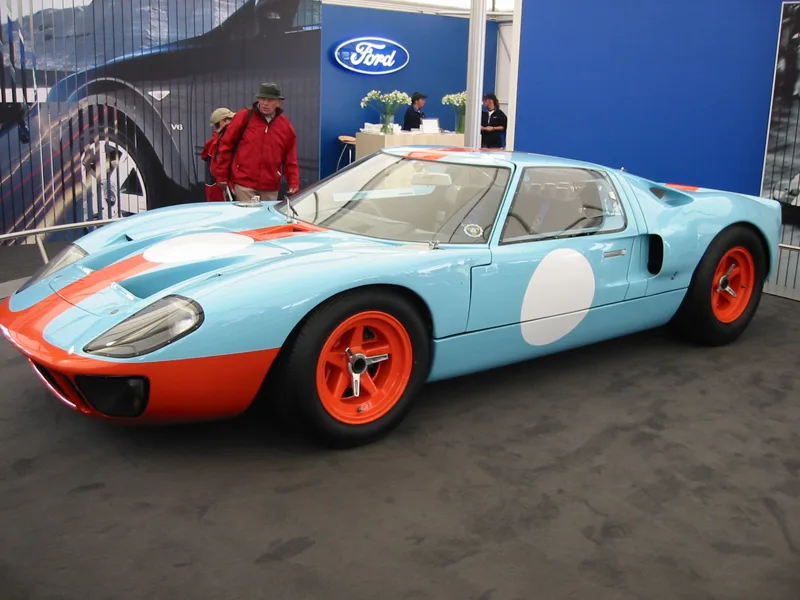
Ford's racing organisation moved under Shelby American after Eric Broadley and Lola left. Car production went to Kar Kraft in the United States and development to Ford Advanced Vehicles in England, which John Wyer ran with former Aston Martin staff. The new Mk II, known as the X-car, had a 7-litre NASCAR engine producing about 450 bhp.
Four GT40 Mk I cars came for the GT class, with the same 380 bhp 4.7-litre engine as the Cobras. The Colotti gearbox that had proved unreliable was replaced by a German ZF unit. Maserati's John Simone commissioned a Tipo 65 built in only seven weeks, and two of Iso's three Grifo cars had been wrecked earlier in the year at Sebring.
Porsche's new 904 GTS prototypes had a 185 bhp flat-six, and the factory also ran a flat-eight producing 225 bhp. The Rover turbine returned, now treated as an equivalent of 1992cc, and its drivers were Graham Hill and Jackie Stewart.
Leading finishers in 1965
| Position | Car | Drivers | Notes |
|---|---|---|---|
| 1 | NART Ferrari 365 P2 | Gregory and Rindt | Winners, five laps clear |
| 2 | Ferrari 250 LM, privateer | Dumay and Gosselin | Five laps behind the winners |
| 3 | Ferrari GTB, Ecurie Francorchamps | Mairesse and Beurlys | First in GT, three laps further back |
| 4 | Porsche works car | Linge and Nocker | Took the Index of Performance |
| 5 | Porsche GT, works | Koch and Fischhaber | Took the Index of Thermal Efficiency |
| 7 | NART Ferrari 365 P2 | Rodriguez and Vaccarella | Only P2 to finish, 28 laps behind |
| 8 | Shelby Cobra, works | Sears and Thompson | Only Ford-engined car to finish |
| 10 | Rover-BRM turbine | Hill and Stewart | First British car home |
What happened in practice in 1965?
The April test weekend was overshadowed by the death of Lloyd Casner in the rain. Braking at the end of the Mulsanne straight, his Maserati Tipo 151/3 speared off the track and rolled, and he died later in hospital from head injuries.
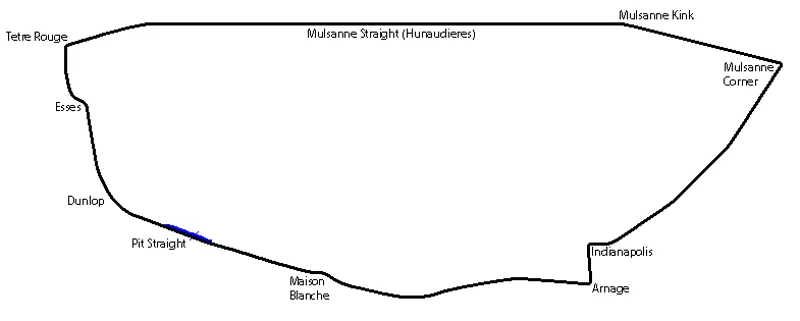
Race week brought a first for the event. The initial practice session had to be cancelled after a severe storm felled trees and flooded parts of the circuit, and the ACO rescheduled an extra session on the Saturday instead.
Phil Hill put in a blistering fastest lap, at 227.51 km/h (141.37 mph), about 30 seconds faster than the best practice lap of only four years earlier. Surtees was second, two seconds slower, in the rival Ferrari, ahead of the Fords of Bondurant and Miles.
Dan Gurney had the quickest GT car, his Shelby Cobra in 12th at 3:51.3, just ahead of Willy Mairesse's Ferrari GTB at 3:55.0. The fastest Porsche was Gerhard Mitter's flat-eight, which qualified 18th at 3:59.4, and Mauro Bianchi's Alpine was the quickest small car in 35th place at 4:20.0.
How did the race start in 1965?
It was sunny and hot, and it was the first time the American audience had live television coverage of the race. Chris Amon took the start in the Ford, and Phil Hill acted as the television guest until the live feed failed and Hill took over the commentary.
Siffert got his Maserati away first, with the three Fords of Amon, Bondurant and McLaren behind. Colin Davis was the last away, when his Porsche prototype refused to start for two minutes.
On the fourth lap Siffert put the Maserati into the haybales at Tertre Rouge. When he got back to the pits the car was retired with damage to its oil tank and suspension, which ended Maserati's presence at Le Mans that year.
Why did the Ford challenge collapse?
Ford's challenge ended within the first three hours. Hill's clutch problems cost 40 minutes in the pits, the French Ford broke its gearbox when Trintignant missed a gearchange, and the Filipinetti and Walker cars blew head gaskets on the same lap. When the McLaren and Miles car broke its gearbox, the Ford effort was effectively beaten.
Hill still set a fast lap of 222.80 km/h (138.44 mph) as he tried to recover the ten laps he had lost. It was a consolation, because by then the race had been left to Ferrari.
Only one of the eleven Ford-engined cars finished. It was the Sears and Thompson works Cobra in eighth, which had collided with an Alfa Romeo around midnight and had nursed its battered car home with oil-pressure problems.
How did the smaller cars fare in 1965?
Alpine was the only French manufacturer in the small classes. Its new M65 had aerodynamic tailfins and a 1.3-litre Gordini engine producing 135 bhp, and it could reach 250 km/h (155 mph). It was given to Mauro Bianchi and Henri Grandsire.
The Austin-Healey Sprites, fitted with the 1293cc engine from the Mini-Cooper S, could reach 240 km/h (148 mph). One of them, driven by Rauno Aaltonen and Clive Baker, was looking good for the two index prizes until it broke its gearbox with less than three hours to go.
The leading Alpine of Roger Delageneste and Jean Vinatier retired with ignition problems while comfortably leading its class and running 16th overall. The smallest car in the field, the works Alpine M63B, had already been stopped by a broken conrod.
What happened during the night?
The only major accident of the race came at dusk. Rob Slotemaker went off at the fast Maison Blanche corner in his Triumph Spitfire and was unhurt, although it was the same car that had careered towards the pits the year before, when Mike Rothschild had been overcome by exhaust fumes.
The Ferraris began to struggle too. The Maranello car was the first to retire after an exhaust broke and Bonnier was overcome by fumes, and the gearbox of Parkes and Guichet jammed in fifth gear. Brake disc cracks slowed the P2s through the night, and each one lost half an hour or more to repairs.
The 250 LMs ran reliably. By halfway the surprise leader was the French privateer Pierre Dumay, with the NART car of Gregory and Rindt closing on him by at least 5 seconds a lap after its earlier delay, and the Ecurie Francorchamps GTB of Mairesse and Beurlys in the mix.
Why did the Cobra and the Porsches matter in the morning?
The morning brought the decisive changes. A tyre blowout at speed on the Mulsanne Straight damaged the rear bodywork of Dumay's car around midday, and crucial time was lost to panel beating. Rindt and Gregory had a five-lap lead when Dumay's car rejoined, and it could not close the gap.
Gregory, in his final stint, let the clutch out gently through the corners to save the transmission. The leaders were nursing a failing gearbox, and the NART car cruised home on a unit that packed up completely on the slow-down lap back to the paddock.
Porsche made the most of the chaos. Linge and Nocker's works car finished fourth and won the Index of Performance, while Koch and Fischhaber's GT stablemate finished fifth and won the Index of Thermal Efficiency despite having to be pushed over the line.
What was the Hugus claim?
Ed Hugus, the reserve driver, later said that he had driven a whole shift in the winning car. He claimed that Gregory had pitted exhausted before dawn, and that Rindt could not be found to take over, so Hugus drove for a few hours.
The regulations would have barred Gregory from driving again after a reserve took the wheel, which would have meant disqualification. No one recorded the claim at the time, and Hugus was never officially credited as a co-driver. The story only surfaced in the late 2000s, and after his death a letter from the driver that gave his account came to light.
Neither the official timing figures nor the eyewitness accounts fit Hugus's version of events. The claim remains a footnote in the story of a race that is otherwise well recorded.
What did the 1965 race leave behind?
The result was the first non-works victory since Ecurie Ecosse in 1957, and it was the first international race win for Goodyear tyres. Ferrari had won for six years running, and it would not win at Le Mans again until 2023.
Other changes came quickly. Triumph's final appearance at Le Mans came in 1965, and MG did not return for 40 years. The Cobra-Ford combination clinched the GT Championship at Reims the following month. Later that year Enzo Ferrari sold a portion of his company, not to Ford, but to Fiat.
For Rover, the turbine programme ended in 1965. The car finished tenth, the first British car home, but its fuel consumption and heat management made it impractical for road use, and the project was cancelled soon afterwards.