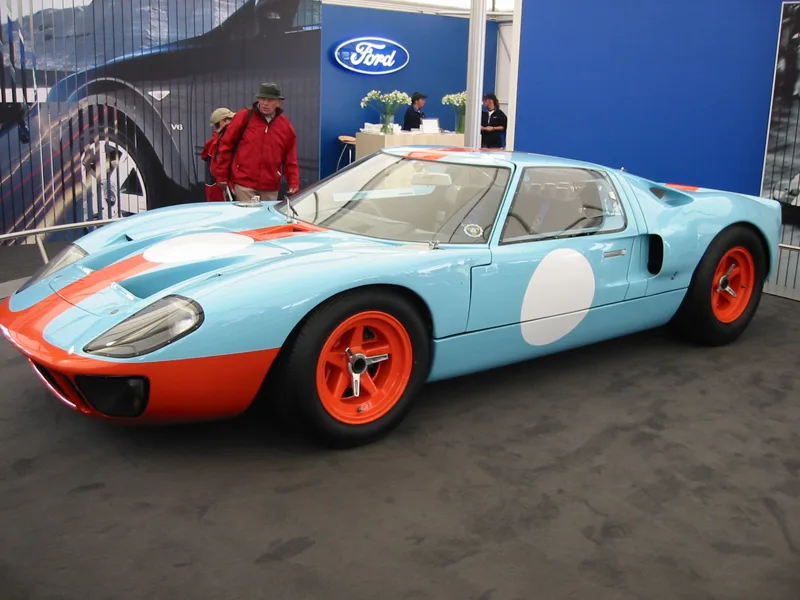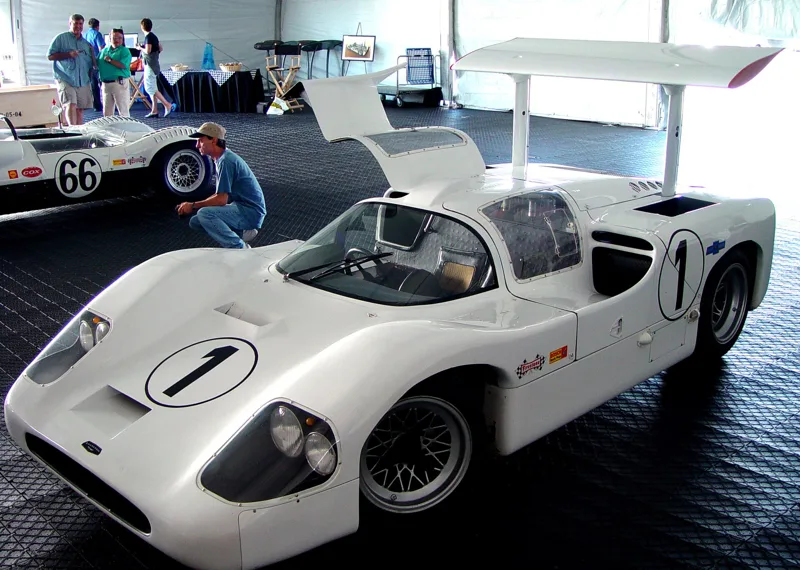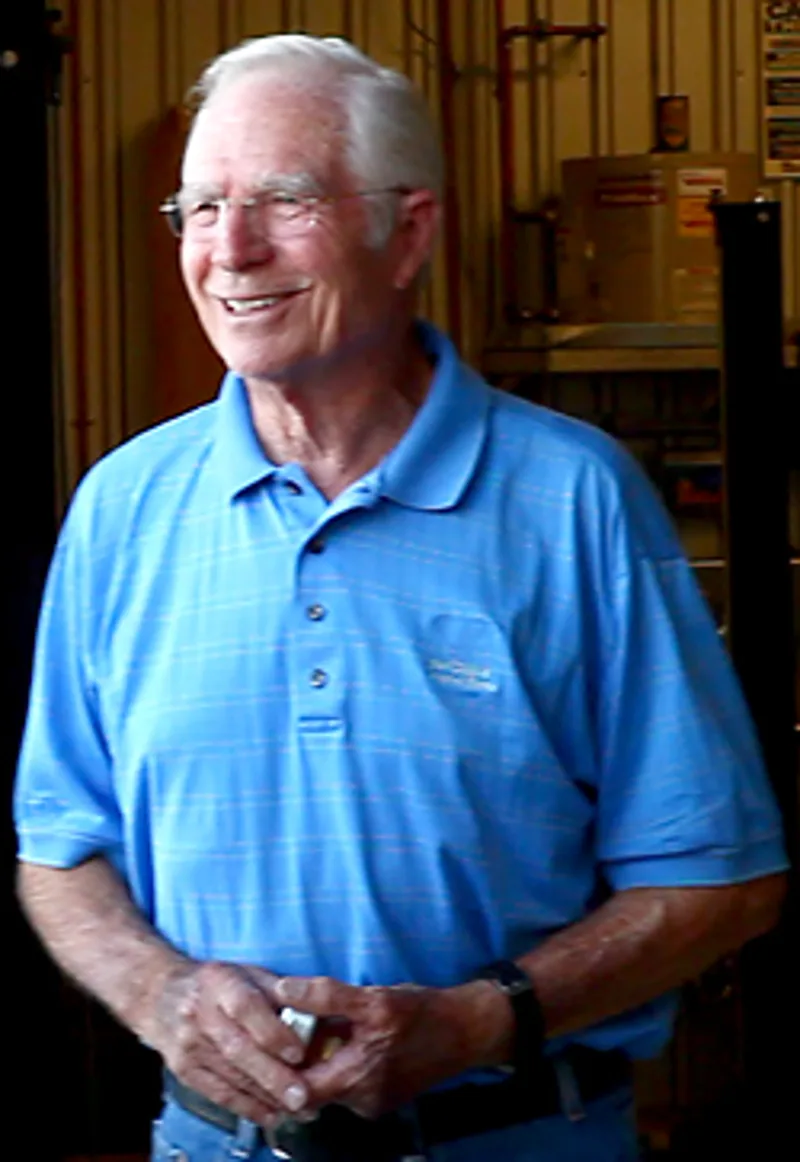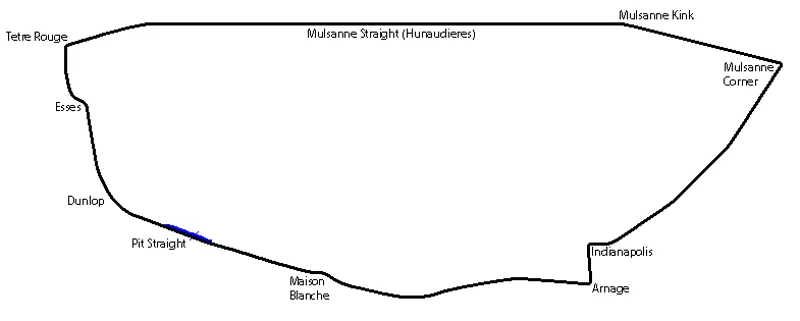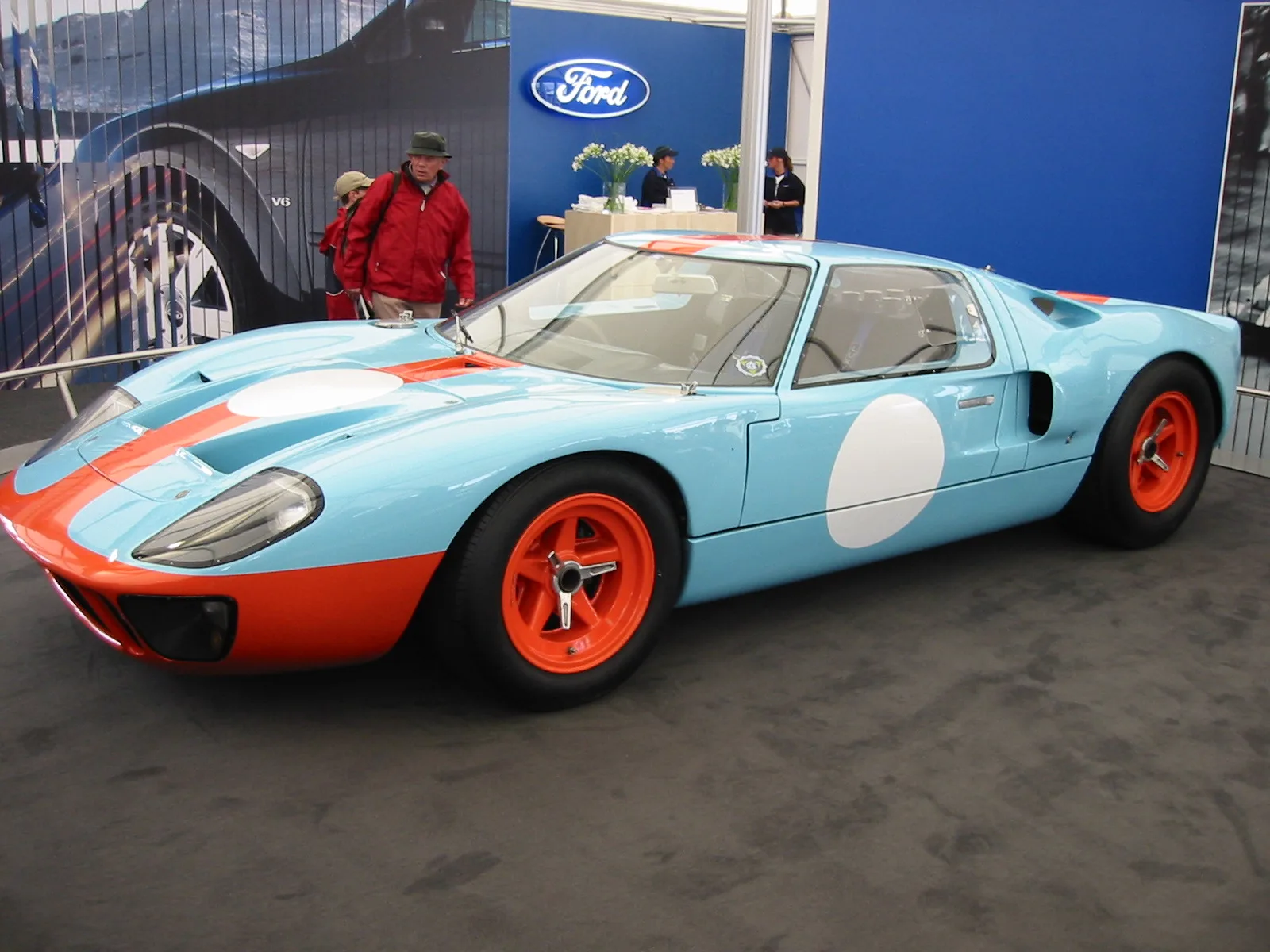
The Ford Mk IV that Gurney and Foyt drove led from the second hour, and its win remains the only all-American result in the race's history.
The 1967 race went to Dan Gurney and A. J. Foyt, who led from the second hour in a Ford Mk IV entered by Shelby American. They covered 5,232.90 km (3,251.57 mi) at 218.04 km/h (135.48 mph), winning by four laps.
Dan Gurney and A. J. Foyt won the 1967 24 Hours of Le Mans in a Ford Mk IV, the only victory for a car designed and built in the United States. Ferrari finished second and third, and the top three cars all covered more than 5000 km for the first time in the race's history.
Who won the 1967 24 Hours of Le Mans?
Gurney and Foyt won by four laps after leading for all but the first 90 minutes of the race. Theirs was the only Ford out of ten that ran without trouble throughout, and the same car also took the Index of Thermal Efficiency for the record distance it covered.
The pair had been written off by some observers, who expected two strongly competitive drivers from the United States to break their car in a battle of egos. Both men took real care with the car, driving with discipline, and they won easily.
The only all-American win at Le Mans came from a car built entirely in the United States, and it has never been matched.
Which rules applied to the 1967 race?
The 1966 overhaul of Appendix J brought few further changes to the regulations. The ACO did tighten qualifying, lifting the minimum average speed from 160 km/h (99 mph) to 190 km/h (120 mph) and requiring every car to qualify within 85 percent of the pole car's average.
The organisers were trying to narrow the speed gap between the classes, which the faster prototypes had widened. The minimum distances on the Index of Performance also rose by about 2.5 percent.
Who was on the entry list?
Only six Sports Cars and seven GTs took part, against 41 Prototypes. Of the drivers, 37 had raced or would race in Formula One, and five world champions were entered. In the month before, eleven drivers had raced at Monaco and seven at the Indianapolis 500.
Ford and Porsche led the entry list with ten cars each. The new Ford GT40 Mk IV was an updated version of the J-car, which had been shelved after Ken Miles died in August 1966. The Mk IV had an all-new chassis built in the United States, and its big-block 427 cu in (7-litre) engine produced 530 bhp.
Four Mk IVs were ready for Le Mans. Two were entered by Shelby American, one for Gurney and Foyt and one for Bruce McLaren and Mark Donohue. Holman and Moody ran the other two, for Mario Andretti and Lucien Bianchi, and for Denny Hulme and Lloyd Ruby. The team had to fabricate a roof bubble to fit Gurney's helmet, because he stood more than 190 cm (6 feet 3 inches) tall.
Ford also brought three Mk IIBs, lightened versions of the previous year's car, run by Shelby American, Holman and Moody, and Ford France. Three GT40 Mk Is entered the S5.0 class, from Ford France, John Wyer Automotive and Scuderia Filipinetti, and the factory's support was substantial even where the entries were not official works cars.
Ferrari concentrated on the large-prototype category with the 330 P4, which produced 450 bhp. Four were built and all of them reached Le Mans. Chris Amon and Nino Vaccarella drove the open-top car, while Scarfiotti and Parkes, Klass and Sutcliffe, and Mairesse with Beurlys drove the others.
Three updated P3s, now called 412 P, went to the customer teams. Attwood and Courage ran one for Maranello Concessionaires, Guichet and Muller ran another for Scuderia Filipinetti, and Rodriguez and Baghetti drove the North American Racing Team car.
Leading finishers in 1967
| Position | Car | Drivers | Notes |
|---|---|---|---|
| 1 | Ford Mk IV | Gurney and Foyt | Winners by four laps |
| 2 | Ferrari P4 | Scarfiotti and Parkes | Ferrari's best finish |
| 3 | Ferrari P4, Equipe Nationale Belge | Mairesse and Beurlys | Consistent run to third |
| 4 | Ford Mk IV | McLaren and Donohue | Fought back to fourth |
| 5 | Porsche 907 | Siffert and Herrmann | Covered 12 km less than the 1966 winners |
| 6 | Porsche 910 | Stommelen and Neerpasch | Works car |
| 7 | Porsche 906 | Pon and Elford | First Group 4 906 home |
| 11 | Ferrari GTB | Spoerry and Steinemann | First GT car home |
| Fifteenth | Austin-Healey Sprite | Crew of the Sprite | Only British car to finish |
What happened at the test weekend in 1967?
Bandini was fastest in the Ferrari P4 spyder at 3:25.4, with Parkes second in the other P4. Surtees was third in the Lola at 3:31.9, and Donohue reached 330 km/h (210 mph) in the Ford Mk IV but was only fourth fastest at 3:32.6.
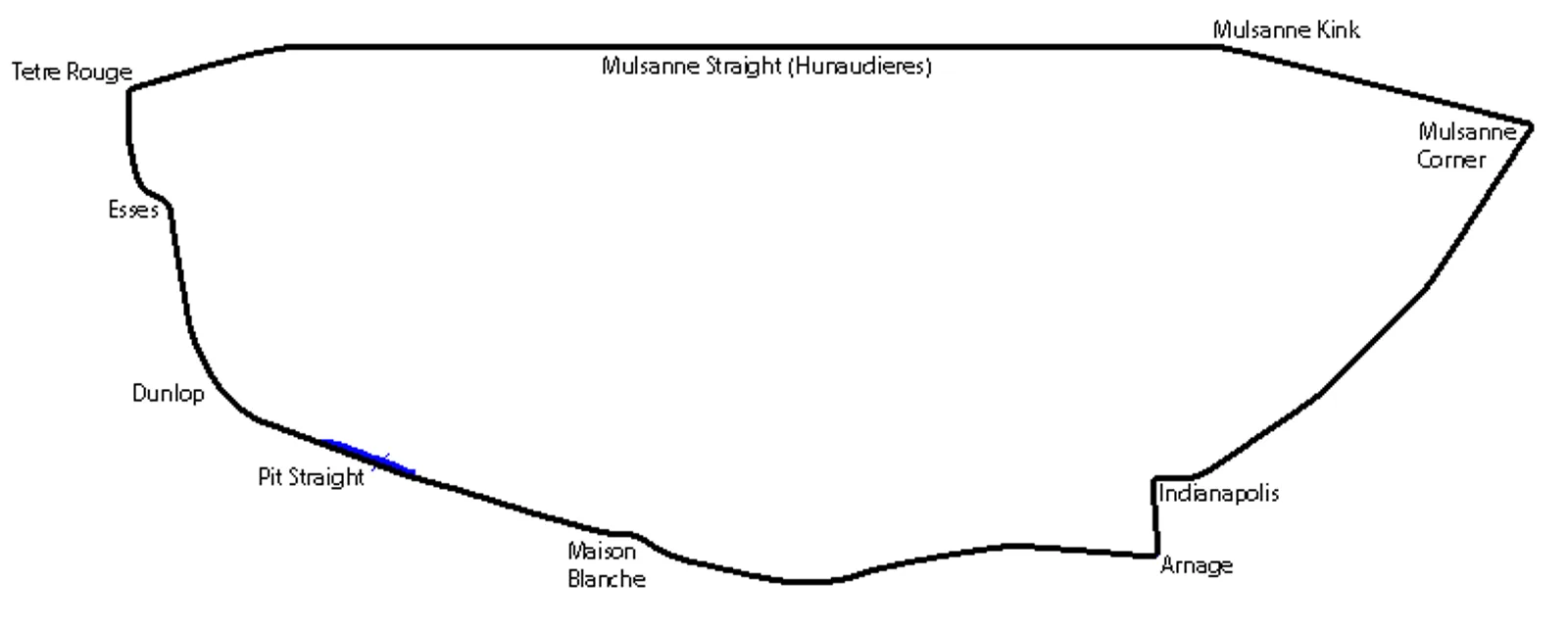
The weekend also had a tragedy. Roby Weber lost control of the new Matra at full speed on the Mulsanne straight. The car went over in a somersault and burned, and Weber died in the wreck before the marshals arrived.
During race week the Ford Mk IVs were very unstable at high speed, and their windscreens cracked and popped out. Pole went to Bruce McLaren at 3:24.4, just ahead of the Chaparral of Phil Hill at 3:24.7.
How did the start and the early hours go?
Bucknum's Ford and Rodriguez's NART P3 were the first away, while both Chaparrals were among the last because Jim Hall insisted on full race harnesses. Early pit visits included Hulme's Mk IV to fix a sticking throttle and Bianchi's Mk IV to check a windscreen cracked by a stone.
Bucknum led the field to the first pit stops, and then Foyt led from Hill in the Chaparral and the Fords of Andretti and McLaren. Hulme then set a new lap record of 3:23.6, faster than the record pole time, as the Fords pulled clear.
Mike Salmon's JWA Ford burst into flames at more than 300 km/h down the back straight with a full tank of fuel. Salmon brought the car near a marshal post at Mulsanne corner before jumping out, and he was taken to hospital with severe burns.
After two hours, the three Americans Foyt, Hill and Andretti had a lap on the Ferraris and the rest of the field. The Porsches of Siffert and Herrmann and of Mitter and Rindt were up to 14th and 15th overall, with a comfortable lead in the Index of Performance.
What went wrong during the night?
Soon after 10pm Amon's Ferrari suffered a puncture while running fifth. A faulty mallet stopped him changing the tyre on the track, and sparks from the wheel hub set the engine on fire as he crawled back to the pits. He got out unharmed, and the car burned out.
Lloyd Ruby ditched his Ford twice in the Mulsanne corner sandtrap, and the second time the damage was terminal. Bucknum lost two hours to a water pipe repair and then had to creep round for two laps to reach the minimum for refilling the car.
By 3am Ford was 1-2-3, with Gurney on 182 laps and Andretti and McLaren behind. Andretti then pitted, and while Foyt complained loudly about his rival's driving, a mechanic fitted a front brake pad the wrong way round. When Andretti braked for the Esses, the front brake locked and the car spun into the banks. He broke three ribs, and McCluskey and Schlesser crashed trying to avoid the wreck, so Ford lost three cars.
McLaren picked up a second puncture and then suffered clutch trouble. A rear engine bonnet also flew off on the Mulsanne, costing another 45 minutes. Gurney and Foyt had a five-lap lead by the end of the night, with Parkes second in the Ferrari.
Parkes spent some time trying to provoke a battle, flashing his lights in Gurney's mirrors. Gurney finally pulled onto the grass at Arnage, and the two race leaders sat in the dark until Parkes gave up and drove on.
How did the British cars fare in 1967?
The Mirages were built for the 5-litre class, but both cars had problems in qualifying. They were first fitted with 5.7-litre engines, and when those failed John Wyer Automotive changed back to the 5.0-litre engines.
The scrutineers then objected that the cars still carried the larger fuel tanks for the 5.0+ class. Ford supplied two engines slightly larger than 5 litres so that the cars could race, while the Team Elite Lotus solved its own tank problem by filling the tank with empty plastic bottles.
In the race the Mirages and the second Lola were out before dark with engine problems, after running outside the top ten. The Lola of Surtees and Hobbs had lost an engine piston early on the fourth lap.
How did the Ferraris and Porsches fare in the race?
Ferrari's four P4s were its answer to the Fords, but the team's race was rough. The NART P2, going slowly in practice, got in the way of Klass's P4 and sent it into the trees, although Klass was unhurt.
The Belgian P4 was running consistently in third at dawn, but the Klass and Sutcliffe P4 in fourth retired mid-morning with a broken fuel-injection pump.
The Porsche challenge was led by Siffert and Herrmann in the 907. They still led the Index of Performance, chased by the improving Alpine of Larrousse and Depailler.
How did the morning and the finish unfold?
Dawn was clear and cold, with little mist. The Chaparral developed an oil leak in its transmission that dropped it down the order, and the Corvette retired with a broken conrod while leading the GT category. By 10am only 16 cars were still running, and Gurney and Foyt had covered 293 laps.
Ford's pair could afford to ease off, and although the Ferraris were lapping faster they could not make significant inroads. The Gurney and Foyt Ford won by four laps.
Ferrari salvaged some pride with second and third, while McLaren and Donohue fought back to fourth. Siffert and Herrmann finished fifth in the new 907, with three more Porsches behind them and the Stommelen and Neerpasch 910 among them.
On the podium Gurney was handed the traditional magnum of champagne, and he sprayed the people around him. The gesture became a tradition at victory celebrations everywhere, and the bottle later served as a lamp for the Life photographer Flip Schulke for 30 years.
How did the Chaparrals end their races?
Earlier the Chaparral had been forced to pit with its aileron stuck in the brake position, which cost it about 20 km/h off its top speed. Later it dropped down the order with transmission trouble and retired.
What did the 1967 result change?
Ford had suffered a humiliating defeat at Daytona, where Ferrari finished 1-2-3 and crossed the line the way Ford had at Le Mans the year before. Ford came back at Sebring with Andretti and McLaren in the new Mk IV, and the Le Mans win gave the programme its final triumph.
As of 2026 the win remains the only all-American victory at Le Mans. The drivers, the team, the chassis constructor, the engine maker and the tyres were all American, and the car was designed and built entirely in the United States.
A month later Chaparral had its one victory with the 2F, at Brands Hatch. For Phil Hill it was a fitting finale to a career that had included three Le Mans wins, before he retired from sports-car racing.