An engineer-driver who dominated Trans-Am, won the 1972 Indianapolis 500 and the first IROC title, and developed the Porsche 917/30 before his death in 1975.
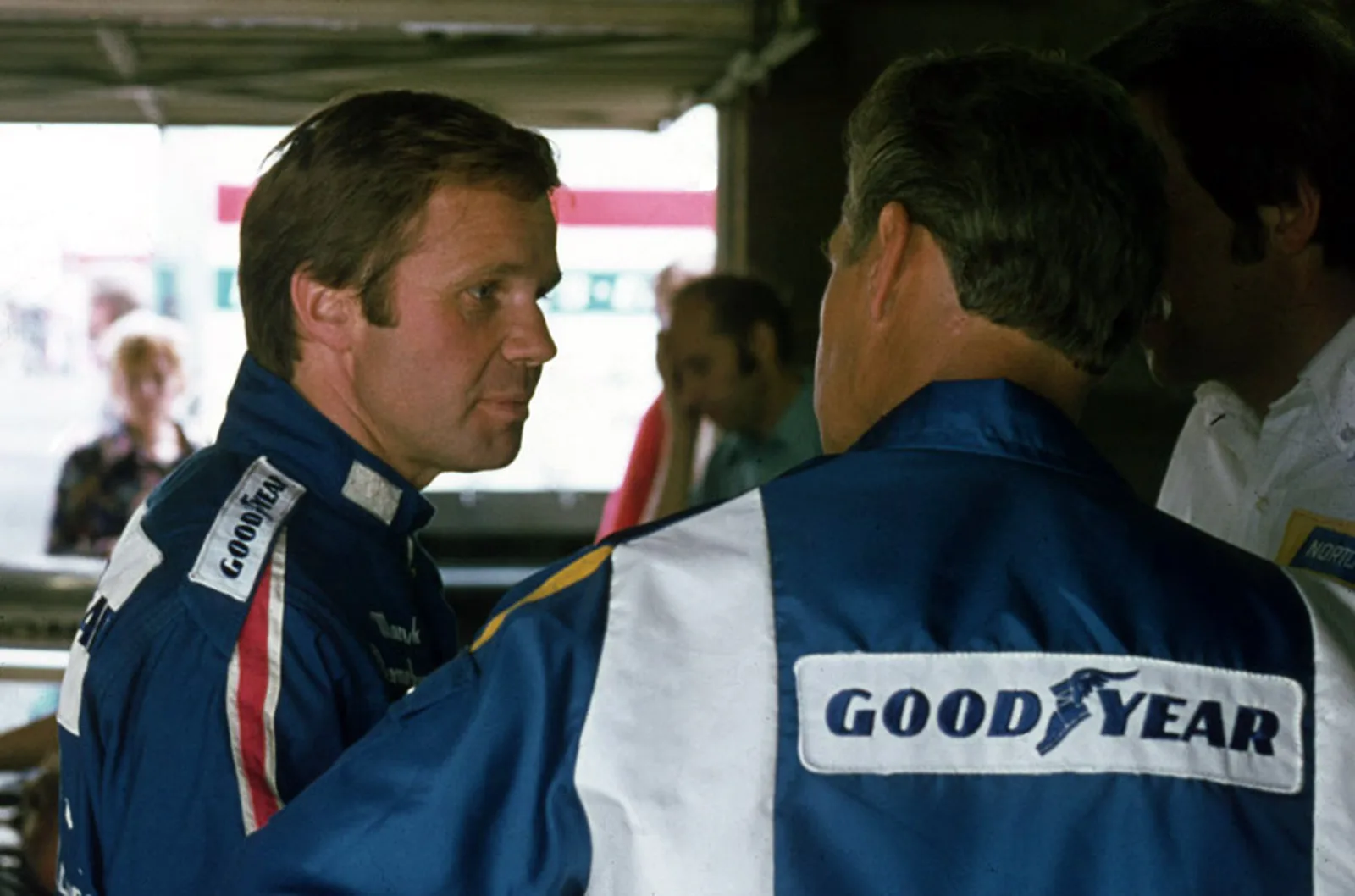
Mark Donohue was an American race driver and engineer nicknamed Captain Nice. He won the 1972 Indianapolis 500 for Roger Penske and developed the Porsche 917/30 Can-Am car before he died after a practice crash at the 1975 Austrian Grand Prix.
Known as Captain Nice, Mark Donohue combined engineering and driving in a way few of his contemporaries did. His 1972 Indianapolis 500 victory for Roger Penske is his best-known result, but his Trans-Am dominance and his work on the Porsche 917/30 matter just as much.
Who was Mark Donohue?
Mark Neary Donohue Jr. was born on 18 March 1937 in Haddon Township, New Jersey. He grew up in Summit, attended the Pingry School and then entered Brown University in Providence, Rhode Island, where he studied mechanical engineering and graduated in 1959.
He began racing a 1957 Corvette while still a senior at Brown, at the age of 22. His first event was a hill climb in Belknap County, New Hampshire, and he won it. That early success set the pattern for a career built on engineering and driving together.
His engineering degree, earned in 1959, underpinned the technical approach that marked his later career.
An engineer who drove what he designed, won the Indianapolis 500 and left behind a 917/30 record that stood for over a decade.
How did his early amateur career go?
His 1961 SCCA national title came in an Elva Courier. In 1964 he won the Bridgehampton 500-mile SCCA endurance event in an MGB, a car prepared for him by a race shop linked to Walt Hansgen's contacts.
Hansgen, who had recognised his talent, made him a teammate in 1965. The pair co-drove a Ferrari 275 at Sebring and finished 11th. In the same season he took two divisional titles, one with a GT350 and one with a Lotus 20B.
In March 1964 Jack Griffith hired him as a design engineer for the Griffith, a car built around a Ford 289 V8 and derived from the TVR Grantura. He later worked on the Series 400 and Series 600 Griffiths, and in February 1965 he became comptroller of the company before Roger Penske lured him away in 1966.
What was his early Ford and Le Mans experience?
In 1966 Ford signed Donohue to drive a GT40 at the 24 Hours of Daytona, where he finished third alongside Hansgen. He then raced at Le Mans with the Holman and Moody team, but a differential failure limited him to twelve laps and a 47th place.
Hansgen died while testing a GT40 in preparation for Le Mans, and Donohue partnered the Australian Paul Hawkins instead. In 1967 Ford invited him back, and he co-drove a Shelby American Mark IV with Bruce McLaren. The two disagreed on many aspects of car setup, but they still finished fourth.
A June 1966 outing at Watkins Glen, his debut for Penske, ended with a crash at the top of a hill that destroyed the car. The incident was an early reminder that his partnership with Penske would be defined by hard work as much as by results.
How dominant was he in sports car and Trans-Am racing?
In 1967 Penske gave Donohue a Lola T70 in the United States Road Racing Championship, and he won six of the seven races he contested. In Trans-Am that season he won three of twelve races in a Camaro, and in 1968 he took ten of the 13 races, a record that stood until 1997.
Penske and Donohue experimented with acid-dipping their Camaro bodies to save weight. Their 1967 Z-28 lapped the entire field, which drew suspicion, and inspectors found it 250 pounds below the minimum weight. Penske warned that a disqualification could prompt Chevrolet to withdraw from the series, and the victory was allowed to stand.
Rule changes followed, with all cars weighed before each race. Penske and Donohue then ran two identically painted Camaros at Sebring in 1968, one legal and one lightweight. They won their class and finished third overall, and the lightweight car later featured on a television restoration show.
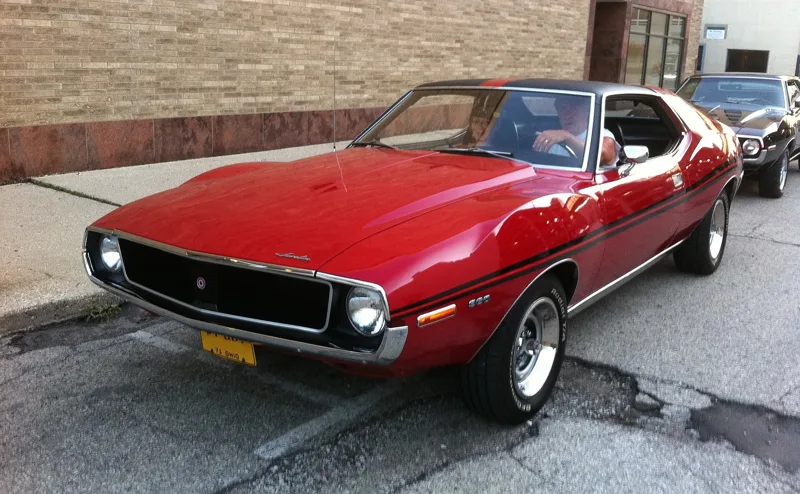
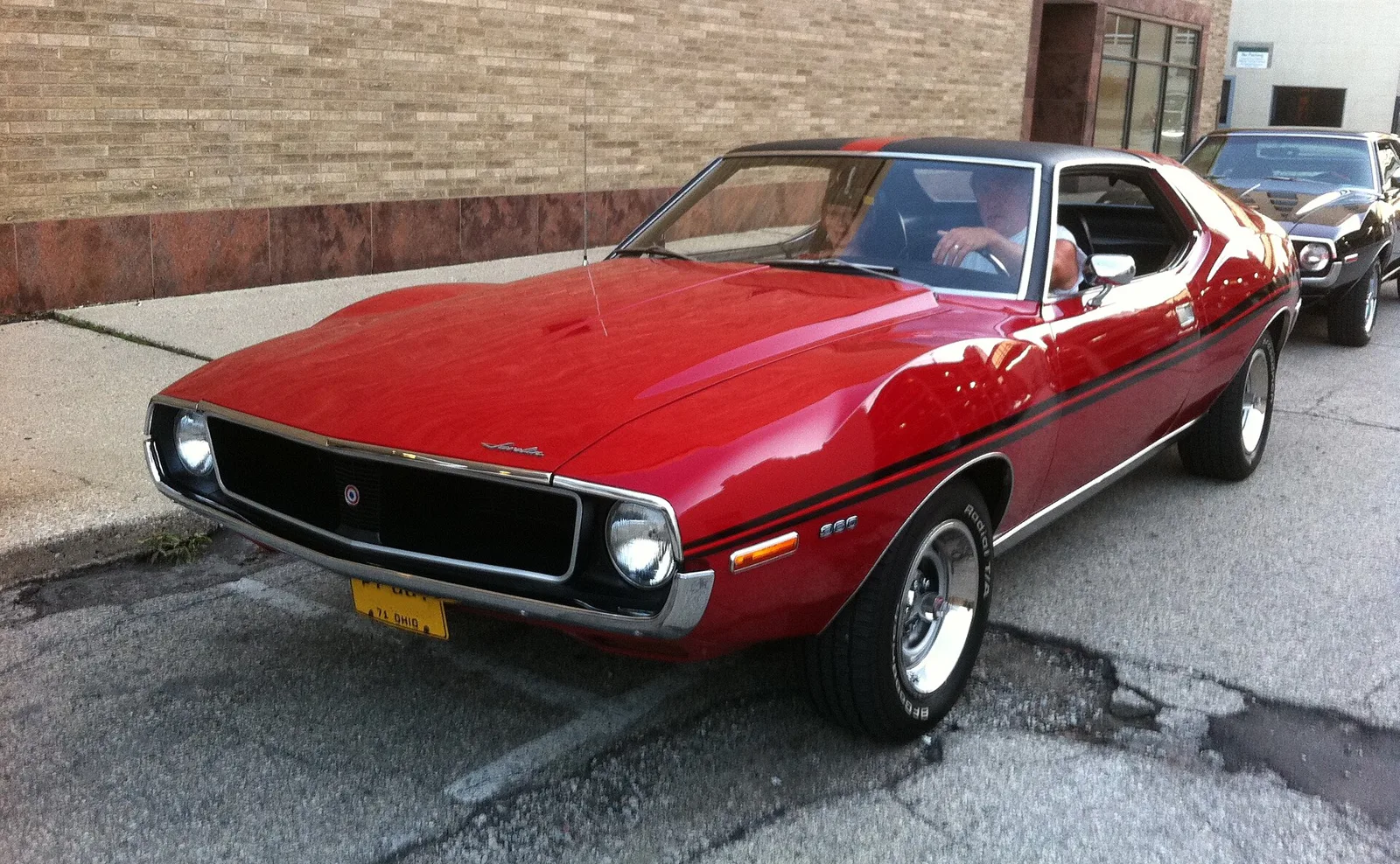
In 1970 Penske and Donohue took over the AMC Javelin programme. Donohue drove the Javelin to three victories, and AMC finished second in the manufacturers' championship. In 1971 he won seven of the ten races in the Over 2.5L class, including the last six in a row, and AMC won the manufacturers' title for the first time.
The final race of 1971 produced a Javelin one-two-three finish, and George Follmer became the only other Javelin driver to win a race that year.
What did his Indianapolis 500 career look like?
Donohue made his Indianapolis 500 debut in 1969, finishing seventh and winning rookie of the year. He was second in 1970 and 25th in 1971, before he won the race in 1972 for Penske in a McLaren-Offy.
That 1972 result produced a speed of more than 162 mph (261 km/h), a record that lasted twelve years. It was also the first Indianapolis 500 victory for Penske, a milestone for a team that had long pursued the race.
Donohue also contested NASCAR events between 1968 and 1971 and then the top-level Winston Cup Series in 1972 and 1973. In an AMC Matador for Penske he took the season-opening race at Riverside, the squad's first NASCAR victory after a long run in the sport.
Why is the Porsche 917 central to his legacy?
Between 1971 and 1972 Penske Racing worked with Porsche to develop the 917-10 for the Can-Am series, and Donohue was the main test and development driver. At Road Atlanta he recommended larger brake ducts, but the new ducts interfered with the pins that held the body panels in place.
Exiting turn seven near 150 mph, the rear body panels separated and the car somersaulted along the circuit. He survived with a knee injury that included meniscus damage and ligament damage, and George Follmer took over testing the 917-10. Donohue later remarked that seeing another man drive a car he knew so well felt like a personal loss.
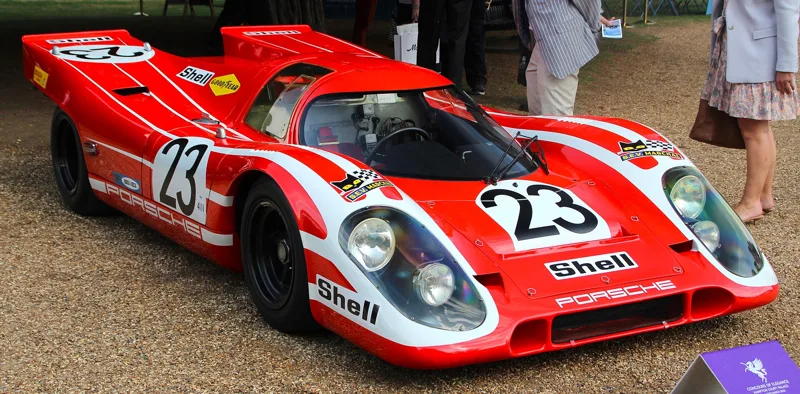
Porsche and Penske then developed the 917-30, with a reworked body and a 5.4-litre turbocharged flat-12. A cockpit boost control let the driver vary output between roughly 1,100 and 1,500 bhp, and the Porsche engineers kept asking whether there was enough power.
What was the 917/30 record and its season?
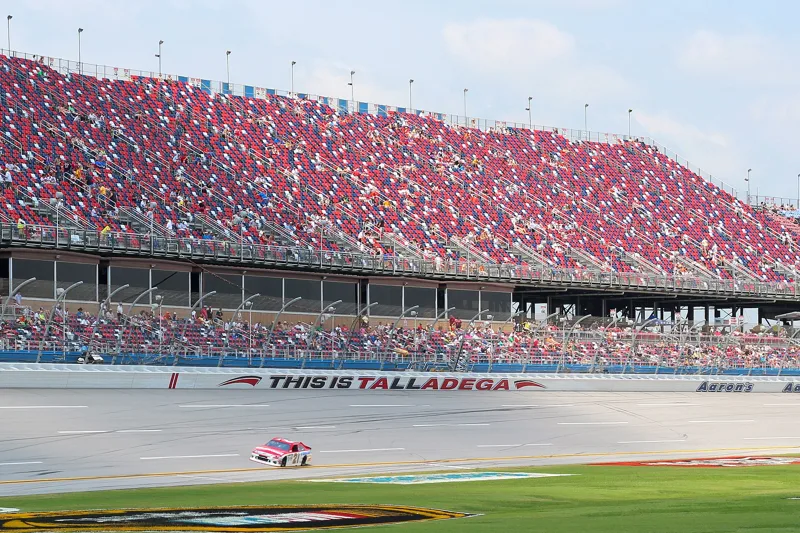
On 9 August 1975 Donohue took the 917/30 to a closed-course speed record at Talladega Superspeedway, averaging 221.120 mph (355.858 km/h) around the 2.66-mile high-banked oval. The record stood for 11 years until Rick Mears broke it at Michigan.
In the 1973 Can-Am series the car won all but two races, which earned it the name Can-Am Killer. After the 1973 oil embargo, fuel limits hampered its performance, and Brian Redman drove it only once in 1974.
Many enthusiasts still regard the 917/30 as one of the most powerful and dominant racing machines ever built. Its record and its reputation both trace back to the engineering work Donohue did on it.
What did his IROC and Formula One career involve?
Donohue won the first IROC championship in 1973-74, driving identical Porsche RSRs against drivers from several major series. He won the first and third of three Riverside races and the final round at Daytona, and only his former Penske teammate George Follmer beat him.
He made his Formula One debut in 1971, when a Penske-sponsored McLaren entered by the White Racing privateer team finished third at the Canadian Grand Prix at Mosport. He retired after the 1973 Can-Am season, shaken by the 1973 Indianapolis 500 and by the death of his friend Swede Savage.
Penske Cars Ltd returned him to Formula One for the final two races of 1974, when he finished 12th in Canada. In 1975 the Penske PC1 suffered three retirements in its first six races, although Donohue scored fifth places at the Swedish and British Grands Prix.
How did Donohue die?
Donohue died on 19 August 1975 after a crash during practice for the Austrian Grand Prix at the Osterreichring. A tyre failed on his March, which sent him into the catch fencing at turn one, and debris from the accident killed a track marshal. The marshal's death was a grim reminder of the dangers that drivers and officials faced at the time.
He seemed to be only slightly hurt, but a headache worsened. After he was taken to hospital in Graz the next day, he lapsed into a coma from a cerebral haemorrhage and died. He was buried at St. Teresa Cemetery in Summit, New Jersey.
His estate pursued litigation against Penske and Goodyear, which was settled in 1986. The widow and children received $9.6 million from Goodyear, and the corner was reworked into the Hella Licht Esses in 1977.
What were the key results of his career?
| Series | Years | Key result |
|---|---|---|
| SCCA | 1961 to 1965 | National champion in 1961 in an Elva Courier |
| United States Road Racing Championship | 1967 to 1968 | Six wins from seven races in 1967 |
| Trans-Am | 1967 to 1971 | Ten wins from 13 races in 1968 |
| Daytona 24 Hours | 1969 | Win with the Penske Lola-Chevrolet T70 |
| Indianapolis 500 | 1969 to 1972 | Winner in 1972; rookie of the year in 1969 |
| Can-Am | 1973 | 917/30 won all but two races |
| IROC | 1973 to 1974 | First champion |
| Formula One | 1971 to 1975 | Third at Canada in 1971; fifth at Sweden and Britain in 1975 |
How is he remembered today?
His name lives on in commemorations and in his writing. In 2003, to mark Penske Racing's 50th NASCAR win, Ryan Newman raced a Dodge Intrepid in a livery modelled on Donohue's 1973 AMC at Rockingham. Penske's Mooresville complex displays murals of Donohue and his cars.
His book, The Unfair Advantage, described his step-by-step engineering approach. The book described his use of a skidpad for suspension work, and how he made use of ABS braking and the turbocharged prototypes.
His son David Donohue has carried the family's racing tradition forward as a road racer in his own right.