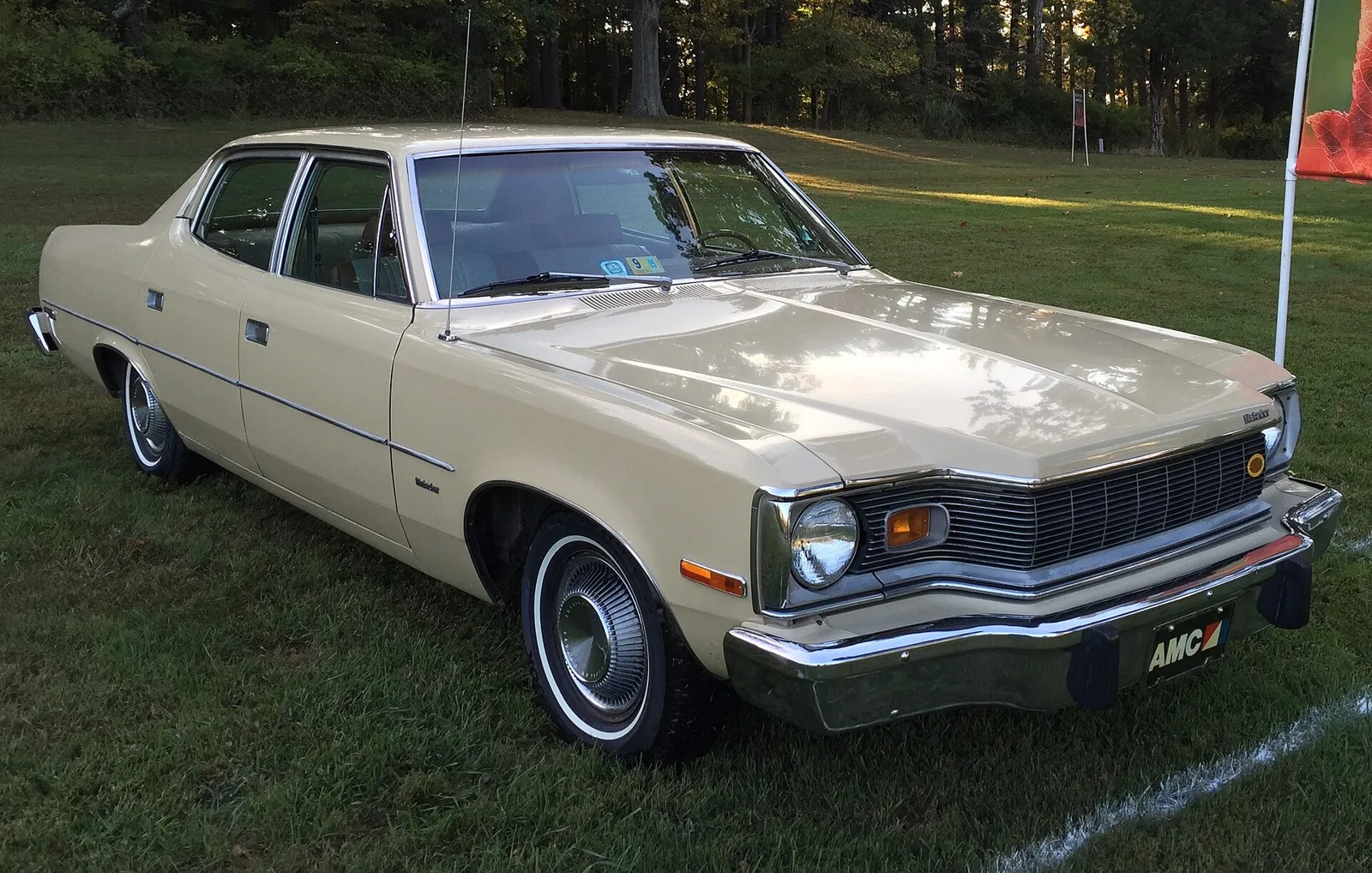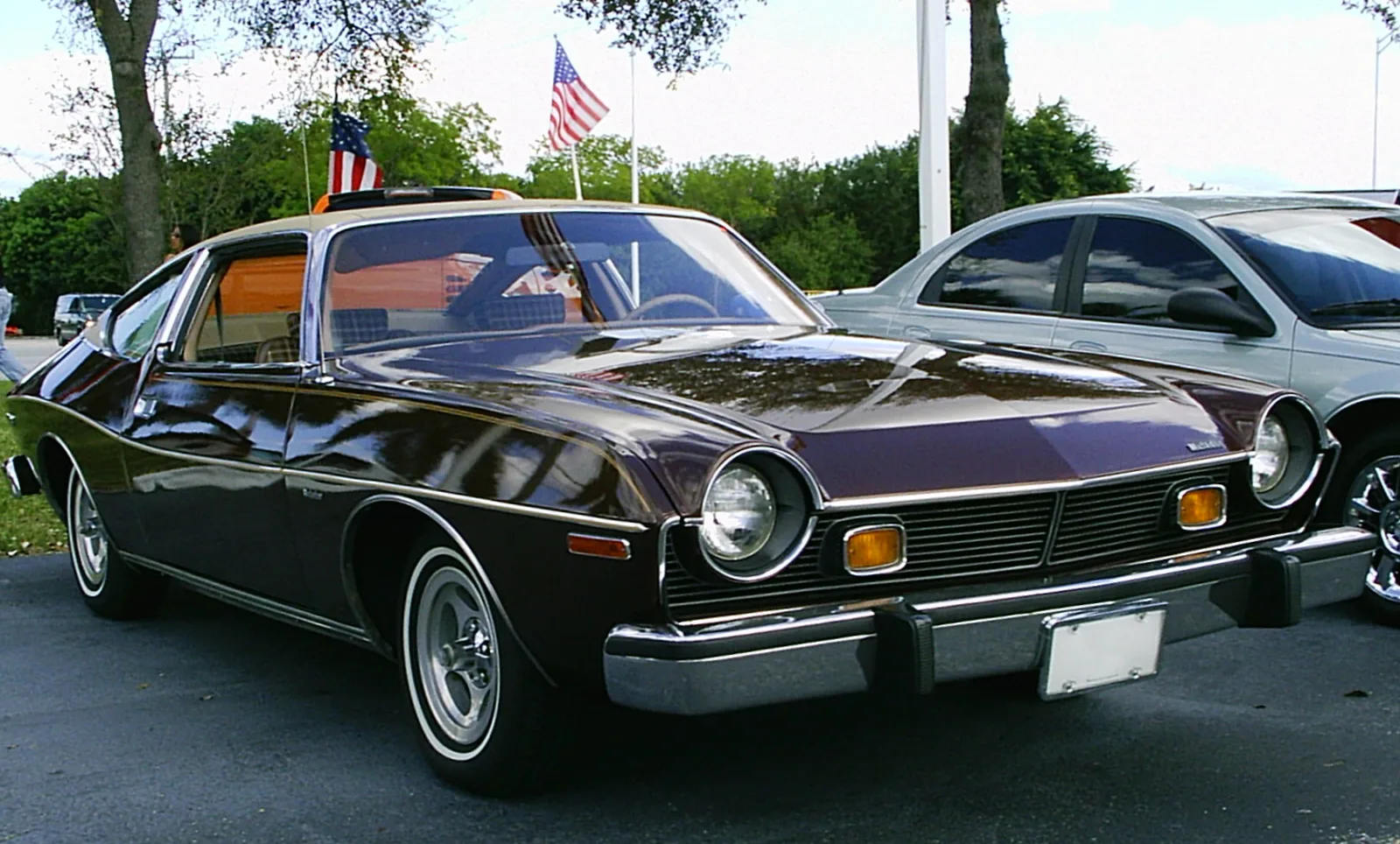
American Motors built the Matador from 1971 to 1978, first as a mid-size family car and then as a full-size range with a fastback coupe, NASCAR wins and police fleets.
Sold by American Motors between 1971 and 1978, the Matador began as a mid-size family car and ended as a full-size range. Its second generation gained a fastback coupe, NASCAR wins and police contracts along the way.
The AMC Matador was a series of mid- and full-size cars that American Motors built from 1971 through the 1978 model year. The first generation was a mid-size family car offered as a hardtop, sedan and station wagon. The second moved to a full-size platform and added a striking two-door coupe.
Where did the Matador name come from?
American Motors dropped the Rebel name for 1971, because it had picked up negative associations with youthful unrest. The Matador was chosen to suggest power and precision, even though its bullfighting association was a known drawback.
The company was fighting in the intermediate segment, where wheelbases usually spanned 2,900 to 3,000 mm (114 to 118 in), weighed 1,590 to 1,680 kg (3,500 to 3,700 lb) and V8 displacements typically ran from 300 cu in (4.9 L) up to 360 cu in (5.9 L). Many buyers in that market were drifting toward compacts, so AMC needed to lift its standing among mid-size families.
In 1972 the company moved its $15 million advertising account to the Cunningham and Walsh agency, ending its relationship with Wells, Rich, Greene. The new team created the What's a Matador? campaign, which used self-deprecating humour to make the name stick. Consumer research found that the name suggested virility and excitement, and the campaign raised awareness and dealership traffic. In Puerto Rico the name had a harder meaning, since matador there translated as killer, which made it a marketing challenge.
A name picked for its power and precision, on a car that found its audience in police fleets, NASCAR and the coupe showroom.
What was the 1971 to 1973 Matador like?
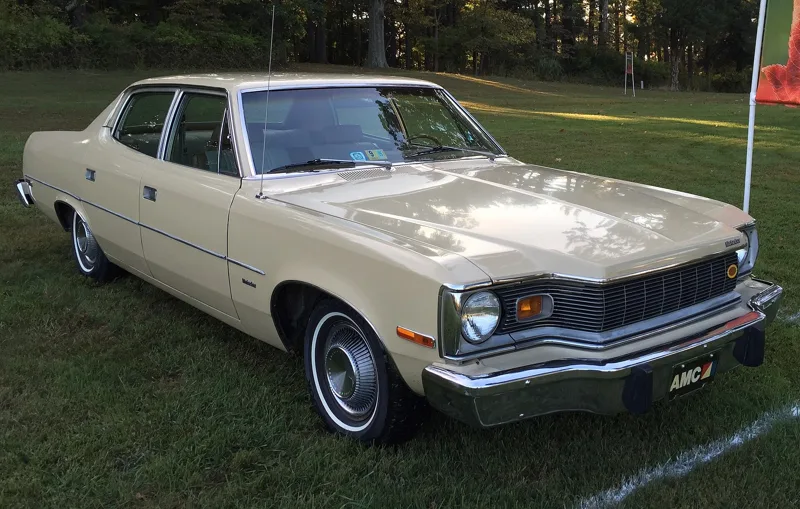
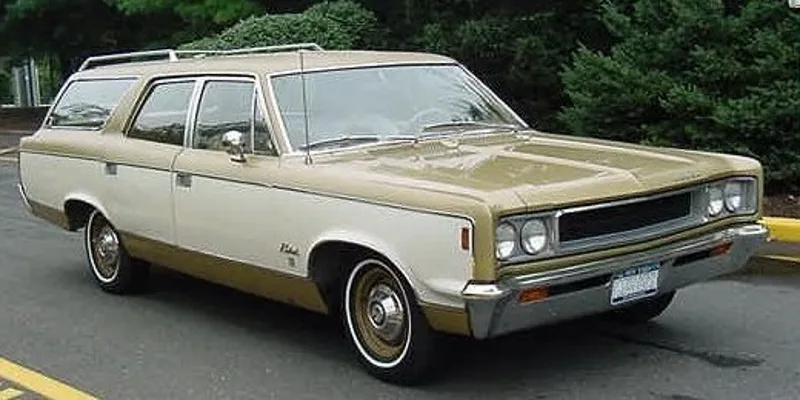
The first Matador's body from the firewall back matched the full-size Ambassador, and its wheelbase was lengthened by 4 in (102 mm) for 1971 to improve the ride. The nose got a fresh grille, extra chrome and a lighter bumper that wrapped around the corners, and the car came as a two-door hardtop, a four-door sedan and a station wagon.
Engines started with a 232 cu in (3.8 L) inline six, with a larger 258 cu in (4.2 L) six available as an option and a 304 cu in (5.0 L) V8 standard. Transmissions were a column three-speed manual, a Borg-Warner three-speed automatic called Shift-Command, and a floor-mounted four-speed manual on V8 cars. The station wagon offered an optional rear-facing third-row seat that took capacity from six passengers to eight.
In 1972 AMC introduced a Buyer Protection Plan with a 12-month or 12,000-mile bumper-to-bumper warranty, which the company presented as an industry first. That year the V8 range ran from 150 bhp (112 kW; 152 PS) to 255 bhp (190 kW; 259 PS), and every V8 was paired with the Chrysler-built TorqueFlite three-speed, sold by AMC as Torque-Command. The 1972 build tally was 36,899 sedans, 10,448 wagons and 7,306 hardtops.
For 1973 the cars gained stronger bumpers to meet new federal rules, which required the cars to survive 5-mile-per-hour front and 2.5-mile-per-hour rear impacts without damage. Owner surveys by Popular Mechanics later suggested that 1973 owners were more satisfied and reported fewer problems than owners of the 1970 Rebel.
Was there a performance Matador?
The Machine Go package was an option rather than a model, and it brought much of the Rebel Machine's performance equipment to the 1971 Matador hardtop. Only the 360 cu in (5.9 L) and 401 cu in (6.6 L) V8s could be ordered with it, and roughly fifty Matadors were built with the package.
Equipment included 15-inch slot-style wheels, raised white-lettered tyres, a compact spare, power discs and a suspension pack with heavier springs, shocks and a rear anti-roll bar. The package left out the Rebel Machine's red, white and blue striping and its functional ram-air hood scoop.
Why was the Matador redesigned for 1974?
The 1974 redesign was driven by a new federal rule requiring bumpers to absorb 5-mile-per-hour impacts at both ends. AMC also wanted a fresh design in the intermediate segment and a foothold in the growing personal luxury market, so it split the range into a revised sedan and wagon and an all-new fastback coupe.
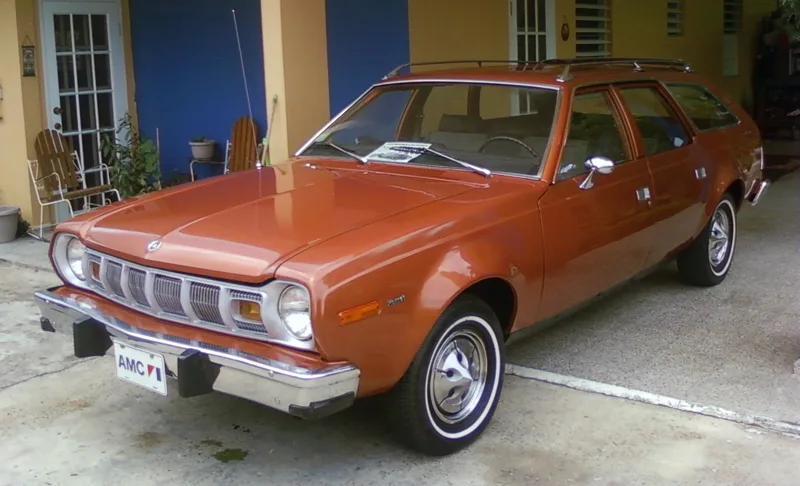
The sedans and wagons had large bumpers mounted on energy-absorbing shocks, with a prominent central protrusion at the front that earned them the nickname coffin noses. The four-door models also had a fully padded dashboard with squared instrument pods, a rectangular soft-feel horn bar and a clock or a fuel economy gauge on the right.
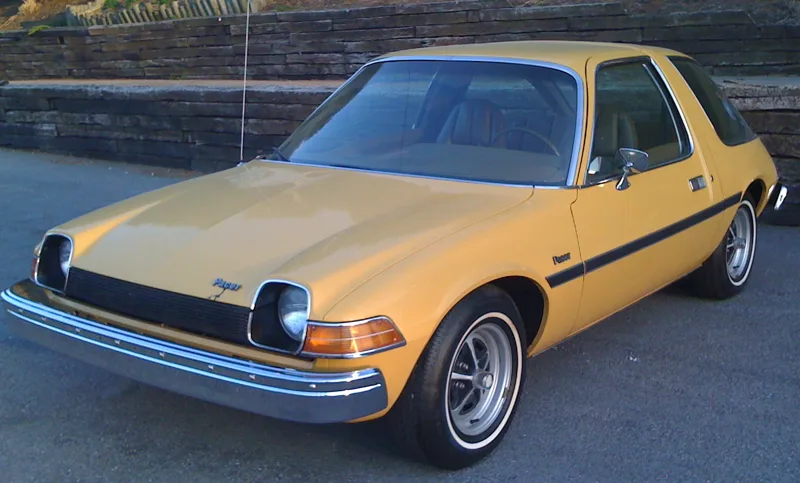
The coupe shared no body parts with the sedan or wagon. Its roofline was much lower, its wheelbase was 4 in (102 mm) shorter than the four-door cars, and it used tunnelled headlights and a fastback silhouette that critics called polarising.
How did the Matador coupe sell?
The coupe sold strongly at first, with 62,629 delivered between August 1973 and December 1974, compared with 7,067 hardtops in 1973. Car and Driver named it Best Styled Car of 1974, and it beat the four-door Matadors by close to 25,000 sales during 1974.
Dick Teague, AMC's vice president of styling, led the coupe's design, with input from race driver Mark Donohue. Popular Mechanics found that 63.7 percent of owners liked the car specifically for its styling. The 1974 coupe was also the six millionth AMC built since the Nash and Hudson merger of 1954.
Sales declined after the first year. Fewer than 10,000 coupes sold in 1977, and only 2,006 were built in the final year, with close to 100,000 coupes built between 1974 and 1978. The design remains one of the more controversial styles of the 1970s.
Which Matador trims were built?
The Matador X was a sportier version with striping along its flanks that continued around the back, and the D/L was a limited promotion. The Oleg Cassini and Barcelona coupes targeted the personal luxury buyer, and each one had its own colour and upholstery story.
Under the bonnet was a 5.0 L (304 cu in) V8 and sold for $3,699, with 10,074 sales in 1974. The D/L promotional package, priced at $4,995 MSRP, built on the Brougham with an opera window, a padded vinyl roof and a 360 cu in (5.9 L) V8.
The Oleg Cassini coupe was built for the 1974 and 1975 model years, with 6,165 made in the 1974 model year and 1,817 for 1975. Cassini's influence ran through black upholstery with copper buttons, copper trim and embroidered medallions on the headrests, and the car helped AMC dealers draw showroom traffic.
The Barcelona replaced the Cassini package for 1976 with an in-house design. The Barcelona II coupe of 1977 and 1978 had a padded Landau roof, opera windows and velour upholstery. Motor Trend found the 1977 Barcelona II equal to its rivals in the objective tests, and the final year produced 2,006 coupes.
How did the Matador race in NASCAR?
Roger Penske's team ran works-supported Matador hardtops and coupes in NASCAR between 1972 and 1975, with Mark Donohue and Bobby Allison at the wheel. The cars were underdogs against the big Chevrolet, Ford and Dodge teams, and AMC's entry raised eyebrows among veterans, since the maker had never tried to build a racing reputation.
Donohue led 138 of the 191 laps at Riverside in January 1973, and he alone finished every lap of a race that lasted almost five hours. The Matador was also among the earliest oval stock cars with disc brakes at all four corners, and other teams soon followed with the same upgrade.
The five wins came at Riverside in 1973 and 1975, at Ontario in 1974, and twice at Darlington in 1975. Allison took the Daytona 125 qualifier on 13 February 1975, then placed second in the Daytona 500 three days afterwards.
The 1974 coupe's streamlined shape replaced the older hardtop, which Penske said had performed better on circuits with many bends and fewer long straights. Donohue never drove the new fastback, and many believe its design had NASCAR in mind from the outset.
Why was the Matador popular with police forces?
The full-size Ambassador and the Matador were both available as factory police cars, but the smaller Matador proved much more popular. The Los Angeles Police Department bought 534 units in 1972 after testing cars from GM, Ford and Chrysler, and it said the Matador out-handled and outperformed the rest.
Georgia and Alabama took 285 Matadors for patrol work in 1972, and 31 were unmarked plain wrappers. The police and fleet list offered a 401 engine of 6.6 L (401 cu in), and tests of 1972 cars with that engine quarter-miles of about 14.7 seconds, 0-60 mph (97 km/h) inside 7 seconds, and a top speed close to 125 mph (201 km/h).
The 1974 model year was the last in which the LAPD bought the Matador. The heavier second-generation body and its bumpers affected handling and performance, and after 1976 AMC let the police business go because it caused too many problems. Some of these cars stayed in service until the mid-1980s.
Where did the Matador appear on screen?
The Matador became a familiar sight on television in the 1970s. Adam-12 made it a character from 1972 until 1975, and in the sixth season the lead character bought a 1974 Matador coupe. Emergency! used Matadors as Los Angeles County fire command vehicles and police cars throughout its run.
AMC sponsored Wonder Woman in later seasons, and In some episodes the Colonel, Steve Trevor, used a 1978 Matador Barcelona sedan. Wonder Woman's own car was a 1978 Concord AMX.
The coupe also appeared in 1974's film The Man with the Golden Gun, as the villain's ride for Francisco Scaramanga. The stunt car measured 9.15 metres (30 ft) long and 3.08 m (10 ft) high, with 12.80 m (42 ft) of wing span. A stuntman drove it to a runway, while John Stears built a 1 metre (39 in) radio-controlled model for the air shots.
How was the Matador built in Australia?
Australian Motor Industries assembled the Matador from 1971 to 1976 from partial knock-down kits shipped from Kenosha. The bodies arrived with right-hand drive already fitted, and the car was marketed as the Rambler Matador in Australia.
The 1971 sedan was priced at AU$6,395 and the wagon at AU$7,395. The 1976 second generation cost $9,810 as a sedan and $10,951 as a wagon. Local content rules favoured locally sourced seats, carpets, headlamps, mirrors, heaters and the R-logo hub caps, which reduced tariffs on each car.
Registrations were modest. In 1971 there were 307 Rebels, 69 Matadors and 64 wagons registered, and some 300 cars found buyers in 1972, mainly 1971 US-spec models. The Australian coupe was a small story: Of the 160 kits that reached AMI for the 1974 coupe, 80 were assembled, 70 were destroyed and 10 were kept as parts.
Did the Matador sell in Mexico, Costa Rica and Canada?
The Matador was assembled and sold in several markets under the Rambler badge. In Mexico the local company VAM built its own Classic line. In Costa Rica Purdy Motor assembled the cars from knock-down kits, and in Canada the cars came from Kenosha rather than the Brampton plant.
VAM's Classic Brougham of 1972 is considered the closest Mexican equivalent to the Rebel Machine and the Go package Matador. The Classic range ended partway through 1976, when VAM redirected its effort to the Pacer, which it wanted to sell as its luxury flagship.
In Costa Rica the Matador was sold as a Rambler even after AMC had retired that marque at home. Assembly there ran until the company Motorizada was liquidated in 1979, after it had taken over the franchise in 1974. Finland imported the first and second generations until 1975, and the United Kingdom received right-hand drive cars from Kenosha, with none assembled locally.
Why did the Matador come to an end?
Buyers turned towards smaller and more fuel-efficient cars after the 1973 oil crisis, and the company had limited money to redesign its large cars. The Ambassador ended with 1974, and the Matador's run finished after 1978.
An emissions fault forced the callback of nearly every Matador outside California. The bill topped $5 million and helped push the fiscal year into a $46.3 million net loss. The company's share of the US market fell from 4.6 percent in 1975 to 2.8 percent in 1976, and the Matador's sales fell by two-thirds in 1978.
AMC introduced the Concord for the 1978 model year as an upmarket restyling of the Hornet on a 108-inch (2,743 mm) wheelbase. The Matador line was discontinued by the end of that model year. AMC did not return to the traditional large-car segment until the Eagle Premier, which came from its partnership with Renault, and Chrysler bought the company in 1987.
What were the core Matador specifications?
| Specification | Detail |
|---|---|
| First generation | 1971 to 1973, mid-size hardtop, sedan and wagon |
| Second generation | 1974 to 1978, full-size sedan, wagon and fastback coupe |
| Wheelbase increase, 1971 | 4 in (102 mm) |
| Base six, first generation | 232 cu in (3.8 L), with 258 cu in (4.2 L) optional |
| V8 options, 1972 | Five options, from 150 bhp (112 kW; 152 PS) through 255 bhp (190 kW; 259 PS) |
| Police 401 V8 | 401 cu in (6.6 L), quarter-mile in the 14.7-second range |
| Coupe deliveries, 1974 | 62,629, August 1973 to December 1974 |
| Oleg Cassini coupes | 6,165 in 1974 and 1,817 in 1975 |
| Matador X price, 1974 | $3,699 |
| Australian sedan price, 1971 | AU$6,395 |
| Final coupe year | 2,006 built in 1978 |
| Production ended | 1978 model year |