A midsize family car that gained a muscle variant, a funny car and a long run of overseas assembly before it became the Matador in 1971.
The AMC Rebel was a midsize car from American Motors built from 1967 to 1970 on the Ambassador platform. It offered V8 engines up to 390 cu in, a 1970 muscle version called the Machine with 340 hp, and it was replaced by the Matador for 1971.
The AMC Rebel was a midsize car that American Motors built from the 1967 to the 1970 model year, before it was renamed the Matador. It was the high-volume seller in the company's line-up, and its 1970 Machine version became one of the best-known muscle cars of the period. Its designs also travelled overseas, where it was assembled under licence in several countries.
Where did the Rebel name come from?
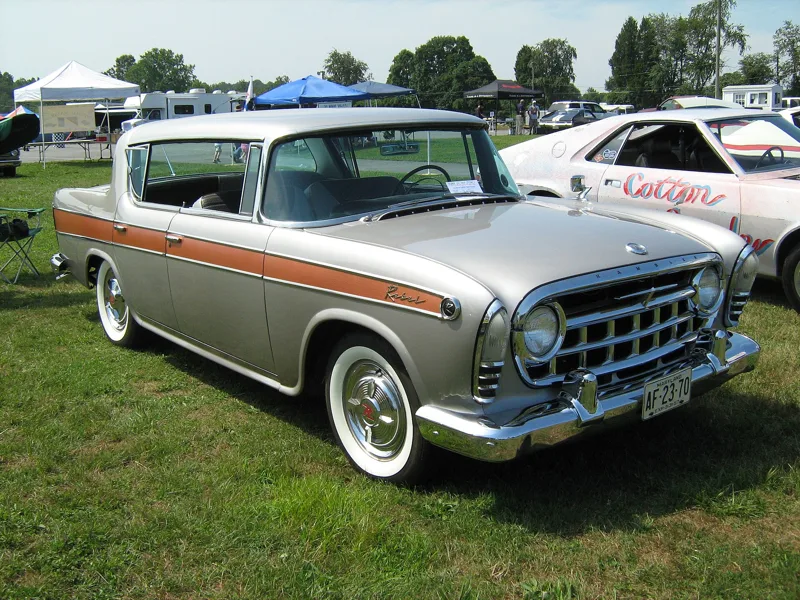
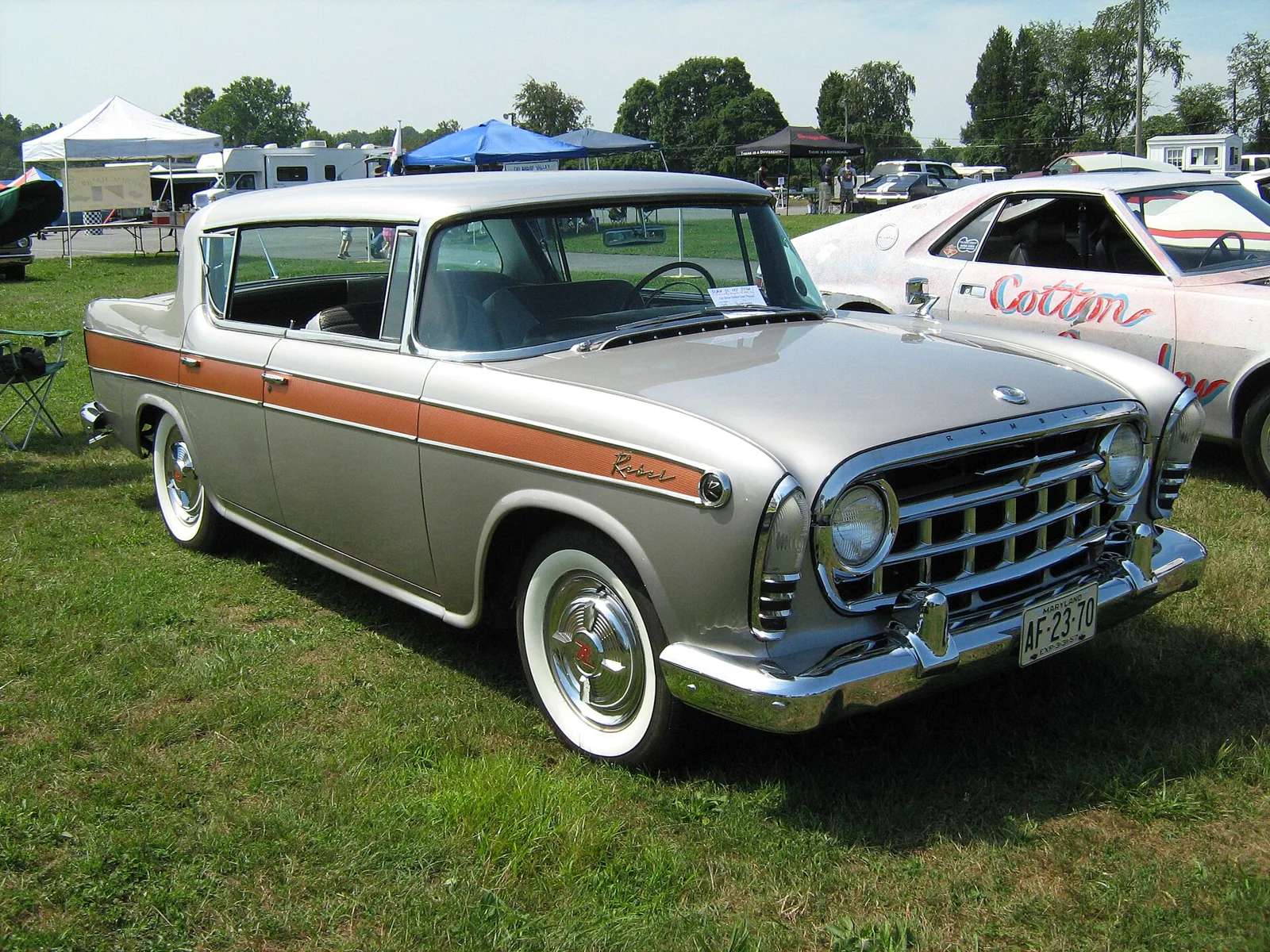
The Rebel name began in 1957 on a special Rambler with a big V8, which was the first factory-produced lightweight muscle car. It returned for the 1966 model year on the top Rambler Classic hardtop, and for 1967 the entire intermediate line took the name. The Rebel replaced the Rambler Classic as the midsize model.
The new Rebels were designed under Roy Abernethy on the Ambassador platform. In January 1967 Roy D. Chapin Jr. became chairman and chief executive, with the aim of changing AMC's dated image. The intermediate line was promoted with a performance focus, and factory and dealer high-output options were offered.
The Rebel was built in Kenosha, Wisconsin, and at Brampton, Ontario. It was the shorter-wheelbase intermediate version of the full-sized Ambassador, and the two shared the same basic unit body behind the cowl.
A midsize AMC family car that grew a muscle version, a funny car and an overseas following before it became the Matador.
What body styles did the Rebel come in?
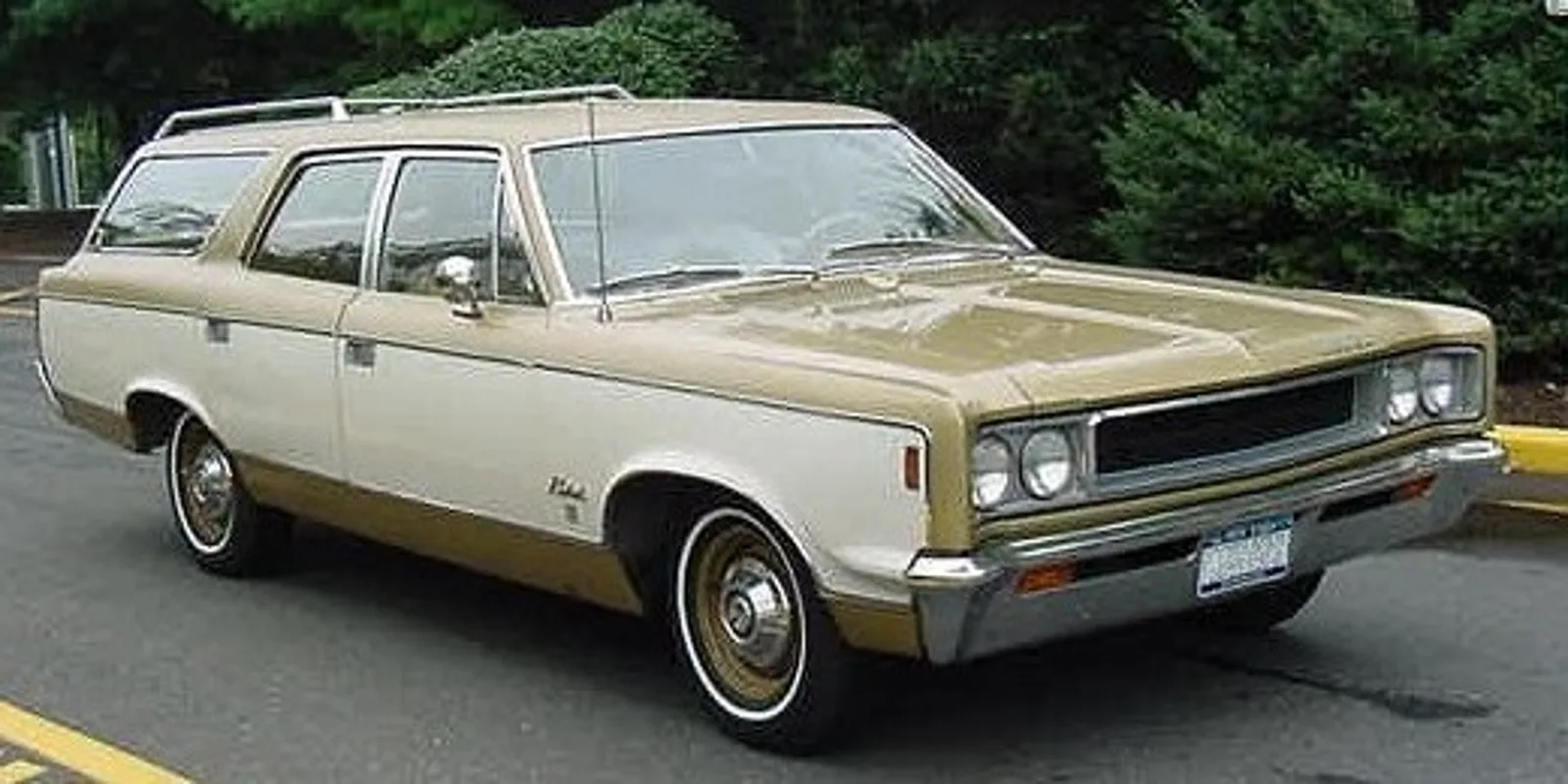
The Rebel came as a six-passenger four-door sedan, a two-door hardtop and a four-door station wagon with an optional third-row seat for two more passengers. A two-door coupe with a thin B-pillar was offered only in 1967, and a convertible was available in 1967 and 1968.
The base 550 and deluxe 770 were the core trims for 1967, with a high-line SST available only as a two-door hardtop. The Cross Country station wagons had a standard roof rack and a drop-down tailgate for long loads. The 770 wagon was available after midyear with simulated wood-grain side panels.
The convertible used a split-stack folding mechanism that allowed a full-width back seat with room for three passengers. The sedans kept a notchback form, smoothed from the sharp-angled roofline of the previous car.
How was the 1967 Rebel different from the car it replaced?
The 1967 Rebel was a completely new design on a wheelbase two inches longer, at 114 in (2,896 mm), and it was nearly four inches (102 mm) wider. Its rounded body and sweeping rooflines replaced the straight-edged look of the Rambler Classic, and it offered as much interior space as full-sized Ford and GM cars.
A new safety-oriented dashboard featured a steering column that collapsed under impact. The gauges sat in a hooded binnacle in front of the driver, with the rest of the dashboard pushed forward and away from the passengers.
Critics noted that the design themes of the period, such as the hop-up fenders, made the Rebel hard to tell apart from its Ford, GM and Chrysler rivals. AMC's answer was that it was the first family car with style that rivalled function.
What engines did the Rebel offer?
The six-cylinder engines introduced in 1964 carried on, but the 1967 Rebel introduced the first of a family of all-new V8s that replaced AMC's older designs. The 343 cu in (5.6 L) V8 produced 280 hp (209 kW; 284 PS) and 365 lbf ft (495 N m) of torque at 3,000 rpm, with a four-barrel carburettor and dual exhaust.
The Rebel also replaced the torque tube of the Rambler Classic with an open driveshaft and a four-link, trailing-arm rear live axle on coil springs. The front suspension kept AMC's unequal-length control arms and high-mounted coil springs, which gave a more comfortable ride.
| Model year | Engine | Power | Torque |
|---|---|---|---|
| 1967 | 343 cu in (5.6 L) V8 | 280 hp (209 kW; 284 PS) | 365 lbf ft (495 N m) |
| 1968 | 290 cu in (4.8 L) Typhoon V8, SST standard | Unlisted | Unlisted |
| 1968 | 390 cu in (6.4 L) AMX V8, mid-year option | 315 hp (235 kW; 319 PS) | Unlisted |
| 1970 | 304 cu in (5.0 L) V8, standard | 210 hp (157 kW; 213 PS) | Unlisted |
| 1970 | 360 cu in (5.9 L) V8, two-barrel | 245 hp (183 kW; 248 PS) | Unlisted |
| 1970 | 360 cu in (5.9 L) V8, four-barrel | 290 hp (216 kW; 294 PS) | Unlisted |
| 1970 | 390 cu in (6.4 L) V8 | 325 hp (242 kW; 330 PS) | Unlisted |
What changed for the 1968 Rebel?
For 1968 the Rebel received a modest restyle of its trim, grille and taillamps, plus the federal safety equipment that applied to all cars that year. Shoulder harnesses, rear lap belts, lighted side markers, padded seat backs and an energy-absorbing steering column were among the additions.
The flush-mounted paddle door handles also arrived in 1968. They replaced the push-button design and became an AMC signature on its passenger cars through 1988, and they continued on Jeep Wranglers after Chrysler bought AMC until 2006. The door lock buttons moved into the armrests.
The Rebel also returned to the convertible list, and the Rambler name was dropped, so the cars were sold simply as AMC Rebels. The Rebels became the last true AMC convertibles, because the Rambler American and Ambassador open models had been discontinued after 1967.
Advertising changed too. AMC moved to Wells, Rich, Greene, headed by Mary Wells Lawrence, and the campaigns stressed value through direct comparisons with rivals. The approach broke the usual rule against attacking competitors, but it helped return AMC to its practical-car roots. Even so, Rebel sales fell to 73,895 units in 1968.
What happened to the Rebel in 1969?
The 1969 range was simplified by dropping the 550, the 770 and the convertible. The four-door sedan, station wagon and two-door hardtop were offered in base and SST trim, and only the two-door SST received a simulated louver trim ahead of the rear wheels.
The front and rear track widened from 59 in (1,499 mm) to 60 in (1,524 mm), and the interior received a deeply hooded instrument panel. The wagon offered 91.12 cu ft (2,580 L) of cargo space, which Popular Mechanics described as impressive.
American Motors also ran a distinctive television campaign for the 1969 Rebel, which moved away from its earlier rational approach. One commercial, in which student drivers torture-test a car, was widely remembered as one of the funniest car adverts of its time.
What changed for the 1970 Rebel?
The 1970 Rebel was two inches (51 mm) longer in its sedan and hardtop forms, with a restyled rear that featured a large bumper and integrated taillights. The grille was revised with a horizontal split, and the name was spelled out on the hood's left lip. The SST wagons could be ordered in two-tone paint or with simulated woodgrain trim.
Standard V8 power came from a new 304 cu in (5.0 L) engine rated at 210 hp (157 kW; 213 PS), which replaced the 290. The 343 gave way to a 360 cu in (5.9 L) V8 with two-barrel or four-barrel versions. The 390 V8 made 325 hp (242 kW; 330 PS) and was optional on SST models.
The 1970 production run was spread across the models. The base two-door hardtop made 1,791 cars, the base sedan 11,725, and the base wagon 8,183. The SST hardtop made 6,573, the SST sedan 13,092 and the SST wagon 6,846, while the Machine hardtop added a further 1,936.
Popular Mechanics found that the 1970 changes gave the car a no-nonsense air, and the 304 V8 proved the most popular engine. Almost 87% of owners chose it for its mix of performance and durability.
What was the Rebel Machine?
The Machine was the muscle version of the 1970 Rebel, built around a 390 cu in V8 rated at 340 hp (254 kW; 345 PS) at 5,100 rpm and 430 lbf ft (583 N m) at 3,600 rpm. It was painted white with a large blue hood stripe and bold red, white and blue reflective stripes, and about 2,326 were built.
Development began with a June 1968 proposal for a black 1969 Rebel coupe with no stripes, scoops or spoilers. An earlier 1967 project car had a modified 390 with an estimated 500 hp (370 kW), and it was a legal drag racer under the rules of the time.
The Machine's engine breathed through a Motorcraft four-barrel carburettor rated at 690 cfm and ran 10.0:1 compression, which needed high-octane fuel. It was the most powerful engine AMC would ever put in a regular production car. The car also carried a Borg-Warner T-10 four-speed, a Hurst floor shifter and a Twin-Grip differential with 3.54:1 or 3.91:1 gearing.
The Machine made its official debut on 25 October 1969 in Dallas, at the NHRA World Championship Drag Race Finals. Factory-rated at 10.7 pounds per horsepower, it was aimed at the NHRA F-stock class. Ten launch cars were driven from Kenosha to Dallas and raced as they arrived, and four bone-stock cars ran in the mid-fourteen-second range during press day.
How much did the Rebel Machine cost?
The Machine's MSRP was $3,475 (US$28,809 in 2015 dollars). The automatic transmission cost $188, cruise control $60, a tilt steering wheel $45 and air conditioning $380. Dealers also sold a $500 service kit that took output well above 400 hp (298 kW; 406 PS) and cut quarter-mile times from 14.4 seconds to 12.72 seconds.
Motor Trend recorded a 0 to 60 mph time of 6.4 seconds and a top speed of 127 mph (204 km/h) in a retrospective test. AMC's own marketing said the car was not that fast, but that it could give many muscle cars from the big three a run for their money.
The first run of 1,000 units was followed by variants without the stripes, and the Machine name carried on as a package for the 1971 Matador.
What were the Machine's wheels and paint like?
The Machine wore wheels that looked like cast alloys but were silver-flake steel units, made by Kelsey-Hayes in 15 x 7 in size. Enthusiasts call them Machine wheels. They had five narrow cooling slots and a chrome centre cap with a blue trim disc.
Only three Frost White cars with a flat-black hood were made, and at least three Big Bad Green cars were built. Once the original trim had been offered, it became a $75 option on later cars, and the wheels were also optional on the 1970 AMX and Javelin.
Did the Rebel race?
Yes. AMC backed the Grant Rambler Rebel funny car, which ran a 438 cu in (7.2 L) V8 producing 1,200 hp (895 kW; 1,217 PS). Hayden Proffitt took the car to 8.11 seconds at 180.85 mph (291.0 km/h) in the quarter-mile.
AMC agreed to a $1 million deal in 1967 with Grant Industries of Los Angeles, a maker of piston rings and ignition systems, to build the funny car for the NHRA's experimental classes. Grant's president, Grant McCoon, said the partnership would show what the Rambler could do.
For 1968 a new car was built and renamed the Grant Rebel SST, with the car consistently running in the mid-eight second range. By the end of 1968 AMC left funny car racing to concentrate on the Javelin in SCCA Trans Am racing.
In 1968 Ron Rosenberry drove the King Rebel of Ted McOsker, which used a blown-fuel Chrysler Hemi. It was clocked at 9.58 seconds at 148.02 mph (238.2 km/h) over the standing quarter.
How many convertibles and special wagons were built?
AMC built 1,686 Rambler Rebel convertibles in 1967, all in the top-trim SST. For 1968 the company made 1,200 convertibles, 823 SST models and 377 of the base 550.
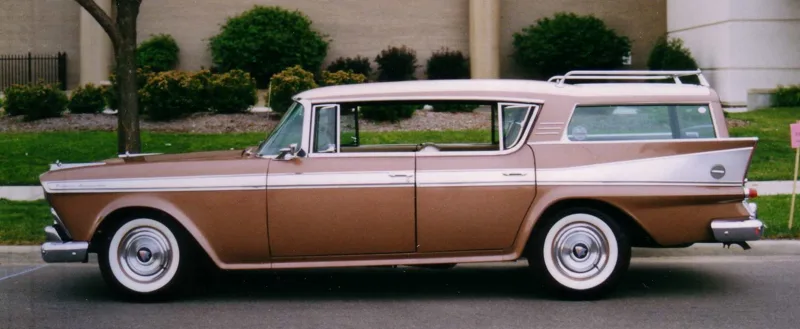
Three regional station wagons were marketed in 1967. The Mariner, with 600 units, was sold along the coastal regions of the United States in Barbados Blue. The Briarcliff, with 400 units in Matador Red, was marketed in the east and south, and the Westerner, with 500 units in Frost White, was available west of the Mississippi.
The Raider was a 1969 hardtop sold only in New York and New Jersey. Three hundred were built, and 75 took part in a driveaway by area dealers. It cost US$2,699 and carried the Big Bad colours of electric green, tangerine and blue.
How did the Rebel sell in Australia and New Zealand?
Australian Motor Industries (AMI) assembled Rebel sedans and station wagons at Port Melbourne from semi-knock-down kits, with the engine, transmission, front suspension, rear axle and doors fitted in Kenosha. Registrations were 864 sedans and 132 wagons in 1967, falling to 345 sedans and 71 wagons in 1970.
Campbell Motor Industries (CMI) assembled right-hand drive Rebel sedans at Thames, New Zealand, and it also imported complete station wagons and hardtops. It built 590 sedans, and the imported cars numbered 177. New Zealand registrations were 228 in 1967, 156 in 1968 and 136 in 1969.
New Zealand's 1970 sedan was priced at NZD 6,429.00, and 1970 was the first year that New Zealand Rebels received a V8, the 304 cu in engine. CMI continued assembly into early 1971, and the last Rebels were sold in 1972.
How did the Rebel reach Mexico, Europe and beyond?
In Mexico, Vehiculos Automotores Mexicanos (VAM) built Rebel-based Rambler Classics, which needed at least 60% local parts. They were only available as the Rambler Classic SST hardtop and the 770 sedan, and they were positioned as VAM's luxury flagship.
Kolberg and Caspary imported 147 Rebels into Norway between 1967 and 1969. In the UK, Rebels were sold in 1967 at prices of GBP 1,900 to 2,500, and in 1969 Peter Lindner of Frankfurt became the exclusive importer for West Germany, offering seven AMC models including the Rebel.
Renault assembled AMC cars at its Haren plant in Belgium and sold them as the Rambler Renault. Peru saw AMC build 750 vehicles from 1966 to 1970, and Costa Rica's Purdy Motor assembled Rebels until the Matador arrived in 1971.
Why did the Rebel become the Matador?
The Rebel name was dropped for the 1971 model year after the company concluded that the name clashed with the mood of the times. Social unrest and the name's connotations of rebellion weighed on the decision, and consumer research pointed to a new name.
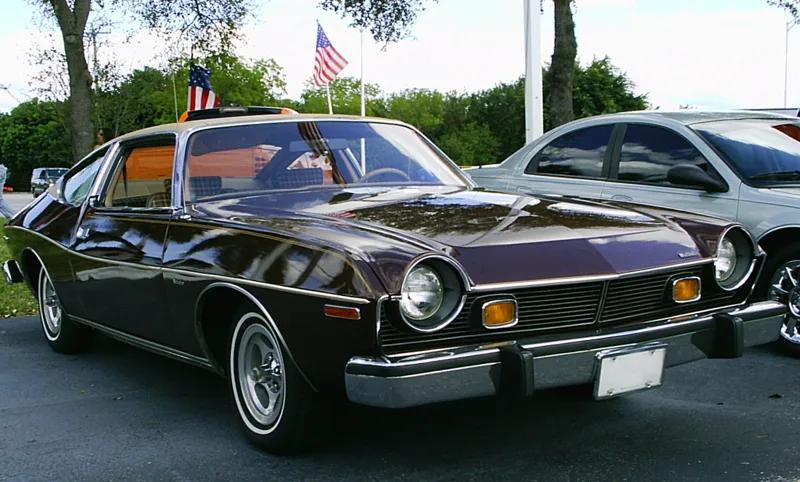
The Matador continued the same basic design, with changes to the taillights, hood, grille, front fenders and bumper. It kept the Machine option as a package, and it was built in several markets into the late 1970s.