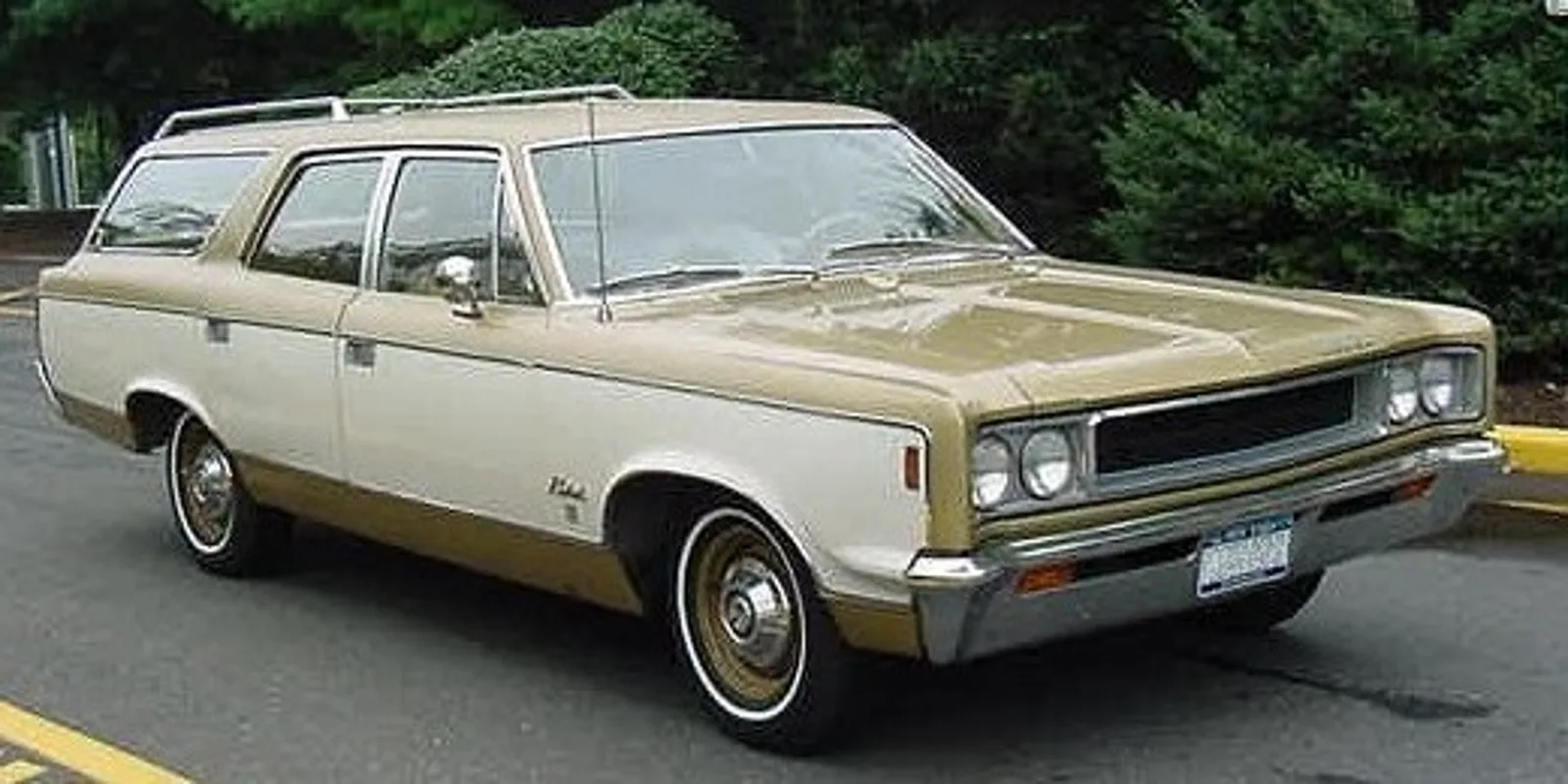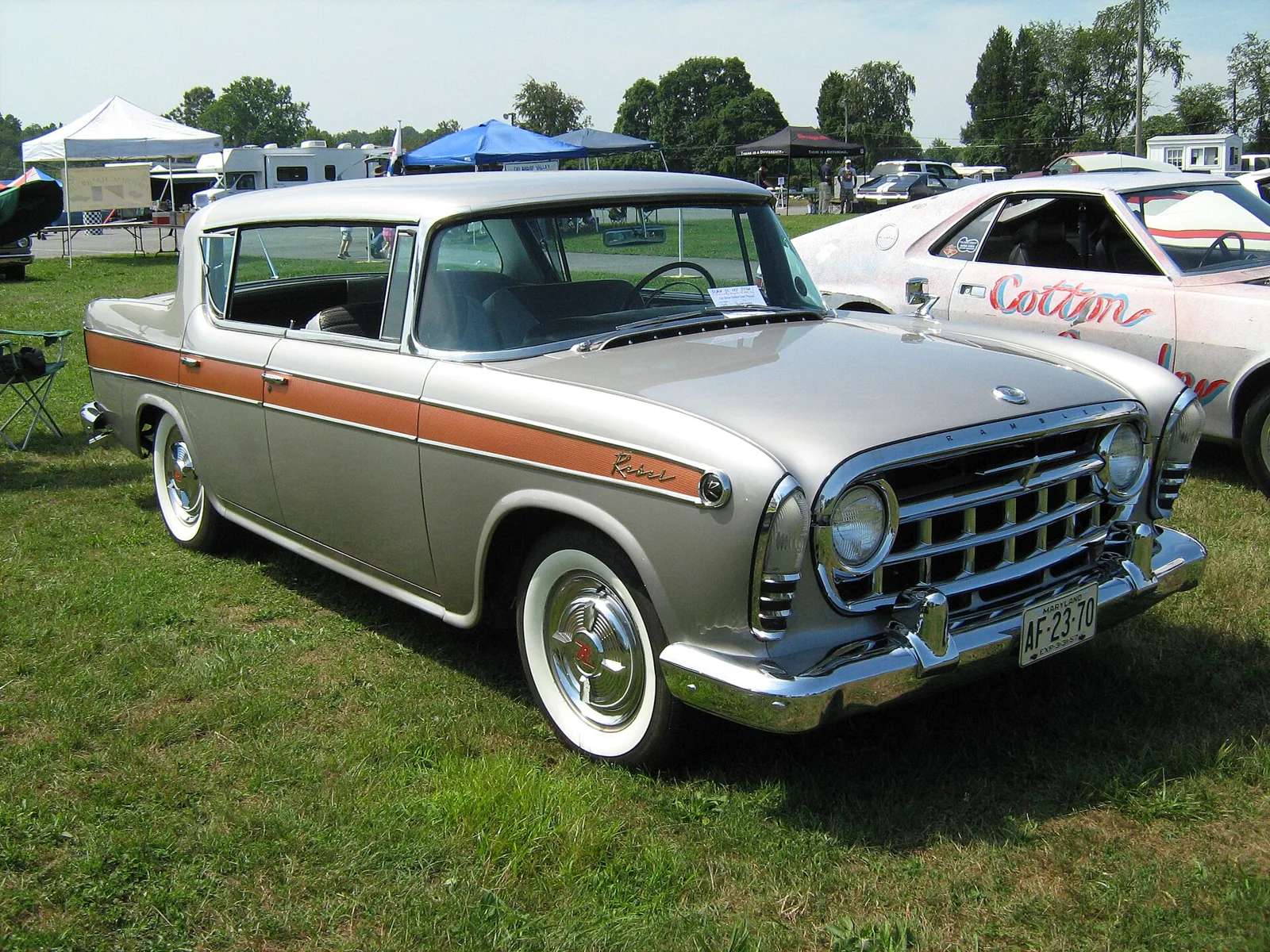
A 1957 high-performance hardtop that foreshadowed the muscle car, a V8 badge on Ramblers, a 1966 two-door and a 1967 intermediate range that wore the name.
The AMC Rambler Rebel was a performance Rambler from American Motors that first appeared as a 327 cu in V8 hardtop in 1957. The name returned on V8 Ramblers from 1958 to 1960, on a two-door hardtop in 1966 and across the intermediate range in 1967, before becoming the AMC Rebel.
The AMC Rambler Rebel was a performance-minded version of the Rambler built by American Motors Corporation (AMC) in Kenosha, Wisconsin. It debuted as a V8 four-door hardtop for 1957, returned as a V8 badge across the Rambler range from 1958 to 1960, and reappeared as a two-door hardtop for 1966 before the whole intermediate line took the name in 1967. Many enthusiasts see the 1957 car as an early step toward the muscle car.
This guide follows the model through each period, covering the engines and specifications, the production story, the 1967 Grant drag car and the change to the AMC Rebel in 1968. Figures are given metric first, with imperial in brackets.
What was the AMC Rambler Rebel?
The Rambler Rebel was a name AMC used across two separate periods, from 1957 to 1960 and again in 1966 and 1967. The first car was a special high-performance four-door hardtop, while later Rebels were V8 trim levels and then intermediate-sized cars. From 1968 the line became the AMC Rebel, which ran until the 1970 model year.
The name meant a different thing in each period. In 1958 it covered every Rambler fitted with the 250 cu in (4.1 L) V8, and by 1967 it covered every AMC intermediate. Anyone comparing cars from these years needs to check which generation they belong to before comparing power, size or price.
A 1957 V8 hardtop that AMC presented as a performance car, and a name that later covered its whole intermediate line.
Why did AMC build a high-performance Rambler in 1957?
AMC built the Rebel because its president, George W. Romney, chose smaller cars over head-to-head fights with the Big Three. The company's large Nash and Hudson models were losing sales, and the end of Packard component sharing meant AMC had to develop its own V8 engine.
The Nash and Hudson large models had dwindling sales through the 1950s, so AMC put its resources into the smaller Rambler. Romney's plan was to build cars that were smaller than the standard American models and to compete on efficiency and cost rather than size.
The engineering push began with an AMC V8 programme started in 1955 under chief engineer Meade Moore. Once the Packard component sharing ended, AMC had to develop its own powertrains, and the 250 cu in (4.1 L) overhead-valve V8 was revealed in mid-1956. The engine first appeared in the Nash Ambassador Special and the Hudson Hornet Special.
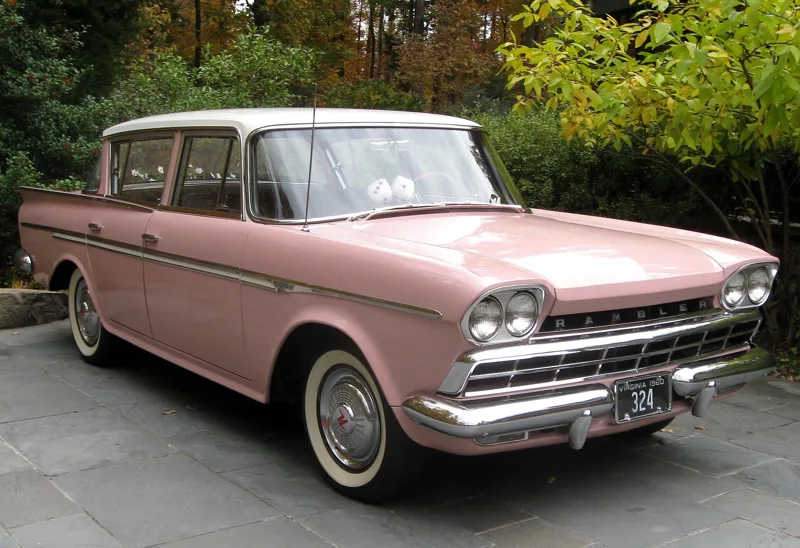
The Rambler body had been redesigned for 1956 by Edmund E. Anderson and Bill Reddig. Their design brought a reverse-sloped C-pillar that became an AMC signature, along with inboard, grille-mounted headlamps that were a Pinin Farina-designed cue. The Rebel took that body and added the new engine, creating a car that stood out from the rest of the Rambler range.
How quick was the 1957 Rebel?
The standard 1957 Rebel was rated 255 hp (190 kW; 259 PS) from its 327 cu in (5.4 L) V8, and it reached 0 to 60 mph in 7.5 seconds. Its power-to-weight ratio was about 13 pounds per horsepower, and Motor Trend called it the fastest stock American sedan.
The car used the lightweight 108-inch (2,743 mm) wheelbase Rambler four-door hardtop body. Under the bonnet, the 327 used mechanical valve lifters, which set it apart from the 327 engines used in the Ambassador and the Hudson Hornet. Standard equipment on every Rebel included a manual gearbox with overdrive or GM's four-speed Hydra-Matic automatic.
The Rebel was not cheap for what it offered. The base price was US$2,786, which is about $31,937 in 2025 dollars, and buyers who wanted extras paid for them. All Weather Eye air conditioning cost $345. Only 1,500 Rebels were produced in 1957, so the car was always a niche model within a niche range.
Did the 1957 Rebel offer fuel injection?
A Bendix Electrojector fuel injection system was announced as a US$395 option for the 1957 Rebel in March 1957, and the injected engine was rated 288 bhp (215 kW) on test cars. Cold-start problems meant that production Rebels used four-barrel carburettors instead, so the injected version never became a regular production choice.
The owner's manual still listed the fuel injection option even though production cars did not use it. The gap between the printed option and the actual cars is one of the more unusual details of the early Rebel, and it shows how close AMC came to a first for a mass-produced engine.
What changed in the 1958 to 1960 Rebel?
From 1958 the Rebel name moved from a single specialist car to a V8 badge on Ramblers. The engine was rated 215 hp (160 kW; 218 PS) in 1958, and by 1960 the two-barrel version made 200 hp (149 kW). Each year brought a different body and trim mix, so the badge meant more power than a standard Rambler but not the same car as in 1957.
The 1958 Rebel lineup included six models, among them Cross Country station wagons. The Custom four-door hardtop was the only pillarless Rebel, and quad headlamps and flared tailfins gave the whole Rambler range a new look. A Motor Trend test estimated 12.0 seconds to 60 mph, a clear step back from the 7.5 seconds of the original 1957 car.
For 1959, bumpers reduced overall length by 1.6 inches (41 mm), and the Rebel kept its V8 choices. The 1960 model year brought narrower C-pillars and smaller tailfins, along with a full move of the emphasis towards the Rambler name and its Deluxe, Super and Custom trims.
Why did the Rebel name return in 1966?
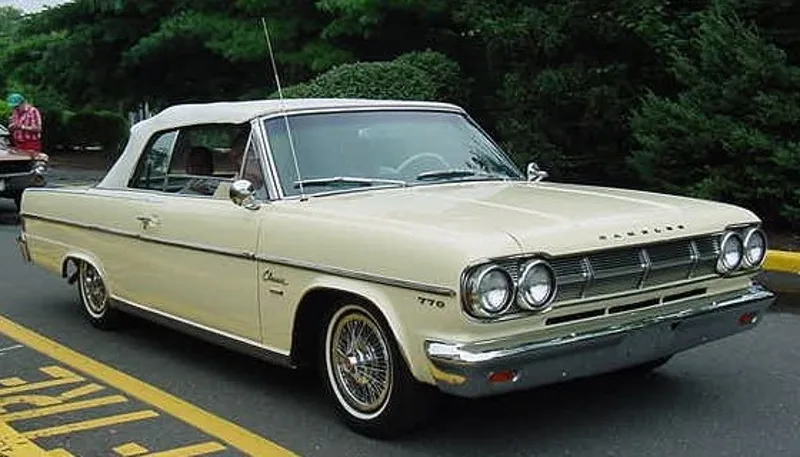
The Rebel came back for 1966 as a two-door hardtop based on the Rambler Classic, with bucket seats, a revised roofline and special trim. The base car used a 232 cu in (3.8 L) inline six and cost US$2,523, while the 327 cu in V8 rated 270 bhp (201 kW) cost only $65 more.
Buyers could also order a four-speed Borg-Warner T-10 manual transmission, which made the 1966 car more sporting than the family Rambler it sat beside. The rear suspension used a torque tube, and that layout drew criticism.
Print advertisements compared the Rebel with the Chevelle, the Belvedere and the Fairlane, but the car's styling sat at odds with the youthful marketing. Total production reached 7,512 cars, and many consider it the last real performance Rambler Rebel before the name was reworked for the new intermediate line.
What did the 1967 Rebel change?
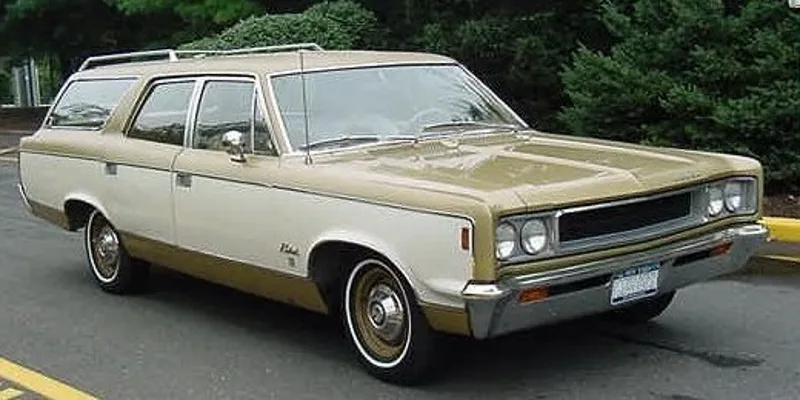
For 1967 every AMC intermediate took the Rebel name. The new cars rode on a 114-inch (2,896 mm) wheelbase and offered a two-door hardtop, a four-door sedan, a station wagon and a convertible, with sweeping rooflines and a rounded coke-bottle body.
CEO Roy Abernethy ordered a redesign to shed the economy image that the marque had carried for years. He wanted the Rebel and Ambassador designs to stand on equal terms with the volume brands of the Big Three,.
The 1967 range used a new four-link, trailing-arm rear suspension in place of the earlier layout. Six-cylinder engines and overdrive transmissions were still standard, but a 343 cu in (5.6 L) V8 gave buyers a budget muscle car option that the earlier Rebels could not offer.
The base trims were the 550 and the deluxe 770. The high-line SST was offered only as a two-door hardtop, and the two-door coupe carried a thin B-pillar that gave it an airy profile. Station wagons offered 91 cubic feet (2.58 m3) of cargo space, a useful figure for a family car in this class.
What was the Grant Rambler Rebel?
The Grant Rambler Rebel was a 1967 Funny Car built with Grant Industries to race in the NHRA X/S and Super Experimental Stock classes. Its 438 cu in (7.2 L) V8 made 1,200 hp (895 kW; 1,217 PS) at 9000 rpm on alcohol and nitromethane, and driver Hayden Proffitt ran the quarter-mile in 8.11 seconds.
The racing chassis used a 122-inch (3,099 mm) wheelbase and a chrome moly tube frame. A GMC 6-71 blower and Enderle fuel injection fed the engine, which was bored and stroked for racing use. Its quarter-mile speed reached 180.85 mph (291.0 km/h).
The partnership with Grant Industries was part of a wider move by AMC into racing in 1967. It gave the company visibility in the drag strip scene while the road cars were being redesigned, and it sits apart from the production story as a separate, specialist car.
Why did the Rebel become the AMC Rebel in 1968?
For 1968 the historic Rambler marque was dropped from the intermediates, and the whole line became the AMC Rebel. A 390 cu in (6.4 L) V8 was offered in the AMX, and convertibles were discontinued after only 823 were built in 1968 as sales of open cars fell across the late 1960s.
Production of the Rebel continued through the 1970 model year. The AMC Matador then replaced it for the 1971 model year, which closed the Rebel chapter. Export markets kept the Rambler badge for the whole Rebel run, so cars sold overseas carry a different name from the ones sold at home.
Where was the Rebel built?
Fifth-generation Rebels were built in Kenosha, Wisconsin and at AMC's Brampton, Ontario plant, which opened in December 1960. Overseas, Renault assembled cars from CKD kits in Europe for 1967 only, and partners in Australia, New Zealand and Mexico assembled kits locally.
Australian Motor Industries assembled Rebels from semi knock-down (SKD) kits, while Campbell Motor Industries assembled them in Thames, New Zealand. Vehiculos Automotores Mexicanos assembled Rebels in Mexico in markets beyond the home plants.
What were the Rambler Rebel specifications?
| Specification | Detail |
|---|---|
| Model years | 1957-1960 and 1966-1967 |
| Body (1957) | Four-door hardtop |
| Engine (1957) | 327 cu in (5.4 L) V8, 255 hp (190 kW; 259 PS) |
| 0-60 mph (1957) | 7.5 seconds |
| Base price (1957) | US$2,786 (about $31,937 in 2025 dollars) |
| Wheelbase (1957) | 108-inch (2,743 mm) |
| Wheelbase (1967) | 114-inch (2,896 mm) |
| Base price (1966) | US$2,523 with a 232 cu in (3.8 L) inline six |
| V8 option (1966) | 327 cu in (5.4 L), 270 bhp (201 kW); $65 extra |
| AMX V8 (1968) | 390 cu in (6.4 L) |
| Transmission | Manual with overdrive or GM four-speed Hydra-Matic automatic |
| Production | 1,500 in 1957; 7,512 in 1966; 823 convertibles in 1968 |