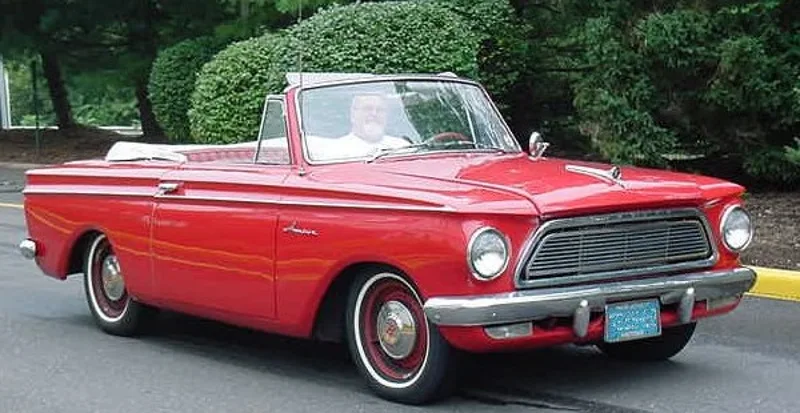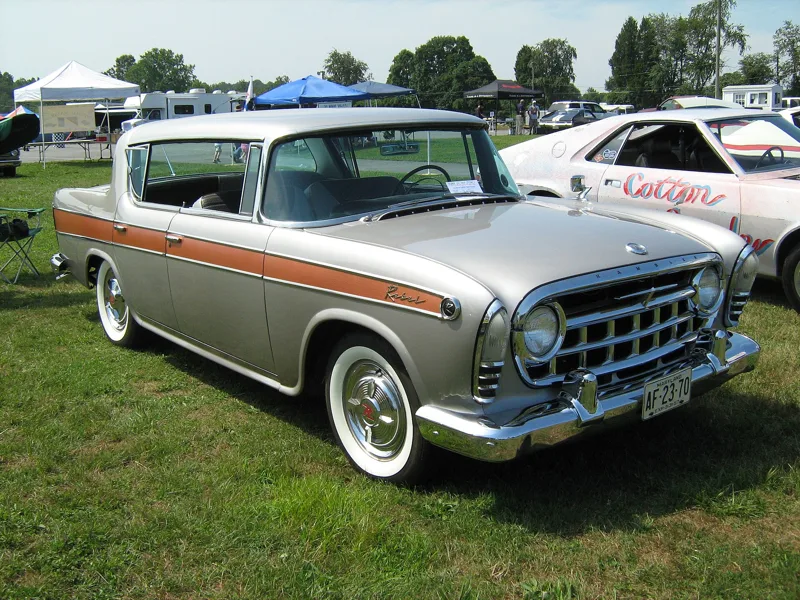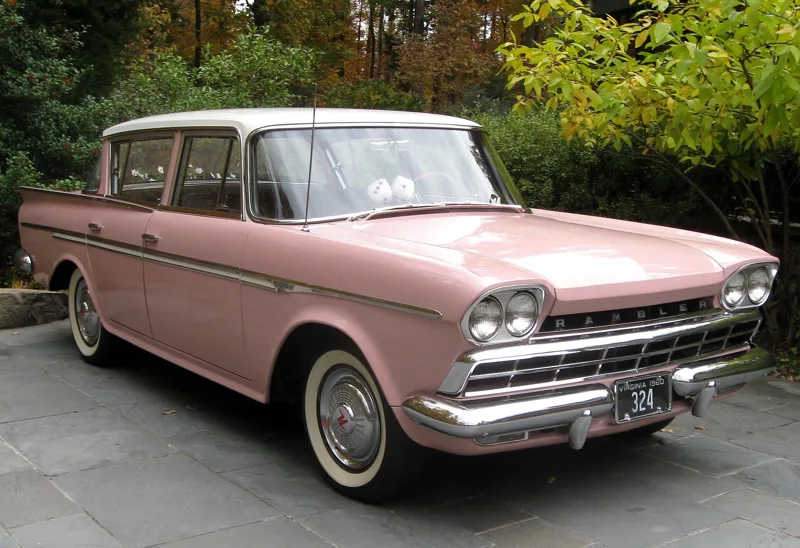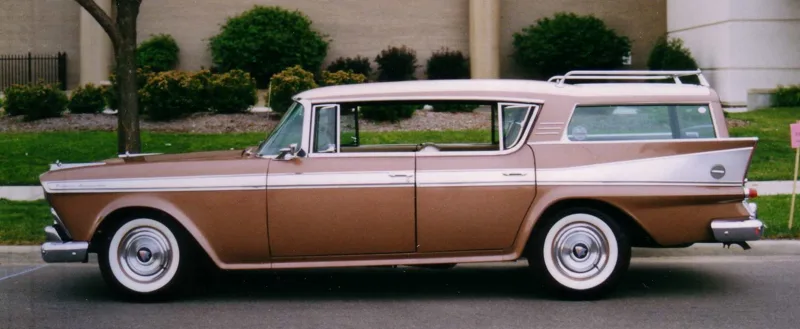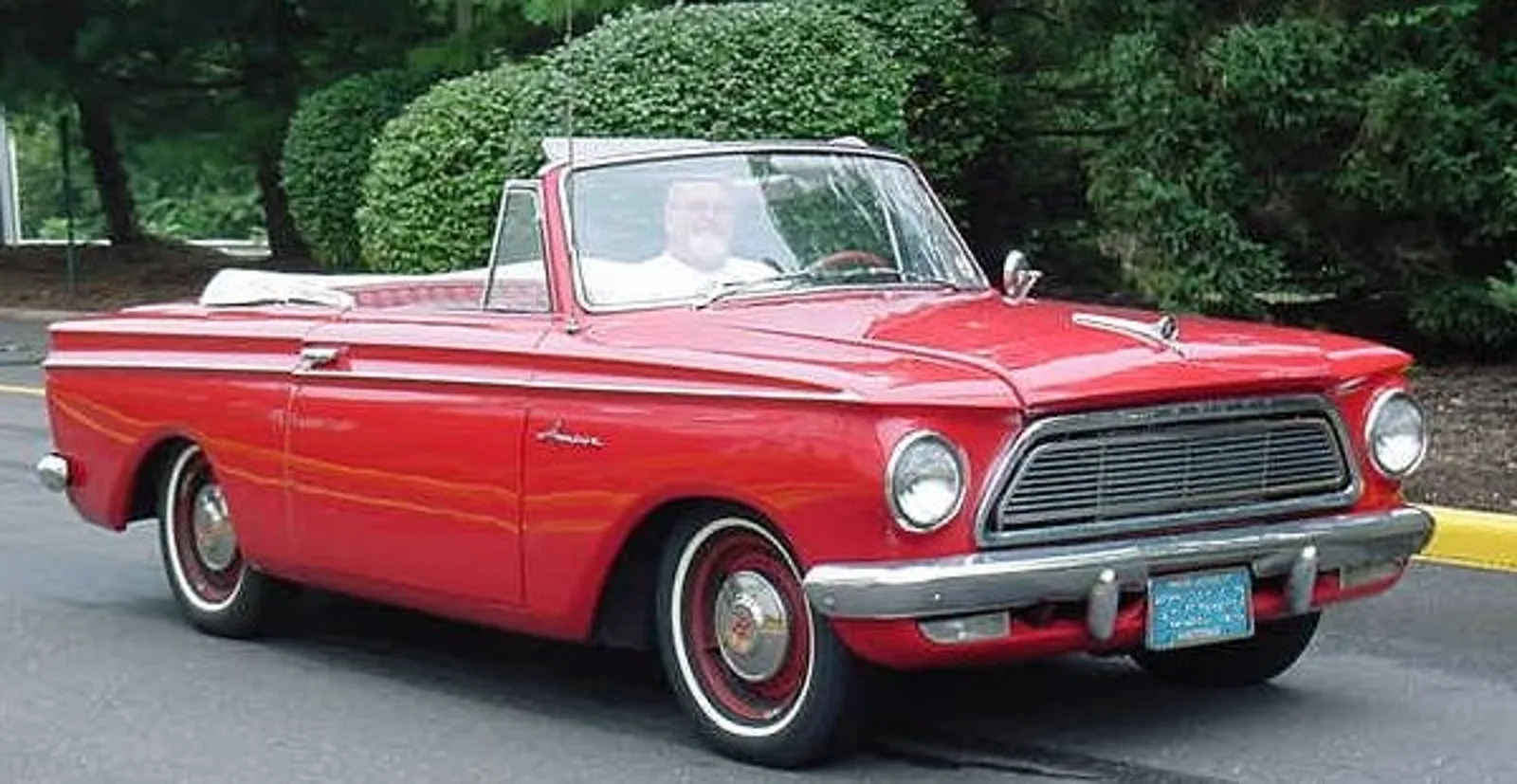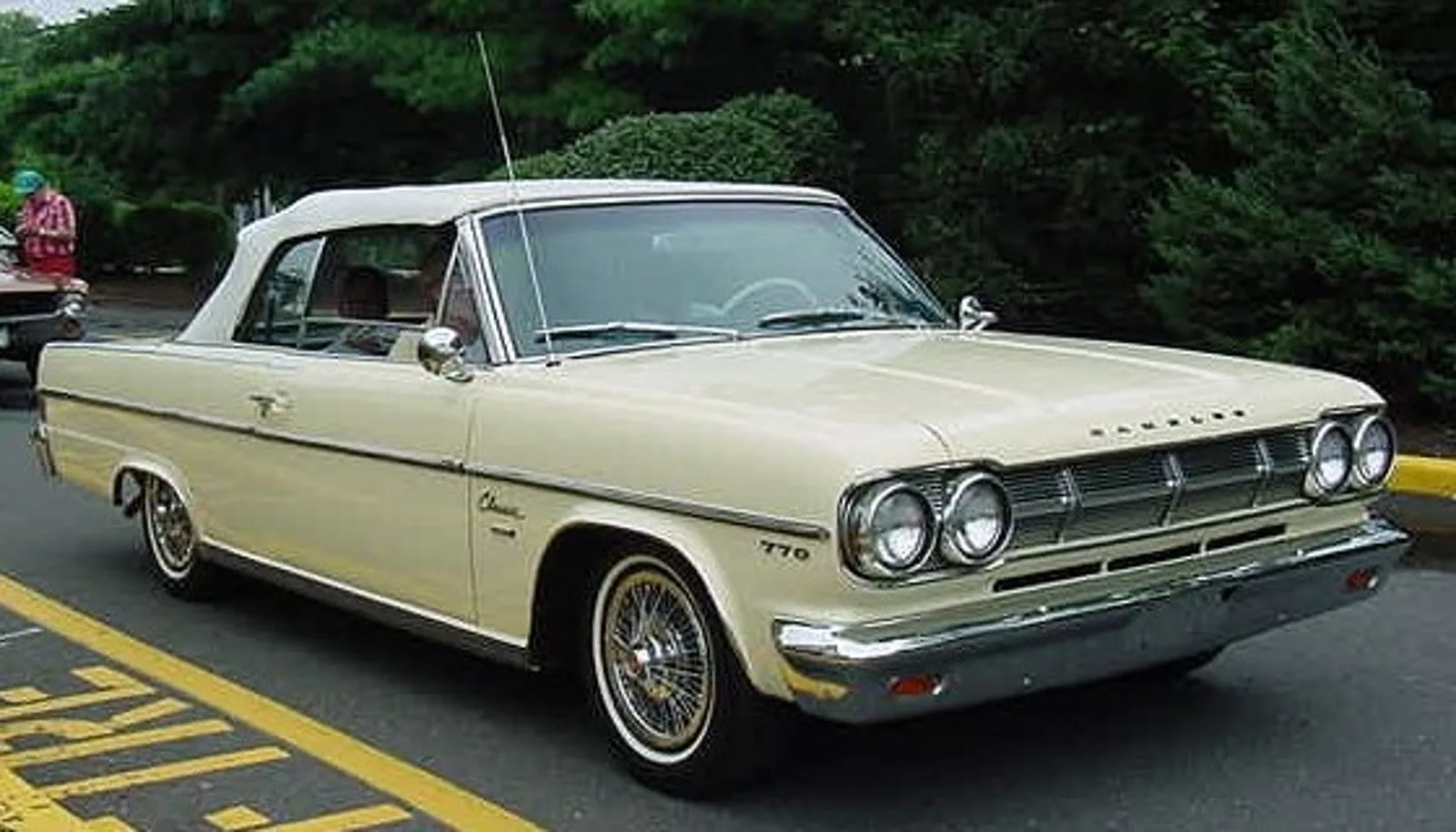
Three generations of AMC's intermediate, from the 1961 reskin of a 1956 design to the 1963 Car of the Year and the 1966 cars that gave way to the Rebel.
Built by American Motors, this intermediate ran from 1961 to 1966 in three generations. It became the company's high-volume seller, took Motor Trend's 1963 Car of the Year and was exported to over 100 nations before the Rebel name took over.
The AMC Rambler Classic was an intermediate-sized car that American Motors built and sold from the 1961 through the 1966 model years. It came in three generations, and it was AMC's high-volume seller for much of that time. Its name was dropped in favour of Rebel for 1967, when the company moved to new intermediates.
What was the AMC Rambler Classic?
The Classic was a mid-range car in American Motors' lineup, larger than the Rambler American and built on a platform that dated back to 1956. American Motors sold it as a six-passenger four-door sedan and as a wagon, and later added two-door, hardtop and convertible bodies. It was assembled in AMC's factories in the United States and Canada, and it was exported to more than 100 nations.
The Classic was a central part of the company's strategy under George W. Romney. Its compact cars for the era helped AMC win sales and profit, and in 1961 the Rambler marque was third in domestic sales behind Chevrolet and Ford.
A reskinned intermediate that won Motor Trend's 1963 Car of the Year and sold in more than 100 nations.
Where did the Classic name come from?
The name took over from the Rambler Six and the Rambler Rebel V8, both dropped after 1960. The larger Rambler series had been based on a 1956 design, and the new name was meant to give the car a stronger identity apart from the smaller Rambler American.
Edmund E. Anderson of American Motors designed the 108-inch (2,743 mm) wheelbase cars. Their bodies looked new but were in fact inexpensive reskins. AMC kept its basic body shells longer than the Big Three did, because this recovered tooling costs and kept the company profitable. A five to six year cycle was longer than the three-year industry norm, so the designers used facelifts to freshen the look.
How much did the 1961 Classic cost?
The 1961 Classic went on display in Rambler showrooms on 12 October 1960. The basic Deluxe four-door sedan had a suggested retail price of US$2,098, and a station wagon was only US$339 more. Trim levels ran from the Deluxe to the mid-level Super and the top-line Custom, which offered bucket seats in a four-door sedan.
Engine choices were an I6 of 195.6 cu in (3.2 L) and a V8 of 250 cu in (4.1 L). An aluminium-block version of the six, sometimes called the 196, was offered as an option in the Deluxe and Super. It weighed 80 pounds (36 kg) less than the cast-iron engine and produced the same 127.5 horsepower (95 kW).
The Classic was promoted as The All-Purpose Compact Car, though it was roomier and larger than the Rambler American. Romney's own sales literature called it The New World Standard Of Basic Excellence. Many older drivers liked its performance, fuel economy and automatic transmission.
How well did the 1961 Classic sell?
American Motors sold 370,600 vehicles in 1961, which lifted the Rambler to an unprecedented third place behind Chevrolet and Ford. The company's emphasis on economical, compact cars was the basis of that result.
What changed for the 1962 model year?
For 1962 the Super models were dropped and replaced by a 400 model. The flagship Ambassador was shortened to the same 108-inch wheelbase as the Classic, and the V8 was removed from the Classic, so the Ambassador became the only AMC car with a V8. The two-door sedan body style was a one-year offering for 1962.
The grille was modified and the rear end received round tail lamps. The previous year's tailfins were shaved off, and Rambler was one of the first cars to drop them. Starting in 1962, every Rambler had twin-circuit brakes, a feature few cars offered at the time. A price cut of US$176 was made on the popular Custom Classic sedan.
A five-door wagon with a rear-facing third seat arrived in 1962. Its door was a vertical hinged door, unlike the horizontal tailgate on other wagons of the time. Popular Mechanics surveyed owners who had driven a combined 1,227,553 miles (1,975,555 km), and the Rambler came out as likable, easy to handle and comfortable, with flaws in power and workmanship.
Sales of 1962 Classics rose by over 56,000 in the first six months compared with the same period in 1961, despite a dozen new competitors. American Motors also showed the Rambler Centaur at the 1962 Chicago Auto Show on a raised platform, based on a two-door sedan.
Why did Motor Trend name the Classic Car of the Year?
Motor Trend picked the redesigned 1963 Classic as its Car of the Year. The award rewarded what the magazine called pure progress in design, as well as performance and value. The Ambassador shared the same bodywork and was also honoured in the same judgement.
The 1963 cars were the first all-new AMC models since 1956. They were shorter and narrower than before, but kept their family-sized room. Edmund E. Anderson, the outgoing design director, shaped the car, and Dick Teague, the company's new principal designer, gave the range its smooth, streamlined look.
The 1963 Classic used a 112-inch (2,845 mm) wheelbase, longer than the cars it replaced. Subtle body sculpturing was the main visual change, and the new platform became the basis for the 1965 cars as well.
How did the 1963 Classic handle and perform?
The 1963 range used three-digit model designations, from the 550 at the bottom through the 660 to the 770 at the top. Classics came as pillared two- and four-door sedans and as four-door wagons. The six remained the only engine in the early 1963 cars.
In mid-1963 a 287 cu in (4.7 L) V8 with 198 hp (148 kW; 201 PS) arrived. With the optional Flash-O-Matic automatic from Borg-Warner, the V8 reached 0 to 60 mph (0 to 97 km/h) in about 10 seconds. Economy ranged from 16 mpg-US (14.7 L/100 km; 19.2 mpg-imp) up to 20 mpg-US (11.8 L/100 km; 24.0 mpg-imp).
A semi-automatic E-Stick transmission was also offered with the cast-iron six. It removed the clutch pedal from the standard three-speed manual, and its clutch was operated by vacuum and electric switches using engine oil pressure as the hydraulic source.
Engineering details included curved side glass, one of the earliest examples in a popular-priced car. AMC also combined separate parts of the monocoque body into single stampings. The uniside door surround, made from one steel stamping, replaced 52 parts and made the doors fit better.
What changed in the 1964 Classic?
The 1964 cars added stainless steel rocker mouldings, a flush single-plane aluminium grille and oval tail lamps. Classics with bucket seats and a V8 could be ordered with a new Shift-Command three-speed automatic on the centre console, which let the driver shift manually.
A pillarless hardtop joined the line in the top 770 trim, and a sporty 770-H version added individually adjustable reclining bucket seats. Station wagons still made up 34 percent of Classic sales. The E-Stick proved unpopular, so it was discontinued after 1964.
Consumers still saw Ramblers as economy cars, and the six-cylinder models outsold the V8s. American Motors positioned the Classic near intermediate proportions with small-car pricing, but stronger competition from the Big Three cut total Rambler sales in 1964.
What was the Typhoon?
The Typhoon appeared in April 1964 as a sporty variant of the 770 two-door hardtop. It was built to show off AMC's new short-stroke, seven main bearing 232 cu in (3.8 L) inline-six, which made 145 hp (108 kW; 147 PS) at 8.5:1 compression. Production was limited to 2,520 units at a list price of US$2,509.
Each Typhoon was a two-tone Solar Yellow car with a Classic Black roof and an all-vinyl sporting interior. It had a distinctive Typhoon script in place of the Classic badge and a grille with blackout accents. The six went on to become the mainstay six-cylinder engine for AMC and Jeep vehicles, and it was built in modified form until 2006.
What did the 1965 Sensible Spectaculars bring?
The 1965 Classics were marketed as the Sensible Spectaculars, a deliberate move away from the economy car image. American Motors retired the 195.6 cu in six and offered only its straight-six family. The base 550 used a 199 cu in six making 128 hp (95 kW; 130 PS), and the 660 and 770 used the 232 with 145 hp (108 kW; 147 PS).
Optional V8s were the 198 hp 287 cu in unit and the 270 hp (201 kW; 274 PS) 327 cu in unit. Power front disc brakes with four-piston calipers were available from Bendix. The Classic was also a platform for the Rambler Marlin, a fastback halo car that appeared on 1 March 1965 and was marketed as a personal luxury car.
A show car called the Hialeah used yellow and green plaid trim, and the tartan interior proved popular enough that AMC offered a plaid custom upholstery option, with two matching throw pillows, for the 1966 Classic Rebel hardtop.
How did the 1966 Classic differ from earlier cars?
The 1966 Classics received trim changes and extra safety equipment, including a padded dash and visors, a left outside mirror, and seat belts for front and rear passengers. The 660 was dropped, leaving the 550 and 770. The standard six became the 232 cu in unit, and V8s were offered with a floor-mounted four-speed manual for the first time.
The two-door hardtop got a rectangular rear window and a crisp-line roof that could be covered in vinyl. Wagons had 83 cubic feet (2,400 L) of cargo space and a standard roof rack, and their load floor was lengthened by 3 inches (76 mm). An eight-passenger version was offered with three rows of seats and a left-side rear fifth door.
The high-compression 270 hp 327 cu in V8 was the performance option, with a heavy-duty clutch, power disc brakes and a Twin-Grip limited-slip differential. American Motors marketed the car as the Friendly Giant Killer, emphasising quality built in rather than added on. The company built 126,006 Rambler Classics for the 1966 model year.
What was the Rambler Rebel and why did the Classic end?
The Rebel was offered as the top-of-the-line version of the two-door hardtop, with special badges and slim bucket seats. It replaced the 770-H, and sales of the Rebel reached 7,592. The Classic name had become a poor selling point, so AMC reshuffled its model designations for 1966 to launch the redesigned intermediate line.
The Rambler St. Moritz was a snow-themed show wagon displayed during the 1966 show circuit. It had tinted observation windows, a stainless steel roof and a ski rack, and its interior used Corfam upholstery with embroidered snowflakes.
How did the Classic sell overseas?
American Motors sent finished cars from its Canadian and US plants to independent distributors and used joint ventures and licensees to build Rambler Classics in other countries. In Argentina, Industrias Kaiser Argentina built them in Cordoba from 1962 until 1971, using a Tornado overhead-camshaft straight-six developed in the US.
In Australia, Australian Motor Industries assembled Classics from semi-knock-down kits from 1961, with right-hand drive. The Brampton, Ontario plant exported 255 right-hand-drive Classics in 1964, mostly to the United Kingdom. In France and across Europe, Renault built the car at Haren in Belgium and sold it as the Rambler Renault.
Mexico's Vehiculos Automotores Mexicanos assembled the 1963 Classic 660 with a six making 127 hp (95 kW; 129 PS). In 1966 the Classic became the 770 there, and the name survived into the 1970s before the Matador replaced it. Elsewhere, Rambler Classics were assembled in Chile, Costa Rica, New Zealand, Peru and Venezuela, while Norway imported 558 cars by 1966.
What are the AMC Rambler Classic specifications?
| Specification | Detail |
|---|---|
| Model years | 1961 through 1966 |
| Wheelbase, 1961 | 108-inch (2,743 mm) |
| Wheelbase, 1963 | 112-inch (2,845 mm) |
| Length, 1965 | 195 in (5,000 mm), wheelbase 112 in (2,800 mm) |
| 1961 engines | I6 195.6 cu in (3.2 L); V8 250 cu in (4.1 L) |
| 1961 Deluxe sedan | US$2,098 suggested retail price |
| 1963 V8 | 287 cu in (4.7 L), 198 hp (148 kW; 201 PS) |
| Typhoon | 232 cu in, 145 hp (108 kW; 147 PS), 2,520 units |
| 1966 top V8 | 327 cu in (5.4 L), 270 hp (201 kW; 274 PS) |
| 1966 wagon cargo | 83 cubic feet (2,400 L) |
| 1966 production | 126,006 Rambler Classics |