A 1956 intermediate-sized car that created a new market segment, a V8 added for 1957, and a six-cylinder range that sold more than any other AMC model by 1960.
Launched on 15 December 1955, the Rambler Six from American Motors was an intermediate sedan with a six-cylinder engine. A V8 arrived for the 1957 model year, and the two lines were renamed the Rambler Classic in 1961, ending the separate names.
The AMC Rambler Six was an intermediate-sized car that American Motors Corporation (AMC) built and sold for the 1956 to 1960 model years. A V8 version joined the range in 1957, and together the two helped define a new compact-car market segment in the United States. Figures are given metric first, with imperial in brackets.
The car matters for anyone tracing the early history of AMC, a company formed in 1954 by merging Nash and Hudson. Its story is also the story of how the company came to rely on smaller cars, and why the Rambler name carried it through a difficult decade.
What was the AMC Rambler Six?
The AMC Rambler Six was a four-door intermediate car from American Motors that launched on 15 December 1955 as the 1956 model year car. It used a 195.6 cu in (3.2 L) six-cylinder engine at first, and a V8 was added for the 1957 model year.
The Rambler was sold in 1956 through both the Nash and Hudson dealer networks, which meant one new model reached two sets of showrooms. George W. Romney, AMC's president, described the car as the start of a new era in motoring, and the company set out to sell it as the car of the future.
The 1956 car kept the 108-inch (2,743 mm) wheelbase used by the earlier Nash Rambler four-door bodies, but it grew by 5 inches (127 mm) to 191.14 in (4,855 mm) overall.
A 1956 compact that opened a new market segment for AMC, with a V8 added the next year and a six that outsold every other AMC model by 1960.
Why did AMC launch the Rambler in 1956?
AMC launched the Rambler because its large Nash and Hudson models were losing sales, and George W. Romney chose to concentrate on smaller cars rather than fight the Big Three head-to-head. Romney spent US$5.4 million on a crash programme so the car could reach the market quickly.
The Big Three of General Motors, Ford and Chrysler were the main rivals, and an independent company such as AMC could not match their volume. Romney pursued a different path, building a car that was smaller than the standard American models but still roomy enough for families.
Romney later said that the Rambler was the car of the future, and that he had bet the farm on it. Imports were also growing in the same period, with Volkswagen arriving in 1955, Toyota in 1957 and Peugeot in 1958, but their share remained small compared with the domestic market.
How was the 1956 Rambler designed?
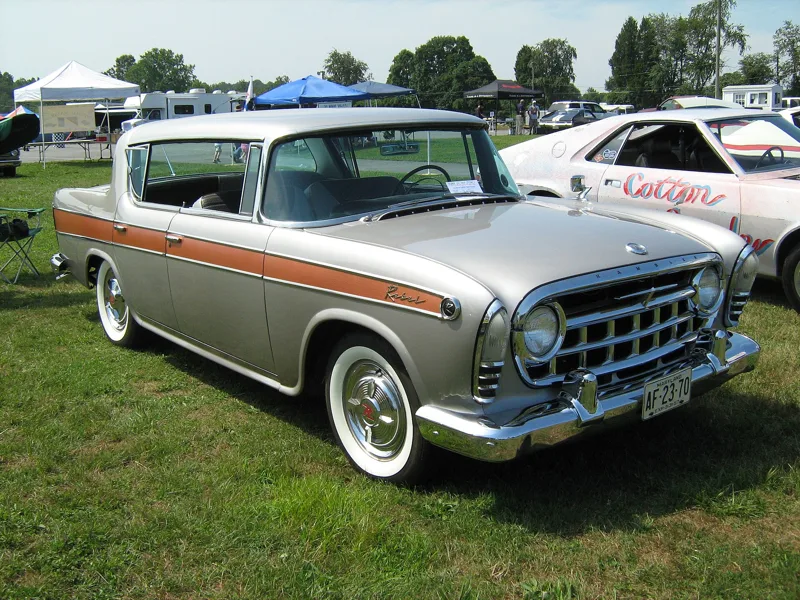
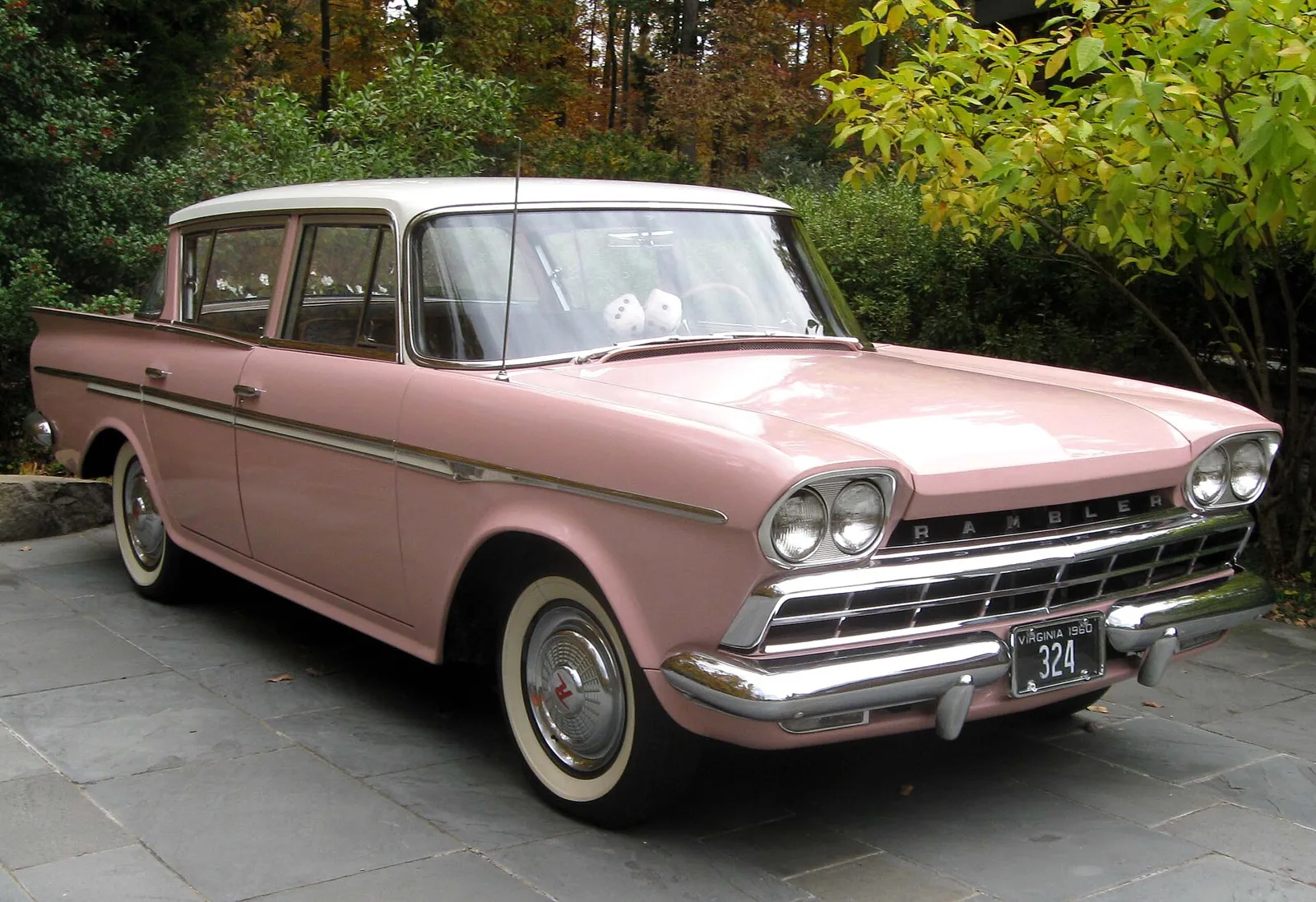
The 1956 Rambler was styled under the direction of Edmund E. Anderson, AMC's styling director. It had swept-back C-pillars, unusual wing windows on the rear doors and inboard, grille-mounted headlamps, and it was offered only as a four-door model with the widest windshield the company could claim.
The swept-back C-pillars took the name Fashion Safety Arch, and the shape became one of the car's most recognised features. The rear doors carried wing windows that were unusual for the period, and the windshield was broad enough for AMC to make a point about it in its advertising.
Construction used a unit body, which Nash called Double Safe Single Unit. AMC linked this to a $25,000 personal injury insurance policy that came with each 1956 car, a promotion that sat alongside the safety claims made for the body.
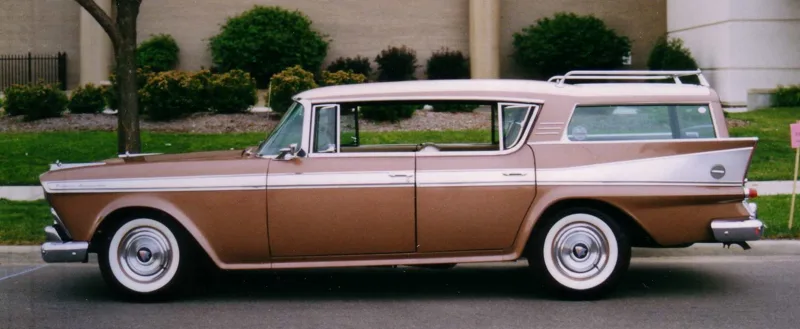
The Rambler introduced the industry's first four-door hardtop station wagon in 1956. Wagons were called Cross Country, and they featured a roll-down tailgate window and 80 cubic feet (2.27 m3) of cargo space. Interiors came in fifteen colours, and genuine leather was offered in six of them, while power brakes were standard on Custom models.
What engine did the 1956 Rambler Six use?
The Rambler Six used a 195.6 cu in (3.2 L) Typhoon straight-six with overhead valves, rated 120 bhp (89 kW; 122 PS) in 1956. Its output was 33 per cent higher than the 1955 version, and AMC claimed up to 30 mpg-US (7.8 L/100 km; 36 mpg-imp) for the car.
The 1956 Rambler also moved to a 12-volt electrical system, and it used a torque tube drive in place of the Hotchkiss drive used before. Four-wheel coil springs supported the suspension.
The automatic transmission was a GM-produced Hydramatic, which AMC sold under the name Flashaway. It sat alongside the standard manual gearbox.
When did the Rambler V8 arrive?
The Rambler V8 arrived for the 1957 model year with a 250 cu in (4.1 L) engine rated 190 bhp (142 kW). It gave the range a performance option at a time when the six-cylinder car was the core of the line.
Overdrive made a difference to the 1957 car's fuel use, which reached up to 32 mpg-US (38 mpg-imp). Most buyers still chose the six, and total sales had risen to about 82,000 cars in 1957 from 66,573 in the first year. In 1959 only 16,399 buyers picked the Rebel V8, while the Six dominated the range's sales.
What changed for the 1958 model year?
For 1958 the Rambler was redesigned with new front and rear fenders, quad headlamps on Super and Custom models, and flared tailfins. The six was rated 127 hp (95 kW; 129 PS), and sales rose to 119,000 units, which returned the smallest American automaker to profitability.
Romney said that tailfins would help sell compact cars, and that they could be dropped later on. The 1958 car measured 191 inches (4,851 mm) overall and still carried room for six passengers. Rambler finished seventh in US automobile sales that year.
The Flash-O-Matic was a Borg-Warner torque converter automatic with pushbutton gear selection on the left side of the dash, and a step-on parking brake pedal was new for the same year. Bodies were dipped in a 40-foot (12 m) primer vat before the colour coat.
How did the 1959 and 1960 models differ?
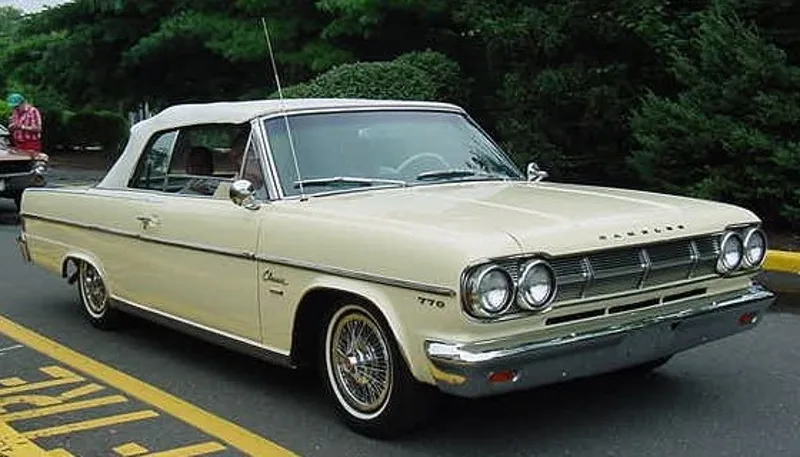
The 1959 Rambler had a full-width die-cast grille, smooth bodysides and pushbutton automatic controls with coloured indicator lights. The 1960 model had narrower C-pillars, smaller tailfins and a new bumper design, and its six became the best-selling AMC model of the period.
Electric overdrive sat behind the three-speed manual in 1959, and the mufflers were aluminium-coated inside and zinc-coated outside. Cross Country wagons made up about half of 1959 sales, and the Rambler finished the year sixth among all US-built models, while AMC ended 1959 with $60 million in profits.
Sales in 1959 topped a quarter-million, mostly Rambler Six models, while only 16,399 buyers chose the Rebel V8. For 1960 the instrument panel placed the gauges in one large oval, and the Rambler line reached third place in US industry sales.
How did owners and readers rate the Rambler?
Almost 74 percent of surveyed Rambler owners called their cars roomy, and readers of Popular Science gave the Rambler the highest response when asked which car was the best deal for the money. Reviewers also praised the unit body for its tightness.
The owner response was among the more positive findings of the period. Almost three-quarters of owners described the car as roomy, which is a strong result for a car sized below the American standard.
The Popular Science survey covered 5,000 readers, who were asked which 1959 car they would buy. Ford was picked by 17 per cent, while Rambler and Chevrolet tied for second on 16 per cent each.
Reviewers also rated the unit body, which was found tighter and freer of rattles and twisting than rival designs. Together with the economy claims, that gave the Rambler a reputation for solid, sensible motoring.
Where else was the Rambler built?
The Rambler was assembled outside the United States in Toronto, Mexico, Australia, New Zealand and Belgium. Australian Motor Industries began assembly in October 1960, while VW Motors assembled Ramblers in Otahuhu, Auckland, until 1962, alongside its own Volkswagen cars. Canadian and Mexican assembly had started earlier, in the mid-1950s.
In Canada the former Nash plant in Toronto built Ramblers until 1957. Mexico saw several assembly partners: Armadora Mexicana worked from 1956 to 1957, Planta REO took over from late 1959, and Willys Mexicana became a third partner in 1960. A 1962 decree banned imports of fully assembled vehicles.
Australian Motor Industries used right-hand drive semi knock-down kits. The 1957 station wagon used on the Soviet trip was assembled in Belgium.
Did a Rambler cross the Soviet Union?
Yes. In 1957 Harry Walton drove a Rambler station wagon, assembled in Belgium, through the Soviet Union. The trip ran 3,500 miles (5,633 km) from Brest to the port city of Yalta, and Walton said the wagon left Russians paying attention.
The wagon cruised at 60 mph (97 km/h) and returned 22.35 mpg-US (10.52 L/100 km; 26.84 mpg-imp) on the journey. It remains one of the more unusual episodes in the car's history.
What happened to the Rambler name after 1960?
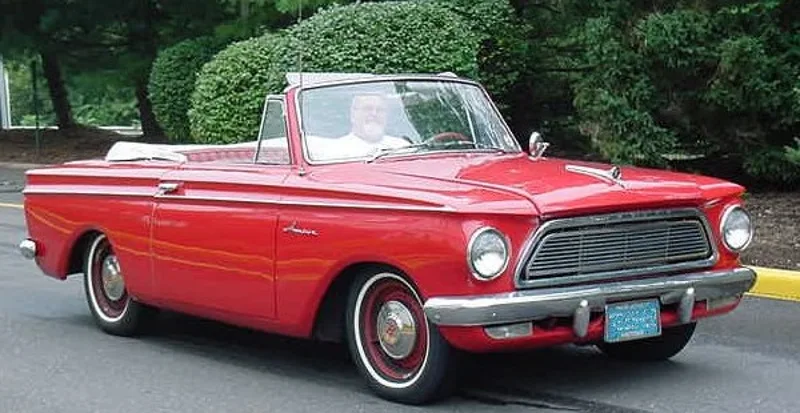
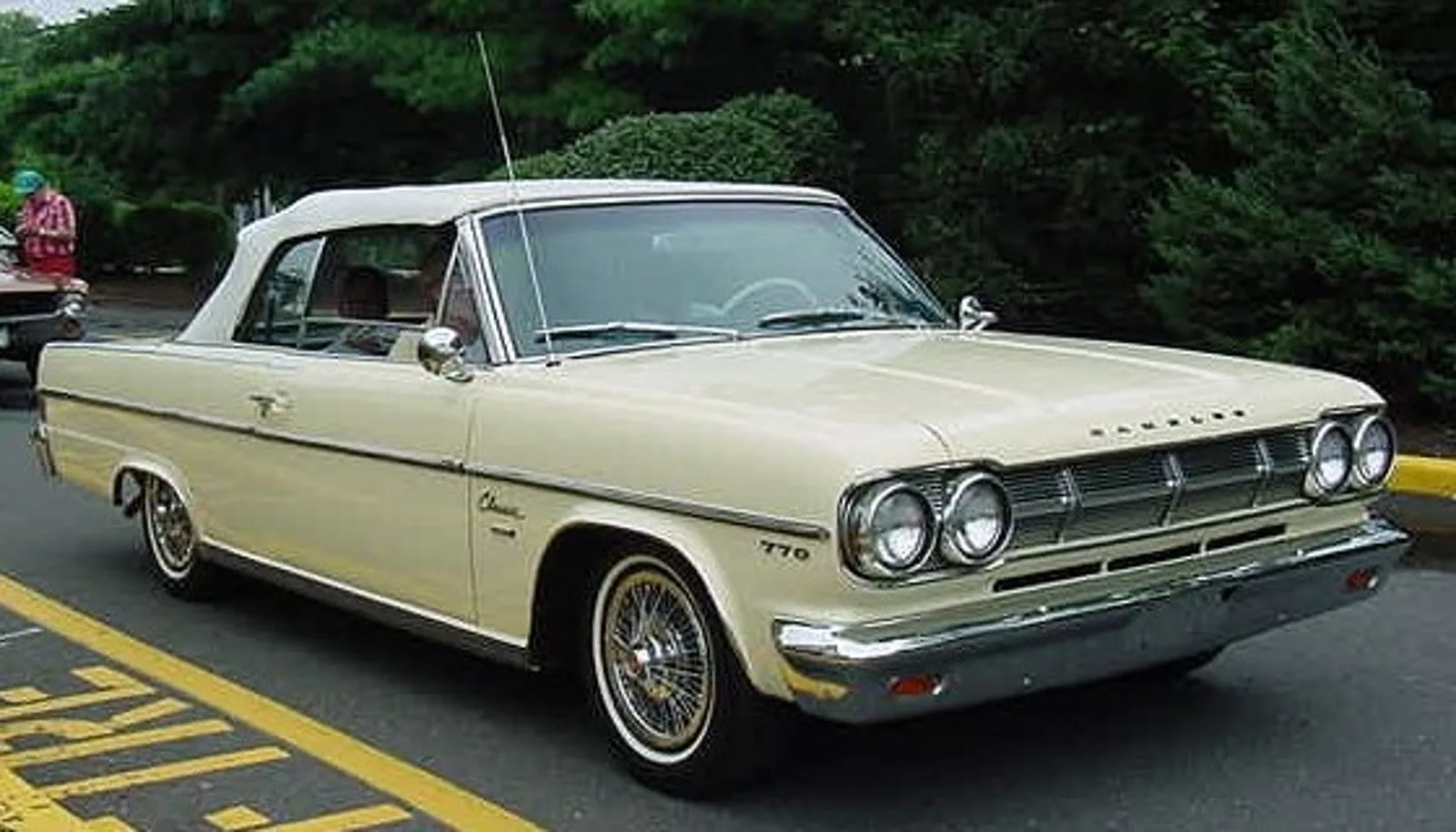
For 1961 the Six and the Rebel V8 were both renamed the Rambler Classic, ending the separate Six and V8 model names. The Six had been AMC's top seller in 1960, with 297,368 units, so the rename covered the company's biggest model.
The change was a clean-up of the Rambler line names. The Rambler Classic name replaced the earlier model labels.
What were the Rambler Six and V8 specifications?
| Specification | Detail |
|---|---|
| Model years | 1956-1960 |
| Wheelbase | 108-inch (2,743 mm) |
| Length (1956) | 191.14 in (4,855 mm) |
| Six (1956) | 195.6 cu in (3.2 L) Typhoon, 120 bhp (89 kW; 122 PS) |
| Six (1958-1960) | 195.6 cu in (3.2 L), 127 hp (95 kW; 129 PS) |
| V8 (1957 on) | 250 cu in (4.1 L), 190 bhp (142 kW) |
| Automatic | GM-produced Hydramatic, sold as Flashaway; Flash-O-Matic in 1958 |
| Fuel economy (1956) | Up to 30 mpg-US (7.8 L/100 km; 36 mpg-imp) claimed |
| Fuel economy (1957) | 32 mpg-US (38 mpg-imp) with overdrive |
| Sales (1956) | 66,573 cars, of which 20,496 were badged as Hudsons |
| Sales (1960) | 297,368 Rambler Six units |