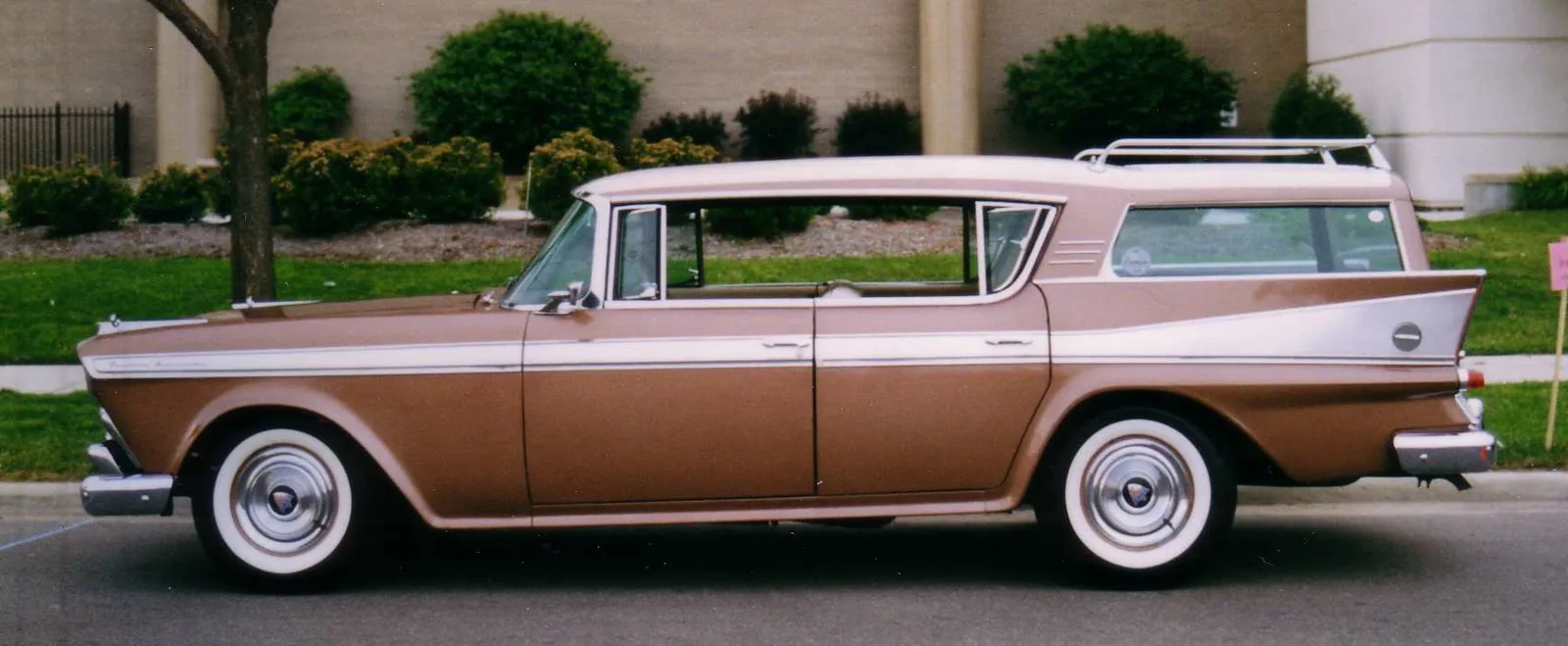
From a Packard stopgap to the Jeep Cherokee XJ, Dick Teague gave American Motors a look of its own between 1959 and 1983.
Dick Teague was an American industrial designer and vice president of styling at American Motors, where he worked from 1959 until 1983. He designed the Gremlin, Pacer and Javelin, plus the Jeep Cherokee XJ launched in 1983. His work spanned General Motors, Packard and Chrysler before AMC.
Richard Arthur 'Dick' Teague was an American industrial designer who worked for General Motors, Packard, Chrysler and American Motors. He became AMC's vice president of styling in 1964 and held the post until he retired in 1983. The Pacer, Gremlin, Javelin and Jeep Cherokee XJ all carry his influence.
Where did Dick Teague start his career?
Teague began as an apprentice stylist in the General Motors design studios in 1947, after building model airplanes and hot rods as a schoolboy. He later worked in the Cadillac advanced design group. Before that, he had been a technical illustrator for Northrop, a job that followed high school graduation in 1942.
Teague's childhood was hard. A car accident when he was six left him with impaired sight in one eye and no depth perception. That impairment exempted him from military service during the Second World War, so he moved into drawing and design work. His schoolmates included the future automotive entrepreneur Ed Iskenderian and the land speed racer Stuart Hilborn.
At Northrop his boss, Paul Browne, had once been a designer at General Motors. Browne recommended evening study at the ArtCenter College of Design, and that advice shaped the training that carried Teague into the studios of Detroit's biggest carmaker.
A stylist who made small budgets look bold, from the Pacer to the Jeep Cherokee XJ.
How did his time at General Motors and Packard shape him?
At General Motors he worked on the 1950 Oldsmobile Rocket and was dismissed in 1952. At Packard he became chief stylist, gave the Clipper its own identity, and restyled the whole line for 1955 on limited budgets. His last Packard design, the Executive, appeared in mid-1956.
Packard's management wanted the Clipper relaunched as a separate make, and Teague gave the two models their visual distinction. He also designed the 1953 Balboa and 1954 Packard Panther show cars. By 1957 the Packard styling team had moved to Chrysler, where Teague became chief stylist, but the internal rivalry between William Schmidt and Virgil Exner made the job difficult.
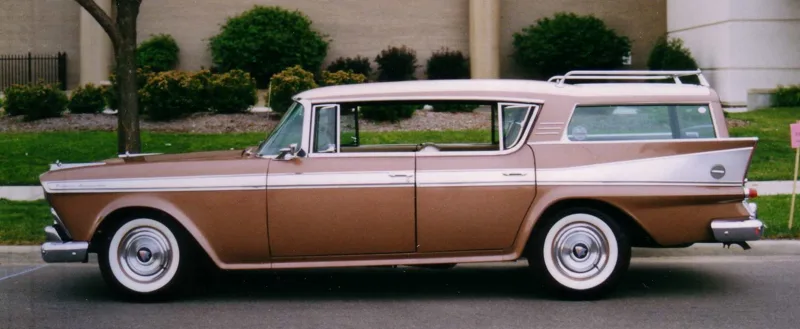
The last Packard show car, the Predictor, also came from his pen, along with a planned 1957 lineup that followed its lines. The merged company closed its Detroit Packard operations in mid-1956, which stopped that plan. Teague designed the 1957 Clipper instead, a Studebaker-based stopgap that critics mocked. He then took non-automotive work at an independent firm before joining American Motors in September 1959.
What did Teague design at American Motors?
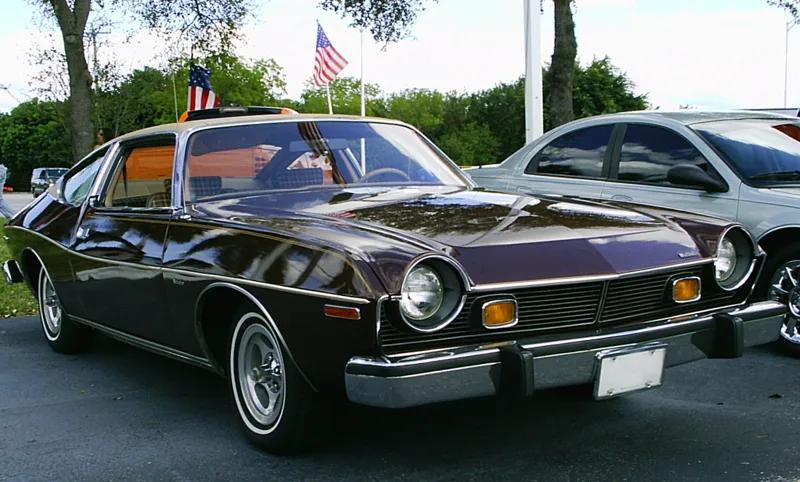
Teague led AMC styling from 1961 and was credited with the Gremlin, Pacer, Matador coupe, Rambler American, Javelin, AMX and Hornet. He also reshaped the compact platform into the Concord, Spirit and Eagle. Much of this work reused existing tooling, which was essential for a company with little money.
Compared with the spending norms of the industry, his team achieved remarkable results with very little money. For the 1964 Rambler American he reused the doors from AMC's larger cars, and the Project IV concept cars of the mid-sixties showed what interchangeable parts could do.
On one concept the right front fender was a match for the left rear fender, and doors, hood and deck lid could be swapped between platforms. The 1970 AMC Hornet's front and rear bumpers came from one stamping, a saving that the company valued.
How did the Tarpon and Javelin come about?
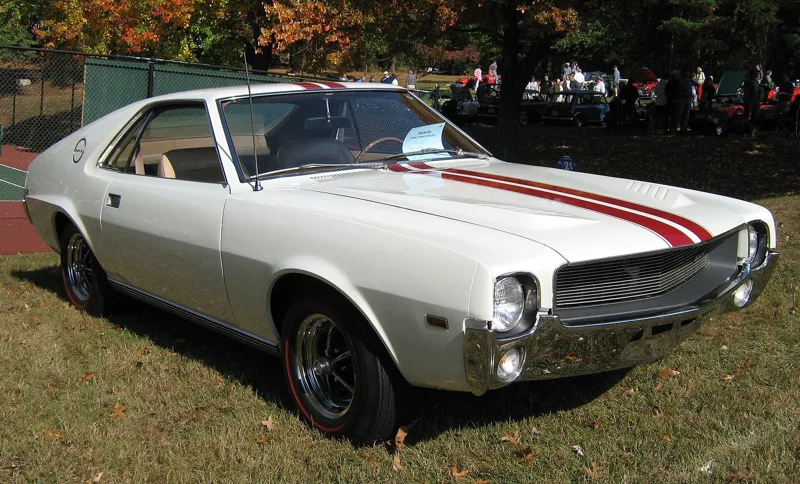
Teague's team set out to build a sporty fastback without paying for new tooling. Teague chose the name Tarpon for the show car and Marlin for the production version. The two-seat AMX prototypes from Project IV evolved into the Javelin, which AMC aimed at a younger, performance-minded buyer.
Roy Abernethy, AMC's president, wanted a sports-type car rather than a four-seat coupe, and Teague's team adapted to that wish. Teague was a two-seater at heart. He created a non-running show model in late 1965, and the production AMX became the car he most wanted to drive.
The new models reflected AMC's wish to shed its economy-car image and reach a younger, performance-minded market. Executives such as Robert B. Evans pushed for the two-seat AMX to reach showrooms quickly, and the strategy was to make AMC's cars stand out from the pack.
How did the Ambassador show his approach?
The 1965 Ambassador was reskinned and rode a longer wheelbase, and Teague's crisp, angular lines helped it reach record sales. The 1967 to 1969 Ambassador followed, and it looked distinctive despite a limited parts budget. Its body was exactly the kind of result the company wanted from a small team.
Colleagues said Teague could do more with less than most car designers, usually because he had no alternative. AMC gave him few resources, and his team reworked existing stampings to make each new model look fresh.
Why is the Pacer considered significant?
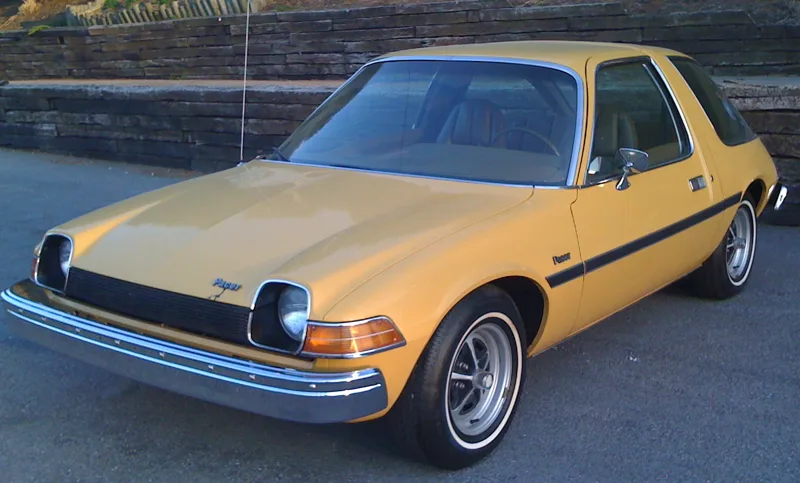
The 1975 production Pacer is often treated as the first cab-forward design. It was a 'wide-small' car, small on the outside but made to feel large inside, and it gave drivers the impression of a conventional large American car. Its styling was offbeat and appealing, with large areas of glass.
Its low beltline meant the side window never lowered fully out of sight, so Teague built large bolsters into the inner door panels. In 1971 he had proposed a light front-drive economy car with a compact Wankel engine, but the production car was a compromise shaped by many constraints. AMC was the smallest US carmaker, and it felt it had to innovate or die.
Roy Chapin formalised the strategy in the firm's Philosophy of Difference. AMC could not copy its rivals, so it set out to open market segments of its own, and the Pacer was one of the results.
What did Teague predict about the future of cars?
Teague and Brooks Stevens presented ideas about future cars at a 1963 SAE meeting in Detroit. Teague expected conventional gasoline engines to keep improving, and his evolutionary forecast proved accurate. He believed the 1970 car would still be basic transportation rather than a home on wheels.
Popular Mechanics also called on Teague to predict design trends for the decade ahead while he was chief stylist. He foresaw glass being shaped in new ways, and suspension systems improving. Stevens was the more dramatic futurist, but Teague's sober predictions were the ones that came true.
What happened to the AMX/3?
The AMX/3 was a 1970 project in which AMC worked with Giotto Bizzarrini on chassis engineering and with BMW on road testing. Teague steered it toward production at a reasonable cost. Its quoted top speed was 260 km/h (160 mph), but US bumper rules and other issues threatened its price.
The car was among the most unusual to come out of Detroit at the end of the decade, combining internationally sourced components. Teague had pushed hard for it, but forthcoming bumper regulations and other problems would have pushed its price beyond commercial viability. The car stayed a prototype, and Teague's own collection later included a rare AMX/3.
How did the Jeep Cherokee XJ become his last production design?
Teague's Cherokee XJ launched in the United States in 1983 with a practical look that recalled older Jeeps. It stayed in production through 2001, and in China until 2005. It was the last Teague design to reach production, and Robert Cumberford named it among the 20 greatest cars of all time.
Teague said the team did not want to lose the flavour of the older Jeeps, and the XJ was built to look like something a buyer would take into rough country. Its design stayed unchanged for much of its long run. Earlier, from 1982, Teague had worked on the X-58 front-drive sedan for a late 1986 introduction and its companion X-59 for the 1988 model year.
Giorgetto Giugiaro styled the exterior of the four-door sedan that became the Eagle Premier. After Chrysler acquired American Motors in 1987, Teague designed or assisted with the Grand Cherokee ZJ and the Neon, so his influence reached well beyond the AMC badge.
Why did the 1980 minivan idea go nowhere?
In 1980 Teague tried, unsuccessfully, to persuade AMC's board to build a minivan concept. The board did not agree, and Chrysler later adopted the same formula for its own vans. The episode shows how tight budgets limited what AMC could attempt, whatever its designers proposed.
Teague led a talented team whose members included Vince Geraci, Norbert Ostrowski, Fred Hudson, Chuck Mashigan and Bob Nixon. Their work reflected the Philosophy of Difference, which left AMC needing to open markets that rivals were not serving.
What awards and collections marked his career?
In 1976 Chilton's Automotive Industries magazine gave Teague its Man of the Year honour for his designs and his Pacer work. He was the first automotive stylist to receive that award in its 12-year history. Later, in 1999, he received the EyesOn Design Lifetime Design Achievement Award.
Teague was also a dedicated historian and collector. He restored a 1904 Packard from the marque's earliest production, and had owned 285 vehicles by 1970. At retirement he said he had owned 400 or 500 cars. Four-wheel drive interested him well before AMC bought Jeep, and he owned several World War II vehicles.
He donated his rare AMX/3, along with most of his papers, to the San Diego Automotive Museum. In 2012 he was inducted posthumously into the AMC Hall of Fame as the Person of American Motors, an honour created to recognise an executive or employee whose work was instrumental to the company's success.
Career at a glance
| Period | Employer | Role | Notable work |
|---|---|---|---|
| 1947 to 1952 | General Motors | Apprentice stylist, then Cadillac advanced design | 1950 Oldsmobile Rocket |
| 1952 to 1957 | Packard | Chief stylist | 1953 Balboa, 1954 Panther, 1957 Clipper |
| After 1957 | Independent design firm | Non-automotive assignments | Work before joining AMC |
| 1959 to 1983 | American Motors | Styling director from 1961, vice president from 1964 | Gremlin, Pacer, Javelin, Jeep Cherokee XJ |