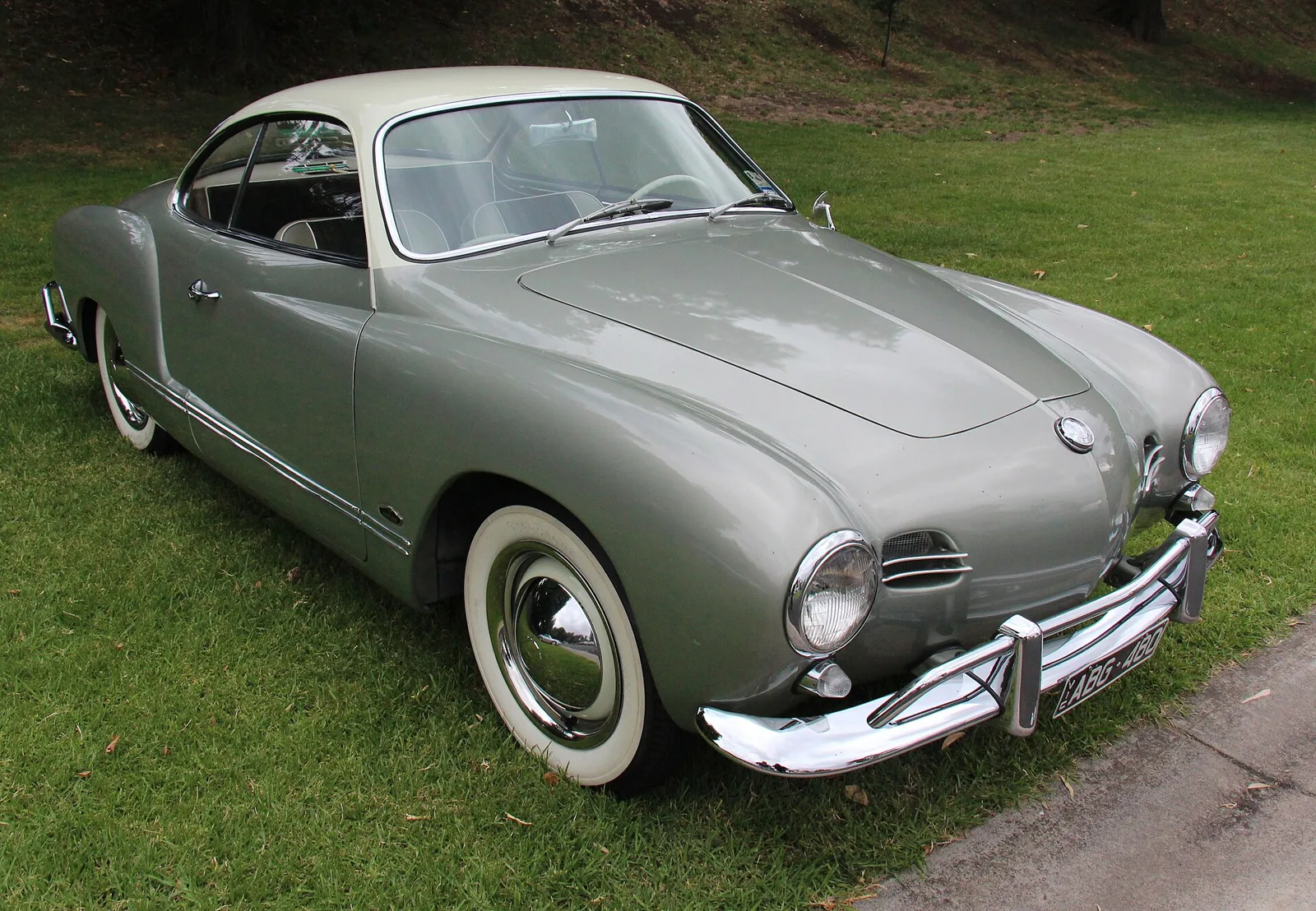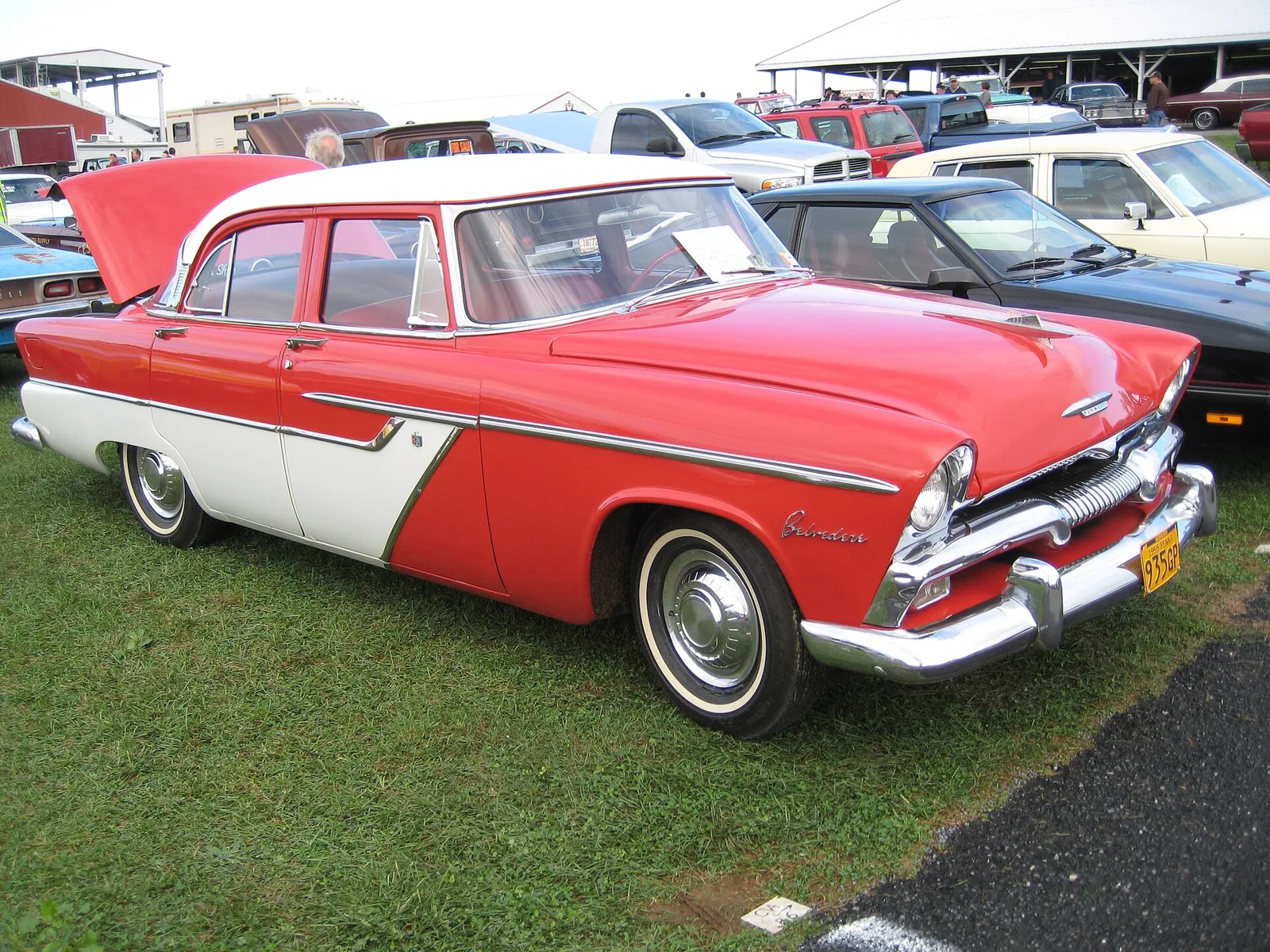
The Studebaker and Chrysler stylist whose 1955 to 1963 Forward Look made tailfins a feature of American cars, and whose concepts fed into the Volkswagen Karmann Ghia.
Virgil Exner was an American automobile designer for Chrysler and Studebaker, born in 1909 and died in 1973. He led Chrysler's Forward Look programme, which popularised tailfins from 1955, and he also shaped the Volkswagen Karmann Ghia.
Virgil Exner was an American automobile designer who worked for several manufacturers, most notably Chrysler and Studebaker. He is best known for the Forward Look design programme at Chrysler, which made tailfins a central feature of American cars from 1955. His concepts also influenced the Volkswagen Karmann Ghia.
Who was Virgil Exner?
Virgil Max Ex Exner Sr. was born on 24 September 1909 and died on 22 December 1973. He was an American automobile designer for several companies, most notably Chrysler and Studebaker, and his fondness for tailfins rested on both appearance and aerodynamics.
He was born in Ann Arbor, Michigan, and was adopted as a baby. He showed an early interest in art and automobiles, two interests he later combined in his work. He attended Buchanan High School in Buchanan, Michigan, and then enrolled in art classes at Notre Dame, in Indiana. He left after two years in 1928 for lack of funds, and he worked as a helper at an advertising art studio, where he was soon promoted to drawing advertisements for Studebaker trucks.
Exner's Forward Look at Chrysler made tailfins a defining element of American car design in the 1950s.
How did Exner's career start at General Motors and Loewy?
His move from advertising art to car design began at General Motors, where Harley Earl hired him. Before he turned 30, Pontiac styling came under his control, which made him responsible for the look of an entire marque. In 1938 he joined Raymond Loewy's firm, Loewy and Associates, which worked on wartime vehicles and on Studebaker's 1939 to 1940 cars. The firm was an industrial design house, and its work ranged from military vehicles to passenger cars. Loewy was one of the best-known industrial designers of the period, which gave the firm a strong public profile.
Working for Loewy was frustrating. Exner had trouble getting his boss to notice his work, since that boss had to approve every part of the designs. Roy Cole, Studebaker's engineering vice president, encouraged him to develop backup designs at home in case the relationship with Loewy broke down.
What did Exner design at Studebaker?
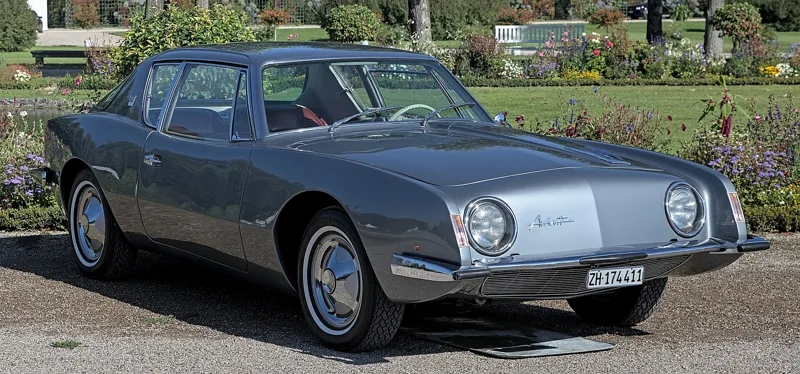
In 1944 Loewy dismissed Exner, and Studebaker hired him directly in South Bend, Indiana. There he worked on some of the first all-new post-war Studebaker styling. He was the final designer of the 1947 Starlight coupe, although Loewy received the public credit. The company's post-war advertising stressed its early lead in new styling, and the Starlight was central to that message. The historian Robert Bourke acknowledged Exner as the car's final designer.
He alone is named as the inventor on the design patent for the Starlight. The rivalry with Loewy grew until Exner had to leave Studebaker, and Cole gave him introductions to Ford and Chrysler.
How did Exner join Chrysler?
In 1949 Exner joined Chrysler's Advanced Styling Group, alongside Cliff Voss and Maury Baldwin. Luigi Segre, known as Gigi, of the Italian coachbuilder Carrozzeria Ghia became another key partner, and their work together produced several concept cars through the 1950s.
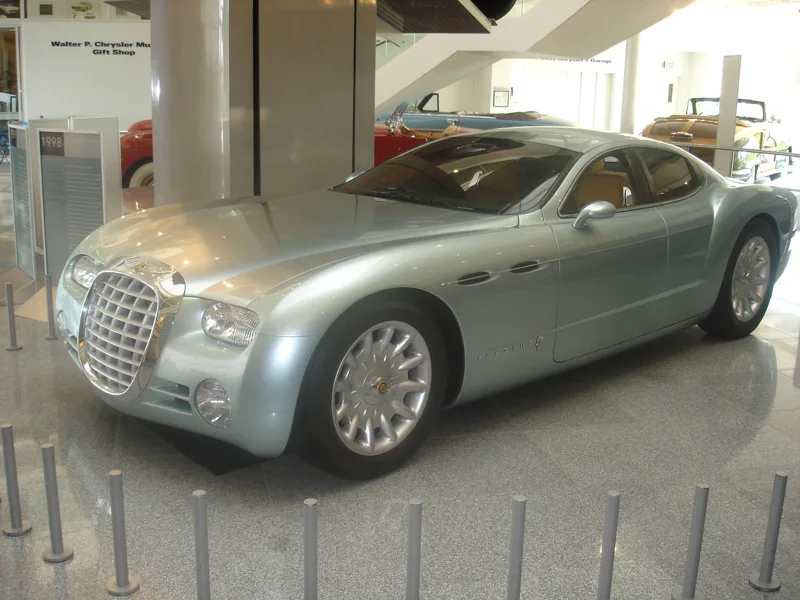
The Chrysler and Ghia alliance produced the 1952 K-310, the Dodge Firearrow series, the Chrysler d'Elegance and the DeSoto Adventurer. The two men became close, and that friendship tied the companies together through the decade.
What was the Forward Look?
The Forward Look was Exner's design programme for Chrysler, which produced sleek, lowered cars with tailfins from 1955. It was introduced as The New 100-Million Dollar Look and produced long-hooded, wedge-shaped models such as the Chrysler 300 letter series. Before 1955 Chrysler products were regarded as solid and well engineered but dully styled, and the Forward Look greatly improved the company's image. Ford and General Motors were quick to work on catching up.
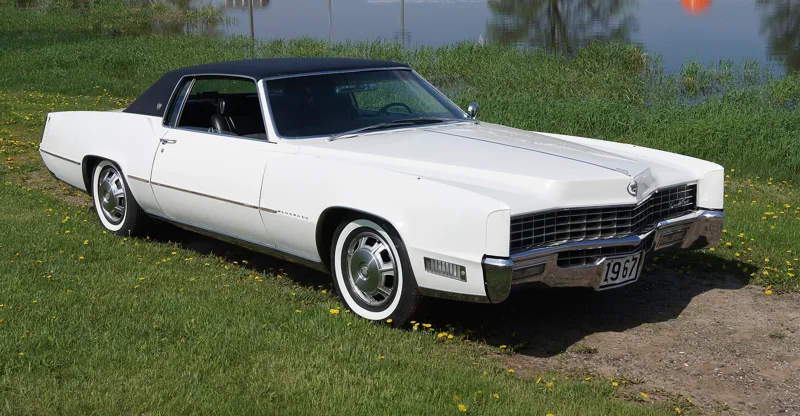
Exner adopted fins after seeing the tailfins of the 1948 Cadillac, which were inspired by the Lockheed P-38 Lightning. He believed the fins had aerodynamic benefits, and he tested the idea in a wind tunnel at the University of Michigan. He also liked how they looked, and he lowered the roofline to make the cars sleeker.
The 1957 models were long, low and wide, with sweeping fins, and they caused a sensation across the North American industry. When GM designer Chuck Jordan glimpsed the 1957 Chrysler lineup through a fence, his boss Bill Mitchell won over GM's leadership, including styling chief Harley Earl, to reopen the completed designs for 1959, with an alternative design for each car line. In 1957 Exner also gave a presentation to the Society of Automotive Engineers that set out his theories on tailfins, body design and aerodynamics. The 1957 Imperial had compound curved glass, the first of its kind in a production car, and Plymouth advertised its 1957 cars under the banner Suddenly, it's 1960!
In June 1957 Exner and his team received a Gold Medal Award from the Industrial Designers Institute. In 1958 Chrysler's Forward Look sponsored the TV special An Evening with Fred Astaire.
Why did Exner leave Chrysler?
Exner suffered a heart attack in 1956 while working on the 1961 models, and he returned to work in 1957. On 25 July 1957 Chrysler made him its first vice president of styling. A rumour that General Motors was shrinking its cars then led Chrysler president Lester Lum Tex Colbert to order the 1962 design reduced in size.
Exner disagreed, believing the change would make the cars ugly. While he was still recovering, the 1962 models he had taken credit for were downsized by associates, which changed their look. Sales dropped, and buyers disliked the smaller Plymouth and Dodge cars.
Chrysler fired him, though it allowed him to remain a consultant and retire on a pension at 55. Elwood Engel, lured from Ford, took his place. Engel had earned high regard for the classic 1961 Lincoln Continental.
How did tailfins fall out of favour?
Tailfins lost popularity by the late 1950s, when Cadillac and Chrysler competed in escalating fin size. By the early 1960s fins were seen as a symbol of American excess. The 1961 models are regarded as the end of the Forward Look era.
Exner later called the downsized 1962 Plymouth and Dodge models plucked chickens, and he thought Chrysler's executives had nibbled away at the cars to lower their cost. It later turned out that the rumour about Chevrolet was false, but by then the cars had already been changed. Fins still had aerodynamic value, however, and in the early 1970s Porsche 917 racing cars had fins that recalled Exner's designs.
What was Exner's role in the Karmann Ghia?
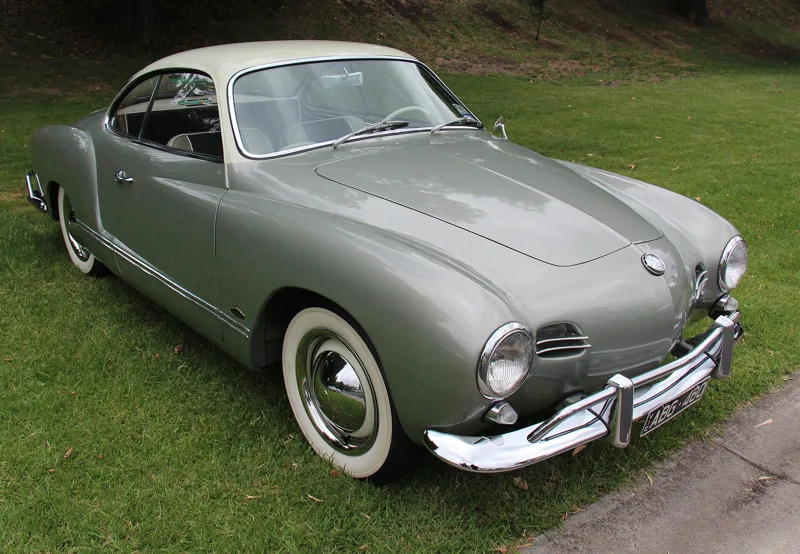
The Volkswagen Karmann Ghia was shaped by three parties: Volkswagen, which wanted a halo model above its Beetle, Carrozzeria Ghia under Luigi Segre, and the Karmann coachbuilding firm of Wilhelm Karmann. Its styling bore strong similarities to Exner's Chrysler d'Elegance and K-310 concepts.
The styling drew on work by Segre, Mario Boano, Sergio Coggiola and Giovanni Savonuzzi, and each of them later claimed credit at different times. No single individual attribution was ever made. The roles were never documented before the designers died, and earlier cues from Mario Boano also appeared in the work.
Segre and Exner became close friends and travelled through Europe together. Segre was focused on raising the international reputation of Carrozzeria Ghia, while Wilhelm Karmann had inherited the family coachbuilding business and wanted more of Volkswagen's convertible work. In 1955 Exner saw the Karmann Ghia and was pleased, since it drew heavily on his Chrysler d'Elegance. Segre later sent him the first production Karmann Ghia imported into Michigan as a thank you.
Volkswagen approved the design in November 1953, and the car debuted at the 1955 Paris Auto Show. Production began at Ghia and then moved to Osnabruck, and more than 445,000 were built over 19 years with few changes. The production run was long enough that the car changed little over nearly two decades.
What did Exner do after leaving Chrysler?
After Chrysler he remained a consultant to several car firms, working from Birmingham, Michigan. He worked with his son Virgil Exner Jr. on watercraft for the Buehler Corporation, and in 1963 he developed a set of Revival Cars, each with production plans attached.
His attempt to revive Duesenberg failed, but he was instrumental in reviving Stutz in the 1970s. He also worked with Ghia on the 1965 Bugatti Type 101 and Mercer-Cobra concepts, and on a 1966 Duesenberg prototype.
Seeking to reenter the automotive field, he drafted a resume describing extensive and successful experience in all areas of the business. He died of heart failure on 22 December 1973 at William Beaumont Hospital in Royal Oak, Michigan.
What did the 1961 and 1962 Chrysler models look like?
The 1962 Plymouth and Dodge cars that followed were a different proposition. Exner's team had finished a finless Plymouth for 1962, the second car of its size without fins since 1955, and it was described as a strikingly attractive automobile.
Once the cars were downsized, critics and buyers found the styling odd next to the more restrained Ford and General Motors products. The smaller Plymouth and Dodge models lost much of the appeal of the Forward Look, and sales fell.
Which vehicles did Exner design?
Exner's design list is long and spans Chrysler, DeSoto, Plymouth, Dodge, Imperial and Studebaker, along with several concept cars built with Ghia. Notable entries include:
- Studebaker Champion and Studebaker Starlight
- The C-200 concept from Chrysler, and the 1953 d'Elegance concept that Volkswagen's Karmann Ghia later borrowed from
- The Chrysler 300 cars in both letter and non-letter series, plus the 1957 New Yorker
- Imperial models from 1955 to 1961, and the 1957 Diablo concept built with Ghia
- Valiant, Savoy, Fury, Belvedere, XNR and Suburban from Plymouth
- Coronet and Firearrow cars from Dodge
- DeSoto models of the late 1950s and early 1960s, including the Adventurer
- Concepts of 1965 and 1966, from Bugatti, Mercer-Cobra and Duesenberg, several built with Ghia
- Stutz Blackhawk
What is Exner's legacy?
Exner's Forward Look at Chrysler made tailfins a defining element of American car design in the 1950s. His work at Studebaker and Chrysler also shaped the Karmann Ghia, and his career is recorded in Peter Grist's 2007 biography, Virgil Exner: Visioneer.
In 1993 Chris Voss, who worked in Exner's studio, recalled that Exner took the Karmann Ghia as the greatest compliment. Commentators have said his Chrysler work changed the course of automotive design. Fins stayed tied to his name because he argued for them on both looks and aerodynamics.
| Years | Employer | Role | Notable work |
|---|---|---|---|
| 1938 | Loewy and Associates | Designer | Wartime vehicles and Studebaker's 1939 to 1940 models |
| 1944 | Studebaker | Designer | 1947 Starlight coupe, final designer |
| 1949 | Chrysler | Advanced Styling Group | K-310 and d'Elegance concepts with Ghia |
| 1955 to 1961 | Chrysler | Forward Look design | Tailfin models, 1961 models the last of the programme |
| 1957 | Chrysler | First vice president of styling | Elected 25 July 1957 |
| 1962 | Chrysler | Fired | Downsized 1962 models, lower sales |
| 1963 | Consultant | Revival Cars | Series of revival designs with production plans |