AMC's Matador and Dodge's Coronet, two intermediate family cars that overlapped on the road from 1971 to 1976, compared on heritage, engines, racing, sales and the names behind them.
The AMC Matador and Dodge Coronet were intermediate family cars that overlapped from 1971 to 1976. The Matador was a 1971 rebrand that ran to 1978, while the Coronet dated to 1949 and returned as an intermediate in 1965 with a long muscle-car history.
The AMC Matador and the Dodge Coronet were both intermediate family cars that shared the road in the early 1970s. The Matador was a new name for AMC's mid-size line from 1971, while the Coronet had been around since 1949 and returned as an intermediate in 1965.
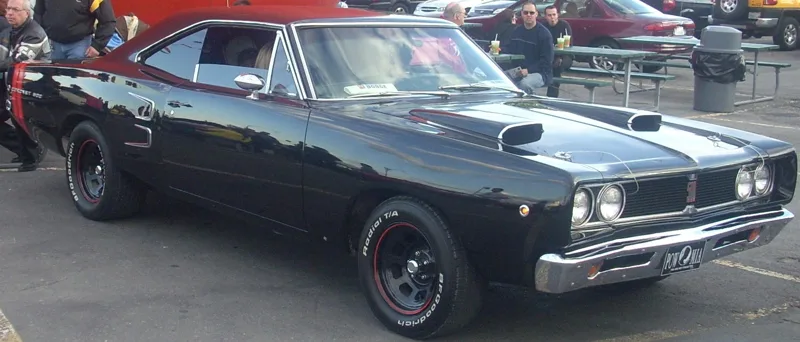
The two cars had different heritages. The Matador was built on a rebrand and a new family image, while the Coronet carried a long muscle-car story that included Chrysler's Hemi engines and factory performance versions.
Where did the two nameplates start?
The Coronet dates to 1949, when it was Dodge's highest trim line as a full-size car, and its first gearbox was a Gyromatic four-speed fluid semi-automatic, where the accelerator did the upshifts after the driver selected high range. It came back as a mid-size model in 1965, riding a 117-inch wheelbase, and its muscle-car era began with 383 and 426 wedge cubic-inch engines before the 426 Chrysler Hemi arrived in 1966.
The Matador arrived for 1971 as AMC's attempt to reposition its intermediate models. The Rebel name had come to carry counterculture-era baggage, so AMC adopted Matador, a name meant to suggest power and precision despite its link to bullfighting.
The intermediate class of the time ran wheelbases of 114 to 118 inches and weights of 3,500 to 3,700 pounds, with 300 to 360 cu in V8s common, and the Matador was pitched into that heartland.
Market research shaped the change. The name tested well with buyers, though AMC encountered problems in Puerto Rico, where the word kept its bullfighting sense of killer.
In 1972 the company handed its $15 million national advertising to Cunningham and Walsh, which ran the self-deprecating What's a Matador? campaign. The idea was to build awareness of a nameplate that consumers did not yet recognise.
Two family intermediates with V8 ambitions, one built on a rebrand and a 1974 coupe, the other on a long line of Hemi-powered performance.
What did the 1971 Matador share with the Ambassador?
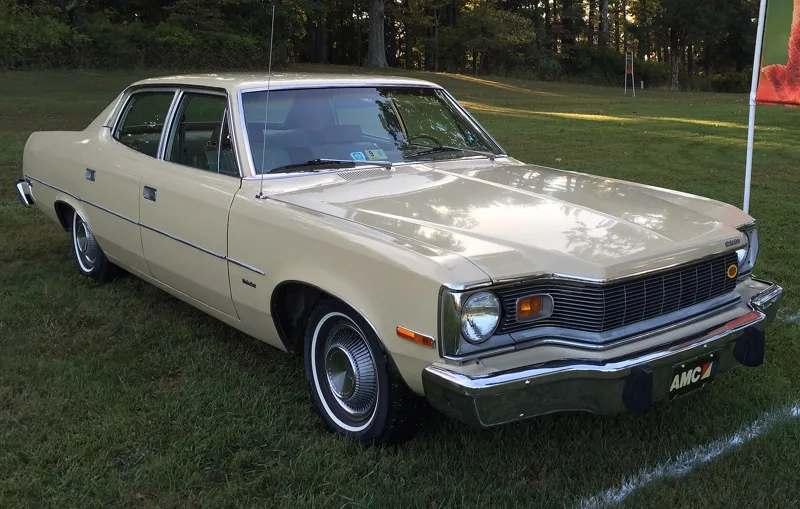
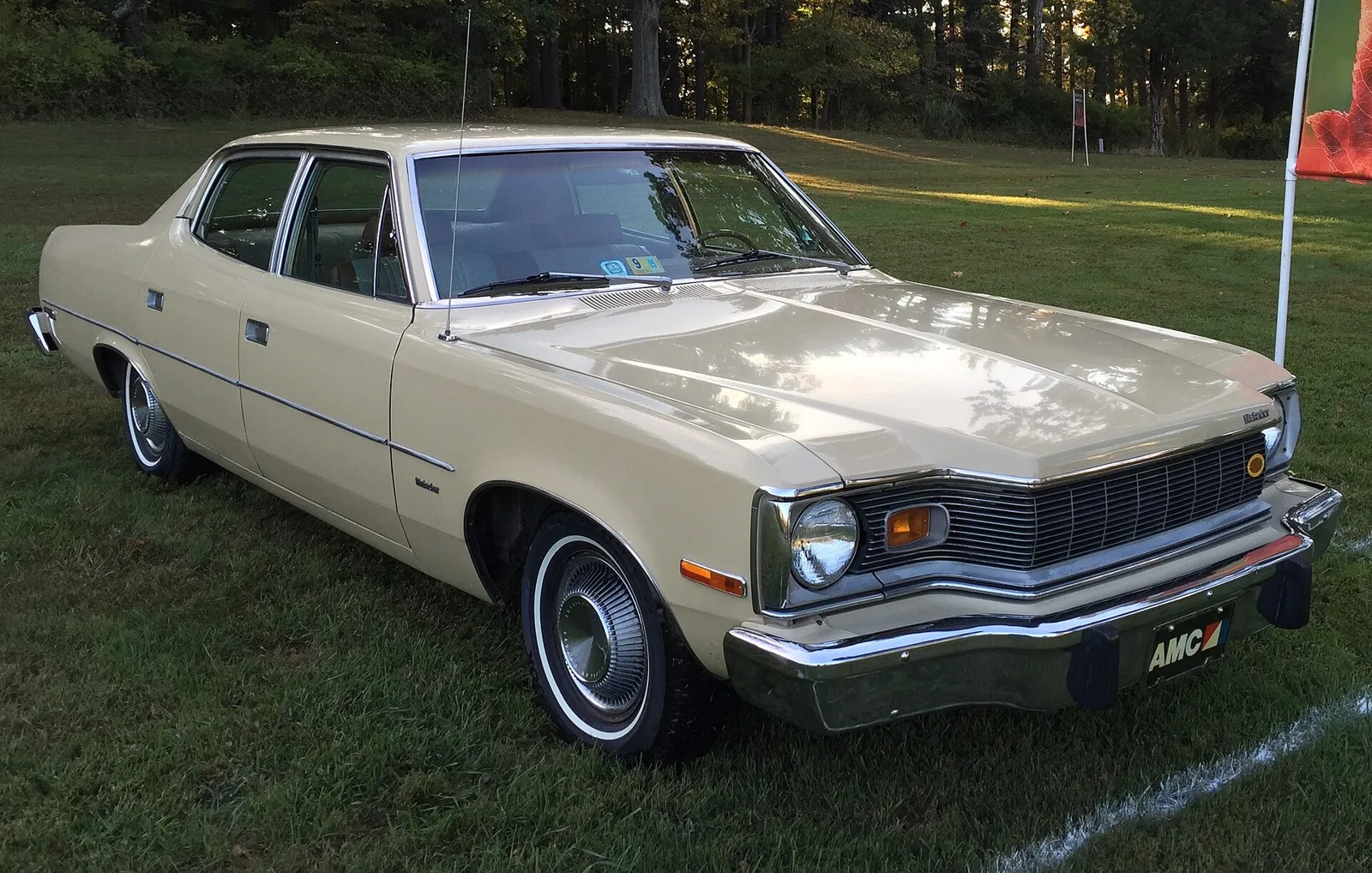
The Matador's rear half, from the firewall backwards, came from the same design as the full-size AMC Ambassador, while its nose was new. Its wheelbase was lengthened by 4 inches (102 mm) for 1971 to improve the ride.
The wagon offered an optional rear-facing third-row bench, lifting capacity from six to eight passengers, and a two-way tailgate that could drop downward or swing open like a door.
The sedan and hardtop carried over the 1970 Rebel's rear bumper and chrome garnishes, but the backup and tail lights moved into three square lenses with rounded corners.
Which engines did the Matador and Coronet offer?
The Machine Go package, offered as an option rather than a model, brought 360 and 401 cu in V8s at premiums of $373 and $461 over the standard 304.
The 1971 Matador range began with a 232 cu in (3.8 L) six on sedans and a 304 cu in (5.0 L) V8 as standard on the bigger cars, plus a 258 cu in (4.2 L) six and larger V8s such as 360 and 401 cu in. Transmissions were a column three-speed manual, a Borg-Warner automatic and a floor four-speed with V8s.
In 1972 the Matador offered five V8 outputs from 150 bhp to 255 bhp, all designed for no-lead, low-octane gasoline. The Chrysler-built TorqueFlite replaced the older automatic, and the optional four-speed was dropped.
The Buyer Protection Plan that AMC introduced in 1972 was pitched as a way to win customers over, and dealers judged it a success at drawing buyers into showrooms.
The Coronet's engine story runs from a 230 cu in flat-head six rated at 103 hp in 1949 to Chrysler's 354 cu in Hemi. In 1955 the lineup offered a 230 cu in straight-six and a 270 cu in V8 rated at 175 hp, alongside a 315 cu in Hemi.
The 1956 D-500 used a 315 cu in V8 with hemispherical heads, rated at 260 bhp with 330 lb-ft of torque. The 1957 D-501 then took the 354 cu in Hemi with 340 bhp, and only 101 were built.
| Feature | AMC Matador | Dodge Coronet |
|---|---|---|
| Span covered | 1971 to 1978 | 1949 onward; intermediate from 1965 to 1976 |
| Body styles | Two-door hardtop and coupe, four-door sedan, station wagon | Sedans, hardtops, convertible and station wagon |
| Platform | Shared body aft of the firewall with the Ambassador in 1971; full-size platform from 1974 | Intermediate B-body on a 117-inch wheelbase in 1965 |
| Base engine | 232 cu in six in 1971 | Six-cylinder and V8 engines; 273 cu in V8 standard on the 500 in 1965 |
| Top V8 | 255 bhp in 1972 | 354 cu in Hemi at 340 bhp in 1957 |
| Performance option | Machine Go package with 360 and 401 cu in V8s | D-500 and D-501 Hemi cars; D-500-1 NASCAR car |
| Racing | Five NASCAR first-place wins, 1972 to 1975 | D-500-1 built for NASCAR at 285 bhp |
| Sales | No figure given | Slightly over 209,000 in 1965 |
| Notable appearance | Coupe featured in a 1974 Bond film with special effects | JATO rocket car publicity in 1958 |
What made the D-500 special?
The D-500 was the first high-performance Dodge built at the factory for production, sold through dealers on Coronet bodies. Outwardly it gave little away apart from modest checkered-flag decals and numerals on its hood and rear deck.
Under the bonnet was the 315 cu in unit, fitted with hemispherical heads, a unique camshaft and a four-barrel Carter carburettor, with a 9.25:1 compression ratio and 260 bhp. Stiff front coil springs and heavy-duty shock absorbers tightened the handling, and the car sat 1.5 inches (38 mm) lower than the standard Dodge.
Did either car race?
The Matador did, with factory backing. Two-door models with factory support raced in NASCAR between 1972 and 1975, with Mark Donohue and Bobby Allison taking wins. Allison took a 1975 victory in the Southern 500 at Darlington, which stood out, and the Matador secured five first-place wins in NASCAR overall.
The Coronet's racing link was the D-500-1, the first 500 required by NASCAR and intended for competition. It had stiffer suspension, larger valves and two four-barrel Carter carburettors, producing 285 bhp, which made it the fastest factory car that year.
Dodge also staged a stunt in 1958. A JATO rocket unit was bolted to a Coronet, which then tore across the El Mirage dry lake to publicise the brand's front drum brakes, and a TV advertisement with the Lawrence Welk Show followed. It was a marketing moment more than a sporting one.
How did police and film work shape each image?
The Matador sedan became a popular police car in the United States, and the 1971 to 1975 sedans and wagons, fitted with police-spec kits and either 360 or 401 cu in V8s, were regarded as superior tactical vehicles. Agencies such as the LAPD preferred them for toughness and stability at speed.
In The Man with the Golden Gun the 1974 coupe appeared with special effects that showed it flying. Matadors in police livery also turned up in 1970s television shows and films.
Dodge police cars left their own mark on the Coronet. The D-500's heavy-duty shock absorbers used the same valving as Dodge police cars, a reminder that fleet work influenced both brands.
How did the Matador's second generation change?
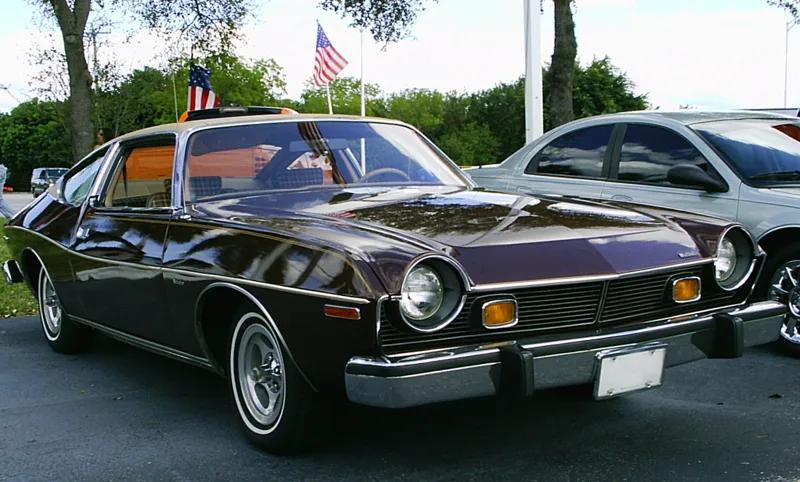
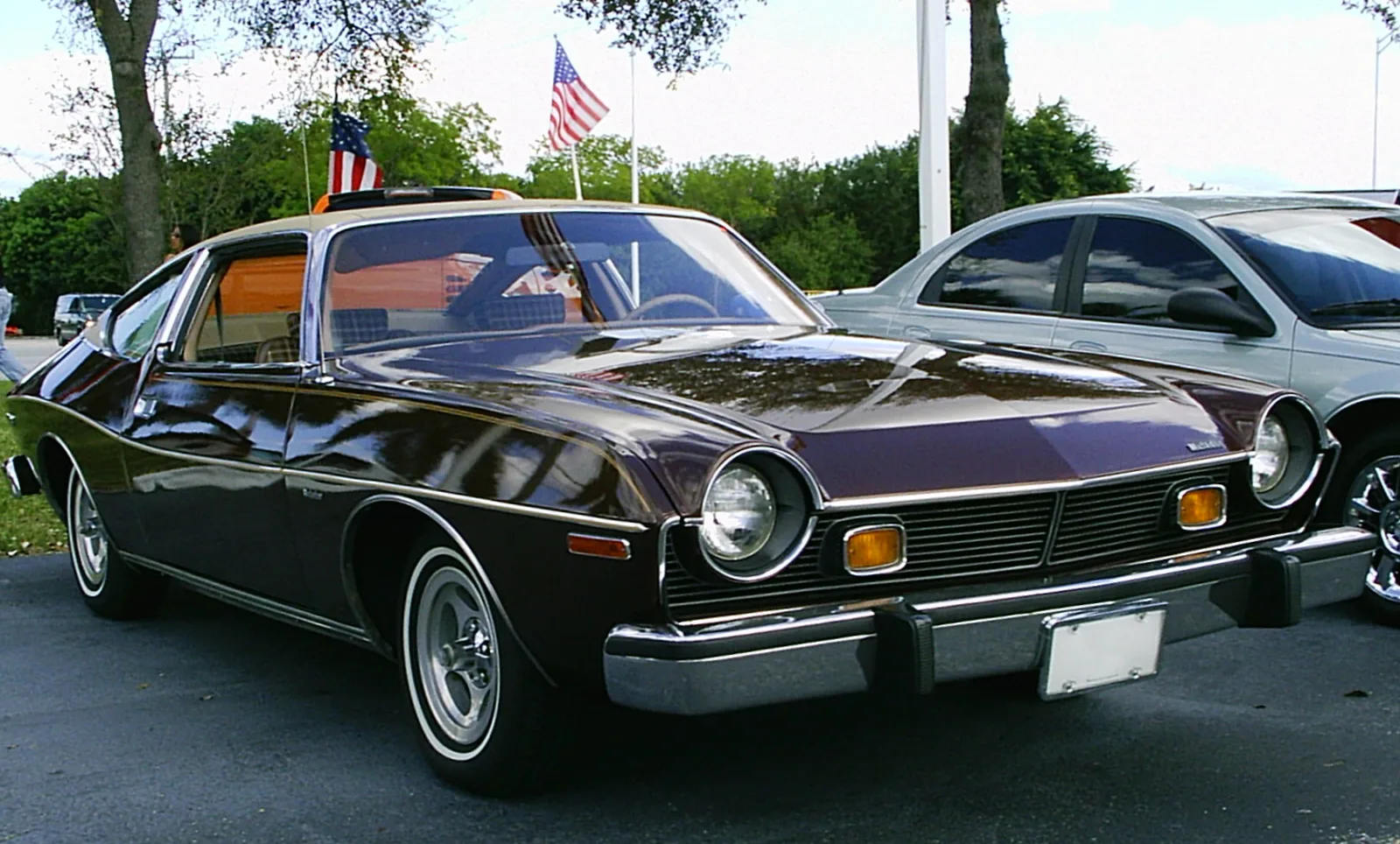
The 1974 Matador moved to a full-size platform and added a two-door coupe with a steel hoop in its B-pillar, a response to federal roof-crush rules. Reviewers called the fastback shape and flared fenders polarising.
AMC's coupe was longer, wider and lower than the sedan and wagon, and it shared no design elements with them. Its premium Barcelona and Oleg Cassini versions targeted the personal luxury segment.
Once the Ambassador ended in 1974, the Matador took over as AMC's top full-size car.
What did the Coronet's 1950s changes involve?
The Coronet was totally redesigned for 1953, with an optional 241 cu in Red Ram Hemi and a one-piece windshield. Virgil Exner's restyle for 1955 made the car lower, wider and longer than its prewar predecessor, and the Coronet stayed at the base end of Dodge's range until 1959.
Chrysler's first fully automatic, the two-speed PowerFlite, arrived in 1954 as an extra-cost choice across the Dodge line.
The 1958 and 1959 Coronets used a DeSoto Fireflite chassis, with a 230 cu in L-head six or a 325 cu in Red Ram V8. The 1959 Silver Challenger added a two-door body in silver paint with extra equipment at no added cost.
The 1959 Silver Challenger wore silver paint and was offered only as a two-door. Pricing started at $2,297 for the six and rose to $2,408 for the V8, and a three-speed manual was standard with an automatic as an option.
Water leaks were a common complaint. In a September 1957 survey, 37.6% of six-cylinder owners and 34.8% of V8 owners said there were too many leaks, and Popular Mechanics recorded 0 to 60 mph in 12.3 seconds for a V8 car.
How did the Coronet return as an intermediate?
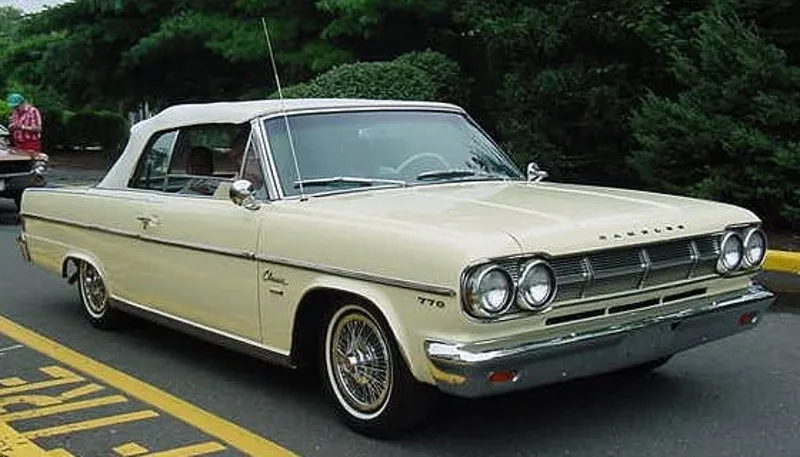
The Coronet came back in 1965 as an intermediate on a 117-inch wheelbase, and Dodge sold slightly over 209,000 that year, making it the most popular model in the Dodge range.
About 33,300 Coronet 500s were sold in 1965, the first year of the model.
Its trims were the base Coronet, the 440 and the Coronet 500. The 440 name did not denote engine size, despite what many assumed, and the 500 came with a 273 cu in V8, bucket seats and a padded dash as standard.
Which buyer suits each car?
The Matador suits a buyer who wanted a family car with a broad V8 option list, a NASCAR pedigree and, from 1974, a coupe with real visual drama. Its police and racing credentials are the strongest facts for that buyer.
The Coronet suits a buyer drawn to intermediate cars with deep muscle-car and Hemi history, from the 1957 D-501 to the 1965 Coronet 500. Its later 1960s and 1970s years are covered only briefly in the record here.
Sales are the gap in the record. The Coronet's 1965 total of slightly over 209,000 is recorded, but no Matador sales figure is given, so volume cannot settle the contest. Without a Matador sales figure, the two cars can be compared on design and performance, but not on market success.