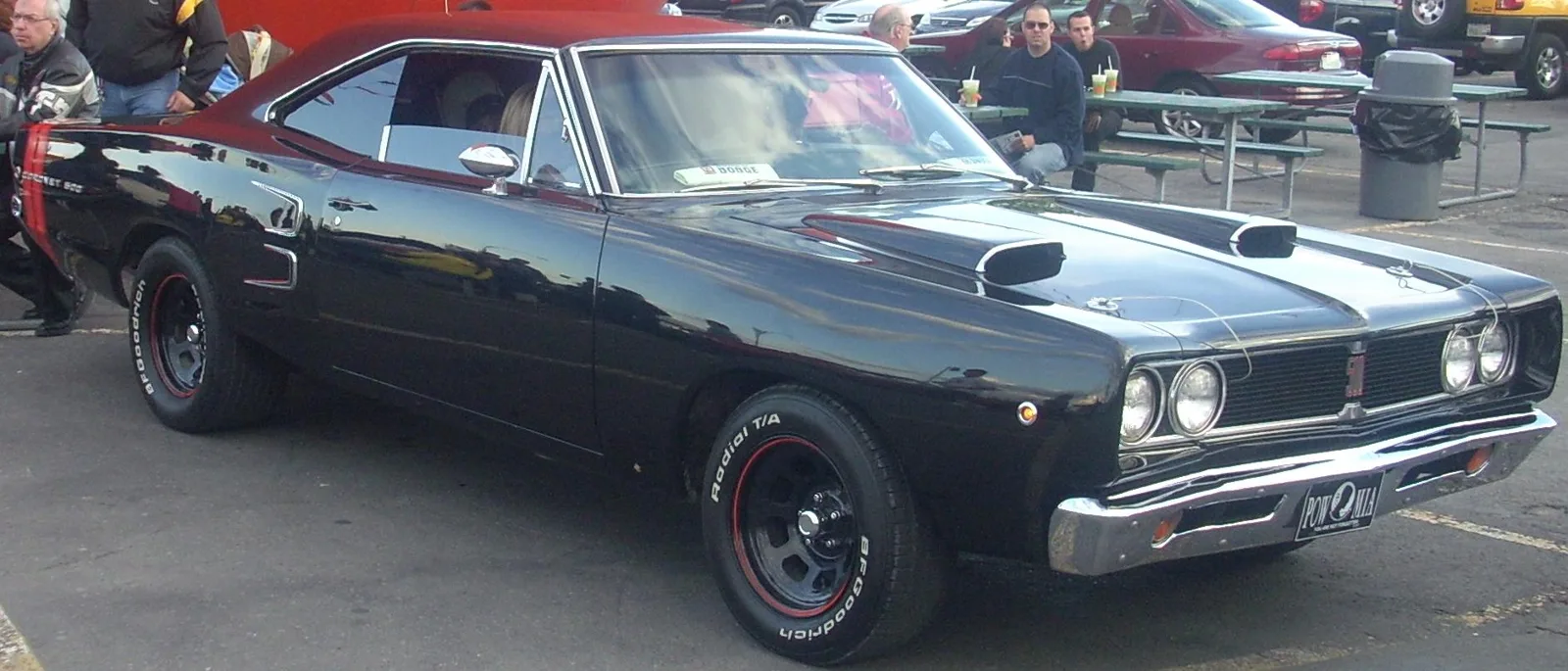
From the 1949 full-size car to the 1965 intermediate range and the Hemi and Super Bee muscle versions, the Coronet name carried Dodge for decades.
The Dodge Coronet was a Dodge model marketed in seven generations, starting as a full-size car in 1949. It returned on intermediate models from 1965 to 1976, with muscle versions such as the Hemi-powered R/T and the Super Bee. The name was later passed to the mid-size Monaco from 1977.
The Dodge Coronet was a car that Dodge marketed in seven generations, sharing a name across bodies that carried different equipment levels. It began as a full-size car in 1949, returned on intermediate models from 1965 to 1976, and produced some of the company's best-known performance cars. The name refers to a crown worn by royalty.
Where did the first Coronet fit?
The Coronet was introduced in 1949 with the division's first postwar body styles, as the highest trim line in the Dodge range. Lower trims were the Wayfarer and Meadowbrook, with the Wayfarer built on a shorter 115 inch wheelbase. The only engine was a 230 cubic-inch flat-head straight six making 103 hp (77 kW) gross.
Chrysler's Gyromatic transmission was a fluid-driven semi-automatic with four forward speeds. Drivers used the clutch to select the high range, after which the accelerator pedal handled the upshifts and downshifts, so the clutch was not needed in stop-and-go driving once underway.
The 1950 facelift gave the cars a grille with three heavy horizontal bars and a large chrome plaque bearing the Dodge crest. A limited production limousine was an extended version of the Coronet and was related to the DeSoto Suburban.
A name that began as Dodge's top full-size car and ended as a mid-size Monaco after seven generations.
How did the 1950s Coronets change?
The 1953 car was totally redesigned and gained an optional 241 cubic-inch Red Ram Hemi engine. Its windshield became one-piece, electric wipers were standard, and the car set more than 100 land speed records at the Bonneville Salt Flats. The redesign followed facelifts in 1950 and 1951 that had kept the body styles largely unchanged.
The 1954 range added the Dodge Royal above the Coronet, and the year also brought Chrysler's first fully automatic transmission, the two-speed PowerFlite, as an extra-cost option. For 1955 the Coronet dropped to the lower end of the Dodge range, and Virgil Exner's restyled bodies were lower, wider and longer than before.
What engines and bodies did the 1955 Coronet offer?
Two V8 engines were offered in 1955: a 270 cubic-inch unit with polyspheric heads producing 175 hp (130 kW), and a 315 cubic-inch Hemi. The base 230 cubic-inch straight six was carried over, and the Coronet was the only line to carry the 270 cubic-inch V8 in the base range.
Coronets came in all body styles except the convertible. Sedans wore Coronet badges, the station wagon was called the Suburban, and the hardtop coupe was officially named the Lancer while still wearing only Coronet badges.
What was the D-500?
The D-500 was Dodge's first factory high-performance production car of its kind, a 1956 tribute to the D-500-1 Super Stock model. Its 315 cubic-inch Hemi made 260 bhp (190 kW) with 330 lb ft (450 N m) of torque, and it had a 9.25:1 compression ratio and a four-barrel Carter carburettor.
The D-500 had stiff front coil springs and heavy-duty Oriflow shock absorbers, and it sat 1.5 inches (38 mm) lower than the standard Dodge. The D-500-1 was the first 500 made, required by NASCAR for competition, and its 285 bhp (213 kW) made it the fastest car of its year from the factory.
How did the D-501 and the 1958 cars work?
The 1957 D-501 replaced the D-500 as the top Coronet and used a 354 cubic-inch Hemi, with engines left over from the 1956 Chrysler 300B production. Twin Carter four-barrels fed a 10.0:1 compression ratio to produce 340 bhp (250 kW). Only 101 D-501s were built.
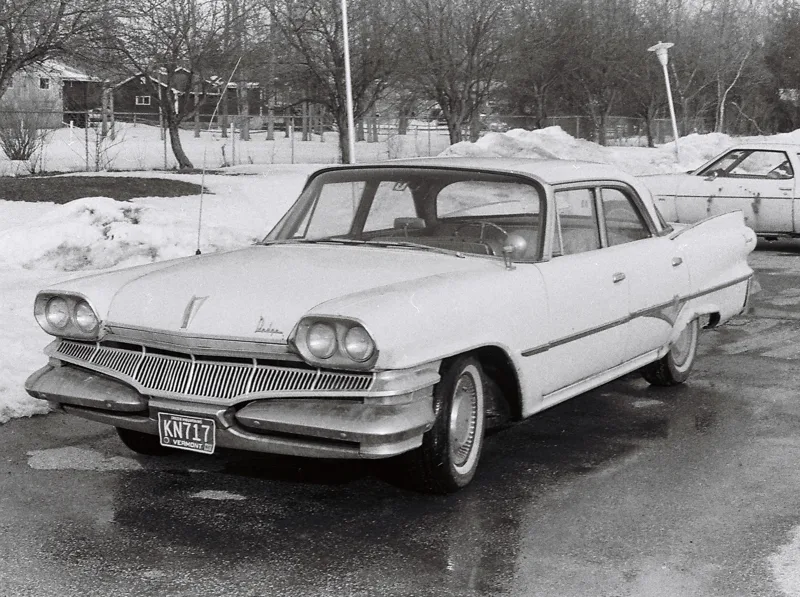
The 1958 and 1959 Coronet, Royal and Custom Royal used a DeSoto Fireflite chassis with less ornate trim. Power came from a 230 cubic-inch Getaway straight six or a 325 cubic-inch Red Ram V8. A JATO rocket unit was fitted to a 1958 Coronet at El Mirage dry lake to publicise Dodge's dual-leading shoe drum brakes.
What was the 1959 Silver Challenger?
The Silver Challenger was a limited-edition two-door Coronet sold only in silver paint, with a six-cylinder version at $2,297 and a V8 at $2,408. It came with extras at no added cost, including premium whitewall tyres, full wheel covers and wall-to-wall carpet.
The Silver Challenger was related to the Dodge Matador and sat on a 122 inch wheelbase, with a length of 217.4 inches. Its upholstery combined silver metallic vinyl with black Manchu fabric, and a three-speed manual was standard with an automatic optional.
How did the 1965 intermediate Coronet sell?
The Coronet returned for 1965 as an intermediate B-body on a 117 inch wheelbase, while the Polara continued as the full-size Dodge. Dodge sold slightly over 209,000 Coronets that year, making the car the most popular model the company sold. The range started with the base Coronet, the Coronet 440 and the Coronet 500.
The 440 designation did not indicate engine displacement, a point that helped sales to an extent. The Coronet 500 came with a 273 cubic-inch V8 as standard in 1965, with bucket seats and a chrome floor console, and slightly over 33,300 of them were sold that year.
How did the R/T and Hemi cars work?
The Coronet R/T arrived in 1967 as a two-door hardtop or convertible with the 440 cubic-inch Magnum as its standard engine, rated at 375 bhp. The 426 Hemi was the only engine option, rated at 425 bhp and costing $908. Transmission choices were a heavy-duty three-speed TorqueFlite automatic or a four-speed manual.
From 1967 the Hemi was reserved for the badged muscle cars: the Dodge Charger, the Coronet R/T and the Plymouth Belvedere GTX. In 1966, when the Hemi first became available to the public, a total of 136 Coronet 500 Street Hemis were built.
What was the Super Bee?
The Super Bee arrived in early 1968 as a companion to the Plymouth Road Runner. Positioned a step above Plymouth, it shared the Charger's Rallye instrument cluster and the Coronet 440's rear panel. It was Dodge's low-priced muscle car, priced at $3,027 and built from 1968 to 1971.
In mid-1969 the A12 package added a 390 hp (291 kW) version of the 440 with three 2bbl Holley carburettors on an aluminium intake manifold. It also brought a black fibreglass hood with a forward-facing scoop and red Six Pack decals. The 440 six-pack returned in 1970 as an option exclusive to the Super Bee.
How did the sixth and seventh generations go?
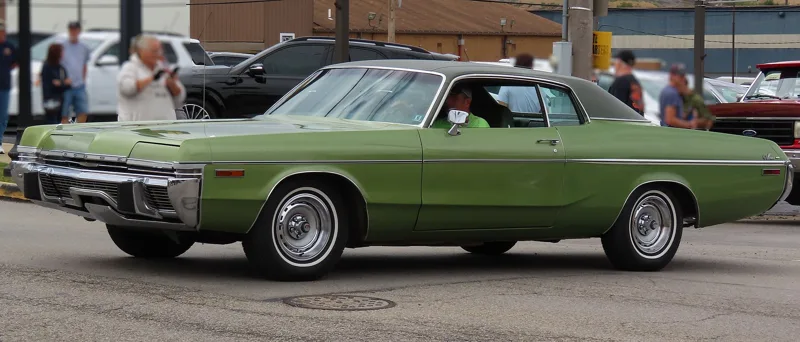
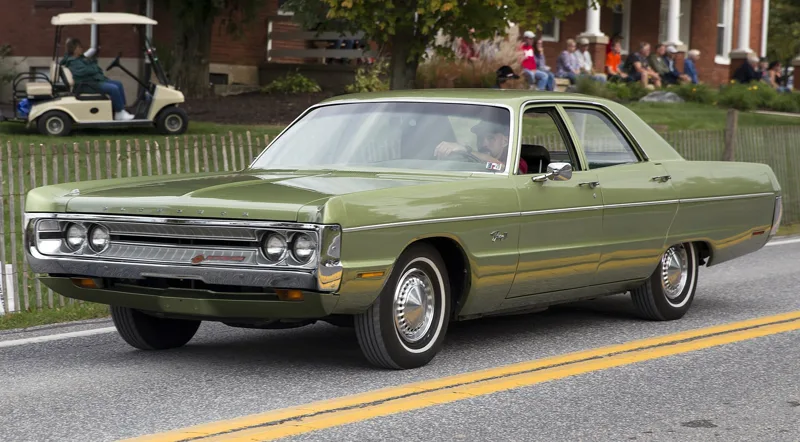
The 1971 Coronet was a twin of the four-door Plymouth Satellite, with more flowing styling, and it covered the sedan and wagon market while the Charger took the coupe. Sales fell sharply through 1973, compared with 196,242 as recently as 1968, because of the fuel crisis and the overlap with other Chrysler brands.
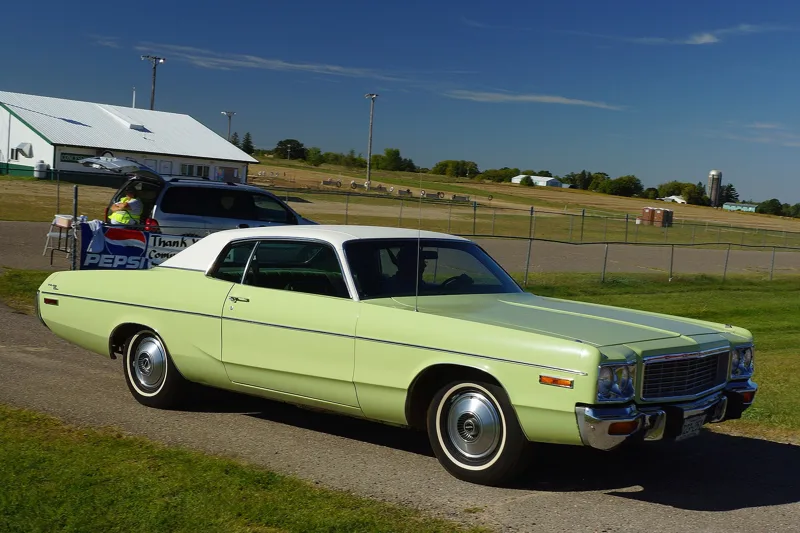
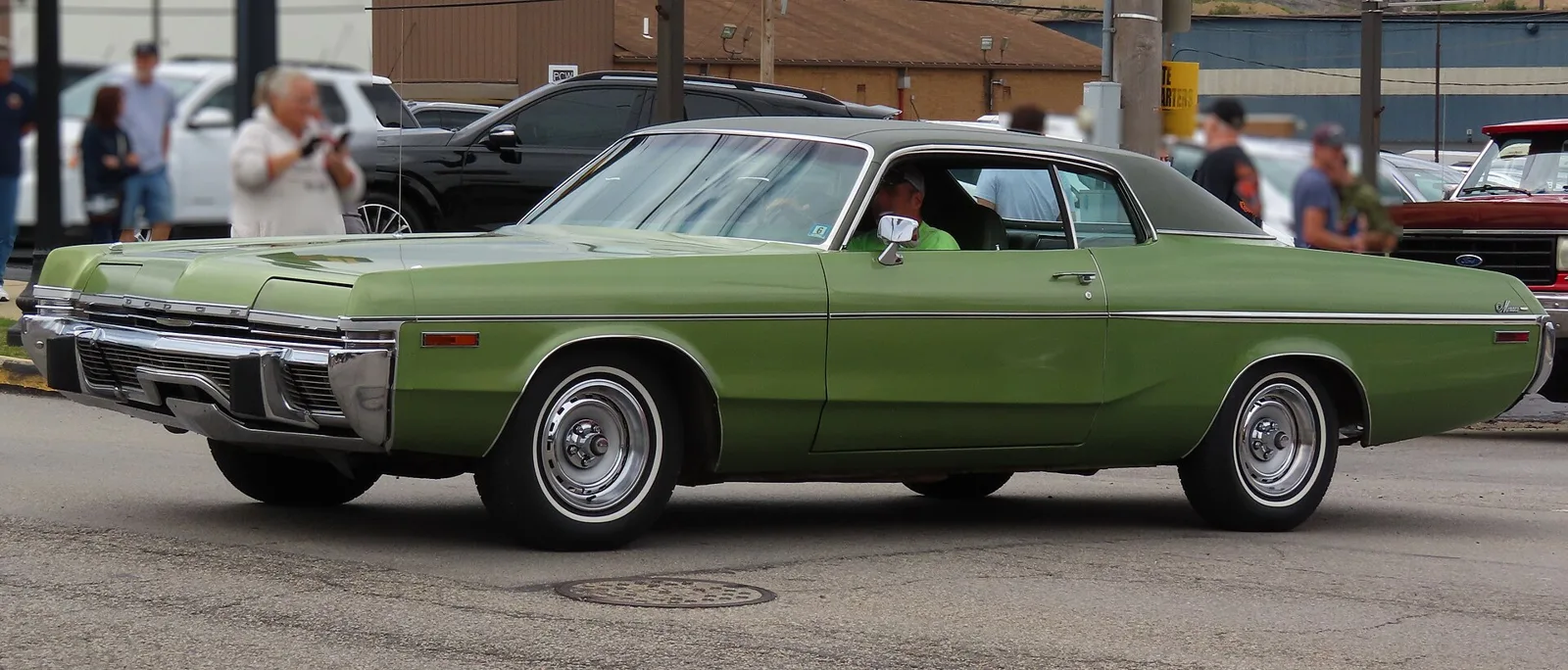
The 1975 Coronet received a squarer body and new front styling with two round dual-beam headlights, shared with its Plymouth Fury stablemate. A Dodge Coronet two-door returned for 1975 after a four model year absence.
Why was the Coronet renamed?
The 1976 model year was the last for the Dodge Coronet, which then offered only four-door wagon and four-door sedan body styles. The Dodge Charger Sport replaced the two-door Coronet for 1976, and for 1977 the mid-size Coronet was renamed Monaco while the full-size model became the Royal Monaco.
How did owners rate the cars in 1957?
Popular Mechanics surveyed owners of both the six-cylinder and eight-cylinder Coronets in September 1957. Many owners complained of too many water leaks, with 37.6% of I6 owners and 34.8% of V8 owners reporting the problem. When the magazine tested a V8 for water resistance, water pooled in two spark plug wells.
Many owners still liked the exterior styling and the ride comfort. The same magazine recorded 0-60 mph in 12.3 seconds on 90 octane gasoline.
What did the 1951 Diplomat and early hardtops add?
In 1951 the Coronet Diplomat became Dodge's first hardtop coupe, with a pillarless steel roof styled after the contemporary Chrysler Newport. The speedometer became circular while the other four gauges stayed rectangular. The Wayfarer line was discontinued by 1953, leaving Coronet, Meadowbrook and Royal names to carry the range.
What did the 1966 and 1967 Coronets add?
In 1966 the Coronet was redesigned, and a Coronet Deluxe was introduced between the base car and the Coronet 440. A four-door Coronet 500 SE joined the line that year, with special SE logos on the C-pillars and seatbacks, and the Coronet 500 wagon did not return until 1968.
A facelift followed in 1967, and the Coronet R/T was introduced that year as a two-door hardtop or convertible. For 1965, the 225 Slant-Six was the entry engine, and 273, 318, 361, 383 and 426 cubic-inch V8s sat above it, with the 426 available in single or dual four-barrel form.
How did the 1968 to 1970 Coronets change?
The Coronet and the Plymouth Belvedere received complete redesigns in 1968, as did the Dodge Charger on the shared B-body platform. The plain base car was discontinued for 1969, and the Deluxe became the entry level until 1970. A Coronet 500 station wagon with simulated woodgrain debuted in 1968.
The 440 Magnum stayed exclusive to the Coronet R/T in 1968, while two 1968 Coronet 440s are known to have carried the 426 Hemi, which was supposed to be limited to the R/T and Super Bee. The 1970 models brought a mild facelift, and the R/T continued as a two-door hardtop and convertible.
Where were Coronets built?
Production took place at three plants: Los Angeles, Lynch Road in Detroit, and St. Louis in Missouri. The Coronet name was later used on Dodge models marketed in Colombia during the 1980s, long after the American car had gone. Those were the plants for the 1965 range.
How did the Coronet ride and handle in the 1970s?
Dodge introduced its TorsionQuiet system in 1973 on mid-size models, adding extra silencers and rubber vibration insulators for a smoother, quieter interior. The sixth generation was a twin of the Plymouth Satellite, and its rear bumper was reworked to meet the 1974 DOT requirements. Slight changes to the grille, headlights and taillights had already followed in 1972.
The sedan body style became the basis of the later Coronets, and of the Plymouth Fury, until the 1978 model year.
Frequently asked questions
When did the Coronet name come back?
The name returned in 1965 on intermediate-sized models and ran until 1976. Its muscle versions included the R/T and the Super Bee, and the earlier full-size cars had carried the name from 1949.
What engine did the 1967 Coronet R/T have?
The standard engine was the 440 cubic-inch Magnum at 375 bhp. The 426 Hemi was the only option at 425 bhp, and it cost $908.
How many D-501 cars were built?
Only 101 D-501s were produced. Each used the 354 cubic-inch Hemi and was the top Coronet of its year.
What replaced the Coronet name in 1977?
The mid-size Coronet became the Monaco in 1977, and its full-size sibling became the Royal Monaco. The Dodge Charger Sport had already replaced the two-door Coronet in 1976.
.jpg)