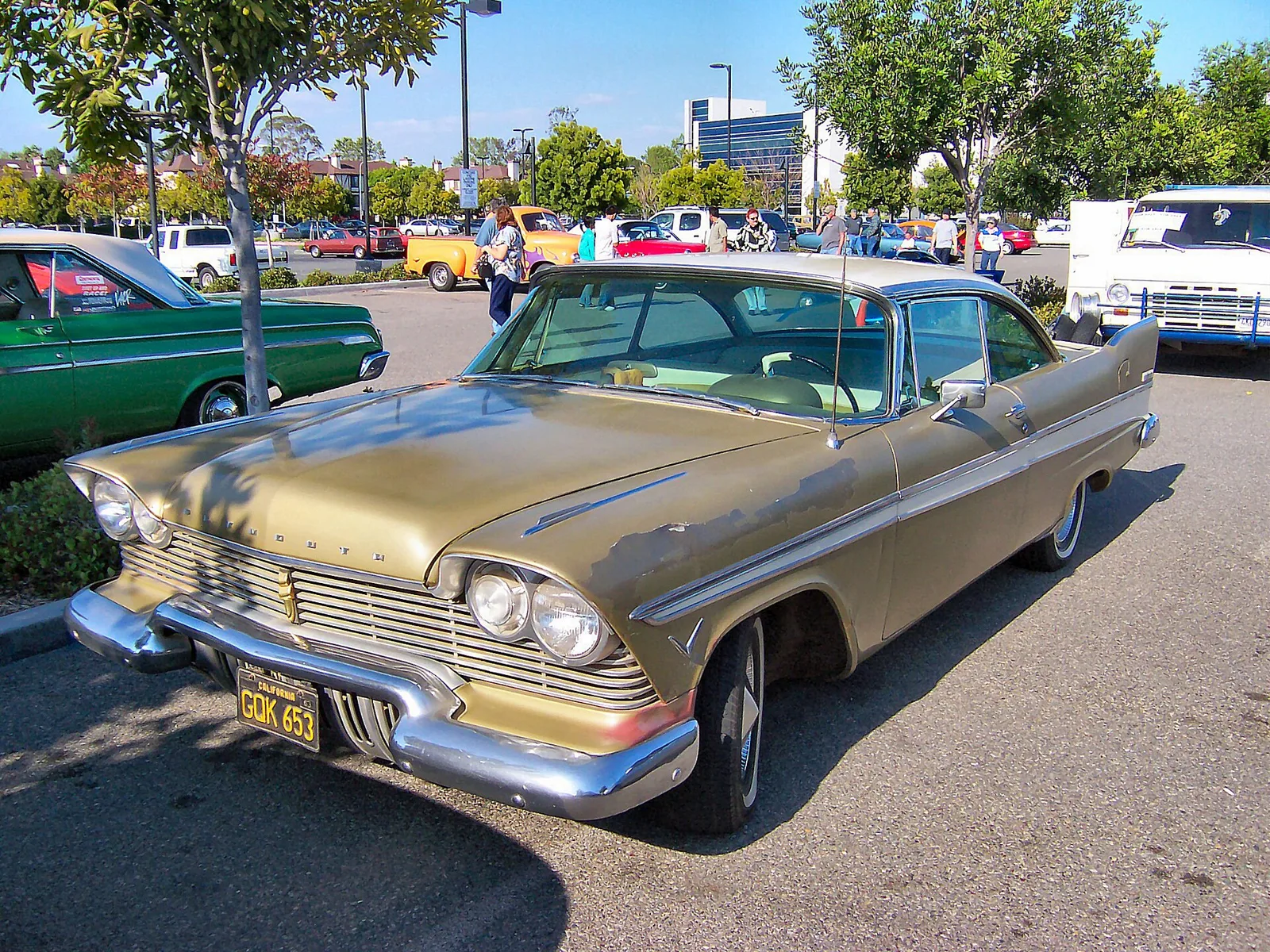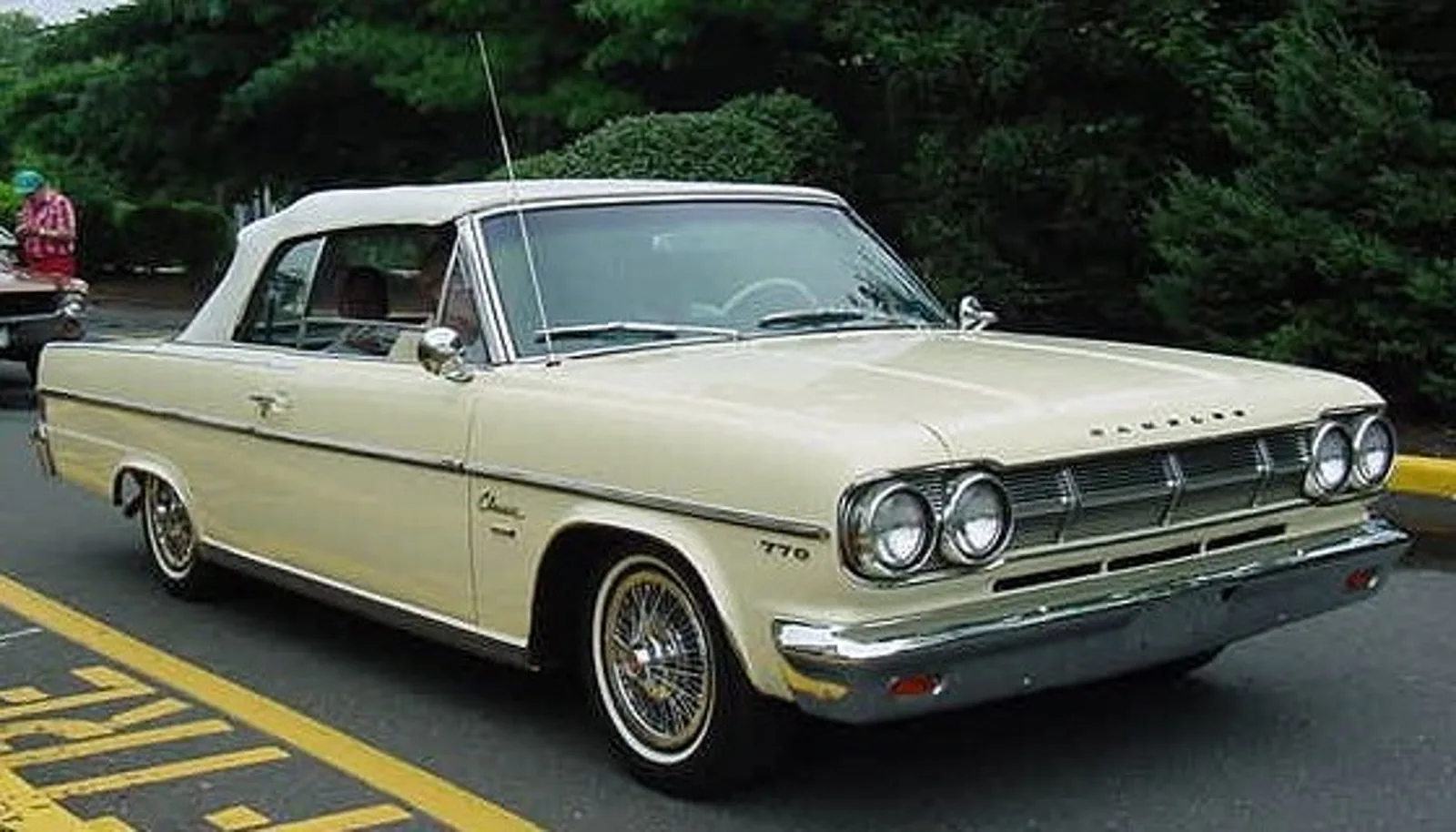
Two American family cars that met in the intermediate class of the 1960s, compared on size, engines, awards and the racing and police records of the Belvedere.
Three generations of the Rambler Classic ran from 1961 to 1966. The Plymouth Belvedere was a family car from 1954 to 1970, and in the mid-1960s the two were intermediates, with the Belvedere remembered for its Hemi-powered Daytona sweep.
The AMC Rambler Classic and the Plymouth Belvedere were American family cars that shared the intermediate class in the middle of the 1960s. The Classic was built from 1961 to 1966 in three generations. The Belvedere was a Plymouth model from 1954 to 1970, and it became an intermediate for 1965, when Plymouth moved the Fury into full size.
Were the Rambler Classic and the Belvedere rivals?
Yes, in the sense that both were intermediate-size cars sold by American makers in the early and middle 1960s. The Classic filled the mid-range of AMC's compact line, while the Belvedere became the intermediate Plymouth after 1965. Their paths overlapped most closely from 1962 to 1966, when both were restyled on a shorter wheelbase.
The two makers came at the class from different directions. AMC was a small independent that worked with an older body shell, and Chrysler was a large company with several divisions. The comparison below follows what each car offered within those constraints.
Two family intermediates of the mid-1960s, one with a Car of the Year title and the other with a Daytona sweep and a police following.
Where did each car come from?
The Rambler Classic began life as the larger of AMC's two Rambler series. It was based on a 1956 design, renamed the Classic for 1961 to separate it from the Rambler American, and given a fresh front end. Edmund E. Anderson designed the 108 in (2,743 mm) wheelbase Ramblers, and AMC kept the basic body shell longer than the Big Three did to recover tooling costs.
The Belvedere started as a name. It was first used for a 1951 pillarless two-door hardtop body style on the Cranbrook, then became a full model line in 1954, replacing the Cranbrook as the top trim. The name is Italian for a beautiful sight or fair view, and Plymouth used it for its top-line cars until 1970.
How did the Classic's design develop?
The 1961 Classic kept the body of the earlier Rambler Six and V8 but gained a one-piece rectangular grille, new fenders and hood, and redesigned bumpers. It came as a four-door sedan and a station wagon, with an optional rear-facing third-row seat, in Deluxe, Super and Custom trim.
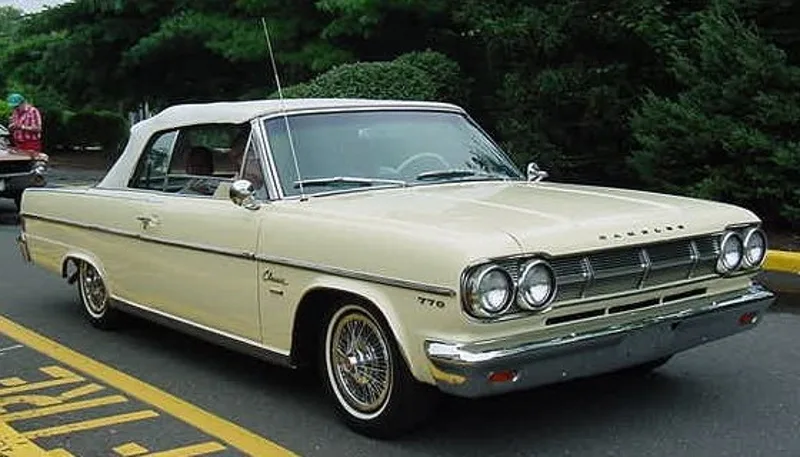
For 1963 the Classic was completely redesigned with subtle sculpting and a longer 112 in (2,845 mm) wheelbase. The body was one inch (25 mm) narrower and over two inches (56 mm) lower than before, and Dick Teague became the principal designer. The car was the first all-new AMC model since 1956, and Motor Trend named it Car of the Year for 1963.
How did the Belvedere's styling change?
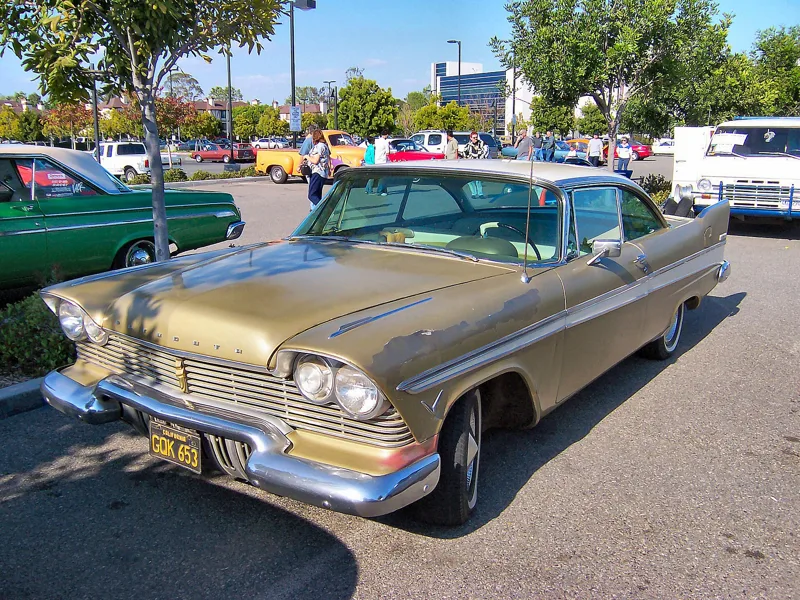
The Belvedere went through several styling phases. The 1955 car was the first year of Virgil Exner's Forward Look, and the 1956 model introduced tail fins and the first push-button automatic in an American car. By 1960 the styling was pushed hard, which led to the car being called a jukebox on wheels.
The 1961 Belvedere was not well received, and the 1962 model was downsized with more compact outside dimensions. The 1964 car gained a slant-back roofline that proved popular, and sales improved significantly over the earlier design. In 1965 the Belvedere became the intermediate, while the Fury took over full size.
The 1968 Belvedere was reskinned with Coke-bottle styling, and the Road Runner was added as a low-price performance alternative to the GTX. The name was dropped after the 1970 model year, when it was replaced by the Satellite.
How did the Belvedere's 1960 and 1961 models compare with the Classic?
The 1960 Belvedere switched to a new 225 cu in (3.7 L) Slant Six in place of the older flathead six, and the Slant Six became known for rugged construction and long life. The V8 options were 318 cu in (5.2 L) and 361 cu in (5.9 L), and unit body construction was introduced across the line, which removed the separate frame.
Styling was the problem. Under Chrysler president William Newberg, Virgil Exner's team was encouraged to go over the top, and the 1961 models were not well received. Good performance, handling and interiors did not stop sales from suffering, and Plymouth lost its third place in US sales to the 1960 Ramblers.
The Classic was a different proposition. Its 1961 body was a modest update of the earlier Rambler design, and its sales total of 370,600 vehicles placed AMC third behind Chevrolet and Ford. Both cars were chasing the same economy-minded buyers, and the Classic's sales show how well that message landed in 1961.
What did Plymouth change for 1965 and 1966?
In 1965 Plymouth brought the Fury back to full size, and the Belvedere became the intermediate. The line was divided into the Belvedere I, the Belvedere II and a Satellite sub-series, and the Satellite came with the 273 cu in (4.5 L) LA V8 as standard equipment, available only as a hardtop coupe and convertible.
The Belvedere was restyled in 1966, and the high-performance GTX was added in 1967. That same year a 1967 Belvedere was used as the standard LAPD police cruiser in the pilot episode of the television show Adam-12.
How do the specifications compare?
| Feature | AMC Rambler Classic | Plymouth Belvedere |
|---|---|---|
| Production | 1961 to 1966, three generations | 1954 to 1970; intermediate from 1965 |
| Body styles | Four-door sedan and wagon (1961); two-door post sedan (1963); pillarless hardtop (1964); convertible (1965 and 1966) | Sedan, wagon, convertible and Sport Coupe from 1954; hardtop and convertible in the Satellite sub-series from 1965 |
| Wheelbase | 108 in (2,743 mm) in 1961; 112 in (2,845 mm) from 1963 | 114 in (2,900 mm) in 1953; the Belvedere shared the intermediate unibody platform from 1962 |
| Base engine | 195.6 cu in (3.2 L) six in 1961 and 1963; 232 cu in (3.8 L) six in the 1964 Typhoon | 225 cu in (3.7 L) Slant Six from 1960 |
| V8 options | 250 cu in (4.1 L) in 1961; 287 cu in (4.7 L) at 198 hp (148 kW) from mid-1963 | 318 cu in (5.2 L) and 361 cu in (5.9 L) in 1960; 273 cu in (4.5 L) LA V8 standard in the Satellite from 1965 |
| Transmissions | E-Stick option in 1963, dropped after 1964; Shift-Command automatic in 1964 | Chrysler PowerFlite two-speed from 1954; push-button TorqueFlite on V8 cars |
| Sales | 370,600 vehicles in 1961; over 56,000 extra in the first six months of 1962 | 32,492 cars in 1954; 35,185 sold in 1953; Plymouth third place behind the 1960 Ramblers |
| Awards | Motor Trend Car of the Year for 1963 | Not reported |
| Motorsport | Not reported | 1964 Daytona, Hemi cars first, second and third; 1968 Grand National title in a Belvedere |
| Police and film | Not reported | LAPD cruiser in the Adam-12 pilot; police service late 1960s to early 1970s |
| Exports | Exported to over 100 nations | Built for New Zealand, India and South Africa in Canada |
Which car had the stronger engine line?
The Belvedere had the broader performance story, because Chrysler offered large V8s early and then added the Hemi. The 1964 Belvedere introduced the 426 Hemi, and the Hemi cars filled the top three places at Daytona that year. Richard Petty was among the winning drivers, and the engine set the Belvedere's performance image apart from the Classic.
The Classic's engine line was more modest. The six was the mainstay, the V8 was dropped for 1962 and returned in mid-1963 at 198 hp (148 kW), and the Typhoon's 232 cu in six was a special-edition engine rather than a regular option.
How did the cars perform in racing and on the road?
The Classic has no racing result in its history, and its strengths were economy, a roomy interior and styling that Motor Trend praised. The Classic's 1963 award was given for progress in design and for worthiness in performance, dependability, value and buyer satisfaction.
The Belvedere's road reputation was also tested in print. A Popular Mechanics economy test compared a six-cylinder automatic Belvedere with the Fairlane and the Chevy II, and the magazine called the Belvedere a very pleasant transportation package. The smaller, lighter body also helped in drag racing.
What happened to the Classic in 1964?
The 1964 Classic was refined with stainless steel rocker moldings, a flush single-plane aluminium grille and oval tail lamps. Classics with bucket seats and a V8 could be ordered with the Shift-Command automatic, which let the driver change gears manually.
A pillarless two-door hardtop joined the line in the top 770 trim, and a sporty 770-H version added reclining bucket seats. Station wagons still made up 34 percent of Classic sales, and the six-cylinder cars outsold the V8s. Stronger competition from the Big Three meant total Rambler sales dipped in 1964.
Which buyer suits which car?
The facts do not settle which car was better, so the choice depends on what the buyer wants. The Classic suits a buyer who values a Car of the Year design, early twin-circuit brakes and a choice of sedan and wagon bodies. The Belvedere suits a buyer who wanted a Plymouth with a wide V8 line, the 1964 slant-back styling and, from 1965, a clear intermediate position.
Sales point in different directions. The Classic's 1961 total of 370,600 vehicles put AMC third in the market. The Belvedere's sales for the years the Classic was built are not reported, so a fair sales comparison for the mid-1960s is not possible.
A buyer who wanted an intermediate with a wide V8 choice and a strong performance image would look toward the Belvedere. A buyer who valued engineering innovation and a car that won a major critics' award would look toward the Classic. Because both cars were on sale in the same years, the choice comes down to character rather than size.