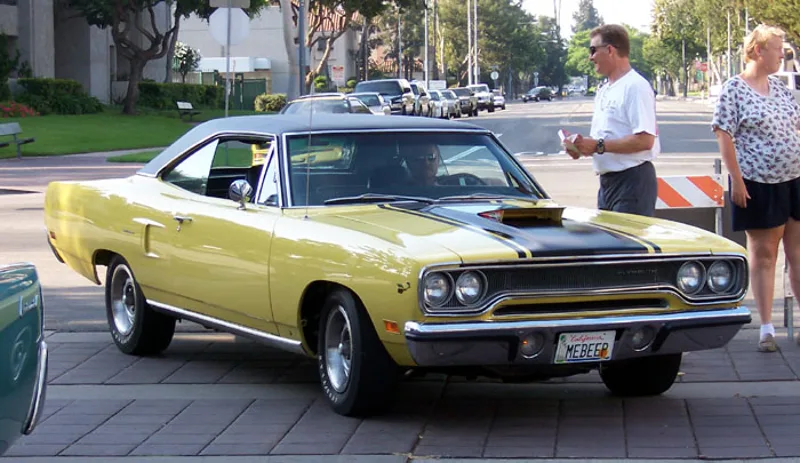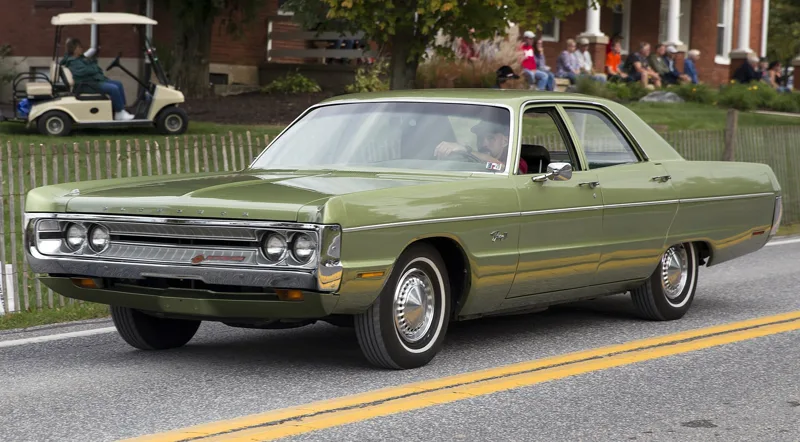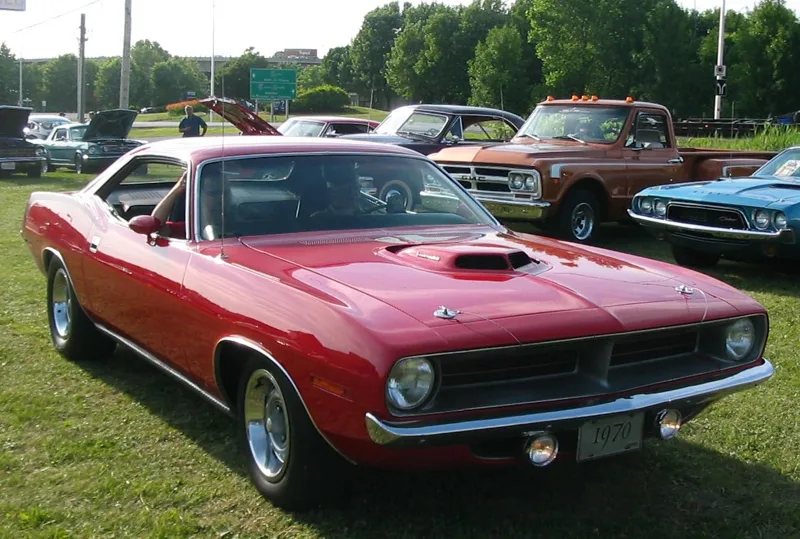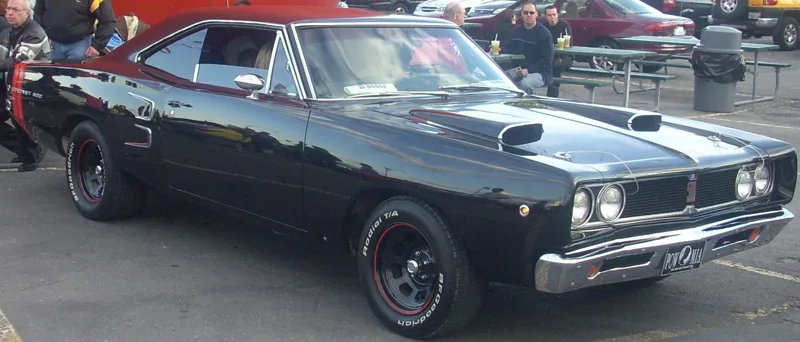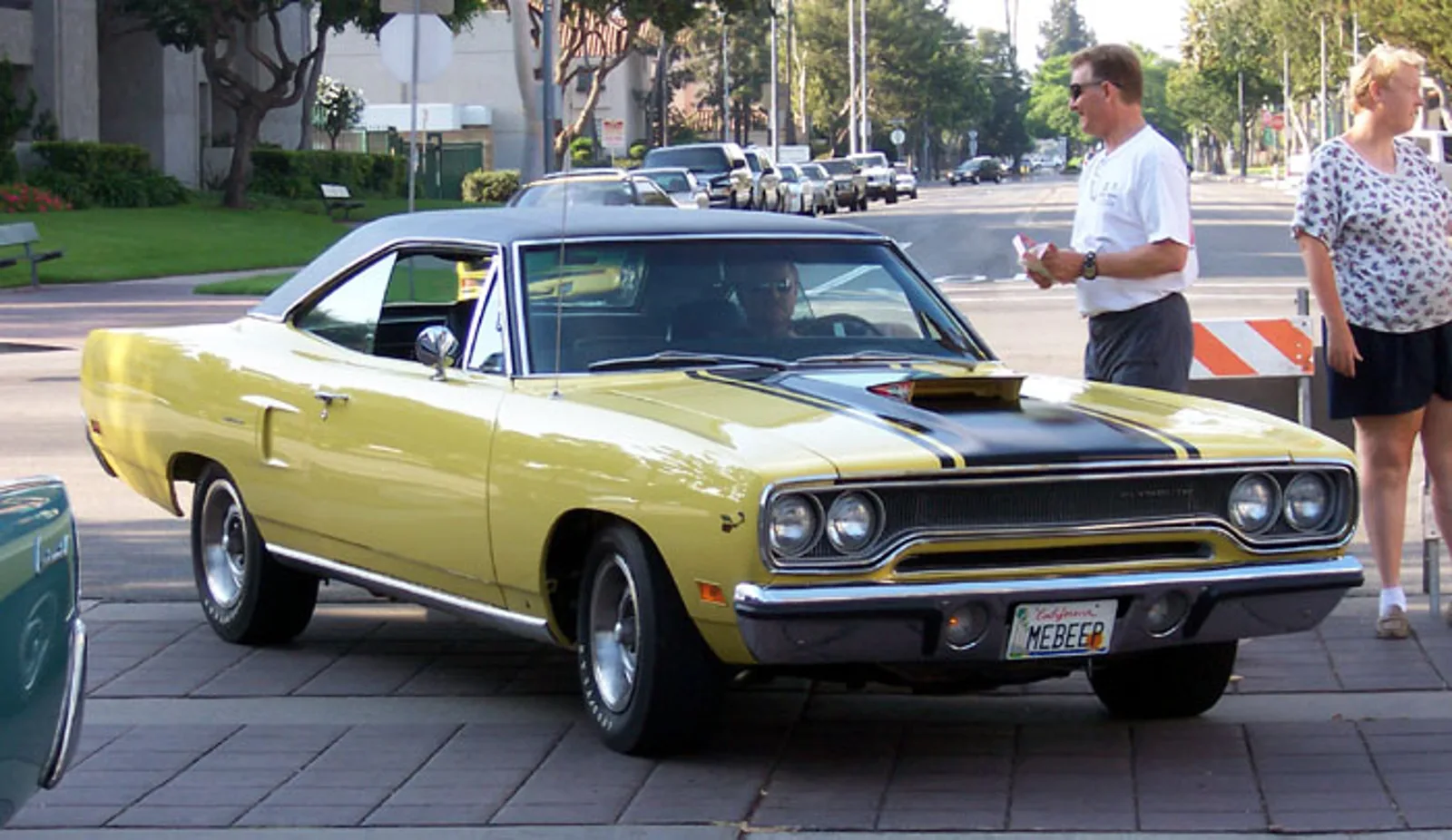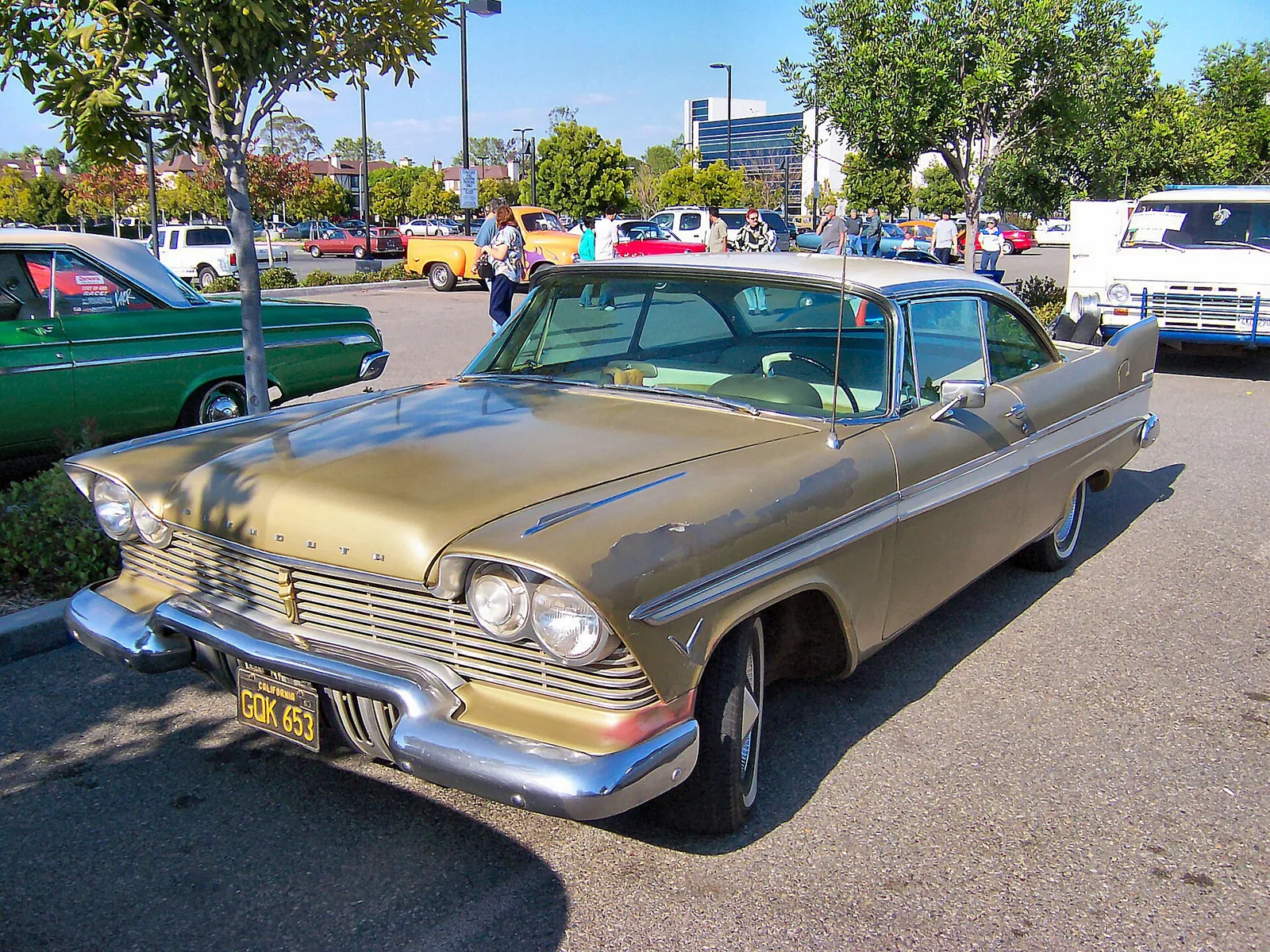
A name that began as a pillarless hardtop, grew into a full model line with Forward Look styling and carried Hemi power to NASCAR wins before the Satellite took over in 1970.
The Plymouth Belvedere was an American car line from Plymouth that ran from 1954 to 1970, after starting as a 1951 hardtop body style. It moved from full-size to intermediate in 1965, carried Hemi engines to NASCAR wins and was replaced by the Satellite.
The Plymouth Belvedere was Plymouth's top-trim name that became a full American model line in 1954 and ran until 1970. It began as a two-door hardtop body style in 1951, grew into a full-size car, moved to intermediate size in 1965 and was then replaced by the Satellite. Along the way it carried Forward Look styling, Hemi power on the NASCAR circuit and export production in several countries.
Where did the Belvedere name come from?
Belvedere is an Italian word meaning beautiful sight or fair view. Plymouth applied it first in 1951 to a hardtop in the Cranbrook line, and the name then sat at the top of the range for most of the next two decades. Chrysler also operated the Belvidere Assembly Plant in Illinois, which began vehicle production in 1965, although no Plymouth Belvedere was ever built there.
A name that started as a hardtop body style and ended as a full model line with its own racing record.
How did the Cranbrook Belvedere begin in 1951?
The Cranbrook Belvedere made its debut on 31 March 1951 as a two-door pillarless hardtop, the first body of that style Plymouth had built. Plymouth built it to rival the 1950 Chevrolet Bel Air and Ford's Victoria, which had brought the two-door hardtop to the low-priced American market.
The body rode on a 3,010 mm (118.5 in) wheelbase shared with the Cranbrook. Power came from a straight-six flathead of Chrysler design, 3.6 L (217.8 cu in) in size, with a 7.00:1 compression ratio giving 97 hp (72 kW; 98 PS) on the SAE gross rating.
For 1952 the car changed little. The most visible update was colour: the two tones now ran from the roof over the beltline and onto the boot, a treatment Plymouth called saddleback. Overdrive became an option that year, so the engine turned three times for each rear wheel turn rather than four.
What changed with the 1953 restyle?
Every Plymouth was restyled for 1953, and the Belvedere moved to a shorter 2,900 mm (114 in) wheelbase. The restyle brought a one-piece windshield, rear wings set flush with the body and a lower bonnet line. Plymouth added the Hy-Drive semi-automatic transmission in April 1953, and compression rose to 7.10:1, lifting the rating to 100 hp (75 kW).
Plymouth built 51,266 Belvederes across 1951 and 1952 together, and sold 35,185 in 1953 alone.
Why did the Belvedere become a full model line in 1954?
In 1954 the Belvedere stopped being a single hardtop and became a separate range. Buyers could choose a convertible, a two-door station wagon, a four-door sedan or the two-door hardtop, now called the Sport Coupe. The new entry-level Plaza shared the same design at a lower price, and the car picked up full-length rocker sill mouldings and the first small chrome tailfins on its rear fenders.
Plymouth finally offered a fully automatic transmission in March 1954, the two-speed PowerFlite. The standard unit became a 3.8 L (230.2 cu in) inline six, also used by Dodge, and developed 110 hp (82 kW). Belvedere production reached 32,492 units for the year.
How did Forward Look styling reshape the Belvedere?
All Plymouths were overhauled for 1955, the debut year of the Forward Look design language of stylist Virgil Exner. The Belvedere came back as the top model with the Plaza below it. A stroke increase arrived on 26 February that year, taking the engine from 3.6 L (217.8 cu in) to 3.8 L (230.2 cu in) and lifting output from 75 kW (100 hp) to 82 kW (110 hp).
For 1956 the range gained tail fins, which Exner described as part of the Forward Look, along with a push-button automatic transmission that was the first of its kind in an American car. The Fury arrived in early 1956 as a high-performance special-edition coupe. V8 choices ranged from 180 bhp with 270 cu in (4.4 L) up to 200 bhp with 277 cu in, while the Fury's option was 303 cu in (5.0 L) with 240 bhp. Plymouth also added seat belts that year.
The same year Chrysler's chief engineer George Huebner fitted a Chrysler turbine engine to a Belvedere in place of the standard petrol unit and drove the car across the United States.
What did the 1957 to 1959 range look like?
Chrysler promoted the new Plymouth design with the slogan 'Suddenly, it's 1960!', a sign of how far the styling had moved on. The standard engine on most bodies was the Powerflow 6 L-head, while convertibles were V8 only. The manual gearbox came as standard, and buyers could order the two-speed PowerFlite push-button automatic instead. Torsion-Aire torsion bar front suspension arrived across Chrysler products in 1957.
The Belvedere was a top trim one final time in 1958. That year a 5.7 L (350 cu in) big-block B V8, whose dual four-barrel carburettors earned it the Golden Commando nickname, became available across the range. For 1959 the Fury took the top spot, the Belvedere moved to the middle, the Savoy became the cheapest model and the Plaza was dropped.
Which engines did the Belvedere offer?
The Belvedere started with a 217.8 cu in (3.6 L) flathead six and moved up to a 3.8 L (230.2 cu in) inline six in 1954. V8 engines were optional from 1956, and the 225 cu in (3.7 L) Slant Six arrived in 1960. The V8s then came in 5.2 L (318 cu in) and 5.9 L (361 cu in) forms.
| Years | Engine | Notes |
|---|---|---|
| 1951 to 1953 | 3.6 L (217.8 cu in) flathead straight-six | 97 hp (72 kW; 98 PS), then 100 hp (75 kW) in 1953 |
| 1954 | 3.8 L (230.2 cu in) inline six | 110 hp (82 kW), standard engine |
| 1955 | 3.6 to 3.8 L (217.8 to 230.2 cu in) | Stroke lengthened in February; 75 to 82 kW (100 to 110 hp) |
| 1956 | 4.4 L (270 cu in) V8 | 180 bhp option |
| 1956 | 4.5 L (277 cu in) V8 | 187 bhp and 200 bhp options |
| 1956 | 5.0 L (303 cu in) V8 | 240 bhp, Fury |
| 1958 | 5.7 L (350 cu in) B V8 | Dual four-barrel carburettors, Golden Commando |
| 1960 | 3.7 L (225 cu in) Slant Six | Overhead valves, single-barrel Holley carburettor |
| 1960 to 1961 | 5.2 L (318 cu in) and 5.9 L (361 cu in) V8 | Optional V8 displacements |
| 1965 | 4.5 L (273 cu in) LA block V8 | Standard on the Satellite |
Read across the table and the pattern is clear: the Belvedere moved from a flathead six to a Slant Six, and from modest V8s to big-block options within a decade.
Why did the 1960 and 1961 models divide opinion?
The 1960 Belvedere introduced the Slant Six, a rugged inline six that became known for reliability and long life, and unit body construction spread through the line. Styling was pushed hard under Chrysler president William Newberg, and the 1960 cars became known as jukebox on wheels. The 1961 cars were less well received, although later commentators argued they had been unfairly criticised for being different.
The Slant Six had its block inclined 30 degrees to the right, which allowed a lower hood line while keeping maximum displacement. The cars handled well, weighed modestly and had attractive interiors, yet sales still fell. Plymouth lost its third place in US sales to the 1960 Ramblers.
How did the 1962 downsizing change the Belvedere?
For 1962 Plymouth shrank its full-size cars, giving them smaller external measurements. Many buyers still wanted bigger cars, and sales dipped, although owners later judged the smaller car to be easier to live with. Popular Mechanics compared a six-cylinder automatic Belvedere with the Ford Fairlane and the Chevrolet Chevy II in an economy test and called it a very pleasant transportation package.
The lighter body also helped in drag racing. The 1963 and 1964 cars kept the same unibody platform but were reshaped to appear longer and broader.
Why was the 1964 Belvedere a turning point?
The 1964 Belvedere, and the matching Fury hardtop coupes, adopted a new slant-back roofline that proved popular with buyers. Sales rose markedly compared with the earlier design. The same car introduced the 426 Chrysler Hemi, which used a canted large-valve arrangement for much better breathing at high engine speeds.
Did Hemi Belvederes win at Daytona?
Yes. Hemi-equipped Plymouth Belvederes swept the top three places at NASCAR's 1964 Daytona race. Richard Petty was one of the winning drivers. The result was credited to the large gain in high-rpm breathing that the Hemi brought to the car.
Petty later won the 1968 Grand National championship in a Belvedere.
How did the Belvedere become intermediate in 1965?
In 1965 Plymouth made the Fury a full-size car again, which left the Belvedere as the intermediate offering. In practice the Belvedere changed little, with most dimensions and weights staying the same. The line split into Belvedere I, Belvedere II and a Satellite subseries, the last available only as a hardtop coupe or convertible and fitted as standard with the 4.5 L (273 cu in) LA block V8.
The range was restyled for 1966, and the high-performance GTX joined the line in 1967.
What happened to the Belvedere from 1968 to 1970?
For 1968 the Belvedere shared the reskinned Coke bottle styling that Chrysler gave its whole B-body range. The Belvedere II was dropped, while the Sport Satellite joined the lineup on the same sheet metal. The new lightweight LA-style 318 engine arrived that year and stayed available on the Belvedere for the rest of its production.
The Plymouth Road Runner arrived in 1968 as a lower-priced performance car beside the GTX. The GTX fitted the 440 CID engine as standard, the Road Runner used the 383 Magnum as its base engine, and the 440 six-barrel or 426 Hemi could be specified as options.
The Belvedere badge disappeared once the 1970 model year closed. The Satellite name, originally reserved for the higher-end Belvederes, took over the top role and ran only through 1974. From 1975 the Fury name returned, and the longer-wheelbase Fury became the Gran Fury.
Did police forces use the Belvedere?
Yes. Police fleets ran Belvederes from the late 1960s until the Gran Fury took over. The Los Angeles Police Department and the New York Police Department were among the forces that used them. The pilot episode of the television series Adam-12 cast a 1967 Belvedere as the standard LAPD cruiser.
What was the Australian Belvedere?
The Australian Belvedere was built by Chrysler Australia. The first model was based on the 1953 US Plymouth and used body panels pressed at Keswick in South Australia, with a 217.8 cu in (3,569 cc) side-valve six imported from Chrysler UK. The Chrysler Royal took over from it in 1957.
Chrysler Australia brought the Belvedere back in early 1958, building a four-door hardtop that arrived from the US in knocked-down kits. The 1959 model used a 318 cubic inch V8 with push-button automatic transmission. In 1960 the Dodge Phoenix took over from the Belvedere, the Dodge Custom Royal and the De Soto Firesweep.
Where else was the Belvedere built?
Chrysler Canada produced Belvederes for Commonwealth export markets through the 1950s and 1960s, including New Zealand, India and South Africa. Cars went either in CKD form or as factory right-hand-drive models for those markets.
What is the Tulsa time capsule car?
A 1957 Plymouth Belvedere, still new at the time, was walled up in concrete downtown in Tulsa during Oklahoma's semicentennial. It was unearthed on June 14, 2007, and publicly unveiled the following day. The enclosure was advertised as built to withstand a nuclear attack, but it was not airtight, and water leaked in and caused significant damage to the car.
The car was the prize in a 1957 contest to guess Tulsa's population in 2007. The winning entry from Raymond Humbertson was 384,743, against an actual figure of 382,457. Humbertson died in 1979, and only distant relatives remain. Customiser Boyd Coddington, a controversial figure, was due to be the first to start the car, had it been operable.
A second car, a Plymouth Prowler, was placed in a vault at Tulsa's Centennial Park in 1998 to mark the city's centennial. Once the 1957 Belvedere's condition was known, the Prowler was lifted to ground level and covered with a mound of earth. The Prowler is due to be revealed in 2048.
Where did the Belvedere appear on film?
The 1957 to 1958 Belvedere two-door hardtop became famous through the 1983 film Christine, based on the Stephen King novel. The film's opening scene shows the car as a lone bright red model in a line of beige Furys,.
For the film the body was toreador red and the top iceberg white. In the novel, the first owner, Roland Lebay, had ordered custom paint, since the factory offered that Fury only in beige.
What is the Belvedere's legacy?
The Belvedere is remembered for Forward Look styling, the Slant Six engine, Hemi-powered NASCAR success and its appearances in police fleets, television and film. Those strands show a model that moved between family transport, performance and popular culture over nearly two decades.
The Slant Six's reputation for rugged construction, exceptional reliability and longevity is part of that story.
The Belvedere name shows how Plymouth reshaped its top trim across the 1950s and 1960s, from pillarless hardtop to Forward Look sedan to intermediate coupe. It ended in 1970, when the Satellite took over the role.