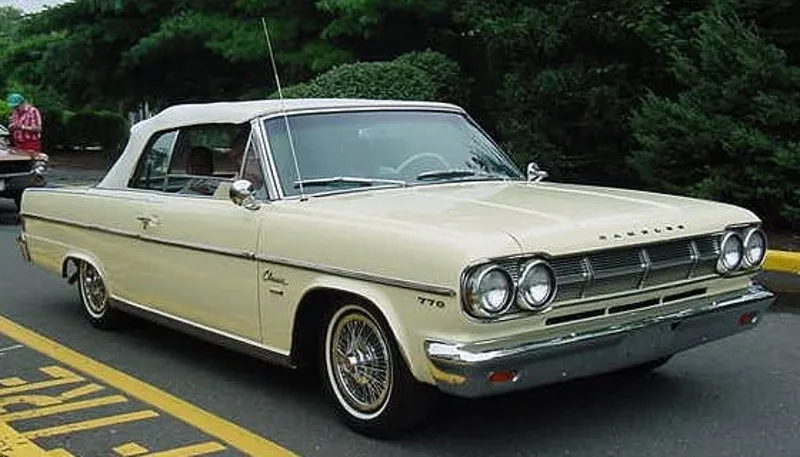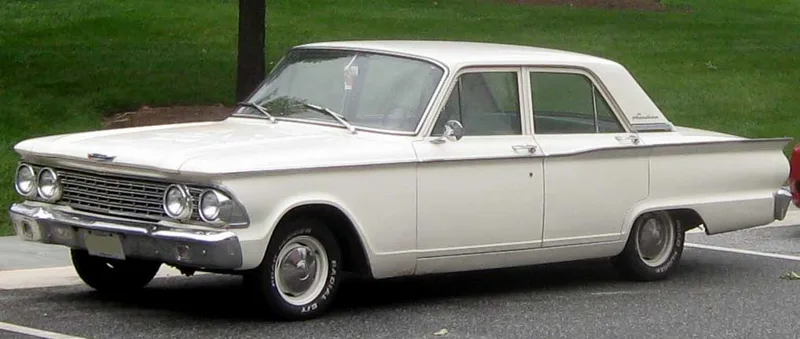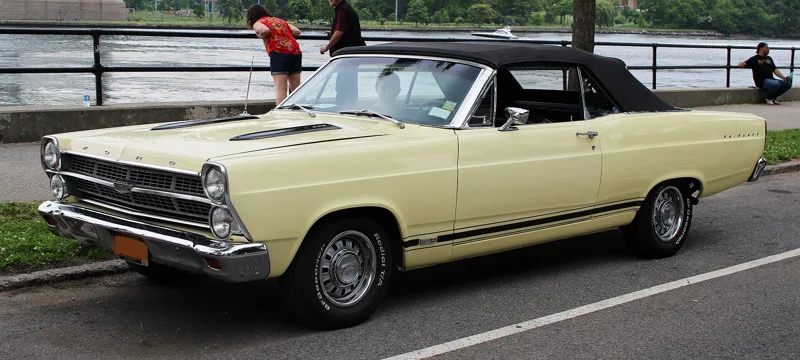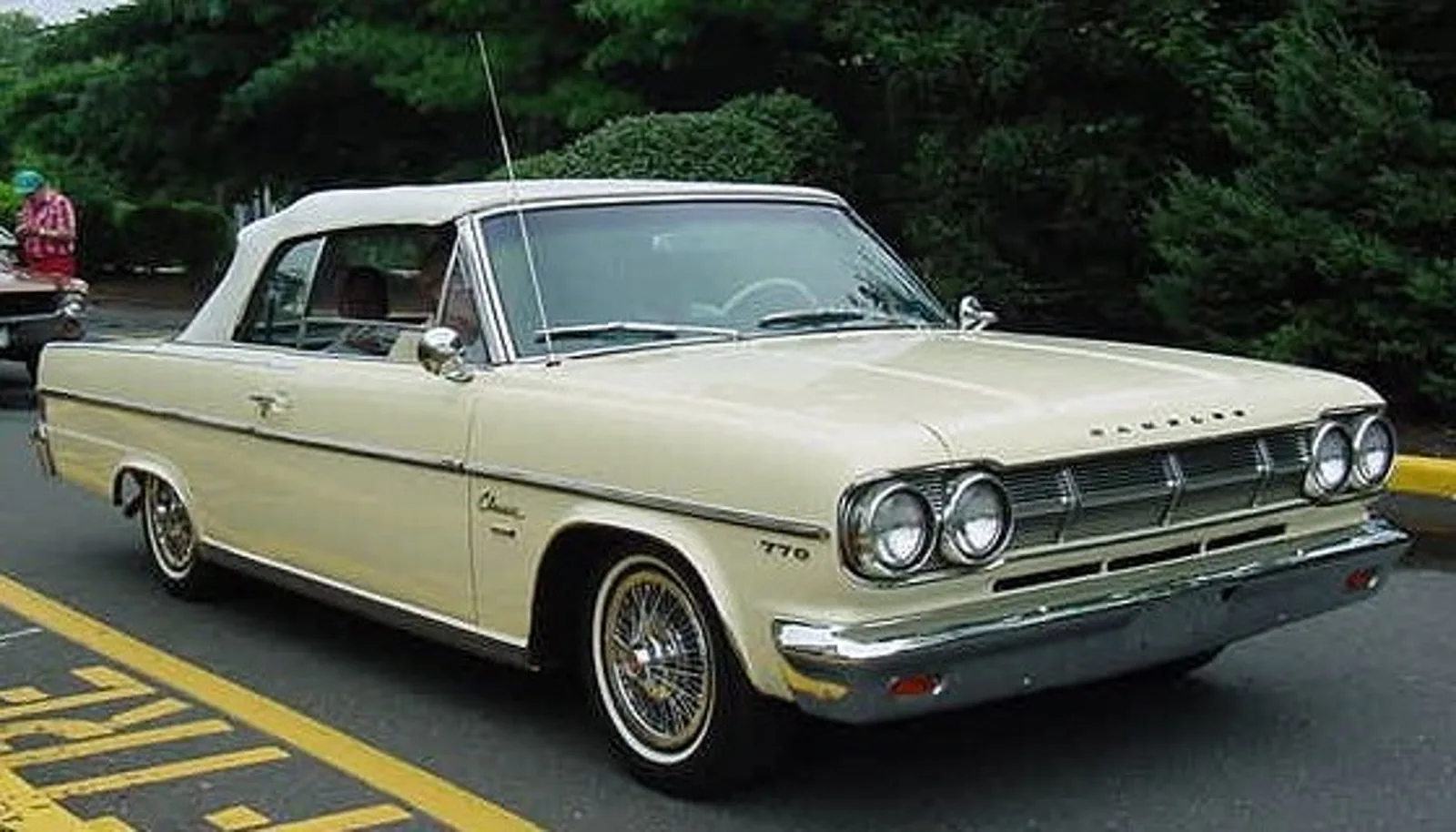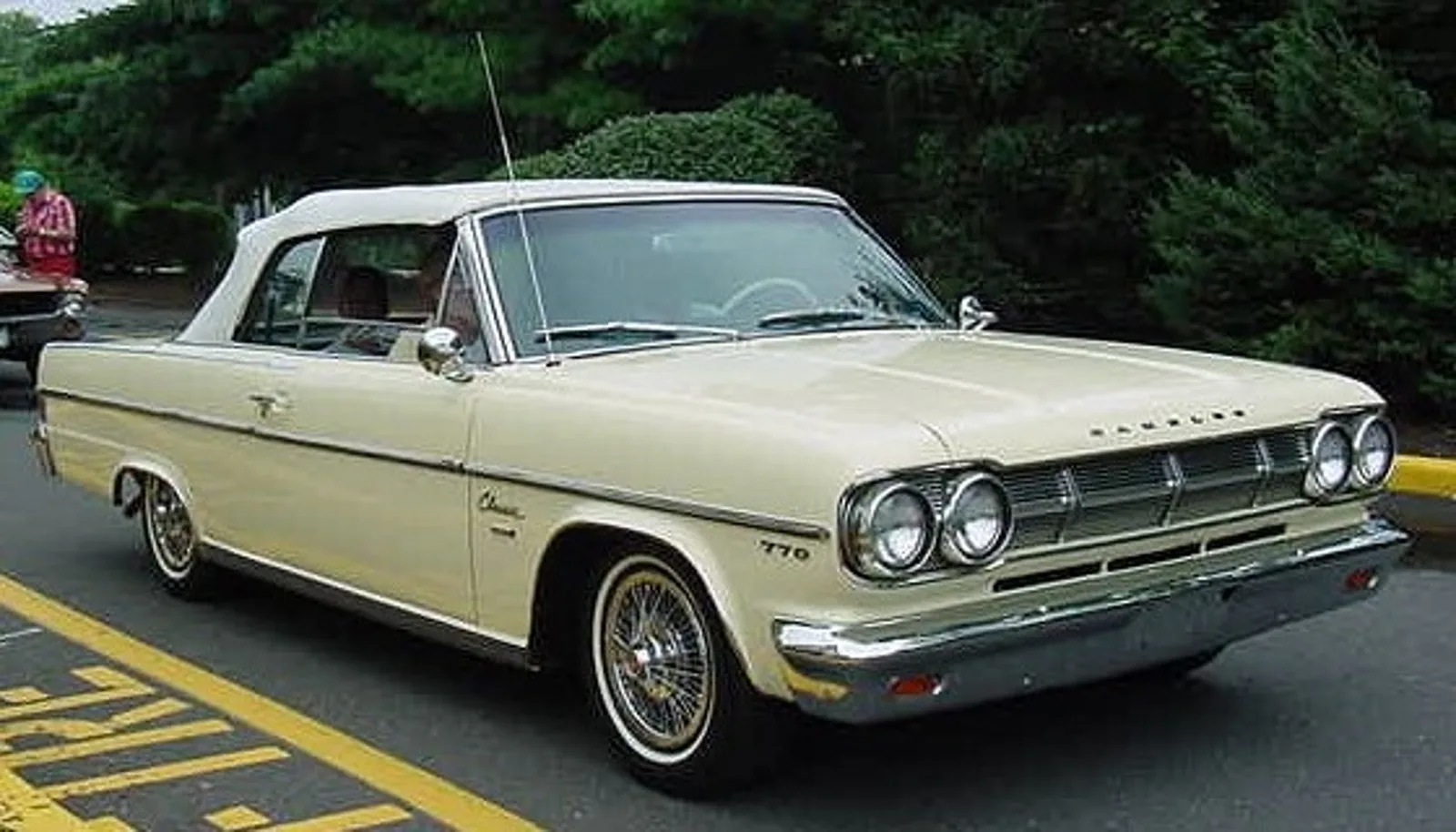
AMC's Classic and Ford's Fairlane met in the intermediate class of the early 1960s, one with a Car of the Year award and the other with a drag-strip legend.
Three generations of the Rambler Classic were built between 1961 and 1966. The Fairlane, a Ford model since 1955, took up intermediate dimensions in 1962, and the two were rivals through the middle of the decade.
The AMC Rambler Classic and the Ford Fairlane were intermediate-size American cars that met in the same class from 1962 to 1966. The Classic was built from 1961 to 1966 in three generations, and it won Motor Trend's Car of the Year award for 1963. The Fairlane was a Ford model from 1955 to 1970, and its intermediate form began in 1962 with a racing record that became part of its identity.
Were the Rambler Classic and the Fairlane rivals?
Yes. Ford moved the Fairlane into the intermediate segment for 1962, and it was built to compete with the Plymouth Belvedere and the AMC Rambler. That places the Classic and the Fairlane in the same size class for the middle years of the decade.
Their rivalry was one of market position. Both cars were sold to buyers who wanted more room than a compact and less size than a full-size car, and both came with a choice of body styles and V8 options. The sections below compare how each car used that position.
One intermediate with a Car of the Year title and the other with a drag-strip legend, both aimed at the same buyer in the middle of the 1960s.
Where did each car come from?
The Rambler Classic was the larger of AMC's two Rambler lines. It was renamed the Classic for 1961 to distinguish it from the smaller Rambler American, and it had been based on a 1956 design. Edmund E. Anderson designed the 108 in (2,743 mm) wheelbase Ramblers, which AMC kept in production longer than the Big Three kept theirs.
The Fairlane had a longer history. The name first appeared in 1955 on Ford's premier full-size car, replacing the Crestline. Its name came from the Dearborn, Michigan estate of Henry Ford, and the Town Sedan sold 254,437 cars in 1955. The Fairlane became an intermediate for 1962, when it moved down to fill the gap between the Falcon and the Galaxie.
How did the Classic's design develop?
The 1961 Classic kept the body of the earlier Rambler Six and V8 but gained a new front end with a one-piece rectangular grille and redesigned bumpers. It came as a four-door sedan and a station wagon, with an optional rear-facing third-row seat in the wagon, and it was offered in Deluxe, Super and Custom trim.
For 1963 the Classic was completely redesigned with more subtle sculpting, a longer 112 in (2,845 mm) wheelbase and a body that was one inch (25 mm) narrower and over two inches (56 mm) lower. Dick Teague became the principal designer, and the car was the first all-new AMC model since 1956. Motor Trend named it Car of the Year for 1963.
Engineering was a strong point. The 1963 Classic used curved side glass and a single-stamping door surround that replaced 52 parts and improved the fit of the doors. The Motor Trend award was given for pure progress in design, and it recognised those engineering choices as well as the car's looks.
How did the Fairlane's body and chassis work?
The Fairlane moved to a unibody frame for 1962 with four torque boxes in the lower body, built to soak up road shock through slight vertical movement. The front suspension was an independent short-long arm arrangement, and the rear used a Hotchkiss drive. The car came as a two-door or four-door sedan at launch.
Its size was intermediate, measuring 197 in (5004 mm) overall on a 115.5 in (2934 mm) wheelbase. Compared with the Falcon it was 406 mm (16 in) longer, and it sat 312 mm (12.3 in) shorter than the Galaxie. Track width ranged from 1355 mm (53.5 in) to 1422 mm (56 in), according to model.
What did the Fairlane's 1966 redesign bring?
For 1966 the Fairlane became a longer-wheelbase version of the revised Falcon platform, sharing its mid-size wagon bodies with the Falcon. The look was changed to match the full-size Galaxie, which had been restyled for 1965, and the car adopted vertically stacked dual headlights.
The XL, GT and GTA packages were introduced that year, and a convertible joined the existing sedans, hardtops and station wagons. The K-code 289 engine was dropped at the same time, which marked the end of the high-output V8 that had defined the car's performance image.
What changed on the Classic for 1962?
For 1962 the Super models were dropped and replaced by a 400 model, and AMC's Ambassador shrank to a 108 in (2,700 mm) wheelbase, the same as the Classic. The V8 was no longer offered in the Classic, which left the Ambassador as the only AMC model with one. A one-year two-door sedan joined the range.
The rear end received round tail lamps and the tail fins were removed. Rambler was one of the last cars to use tail fins and one of the first to abandon them. The cast-iron six became standard on Deluxe and Custom models, and a price cut of $176 applied to the popular Custom sedan.
A Popular Mechanics survey of owners found the car likable, easy to handle and roomy, although inadequate power and poor workmanship were noted as flaws. The 1962 wagon added a five-door body with a rear-facing third seat.
How do the specifications compare?
| Feature | AMC Rambler Classic | Ford Fairlane |
|---|---|---|
| Production | 1961 to 1966, three generations | 1955 to 1970 in North America; intermediate from 1962 |
| Body styles | Four-door sedan and wagon (1961); two-door post sedan (1963); pillarless hardtop (1964); convertible (1965 and 1966) | Two- and four-door sedans, hardtops and wagons; pillarless hardtops from 1963 |
| Wheelbase | 108 in (2,743 mm) in 1961; 112 in (2,845 mm) from 1963 | 115.5 in (2934 mm) from 1962 |
| Base engine | 195.6 cu in (3.2 L) six in 1961 and 1963; 232 cu in (3.8 L) six in the 1964 Typhoon | 170 CID (2.8 L) six |
| V8 options | 250 cu in (4.1 L) in 1961; 287 cu in (4.7 L) at 198 hp (148 kW) from mid-1963 | 221 CID (3.6 L) at 145 hp (108 kW) in 1962; 260 CID (4.2 L) at 164 hp (122 kW) in mid-1962; 289 CID at 271 hp (202 kW) in 1963 |
| Transmissions | E-Stick option in 1963, dropped after 1964; Shift-Command automatic in 1964; Flash-O-Matic with V8 | Two-speed Fordomatic; Cruise-O-Matic or four-speed manual on Sports Coupe; Cruise-O-Matic only from 1965 |
| Sales | 370,600 vehicles in 1961; over 56,000 extra in the first six months of 1962 | Not reported for 1962 to 1965 |
| Awards | Motor Trend Car of the Year for 1963 | Not reported |
| Motorsport | Not reported | 1964 Thunderbolt: NHRA Super Stock records and the Manufacturer's Cup |
| Markets | Exported to over 100 nations; Renault built it at Haren, Belgium, as a luxury car | Australian and New Zealand models; Ford Australia used the name through 2007 |
Which car had the stronger engine line?
The Fairlane's engine line was more varied in the mid-1960s. Its standard six was a 170 CID (2.8 L) unit, and Ford's new lightweight Windsor V8 arrived as an option in 1962 with a 221 CID (3.6 L) displacement and 145 hp (108 kW). The 260 CID Challenger followed at mid-year, and the 289 CID Challenger brought an advertised 271 hp (202 kW) in 1963.
The Classic's V8 story was less steady. The V8 was dropped from the Classic for 1962, leaving the Ambassador as the only AMC V8. A new 287 cu in (4.7 L) V8 returned in mid-1963, rated at 198 hp (148 kW), and it could reach 60 mph in about 10 seconds with the Flash-O-Matic automatic.
How did the two cars perform in racing?
The Classic's history includes no racing result, and its appeal was broader: economy, a roomy interior and styling that Motor Trend praised. The Fairlane's racing record is the most striking difference between the two cars, and it came from the Thunderbolt.
In the 1963 season Ford prepared a handful of two-door Fairlanes for drag strip use. These became the Thunderbolt for 1964, with a 427 CID (7.0 L) race V8 rated at 425 hp (317 kW). Racing in NHRA Super Stock, the Thunderbolt set elapsed time and top speed records of 11.6 seconds and 124 mph (200 km/h) in 1964, won the Super Stock title and took the Manufacturer's Cup.
Production was small, with reports differing on whether 111 or 127 cars were made, and the NHRA rule changes that required 500 vehicles to be built ended the programme. The Thunderbolt is still the Fairlane's best-known performance story.
How did the Fairlane's mid-decade models change?
For 1964 Ford refreshed the grille and headlight bezels, dropped the tail fins and reshaped the trunk lid. The 289 V8 was now also offered in a two-barrel version with hydraulic lifters and 195 hp (145 kW), alongside the K-code 271 hp unit that gained dual exhausts.
By 1965 the Fairlane had 14-inch wheels as standard in place of 13-inch units. The Fordomatic was finally phased out, leaving the Cruise-O-Matic as the only automatic on the Fairlane. The Squire wagon had been dropped after 1963, and the 260 V8 was dropped after 1964.
Which buyer suits which car?
The facts do not settle which car was better, so the choice depends on the buyer. The Classic suits a buyer who values a Car of the Year design, an early twin-circuit brake system and a choice of wagon and sedan bodies. The Fairlane suits a buyer who wanted a Ford-badged intermediate with a broad V8 line and, from 1964, a route into performance.
Sales are the clearest measure for the Classic. Its 1961 total of 370,600 vehicles placed AMC third behind Chevrolet and Ford in the market, and the first six months of 1962 added more than 56,000 sales over the same period in 1961. Fairlane sales for the mid-1960s are not reported here.