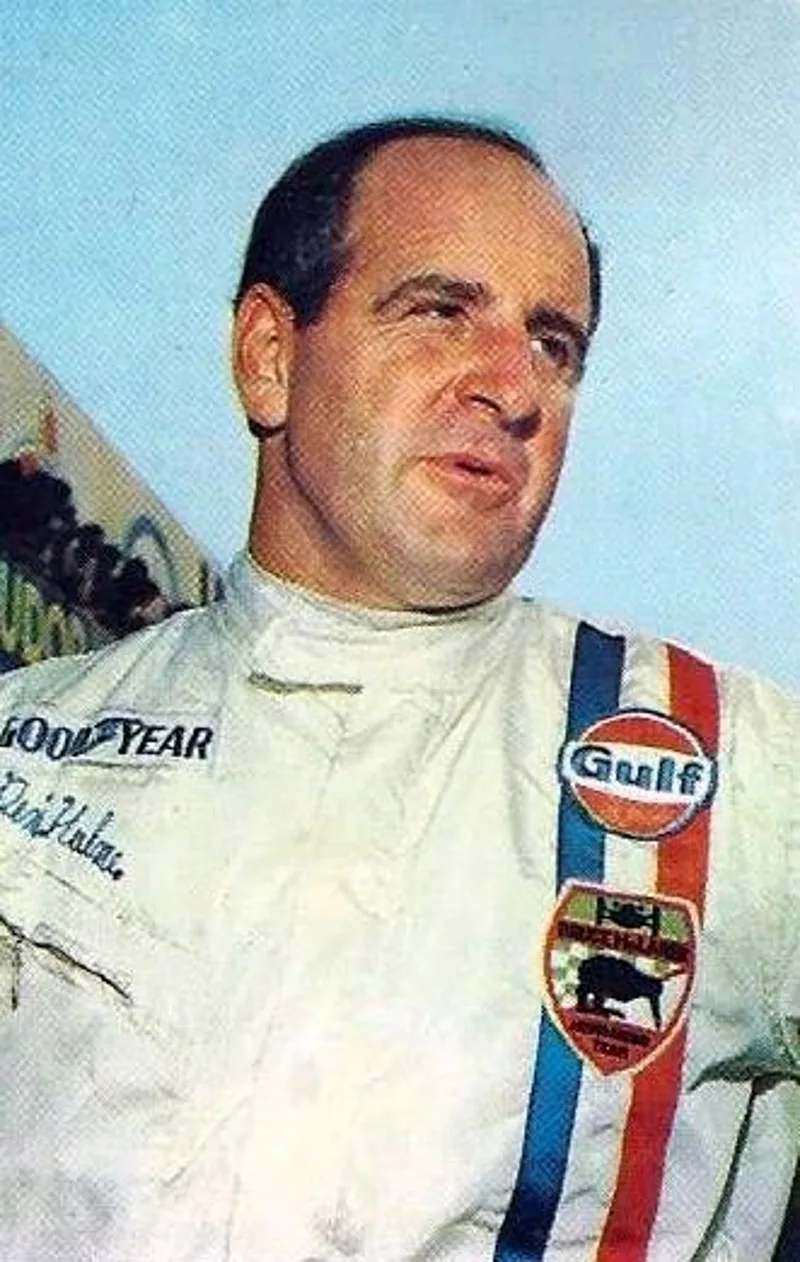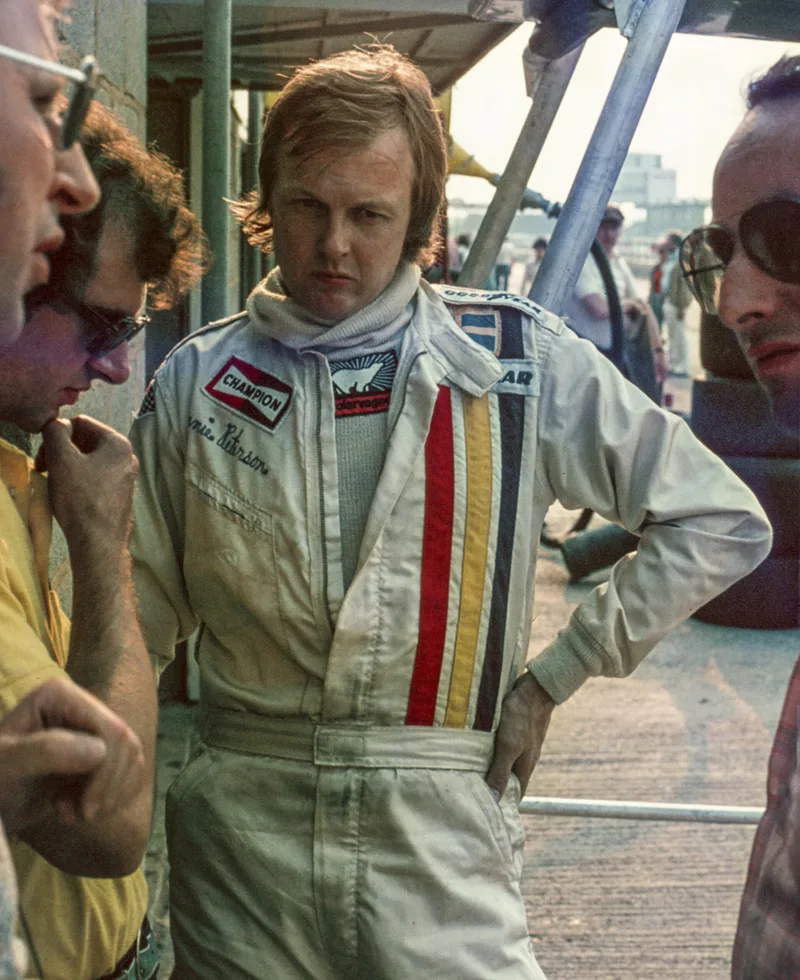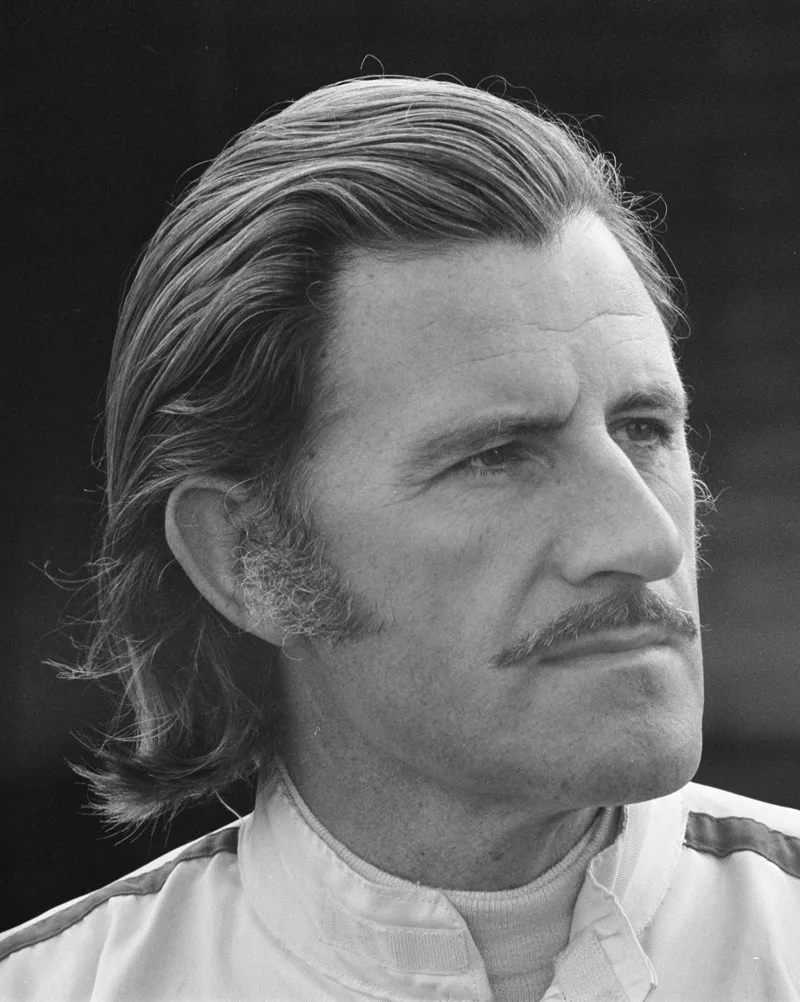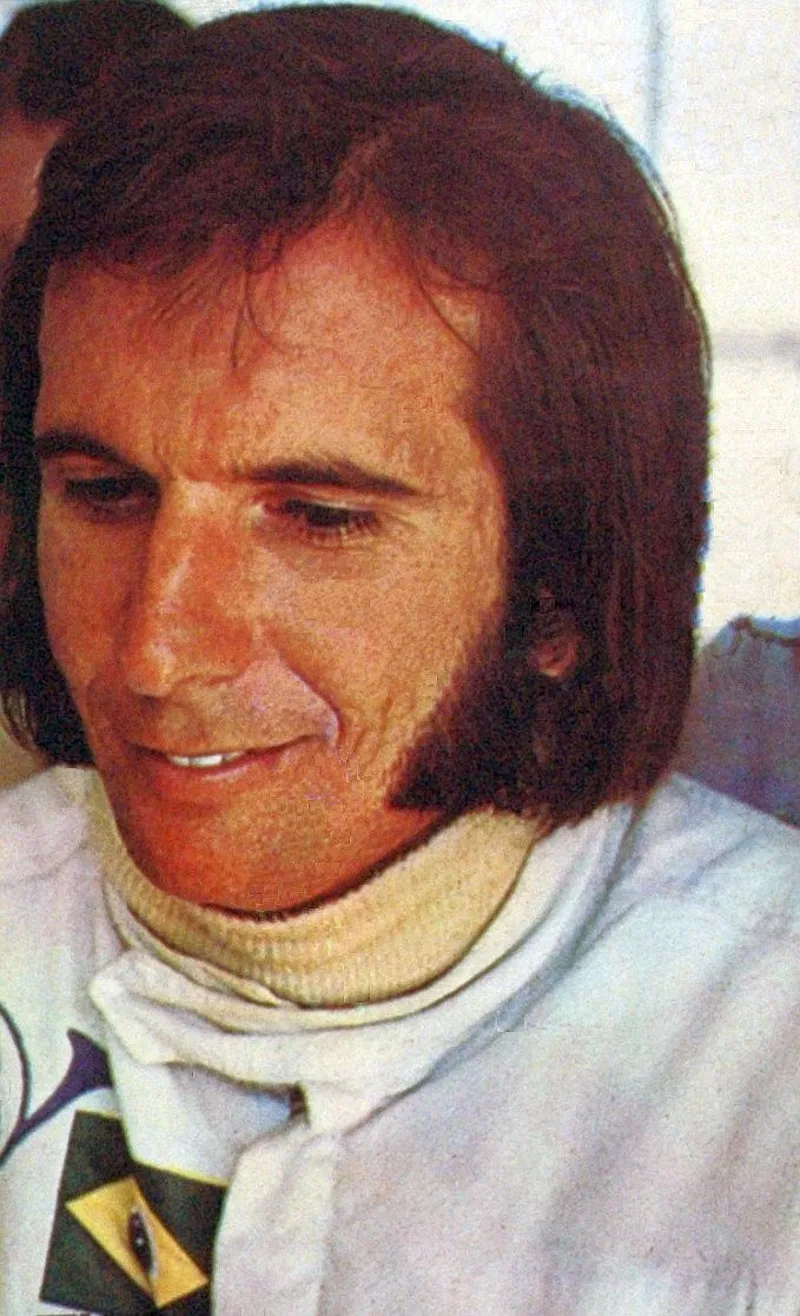
From a New Zealand sheep farm to Le Mans and Daytona wins, Amon's Formula One career was shaped by mechanical failures and a long run of near misses.
Amon was a New Zealand driver whose Formula One career ran from 1963 to 1976. Le Mans and Daytona victories came with Ford and Ferrari, yet no championship Grand Prix win arrived, largely because mechanical failures cut short many of his races.
Chris Amon was a New Zealander who raced in Formula One between 1963 and 1976. He won the 1966 24 Hours of Le Mans with Bruce McLaren and the 1967 Daytona 24 Hours with Ferrari, yet he never won a championship Grand Prix. His career is remembered as much for mechanical failure as for speed.
Where did Chris Amon begin his racing career?
Amon was born in Bulls, New Zealand, on 20 July 1943, the only child of sheep farmers Ngaio and Betty Amon. A farm worker taught him to drive at six on the family property, attended Whanganui Collegiate School, and began in minor local races and hillclimbs in an Austin A40 Special that his father bought him.
After a 1.5-litre Cooper came a 2.5-litre Maserati 250F. The car that drew real attention was the Cooper-Climax T51 that Bruce McLaren had used to win a Grand Prix. At Lakeside in 1962, a similar car entered by Scuderia Veloce went well in the rain, and Reg Parnell, who was watching, invited him to race for his team in England.
Amon impressed in pre-season races at Goodwood and at the Aintree 200 before his first season.
A winner at Le Mans and Daytona whose Grand Prix results were repeatedly cut short by mechanical failure.
How did Amon's Formula One career start with Parnell?
Amon made his Formula One debut at the 1963 Monaco Grand Prix with the Parnell team, which ran a year-old Lola Mk4A with Climax V8 engines. His best results that year were seventh places at the French and British Grands Prix, and he was generally quicker than his teammates, who included his friend Mike Hailwood.
Peritonitis killed Parnell in January 1964, leaving the team to his son Tim. Amon scored his first World Championship points at the 1964 Dutch Grand Prix with a fifth place, but mechanical problems dogged the rest of that season. In 1965 he rejoined the team as a stand-in for the injured Richard Attwood, and won a Formula Two race at Stuttgart.
Without a second McLaren Formula One car for 1965, Amon raced mostly sportscars.
Why did Amon win at Le Mans in 1966?
In 1966 Amon and Bruce McLaren claimed the 24 Hours of Le Mans in a 7-litre Ford GT40 Mk II. The finish came after Ford arranged a dead-heat formation finish with the sister car of Ken Miles, who was told to slow down while leading. The result gave Amon the biggest win of his career to that point.
The Le Mans success brought him to Enzo Ferrari. Amon visited the Ferrari home in Maranello and signed to race for the team in 1967, joining Lorenzo Bandini, Mike Parkes and Ludovico Scarfiotti.
Earlier that year he had also taken a privateer Brabham BT11, running as Chris Amon Racing, to the Italian Grand Prix. The car had an old 2-litre BRM engine, and he failed to qualify.
What happened in Amon's first season with Ferrari?
Amon's first year at Ferrari began badly, when he crashed his road car on the way to the Race of Champions at Brands Hatch and withdrew after race practice. Tragedy struck the team, with Bandini killed at Monaco and Mike Parkes injured at Belgium.
He scored his first Formula One podium at his first official race for the Scuderia, the 1967 Monaco Grand Prix. Across the year he collected four third places and finished fifth in the Drivers' Championship, the best title finish of his career.
His sportscar form was just as strong. Amon and Bandini won the Daytona 24 Hours and the 1000km Monza in the 4-litre Ferrari 330-P4, and at the BOAC 500 he finished second alongside Jackie Stewart. That result gave Ferrari the manufacturers' title by a single point from Porsche.
How did 1968 and 1969 shape Amon's reputation?
Aerodynamics became a serious factor in Formula One design in 1968, and Amon worked alongside engineer Mauro Forghieri on aerofoils for the Ferrari 312. Between Grands Prix he went home to race the Tasman Series, where he took the first two rounds, one of them the New Zealand Grand Prix, before losing the series to Jim Clark's Lotus-Ford.
Back in Formula One, Amon took pole position at three of the four races after South Africa, but each time mechanical trouble prevented him from turning that speed into points. His best result was second at the British Grand Prix behind Jo Siffert's Lotus-Cosworth. In Canada he dominated before his transmission failed 17 laps from the finish, and Jacky Ickx comforted him afterwards.
In 1969 Amon won the seven-race Tasman Series, finishing with four victories, two thirds and a retirement. In Formula One he finished third at the Dutch Grand Prix and dominated the Spanish Grand Prix until an engine failed on lap 56, when he was 40 seconds ahead of Jackie Stewart's Matra. He then left Ferrari for a Cosworth DFV-powered team, as Jackie Stewart and Jochen Rindt had urged.
How did Amon fare at March and Matra?
Amon joined March for 1970 and won the pre-season Silverstone International Trophy. Once the championship began, failures turned good qualifying positions into poor results. At Monaco he ran second until his suspension failed 20 laps from the finish, and he had earlier refused to race unless his number changed from 18 to 28.
His best result for March came at the Belgian Grand Prix, where he qualified third and finished second. It gave the works team its first points finish, and his fastest lap at Spa-Francorchamps, over 152 mph, still stood as a lap record in 2016, since the event was the final one on the original long layout.
A dispute with team figures over unpaid pay led to inferior engines for the rest of the year, and by the end of 1970 he had moved to Matra. There he won the non-championship 1971 Argentine Grand Prix and took pole at the Italian Grand Prix, but a loose helmet visor cost him the race and he finished sixth. In 1972 he took the fifth and final pole of his career at the French Grand Prix and finished third after a puncture.
| Measure | Detail |
|---|---|
| Born | 20 July 1943, Bulls, New Zealand |
| Formula One Grands Prix | 96, from 1963 to 1976 |
| Poles | 5 |
| Podiums | 11 |
| Championship points | 83 |
| Laps led | 183 laps in 7 races |
| Best Drivers' Championship finish | Fifth in 1967 |
| Le Mans | Winner in 1966 with Bruce McLaren |
| Daytona 24 Hours | Winner in 1967 with Bandini |
| Non-championship Grand Prix wins | 1970 BRDC International Trophy, 1971 Argentine Grand Prix |
What was Amon's final stretch in Formula One like?
After Matra withdrew from Formula One at the end of 1972, Amon joined Tecno for 1973. He scored the team's only Formula One point with sixth at the Belgian Grand Prix, before walking away after the Austrian Grand Prix. Tyrrell then gave him two late drives, where he finished tenth in Canada.
In 1974 he revived Chris Amon Racing with the AF101, designed by Gordon Fowell. The car qualified 23rd at the Spanish Grand Prix and retired after 22 laps, and it could not start at Monaco or qualify for Monza. That ended the careers of both the car and the team.
He spent 1975 in F5000, where he won at Teretonga by 24.2 seconds, and then drove for the small Ensign team. Ensign signed him for 1976, and his early races showed good speed, including a third-place grid start at the Swedish Grand Prix before a suspension failure after 38 laps.
How did Amon's career end?
At the 1976 German Grand Prix Niki Lauda crashed on the second lap. Amon refused to restart the race, and team owner Mo Nunn fired him. He announced his retirement and returned to New Zealand, but Walter Wolf talked him into driving for his squad at the North American rounds late in the season.
A heavy collision in qualifying for the Canadian Grand Prix ended that run. In 1977 Amon turned down a full-time Formula One drive, made one Can-Am start in a Wolf-Dallara, and quit after saying he was not enjoying it. Gilles Villeneuve took his place, and Amon recommended the young Canadian to Enzo Ferrari.
What did Amon do after Formula One?
Amon ran the family farm in New Zealand's Manawatu District for many years before settling in Taupo. In the early 1980s television viewers knew him from test drives on the motoring series Motor Show, and he later advised Toyota New Zealand on tuning the 1984 Corolla and later models.
In the 1993 Queen's Birthday Honours he received an MBE for services to motor sport. He also helped design the upgraded Taupo Motorsport Park, which hosted an A1 Grand Prix round in January 2007. In 2003 he returned for one event, the Dunlop Targa New Zealand, with Murray Walker as navigator, and in 2004 he won the EnergyWise Rally in a Toyota Prius.
What is Chris Amon's legacy?
Many fans see Amon as one of the finest drivers never to take a title-counting Grand Prix victory. Mauro Forghieri, who worked with him at Ferrari, called him by far the best test driver he had known, and said bad luck alone kept him from the title.
He is the only New Zealand and Oceania driver to race for Scuderia Ferrari in Formula One, and he raced thirteen different makes of car, more than any other Formula One World Championship driver. The New Zealand Sports Hall of Fame recognised him in 1995, and in 2008 the motorsport journalist Alan Henry ranked him 13th on his own list of greatest drivers.