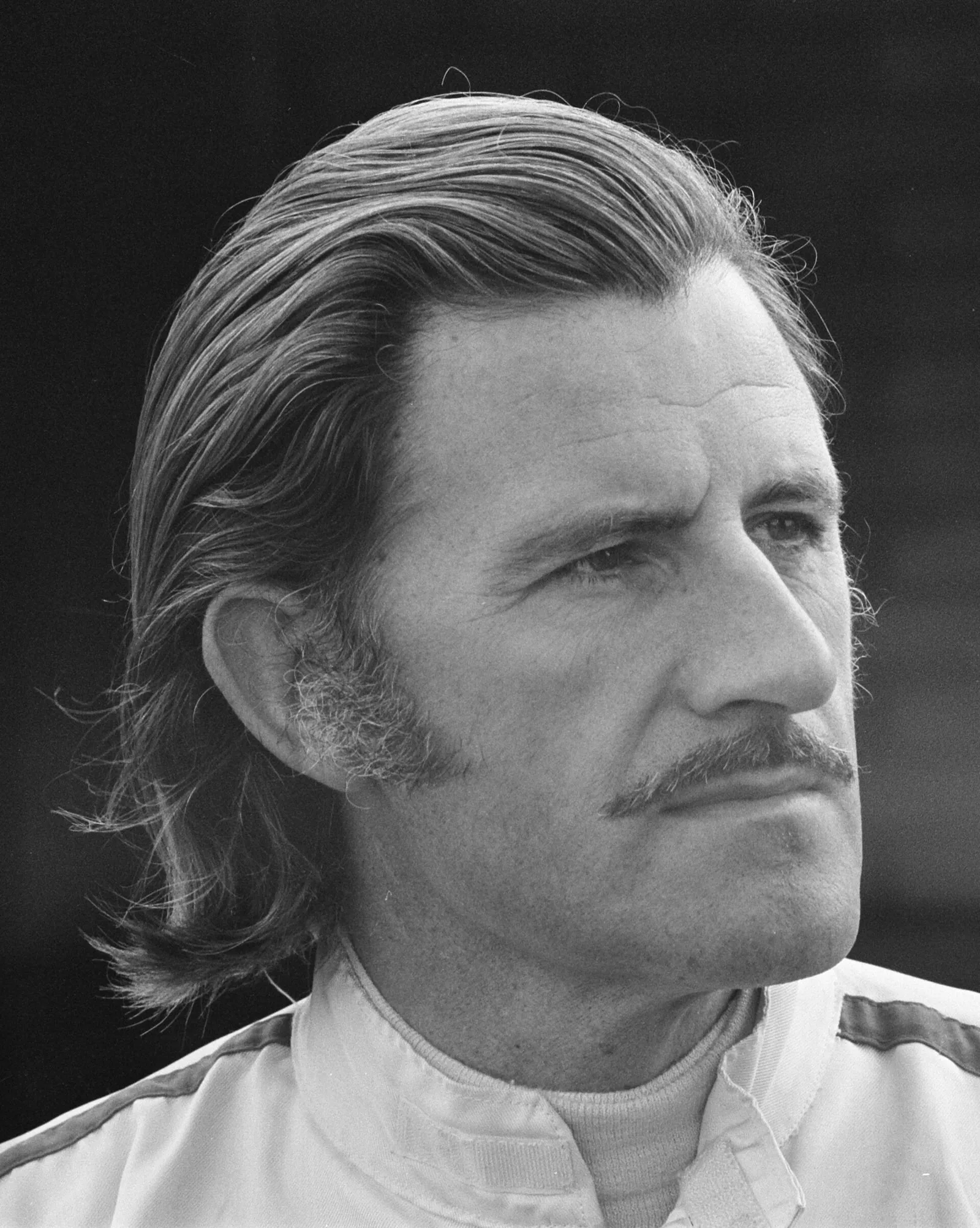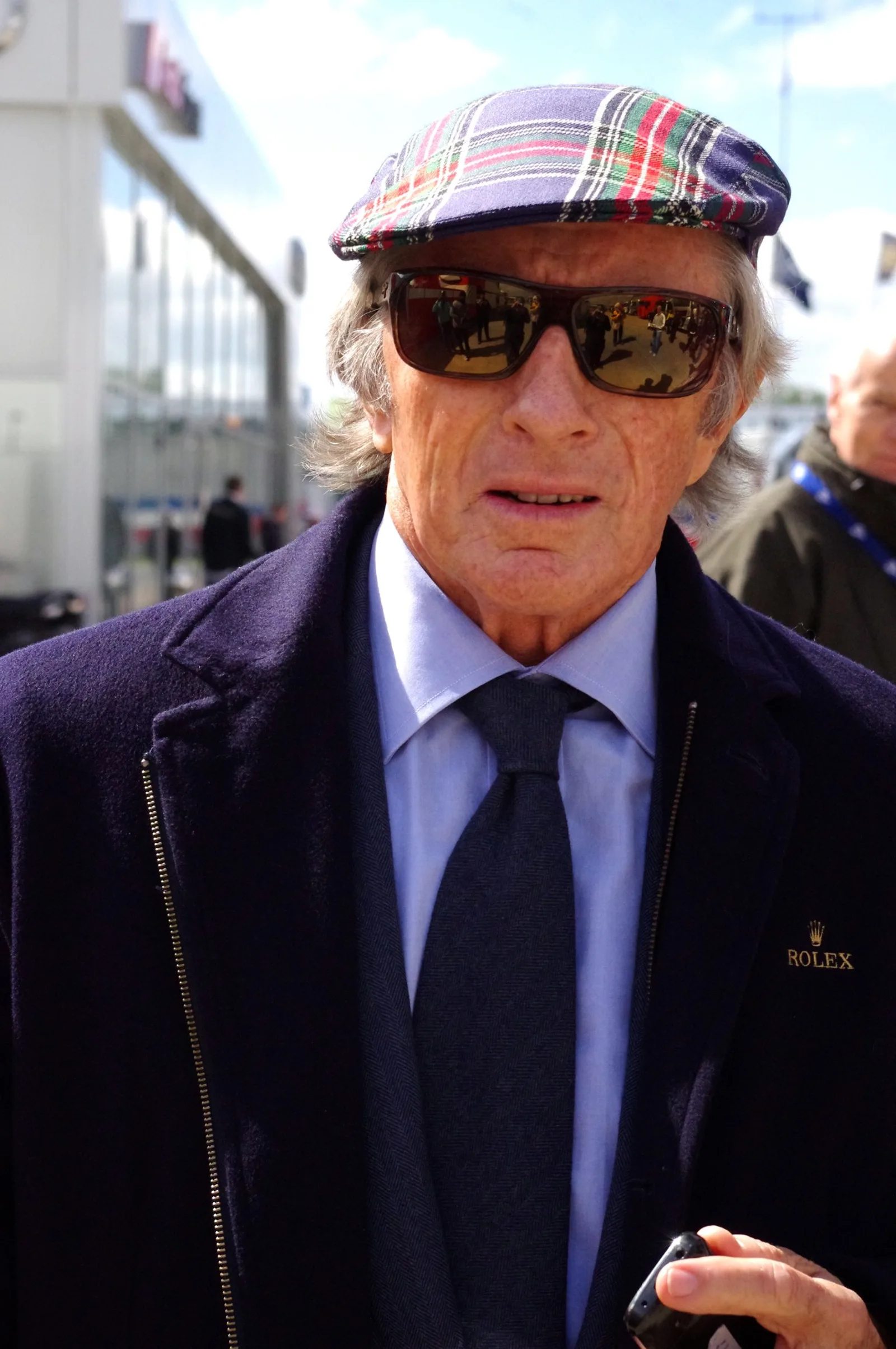
Three world championships with Matra and Tyrrell, 27 Grand Prix wins at the time of his retirement and a long campaign that made Formula One far safer.
Jackie Stewart was a British driver from Scotland who competed in Formula One from 1965 to 1973 and won three world championships. He retired with 27 Grand Prix wins and 43 podiums, both records at the time, and he became a leading campaigner for motor racing safety.
Sir Jackie Stewart is a Scottish former driver whose Formula One career ran from 1965 to 1973. He won three world championships, all with Tyrrell's team, and at his retirement he held the records for wins (27) and podium finishes (43).
Beyond the cockpit, Stewart is remembered for a long campaign to make motor racing safer, after a near-fatal crash at Spa in 1966 changed his outlook. He later became a team owner, a television commentator and a consultant, and he remains one of the most respected voices in the sport.
How did Jackie Stewart get into racing?
Stewart was born in Milton, Dunbartonshire, in 1939. His family ran car dealerships selling Austin and later Jaguar cars, and his brother Jimmy raced for Ecurie Ecosse. He left school at 16 to work as an apprentice mechanic in his father's garage, and he bought his first car, an Austin A30, for 375 pounds shortly before his 17th birthday.
He began testing cars for a customer of the family business at Oulton Park. In 1961 he won four races in a Marcos, and in 1963 he took 14 wins, with a second and two third places across the year. That record led to a test at Goodwood, where he impressed the team boss Ken Tyrrell, who offered him a seat in the Formula Junior team in 1964.
His childhood was not easy. Undiagnosed dyslexia left him mocked by teachers and classmates, and he was not diagnosed until 1980, when his son was tested. He later said that anyone with dyslexia who finds something they are good at tends to put more into it than others. Shooting was an early outlet: at 13 he won a clay pigeon competition, later joined the Scottish shooting team, and finished third in the trials for Britain's 1960 Olympic trap team.
The Flying Scot won three titles, but his 1966 crash at Spa mattered as much to the sport as any of them.
How did Stewart's junior career develop?
In 1964 Stewart drove Formula Three for Tyrrell. His debut at Snetterton in March was dominant, and he went on to win the Formula Three championship. He turned down an early offer from Cooper to race in Formula One, preferring to gain experience under Tyrrell first.
A test in a Lotus 33-Climax impressed Colin Chapman and Jim Clark, but Stewart again chose not to race in Formula One and instead joined Lotus's Formula Two team. He finished second on his Formula Two debut at Clermont-Ferrand.
What did Stewart achieve at BRM?
Stewart signed with BRM alongside Graham Hill for 1965, on a contract worth 4,000 pounds. He finished his rookie season third in the championship, with a win at Monza and several other podiums. The BRM cars were not always reliable, and the team's 1966 H16 cars struggled, although Stewart won the Monaco Grand Prix that year in a two-litre car.
The 1966 season also brought his most significant near-miss. At the Indianapolis 500 he was leading by more than a lap with eight laps to go when a broken scavenge pump ended his race. Graham Hill won the race, and Stewart was still named Rookie of the Year for a drive that many felt had been won in every other respect.
In the Tasman Series he beat Hill and raced closely with Jim Clark. In 1967 he won the New Zealand Grand Prix in a race where Clark attempted to run him down in the closing laps. His Formula One results that year were limited by unreliability, and his best was second at Spa.
What happened at Spa in 1966?
At the 1966 Belgian Grand Prix Stewart left the circuit at roughly 266 km/h (165 mph) in downpour. He hit a telephone pole and then a shed, and his steering column pinned his leg as his fuel tanks ruptured. Graham Hill and Bob Bondurant, both of whom had come off nearby, helped to free him, and there were no proper tools or medical crews at hand.
He was placed in the bed of a pickup truck, then moved to a first aid centre where he lay on a stretcher on a dirty floor. The ambulance later got lost on the way to hospital in Liege, and he was finally flown back to Britain by private jet for treatment. He missed the French Grand Prix that year as a result.
Why did Stewart become a safety campaigner?
Stewart saw the Spa crash as proof of how poorly prepared the sport was. He campaigned with BRM team director Louis Stanley for better emergency services and crash barriers, and he hired a private doctor for his own races. He also kept a spanner taped to his steering shaft, in case it was needed to free him.
He pressed for mandatory seat belts and full-face helmets, which are now standard. He also organised driver boycotts at Spa in 1969, at the Nurburgring in 1970 with his friend Jochen Rindt, and at Zandvoort in 1972, until the circuits had better barriers, fire crews and medical care. Critics among drivers and writers argued that the changes took away from the sport, and track owners complained about the cost.
How did Stewart win his titles with Matra and Tyrrell?
Stewart moved to Tyrrell's Matra team in 1968, taking a major part in running the team and negotiating sponsorship. He won at Zandvoort, the Nurburgring and Watkins Glen that year, but a failure at Mexico City cost him the title, which went to Graham Hill.
In 1969 the Matra MS80 gave him a dominant season. He won at Montjuic by more than two laps, Silverstone and Monza, and he added Kyalami and Zandvoort. He also led at least one lap of every round that season, a distinction he remains the only driver to hold, and he became champion.
In 1970 Matra insisted on its own engines, while Tyrrell wanted to stay with Cosworth. Stewart won the Jarama round in a March chassis while Tyrrell built its own car. A planned Le Mans drive with Steve McQueen did not go ahead, and Stewart's one-off Can-Am race in a Chaparral ended with a brake failure.
The 1971 Tyrrell 003 gave him the second title. He won six races that year, at Spain, Monaco, France, Britain, Germany and Canada, and he did it while suffering from mononucleosis. In 1972 he won four Grands Prix, including Argentina, France, the United States and Canada, but he finished second to Emerson Fittipaldi in the championship. He was also awarded the OBE that year.
Why did Stewart retire in 1973?
Stewart had decided to retire before the 1973 season began. He later explained that the pace of his life, the travel and the friends lost in racing had weighed heavily on him. He had also suffered from gastritis and mononucleosis.
He still won four races that year, with wins in South Africa, Belgium, Monaco and the Netherlands, and his 27th and final win came at the Nurburgring, where Tyrrell took a 1-2 finish. He said that he always felt afraid at the German Grand Prix, which was a race he had never been sure he would survive. He clinched his third title at the Italian Grand Prix, where he drove from 20th to fourth after a flat tyre.
He retired one race early after teammate Francois Cevert died in a practice crash at Watkins Glen in 1973, and he missed the race that would have been his 100th start.
| Season | Team | Result |
|---|---|---|
| 1965 | BRM | Third in the championship; first win at Monza |
| 1966 | BRM | Monaco win; crash at Spa; Indianapolis near-win |
| 1967 | BRM | Second at Spa; Tasman win in New Zealand |
| 1968 | Matra and Tyrrell | Wins at Zandvoort, Nurburgring and Watkins Glen; second overall |
| 1969 | Matra and Tyrrell | World champion; led a lap of every Grand Prix |
| 1971 | Tyrrell | World champion; six wins |
| 1972 | Tyrrell | Second overall; four wins |
| 1973 | Tyrrell | World champion; four wins; 27th and final win |
What records did Stewart hold?
When he retired, Stewart held the records for most Grand Prix wins (27) and podium finishes (43). He held the wins record for 14 years, until Prost won at Portugal in 1987. He also held the British wins record for 19 years, until Nigel Mansell's 1992 home win.
Until Lewis Hamilton matched him in 2015, no other Briton had won three titles. With John Surtees gone in March 2017, Stewart is the last living Formula One champion from the 1960s, and he is also the eldest surviving race winner.
What did Stewart do after racing?
Stewart became a broadcaster, covering Formula One, NASCAR and Indy car races for ABC's Wide World of Sports from 1971 to 1986. He also covered the Indianapolis 500 for more than a decade. He was known for his insightful analysis, his Scottish accent and his quick delivery, and he left ABC in 1986 after tension over his commercial work for Ford.
Stewart admitted in his memoir that he used notes on air, because dyslexia made reading an autocue difficult. Jim McKay, ABC's lead sports presenter, joked that Stewart's delivery was almost as quick as his driving. His commentary also included criticism of driver safety: after a 1977 Daytona 500 crash he argued that drivers should wear flame-resistant clothing.
He later covered CART races for NBC SportsWorld and worked on Australian and Canadian television. He also appeared alongside Murray Walker on the BBC's Formula One coverage. He started a partnership with Ford in 1964 that lasted 25 years, and he advised its engineers on improvements.
In 1997 he returned to Formula One as a team owner with his son Paul, running Stewart Grand Prix. Rubens Barrichello finished second at the rain-hit Monaco Grand Prix that year, and in 1999 Johnny Herbert won at the European Grand Prix at the Nurburgring. Ford took the team over in 2000, and it became Jaguar Racing.
What honours did Stewart receive?
Stewart was knighted in 2001 for services to motor racing, after an OBE in 1971 and a host of awards in the 1970s. The International Motorsports Hall of Fame added him in 1990, and he has been honoured by several universities. The Sports Illustrated Sportsman of the Year award and the BBC Sports Personality of the Year both came to him in 1973.
In 1996 Heriot-Watt University gave him an honorary doctorate, and Cranfield University followed in 1998. In 2009 he was given the Freedom of West Dunbartonshire at a ceremony in his hometown of Dumbarton. In 2012 he gave the starting command for the 50th Rolex 24 at Daytona, stepping in for A. J. Foyt.