A Dolgellau partnership built wooden-chassis sports cars, a Mini-based racer and the Mantis, then failed and revived several times.
Marcos is a British sports car maker founded in 1959 in Dolgellau, North Wales, by Jem Marsh and Frank Costin. It built plywood-chassis racers, the Mini Marcos and the Mantis, and went through several collapses before its brand was contested in the 2020s.
Marcos Engineering is a British sports car maker whose name comes from the surnames of its founders, Jem Marsh and Frank Costin. Over more than six decades it built wooden-chassis racers, a Mini-based car, the Mantis and factory-built coupes, and it failed or was sold several times along the way. Its story is one of enthusiasm, ambitious engineering and repeated financial trouble.
Who founded Marcos and why is it called that?
Marcos was founded in Dolgellau, North Wales, in 1959 by Jem Marsh of Speedex cars, working with the aerodynamicist Frank Costin. The name combines their surnames, and it marks a partnership that shaped the company's early engineering and styling.
Costin had earlier worked on the de Havilland Mosquito fighter-bombers, and from that experience he got the idea of using plywood for the chassis. That wooden approach gave Marcos its distinctive early cars and its reputation for light, strong monocoques.
The company moved to a converted mill in Bradford on Avon, Wiltshire, in 1963. Its move to a purpose-built factory at nearby Westbury followed in 1971, at a cost of 125,000 pounds sterling.
Wooden chassis, Mini-based racers and a Mantis, then a series of collapses and a name still in dispute.
Why did the first Marcos cars use plywood?
The first car, the Xylon, had gullwing doors and a windscreen made of four panels. It was nicknamed the ugly duckling. Nine were built in 1959 and 1960 for 750 Motor Club events, using Ford engines of between 997 and 1498 cc, with Standard 10 and Triumph Herald steering and suspension.
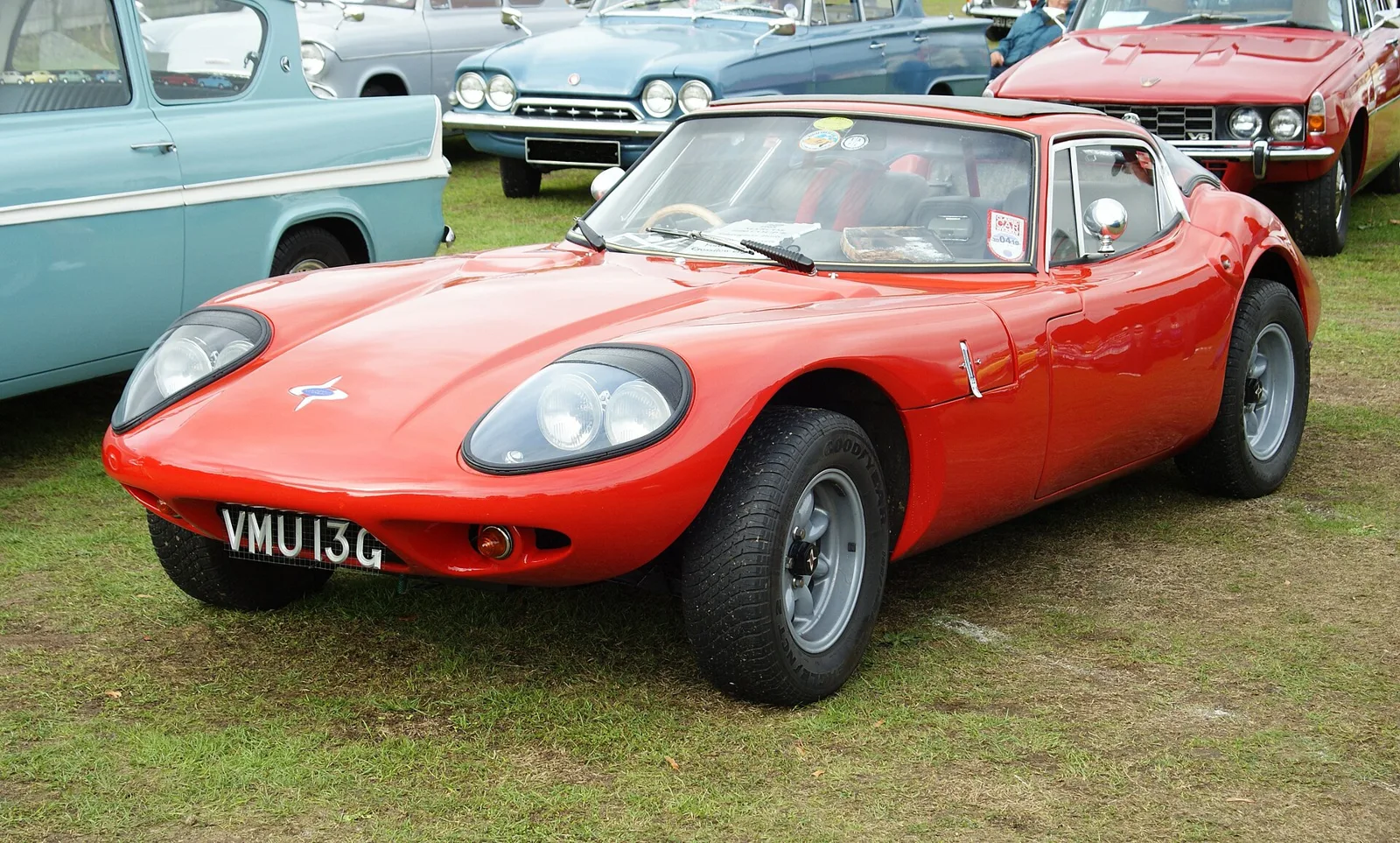
The chassis was built from laminated 3 mm marine plywood. That gave the cars strong monocoques and low weights, and the GT was homologated at 475 kg. Thirty-nine production cars were made up to 1963, and most early Marcos models went on to compete in national and international events.
How did the Luton gullwing and fastback GT develop?
In 1961 Dennis and Peter Adams joined the project and made several changes to the original design. The Luton gullwing and spyder followed in November 1961, with a body reworked from the Xylon.
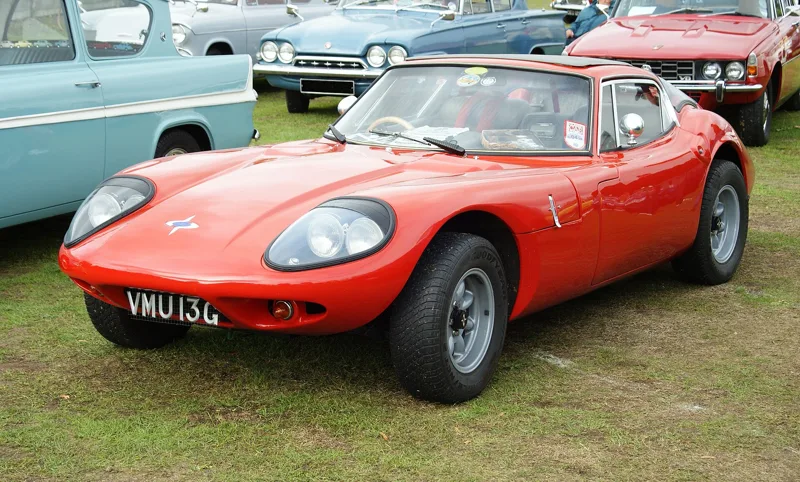
The design was reworked again into the fastback GT, which was displayed at the London Racing Car Show in 1963. Its sporting character came from its homologation and light weight, and all 18 fastbacks made in 1963 went into racing.
The fastbacks were awkward to get in and out of once the gullwing doors had gone. Drivers who raced them included Jackie Oliver, Terry Sanger, Derek Bell and Jem Marsh himself.
What was the Marcos 1800GT?
In 1964 the Marcos 1800GT was introduced with the four-cylinder Volvo B18 engine, an overdrive gearbox and a De Dion rear axle. Enthusiasts knew this design for more than 30 years, although its plywood chassis was later swapped for steel.
In 1966 the GT switched to Ford engines of originally 1500 cc, later 1650 and 1600 cc, with a coil-sprung live rear axle. In 1968 the Ford Essex V6 from the Capri Mk1 was added, and in 1969 the plywood chassis was replaced by steel, which shortened production time and saved cost. The Ford Essex V4 then replaced the earlier inline-fours.
On test, the Ford V6 car passed 120 mph (190 km/h), and the Volvo-engined car was close behind. From 1970 cars for North American markets received Volvo three-litre inline-sixes with Borg-Warner automatics, tubular steel space frames and no headlight covers to meet US road rules.
Why did Marcos first go out of business in 1971?
Problems with exporting cars to the US and the cost of the new premises led to financial trouble, and Marcos went out of business in 1971. UK dealers had been discounting new cars heavily from late 1970 onward, and the company's stock of 35 unsold US cars was described as liquidated.
In July 1971 the Rob Walker Group of Companies, a principal dealer, acquired the stocks and assets and set up a new company, Marcos Ltd. The new owners said production would continue, mainly for the UK market, but it is unclear whether many additional cars were built.
In June 1972 a cash jumble sale of prototype and shop-soiled components was held at the old Westbury factory, as the company reorganised and moved to a smaller site. Delays and problems with the federalised US cars, together with the development costs of the Mantis, later led the company to close its doors for the first time.
What was the Mini Marcos?
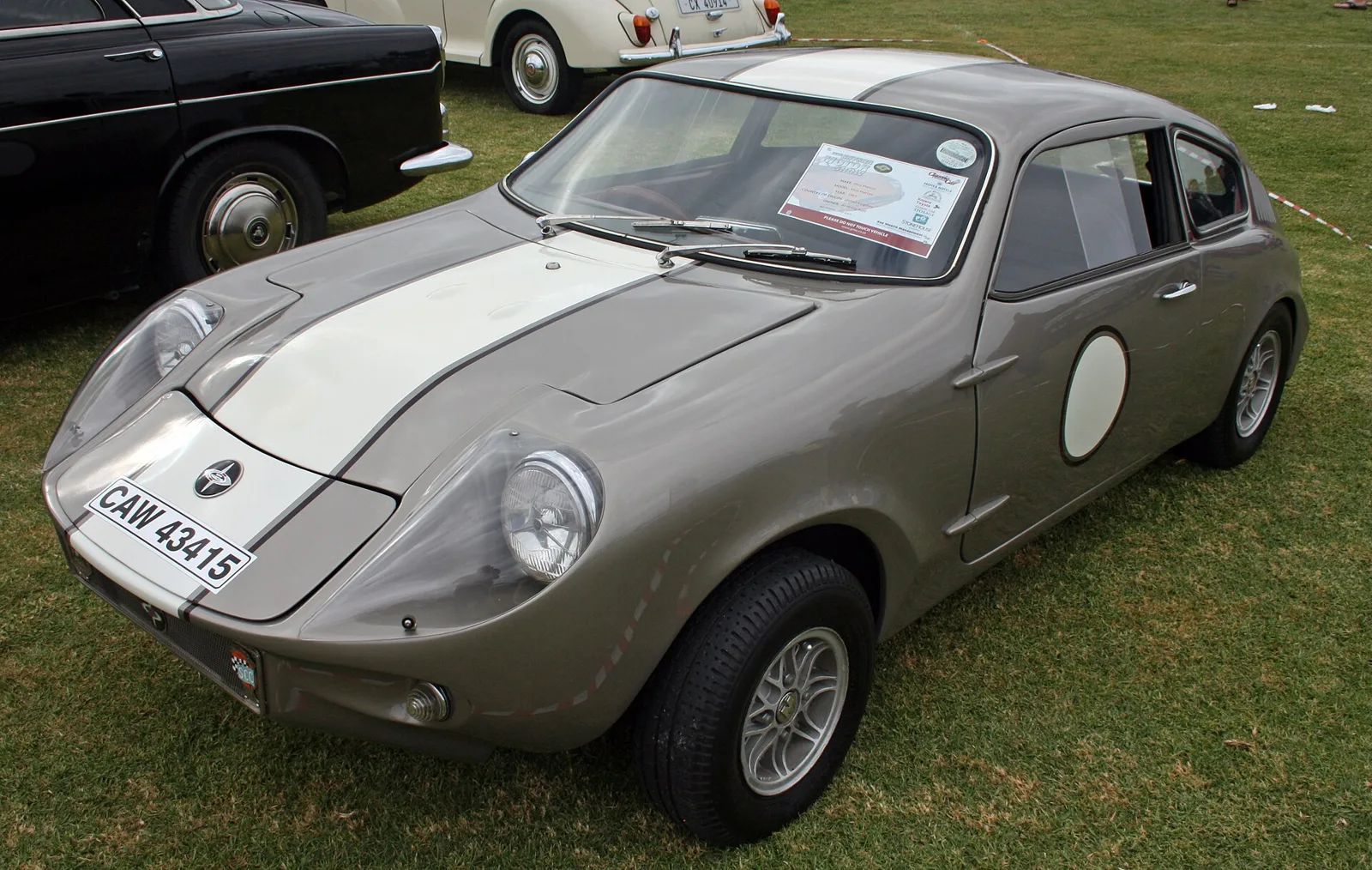
The front-wheel drive Mini Marcos, designed by Malcolm Newell, arrived in 1965. It had a fibreglass monocoque body, Mini subframes and suspension, and an 80 inch (2,000 mm) wheelbase. A transversely mounted Mini A-series engine drove the front wheels.
A French-entered Mini Marcos came 15th overall in the 1966 Le Mans race, and it was the only British car to finish. After Marcos stopped building the car around 1975, a different firm sold updated versions under the Midas name, and licensed builds appeared in South Africa, Australia and Ireland.
The car was revived in 1991 for the Japanese market and was built until 1995. A total of more than 1,300 Mini Marcos cars have been sold in kit form and as complete cars, and in 2005 the moulds were used for the Marcos Heritage Mk. VI.
What was the Marcos Mantis?
The first Mantis, the Mantis XP, appeared in 1968. It was a racing car for the Group 6 prototype category, powered by a mid-mounted Repco V8 and built on a plywood monocoque. Just one example was built. It raced once, at Spa in 1968 over 1,000 km, and retired with electrical trouble in heavy rain.
Marcos had intended to race the XP at Le Mans in 1968, but the event was postponed from June to September. By then the car was in America and had a Buick V8 fitted, from which the Rover V8 was later derived. A full restoration was completed in 2008.
The next Mantis, the four-seater M70, was launched in 1970 with a fuel-injected 2.5-litre Triumph TR6 six. Thirty-two were sold before the company went into liquidation in 1972, and Autotune later took the moulds and produced a few more as Autotune Mirages in the mid-1980s.
How did Marcos come back in the 1980s?
Marsh brought the brand back in 1981 by selling the earlier GT cars as kits with a range of Ford, Triumph and Rover engines. About 130 kits were sold up to 1989. The brand's next model, the Mantula, followed in 1983.
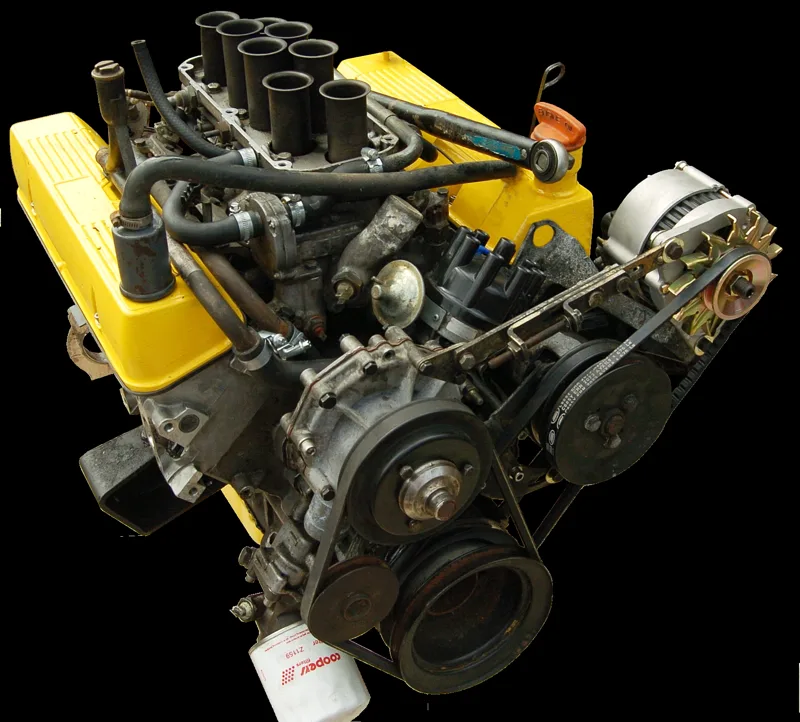
The Mantula was externally similar to the old GT but used a 3.5-litre Rover V8 with a five-speed gearbox, producing 190 hp (142 kW) at 5280 rpm. The lighter alloy engine brought the car to about 900 kg and made it competitive with other Rover-powered sports cars such as TVR and Morgan. Tested by Motorweek, it reached 0-60 mph in 5.7 seconds and a top speed of 136.9 mph (220 km/h).
The Spyder convertible arrived in 1986 and later outsold the coupes. In 1989 the car gained independent rear suspension, together with the Ford Sierra's differential and rear disc brakes, and a total of 170 coupes and 119 Spyders were produced.
What were the Martina and the factory-built Mantara?
The Marcos Martina, launched in 1991, looked much like the Mantula but had flared front wheel arches. It borrowed its 2-litre four-cylinder engine, steering and suspension from the Ford Cortina, and around 80 were built before production of the Mantula and Martina ceased in 1993.
In 1992 Marcos left the kit car business, and all cars from then were factory built. The Mantara, sold through dealers in limited numbers, adopted MacPherson strut front suspension and offered power steering for the first time. It came with a 3.9-litre fuel-injected Rover V8 as standard, or a 4.6-litre Rover V8 as an option.
The Marcos GTS was a version of the Mantara powered by a 2-litre Rover Tomcat engine, built on the request of the Italian distributor Martes Spider Cars. The top version was a 200 bhp turbo.
What were the LM Le Mans cars?
For a return to GT racing, Marcos produced a range of modified Mantaras called the LM cars. Several versions were built, including the LM400 with a 3.9-litre Rover V8, the LM500 with a Rover 5-litre V8 and the LM600 with a 6-litre Chevrolet small-block V8.
A limited run of road-going cars was also built, so the racers could count as production vehicles. Just 30 road-going LM cars were made, and just one of them was an LM600.
What did the 1997 Mantis and Mantis GT offer?
In 1997 the Mantis name returned on a two-seat coupe or convertible based on the LM series, powered by a 4.6-litre all-aluminium quad-cam Ford Modular V8 producing 327 bhp (244 kW; 332 PS). It was capable of 170 mph (270 km/h), and the price was 46,883 pounds sterling.
In 1998 the engine was supercharged to produce one of the few British production sports cars with over 500 bhp. Named the Mantis GT, it used a Vortech supercharger and intercooler to produce 506 bhp (377 kW; 513 PS). It accelerated from 0-60 mph in 3.7 seconds, and it cost 64,331 pounds sterling.
Production of the Mantis reached 51 cars, of which 16 were the supercharged GT version. The figure does not include the Mantis Challenge race cars.
What did Tony Stelliga's Marcos achieve?
In 2002 Marcos Engineering Ltd began trading, with Marsh as vice-chairman and Canadian investor Tony Stelliga providing the funds. It built the Marcasite TS250, with a 2.5-litre 175 bhp Ford V6, and in 2003 the 5-litre Rover V8-powered TS500 followed. The 2002 price of the TS250 was 29,744 pounds sterling plus VAT.
The Marcos TSO was launched in 2004 with a Chevrolet V8 in 350 bhp or 400 bhp versions, with its components designed using CAD in England and its chassis engineering completed by Prodrive. In 2006 the TSO GTC followed with a racing suspension, racing brakes and a rear diffuser. With its Performance Pack it produced 462 bhp, reached 60 mph in 4.1 seconds and had a top speed of over 185 mph (298 km/h).
Only two prototypes and seven production TSO GTCs were built. On 9 October 2007 the company again announced that Marcos would cease production and go into voluntary liquidation, with Stelliga's company going into liquidation that October.
Who owns the Marcos name today?
After the 2007 liquidation, Marcos Heritage Spares Ltd, owned by Rory MacMath, took over the design rights, jigs and car history files. MacMath had worked closely with Marsh on the cars. The names Marcos Engineering and Marcos Cars were purchased by the engineer Tony Brown, who later began work on a new vehicle.
A mid-engine prototype was revealed in 2013, and in 2025 Marcos partnered with the former Rich Energy chief executive William Storey, who announced a new supercar named the Manticore. Meanwhile, Marcos Heritage Spares was acquired by the businessman Howard Nash in 2022, who formed the Marcos Motor Company. Its Project Mosquito, revealed in 2025, uses the running gear of the R53 Mini Cooper, and both sides are involved in an ongoing dispute over the Marcos brand.
What are the key Marcos figures?
| Model | Key figures |
|---|---|
| Xylon | Nine built in 1959 and 1960; 997 to 1498 cc Ford engines |
| Fastback GT | Homologated at 475 kg; 18 made in 1963 |
| Mini Marcos | 80 inch (2,000 mm) wheelbase; over 1,300 sold |
| Mantis M70 | Thirty-two sold before liquidation in 1972 |
| Mantula | 3.5-litre Rover V8, 190 hp (142 kW); 0-60 mph in 5.7 seconds |
| Mantula and Spyder | 170 coupes and 119 Spyders |
| Mantis (1997) | 327 bhp (244 kW; 332 PS); 170 mph (270 km/h); 46,883 pounds sterling |
| Mantis GT | 506 bhp (377 kW; 513 PS); 0-60 mph in 3.7 seconds; 64,331 pounds sterling |
| Mantis production | 51 cars, 16 of them supercharged GT versions |
| TSO GTC | 462 bhp with Performance Pack; top speed over 185 mph (298 km/h) |
How did Marcos perform in motorsport?
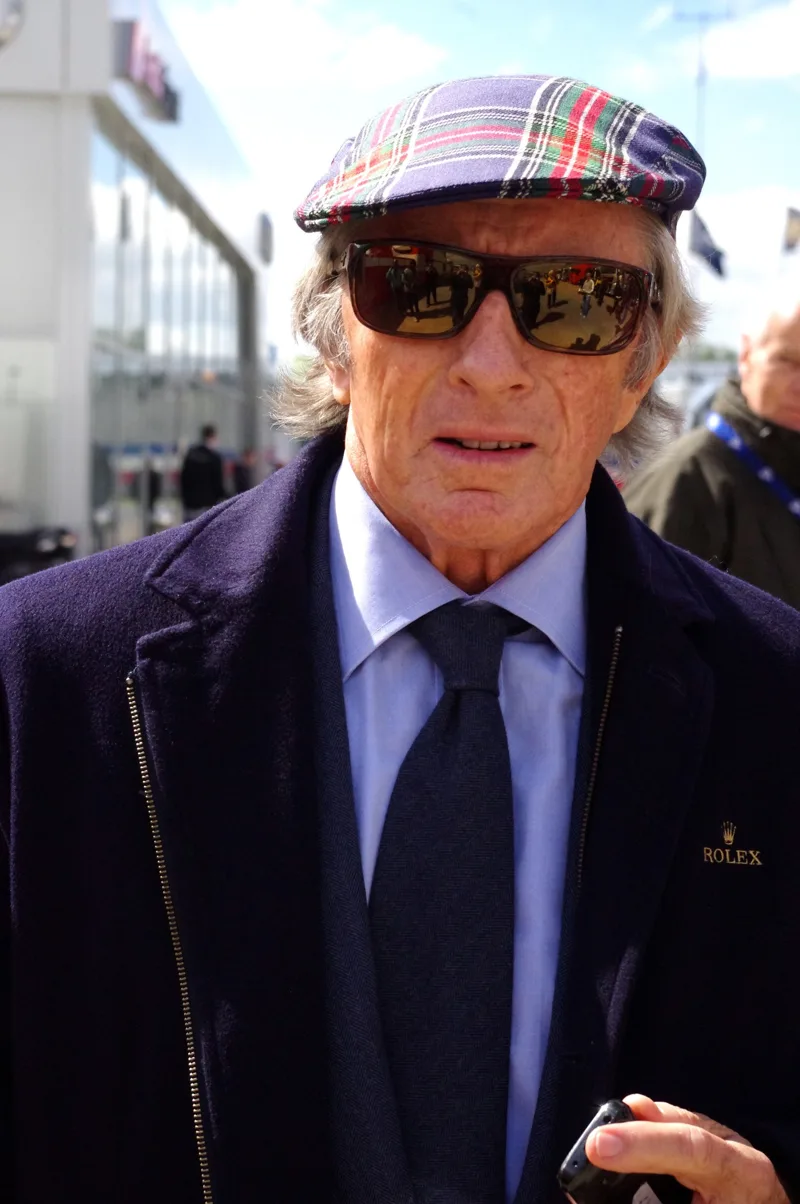
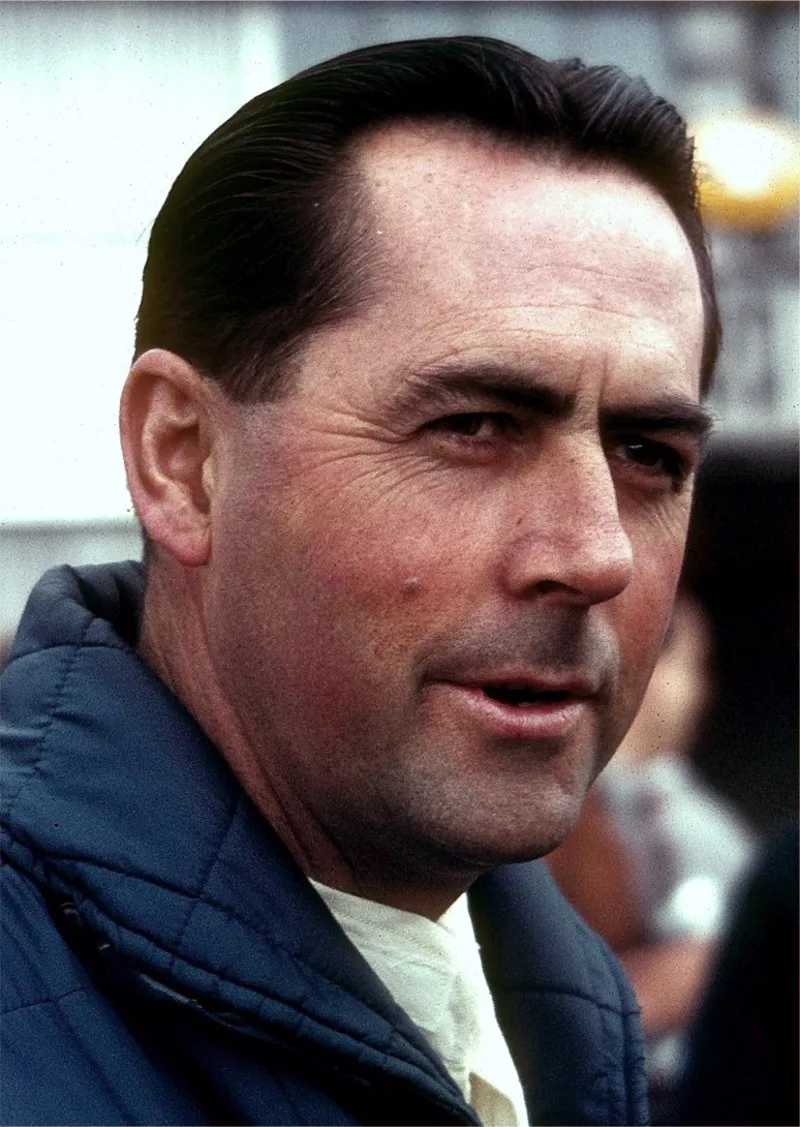
Marcos began with race cars, built for 750 Motor Club events. Jackie Stewart won four races in 1961, Bill Moss won nine from ten starts, and John Sutton took the 1961 Autosport Championship. Stephen Minoprio was the 1962 Autosport 1000cc GT champion in his Gullwing, setting seven lap records along the way.
The Mini Marcos debuted at Castle Combe on 25 September 1965, where Geoff Mabbs won the BRSCC race by 81 seconds. In 1967 Marcos's own Mini Marcos was clocked at 141 mph on the Mulsanne Straight during the April test, though it failed to finish Le Mans because of an oil pump failure.
In 1993 Marcos announced a return to GT racing, and in 1995 two cars competed at Le Mans. The British GT championship went to Marcos in 1995, 1996 and 2000. In 2000 the racing business was sold to the Dutch engineering firm Eurotech, and an LM600 driven by Cor Euser won the Dutch GT Championship in 2002, 2004 and 2009.
How is Marcos remembered?
Marcos is remembered for its plywood cars, the 1800GT and the Mini Marcos, and for the Mantis. The company's life has been shaped by repeated failures and revivals, which left enthusiasts with a range of clubs and historic cars to keep the legend going.
The Marcos Owners Club, the Mini Marcos Owners Club, the Unofficial Marcos Homepage, the Marcos Forum and Club Marcos International all cater to enthusiasts. The Volvo-engined 1800GT cars are accepted for historic racing under FIA Appendix K, and wooden-chassis Ford-engined cars are still raced.