Five generations of a medium family car that dominated British sales through the 1970s, shared its bones with Germany's Taunus and left a long shadow in the banger racing scene.
The Ford Cortina was a medium family car built by Ford from 1962 to 1982 in five generations. It was Britain's best-selling car for much of the 1970s, shared its platform with the German Taunus from 1970, and was replaced by the Ford Sierra.
The Ford Cortina was a medium-sized family car that Ford built from 1962 to 1982 in five generations. It became the best-selling car in Britain in most years of the 1970s, and it shared its platform with the German Ford Taunus from 1970 onward. It was replaced by the Ford Sierra, but its name and its sales record are still remembered.
What was the Ford Cortina?
The Cortina was a rear-wheel-drive family saloon, estate and, for a time, a coupe-style two-door, sold across a huge range of trims. The first generation was built to be economical to buy and run, and to be cheap to produce in Britain. Over the years it grew into a versatile range that suited fleet buyers, private owners and performance enthusiasts.
Its name came from Cortina d'Ampezzo, the Italian ski resort that hosted the 1956 Winter Olympics. Ford ran a publicity stunt with several Cortinas driven down the resort's bobsled run, which it called Cortina Auto-Bobbing. The project name during development was Archbishop.
A car that was built for ordinary families and ended up as the country's most dependable best-seller for a decade.
Where did the Cortina name come from?
The name honoured the Italian ski resort of Cortina d'Ampezzo, which had hosted the 1956 Winter Olympics. The link gave Ford a memorable name for a car that was meant to appeal to ordinary family buyers across Britain. Ford's publicity team turned the resort's bobsled run into a stage for the car.
Development was led by a designer who had worked on the Edsel. Roy Brown Jr. had been sent to Dagenham after that car's failure, and he became chief designer of the Cortina. The aim was a family car that could be sold in large numbers at a modest price.
How did the Mark I Cortina launch?
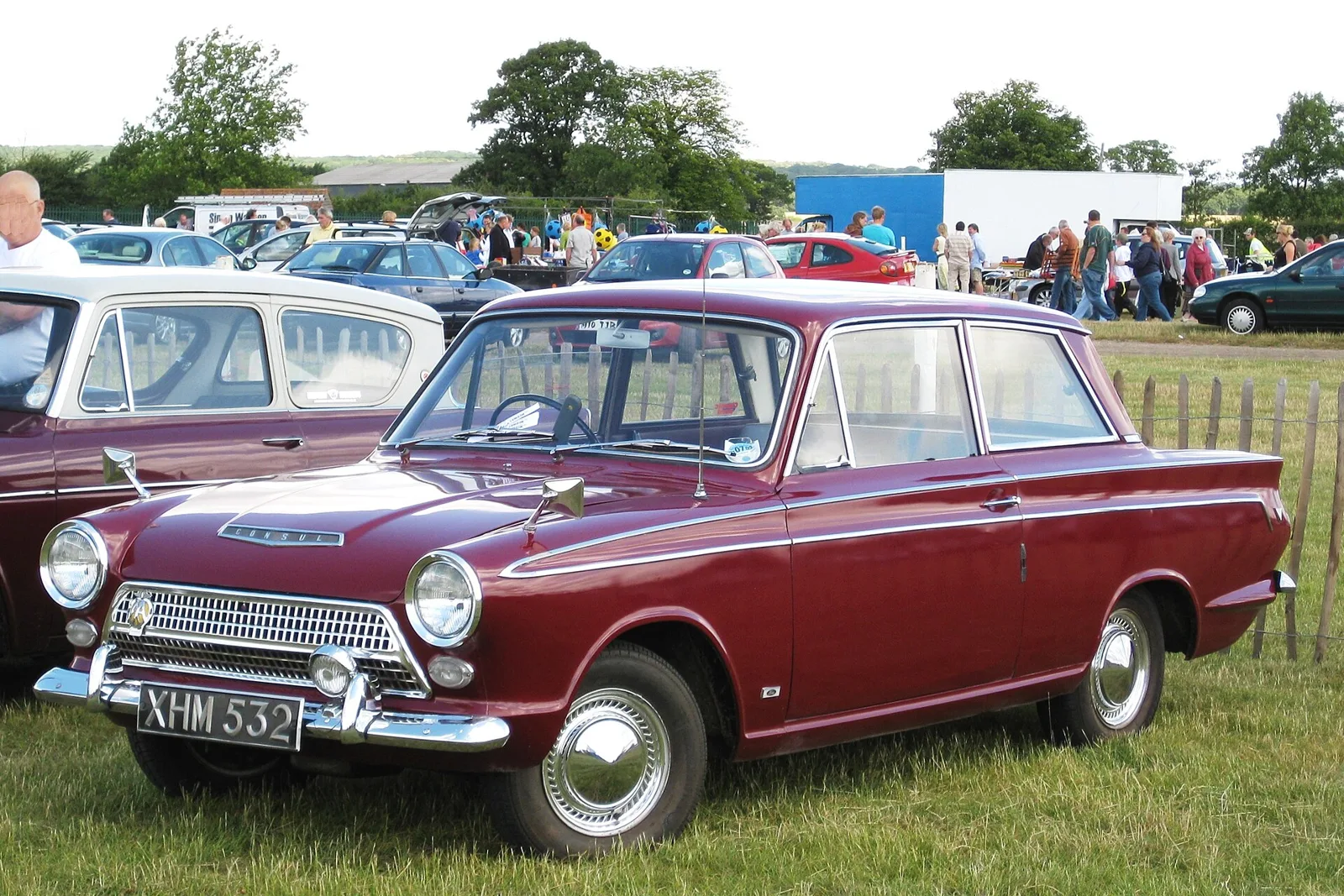
The Mark I was launched on 20 September 1962 and aimed at buyers of the Morris Oxford Farina and the Vauxhall Victor. Ford chose a rear-wheel-drive layout over the front-wheel-drive Taunus P4 used in Germany, and the car was first intended to be called the Ford Consul 225. A modest facelift in 1964 saw the name shortened to plain Cortina.
Early engines were 1198 cc and, from early 1963, 1498 cc four-cylinder units. The GT with lowered suspension produced 78 bhp (58 kW; 79 PS), against 60 bhp (45 kW; 61 PS) for the 1500 Super. The engines shared a pushrod design known as the pre-crossflow unit, with inlet and exhaust ports on the same side of the head.
The Lotus Cortina stood apart. It was offered as a two-door saloon in white with a green side flash and used a 1558 cc twin-cam engine built by Lotus. Its rear suspension was fragile, so the model soon reverted to the standard semi-elliptical rear end.
What did the Mark II bring?
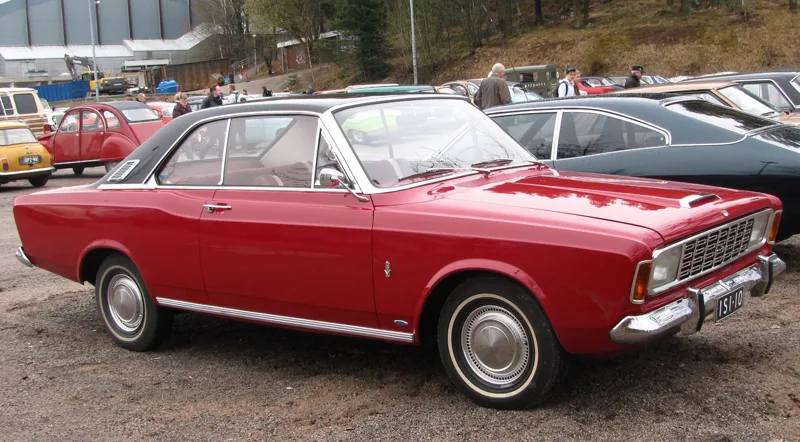
The second generation was designed by Roy Haynes and launched on 18 October 1966, four years after the original car. It had styling elements in common with the third-generation US Ford Falcon, and at 168 in (4,267 mm) it was slightly shorter than before. Extra width gave more room inside, and the car had a smaller turning circle.
The Mark II was Britain's most popular new car in 1967, which ended the long run of the BMC 1100 and 1300 range at the top of the sales charts. The 1600E arrived at the Paris Motor Show in October 1967, combining lowered suspension with a high-tune GT engine and luxury trim. Graham Robson, a Cortina expert, regarded the 1600E as the first Cortina recognised as a classic.
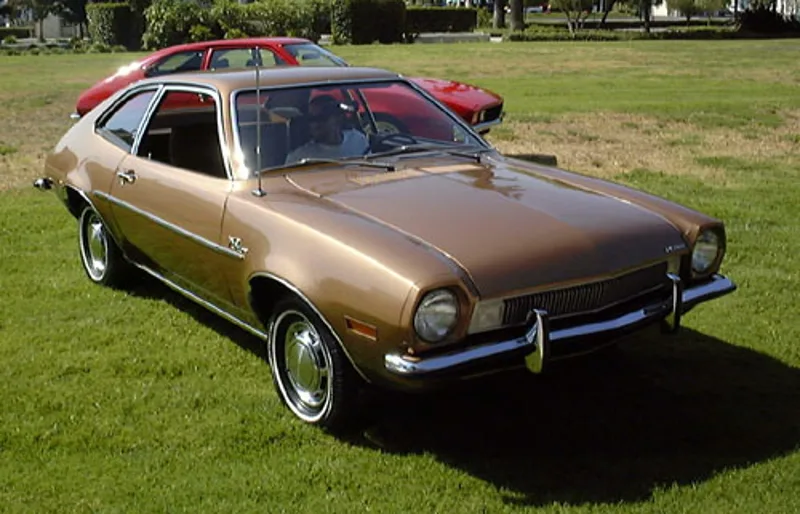
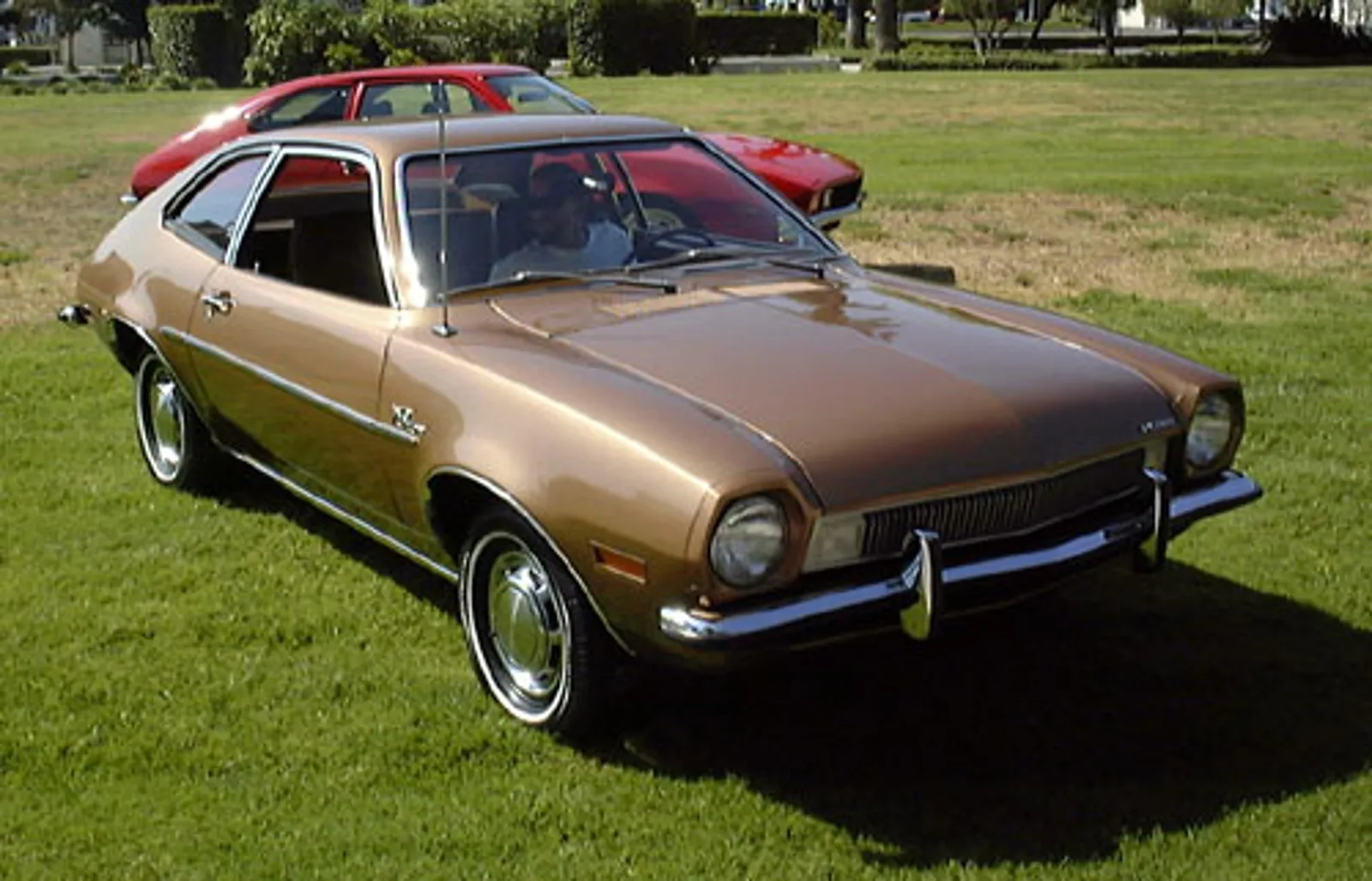
In the United States the Mark II sold 16,193 cars in its first year, rising to 22,983 in 1968. Sales then slipped, reaching 10,216 in 1970. Ford USA dropped the model in 1970 in favour of the domestic Pinto, which sold 352,402 units for model year 1971.
How did the Mark III reshape the Cortina?
The Mark III, launched on 23 October 1970, was the first generation to share its platform with the German Taunus. Its internal name TC1 stood for Taunus-Cortina, and it was engineered by Harley Copp before he returned to Detroit. It looked much larger than the Mark II, but it was the same length and four inches (100 mm) wider.
Its design borrowed the coke-bottle style from Detroit, with a fluted bonnet and beltline similar to American Mercury and Ford models. The suspension changed to double wishbones at the front, which gave a softer ride but also some understeer with heavier engines. Sales started slowly because a ten-week strike in 1971 reportedly cost around 100,000 vehicles.
Volumes recovered, and the Cortina became Britain's top-selling car in 1972. It kept that title until 1976, when the Mk2 Escort overtook it. In late 1973 the Mark III received a facelift, redesignated TD, with a flatter dashboard and rectangular headlights for the XL, GT and the new 2000E.
Why was the Mark IV a rebody?
The Mark IV, known internally as TC2, went on sale on 29 September 1976. It was a more conservative design than its predecessor and was largely a rebody of the Mark III with little mechanical change. It appealed to fleet buyers, and it made the Cortina and Taunus differ mainly in their badges.
The squarer body followed the folded paper fashion of the time, and Ford claimed about 15 percent more window area. The wider rear window was described as giving 40 percent better visibility. The 2.3 litre Cologne V6 arrived in 1977, and the Ghia became the top model in the range.
The Cortina also appeared in the 1977 film The Spy Who Loved Me, where it chased James Bond in his Lotus Esprit. Despite its sales success, the Mark IV is now the rarest Cortina, largely because of poor rustproofing and its popularity with banger racers.
What was the final Mark V Cortina?
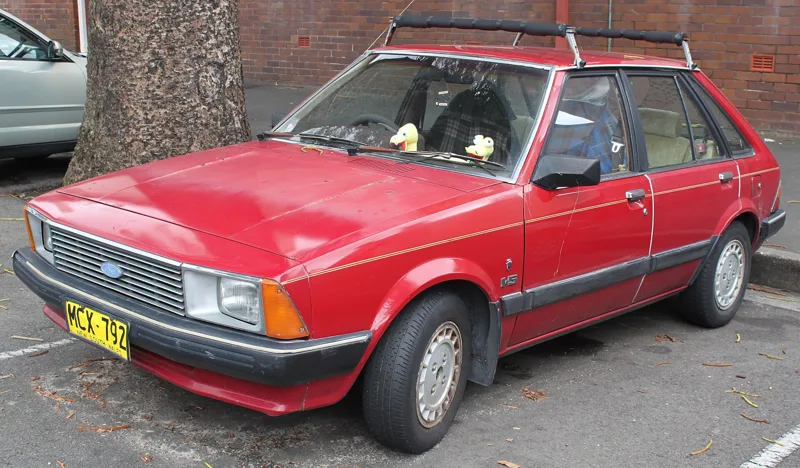
The Mark V was announced on 24 August 1979 under the codename Teresa, and it was marketed externally as the Cortina 80. Prices started at 3,475 pounds sterling for a basic 1.3 litre model. It was a step between a facelift and a rebody, with revised headlights and a flattened roof.
The 2.3 litre V6 gained electronic ignition and produced 116 bhp (87 kW; 118 PS). The final model was the Crusader special edition, a run-out model that sold 30,000 units and was Ford's best-selling special edition. The last Cortina rolled off the Dagenham line on 22 July 1982, shortly after the Sierra launched.
How did the Cortina sell in Britain?
The Cortina took Britain's best-selling car title from the Austin and Morris 1100 and 1300 in 1967. It held the top spot for nine of the ten years from 1972 to 1981, and it was the best-selling car in 1980 and 1981. In 1979 it set a British record with more than 193,000 sales in a single year.
Over its 20-year, five-generation run, more than 2.8 million Cortinas were sold in Britain. It was still the third most popular car ever sold there in March 2009. The Cortina also sold roughly 500,000 units in the 1980s despite production ending in 1982.
How did the Cortina perform overseas?
In New Zealand the Cortina was the most sold car for seven years, with over 100,000 assembled, and local assembly ran until June 1983. South Africa built its own V6 variants, including the XR6 and the homologation special XR6 Interceptor, which produced 118 kW and was built in just 250 examples.
Australia built a version based on the Falcon's six-cylinder engines, including the TC Cortina and the top XLe trim. The Mark V was sold there as the TF Cortina and dropped in 1981. Cortinas were also assembled in Ireland, Pakistan and the Philippines, and Hyundai began assembling the Mark II under licence in Ulsan in 1967.
Did the Cortina race?
The Cortina Lotus was a successful rally and racing car across Europe and North America during the 1960s and 1970s. The standard car was rarely used in competition, but it benefited from the publicity around the Lotus versions. Ian Geoghegan won the 1964 Australian Touring Car Championship in a Cortina GT.
The car found a second career in banger racing on oval circuits, where its rigidity and cheap availability made it popular. The Kent engine found favour with Morgan, which used it in its 4/4 from 1962 to 1980, and it became the basis of many kit cars and Formula Ford racing.
How did the Cortina sell in South Africa and Australia?
South Africa built V6 Cortinas with the Essex engine, and its range included a locally designed pick-up known in Afrikaans as a bakkie. That pick-up stayed in production after the Sierra replaced the saloon. Its V6 variants were sold under names such as Perana, Savage and Cheetah in other markets.
Australian Cortinas followed a different path. Ford Australia used the Falcon's six-cylinder engines and borrowed paint colours from the Falcon range, and the XLe became a recognisable top specification. The Mark V sold there as the TF Cortina but sold poorly, and it was dropped.
New Zealand was another important market, with more than 100,000 Cortinas assembled locally. Its cars followed the British range closely, although they used metric instruments and no two-door saloon was offered for the Mark IV. The car was missed when local production ended.
Specification overview
| Specification | Detail |
|---|---|
| Production span | 1962 to 1982, five generations |
| Launch | 20 September 1962, Dagenham |
| Mark I GT engine | 1498 cc, 78 bhp (58 kW; 79 PS) |
| Mark II length | 168 in (4,267 mm) |
| Mark III width | 4 in (100 mm) wider than the Mark II |
| Mark V V6 | 2.3 litre, 116 bhp (87 kW; 118 PS) |
| Mark V starting price | 3,475 pounds sterling |
| Best British year | more than 193,000 sales in 1979 |
| Final car built | 22 July 1982 |