From a 1,973 cc four-cylinder wedge to a twin-turbo V8 and a Peter Stevens restyle, the Esprit ran for 28 years and became one of Lotus's most durable models.
The Lotus Esprit was a mid-engined sports car built by Lotus from 1976 to 2004 at Hethel. Its folded-paper body was drawn by Giorgetto Giugiaro, and it later received restyles by Peter Stevens and Julian Thomson. The range grew from a four-cylinder model to a turbo and a twin-turbo V8.
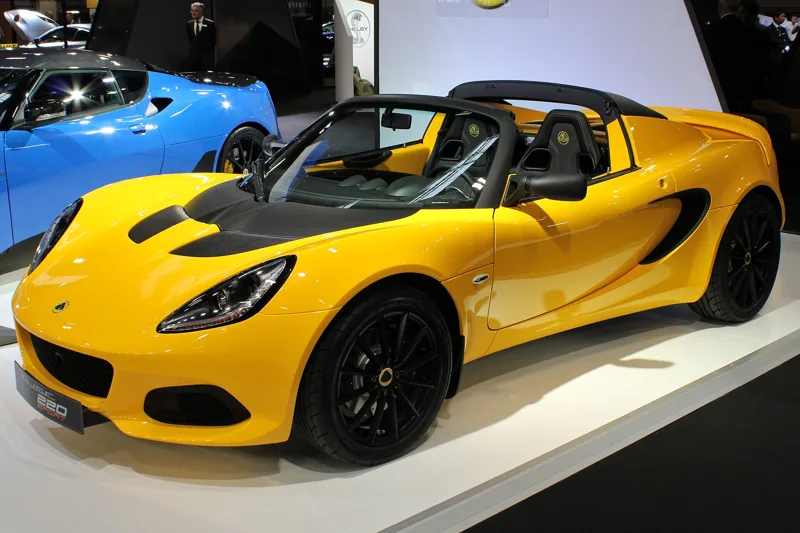
The Lotus Esprit was a mid-engined, rear-wheel-drive sports car built at Hethel in England from 1976 to 2004. Its wedge-shaped body began as a folded-paper design by Giorgetto Giugiaro, and the car went through four series and a turbo V8 before production ended. Together with the Elise and Exige, it is one of Lotus's longest-lived models.
What is the Lotus Esprit?
The Esprit is a two-door, fixed-head coupe with its engine behind the seats and drive to the rear wheels. Its steel backbone chassis carried a fibreglass body, and early cars used a 1,973 cc four-cylinder engine. The car survived through several engine and styling changes, which kept it in the range for almost three decades.
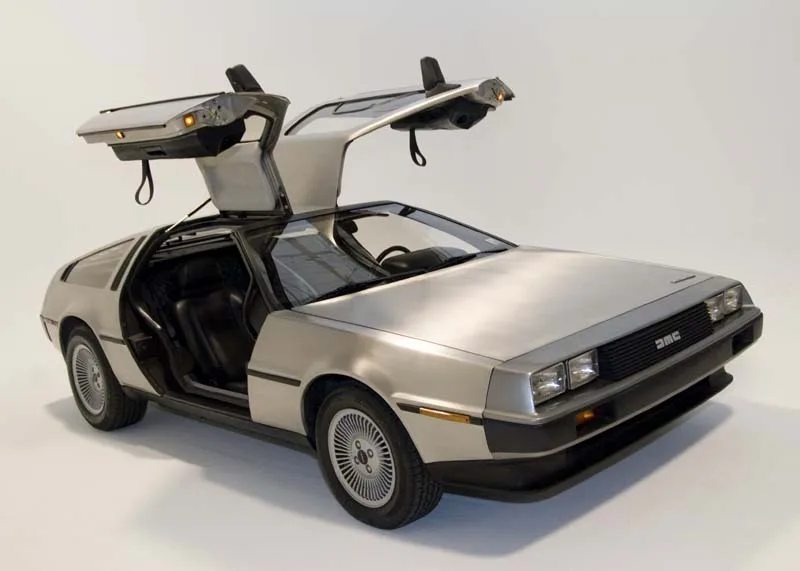
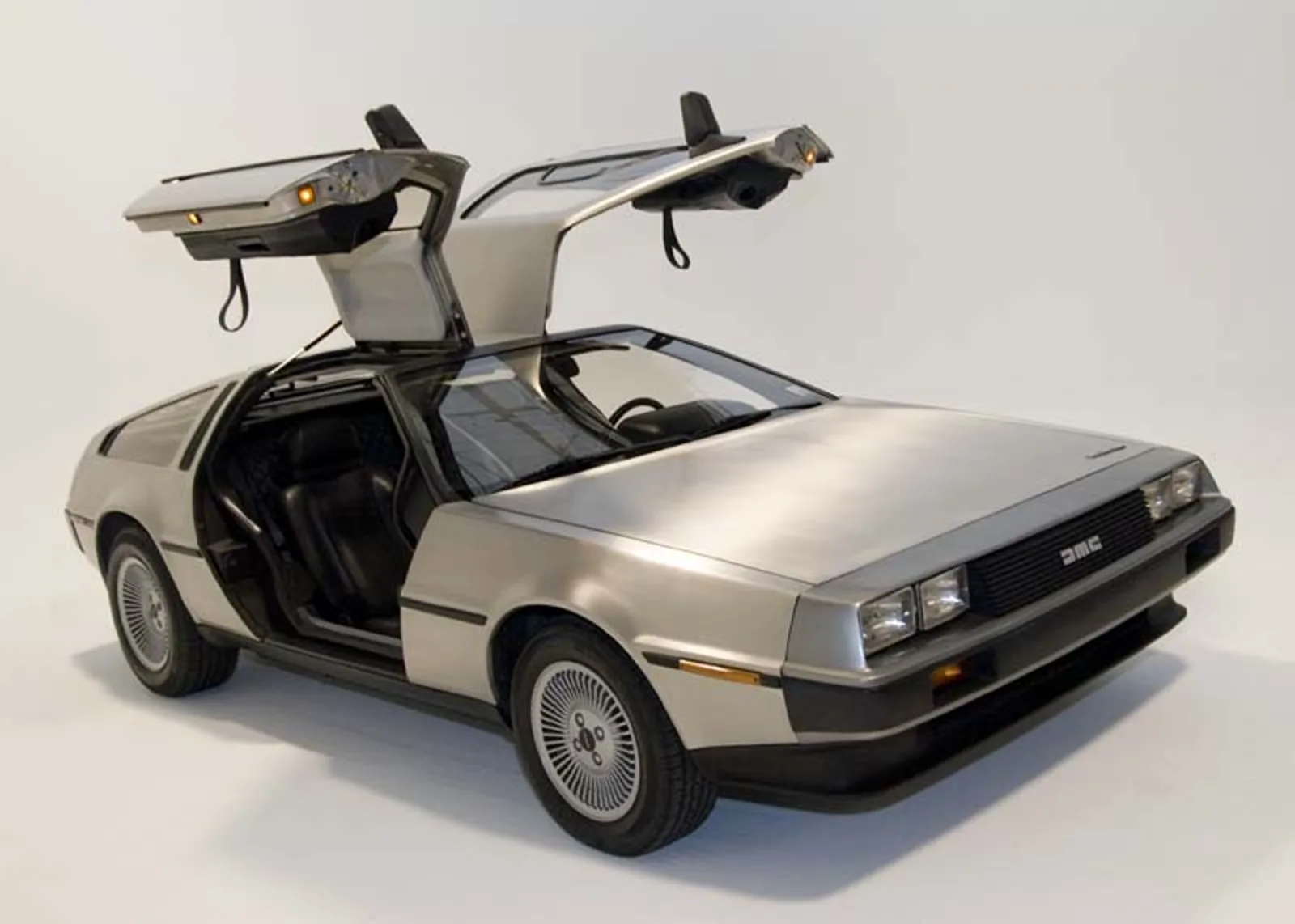
The body belongs to Giugiaro's school of near-straight, hard-edged and wedge-shaped design. Its backbone chassis was later adapted to carry the body of the DeLorean, another low, sharp-creased sports car drawn by Giugiaro.
A wedge from Giugiaro, a Lotus turbo and a V8 of Lotus's own design, carried across 28 years of production.
Who designed the first Lotus Esprit?
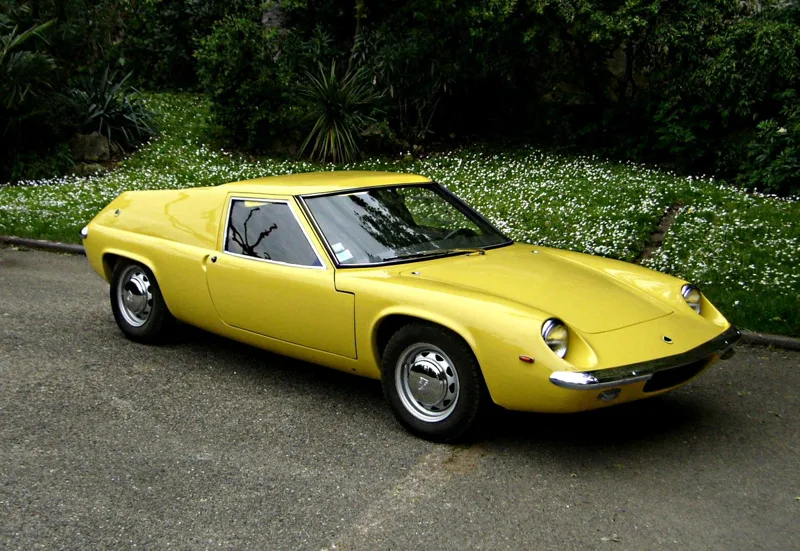
Italian designer Giorgetto Giugiaro drew the first Esprit, which was developed as a successor to the Europa. Tony Rudd proposed the project in 1970, and Colin Chapman met Giugiaro in 1971 after a suggestion from designer Oliver Winterbottom. The Italian studio Italdesign then built the early mock-ups.
Work began in mid-1971 with a 1:4 scale model. Chapman was disappointed by its wind-tunnel results, but Italdesign pressed on and built a full-size mock-up on a stretched Europa chassis. That prototype, often called the Silver Car, appeared at the 1972 Turin show and convinced Chapman to approve further work.
A second, functional prototype was registered IDGG 01 and known as the Red Car. Its mechanical systems were still being developed when the Esprit was announced in October 1975 at the Paris Motor Show.
How did the Series 1 Esprit perform?
The Series 1 Esprit used a 1,973 cc Lotus 907 four-cylinder engine rated at 160 hp (119 kW; 162 PS) in Europe and 140 hp (104 kW; 142 PS) in US trim. The engine drove the rear wheels through a Citroen C35 five-speed manual transaxle, and the car weighed less than 1,000 kg (2,205 lb).
The factory quoted 0-97 km/h (0-60 mph) in 6.8 seconds, with a 222 km/h (138 mph) top speed. Road tests were less kind, finding 8 seconds to 60 mph and about 214 km/h (133 mph). The Series 1 was praised for handling, and its steering was rated among the best of any Esprit, but it was widely seen as underpowered.
The car's identity came from its snow-shovel front air dam, Fiat X1/9-sourced taillights and Wolfrace alloy wheels. Inside, a one-piece cluster held green-faced Veglia gauges. Few Series 1 cars survive today, largely because of drivetrain problems.
What changed with the Series 2 and Series 2.2?
The Series 2 arrived in 1978 with intake and cooling ducts behind the rear quarter windows, bigger ribbed taillights from the Rover SD1 and a new integrated front spoiler. Lotus also introduced 14-inch Speedline alloy wheels, and the battery moved to the rear of the car.
A Commemorative Edition in black and gold JPS livery marked Lotus's 1978 Formula One title. Lotus said 300 were built, but estimates suggest 149 were made. The S2.2 followed in May 1980 with a 2.2 L engine and torque rising from 190 Nm (140 lb ft) to 217 Nm (160 lb ft). Only 88 were built during its thirteen-month run.
Why is the Essex Turbo Esprit significant?
The Essex Turbo Esprit, launched in 1980, was the first factory turbocharged Esprit. It was named after the sponsor of Team Lotus from 1979 to 1981, and it used the dry sump type 910 engine producing 213 PS (157 kW; 210 hp) at 6,250 rpm. The car reached 0-97 km/h (60 mph) in 6.1 seconds, and its top speed was 241 km/h (150 mph).
Giugiaro designed an aerodynamic body kit for the car, including a rear lip spoiler, louvred rear hatch and air ducts in the sills. Inside, scarlet leather and a roof-mounted Panasonic stereo completed the look. Forty-five Essex cars were built, with a number of identical non-Essex turbos following them.
What did the Series 3 and Turbo HC bring?
The Series 3 and Turbo Esprit debuted in April 1981 on a common chassis. The S3 used the 2.2 L type 912 engine, while the Turbo had a wet sump with the same output as the dry sump predecessor. Interior trim was revised for more headroom and an enlarged footwell, and both cars received 15-inch BBS alloy wheels.
The last Giugiaro-styled Esprits were announced in April 1986 with higher compression ratios, marked by the HC badge. The Turbo HC made 218 PS (160 kW; 215 hp) and 298 Nm (220 lb ft). For the United States, Lotus introduced the first fuel-injected Esprits, the HCi, which added Bosch KE-Jetronic injection and a catalytic converter.
Who restyled the Esprit in 1987?
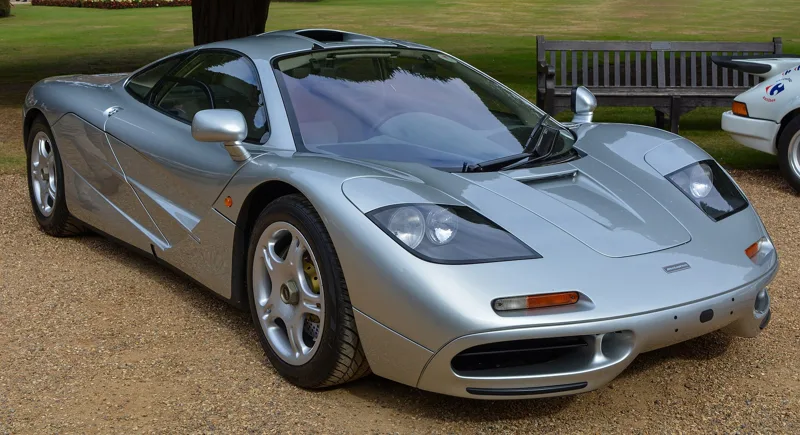
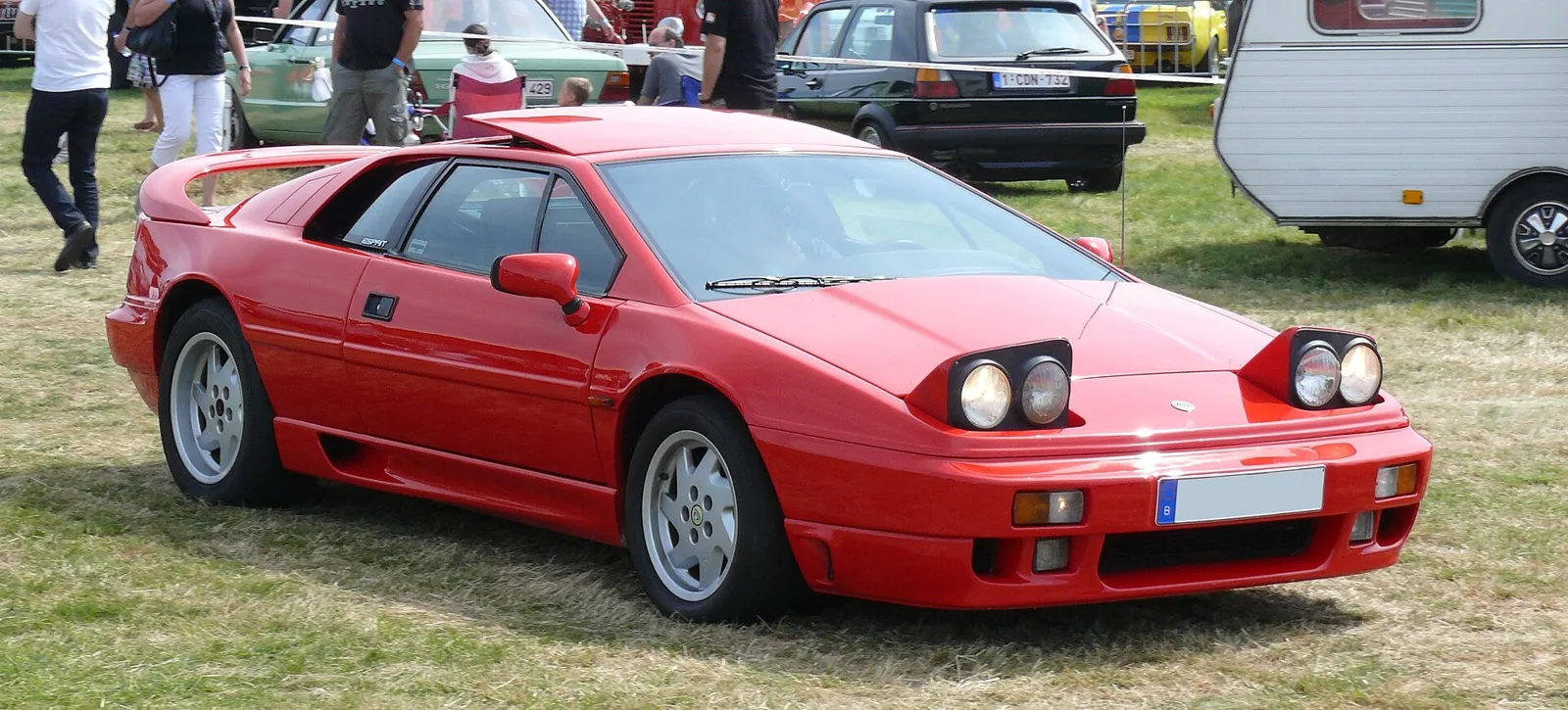
Peter Stevens restyled the Esprit in 1987, and his less angular shape is known as the X180 because it did not receive a new series number. Stevens later styled the McLaren F1. Giugiaro is said to have liked the new shape, claiming it was close to his original design.
The body panels were made with VARI, a vacuum-assisted resin injection process patented by Lotus. Kevlar reinforcement was added to the roof and sides, increasing torsional rigidity by 22%. The rectangular taillights came from the 1983-1985 Toyota Corolla Levin AE86, and the interior gained more space for occupants.
How powerful did the turbo Esprit become?
In 1989 the K-Jetronic system gave way to a Lotus and Delco multi-point injection system, and the engine gained a Chargecooler intercooler. This revised engine, the Type 910S, produced 268 PS (197 kW; 264 hp), with 284 PS (209 kW; 280 hp) on overboost. Lotus put 0-97 km/h (60 mph) at 4.7 seconds, with a top speed of over 257 km/h (160 mph).
In the SE, the body changed too. Parallel side skirts, five ducts in the nose and mirrors borrowed from the Citroen CX set it apart. Lotus also produced the Esprit S, a mid-range turbo, and a two-litre tax special for Italy.
What were the X180R and Sport 300?
The X180R was a race-derived road car. Two specially prepared Esprits competed in the SCCA Escort World Challenge in 1990, with the Type 105 running a 290 PS (213 kW; 286 hp) version of the 910S. Lotus then built 20 road-going examples to homologate parts, with a list price of $126,000 and a full roll cage.
Three more race cars, the Type 106, followed for the 1991 season and weighed 136.1 kg (300 lb) less than the Type 105. In 1993 the sanctioning body added that same weight to the X180R, which made the cars uncompetitive. The Sport 300, sold in Europe, was a further derivative with only 64 cars produced.
The Sport 300 used a Garrett T4 turbocharger and produced 306 PS (225 kW; 302 hp) at 6,400 rpm, with 389 Nm (287 lb ft) of torque. Factory figures gave 0-97 km/h (60 mph) in 4.7 seconds, while Autocar measured 259 km/h (161 mph) in 1993. It is regarded as the fastest of the four-cylinder Esprits.
What was the Esprit V8?
Lotus launched the Esprit V8 in 1996 with its own Type 918 engine, an all-aluminium 90 degree DOHC unit with a flat-plane crankshaft and two Garrett turbochargers. The engine was detuned from a potential 507 PS (373 kW; 500 hp) to 355 PS (261 kW; 350 hp) to protect the transaxle, which was a modified Renault unit.
Period tests recorded 0-97 km/h (60 mph) in 4.1 seconds, and the quarter mile was covered at 180 km/h (112 mph). The top speed was 280 km/h (174 mph). In 1998 the range split into SE and GT versions, and the 1999 Sport 350 was the highest-performance variant, with only 50 built.
The Sport 350 weighed 1,300 kg (2,866 lb) and used a remapped ECU, AP Racing brakes and a large carbon fibre rear wing. Its 0-97 km/h (60 mph) time was 4.3 seconds, and it reached 161 km/h (100 mph) in under 10 seconds.
How did the Esprit race in GT1 and endurance events?
The Esprit raced in GT2 and GT3 classes before Lotus GT1 Engineering, formed from former Team Lotus staff, developed a GT1 version. It used a Type 114 platform with a Type 918 V8 and a single Garrett T4 turbocharger, giving 557 PS (410 kW; 549 hp). The car weighed 900 kg (1,984 lb) and used a TGT200 six-speed transaxle.
Three units were built, numbered 114-001, 114-002 and 114-003. Two debuted at the 1996 BPR Global GT Series 4 Hours of Donington, but reliability problems with brakes, oil pumps and overheating followed. The car was replaced by the Elise GT1 the next year.
Lotus customer racing also produced results on the road-car side. Doc Bundy won the 1992 IMSA Bridgestone Supercar Championship drivers title in the X180R. Thorkild Thyrring took his class in the 1993 and 1994 British GT Championship, and Brad Jones won the 1994 Australian Super Production Car Series in an Esprit. Cars also competed in the 1993 and 1994 24 Hours of Le Mans.
Which Esprit appeared in films?
An S1 Esprit appeared in the 1977 James Bond film The Spy Who Loved Me, where a car was converted into a submarine after a road chase. The underwater car, nicknamed Wet Nellie, was bought by Elon Musk in September 2013.
Two Essex-spec Turbo Esprits featured in For Your Eyes Only. An X180 Esprit appeared in Pretty Woman after Ferrari and Porsche declined the placement, and another X180 was used in Basic Instinct for a high-speed chase.
When did the Esprit end production?
The last Esprit rolled off the production line on February 20, 2004, after a 28-year run. Lotus built 10,675 Esprits in total, and the final car was shipped to Chicago. The Esprit was one of the last production cars with retractable pop-up headlights, alongside the Chevrolet Corvette C5.
The Series 4, drawn by Julian Thomson in 1993, lasted from 1994 to 2004 and was the longest-lived styling of the car. Russell Carr made the final styling changes in 2002, with few, if any, mechanical changes.
Why was the 2010 Esprit concept cancelled?
At the 2010 Paris Motor Show Lotus unveiled a new Esprit as part of a five-car announcement, with production planned for late 2013. The concept had a 5.0 litre Lexus V8 producing up to 620 PS (456 kW; 612 hp) through a 7-speed dual-clutch transaxle, with a claimed 0-60 time of 3.5 seconds.
Lotus cancelled the project on 29 September 2014 to focus on lightweight, nimble cars rather than heavier, more expensive models. The concept measured 4,550 mm (179 in) long and had a stated gross weight of around 1,495 kg (3,296 lb).
What is the Encor Series 1?
The Encor Series 1 is a ground-up remastered restomod of the Esprit, made by UK firm Encor. It is limited to 50 hand-built cars. Each conversion starts from a late-model V8 donor, which is rebuilt with lighter carbon bodywork, improved mechanics and a refreshed cabin.
The twin-turbo 3.5L V8 is heavily reworked to produce 405 PS (399 hp; 298 kW).
Lotus Esprit specifications at a glance
| Specification | Detail |
|---|---|
| Production | 1976 to 2004, Hethel, England; 10,675 built |
| Series 1 engine | 1,973 cc Lotus 907 four, 160 hp (119 kW; 162 PS) in Europe |
| Series 1 weight | Less than 1,000 kg (2,205 lb) |
| Essex Turbo engine | Type 910, 213 PS (157 kW; 210 hp) at 6,250 rpm |
| Essex Turbo 0-97 km/h | 6.1 seconds, top speed 241 km/h (150 mph) |
| Type 910S | 268 PS (197 kW; 264 hp), 0-97 km/h in 4.7 seconds |
| Sport 300 | 306 PS (225 kW; 302 hp), 64 built |
| V8 (Type 918) | 355 PS (261 kW; 350 hp), 0-97 km/h in 4.1 seconds |
| Sport 350 | 1,300 kg (2,866 lb), 50 built |
| GT1 | 557 PS (410 kW; 549 hp), 900 kg (1,984 lb), three built |
| Encor Series 1 | 405 PS (399 hp; 298 kW), 50 hand-built cars |