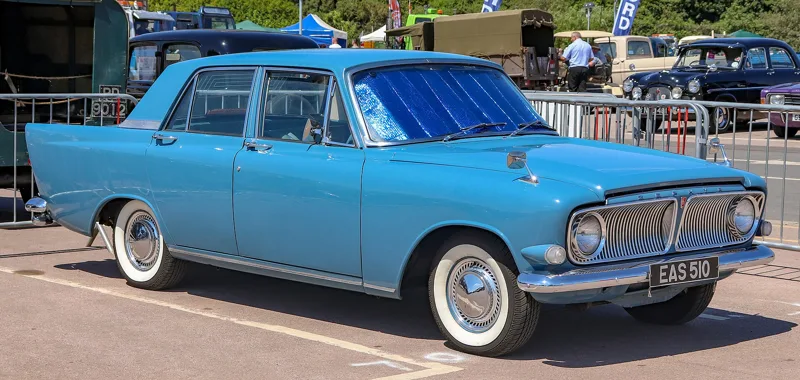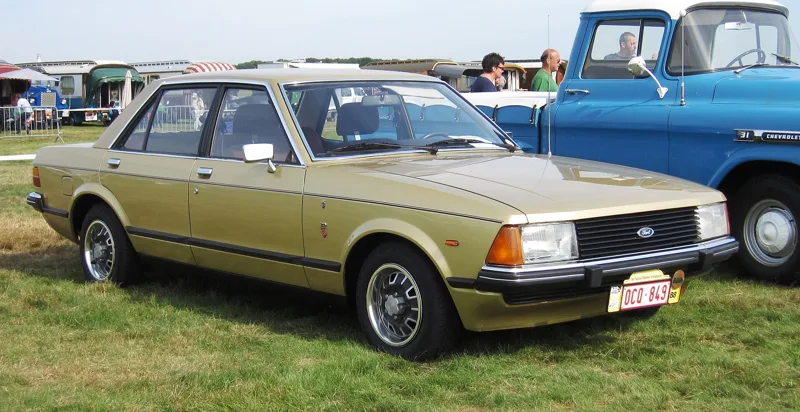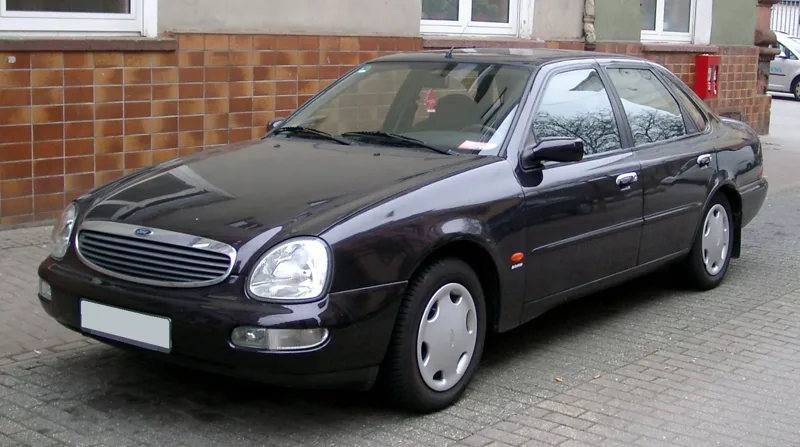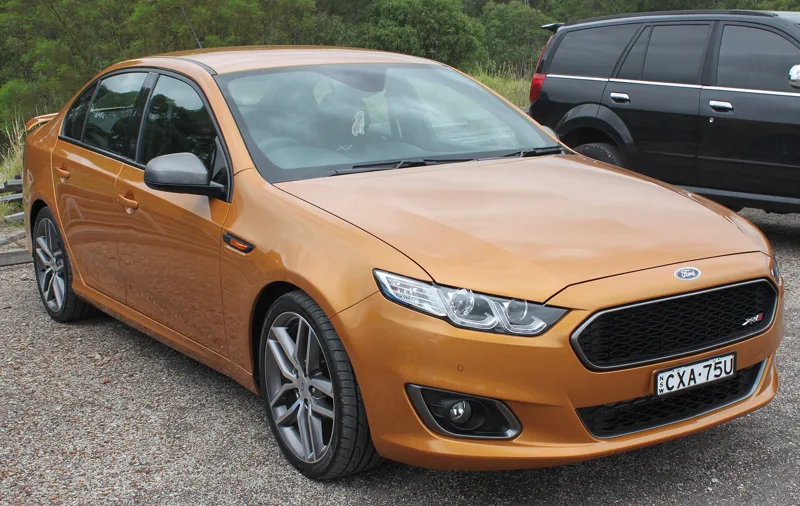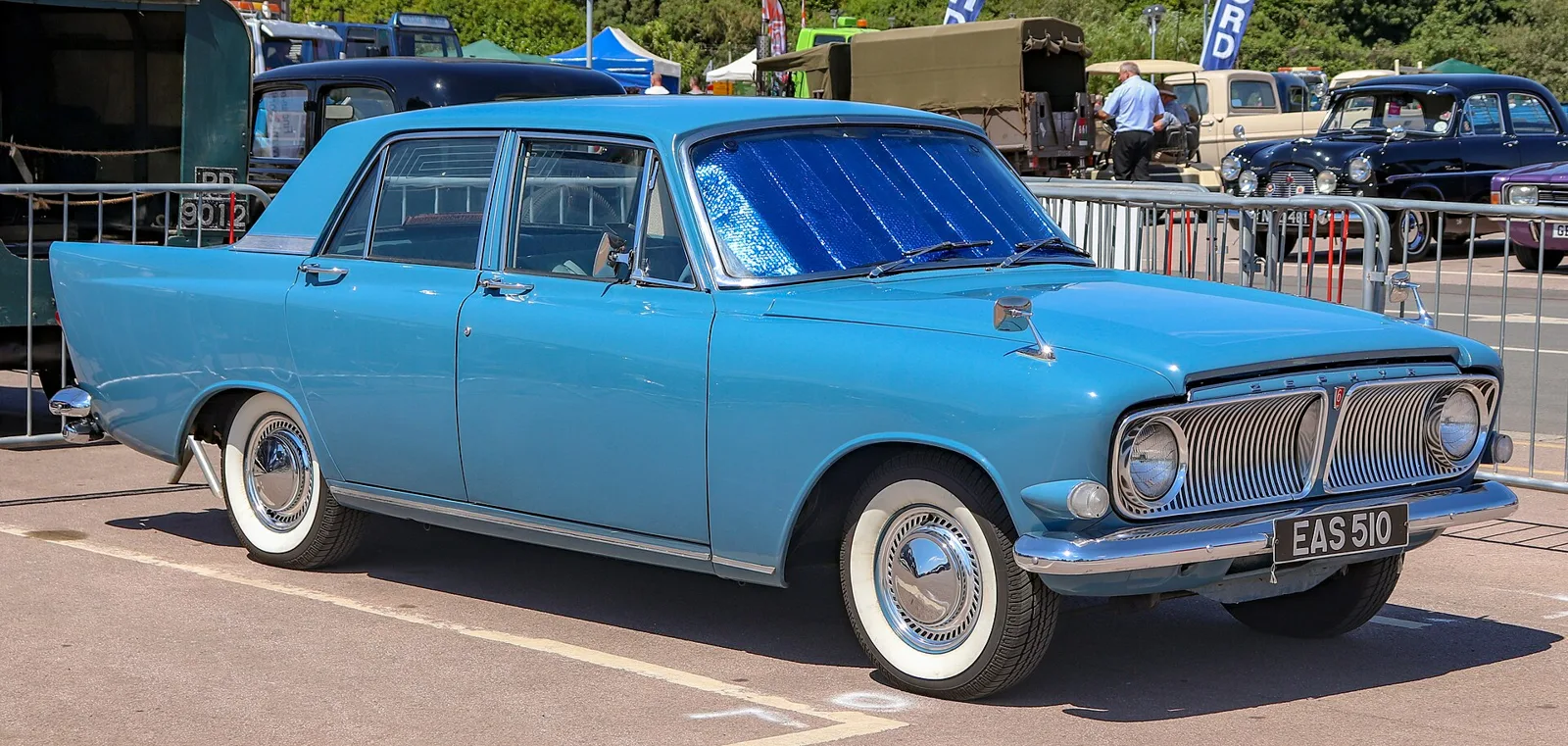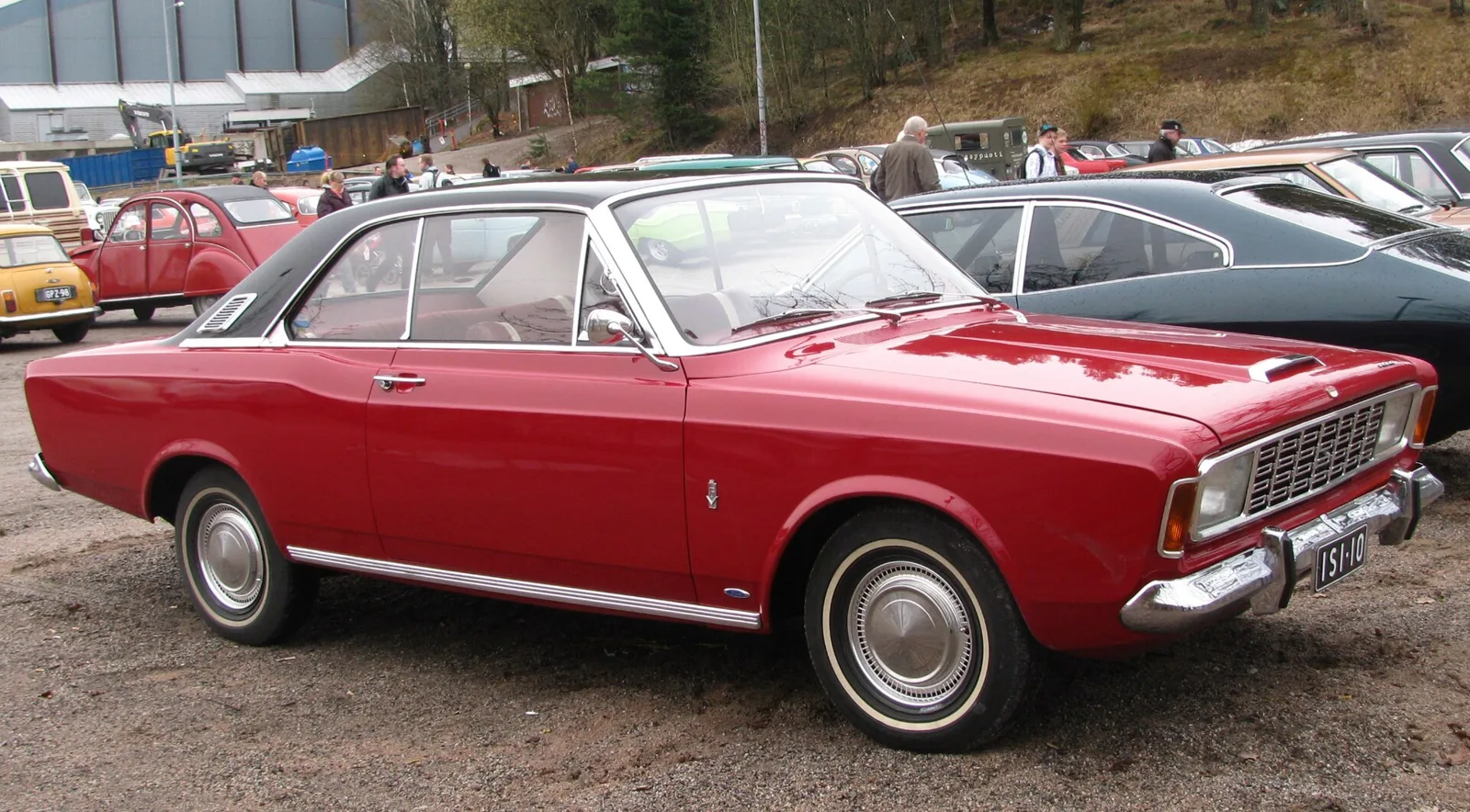
From the pre-war G93A to the Cortina-based TC, the name covered German Fords across more than five decades, with Argentina and Turkey building it late in life.
The Ford Taunus was a family car first sold in 1939 and named after a German mountain range. From 1952 the name covered every German Ford, and from 1970 the Taunus TC shared its construction with the Cortina Mk III until the line ended in 1994.
The Ford Taunus was a family car that Ford Germany built and sold across Europe, with occasional sales in North America. It was named after the Taunus mountain range and was marketed from 1939 until model year 1994. From 1970 its basic construction matched the British Ford Cortina Mk III.
What is the Ford Taunus?
The Taunus is a family car that Ford Germany made and sold across Europe. It was first introduced in 1939 and named after the Taunus mountain range. From 1970 it was built on the same basic construction as the Ford Cortina Mk III.
Later the two cars became rebadged variants of each other, differing mainly in where the steering wheel sat. The model line ran through several generations before the name finally ended in 1994.
A German Ford badge that ran from a 1939 pre-war car to the Cortina-based TC, with Argentina and Turkey building it late.
Where did the Taunus name come from?
The name came from the Taunus mountain range in Germany. The Taunus was introduced in 1939 and carried on across numerous generations until model year 1994. From 1952 to 1968 the name covered every German Ford, with models such as the 12M, 15M, 17M, 20M and 26M.
The M in those model names is said to stand for Meisterstuck, or masterpiece, but that word had already been registered by another German automaker. Some export markets used Taunus as a brand name in their own right.
What was the first Taunus?
The G93A of 1939 was a development of the Ford Eifel. It used the same 1172 cc four-cylinder engine in a longer chassis with a streamlined body, and it was the first German Ford with hydraulic brakes.
Production stopped in 1942 because of the war and resumed in November 1948, after the British Occupation had ended. In total 7,128 pre-war G93A cars were made, followed by 76,590 post-war G73A models.
What was the post-war 12M like?
The 12M of 1952 was the first new German Ford after World War II, with ponton styling similar to the British Ford Zephyr. Its engine was a carry-over sidevalve unit, while the 15M that followed used an overhead-valve engine similar to the British Ford Consul's.
Performance was modest. The 12M's 1172 cc engine made 38 PS (28 kW) and 112 km/h (70 mph), while the 15M's 1498 cc unit made 55 PS (40 kW) and 128 km/h (80 mph). Body styles were the two-door sedan, two-door estate and sedan delivery.
How did the P4 12M bring front-wheel drive to the range?
The P4 12M of 1962 came with a new V4 engine and front-wheel drive, and the smaller 12M models kept that layout until 1970. Its engines were a 1.2-litre of 1183 cc with 40 PS (29 kW) and a 1.5-litre of 1498 cc with 50, 55 or 65 PS.
The P6 of 1966 to 1970 brought new bodies while the engines and platform carried over, and the bigger engine returned to the 15M name. The range reached a 1699 cc 15M 1.7-litre with 70 or 75 PS (51 or 55 kW). In 1970 the P6 was replaced by the Taunus TC.
Why was the 17M called the Baroque Taunus?
The 1957 17M had substantial tailfins and earned the nickname Baroque Taunus. Its overhead-valve engine was 1698 cc and produced 60 PS (44 kW), with a quoted top speed of 128 km/h (80 mph).
The P3 that followed in 1960 earned the nickname Taunus Badewanne, or bathtub, for its streamlined shape. Its 1.7-litre launched with the same 60 PS as the outgoing model, yet it was 10 km/h (6 mph) faster thanks to improved aerodynamics and a lighter body shell.
P3 engines ran from a 1.5-litre of 1498 cc with 55 PS (40 kW) to a 1.8-litre of 1758 cc with 70 or 75 PS (51 or 55 kW), which was quoted at up to 154 km/h.
How did the P5 and P7 change the 17M and 20M?
The P5 of 1964 to 1967 introduced a new body and new engines, with the 17M moving to a V4 and the 20M to a V6. Its 2.0-litre 20M was rated at 85 or 90 PS (63 or 66 kW).
The P7 of 1967 to 1968 kept those engines but added a 20M 2.3-litre with 108 PS (79 kW) and a top speed of 170 km/h (106 mph). Its rear lights were no longer mounted at the corners.
What were the P7b and 26M?
The P7b, also called P7.2, was a restyled car from 1968 to 1971 with rear lights back on the corners. The 26M, introduced in 1969, sat at the top of the range with dual headlights, power steering and the most luxurious trim.
The 26M's 2.6-litre engine produced 125 PS (92 kW) and 180 km/h (112 mph). Across the P7b range there were two base engines, V4 and V6, in nine power stages.
Did the Taunus race?
Yes. The 20M RS Coupe was entered in the 1968 London-Sydney Marathon, where three cars came from Germany and Belgium. In 1969 a Ford 20M RS won the Safari Rally.
The 20M RS Coupe was made in Germany as the 2300 S and 2600 P7b, and it was the last specifically German Ford. Early in 1972 the Consul and Granada replaced it, and a Capri was occasionally seen with works involvement.
What was the Taunus TC?
The Taunus TC was introduced in 1970 as the Taunus Cortina. It came as a two- or four-door sedan, a five-door estate called the Turnier and, between 1970 and 1975, a fastback coupe.
The TC was developed under Ford of Europe, and the Taunus TC and Cortina Mk III shared key bodyshell parts.
How did the TC2 and TC3 compare with the Cortina?
The TC2 and TC3 were almost identical to the Cortina Mk IV, apart from regional trim and specification changes. The TC2 ran from 1976 to 1979, and the TC3 continued from 1979 until 1982 or 1994, depending on the market.
In Europe the line ended in 1982, when the Ford Sierra replaced it. The Sierra carried over the OHC Pinto engines and rear-wheel drive.
Where did the Taunus go after Europe?
Argentina built the Taunus from 1974 until the end of 1984, when production passed to Turkey and became the Otosan Taunus. Turkish cars had remoulded front and back panels and stayed in production until 1994.
Cortinas were also built under licence by Hyundai, and the Cortina 80 led to the Hyundai Stellar. The Cortina 80 handed over the steering rack and propshaft to that successor.
What are the Ford Taunus specifications?
The table covers the core figures across the Taunus family, from the 1939 G93A era to the late P7b cars. Each row names its model, so the 12M's 38 PS is never read as applying to the 26M.
| Specification | Detail |
|---|---|
| Introduced | 1939; marketed through model year 1994 |
| G93A engine | 1172 cc four-cylinder, from the Ford Eifel |
| Cars built | 7,128 pre-war G93A; 76,590 post-war G73A |
| 12M of 1952 | 1172 cc, 38 PS (28 kW), 112 km/h (70 mph) |
| 15M of 1952 | 1498 cc, 55 PS (40 kW), 128 km/h (80 mph) |
| P4 12M (1962) | V4 engine, front-wheel drive; 1183 cc, 40 PS (29 kW), 123 km/h (76 mph) |
| P2 17M (1957) | 1698 cc overhead-valve, 60 PS (44 kW), 128 km/h (80 mph) |
| P7 20M 2.3-litre | 2293 cc, 108 PS (79 kW), 170 km/h (106 mph) |
| 26M 2.6-litre (P7b) | 2550 cc, 125 PS (92 kW), 180 km/h (112 mph) |
| Taunus TC (1970) | Two- or four-door sedan, five-door Turnier, fastback coupe |
| European production ended | 1982, replaced by the Ford Sierra |
| Turkish production | Otosan Taunus, until 1994 |
Frequently asked questions
How many pre-war G93A cars were made?
The pre-war G93A total was 7,128 cars, counting estate cars and light vans. Production stopped in 1942 and restarted in November 1948.
Was the Taunus sold in North America?
Only occasionally. The Taunus name was also used as a brand in some export markets.
Which Taunus engine was a Cologne V6?
The 20M and 26M used the Ford Cologne V6. It was a V4 design with two extra cylinders added, so the two engine families were closely related.
Did the US military use a Taunus?
Yes. The 20M was used as a US military sedan in Cold War Berlin.