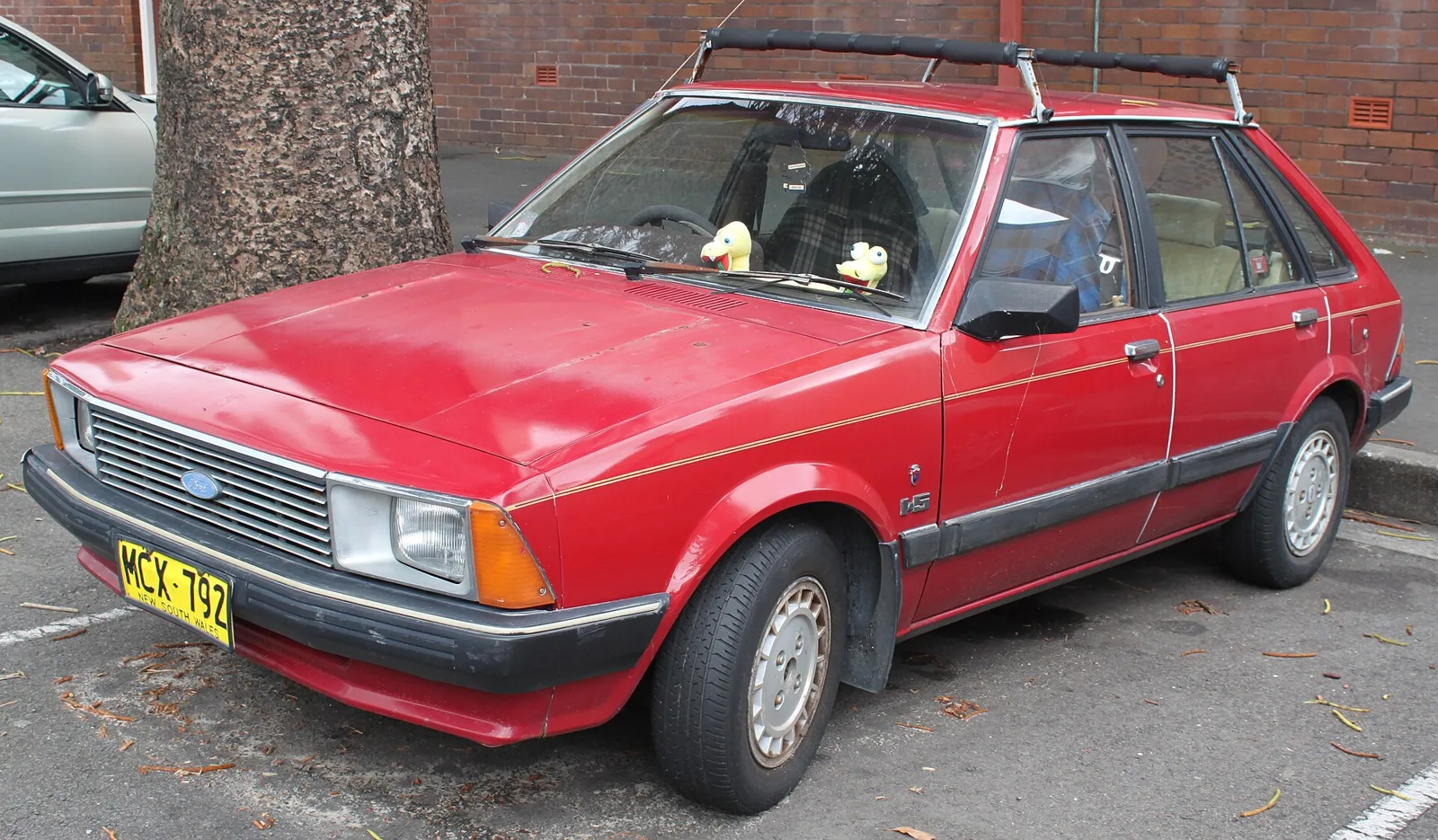
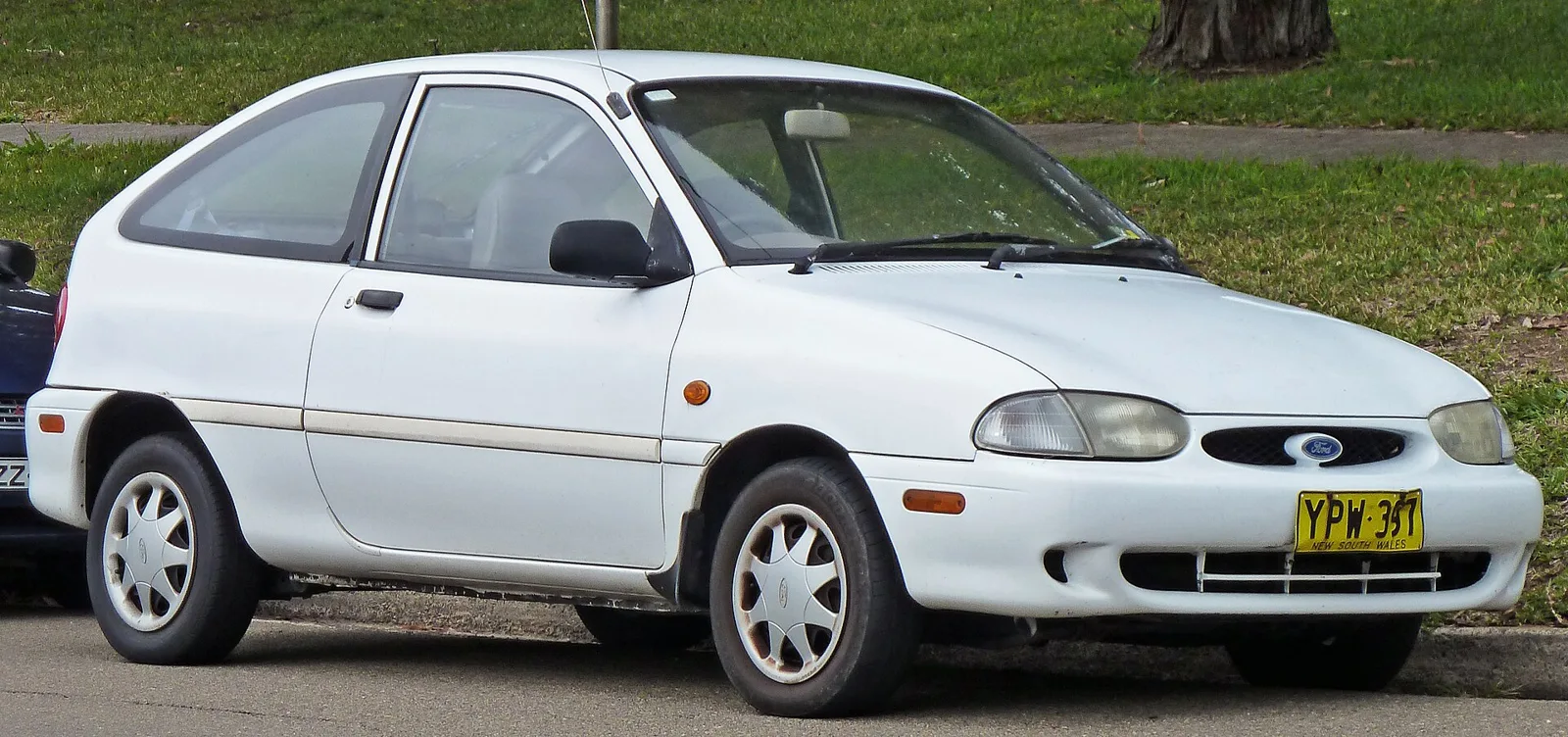
A Mazda Familia twin with a Ford badge, sold for more than twenty years from the 1981 KA hatchback to the fifth-generation KQ.
The Ford Laser was a compact Ford badged on Mazda's Familia and 323 from 1980, sold in Australia from 1981 as the KA hatchback and Meteor sedan. It was replaced in most markets by the Focus, with Australian sales ending in 2002.
The Ford Laser was a compact car sold across Asia, Oceania, South America and Africa, and it was built on a restyled Mazda Familia and 323 platform. It started life as a subcompact in its first three generations, and Ford's Australian and New Zealand dealers sold it under the Laser and Meteor names for more than two decades.
The Laser worked as a Ford-branded twin of its Mazda sibling, and the two cars shared engines, body panels and assembly lines in many markets. That relationship gave Ford a strong compact range in places where Mazda had a larger foothold, and it explains why the same car looked different and sold differently from country to country.
Where did the Ford Laser come from?
The Laser was a restyled version of the Mazda Familia and 323 models built in Japan from 1980, after Ford acquired a 25% stake in Mazda in 1979. The platform sharing allowed the Laser to offer a wide range of engines, paint options and trim levels, many of which never left Japan.
In Australia and New Zealand the locally assembled Laser outsold its Mazda twin, the 323, which was imported into Australia. Ford Australia's own research from 1984 showed that a third of Laser buyers did not realise the car was based on a Mazda, which says a good deal about the badge's pull in those markets.
Across much of Asia, Japan included, the pattern reversed, and the Mazda 323 sold better than the Ford-badged car. Pooling resources with Mazda still gave Ford a foothold in the region, and the Laser was also sold in South America, South Africa and the Caribbean.
A Mazda twin with a Ford badge, sold in Australia, New Zealand and Asia for more than twenty years.
What did the first Ford Laser look like?
The KA Laser was introduced in Australia in March 1981, replacing the rear-wheel-drive Escort. It was available as a three-door or five-door hatchback, and a four-door sedan badged Ford Meteor. Only the 1.3-litre engine was offered at first, and the smaller 1.1-litre unit was never sold in Australia.
In January 1983 the Laser was facelifted to become the KB, with light changes at the rear and a redesigned front that matched Ford's corporate look of the era. The KB remained the core Australian Laser until the KC arrived in late 1985, and its engines ranged from the 1.3-litre to a 1.5-litre unit.
The first Japanese Lasers went on sale in late 1982, branded BE in Japan. Fuel injection and a 115 PS turbocharged model arrived in July 1983, and those variants were never sold outside Japan.
What was the Ford Meteor?
The Meteor was the sedan version of the Laser, introduced in April 1982 as the GA series. It had conventional three-box styling and a 60/40 folding rear seat that added luggage capacity, and Ford Australia used it partly as a replacement for the TF Cortina.
The spare wheel could be stood upright instead of lying flat on the floor, which raised boot depth from 410 to 585 mm. The Meteor's front styling was based on the Japanese Mazda Familia BD sedan, with flush headlamps and an eggcrate grille that set it apart from the hatchback.
The Meteor came with fully independent suspension using coil springs. In Australia it was offered in GL and Ghia trim, with an optional S pack, and it competed directly with the Holden Camira until the mid-term facelift of May 1983 brought the two ranges closer together.
How did the KC and KE Laser change?
The second-generation Laser arrived in Japan as the BF series in January 1985, the first major redesign of the car. For Australia the range became the KC Laser and GC Meteor, launched in October 1985, with a station wagon added in 1986 and the TX3 at the top of the range.
Engines capable of running on 91 RON unleaded petrol became a requirement in Australia from 1986. The 1.6-litre B6 replaced the older 1.5-litre carburettor engine, and fuel injection was offered on Ghia models and fitted as standard to the TX3.
In October 1987 Ford facelifted the KC into the KE, and the Meteor name was dropped, so the sedan and wagon became Lasers like the hatchbacks. The TX3 gained a turbo engine and all-wheel drive as options, and the TX3 Turbo with AWD is now very rare and sought after.
Halfway through KE production Ford added two limited editions, the Redline and the Livewire. The Redline took the TX3's alloy wheels, two-tone paint and red inserts, while the Livewire carried yellow inserts and a tachometer.
How did Asian markets build the Laser?
The Laser sold in Thailand, Malaysia, Singapore, Hong Kong, Taiwan and Sri Lanka, and trim and specification varied between countries. In Indonesia the car was assembled at Mazda's Bekasi plant alongside its 323 twin, with 1.3 and 1.5-litre engines from late 1985.
In Taiwan the second generation was assembled by Ford Lio Ho Motor and offered with slightly different exterior styling. The facelifted hatchback received KE TX3 headlights, and a 130 PS turbo DOHC TX3 Turbo was also sold there in five-door form.
In North America a version of the KC Laser was marketed as the Mercury Tracer, with hatchback and wagon bodies only. US versions were built in Mexico, while the Canadian cars were imported from Taiwan.
Elsewhere the Laser travelled widely. Argentina sold a version identical to the Australian KA, and Zimbabwe assembled it at the Willowvale plant in Harare from 1981 alongside the Mazda 323. South Africa introduced the hatchback in 1986, with the sedan sold as the Meteor, and Samcor built the cars alongside the Mazda 323 until 1995.
What made the Japanese Laser range unusual?
Japanese buyers got the widest Laser range of all. The 1985 BF series added a diesel, a turbo cabriolet and a 1.6-litre DOHC Sport, before the 1987 refresh streamlined the lineup around new B-series engines. The result was an unusually varied line-up, and many of its variants never left Japan.
The diesel was a first for the Japanese Laser, and the cabriolet carried a 1.5-litre turbo engine. The most potent model paired a 140 PS DOHC turbo with full-time four-wheel drive, a combination that never reached most export markets. Autorama dealers sold these cars alongside the Telstar and Festiva.
The 1987 refresh dropped the E-series engines in favour of new B-series units, cut the poorer-selling variants and tidied the exterior styling and interior trim. The commercial van survived in Japan until 1994, sold alongside the next-generation Laser.
What did the third and fourth generations bring?
The third-generation Laser went on sale in Australia in March 1990 as the KF series, updated in October 1991 with the KH facelift. Local production ended on 4 September 1994, when the Flemington plant closed and was replaced by the Japanese-built KJ.
In New Zealand the KH continued at Ford's Wiri assembly plant until the factory closed at the end of 1996. The KH was sold as the Laser Encore or Laser Esprit five-door hatchback, a cheaper option beside the newer KJ imported from Japan.
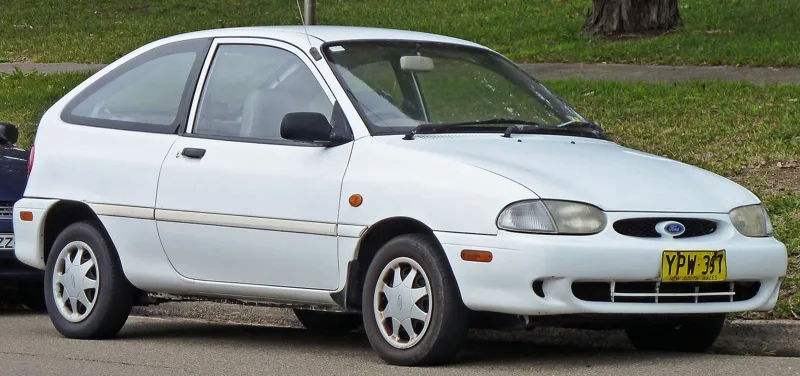
The fourth-generation KJ looked very different from the KH. The three-door was the Laser Lynx and the five-door the Laser Liata, and it was the first Laser built wholly in Japan after Flemington closed. Sales were disappointing, partly because of the smaller Festiva and cheaper Hyundai, Kia and Daewoo cars.
Why did the fifth-generation Laser struggle?
The fifth generation, the KN launched in Australia in May 1999, was almost identical to the Mazda 323 it was based on. It was the first time the Laser had matched its Mazda donor so closely since the KE, and the range was refreshed as the KQ in February 2001.
The KQ brought a 2.0-litre four-cylinder engine for the new top-spec SR2, the first sporty Laser in almost five years. That model produced 97 kW (130 hp) and was the first sports-oriented Laser since the Laser Lynx was dropped in 1996, but it could not rescue sales.
Ford decided to discontinue the Laser in Australia in September 2002, replacing it with the European-sourced Focus. The Laser lasted in New Zealand until mid-2003, when the facelifted Focus took over there too.
How did Taiwan and the Philippines rebadge the Laser?
In Taiwan Ford Lio Ho renamed the fifth-generation sedan the Ford Tierra and the hatchback the Ford Life. Both were rebadged versions of the pre-facelift Mazda 323 BJ, and a later facelifted Tierra was distinguished by new front fenders, a new bonnet and a new grille.
In the Philippines and Malaysia the fifth generation was marketed as the Lynx. The Philippine range had GSi and Ghia grades on a 1.6-litre engine, and a 2.0-litre RS arrived in March 2004 with a 143 hp rating, a strut bar and 17-inch alloy wheels.
The Laser was replaced in most markets by the European-sourced Focus, which Ford called one of its world cars. The Mazda 323's successor, the first-generation Mazda3, was built on the same platform, so the two companies still shared components in the compact segment.
What are the Ford Laser specifications?
The table covers the main engines across the generations sold in Australia, with the Japanese and export variants noted where they differed. Figures are shown in the units used by the original sources, so a kW figure and a hp figure may appear side by side.
| Generation | Engine | Output | Notes |
|---|---|---|---|
| KA (1981) | Mazda E1, 1.1-litre carburettor | 41 kW (55 hp) | Never sold in Australia |
| KA (1981) | Mazda E3, 1.3-litre carburettor | 49 kW (66 hp) | Only engine at launch in Australia |
| KA (1981) | Mazda E5, 1.5-litre carburettor | 54 kW (72 hp) | Turbo version added later |
| KA turbo | Mazda E5T, 1.5-litre | 78 kW (105 hp) | 300 limited-edition units |
| KC and KE (1985 to 1987) | B6, 1.6-litre EFI | Fuel injection on TX3 | Runs on 91 RON unleaded petrol |
| KE TX3 Turbo | Turbo engine with AWD | Imported from Japan | Very rare and sought after |
| KQ SR2 (2001) | Mazda FS 2.0-litre | 97 kW (130 hp); 183 Nm (135 ft lbf) | Top sporty model |
| KN (1999) | Mazda FP-DE 1.8-litre | 91 kW (122 hp); 163 Nm (120 ft lbf) | Fifth-generation range |
| KN and KQ (1999 to 2002) | Mazda ZM-DE 1.6-litre | 72 kW (97 hp); 145 Nm (107 ft lbf) | Entry LXi engine |
Frequently asked questions
Was the Ford Laser actually a Mazda?
Yes. The Laser was based on Mazda's Familia and 323, and Ford held a 25% stake in Mazda from 1979. The two cars shared platforms, engines and assembly lines in many markets.
What was the difference between the Laser and the Meteor?
The Meteor was the four-door saloon form of the Laser, launched in April 1982. It had a 60/40 folding rear seat and a deeper boot, and its nose was modelled on the BD-series Familia sedan from Japan rather than the hatchback.
When did the Laser stop selling in Australia?
Ford discontinued the Laser in Australia in September 2002 and replaced it with the Focus. Local production at Flemington had already ended on 4 September 1994, after which the Laser was imported from Japan.
Did the Laser sell well in Asia?
Not in every market. In Japan and neighbouring countries such as Singapore, Malaysia, Indonesia and Hong Kong, the Mazda 323 outsold the Ford-badged Laser, while in Australia and New Zealand the Laser was the stronger seller.
_Ghia_5-door_hatchback_(22643862523).jpg)