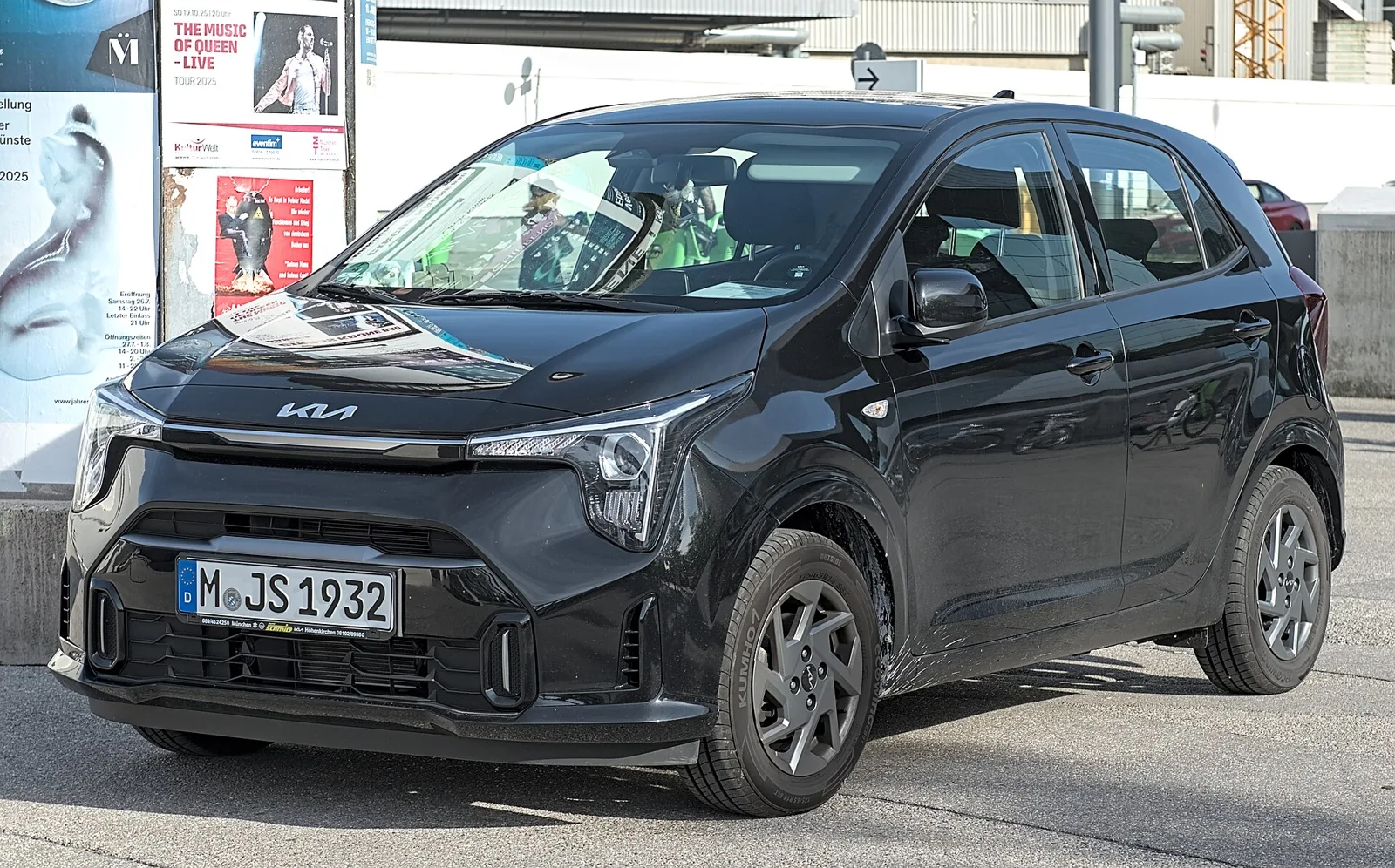
Kia survived a 1997 bankruptcy, a Hyundai takeover and a government ban on building passenger cars to become a 3.1-million-a-year global manufacturer.
Kia is a South Korean automaker founded in 1944, now headquartered in Seoul, ranking as the country's second-biggest carmaker behind only its own largest shareholder, Hyundai. Global deliveries passed 3.1 million vehicles in 2025, a scale its original bicycle-parts business could never have imagined.
Kia began in 1944 making bicycle parts, survived a government ban on building cars at all, and now sells more than 3.1 million vehicles a year worldwide as South Korea's second-largest automaker, behind only its own parent company, Hyundai.
What is Kia?
Kia is a South Korean multinational automotive manufacturer based in Seoul, trailing only its own largest shareholder, Hyundai Motor Company, in South Korea's own domestic sales charts year after year. Hyundai itself holds a 35.17 per cent stake in Kia as of 2025.
The name itself carries real meaning: Kia derives from Hanja characters roughly translating as 'rising from East Asia', a fittingly ambitious tag for a company that began life nowhere near the car industry at all, let alone global expansion. Today Kia builds everything from city cars to electric SUVs and sells them through dedicated sales arms across North America, Europe, Latin America and beyond, a reach that would have seemed unimaginable in its earliest decades. That scale did not simply arrive by accident; it is the product of repeated, often painful reinvention, through a government-imposed exit from cars, a near-collapse in the late 1990s, and a decades-long rebuild of both its products and its public image.
The company only returned to cars in 1986, through a new partnership with American manufacturer Ford, building a mere 26 units in that first year before output leapt to over 95,000 the following year.
How did Kia start out?
Founded in May 1944, Kia began life under a different name entirely, Kyungsung Precision Industry, turning out steel tubing and bicycle parts before building the Samchuly, the first bicycle ever made domestically in South Korea, in 1951. A rename to Kia Industries followed in 1952.
From there, the path to cars ran through two wheels and then three: Kia built Honda-licensed motorcycles from 1957 and Mazda-licensed trucks from 1962, finally bringing its first proper car-assembly facility online, the Sohari Plant, in 1973. Its first proper car arrived in 1974 as the Mazda-based Brisa range, followed a year later by the Brisa II, also known as the K303 family car. Kia also assembled licensed versions of the Fiat 132 and Peugeot 604 under a government scheme that required it, like Hyundai, to export five cars for every single imported Fiat or Peugeot kit it brought in.
Why did Kia stop building cars in the 1980s?
In 1981, South Korea's new military leader Chun Doo-hwan forced an industry-wide consolidation that stripped Kia of its passenger-car business entirely, restricting it to light trucks only.
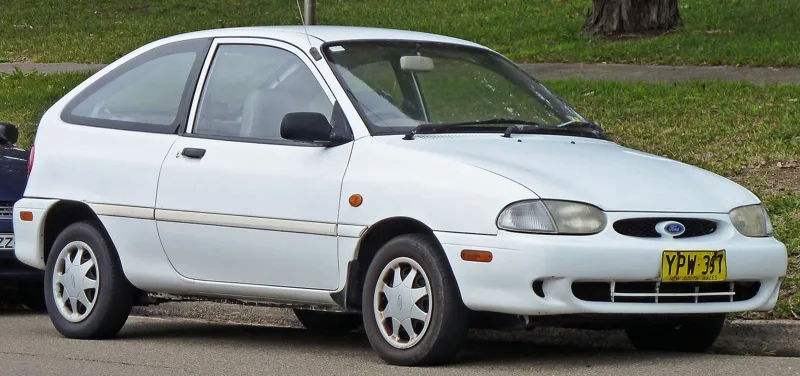
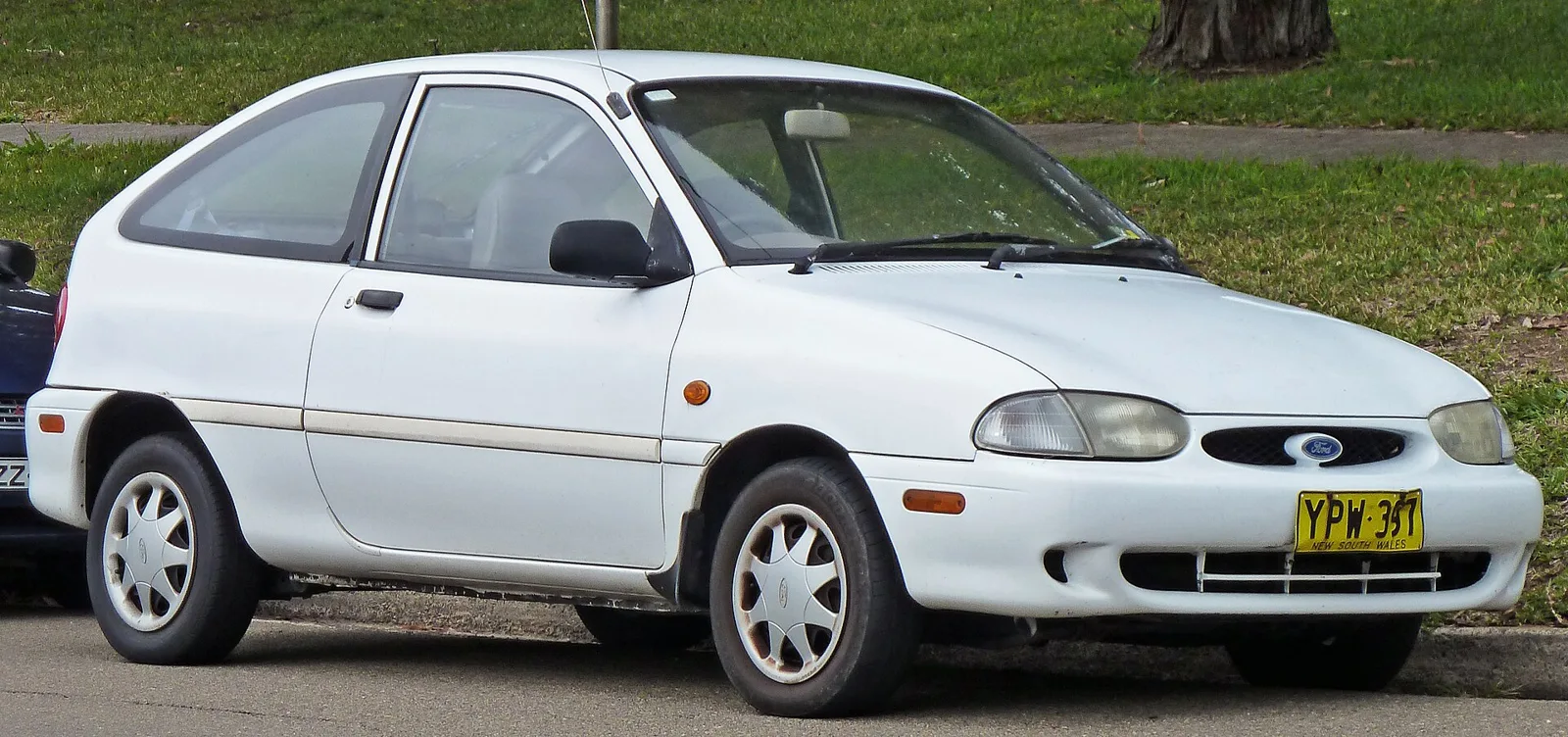
A handful of cars still trickled off the line in 1982 and 1983 as the ban gradually took full hold, but by 1984 and by 1985 Kia built no passenger cars whatsoever, anywhere, for either year. The company only returned to cars in 1986, through a new partnership with American manufacturer Ford, building a mere 26 units in that first year before output leapt to over 95,000 the following year. Many of the resulting cars leaned on Mazda engineering and chased budget-minded buyers specifically: the Pride borrowed heavily from the Mazda 121, while the Avella crossed the Pacific wearing Ford's own Festiva and Aspire badges in North America and Australasia. The corporate name changed again too, from Kia Industries to Kia Motors Corporation, in 1990, just as the company was gearing up for its push into the United States.
How did Kia end up owned by Hyundai?
The 1997 Asian financial crisis pushed Kia into bankruptcy, and the rescue came a year later: Hyundai Motor Company agreed terms in 1998 to take a 51 per cent stake, a deal that effectively created the Hyundai Motor Group.
Subsequent rounds of divestment over the years have gradually trimmed Hyundai's direct holding down to roughly one third of Kia overall, though Hyundai and its related parties together still control 36.99 per cent, with South Korea's National Pension Service disclosed as a further major shareholder at 7.25 per cent. The relationship runs both ways: while Hyundai remains Kia's largest single stakeholder, Kia itself holds stakes in some 22 Hyundai subsidiaries, a structure that keeps the two brands financially intertwined even as they compete for customers on the same dealership forecourts. It is an unusually close arrangement for two companies that still market themselves as separate rivals, each with its own design language, its own dealer network, and its own distinct reputation to protect.
What is the Tiger Nose and why does it matter?
Since 2005, Kia has treated design as what it calls its 'core future growth engine', a strategy shift that led directly to hiring Peter Schreyer as chief design officer in 2006.
Schreyer created the 'Tiger Nose' corporate grille that has anchored Kia's visual identity ever since, giving a once budget-focused brand a consistent, recognisable face across its entire range for the first time in its history. Before that point, Kia's model line-up had grown largely through rebadged Mazda and Ford-era engineering with little shared visual language tying one car to the next. That design-led transformation continued into the branding itself: Kia dropped 'Motors' from its corporate name to become simply Kia Corporation from January 2021, pairing the new name with an angular 'KIA' wordmark logo that replaced the older script badge seen on decades of earlier models.
Kia by the numbers
Kia's modern scale is easiest to grasp through its recent sales and manufacturing figures, several of them record-breaking in their own right.
| Metric | Figure |
|---|---|
| Global sales, 2025 | over 3.1 million vehicles |
| Hyundai's stake in Kia, 2025 | 35.17% |
| Kia America sales, 2025 | 852,155 units |
| Kia Canada sales, 2025 | 94,622 units (up 9.2%) |
| Georgia plant capacity | 340,000 vehicles/year |
| Slovakia plant capacity | 350,000 vehicles, 540,000 engines/year |
| Slovakia plant lifetime output | over 5 million vehicles since 2006 |
The Kia America figure is particularly notable: 852,155 units sold in 2025 marked the brand's highest annual total, the first time it had crossed 800,000 units in the US, and its third consecutive annual sales record, up 7 per cent on the year before.
How did Kia break into the US and UK markets?
Kia Motors America was incorporated in California in 1992, and the Sephia became the first Kia-badged car sold in the US a year later, launched from just four dealerships in Portland, Oregon, before the Sportage SUV joined the range and sales climbed past 24,740 cars across well over a hundred dealerships in thirty states by 1995.
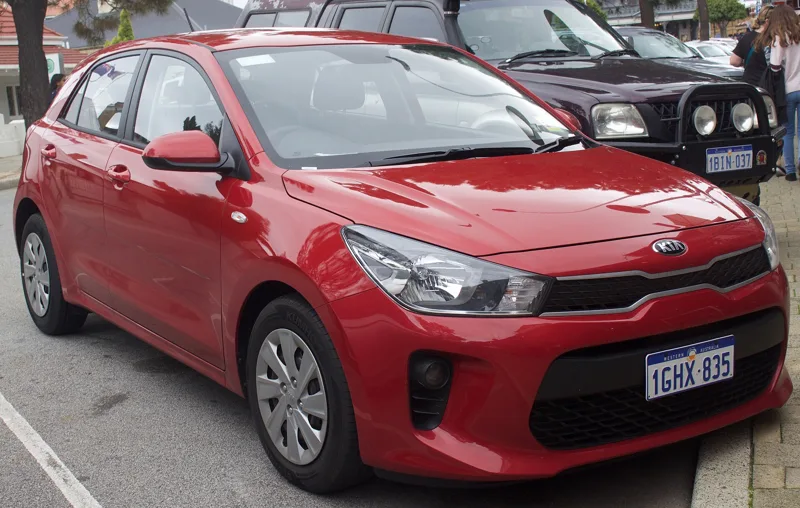
Britain told a messier story. Kia launched there in 1991 with the Pride supermini, a rebadged late-1980s Mazda 121 that sold almost 1,800 units in its first partial year, doubling in 1992 and reaching nearly 5,500 units in 1993. Sales then fell sharply, bottoming out in 1998 at under 3,000 cars across Kia's entire range, the brand's worst full year in Britain, a slump tied directly to the financial trouble that led to the Hyundai takeover. Recovery followed steadily rather than suddenly: by 2009, UK sales had broken 50,000 for the first time, giving Kia over 2 per cent of the new car market, with the Picanto alone contributing almost 17,000 of those sales. Kia Motors America logged its 18th consecutive year of rising US market share by 2013, and from 2015 to 2019, J.D. Power ranked it the highest-scoring mass-market brand for initial quality.
What has Kia built specifically for Europe?
Kia's European range grew well beyond the Pride through the 1990s. The Mentor arrived in spring 1994 as a range of medium hatchbacks and sedans pitched as cheaper, well-equipped alternatives to the Ford Escort and Vauxhall/Opel Astra, before a 1999 facelift kept the Mentor name for the sedan and renamed the hatchback Shuma.
Both models sold until 2004, when the newer Cerato gave Kia one of its first genuinely competitive mainstream-brand rivals. The 1999 Clarus saloon, roughly the size of a Ford Mondeo or Opel/Vauxhall Vectra, launched a year behind schedule because of Kia's pre-Hyundai financial troubles, yet still undercut the smaller Ford Focus and Astra on price. Its 2001 successor, the Magentis, struggled commercially too, but still undercut every other six-cylinder car on sale in Britain at the time, priced under 14,000 pounds. The Sedona MPV, also launched in 1999, was the UK's lowest-priced full-size people carrier at launch and saw sales almost double to nearly 6,400 units that same year. Kia also built the first-generation Sportage SUV in both left- and right-hand drive at Karmann's Osnabruck factory in Germany from 1995 to 1999, before shifting all production back to South Korea until that generation ended in 2003, with the larger Sorento picking up European sales momentum from 2002 onward.
Where does Kia build its cars today?
Kia Motors Manufacturing Georgia, in West Point, represented a US$1 billion investment when it broke ground in October 2006 and opened in February 2010, arriving on the back of fifteen unbroken years of US sales growth for the brand, initially building only the Sorento before adding the Optima, now sold as the K5, from 2011 and the Telluride from January 2019.
By September 2019 the Georgia plant had produced over 3 million units across those three models, running at a capacity of 340,000 vehicles a year. Kia's first European factory, near Zilina in Slovakia, began construction in October 2004, finished in December 2005, and started vehicle production in December 2006; by August 2025 it had built more than 5 million vehicles for export to 83 countries, running a capacity of 350,000 vehicles and 540,000 engines annually, and had just begun building the EV4 hatchback there too, the first fully electric Kia ever assembled on European soil, made possible by a 108 million euro overhaul of the plant's production lines. A further US$1 billion plant in Pesqueria, in Mexico's Nuevo Leon state, adds another 300,000 cars a year to Kia's global output, meaning the company now builds vehicles across three separate continents outside its South Korean home base, each plant feeding a different cluster of regional markets rather than one single export hub for the whole world.
What is next for Kia?
Kia's most recent launches point firmly toward electrification and new vehicle formats. The Tasman pickup truck was shown to the world for the first time on 29 October 2024, at a Saudi Arabian motor show held in Jeddah, while Kia's 2025 EV Day event, staged in the Spanish town of Tarragona, unveiled the EV4, the Concept EV2 and the PV5, the company's first dedicated 'Platform Beyond Vehicle' model.
Those launches sit alongside a stated roadmap to reach carbon neutrality across its entire value chain by 2045, including a goal of fully electrifying its European line-up by 2035, a target that would have been unthinkable for a company once defined almost entirely by cheap, combustion-engined compacts. From a bicycle-parts workshop in wartime Korea to an electric pickup unveiled in Saudi Arabia eight decades later, Kia's path has rarely been a straight line, but it has consistently found its way back from setbacks, a government ban, a bankruptcy, a bruising British sales slump, that would have ended a less determined manufacturer altogether.
_IAA_2025_DSC_1271.jpg)