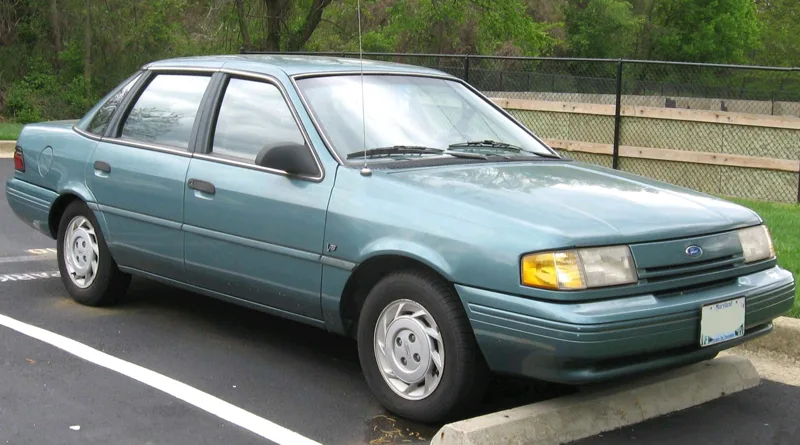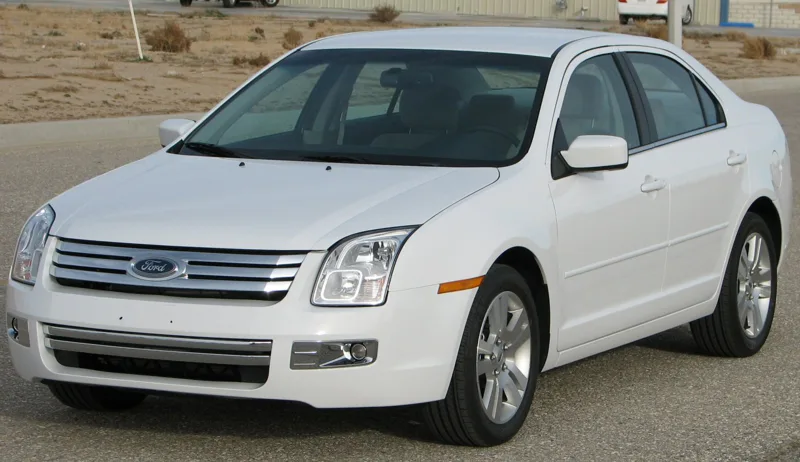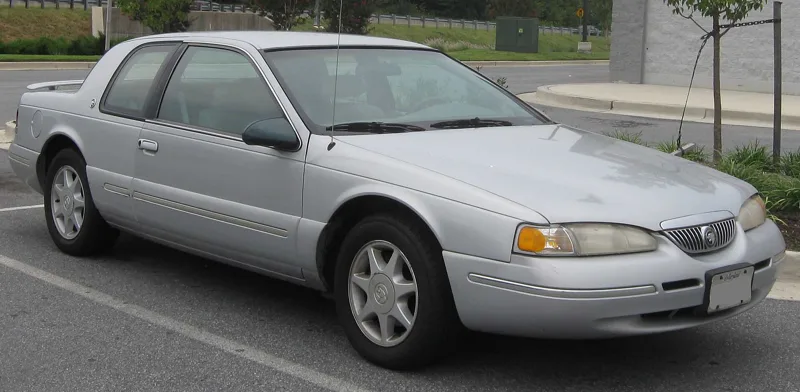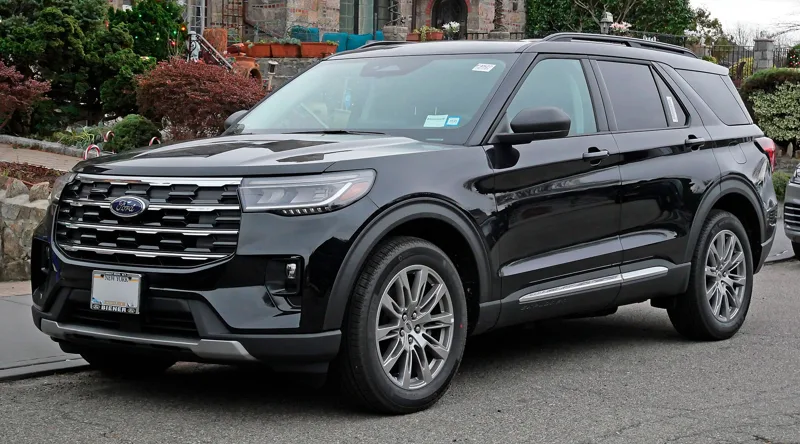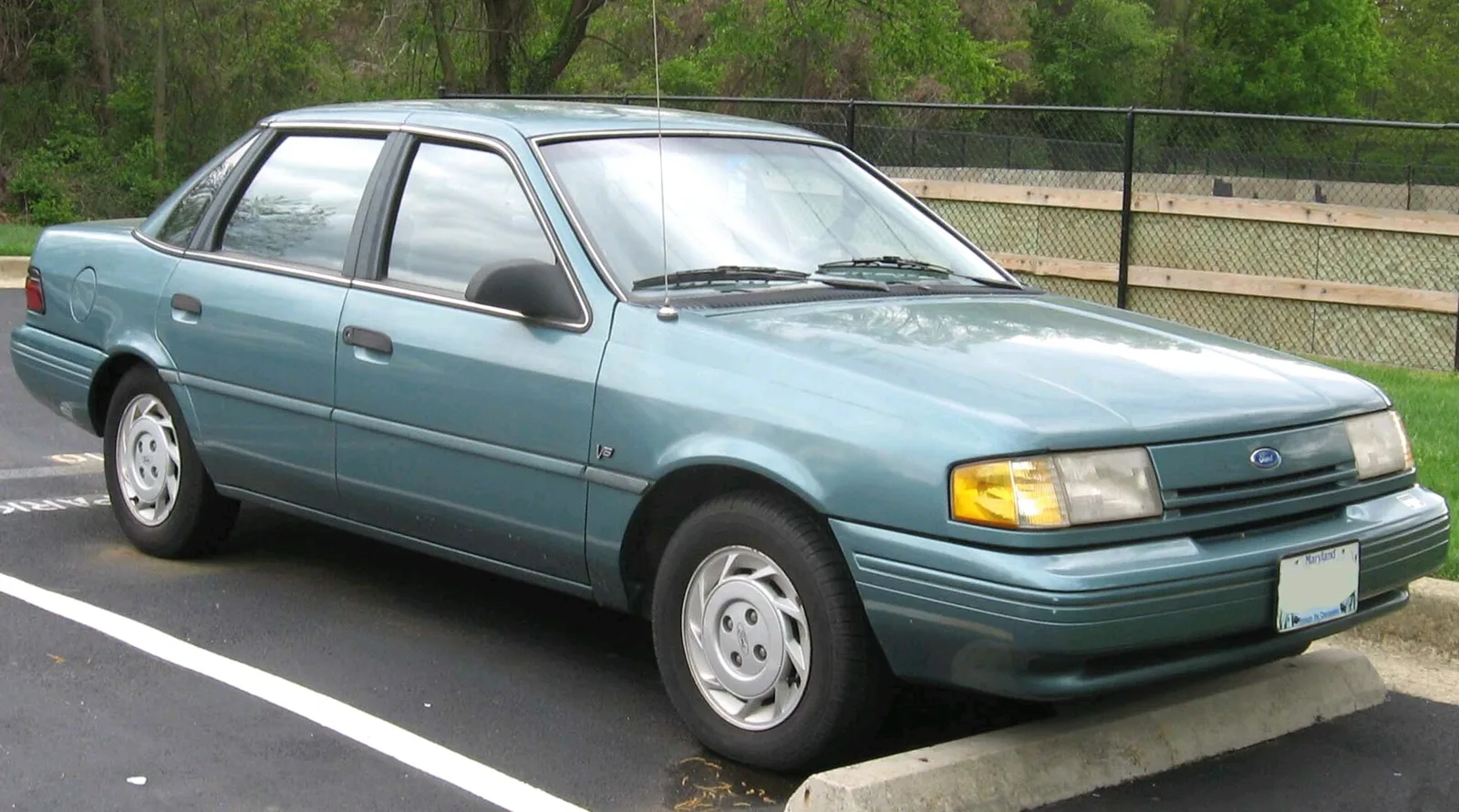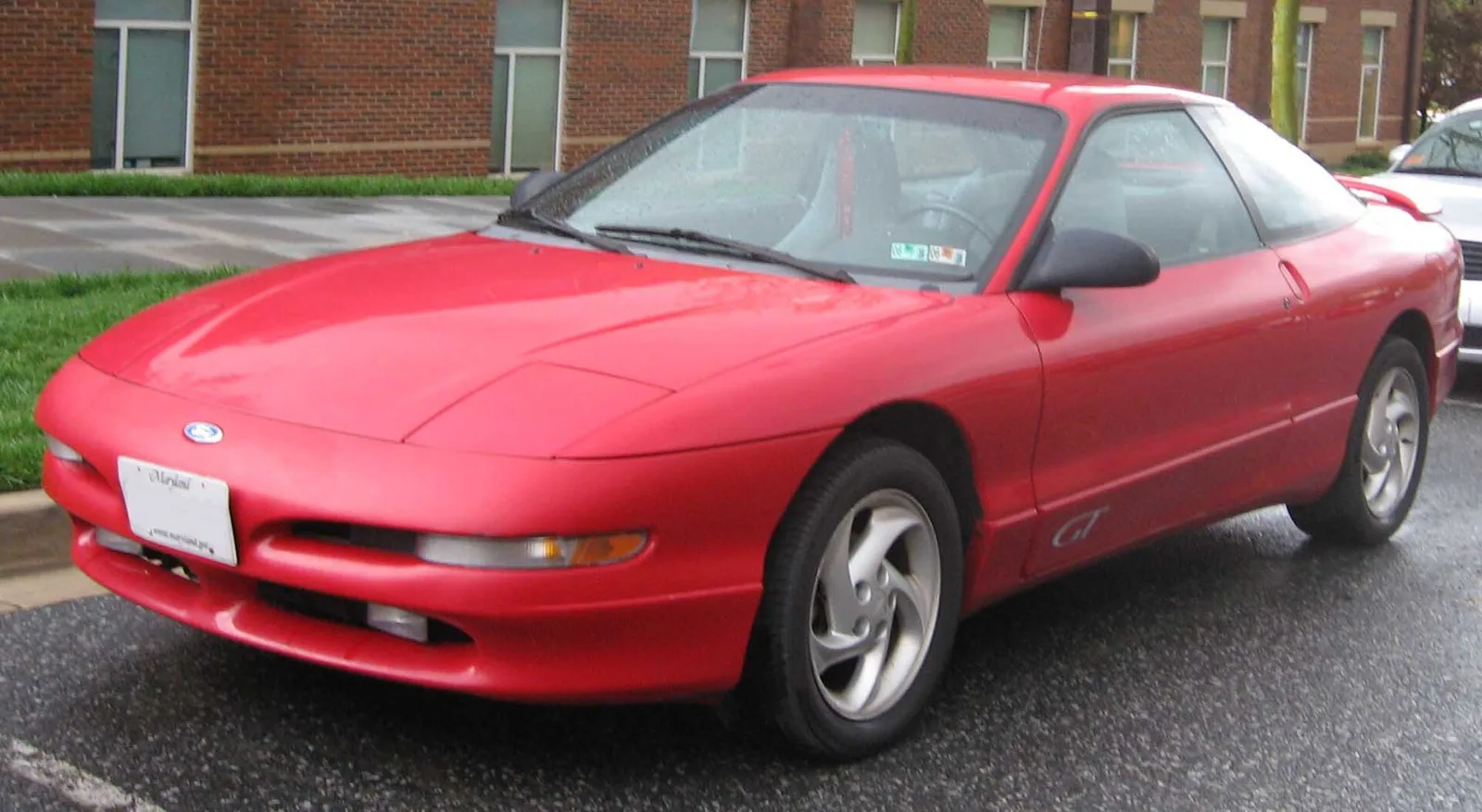
A front-drive sports coupe that began as a Mustang study, was built with Mazda and sold in two generations until 1997.
The Ford Probe was a front-wheel-drive sport compact coupe sold from the 1988 to 1997 model years. Developed with Mazda as a counterpart to the MX-6, it began as a Mustang successor study before Ford launched it as a separate model. Two generations were built, the second arriving for 1993.
Ford sold the Probe for ten model years, from 1988 to 1997, as a sport compact coupe built with Mazda. It began life as a study for a fourth-generation Mustang before Ford chose to sell it under its own name. The car sat above the Escort and Tempo coupes in the range, and beneath the Mustang and Thunderbird.
What was the Ford Probe?
This front-drive two-door was marketed by Ford between the 1988 and 1997 model years. The name came from a series of futuristic aerodynamic concept cars, and the model was aimed at a wider set of rivals than the Mustang faced.
Ford placed the Probe between the Escort and Tempo coupes and the Mustang and Thunderbird, so it sat beneath the Mustang rather than replacing it. Rivals ranged from the Acura Integra and Isuzu Impulse to the Nissan 200SX and Toyota Celica, while the Mustang faced the Chevrolet Camaro and Pontiac Firebird.
The first generation carried a family resemblance to the Mazda MX-6, while the second generation extended the car's shared engineering. Both generations were sold in Japan through Ford and Mazda sales channels, although Japanese models did not meet local rules on exterior dimensions and engine displacement.
A front-drive sports coupe that began as a Mustang study, was built with Mazda and sold until 1997.
Why did the Probe start life as a Mustang?
The Probe began as the fourth-generation Ford Mustang, a front-wheel-drive successor built on a Mazda platform. Engineers at Mazda in Hiroshima developed the project under the codename ST-16 before Ford decided to sell the car under a different name. That decision turned a planned Mustang into a separate model with its own name.
After the 1979 energy crisis, Ford decided to redesign the Mustang on a platform from Mazda, a partner since 1971 in which Ford had held a 25% stake since 1979. Toshi Saito, based in North America, led the styling, and his design was finalised in early 1984.
The public reaction was fierce. AutoWeek revealed the ST-16 in April 1987, and many Mustang fans objected to its front-wheel drive, Japanese engineering and lack of a V8. Ford executives and magazines received strongly worded letters of protest.
By 1987 Alex Trotman, then Ford's North American vice president, had ruled that the ST-16 was unsuitable as a Mustang. Engineering money had already gone into the car, and the company was still climbing out of the early 1980s financial crisis.
Ford's small-car engineering manager, John Coletti, had opposed the project and was asked to lead a skunkworks team to build a rear-drive successor on a heavily revised Fox platform. That work eventually became the fourth-generation Mustang for the 1994 model year.
How did Mazda shape the Probe?
The Probe was a counterpart of the Mazda MX-6, built on the Mazda G platform used by the Mazda 626. The two shared an under-structure, and Mazda engineered the engine, transmission and chassis of the second generation, while Ford handled much of the body and interior.
Work began after the second fuel crisis, when front-wheel drive had gained popularity with buyers. Ford marketed the partnership on lower production costs than the earlier Fox platform, as well as the fuel-economy gains that front-wheel drive offered.
Where was the Probe built?
The Probe was built at the Flat Rock Assembly Plant in Flat Rock, Michigan. Mazda Motor Manufacturing USA ran the plant first, and Ford bought a 50% stake in 1992, which created AutoAlliance International. Production of the first generation ran there until 1992, the year Ford took its stake.
By 1985 Mazda had acquired the former Flat Rock plant, which was then AutoAlliance International, and it planned to build the 626, the MX-6 and the ST-16 there from 1987.
Ford announced the end of the Probe on March 17, 1997. The third-generation model that was in development became the Mercury Cougar, and the smaller Escort ZX2 also took over part of the line.
What were the Probe concept cars?
Ford and Ghia produced five Probe concepts between 1979 and 1985. Each explored aerodynamic efficiency, and several design ideas later reached production Fords. The series began with the 1979 Probe I and ended with the Probe V shown in 1985.
The Probe I used a Ford Fairmont chassis and targeted a drag coefficient of 0.25, helped by skirted rear wheels and headlamps that popped up. It was styled as a sleeker Mustang and used a turbocharged inline-four.
The Probe II of 1980 was a prototype family sedan with covered headlamps and concealed wipers. It was roughly the size of the Ford Tempo, and it was first shown as a concept in 1986.
The Probe III of 1981 came from Ford of Europe and lowered the drag coefficient to 0.22. It previewed the 1982 Ford Sierra, and its flush-mounted glass and wheels later appeared on several 1980s Fords.
The Probe IV of 1983 was another Ford and Ghia design, with a drag coefficient of 0.152 and fully skirted wheels. Its turbocharged inline-four was slanted 70 degrees, and its adjustable suspension could lower the front axle by four inches while raising the rear by six inches.
A prototype of the Probe V was displayed at the 1985 Tokyo Auto Show, and it claimed a drag coefficient of 0.137. It was the only mid-engined car in the series, with a turbocharged 1.9-litre 16-valve four.
What engines and trims did the first generation use?
The first-generation Probe used a 2.2-litre SOHC 12-valve four-cylinder from Mazda, sold as the F2. In the US the trims were GL, LX and GT, with the LX offering a 3.0-litre Vulcan V6 from 1990. Each trim sat at a different point in the price and power range.
The GL was the base model, with 82 kW (110 hp) and 176 Nm (130 lb-ft) from its 2.2-litre four. Most Probes sold in the United States had air conditioning.
The LX added power locks and windows, electrically adjusted mirrors, a storage tray and an optional flip-up moonroof. From 1990 it could take the V6 also used in the Taurus, Ranger, Tempo and Aerostar.
The GT used a turbocharged, intercooled 2.2-litre four rated at 108 kW (145 hp) and 258 Nm (190 lb-ft). It had four-wheel disc brakes with ABS, variable-damping shocks and a boost of 0.50 bar (7.3 psi) around 2,500 rpm.
The 1991 Probe earned a four-star crash rating from NHTSA in collision tests.
What changed in the second generation?
The second generation arrived for the 1993 model year, introduced in August 1992. Ford engineered the body and interior while Mazda handled the engine, transmission and chassis, making the car roughly 60% Mazda and 40% Ford. It was 50 mm (2 in) wider and longer, yet 60 kg (125 lb) lighter.
The redesign was led by Mimi Vandermolen, who had worked on the 1986 Ford Taurus interior. In 1987 she became the first female design executive for small cars at an automaker, and she aimed to make the car easier for women to drive.
The engine line-up used a 2.0-litre Mazda FS four and a 2.5-litre Mazda K V6. Both had dual overhead cams and offered a 5-speed manual or a 4-speed automatic. From 1994 the four-cylinder used the Ford CD4E automatic, built at Batavia, Ohio.
The 1994 model year brought dual airbags as standard, which made the Probe one of the first production cars with that feature. The dashboard was also overhauled with new materials and a redesigned passenger side for the airbag.
The last Probe was built on 20 June 1997. The planned third generation, based on the Ford Contour platform, became the 1999 Mercury Cougar, launched in June 1998.
How did the Probe sell in Britain and Europe?
Ford launched the second-generation Probe in Europe in spring 1994, filling a gap left by the Capri, which ended in 1986. Ford had hoped to sell around 20,000 Probes a year in Britain, but managed just over 15,000 in three years.
The Capri had ranked among Britain's best sellers through the 1970s, but demand fell in the early 1980s. Ford dropped the model in 1986 without a direct replacement.
Sales reached only around a quarter of the projected figure, and imports ceased during 1997. The Cougar successor was even less successful in Europe. As of late 2025, 212 examples were still in use in Britain.
In the US, the entry second-generation car began at just over US$13,000, while the GT began at $15,504.
What special editions were offered?
Ford offered a Sport Edition appearance package for 1993 and 1994, a Wild Orchid limited edition in 1994, and a GTS package on the GT in 1997. Each was largely cosmetic, and the performance of the regular GT was unchanged.
The SE package added 3-spoke swirl-style alloy wheels, GT ground effects and the GT front bumper to the base model, along with power windows and mirrors.
In 1994 Ford released the Feature Car, officially the GT Plus package but better known as the Wild Orchid Edition. It had Wild Orchid paint, matching badging and cloth bucket seats with Wild Orchid inserts, and it was exclusive to GT models for that year.
The 1997 GTS package added dual racing stripes in white or black, chrome-plated swirlie wheels and a spoiler. It was purely cosmetic, and very few were built.
Ford Probe specifications
| Item | Detail |
|---|---|
| Model years | 1988 to 1997 |
| First-generation engine | 2.2-litre SOHC 12-valve Mazda F2 four |
| GL output | 82 kW (110 hp); 176 Nm (130 lb-ft) |
| GT output | 108 kW (145 hp); 258 Nm (190 lb-ft); 0.50 bar (7.3 psi) boost |
| Second generation | 1993 model year, introduced August 1992 |
| Second-generation base engine | 2.0-litre Mazda FS four |
| Second-generation GT engine | 2.5-litre Mazda K V6 |
| Probe I drag coefficient | 0.25 |
| Probe IV drag coefficient | 0.152 |
| Probe V drag coefficient | 0.137, with a 1.9-litre turbocharged four |
| Second-generation weight | 60 kg (125 lb) lighter than the first generation |
What year-to-year changes did the Probe see?
The 1995 model year changed the tail lights, outlined in black on base and SE models and in red on the GT. Heated mirrors and the graphic equalizer were dropped, and the SE became a trim level in its own right.
In 1996 the base model was dropped in favour of the SE, and the GT received a more refined suspension with a higher ride height. An OBD-II engine control unit arrived that year, with new seat belts that had automatic locking retractors.
The 1997 model year brought the base model back, with wheel covers from the Mazda 626. ABS became an option rather than standard on the GT, and the side door intrusion beams were redesigned to meet the 1997 Federal Side Impact Standards.
What awards and records did the Probe earn?
The Probe GT was named Motor Trend's Car of the Year for 1993, and it appeared on Car and Driver's Ten Best lists for 1989, 1993 and 1994. In an Automobile Magazine road test it placed third, behind two cars priced at $80,000.
The most notable record came at Daytona International Speedway on 13 February 1990, when a NASCAR Dash Series Probe driven by Jeffrey Collier set a lap of 268.041 km/h (166.553 mph). That lap still ranks as the quickest closed-course time for a four-cylinder car without a turbocharger.