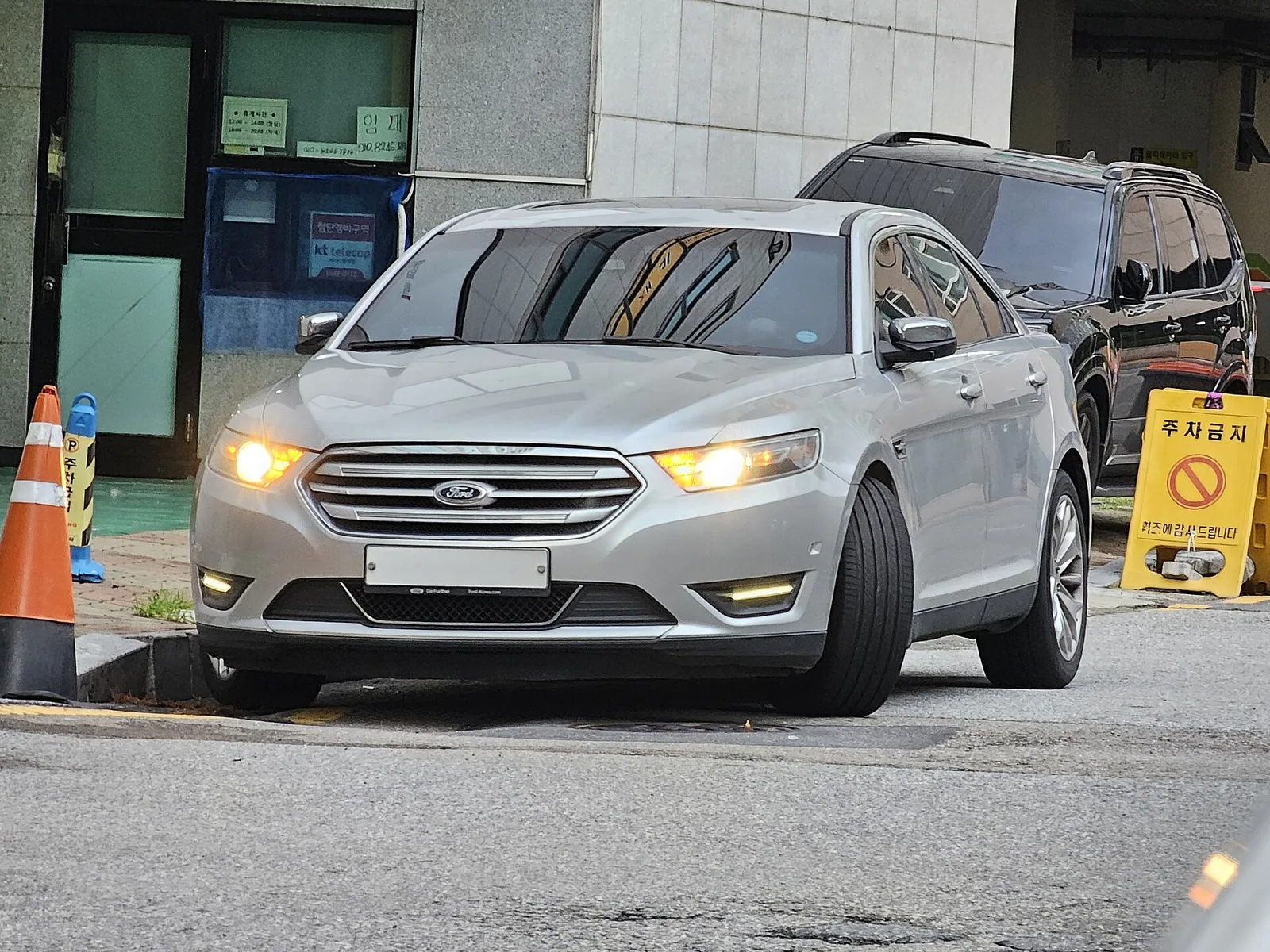
From a 1985 jelly-bean design born out of Deming's quality drive to the 2019 last build, the Taurus shaped American family cars and then saw its own market collapse.
Ford's Taurus began as a 1985 mid-size sedan that set new quality standards for the company. It led US car sales for several years in the early 1990s, and it gained a performance SHO variant. The model ended its American run in 2019.
Between 1985 and 2019 Ford sold the Taurus as a mid-size car in America, and it was the first Ford built under the statistical quality methods that W. Edwards Deming had encouraged. Its sales peaked in the early 1990s, and it was the best-selling car nameplate in the United States from 1992 to 1996.
What was the Ford Taurus?
The Taurus was a front-wheel-drive mid-size car that replaced the slow-selling mid-size Ford LTD. It was launched in 1985 as a 1986 model, and it was sold alongside the Mercury Sable, a near-identical twin, from 1985 to 2009. Four generations of the high-performance SHO joined the range at different points.
Across its life the Taurus was assembled at Chicago and, until its 2006 closure, at Atlanta. Ford built 7,519,919 examples from the 1985 launch to the first withdrawal after the 2007 model year. That total makes it the fifth best-selling Ford nameplate in North America.
The car was a milestone for the company and for the wider industry. Its shape, interior and quality methods all set a template that rivals copied in the years that followed, which is why it is often described as one of the most influential American family cars.
A mid-size sedan that started as a quality experiment, became the best-selling car in America and then ended as a niche choice in its home market.
How did the Taurus come out of Ford's quality crisis?
The Taurus was the first car produced under a new quality culture at Ford. Between 1979 and 1982 the company lost $3 billion, and in 1980 Chairman Donald Petersen started a team approach to car design and manufacture that eventually produced the Taurus.
Ford's corporate quality director, Larry Moore, recruited the statistician W. Edwards Deming to help. Deming argued that management was responsible for 85% of the problems in developing better cars, so Ford made its managers responsible for quality and adopted statistical process control across design and manufacture.
The quality push became a marketing theme. Working with advertising agency Wells, Rich, Greene from 1979, Ford adopted the slogan Quality is Job 1 by the summer of 1981. The Taurus was the first model to carry that approach through the whole product.
What made the first-generation Taurus different?
The first-generation Taurus launched with a rounded, aerodynamic shape that critics called a jelly bean or flying potato. Instead of a conventional grille, it used a smooth grille-less nose. Its styling drew on the Audi 5000 and Ford's European Sierra, and it helped Ford meet tougher fuel economy rules.
The interior was built around touch. Switches for the power windows and locks had one half raised and the other recessed, so drivers could tell them apart without looking. The dashboard placed most controls within easy reach, and the left side of the dash curved around the driver to create a cockpit feel.
Early buyers could choose a V6 or an inline four, with manual or automatic transmissions. Trim levels ran from the basic L with an AM radio and cloth bench seat to the luxurious LX, and the car won the 1986 Motor Trend Car of the Year title.
How did the Taurus sell in its early years?
The first-generation Taurus sold strongly from launch. Production passed 200,000 in the 1986 model year, the millionth car was sold during the 1989 model year, and more than two million had been built by the end of model year 1991.
The sales story is more complicated than the headline numbers suggest. Fleet sales inflated the car's volume in some years, and retail buyers formed a smaller group than the total implied. Early demand came from families and businesses that valued the car's new approach to controls and its modern shape. The model's broad appeal helped it become a fixture on dealer lots across the country.
The second generation, launched for 1992, kept the same chassis but revised almost every body panel apart from the doors. It gained several inches of length and more than 200 pounds of weight. Its interior was completely revised, and a passenger airbag became standard for 1994, making the Taurus the first mid-size sedan sold in the United States with standard dual airbags.
The second generation became the best-selling car in the United States and held that title throughout its run, reaching 1.4 million before production ended in 1995. Rental fleets took a large share of sales, with 51% of the 1996 total going to rental companies.
What was the third-generation Taurus like?
The third generation arrived for the 1996 model year on the upgraded DN101 platform, which it shared with the Mercury Sable, the Lincoln Continental and the Ford Windstar. The chassis was heavily upgraded, and the styling was a sharp break from the look of the two earlier generations.
Designers used rounded lines throughout, and the rear window was oval, as were the side windows of the Sable. Reaction was mixed, and Ford found that customers disliked the oval shape. The interior was completely redesigned, with radio and climate controls grouped on an oval console.
Starting cost was about $18,000 in 1996, equal to $36,951 in 2025 money. In Australia, Ford imported a Taurus Ghia alongside its Falcon EL, but sales were poor and imports ended after one year.
How did the Taurus perform in NASCAR?
The third-generation Taurus replaced the Thunderbird in NASCAR for the 1998 season, and it became the first four-door sedan approved for competition. Dale Jarrett drove a Taurus to the Winston Cup championship, and Greg Biffle took the Busch Series title in a Taurus owned by Jack Roush.
Robert Yates and Jack Roush ran the teams that fielded these cars, preparing them for the series. In total the Taurus won three Winston Cup championships and two Busch Series championships. Those titles gave the model a racing record that fitted its image as a dependable family car.
Motorsport success is rarely the reason buyers choose a family sedan, but in this case the racing link helped keep the Taurus in front of the public during the years when its sales were falling.
Why did the Taurus lose its place in the market?
The fourth generation, launched for 2000, moved away from the oval styling in favour of sharper creases and corners. Ford cut costs during its life, which made the car cheaper but less special, and by 2005 it had dropped to fourth place behind the Nissan Altima.
Analysts pointed out that demand was shifting toward SUVs and pickup trucks, and the Taurus was caught in that trend. Ford ended the Taurus sedan's retail life after a short 2006 model year, and it was sold mainly to fleets. Production ended on 27 October 2006 at Atlanta, and the wagon had already been discontinued on 8 December 2004.
Critics blamed the company for neglecting a car that had once sold best in the country. The debate became a lesson in how a successful nameplate can be left to age. Newly appointed chief executive Alan Mulally later said the decision had perplexed him, and he worked to bring the name back.
How did the Taurus return in the late 2000s?
The fifth generation reached production as a 2008 model, developed from the Ford Five Hundred with a new front end and a 263 hp 3.5 L Duratec V6. The Taurus name came back after the Five Hundred struggled, and the 2008 car was awarded top safety ratings from the IIHS and five stars from NHTSA.
The return of the name was a practical decision, since buyers already recognised it and dealers still wanted a Taurus on the lot. The sixth generation arrived for 2010 with a new design and a choice of V6 or four-cylinder power. Base prices were $25,995 for the SE, $27,995 for the SEL and $31,995 for the Limited, and Ford had hoped to sell 10% to 15% of them as high-performance SHO models.
The SHO returned in 2009 with a twin-turbo 3.5 L EcoBoost V6 making 365 horsepower and 350 lb ft. Its base price was $37,995, and a fully loaded car could reach $45,395, placing it among the most powerful family sedans on sale.
When did the Taurus end in the United States?
Ford announced on 25 April 2018 that the Taurus would be discontinued, as part of a plan to focus on trucks and SUVs. Advertising for the entire sedan line ended later that year, and the last US-built Taurus left the Chicago plant on 1 March 2019.
The decision was controversial. Analysts and customers criticised the company for failing to invest in the car, and a national newspaper editorial argued that Ford had starved the Taurus of attention.
The seventh generation had already been developed for the Chinese market by Changan Ford, and it was sold only in China. Ford's decision also turned the mid-size sedan from a cornerstone of the lineup into a niche product within a few years. That shift made the sedan story harder to tell in showrooms, and dealers felt the change first. The Taurus name therefore survived in a different form, long after the American model had gone. The end of the line marked the close of a nameplate that had lasted more than three decades, and many owners remembered the car as a dependable companion.
What are the Ford Taurus specifications?
The table covers the main generations and the SHO figures. Each row names the generation or version that it applies to, because the power and price figures changed considerably over the car's life. Imperial units appear first here, since the car was built and sold in the United States.
| Specification | Detail |
|---|---|
| Production | 1985 to 2019; 7,519,919 built from 1985 to 2007 |
| Launch | 1985 as a 1986 model |
| Fifth generation V6 | 3.5 L Duratec 35, 263 hp, replacing a 203 hp 3.0 L |
| 2010 SHO | Twin-turbo 3.5 L EcoBoost V6, 365 horsepower, 350 lb ft (470 N m) |
| SHO fuel economy | 17 mpg city, 25 mpg highway, all-wheel drive |
| 2013 facelift | Naturally aspirated V6 up to 288 hp; EcoBoost four-cylinder up to 240 hp |
| 2010 base prices | SE $25,995; SEL $27,995; Limited $31,995 |
| SHO base price | $37,995; fully loaded up to $45,395 |
| Final US build | 1 March 2019, Chicago plant |
Frequently asked questions
How many Tauruses were built?
Production totalled 7,519,919 by the end of the 2007 model year, when the first withdrawal took effect. Output continued in smaller numbers until 2019.
Which car replaced the Taurus?
Ford positioned the Five Hundred and Fusion as its successors in 2006, and the Taurus name returned in 2008 on a revised Five Hundred.
Did the Taurus win in NASCAR?
Yes. Taurus-powered cars took three Winston Cup titles and two Busch Series crowns, with Dale Jarrett and Greg Biffle among the drivers.
What was the Taurus SHO?
The SHO was the high-performance version, offered in four generations from 1988 to 1999 and again from 2009 to 2019. The 2009 car used a twin-turbo 3.5 L EcoBoost V6.
.jpg)