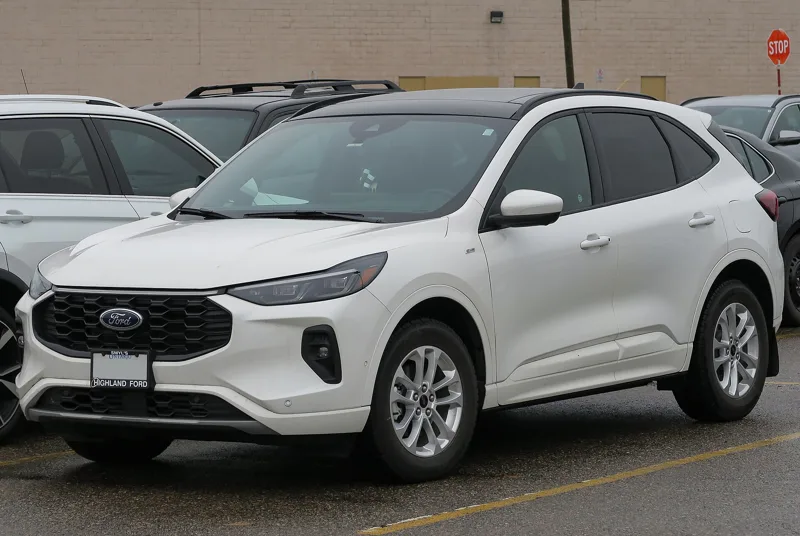
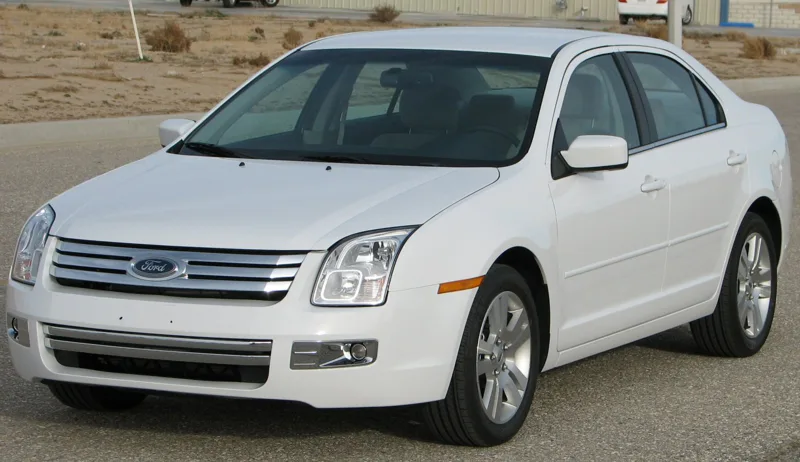
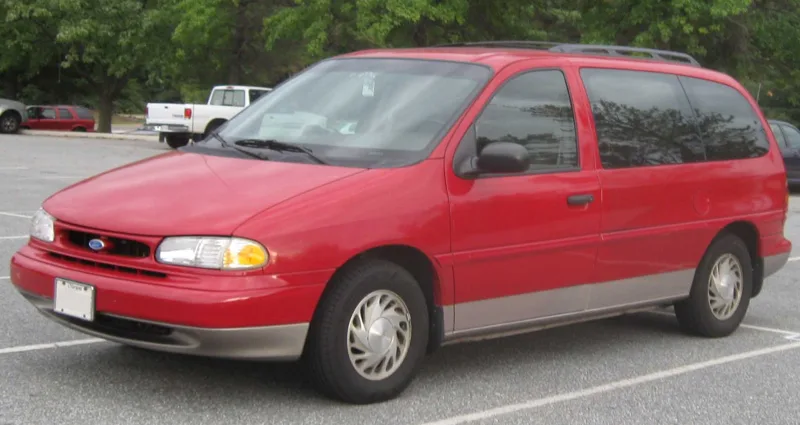
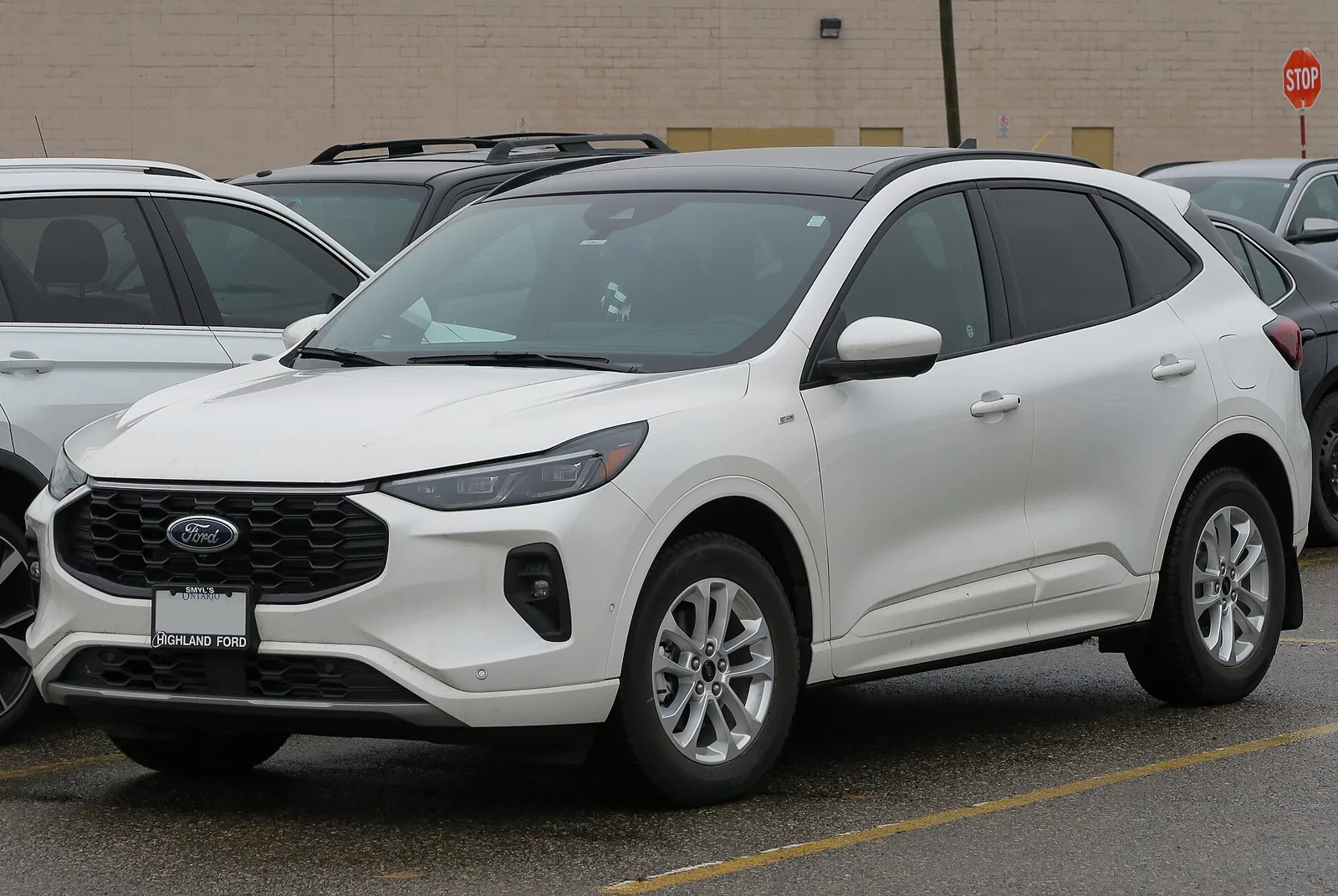
Launched in 1991 to replace the three-door Bronco II, the Explorer went through six generations and became the best-selling SUV in the American market in 2020.
The Ford Explorer is an SUV range that Ford has built since the 1991 model year. It replaced the three-door Bronco II and became Ford's first five-door SUV. Explorer sales led the American SUV market in 2020, and the car is now in its sixth generation.
Few American SUVs have lasted as long as the Explorer, which Ford has sold since 1991. It took over from the three-door Bronco II, and it was Ford's first five-door SUV. Across six generations it has moved from body-on-frame construction to unibody, and in 2020 it was the top-selling SUV across the American market.
Where did the Explorer come from?
The Explorer was introduced in March 1990 as an early 1991 model, replacing the Bronco II. Ford wanted to balance off-road capability with everyday family use, so the Explorer changed a good deal from its predecessor while keeping mechanical links to the Ranger pickup truck.
The first-generation car, known by the design code UN46, was a mid-size SUV that competed head-on with the Jeep Cherokee XJ and the Chevrolet S-10 Blazer. Three-door and five-door bodies arrived together, and the five-door followed the S-10 Blazer into showrooms in the same month.
The name itself came from a trim package that had been offered on Ford F-Series pickup trucks, a link that Ford also used for the Ranger. That heritage gave the new SUV a recognisable name from the start.
A Bronco II replacement that grew into a six-generation family and the best-selling SUV in America.
How big was the first-generation Explorer?
The three-door Explorer grew 12.6 inches in length over the 1990 Bronco II, and the five-door was 22.4 inches longer and 730 pounds heavier than that predecessor. The five-door used an extended wheelbase of 111.9 in (2,842 mm), while the three-door used 102.1 in (2,593 mm).
The wider body allowed three-across rear seating in the five-door version. The spare wheel moved from an exterior carrier to an underfloor position, and the rear liftgate carried a flip-up window, a detail borrowed from the Ford Taurus wagon.
Which engines and gearboxes did the first generation use?
The first-generation Explorer used a 4.0 L Cologne V6, an option shared with the Ranger and the Ford Aerostar. It started at 155 hp (116 kW) and rose to 160 hp (119 kW) for 1993. A Mazda M5OD five-speed manual was the standard gearbox, with a four-speed A4LD overdrive automatic as the alternative.
The Touch Drive electric-shift transfer case was standard on the four-wheel-drive models and let drivers move from two-wheel drive to high-range or low-range 4x4. A manual-shift transfer case was offered as an option, paired with manual-locking hubs. Every Explorer carried the Ford 8.8 rear axle.
How did the Mazda Navajo fit in?
Mazda sold a rebadged version of the first-generation Explorer as the Navajo from 1991 to 1994. It was Mazda's first SUV, and it won the 1991 Motor Trend Truck of the Year award. Its Explorer origins later clouded its reputation during the Firestone and Ford tire controversy.
The Navajo changed the front fascia, taillamps and wheels, and it wore darker painted bumpers. Mazda offered it in base DX and top-tier LX trims. Mazda later withdrew the model and returned to the market in 2000 with the Tribute, a counterpart of the Ford Escape.
What trims did the first-generation Explorer offer?
The Explorer followed Ford's light truck naming, with a base XL and a higher XLT. The outdoors-themed Eddie Bauer sat at the top of the range, sharing the XLT's features but adding alloy wheels and two-tone paintwork.
Three-door models offered the Explorer Sport in place of the XLT, with black lower bodywork and standard alloy wheels. For 1993 Ford added the Explorer Limited, a luxury five-door positioned against the Oldsmobile Bravada and Jeep Grand Wagoneer, with a monochromatic exterior and nearly every feature on the model.
What changed in the second generation?
The second generation arrived for the 1995 model year, and its exterior changes were largely evolutionary. It kept the U1 platform shared with its predecessor, and rear-wheel drive stayed standard, with part-time four-wheel drive as an option and all-wheel drive introduced as another choice.
The redesign brought dual airbags, a first for an American-brand SUV, and a new front suspension with short and long arms replacing the old Twin I-Beam set-up. Four-wheel ABS returned, and the rear drums became discs. Ford also added a Mercury Mountaineer in 1997 and the Sport Trac pickup in 2001.
How did the V8 and V6 engines develop in the second generation?
To compete with the Jeep Grand Cherokee, a 4.9 L (302 cu in) V8 rated at 210 hp (157 kW) arrived in 1996, marketed as a 5.0 L. Output rose to 215 hp (160 kW) for 1997, and the engine was paired with all-wheel drive on most trims by then.
For 1997 an overhead-cam version of the 4.0 L V6 joined the range, and it matched the V8 with 210 hp. It became standard on Eddie Bauer and Limited trims. The 2001 Explorer was the last Ford vehicle in North America to use an overhead-valve gasoline V8 for nearly two decades.
How did ControlTrac work?
The second generation replaced the older Touch-Drive system with ControlTrac, an electronic full-time arrangement that used a two-speed transfer case. Software-controlled multi-disc clutches took the place of a centre differential, and an Auto mode moved torque forward when the rear axle began to spin.
The V8 used a different arrangement, a full-time all-wheel-drive system without separate high or low ranges. Its torque split came from a viscous clutch at 40/60, which was a practical choice for road-going use.
What did the third generation bring?
The third-generation Explorer went on sale in January 2001 for the 2002 model year. It was the first complete redesign since the model's introduction, and it ended the chassis link with the Ranger in favour of a purpose-built SUV. The three-door was dropped, leaving the five-door as the sole body.
Ford benchmarked the new car against the Lexus RX300 and the then in-development Volkswagen Touareg, and it tuned the vehicle for higher-speed European roads. The chassis was based on a 113.7-inch wheelbase, and the rear axle became fully independent, a first for a Ford truck or American-market SUV.
The engine line used a 4.0 L V6 with 210 hp as standard and a 4.6 L Modular V8 with 239 hp as an option. The Lincoln division sold the Aviator from 2003 to 2005 as its own version of the third-generation car.
What was the fourth generation Explorer?
The fourth generation entered production in July 2005 for the 2006 model year. Although it looked new, it shared its roof, glass, drivetrain and several other major parts with its predecessor. A new, stiffer frame from Magna International underpinned it, and it dropped the troublesome two-piece tailgate for a one-piece design.
The 4.0 L V6 remained standard, paired with a five-speed automatic, while a 4.6 L 24-valve V8 offered 292 hp (218 kW) with a six-speed 6R automatic. The fourth generation was the last to use body-on-frame construction, and it was the final model built at the Louisville and St. Louis plants.
Ford sold the fourth generation in Japan in left-hand drive, because right-hand drive was never offered for the model. The last of the line rolled off the assembly line on December 16, 2010.
How did the fifth generation change the Explorer?
The fifth-generation Explorer arrived as a 2011 model with a unibody structure built on the D4 platform, which it shared with the Ford Flex and the Lincoln MKT. Assembly moved to Ford's Chicago Assembly plant, where it was built alongside the Ford Taurus and Lincoln MKS.
At launch the lineup used a 3.5 L TiVCT V6 with 290 hp (216 kW), and a 2 L EcoBoost four with 240 hp (179 kW) later joined it. With the trailer tow package the car could pull up to 5,000 lb (2,268 kg). The EPA rated the four-cylinder EcoBoost at 20/28 mpg city and highway, and the model won the 2011 North American Truck of the Year award.
In 2013 the Explorer Sport arrived with a 3.5 L EcoBoost twin-turbo V6 rated at 365 hp (272 kW). The 2016 refresh brought the 2.3 L EcoBoost four from the Ford Mustang, and a new Platinum trim sat at the top of the range.
How safe was the Explorer?
The third generation adopted safety features after the tread separation controversy that affected its predecessor. Ford removed the Firestone Wilderness AT tires, widened the axles and introduced AdvanceTrac as a stability control system, which became AdvanceTrac RSC in 2005.
The fifth generation became the first vehicle with dual rear inflatable safety belts, and those belts won the 2011 Best New Technology Award from the Automobile Journalists Association of Canada. The sixth generation earned the Top Safety Pick+ from the Insurance Institute for Highway Safety.
What is the sixth-generation Explorer?
The sixth generation debuted on January 9, 2019, ahead of the 2019 North American International Auto Show. It uses the rear-wheel-drive based CD6 platform, which it shares with the new Lincoln Aviator. The standard engine is a turbocharged 2.3 L EcoBoost four with 300 hp (224 kW) and 310 lb ft (420 N m) of torque, paired with a 10-speed automatic.
An optional 3.0 L EcoBoost V6 makes 365 hp (272 kW), and the ST uses the same engine to reach 400 hp (298 kW). The maximum tow rating for the four-cylinder is 5,300 lb (2,404 kg). The US Explorer Hybrid uses a detuned 3.3 L V6 with a 1.5 kWh battery for 318 hp (237 kW) combined.
Early vehicles had quality problems, and thousands were shipped to Ford's Flat Rock Assembly Plant for repairs. Dealers also had to carry out work on many later cars before they could be sold, which dented the model's start.
How did the Explorer's 2025 refresh change the car?
The facelifted sixth-generation Explorer was revealed on February 1, 2024, for the 2025 model year. It gained a redesigned front fascia with a larger grille and revised headlights and tail-lights, plus a 13.2-inch touchscreen and a 12.3-inch digital gauge cluster, which were standard on every model.
The trim list was reduced to four at first, with Active, ST-Line, ST and Platinum. For 2026 two more were added, the Tremor and the lower-end Active 100A, bringing the total to six.
What was the Police Interceptor Utility?
The Police Interceptor Utility was an Explorer-based patrol vehicle that Ford introduced for the 2013 model year, replacing the Crown Victoria Police Interceptor. It used a 3.7 L Cyclone V6 producing 304 hp (227 kW; 308 PS) and was flex-fuel capable, and a 3.5 L EcoBoost V6 joined the range in 2014.
The second-generation Utility, from 2020, is offered in permanent all-wheel drive only. Its 3.0 L EcoBoost V6 makes 400 hp (300 kW; 410 PS), and in Michigan State Police testing it reached 0 to 60 mph in 5.5 seconds and a top speed of 148 mph (238 km/h). The hybrid version lifted combined economy from 19 mpg-US to 24 mpg-US.
Frequently asked questions
How many Explorer generations have there been?
There have been six generations since the 1991 model year. The sixth generation debuted in January 2019, and a facelift for the 2025 model year followed in 2024.
Did the Explorer ever have a V8?
Yes. The second generation offered a 4.9 L V8 from 1996, and later generations offered 4.6 L V8s. The sixth generation uses EcoBoost engines, and no V8 is listed for it.
What were the Lincoln and Mercury versions?
Mercury sold the Mountaineer from 1997 until 2010, and Lincoln sold the Aviator from 2003 to 2005. Lincoln revived the Aviator for 2020 as a counterpart of the sixth-generation Explorer.
How much can an Explorer tow?
Towing capacity varies by generation. The 2011 model could tow up to 5,000 lb (2,268 kg), and the sixth-generation four-cylinder reaches a maximum of 5,300 lb (2,404 kg).