From a 1916 shipbuilder's car project to Elf trucks, the D-Max pickup and a long General Motors partnership.
Isuzu operates from Yokohama and is best known for trucks, buses and diesel engines. It began with a 1916 car project, adopted its name in 1949, worked with General Motors for decades and today builds the D-Max pickup and Elf trucks for markets worldwide.
Isuzu is a Japanese manufacturer headquartered in Yokohama that is best known for commercial trucks, buses and diesel engines rather than passenger cars. Its name comes from a river near one of Japan's most revered shrines, and its history stretches from a 1919 Wolseley-based car to today's global truck group. Outside Japan, the brand is also familiar for the D-Max pickup.
Where does the Isuzu name come from?
The name comes from the Isuzu River, which flows near the Ise Grand Shrine. Translated into English, Isuzu means fifty bells. The company took the name in 1949, after a meeting with the Ministry of International Trade and Industry, when it was renamed after the river.
The bell theme continued into the car range. The later Bellel and the Bellett both leaned on the idea, and Isuzu's passenger models of the 1960s carried those names with pride.
A company that began with shipbuilders building cars has spent a century making the trucks that keep Japan moving.
How did Isuzu start?
The firm's car story starts in 1916, when Tokyo Ishikawajima Shipbuilding explored a tie-up with a gas and electric concern to make automobiles. A technical partnership with Wolseley Motors followed in 1918, and in 1919 a Wolseley model became the first passenger car produced in Japan.
A Wolseley-based CP truck followed, and 550 were built by 1927. The Kanto earthquake of 1923 damaged the rail network, and heavy vehicles were imported from GMC and Ford to aid recovery. Local firms responded by building their own construction and heavy vehicles.
In 1927 the company introduced a 2-tonne Sumida P-type truck and a Sumida bus. The Sumida name came from the river near the Fukagawa factory, which was close by.
How did the company merge and grow in the 1930s?
In 1929 IHI separated its car manufacturing and merged it with DAT Automobile, a predecessor of Nissan, to form Jidosha Kogyo. Its products sold under the Sumida and Chiyoda names, and in 1937 the business was reorganised as Tokyo Automobile Industries with capital of 1,000,000 yen.
Tokyo Automobile Industries became one of the main makers of heavy trucks and buses for the Imperial Japanese Army, alongside Mitsubishi Heavy Industries. One of its wartime vehicles was the Sumida M.2593 armoured personnel carrier.
Hino Heavy Industries split off as a separate company in 1942. Truck and bus output restarted in 1945 after occupation authorities approved it, and the Isuzu name followed in 1949.
Postwar growth and the Elf
A factory opened at Fujisawa in Kanagawa in 1958, and in 1959 the Elf medium-duty cab-over truck arrived. The Elf is still in production, and it shared its platform with the Journey bus.
The TY followed in 1966. Isuzu became one of the primary makers of commercial trucks and buses for public transport, with models such as the Cubic, Gala, Erga and Giga. The Fujisawa plant itself was built and opened for production in November 1961, and it still makes commercial vehicles for Japan and export.
Why did Isuzu make passenger cars through partners?
Isuzu's passenger cars relied on partners for years. From 1953 it built the Hillman Minx under licence from Rootes Group, and the Minx stayed in production until 1962. Isuzu's own Bellel arrived in 1961, and the 117 Coupe sports car came later.
Alliances followed one after another. A tie-up with Fuji Heavy Industries, the parent of Subaru, began in 1966 as a step toward a possible merger. Mitsubishi followed in 1968 and Nissan in 1970, but each ended quickly. In September 1971 a capital agreement with General Motors began a link that lasted 35 years.
General Motors: the stake and the Chevrolet years
In 1972, the year a Chevrolet LUV became the first Isuzu-built car to reach American showrooms, General Motors took a 34 percent stake. Isuzu adopted a new logo in 1974 with two vertical pillars representing the first kana of its name.
The 1974 Gemini shared its development with General Motors, emerging in the US as a T-body Chevrolet Chevette. A tweaked edition appeared in America under the Buick Opel name, and Australians knew it as the Holden Gemini. Exports rose from 0.7 percent of production in 1973 to 35.2 percent by 1976.
From 1981 Isuzu sold its own-brand cars and trucks in the United States, opening with the P'Up pickup and the Piazza sports car. The export success did not last, and the Impulse ended its US run in 1992.
The following year the export of the Stylus ended, and that model was the final Isuzu-built passenger car sold in America. A 1993 swap with Honda saw Honda sell Isuzu's Rodeo as the Passport and the Trooper as the Acura SLX.
Why did Isuzu leave the US car market?
Isuzu's US car sales slid through the late 1990s and 2000s as the Rodeo and Trooper aged. The VehiCROSS and the other sport utility models were dropped in 2001 in a reorganisation that cut almost 10,000 jobs. On 30 January 2008 the company said it would leave the American market entirely, with the exit taking effect on 31 January 2009.
Isuzu sold 7,098 cars in the US in 2007, and the company was blamed in part for low quality engines and weak service. Its US business had been reduced to a pair of rebadged General Motors trucks before the decision was taken.
Commercial business stayed. Isuzu continued to sell trucks in the US, and Budget Truck Rental contracted Isuzu to manufacture its rental trucks alongside other producers.
The GM years end: stake, rescue and sell-down
A 1998 venture called DMAX, set up by GM and Isuzu, would make diesel engines. GM lifted its shareholding to 49 percent a year later, which in practice handed it control. It then appointed an American GM executive to run Isuzu's North American operations, the first non-Japanese executive to hold such a high position.
In late 2002 Isuzu began a recapitalisation to avoid bankruptcy. GM bought 20 percent of DMAX and 60 percent of the Polish and German Isuzu operations, plus rights to three diesel technologies. The price was 50 billion yen, roughly US$425 million, and a further 10 billion yen, or about US$85 million, bought 12 percent of the reshaped company.
By 2006 the General Motors holding had passed to a group led by Mitsubishi Corporation, Itochu and Mizuho. Mitsubishi became the largest shareholder, with 15.65 percent, and Toyota bought 5.9 percent later that year.
Who has run Isuzu?
Leaders have included Goro Matsutaka, who led from 1937 to 1940, and Goro Sannomiya, who led from 1946 to 1961. Toshio Okamoto ran the company from 1976 to 1984, and Yoshinori Ida led it from 2000 to 2007. Masanori Katayama served from 2015 to 2023, and Shinsuke Minami followed until 2026.
Masahiro Yamaguchi has led Isuzu since 2026. Okamoto had started the Suzuki collaboration, which led to the S-car plan and a three-way co-ownership deal in 1981.
Which Isuzu trucks and buses are best known?
Isuzu's commercial range includes the Elf light-duty truck, the Forward medium-duty truck and the Giga heavy truck, plus buses such as the Erga and the Gala. The Elf was introduced in 1959 and is one of the longest-running names in the range.
Japanese fleets use Isuzu's Mimamori-kun telematics service, which began in February 2004. It logs driver activity for legal duty records, records lunch breaks and stops, and includes a digital tachograph and a password lock against theft.
What is the D-Max?
The D-Max is a pickup introduced in 2002 and a leading diesel seller in most Isuzu markets outside Japan and North America. Its SUV sibling, the MU-X, arrived in 2013 and was developed from the D-Max platform, so one engineering effort serves both models.
Isuzu's Thai plant has made pickups since 1966, when a facility in Samuthprakarn province had capacity of 155,000 units a year. By 2002 the production base had moved from Fujisawa to Thailand, and by 2017 Thai-built pickups were shipped to North America, Latin America, Australia and Japan.
Diesel engines and the PowerTrain division
Diesel is a central pillar of the company, with more than 20 million engines built worldwide. Its PowerTrain Division, which belongs to Isuzu Motors America, sits in Plymouth, Michigan, and works with a network of North American distributors.
The company's diesel focus is older than many people realise. In 1983 diesels made up 63.4 percent of Isuzu's passenger car production, long before diesel became mainstream in the markets that followed.
Did Isuzu take over UD Trucks?
Yes. Isuzu signed a non-binding memorandum with Volvo in December 2019 covering the sale of UD Trucks to Isuzu. The deal became binding in November 2020 with final agreements, and the acquisition was completed in April 2021, bringing the UD brand into the Isuzu family.
UD Trucks products have been part of the Isuzu line-up since April 2021, extending the company's reach into heavier commercial vehicles.
Partnerships with Mazda, Toyota and Hino
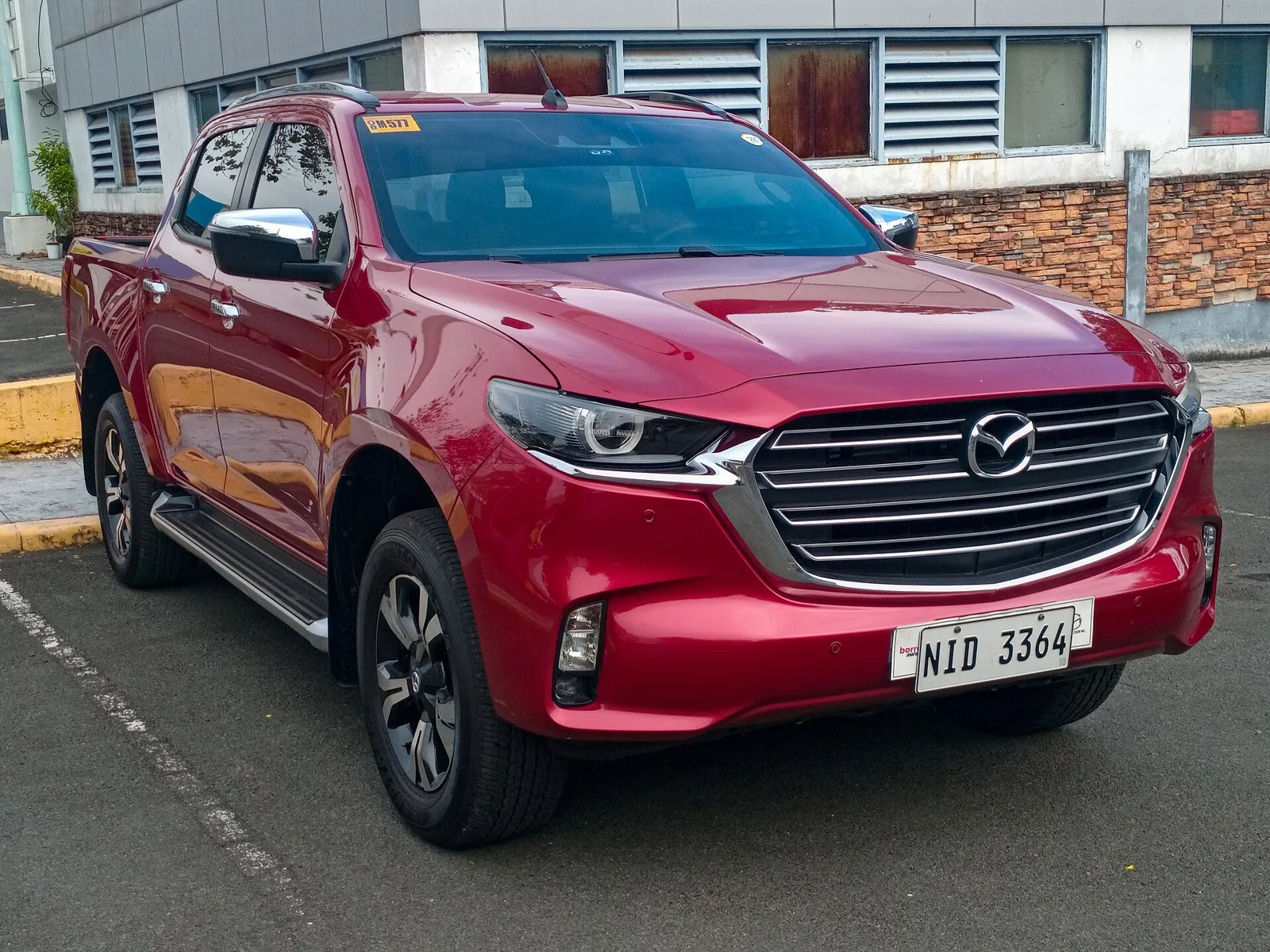
Isuzu and Mazda struck a collaboration in July 2016 to build Mazda's next pickups outside North America. The third-generation Mazda BT-50 has been built by Isuzu in Thailand since 2020.
In March 2021 Isuzu, Hino and Toyota announced a strategic partnership. Toyota took a 4.6 percent stake in Isuzu, while Isuzu planned to buy Toyota shares of equal value, and the three set up a joint venture for fuel cell and electric light trucks.
The joint venture, Commercial Japan Partnership Technologies, was split with Toyota holding 80 percent and Hino and Isuzu 10 percent each. Earlier diesel research with Toyota, a clean diesel engine, was shelved in December 2008.
Where does Isuzu build vehicles abroad?
Isuzu runs plants and joint ventures across Asia, Africa, Europe and the Americas. Partners include Anadolu Isuzu in Turkey, Isuzu Astra Motor Indonesia, Isuzu HICOM in Malaysia and Isuzu Motors India, whose plant in Andhra Pradesh began operations in 2016.
The Isuzu Truck UK operation sits at the former IBC factory in Luton, England, and Isuzu's share of Sollers-Isuzu in Russia was transferred in July 2023 after production stopped in March 2022.
Concept cars and racing prototypes
Isuzu's concept history is long and eccentric. The 1969 Bellett MX1600 was an early show car, and the 1987 COA III was an all-wheel-drive mid-engined coupe. The 1991 Como F1 was a pickup-style crossover fitted with a Lotus Formula One engine.
More recent concepts include the T-Next of 2011, the FLIR of 2020 and the Dragon Max of 2025, which show that Isuzu still uses the show stand to test ideas for its trucks.
Did Isuzu compete in motorsport?
Isuzu's competition record is modest compared with its truck business. Its listed racing cars are the 1969 R7 in Group 7 and the 1970 Bellett R6 in Group 6, and the brand's most visible sporting work since then has come through sponsorship.
The brand's most visible sporting link is in rugby. Isuzu has been shirt sponsor of the Wales Rugby Union side since 2017, and the deal was extended in 2023 to run until 2025.
Isuzu at a glance
| Item | Detail |
|---|---|
| Headquarters | Yokohama, Kanagawa Prefecture |
| Name | Taken from the Isuzu River in 1949 |
| GM stake | 34% in 1972; 49% in 1999 |
| Diesel engines | Over 20 million built worldwide |
| Fujisawa plant | Opened November 1961 |
| US consumer exit | Effective 31 January 2009 |
| President | Masahiro Yamaguchi, since 2026 |