From a Kent car agency in 1913 to the Hillman Imp, the sporty Sunbeam Tiger and the closure of the Ryton plant in 2006.
The Rootes Group was a British car maker and major distributor that began as a Kent car agency founded by William Rootes in 1913. From 1928 the brothers bought Hillman, Humber, Sunbeam and other marques. Chrysler took control in stages from 1964, and the group was later sold to Peugeot, whose PSA owner closed the Ryton plant in 2006.
The Rootes Group began as a car dealership in Kent, grew into one of Britain's largest distributors and then built a manufacturing empire of its own. Its brands included Hillman, Humber, Sunbeam, Singer and Talbot. Its later decades were marked by heavy losses, a troubled Scottish factory and eventual absorption into Chrysler and then Peugeot.
Where did the Rootes Group begin?
The firm began in 1913, when William Rootes set up a Kent showroom in Hawkhurst that sold cars on its own account, separate from his father's garage. By 1914 he had moved operations to Maidstone, where he also took on aero engine repair work. By 1924 the firm had become the largest truck and car distributor in the United Kingdom.
The business kept growing. In 1917 Rootes Limited was formed to buy the Maidstone branch of his father's business, and distribution resumed in 1919 and spread to London. The Devonshire House showrooms on Piccadilly offered new cars priced from 145 pounds to 3,000 pounds, including Rolls-Royce, Daimler, Sunbeam, Austin, Hillman, Fiat and Clyno.
The brothers' ambitions looked overseas. Export opportunities made a move into car manufacture worthwhile, and in 1929 the Rootes brothers bought controlling interests in Hillman, then Humber and Commer. Hillman and Commer became wholly owned subsidiaries of Humber Limited, and the Rootes holding eventually reached 60 percent of Humber's ordinary shares.
A Kent car agency became a manufacturing empire, then a Chrysler subsidiary, and finally a footnote in the story of Peugeot.
How did the brothers build the group in the 1930s?
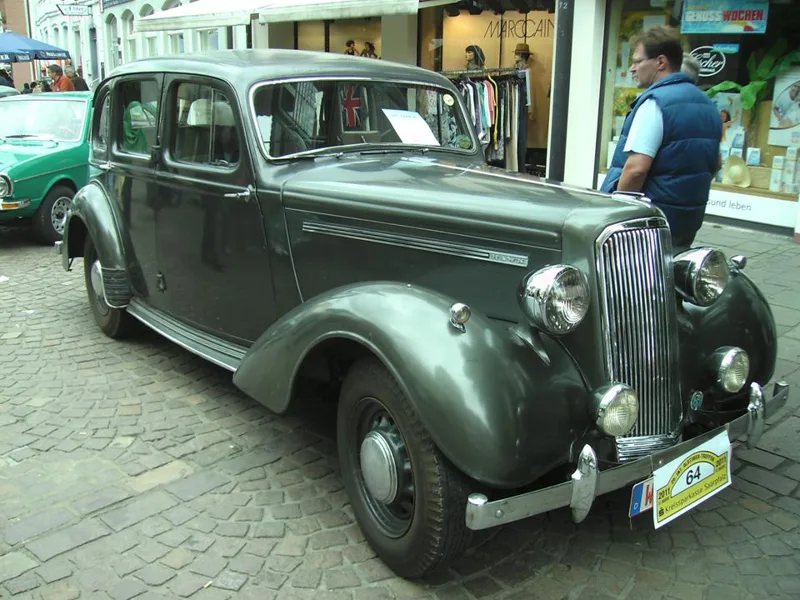
William and Reginald Rootes entered manufacturing in the decade from 1928 to 1938, backed by Prudential Assurance. They bought Hillman, Humber, Sunbeam, Talbot, Commer and Karrier, and by 1933 Rootes Limited had been renamed Rootes Securities Limited. The brothers were able to control the cars they sold, which had been their aim from the start.
The Depression brought more purchases. Karrier and Sunbeam came in during 1934, Clement Talbot in the same year, and British Light Steel Pressings in 1937, and all were made subsidiaries of Humber Limited. The Mayfair coachbuilders Thrupp & Maberly, a Rolls-Royce and Daimler dealer, had been bought in 1926, and its royal warrant was always proudly displayed.
Raleigh acquired all the Humber cycle trade marks in February 1932, and manufacture was transferred to Raleigh's Nottingham works. Export demand for bicycles had revived, but the group's centre of gravity was now the car business.
How was Rootes owned and financed?
Rootes Motors Limited took its name on 16 November 1949 from the holding company Rootes Securities Limited. Shares were issued to the public on 24 November 1949 for 3,025,000 pounds, but the listed shares were preference shares, and the equity stayed with the Rootes family and Prudential.
The family's exposure to tax was the next concern. Barely twelve months after the listing, the brothers recognised the effect death duties would have on their holdings. They offered one quarter of Rootes Motors' ordinary shares to holders of Rootes preference shares. Further preference share and debenture issues followed in November 1954 and November 1959.
By then the group employed 17,000 people and owned on average about 80 per cent of the capital of its subsidiaries. Production took place at three Coventry works, supplemented by sites in Luton, Cricklewood and Acton, along with a fully owned assembly operation in Australia.
At its height in 1960 the group had plants in Coventry, Birmingham, Acton, Luton, Dunstable and a new factory at Linwood in Scotland, and assembly plants in nine countries outside the UK. From Devonshire House it directed operations at five Kent branches, a North Kensington service department and branches in Birmingham and Manchester.
What did Rootes make during the Second World War?
Rootes joined the armaments effort under the Government's shadow factory scheme. In 1940 it built a large assembly plant at Ryton-on-Dunsmore, near Coventry, which initially made aircraft, including the Bristol Blenheim. Handley Page Halifax bombers were built at shadow factories at Speke and Blythe Bridge from 1941 to 1943.
Trucks and cars from the Humber and Commer lines were adapted into military transport. When Rootes visited the Volkswagen factory at Wolfsburg to evaluate it for war reparations, he decided that the factory and the Beetle had no value. It was a rare lapse of business judgement.
How did Rootes expand after the war?
Tilling-Stevens, with its subsidiary Vulcan Motors, was bought in the second half of 1950, adding two established commercial vehicle and bus makers to the group. In 1956 Singer Motors came in too. Rootes' Singers were badge-engineered Hillmans aimed at slightly more upmarket small car buyers.
After the war the company backed overseas factories as well, especially in Australasia and the Middle East. The best-known of these was the Paykan, built in Iran on the Hillman Hunter platform. Rootes pitched its models a little above the home rivals, arguing that better design and finish justified the extra cost.
Studebaker stylist Raymond Loewy was a design consultant to Rootes. The clearest trace of his work is the 1956 Audax line, whose Hillman Minx was also built under licence in Japan by Isuzu.
Did Rootes innovate in engines?
Rootes did experiment with engines. In 1954 it launched a supercharged diesel built on an idea from Sulzer Brothers. The Commer TS3 was a two-stroke, three-cylinder unit in which each cylinder housed a pair of facing pistons, linked to the crankshaft by bell cranks. Its 3.25 litre engine developed 90 hp (67 kW), a figure matched by contemporary four-stroke diesels of more than twice the capacity.
The engine was used in Commer trucks and as an industrial engine. Production ceased in 1968 after the Chrysler takeover, which brought the experiment to an end.
How did the range fit together?
Hillman had once been making large cars. It introduced a straight-eight soon after joining Rootes, but withdrew it as the Depression deepened. The larger two and a half litre and three litre cars were re-styled in the mid-1930s and renamed Humber Snipe, while the small Minx became the core of the Hillman range.
Sunbeam kept its sporting appeal while downsizing after the war to small and medium-sized cars. Humber made the larger luxury passenger vehicles, the Snipes and variants, ending with the compact Sceptre. Commer and Karrier were the commercial brands. Commer built vans, trucks, tractors and bus chassis, while Karrier concentrated on municipal and special-purpose trucks, vans and buses.
What was the Sunbeam Tiger?
The Sunbeam Tiger was a V8 derivative of the Alpine convertible, introduced in 1964 to lift the Alpine's sales in the United States. It used a 260 cu in (4,261 cm3) Ford V8, and Carroll Shelby was involved in developing the prototype. The Alpine had been moderately successful in the US market during the 1960s, and a more powerful model was seen as the way to improve that.
A 289 cu in (4,736 cm3) model followed in 1967, but few were built. It was considered inappropriate for a Chrysler vehicle to be powered by a Ford engine. A Chrysler V8 was ruled out because those engines were larger and heavier, and the rear-mounted distributor would have needed a chassis redesign that the limited sales could not justify.
Why did the Hillman Imp fail?
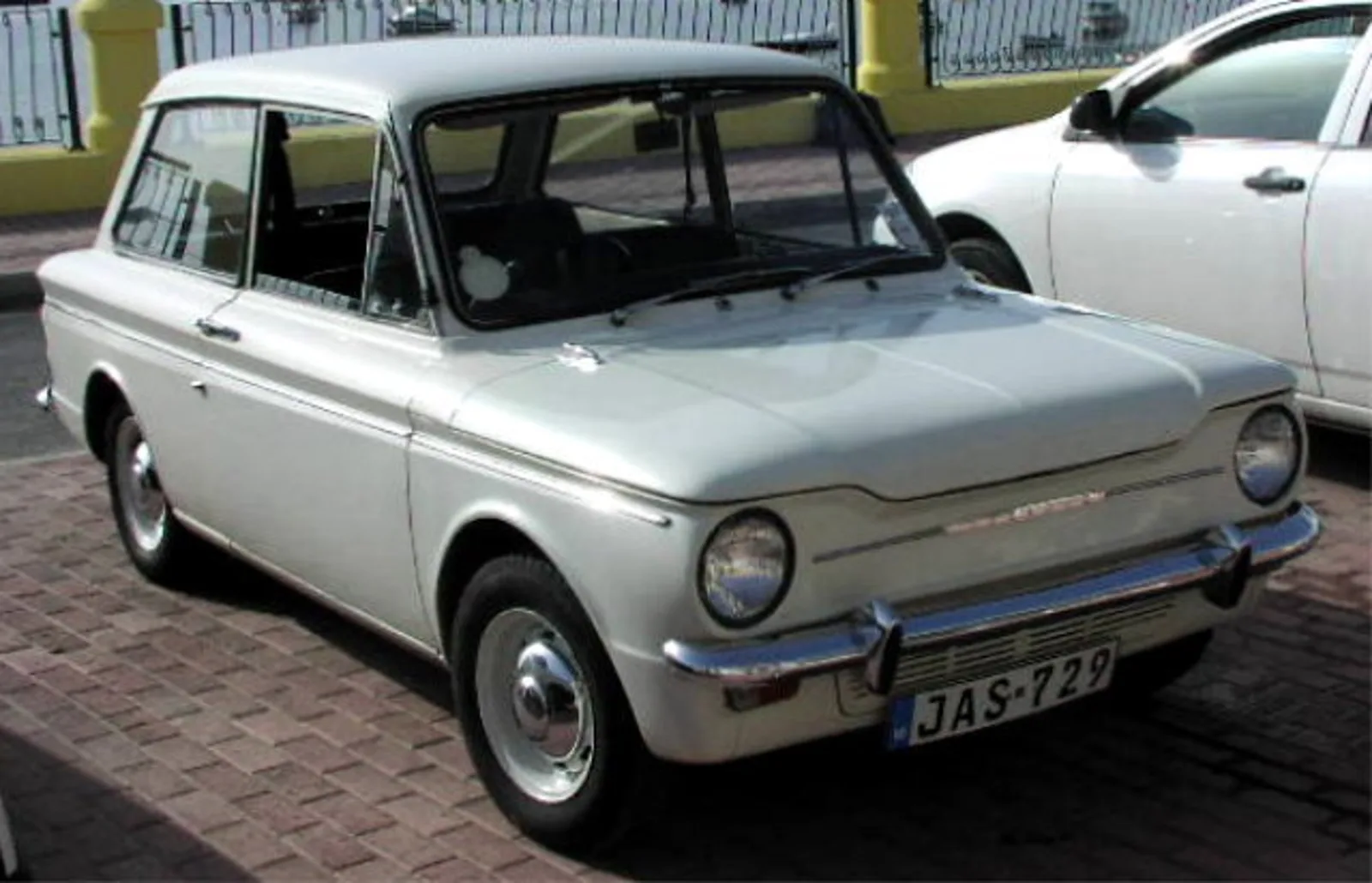
The Hillman Imp, introduced in 1963, was a compact rear-engined saloon with an all-aluminium overhead-cam engine. It was meant to answer the popular Mini from BMC. The move to a new Linwood factory in Scotland was forced on the company by government rules on industrial development certificates, and the build quality and reliability of the cars suffered.
The Linwood workforce had no experience of car assembly, and the component suppliers remained in the Midlands. Half-finished engine castings travelled from Linwood to be machined at Ryton and back again, and completed Imps then returned south to Ryton. The result was a round trip of 600 miles (970 km).
The Imp was underdeveloped, and buyer apathy compounded the build problems. After a reasonable first run, sales dropped away. Frequent strikes at Linwood and rising warranty claims left Rootes with no money to develop other models.
Which motorsport successes did Rootes win?
Through the 1950s the company used rallying as a showcase, with Stirling Moss and Sheila van Damm among its leading drivers. The high point came in 1955, when a Sunbeam-Talbot 90 won the Monte Carlo Rally.
In 1968 the group fielded a works entry in the London-Sydney Marathon. Andrew Cowan, at the wheel of a Hillman Hunter, won against works teams with far larger budgets, a result that surprised much of the field.
How did Chrysler take control?
Chrysler announced in June 1964 that it would take a 30 per cent interest in the ordinary capital of Rootes Motors, and the purchase was completed in October 1964. Its holdings rose to 45 per cent of the ordinary shares in 1966 and to about two-thirds of Rootes Motors' capital by January 1967. The group was renamed Chrysler UK on 30 June 1970.
The results were dramatic. The company reported a pre-tax profit of just 3.8 million pounds in the year ended 31 July 1967, its first reported profit since 1964, compared with a pre-tax loss of 10.7 million pounds in 1966. Lack of funds for new models marked its final decade.
Chrysler also wanted wholly independent European subsidiaries, like its rivals Ford and General Motors. It took over Simca of France and Barreiros of Spain at the same time, and merged them with Rootes to create Chrysler Europe. The Rootes marques were then phased out through the 1970s.
Hillman was shelved in favour of the Chrysler name in 1977, and Commer models mostly took the Dodge nameplate by 1976. The Imp was discontinued in 1976, and the Hunter followed in 1979, although production of its derivative continued in Iran. Chrysler's own former chairman, Lee Iacocca, later wrote in his autobiography that Chrysler should never have bought the Rootes operation.
How did Chrysler's British cars sell?
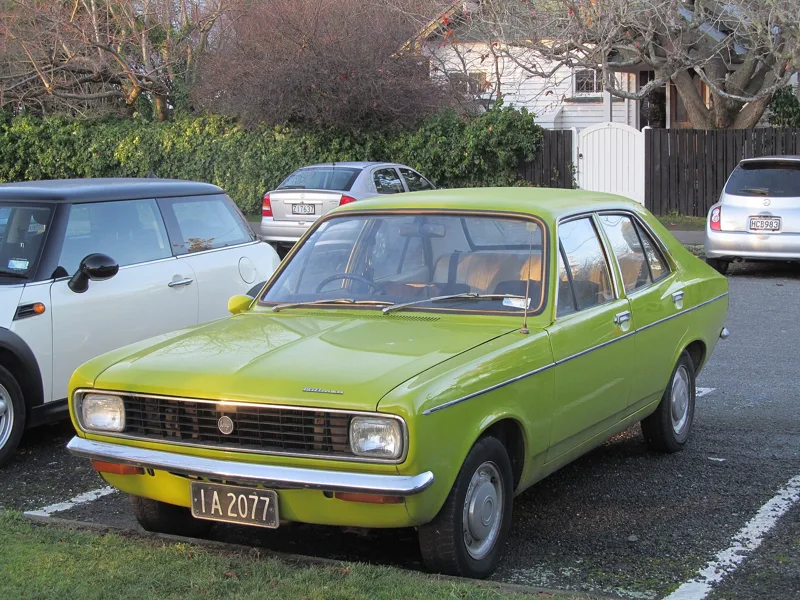
Chrysler UK kept rear-wheel-drive family cars such as the Hillman Avenger, introduced in 1970, and the Hillman Hunter, which had arrived in 1966. The Imp, by now largely free of its teething problems, was largely ignored by the new management.
New front-engined, front-wheel-drive hatchbacks such as the Fiat 127 and the Renault 5 arrived in the early 1970s. They showed that this layout would become the industry standard in the entry-level market, and they spearheaded an influx of popular imports that the Imp could not match.
Efforts to sell the cars in the United States were disappointing. Chrysler tried to market Rootes cars there in the late 1960s, but it could not offer them for part of 1968, because they could not comply with exhaust emission requirements. The Avenger was later sold in North America as the Plymouth Cricket, but that attempt was abandoned after two years, as Dodge's Colt from Mitsubishi proved the more popular choice.
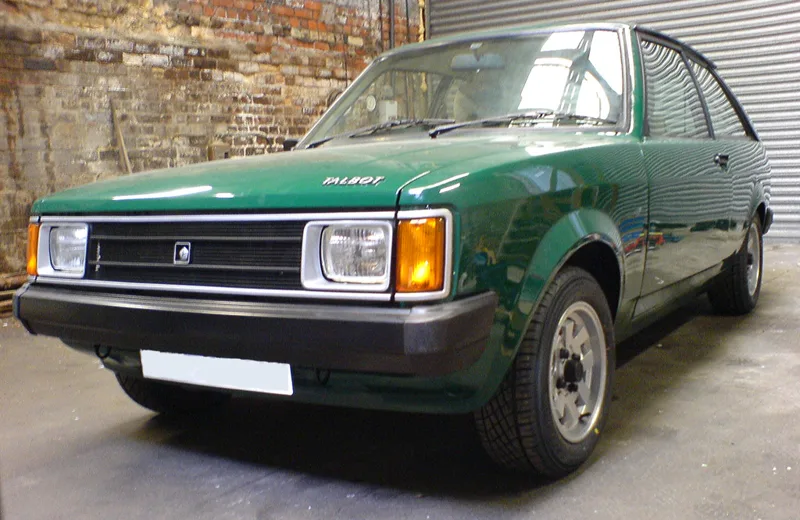
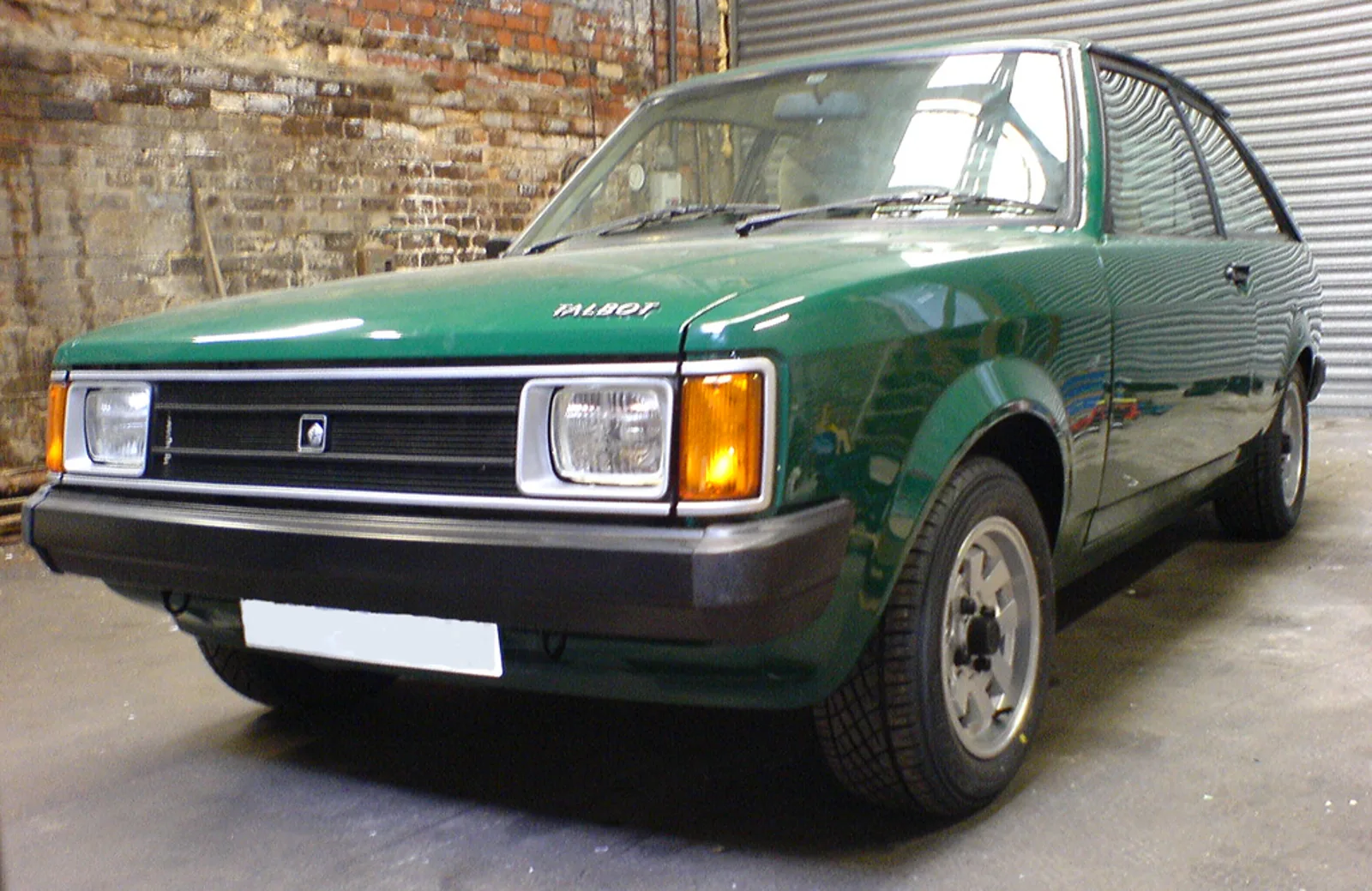
The Chrysler Europe range was developed with the Simca models. The Alpine, sold in France as the Simca 1307 and 1308, was built at the former Rootes plant at Ryton and at the former Simca plant near Paris. The Talbot Solara, which followed in early 1980 after Chrysler sold its European operations to Peugeot, and the Horizon were both voted European Car of the Year on their launch.
What happened when Peugeot took over?
Chrysler Europe collapsed in 1977, and PSA Peugeot-Citroen took it over in 1978. PSA closed the troubled Linwood factory in 1981 and revived the Talbot marque from Rootes history. Ryton was saved. Sales of Talbot-badged models fell from nearly 120,000 in 1979 to about 25,000 in 1984.
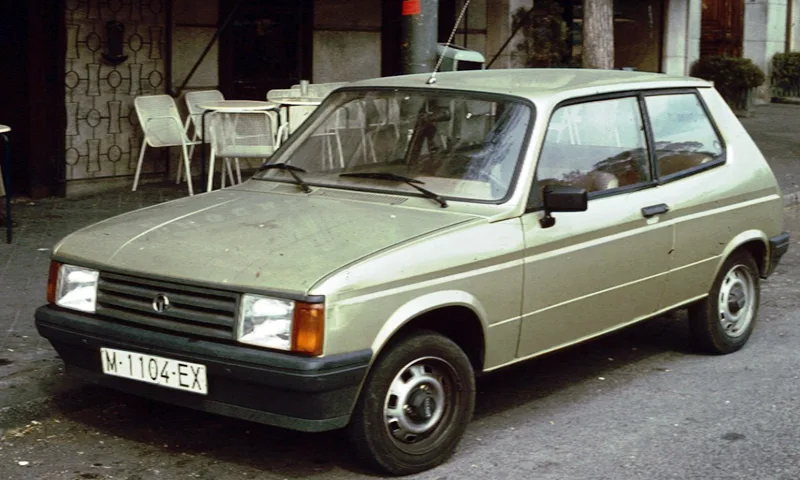
The Talbot Samba, based on the Peugeot 104, went on sale in the UK in February 1982. Hunter production ended in 1979, but its tooling went to Iran, where the Paykan continued in local production until 2004. The Paykan remains a common sight throughout the Middle East, especially as a taxi.
By 1985 PSA had abandoned its three-marque strategy for passenger cars. The Talbot Arizona, the Horizon replacement, became the Peugeot 309 in the autumn of 1985 and was the first Peugeot-badged car assembled at Ryton. The Talbot badge was dropped from passenger cars, with the Alpine, Solara and Samba finishing production in May 1986. The Talbot name survived on the Express van until 1994.
Ryton went on to assemble the Peugeot 405 from 1987, the 306 from late 1992 and the 206 from 1998. At the height of the 206's success the plant ran at capacity, but its location between two main roads made expansion impossible.
How did the Ryton plant close?
In April 2006 PSA announced that production of the Peugeot 206 would move to Slovakia and that Ryton would close within the next year. Production ceased on 12 December 2006, ending nearly 60 years of car manufacturing at the site. More than 2,000 jobs were lost, and the factory was later demolished.
The closure severed the motor industry's final remaining direct link with the Rootes Group. The only physical remnant still in existence is the Whitley research and development centre, which was established in the Chrysler era, later sold by PSA and is now owned by Jaguar Land Rover.
Key Rootes milestones
| Year | Milestone |
|---|---|
| 1913 | Rootes founded in Hawkhurst, Kent |
| 1917 | Rootes Limited formed to buy the Maidstone branch |
| 1929 | Hillman bought, followed by Humber and Commer |
| 1933 | Rootes Limited renamed Rootes Securities Limited |
| 1949 | Rootes Motors Limited name adopted |
| 1964 | Chrysler announces a 30 per cent interest |
| 1967 | Chrysler holds about two-thirds of Rootes Motors capital |
| 1970 | Group renamed Chrysler UK |
| 1978 | PSA Peugeot-Citroen takes over |
| 2006 | Ryton production ceases |
What survives of the Rootes name?
The name lives on in a few places. The Maidstone building that William Rootes used was built in 1938 to 1939 for Rootes and is listed Grade II. The dealership kept the Rootes name until 2007, when it changed to Robins & Day Maidstone, a dealership group wholly owned and operated by Peugeot UK.
The University of Warwick named Rootes Hall, one of its largest halls of residence, after the group's contribution to Coventry. In 2021 the successors of both conglomerates, Fiat Chrysler Automobiles and PSA Group, merged to form Stellantis, which brought the surviving fragments of the Rootes Group back under one umbrella.